
Report Feature
Bassinet Cart Market Trends and Forecast
The future of the global bassinet cart market looks promising with opportunities in the hospital, clinic, menstrual center, and family markets. The global bassinet cart market is expected to grow with a CAGR of 2.3% from 2025 to 2031. The major drivers for this market are the rising investment in hospital infrastructure & neonatal unit, the increasing hospital birth rates in developing region, and the growing preference for mobile & ergonomic bassinet cart.• Lucintel forecasts that, within the type category, metal type is expected to witness higher growth over the forecast period.
• Within the application category, hospital is expected to witness the highest growth.
• In terms of region, APAC is expected to witness the highest growth over the forecast period. Gain valuable insights for your business decisions with our comprehensive 150+ page report. Sample figures with some insights are shown below.

Emerging Trends in the Bassinet Cart Market
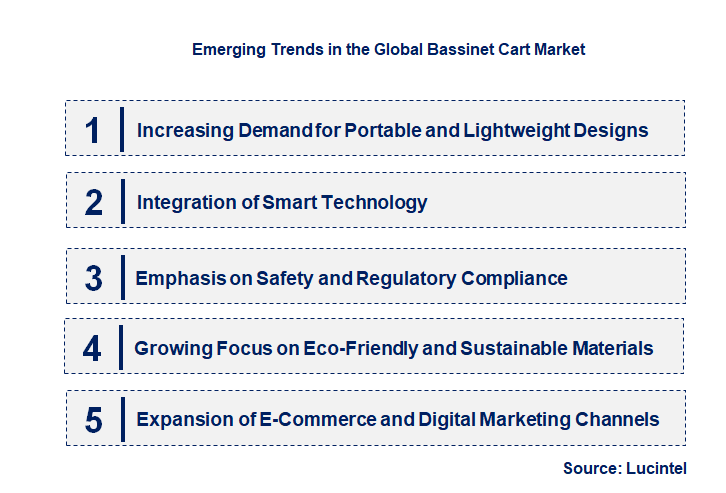
The bassinet cart market is experiencing a significant transformation driven by evolving consumer preferences, technological advancements, and increasing safety standards. As parents seek more convenient, versatile, and safe solutions for their infants, manufacturers are innovating to meet these demands. The market is also influenced by rising urbanization, changing lifestyles, and a growing emphasis on health and safety. These factors are fostering new product developments, strategic collaborations, and digital integration, which collectively are reshaping the competitive landscape. Understanding these emerging trends is crucial for stakeholders aiming to capitalize on growth opportunities and address evolving customer needs effectively.• Increasing demand for portable and lightweight designs: Consumers are prioritizing ease of mobility and convenience, prompting manufacturers to develop more portable, lightweight bassinet carts. These products facilitate effortless movement within homes and outdoor environments, catering to active parents and caregivers. The trend enhances user experience by offering flexibility and ease of use, especially for families with multiple living spaces or those frequently on the go. As a result, product innovation is focused on materials and design to balance durability with portability, significantly expanding market reach.
• Integration of smart technology: The incorporation of smart features such as sensors, automated movement, and connectivity with mobile apps is transforming bassinet carts. These technological advancements enable remote monitoring of infants, automatic rocking, and real-time alerts for caregivers, enhancing safety and convenience. The impact is profound, as it appeals to tech-savvy parents seeking innovative solutions for infant care. This trend not only improves safety standards but also differentiates products in a competitive market, encouraging brands to invest in IoT-enabled features and digital integration.
• Emphasis on safety and regulatory compliance: Heightened safety concerns and stricter regulations are driving manufacturers to enhance product safety features. Innovations include improved locking mechanisms, breathable materials, and stability enhancements. Compliance with international safety standards is becoming a key differentiator, fostering consumer trust. This trend ensures that products meet rigorous safety criteria, reducing risks of accidents and injuries. As safety remains a top priority for parents, companies investing in compliance and safety innovations are gaining a competitive edge, ultimately elevating overall market standards.
• Growing focus on eco-friendly and sustainable materials: Environmental consciousness is influencing product development, with manufacturers adopting sustainable materials such as recycled plastics and organic fabrics. This trend appeals to eco-aware consumers who prefer environmentally responsible products. The use of sustainable materials not only reduces environmental impact but also enhances brand reputation. As sustainability becomes a key purchasing criterion, companies are innovating to balance safety, durability, and eco-friendliness, which is reshaping product offerings and supply chain practices within the market.
• Expansion of e-commerce and digital marketing channels: The rise of online retail platforms and digital marketing strategies is significantly impacting market dynamics. Consumers increasingly prefer purchasing bassinet carts online for convenience and variety. Digital channels enable brands to reach broader audiences, offer personalized experiences, and gather valuable consumer insights. This trend accelerates product launches and promotional campaigns, fostering rapid market penetration. The shift towards e-commerce is also encouraging brands to optimize their digital presence, invest in online customer service, and develop direct-to-consumer sales models, thereby transforming traditional distribution channels. In summary, these emerging trends are collectively reshaping the bassinet cart market by fostering innovation, enhancing safety, and expanding accessibility. The focus on portability, technology integration, safety, sustainability, and digital channels is driving growth and competitive differentiation. As these trends continue to evolve, they are set to redefine consumer expectations and market standards, ensuring sustained development and increased adoption of bassinet carts worldwide.
Recent Development in the Bassinet Cart Market
The bassinet cart market has experienced significant growth driven by increasing demand for portable and convenient baby care solutions. As urbanization accelerates and consumer preferences shift towards ergonomic and space-saving products, manufacturers are innovating to meet these needs. Technological advancements, evolving safety standards, and a rising awareness of infant care are shaping the market landscape. Additionally, the surge in e-commerce platforms has expanded market reach, making these products more accessible to a broader consumer base. These developments collectively influence market dynamics, creating opportunities for new entrants and prompting existing players to innovate continuously.• Technological Innovations: Integration of smart features such as automated movement and temperature control enhances user convenience and safety, boosting market appeal and driving sales.
• Safety Standard Enhancements: Stricter safety regulations and certifications have led manufacturers to improve product quality, increasing consumer trust and reducing product recalls.
• E-commerce Expansion: The rise of online retail channels has broadened market access, enabling brands to reach a global audience and increasing sales volume.
• Sustainable Materials Adoption: Growing consumer preference for eco-friendly products has prompted manufacturers to incorporate sustainable materials, influencing product design and market positioning.
• Customization and Design Trends: Increased demand for personalized and stylish designs has led to a diversification of product offerings, catering to varied consumer tastes and increasing market competitiveness. These developments are collectively transforming the bassinet cart market by fostering innovation, enhancing safety, expanding accessibility, and aligning products with consumer preferences. As a result, the market is experiencing accelerated growth, increased competition, and a broader consumer base.
Strategic Growth Opportunities in the Bassinet Cart Market
The bassinet cart market is experiencing significant growth driven by increasing demand for efficient, portable, and safe infant care solutions. As healthcare facilities, nurseries, and home care providers seek innovative products to enhance infant safety and caregiver convenience, several key growth opportunities are emerging across various applications. These opportunities are shaping the market landscape by introducing advanced features, expanding into new regions, and catering to evolving consumer preferences. Understanding these growth avenues is essential for stakeholders aiming to capitalize on the expanding demand for bassinet carts and improve infant care standards globally.• Healthcare Facilities: Healthcare providers are prioritizing safety features such as secure locking mechanisms, ergonomic designs, and compliance with regulatory standards, which boost trust and adoption rates. These improvements reduce risks of accidents and improve patient outcomes, making bassinet carts more integral to neonatal care units.
• Home Care and Pediatric Use: The rising trend of home-based infant care is fueling demand for portable, easy-to-use bassinet carts. These carts offer convenience, mobility, and safety for parents and caregivers, expanding market reach beyond clinical settings into residential environments.
• Technological Integration: Incorporating smart technology such as sensors, temperature control, and remote monitoring enhances functionality. These innovations improve infant safety, provide real-time data to caregivers, and differentiate products in a competitive market.
• Regional Expansion: Emerging economies present significant growth opportunities due to increasing healthcare infrastructure investments and rising awareness about infant safety. Expanding distribution channels and localized product offerings can capture these burgeoning markets.
• Customization and Design Innovation: Offering customizable options, aesthetic designs, and ergonomic features caters to varied consumer needs. This flexibility enhances user experience, boosts brand loyalty, and drives sales across different demographic segments. In summary, these growth opportunities are transforming the bassinet cart market by fostering innovation, expanding geographical reach, and aligning products with evolving safety and convenience standards. As a result, the market is poised for sustained growth, driven by technological advancements and increasing global awareness of infant care needs.
Bassinet Cart Market Driver and Challenges
The bassinet cart market is influenced by a variety of technological, economic, and regulatory factors that shape its growth and development. Advances in manufacturing technology and innovative design are enhancing product features, while economic conditions impact consumer purchasing power. Regulatory standards ensure safety and quality, influencing product development and compliance costs. Additionally, demographic shifts such as increasing birth rates and urbanization contribute to market expansion. However, challenges such as stringent safety regulations, high manufacturing costs, and evolving consumer preferences also pose hurdles. Understanding these drivers and challenges is essential for stakeholders to navigate the market effectively and capitalize on emerging opportunities. The factors responsible for driving the bassinet cart market include:• Technological Innovation: The integration of advanced materials and ergonomic designs has significantly improved the safety, comfort, and functionality of bassinet carts. Manufacturers are investing in smart features, lightweight structures, and durable materials, which appeal to modern parents seeking convenience and safety. These innovations not only enhance user experience but also differentiate products in a competitive market. As technology continues to evolve, the market is expected to see further enhancements, driving demand and expanding applications across healthcare and retail sectors.
• Rising Birth Rates and Urbanization: Increasing birth rates in emerging economies and urbanization in developed regions are key drivers fueling market growth. Urban living often necessitates portable and space-efficient baby care solutions, making bassinet carts a preferred choice for parents and caregivers. The growing awareness of infant safety and comfort further boosts demand. Governments and healthcare providers are also promoting maternal and child health initiatives, indirectly supporting market expansion. This demographic trend ensures a steady increase in demand, especially in densely populated urban centers.
• Economic Growth and Disposable Income: Improved economic conditions and rising disposable incomes enable more families to invest in premium baby care products, including bassinet carts. As consumers become more willing to spend on quality and safety features, manufacturers are expanding their product lines to cater to this demand. Economic stability also encourages retail expansion and online sales channels, broadening market reach. This financial capability allows for innovation and higher product pricing, which can lead to increased profit margins and market growth.
• Regulatory Standards and Safety Certifications: Stringent safety regulations and certification requirements are shaping the market landscape. Compliance with standards such as ASTM, EN, and ISO ensures product safety and quality, building consumer trust. While these regulations can increase manufacturing costs and time-to-market, they also serve as a competitive advantage for compliant products. Manufacturers investing in safety and quality assurance are better positioned to penetrate markets with high regulatory scrutiny, fostering innovation and elevating overall industry standards.
• Growing Awareness of Infant Safety and Comfort: Increasing parental awareness regarding infant safety, health, and comfort is a significant market driver. Educational campaigns, social media influence, and healthcare advice emphasize the importance of safe and ergonomic baby products. This heightened awareness encourages parents to choose high-quality, feature-rich bassinet carts, boosting demand. Companies are responding by offering customizable, safety-enhanced options, which further attract consumers. The focus on safety and comfort not only drives sales but also encourages innovation and higher standards within the industry. The challenges facing this Market include:
• Stringent Safety Regulations and Certification Processes: While safety standards are essential, they also pose significant challenges for manufacturers. Complying with diverse international regulations can be costly and time-consuming, often requiring extensive testing and certification procedures. This can delay product launches and increase production costs, impacting profitability. Smaller companies may struggle to meet these standards, limiting market entry and innovation. Additionally, evolving regulations necessitate continuous updates to product designs, which can strain resources and hinder rapid development.
• High Manufacturing and Material Costs: Producing bassinet carts with advanced features, durable materials, and safety certifications involves substantial costs. Premium materials, sophisticated manufacturing processes, and quality control measures contribute to higher prices, which can limit affordability for some consumers. Fluctuations in raw material prices and supply chain disruptions further exacerbate cost pressures. These factors challenge manufacturers to balance quality with competitive pricing, potentially impacting profit margins and market accessibility, especially in price-sensitive regions.
• Changing Consumer Preferences and Market Saturation: Consumer preferences are rapidly evolving, with a growing demand for innovative, customizable, and eco-friendly products. Keeping pace with these trends requires continuous research and development, which can be resource-intensive. Additionally, market saturation in developed regions limits growth opportunities, forcing companies to seek expansion into emerging markets. However, cultural differences, regulatory hurdles, and economic disparities can complicate entry. The need to differentiate products in a crowded marketplace adds pressure on brands to innovate constantly, increasing operational costs and strategic complexity. In summary, the bassinet cart market is driven by technological advancements, demographic trends, economic growth, regulatory compliance, and increasing safety awareness. However, it faces challenges from regulatory complexities, high production costs, and shifting consumer preferences. These factors collectively influence market dynamics, requiring stakeholders to innovate, adapt, and strategically navigate the evolving landscape. Successful companies will leverage drivers while addressing challenges to sustain growth and competitiveness in this expanding market.
List of Bassinet Cart Companies
Companies in the market compete on the basis of product quality offered. Major players in this market focus on expanding their manufacturing facilities, R&D investments, infrastructural development, and leverage integration opportunities across the value chain. With these strategies bassinet cart companies cater increasing demand, ensure competitive effectiveness, develop innovative products & technologies, reduce production costs, and expand their customer base. Some of the bassinet cart companies profiled in this report include-• Paramount
• Pedigo USA
• Blickman
• Caretek Medical
• Novum Medical
• Stryker Corporation
• Medline Industries
• Drive DeVilbiss Healthcare
• Metro Healthcare
• Bristol Maid
Bassinet Cart Market by Segment
The study includes a forecast for the global bassinet cart market by type, application, and region.Bassinet Cart Market by Type [Value from 2019 to 2031]:
• Metal Type
• Non-metal Type
Bassinet Cart Market by Application [Value from 2019 to 2031]:
• Hospitals
• Clinic
• Menstrual Center
• Family
Bassinet Cart Market by Region [Value from 2019 to 2031]:
• North America
• Europe
• Asia Pacific
• The Rest of the World
Country Wise Outlook for the Bassinet Cart Market
The bassinet cart market has experienced significant growth driven by increasing demand for portable and convenient baby care solutions worldwide. Innovations in design, safety features, and materials have contributed to market expansion across major economies. As consumer preferences shift towards ergonomic and multifunctional products, manufacturers are focusing on sustainability and technological integration. Regulatory standards and safety certifications also influence product development and market entry strategies. The evolving landscape reflects a blend of technological advancements, demographic trends, and changing parental needs, shaping the future trajectory of the bassinet cart market globally.• United States: The US market has seen a surge in demand for lightweight, ergonomic bassinet carts with advanced safety features. Leading brands are integrating smart technology, such as temperature control and mobility tracking, to enhance user experience. The focus on eco-friendly materials and sustainable manufacturing practices is also prominent, aligning with consumer preferences for environmentally conscious products. Additionally, online retail channels have expanded access, boosting sales and product innovation.
• China: China’s market is characterized by rapid growth driven by urbanization and rising disposable incomes. Local manufacturers are increasingly adopting innovative designs and safety standards to compete globally. The integration of smart features, such as automated height adjustment and remote control, is gaining popularity. E-commerce platforms play a crucial role in distribution, enabling wider reach and consumer engagement. The government’s emphasis on infant safety regulations further propels market development.
• Germany: The German market emphasizes high-quality, durable, and safety-certified bassinet carts. Manufacturers focus on ergonomic design and compliance with strict European safety standards. There is a growing trend toward multifunctional carts that combine storage, portability, and comfort. Sustainability is a key factor, with many companies adopting eco-friendly materials and production processes. The market also benefits from a strong healthcare and parental support infrastructure.
• India: The Indian market is witnessing rapid growth due to increasing awareness of baby safety and rising disposable incomes. Local brands are offering affordable, durable, and safety-compliant bassinet carts tailored to diverse consumer needs. The adoption of innovative features such as foldability and lightweight construction is increasing. E-commerce and organized retail channels are expanding access, while government initiatives supporting maternal and child health are positively impacting market growth.
• Japan: Japan’s market is characterized by a focus on safety, compact design, and technological integration. Consumers prefer high-quality, space-saving bassinet carts with advanced safety features. The adoption of smart technology, including sensors for stability and safety alerts, is emerging. Sustainability and eco-friendly materials are also gaining importance. The market benefits from a mature healthcare system and high consumer awareness regarding product safety and innovation, driving continuous product improvements.

Features of the Global Bassinet Cart Market
Market Size Estimates: Bassinet cart market size estimation in terms of value ($B). Trend and Forecast Analysis: Market trends (2019 to 2024) and forecast (2025 to 2031) by various segments and regions. Segmentation Analysis: Bassinet cart market size by type, application, and region in terms of value ($B). Regional Analysis: Bassinet cart market breakdown by North America, Europe, Asia Pacific, and Rest of the World. Growth Opportunities: Analysis of growth opportunities in different types, applications, and regions for the bassinet cart market. Strategic Analysis: This includes M&A, new product development, and competitive landscape of the bassinet cart market. Analysis of competitive intensity of the industry based on Porter’s Five Forces model.
FAQ
Q1. What is the growth forecast for bassinet cart market? Answer: The global bassinet cart market is expected to grow with a CAGR of 2.3% from 2025 to 2031. Q2. What are the major drivers influencing the growth of the bassinet cart market? Answer: The major drivers for this market are the rising investment in hospital infrastructure & neonatal unit, the increasing hospital birth rates in developing region, and the growing preference for mobile & ergonomic bassinet cart. Q3. What are the major segments for bassinet cart market? Answer: The future of the bassinet cart market looks promising with opportunities in the hospital, clinic, menstrual center, and family markets. Q4. Who are the key bassinet cart market companies? Answer: Some of the key bassinet cart companies are as follows:• Paramount
• Pedigo USA
• Blickman
• Caretek Medical
• Novum Medical
• Stryker Corporation
• Medline Industries
• Drive DeVilbiss Healthcare
• Metro Healthcare
• Bristol Maid Q5. Which bassinet cart market segment will be the largest in future? Answer: Lucintel forecasts that, within the type category, metal type is expected to witness higher growth over the forecast period. Q6. In bassinet cart market, which region is expected to be the largest in next 5 years? Answer: In terms of region, APAC is expected to witness the highest growth over the forecast period. Q7. Do we receive customization in this report? Answer: Yes, Lucintel provides 10% customization without any additional cost.
Table of Contents
List of Figures
List of Tables
Methodology
- In-depth interviews of the major players in this market
- Detailed secondary research from competitors’ financial statements and published data
- Extensive searches of published works, market, and database information pertaining to industry news, company press releases, and customer intentions
- A compilation of the experiences, judgments, and insights of Lucintel’s professionals, who have analyzed and tracked this market over the years.


Buy Now
Choose a license that fits your team. Instant PDF delivery.
Prices exclude taxes. Instant delivery. Custom licensing available on request.
Key Questions
- • What are some of the most promising, high-growth opportunities for the bassinet cart market by type (metal type and non-metal type), application (hospitals, clinic, menstrual center, and family), and region (North America, Europe, Asia Pacific, and the Rest of the World)?
- • Which segments will grow at a faster pace and why?
- • Which region will grow at a faster pace and why?
- • What are the key factors affecting market dynamics? What are the key challenges and business risks in this market?
- • What are the business risks and competitive threats in this market?
- • What are the emerging trends in this market and the reasons behind them?
- • What are some of the changing demands of customers in the market?
- • What are the new developments in the market? Which companies are leading these developments?
- • Who are the major players in this market? What strategic initiatives are key players pursuing for business growth?
- • What are some of the competing products in this market and how big of a threat do they pose for loss of market share by material or product substitution?
- • What M&A activity has occurred in the last 5 years and what has its impact been on the industry? For any questions related to Bassinet Cart Market, Bassinet Cart Market Size, Bassinet Cart Market Growth, Bassinet Cart Market Analysis, Bassinet Cart Market Report, Bassinet Cart Market Share, Bassinet Cart Market Trends, Bassinet Cart Market Forecast, Bassinet Cart Companies, write Lucintel analyst at email: helpdesk@lucintel.com. We will be glad to get back to you soon.


