
Market Report · July 22, 2026

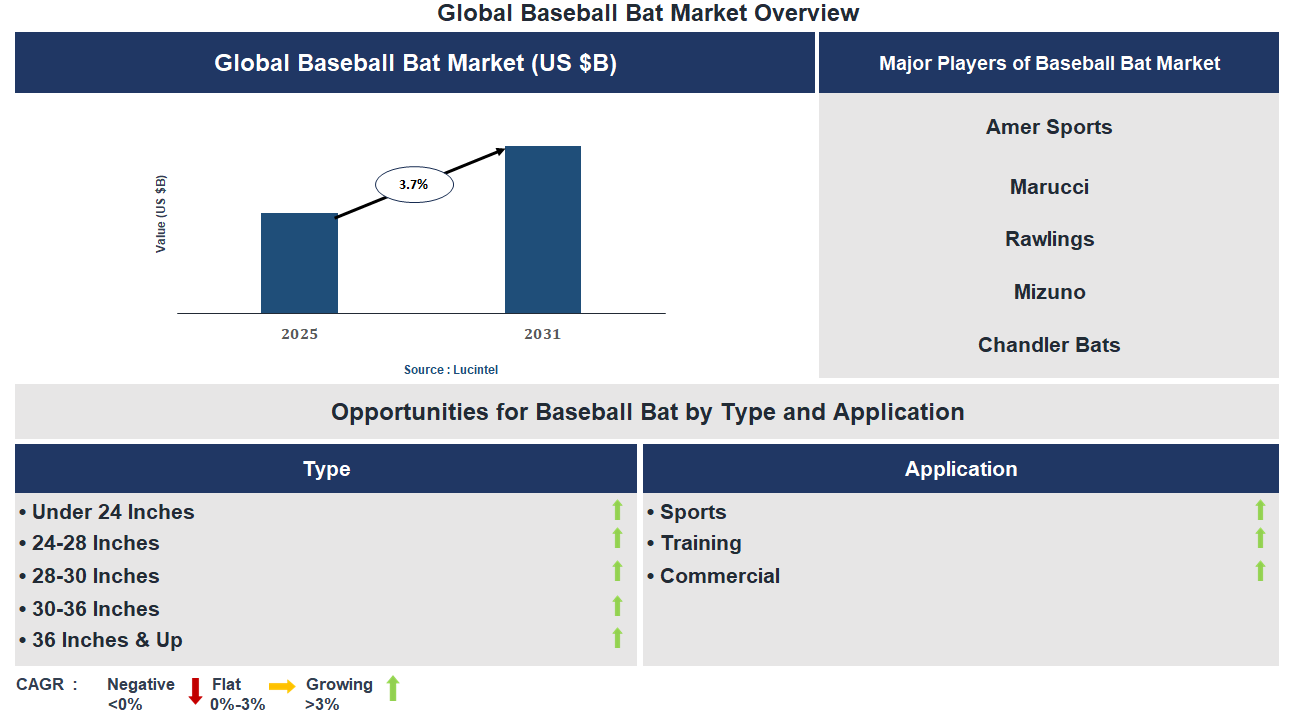
Key data points: The growth forecast = 3.7% annually for the next 7 years. Scroll below to get more insights. This market report covers trends, opportunities and forecasts in baseball bat market to 2031 by type (under 24 inches, 24-28 inches, 28-30 inches, 30-36 inches, and 36 inches & up), application (sports, training, and commercial), and region (North America, Europe, Asia Pacific, and the Rest of the World)
We'll send your sample report shortly.
• Lucintel forecasts that, within the type category, 24-28 inch is expected to witness the highest growth over the forecast period.
• Within the application category, commercial is expected to witness the highest growth.
• In terms of region, APAC is expected to witness the highest growth over the forecast period. Gain valuable insights for your business decisions with our comprehensive 150+ page report. Sample figures with some insights are shown below.
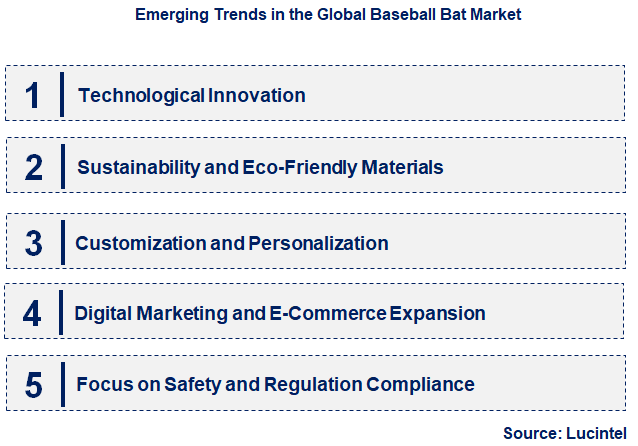
• Technological Innovation: Advanced materials and manufacturing techniques are enhancing bat performance. Carbon fiber composites and lightweight alloys are replacing traditional wood and metal, offering increased durability, better swing speed, and improved energy transfer. Smart bats with embedded sensors are also emerging, providing real-time data on swing mechanics. These innovations are attracting both amateur and professional players seeking superior equipment, thereby expanding market potential and encouraging product differentiation.
• Sustainability and Eco-Friendly Materials: Growing environmental awareness is prompting manufacturers to adopt sustainable practices. Use of responsibly sourced wood, recycled materials, and eco-friendly finishes is increasing. Companies are also exploring biodegradable composites to reduce environmental impact. This shift appeals to environmentally conscious consumers and aligns with global sustainability initiatives. As a result, eco-friendly products are gaining market share, influencing supply chain practices and encouraging innovation in sustainable manufacturing.
• Customization and Personalization: Consumers increasingly demand personalized equipment tailored to their playing style and preferences. Manufacturers are offering customizable options such as grip types, weight distribution, and branding. Digital platforms enable consumers to design their own bats, fostering a sense of ownership and brand loyalty. This trend enhances customer engagement and allows brands to differentiate themselves in a competitive market, ultimately driving higher sales and customer satisfaction.
• Digital Marketing and E-Commerce Expansion: The rise of online retail channels and social media marketing is transforming how products are promoted and sold. E-commerce platforms provide a wider reach and convenience for consumers, while digital campaigns target specific demographics. Virtual try-on tools and augmented reality experiences are enhancing online shopping. This digital shift enables brands to gather valuable consumer data, optimize marketing strategies, and respond swiftly to market trends, thereby increasing sales and market penetration.
• Focus on Safety and Regulation Compliance: Increasing safety standards and regulations are influencing product development. Manufacturers are designing bats that meet new safety guidelines, including weight limits and material restrictions. Certification processes and quality assurance are becoming more rigorous to ensure compliance. This focus on safety not only protects consumers but also enhances brand reputation. Staying ahead of regulatory changes is crucial for market players to avoid penalties and maintain consumer trust, ultimately shaping the industry’s regulatory landscape. In summary, these emerging trends are collectively reshaping the baseball bat market by fostering innovation, promoting sustainability, enhancing consumer engagement, expanding digital presence, and emphasizing safety. These developments are driving growth, creating new opportunities, and setting the stage for a more dynamic and competitive industry landscape.
• Technological Advancement: Advanced materials and manufacturing techniques have led to lighter, more durable baseball bats, enhancing player performance and safety. This innovation attracts both amateur and professional players, boosting market sales and product differentiation.
• Customization Trends: Increasing demand for personalized bats with unique designs, engravings, and specifications has driven manufacturers to offer bespoke options. This trend enhances customer engagement and allows brands to command premium pricing.
• Sustainability Initiatives: Adoption of eco-friendly materials and sustainable manufacturing processes is gaining momentum. This shift appeals to environmentally conscious consumers and aligns with global sustainability goals, influencing product development and branding.
• Digital Marketing and E-commerce Growth: The expansion of online retail platforms and social media marketing has increased product visibility and accessibility. This development broadens market reach, especially in emerging regions, and accelerates sales growth.
• Market Expansion and Globalization: Emerging markets in Asia and Latin America are witnessing increased adoption of baseball equipment. This globalization trend opens new revenue streams and encourages manufacturers to adapt products to local preferences. In summary, these developments are transforming the baseball bat market by fostering innovation, enhancing consumer engagement, promoting sustainability, and expanding global reach. The market is becoming more dynamic, competitive, and aligned with modern consumer values, ensuring sustained growth and diversification.
• Expansion in Youth and Amateur Sports: Growing participation among youth and amateur players is fueling demand for affordable, durable, and lightweight baseball bats. This segment offers significant growth potential as sports programs and schools invest more in equipment, encouraging brand loyalty early on. Companies focusing on innovative, cost-effective products tailored for beginners can capture a larger share of this expanding market.
• Premium Performance Bats for Professional Athletes: The demand for high-end, technologically advanced bats among professional players is increasing. These bats offer enhanced performance, durability, and customization options, appealing to elite athletes seeking competitive advantages. Investing in R&D to develop cutting-edge materials and designs can help brands establish a premium segment and boost profit margins.
• Sustainable and Eco-Friendly Materials: The rising awareness of environmental impact is prompting manufacturers to adopt sustainable materials such as bamboo and recycled composites. This shift not only appeals to environmentally conscious consumers but also aligns with global sustainability trends. Developing eco-friendly bats can differentiate brands and open new market segments, especially among eco-conscious buyers.
• Customization and Personalization Services: Consumers increasingly seek personalized equipment to reflect their style and preferences. Offering customization options such as engraved names, logos, and unique designs enhances customer engagement and brand loyalty. This trend can drive higher sales margins and foster long-term customer relationships.
• E-commerce and Direct-to-Consumer Sales Channels: The growth of online retail platforms provides an efficient way to reach a broader customer base. Direct-to-consumer sales enable brands to control pricing, gather customer data, and offer tailored products. Expanding digital presence and e-commerce capabilities are crucial for capturing market share and adapting to changing purchasing behaviors. In summary, these growth opportunities are transforming the baseball bat market by fostering innovation, sustainability, and customer-centric approaches. They enable companies to diversify their offerings, expand into new segments, and strengthen their competitive position. As these trends continue to evolve, the market is poised for sustained growth driven by technological advancements and shifting consumer preferences.
• Technological Integration: The integration of advanced materials like carbon fiber and composite woods enhances durability, performance, and weight reduction, attracting both amateur and professional players. Manufacturing techniques such as CNC machining and 3D printing improve precision and customization, meeting diverse consumer preferences. These innovations lead to higher-quality products, boosting sales and market competitiveness. As technology continues to evolve, manufacturers can develop more efficient, lightweight, and durable bats, further expanding market reach and consumer satisfaction.
• Growing Popularity of Baseball: The increasing popularity of baseball across various regions, especially in North America, Asia, and Latin America, drives demand for high-quality bats. The sport’s expansion in youth leagues, schools, and professional tournaments encourages more players to participate, fueling sales. Media coverage, international tournaments, and the rise of baseball academies contribute to heightened interest, translating into sustained demand for innovative and performance-enhancing bats.
• Rising Consumer Spending Power: Economic growth in key markets has increased disposable income, enabling consumers to invest in premium sports equipment, including baseball bats. This trend encourages demand for high-end, customized, and branded bats, which often come at higher price points. As consumers seek better performance and durability, manufacturers are motivated to offer advanced products, thereby expanding market size and revenue opportunities.
• Regulatory Standards and Safety Norms: Stringent safety regulations and quality standards imposed by sports authorities and governing bodies influence product design and manufacturing processes. Compliance ensures consumer safety and enhances brand credibility, but also increases production costs. Manufacturers must innovate within regulatory frameworks to develop safe, compliant, and high-performance bats, which can act as a barrier for new entrants but also as a quality assurance for consumers.
• E-commerce and Digital Marketing: The rise of online retail platforms and digital marketing strategies has expanded market reach, allowing manufacturers to target a global audience efficiently. E-commerce provides consumers with easy access to a wide range of products, reviews, and customization options, boosting sales. Digital marketing enhances brand visibility and engagement, fostering consumer loyalty and driving demand for innovative and branded bats. This shift also enables smaller players to compete with established brands by leveraging online channels. The challenges facing this baseball bat market include:-
• Fluctuating Raw Material Prices: The cost of raw materials such as wood, carbon fiber, and composites can be highly volatile due to supply chain disruptions, environmental regulations, and market demand. These fluctuations impact manufacturing costs and profit margins, forcing companies to adjust pricing strategies or seek alternative materials. Managing raw material costs is critical to maintaining competitiveness and profitability in a highly price-sensitive market.
• Intense Competition: The baseball bat market is highly competitive, with numerous established brands and new entrants vying for market share. Differentiation through innovation, branding, and pricing becomes essential but challenging. Companies must continuously invest in R&D and marketing to stay ahead, which can strain resources, especially for smaller players. Competitive pressures also lead to price wars, impacting profit margins and overall market stability.
• Regulatory and Environmental Challenges: Increasing environmental concerns and regulations related to sustainable sourcing and manufacturing practices pose challenges for market players. Compliance requires investment in eco-friendly materials and processes, which can increase costs and complicate supply chains. Failure to meet regulatory standards can result in penalties, reputational damage, and restricted market access, making it imperative for companies to adapt swiftly to evolving environmental policies. In summary, the baseball bat market is shaped by technological advancements, increasing popularity, economic factors, regulatory standards, and digital transformation, which collectively drive growth. However, challenges such as raw material price volatility, intense competition, and environmental regulations pose significant hurdles. These drivers and challenges influence market dynamics, requiring stakeholders to innovate, adapt, and strategize effectively. The overall impact is a competitive yet expanding market with opportunities for growth amid evolving consumer preferences and regulatory landscapes.
• Amer Sports
• Marucci
• Rawlings
• Mizuno
• Chandler Bats
• Old Hickory
• Tucci Limited
• Overfly Sports
• Adidas
• SKLZ
• Under 24 Inches
• 24-28 Inches
• 28-30 Inches
• 30-36 Inches
• 36 Inches & Up
• Sports
• Training
• Commercial
• North America
• Europe
• Asia Pacific
• The Rest of the World
• United States: The US market has seen a surge in demand for lightweight, high-strength bats made from composite materials. Major brands are investing in R&D to improve durability and performance, with a focus on eco-friendly manufacturing processes. The popularity of baseball in youth sports and professional leagues continues to drive growth, alongside innovations in personalized and custom-designed bats. E-commerce sales have also increased, expanding market reach.
• China: China is rapidly expanding its manufacturing capacity for baseball bats, focusing on cost-effective production. The country is increasingly exporting to global markets, benefiting from advancements in automation and quality control. Domestic interest in baseball is growing, supported by government initiatives to promote sports. Local brands are emerging, offering affordable options that appeal to young consumers and amateur players, contributing to market diversification.
• Germany: The German market emphasizes precision engineering and high-quality materials, catering to both amateur and professional players. Innovations include the integration of advanced composites and ergonomic designs to enhance grip and swing efficiency. The market also sees a rising trend in sustainable manufacturing practices, with companies adopting eco-friendly materials. Germanys focus on quality has made it a key player in the European baseball equipment sector.
• India: The baseball bat market in India is experiencing steady growth due to increasing awareness and participation in baseball and other bat-and-ball sports. Local manufacturers are entering the market, offering affordable, durable options tailored to beginners and youth players. The rise of sports infrastructure projects and government initiatives to promote sports is further boosting demand. Online retail channels are expanding access to a broader consumer base, fostering market development.
• Japan: Japan continues to innovate with advanced materials such as carbon fiber composites, enhancing bat performance and durability. The country has a strong baseball culture, with professional leagues and youth programs driving demand. Japanese companies are investing in R&D to develop lightweight, high-performance bats that meet international standards. Sustainability practices are also gaining importance, with a focus on environmentally friendly manufacturing processes. The market remains highly competitive, with a focus on technological advancements.


• Amer Sports
• Marucci
• Rawlings
• Mizuno
• Chandler Bats
• Old Hickory
• Tucci Limited
• Overfly Sports
• Adidas
• SKLZ Q5. Which baseball bat market segment will be the largest in future? Answer: Lucintel forecasts that, within the type category, 24-28 inch is expected to witness the highest growth over the forecast period. Q6. In baseball bat market, which region is expected to be the largest in next 5 years? Answer: In terms of region, APAC is expected to witness the highest growth over the forecast period. Q7. Do we receive customization in this report? Answer: Yes, Lucintel provides 10% customization without any additional cost.


Choose a license that fits your team. Instant PDF delivery.
Prices exclude taxes. Instant delivery. Custom licensing available on request.
Market Report · July 22, 2026
Market Report · July 16, 2026
Market Report · May 18, 2026
Trusted partner for strategic intelligence and business growth


Receive a complimentary market analysis tailored to your industry. Our analysts will identify key growth opportunities and competitive dynamics specific to your business.

Market size, growth rate, and key trend analysis for your specific sector.

Top competitor positioning and market share analysis.

Strategic recommendations backed by data-driven insights.
Get curated market intelligence and competitive moves straight to your inbox.
By subscribing, you agree to receive our monthly insights. Unsubscribe anytime.
Receive a complimentary market analysis tailored to your industry. Our analysts will identify key growth opportunities and competitive dynamics specific to your business.
Market size, growth rate, and key trend analysis for your specific sector.
Top competitor positioning and market share analysis.
Strategic recommendations backed by data-driven insights.
Get curated market intelligence, emerging trends, and competitive moves straight to your inbox each month.
By subscribing, you agree to receive our monthly insights. Unsubscribe anytime.
We'll send your sample report shortly.