
Market Report · July 31, 2026

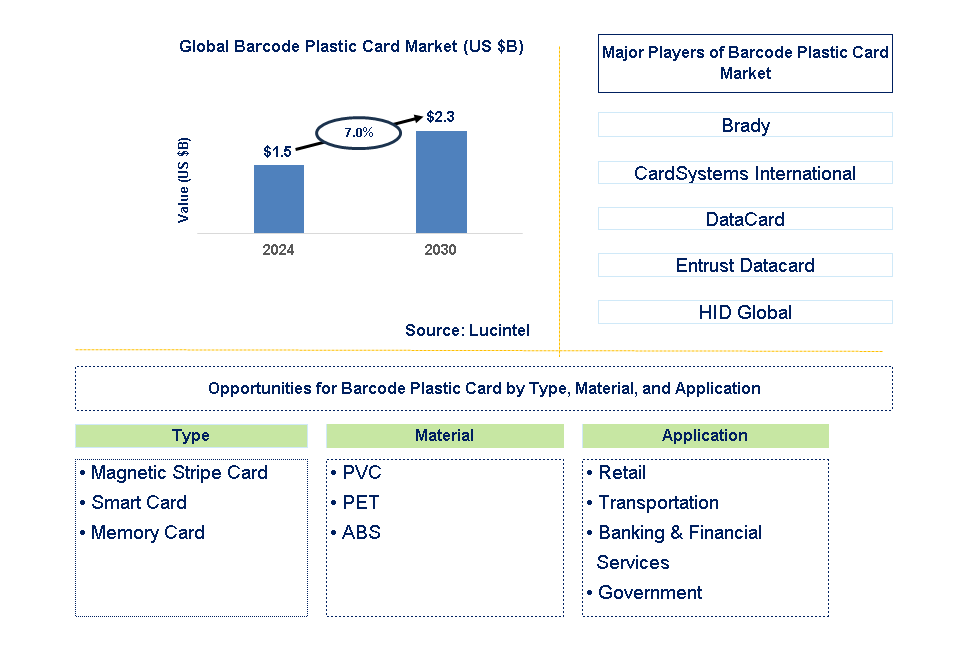
Key data points: The market size in 2030 = $2.3 billion, growth forecast = 7.0% annually for the next 6 years. Scroll below to get more insights. This market report covers trends, opportunities, and forecasts in the global barcode plastic card market to 2030 by type (magnetic stripe card, smart card, and memory card), material (PVC, PET, and ABS), application (retail, transportation, banking & financial services, and government), and region (North America, Europe, Asia Pacific, and the Rest of the World)
We'll send your sample report shortly.
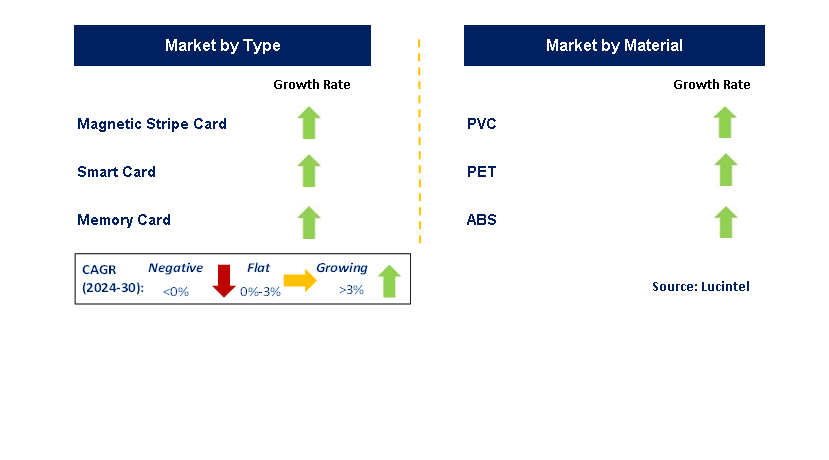
• Lucintel forecasts that, within the type category, smart card is expected to witness highest growth over the forecast period due to more secure and versatile and used as payment cards, access control cards, and others.
• Within the material category, PVC will remain the largest segment due to its versatility and durability material that is well-suited for a variety of applications, including barcode plastic cards.
• In terms of regions, APAC is expected to witness highest growth over the forecast period due to the increasing demand for plastic cards in various industries, such as retail, banking, and healthcare. Gain valuable insights for your business decisions with our comprehensive 150+ page report.
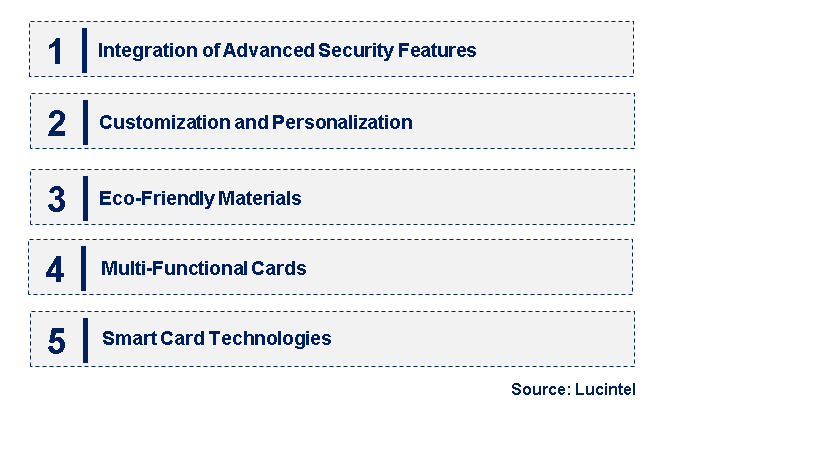
• Integration of advanced security features: The integration of advanced security features, such as holograms, encrypted barcodes, and RFID technology, is becoming prevalent. These features enhance the protection of sensitive information and prevent counterfeiting, addressing increasing concerns about security and fraud. Manufacturers are focusing on incorporating these technologies to offer higher levels of security and reliability.
• Customization and personalization: Customization and personalization of barcode plastic cards are gaining popularity. Consumers and businesses are seeking cards with unique designs, colors, and branding elements. This trend allows for greater brand identity and user engagement, as well as differentiates products in a competitive market. Advances in printing and design technologies facilitate these personalized options.
• Eco-friendly materials: The use of eco-friendly materials in barcode plastic card production is becoming a significant trend. With growing environmental awareness, manufacturers are exploring sustainable alternatives to traditional plastics, such as biodegradable materials and recycled plastics. This shift aligns with global sustainability goals and meets consumer demand for environmentally responsible products.
• Multi-functional cards: Multi-functional barcode plastic cards are emerging, integrating various applications such as payment, access control, and loyalty programs. This trend reflects the increasing demand for convenience and versatility. By combining multiple functions into a single card, businesses can offer enhanced services and streamline operations for consumers.
• Smart card technologies: The adoption of smart card technologies, including NFC and biometric authentication, is on the rise. These technologies provide enhanced functionality and security, offering features such as contactless transactions and secure access. The integration of smart card capabilities addresses the growing need for advanced solutions in various sectors, including finance and healthcare. Emerging trends such as advanced security features, customization, eco-friendly materials, multi-functional cards, and smart technologies are reshaping the barcode plastic card market. These trends reflect technological advancements and evolving consumer needs, driving innovation and growth within the industry.
• Advanced security features: The introduction of advanced security features, such as holograms and encrypted barcodes, addresses the growing concerns about counterfeiting and fraud. These features provide enhanced protection for sensitive information, making barcode plastic cards more secure and reliable for various applications.
• Customization options: Customization options have expanded, allowing consumers and businesses to personalize barcode plastic cards with unique designs, colors, and branding elements. This development caters to the demand for personalized products and enhances brand identity, contributing to market growth and differentiation.
• Eco-friendly materials: The shift towards eco-friendly materials, such as biodegradable plastics and recycled materials, reflects the growing emphasis on sustainability. Manufacturers are adopting these materials to reduce environmental impact and align with global sustainability goals, meeting consumer preferences for environmentally responsible products.
• Multi-functional capabilities: The integration of multi-functional capabilities into barcode plastic cards, including payment, access control, and loyalty features, is becoming more common. This development offers convenience and versatility, allowing businesses to streamline operations and provide enhanced services to consumers.
• Smart card technologies: The adoption of smart card technologies, such as NFC and biometric authentication, is driving innovation in the barcode plastic card market. These technologies enhance functionality and security, addressing the need for advanced solutions in various sectors, including finance, healthcare, and retail. Recent developments, including advanced security features, customization options, eco-friendly materials, multi-functional capabilities, and smart card technologies, are shaping the barcode plastic card market. These advancements are driving innovation and meeting evolving consumer and business needs, contributing to market growth.
• Expansion in emerging markets: Expanding into emerging markets presents significant growth opportunities due to increasing adoption of barcode plastic cards in sectors like retail and healthcare. Companies can target regions with growing economies and rising disposable incomes by offering affordable and customizable solutions tailored to local needs.
• Development of eco-friendly products: Developing eco-friendly barcode plastic cards using sustainable materials aligns with growing environmental awareness. Manufacturers can capture market share by offering biodegradable and recycled options, addressing consumer demand for environmentally responsible products and meeting regulatory requirements.
• Integration of multi-functional capabilities: Integrating multi-functional capabilities into barcode plastic cards, such as payment and access control features, offers growth potential. By providing versatile solutions that streamline various applications, companies can enhance product appeal and attract a broader customer base.
• Adoption of smart technologies: Adopting smart technologies, including NFC and biometric authentication, presents growth opportunities by addressing the need for advanced security and functionality. Manufacturers can develop innovative products that offer enhanced features and convenience, catering to tech-savvy consumers and businesses.
• Customization and personalization: Offering advanced customization and personalization options for barcode plastic cards provides a competitive edge. Businesses can attract customers seeking unique designs and branding elements, driving demand and differentiating their products in a crowded market. Strategic growth opportunities in the barcode plastic card market include expansion in emerging markets, development of eco-friendly products, integration of multi-functional capabilities, adoption of smart technologies, and offering customization options. Leveraging these opportunities can drive market growth and enhance product offerings, meeting evolving consumer and business needs.
• Technological advancements: Technological advancements, such as improved printing technologies and smart card integration, drive growth in the barcode plastic card market. Innovations enhance card functionality, security, and customization, meeting the evolving demands of consumers and businesses.
• Increasing demand for secure identification: The increasing demand for secure identification solutions is a key driver. Barcode plastic cards with advanced security features, such as encrypted barcodes and RFID technology, address concerns about fraud and unauthorized access, supporting market growth.
• Growth in end-use applications: The growth of end-use applications, including retail, healthcare, and access control, drives demand for barcode plastic cards. As these sectors expand, the need for efficient and versatile identification solutions increases, fueling market expansion.
• Rising disposable incomes: Rising disposable incomes, particularly in emerging markets, contribute to the growth of the barcode plastic card market. With increased purchasing power, consumers and businesses are more willing to invest in high-quality, customizable products.
• Expansion of e-commerce: The expansion of e-commerce platforms facilitates the distribution of barcode plastic cards. Online shopping provides easy access to a wide range of products, driving sales and market growth by increasing consumer reach and convenience. Challenges in the barcode plastic card market include:
• Intense competition: Intense competition among manufacturers can impact profitability and market share. Companies must continuously innovate and differentiate their products to maintain a competitive edge and address pricing pressures.
• Price sensitivity: Price sensitivity, particularly in markets that are price-sensitive, can limit sales of higher-priced barcode plastic cards. Manufacturers must balance cost and quality to appeal to a broad range of consumers while maintaining profitability.
• Rapid technological changes: Rapid technological changes can pose challenges for manufacturers in keeping up with the latest trends and incorporating new technologies into products. Continuous investment in research and development is required to stay competitive and meet evolving consumer expectations. Drivers such as technological advancements, increasing demand for secure identification, growth in end-use applications, rising disposable incomes, and e-commerce expansion are shaping the barcode plastic card market. Challenges including intense competition, price sensitivity, and rapid technological changes must be addressed to sustain market growth and innovation.
• Brady
• CardSystems International
• DataCard
• Entrust Datacard
• HID Global
• Magnetic Stripe Card
• Smart Card
• Memory Card
• PVC
• PET
• ABS
• Retail
• Transportation
• Banking & Financial Services
• Government
• North America
• Europe
• Asia Pacific
• The Rest of the World
• United States: In the United States, recent developments in the barcode plastic card market include the adoption of high-security features, such as holograms and encrypted barcodes, to combat counterfeiting. The trend towards personalization has led to advanced customization options, including color printing and bespoke designs. Additionally, there is a growing shift towards eco-friendly materials, with manufacturers exploring sustainable alternatives to traditional plastics.
• China: China has seen rapid growth in the barcode plastic card market, driven by the increasing demand for efficient and secure identification solutions. Recent advancements include the implementation of advanced printing technologies that offer higher resolution and durability. The market is also experiencing a rise in the use of QR codes and multi-functional cards that integrate various applications, such as payment and access control, reflecting the country’s emphasis on technological innovation.
• Germany: In Germany, the barcode plastic card market is focusing on integrating high-tech features, such as RFID and NFC technology, to enhance functionality and security. Recent developments include the introduction of biometric authentication options and smart cards that support multiple applications. The German market is also witnessing a push towards environmentally friendly card production processes, aligning with broader sustainability goals.
• India: India's barcode plastic card market is expanding due to increasing applications in sectors like retail, healthcare, and government services. Recent developments include the adoption of cost-effective printing technologies that maintain quality while reducing production expenses. There is also a growing interest in cards with embedded security features to prevent fraud and unauthorized access, reflecting the country’s emphasis on enhancing security.
• Japan: In Japan, recent developments in the barcode plastic card market focus on integrating advanced technologies, such as digital ink and smart card capabilities. The market is seeing innovations in card design, including thin, flexible cards that offer enhanced user convenience. Additionally, there is a trend towards incorporating data storage and processing capabilities into barcode cards, catering to the country’s tech-savvy consumer base.


• Brady
• CardSystems International
• DataCard
• Entrust Datacard
• HID Global Q6. Which barcode plastic card market segment will be the largest in future? Answer: Lucintel forecasts that smart card is expected to witness highest growth over the forecast period due to more secure and versatile and used as payment cards, access control cards, and others. Q7. In barcode plastic card market, which region is expected to be the largest in next 5 years? Answer: APAC is expected to witness highest growth over the forecast period due to the increasing demand for plastic cards in various industries, such as retail, banking, and healthcare. Q.8 Do we receive customization in this report? Answer: Yes, Lucintel provides 10% customization without any additional cost.


Choose a license that fits your team. Instant PDF delivery.
Prices exclude taxes. Instant delivery. Custom licensing available on request.
Market Report · July 31, 2026
Market Report · July 31, 2026
Market Report · July 31, 2026
Trusted partner for strategic intelligence and business growth


Receive a complimentary market analysis tailored to your industry. Our analysts will identify key growth opportunities and competitive dynamics specific to your business.

Market size, growth rate, and key trend analysis for your specific sector.

Top competitor positioning and market share analysis.

Strategic recommendations backed by data-driven insights.
Get curated market intelligence and competitive moves straight to your inbox.
By subscribing, you agree to receive our monthly insights. Unsubscribe anytime.
Receive a complimentary market analysis tailored to your industry. Our analysts will identify key growth opportunities and competitive dynamics specific to your business.
Market size, growth rate, and key trend analysis for your specific sector.
Top competitor positioning and market share analysis.
Strategic recommendations backed by data-driven insights.
Get curated market intelligence, emerging trends, and competitive moves straight to your inbox each month.
By subscribing, you agree to receive our monthly insights. Unsubscribe anytime.
We'll send your sample report shortly.