
Market Report · July 31, 2026

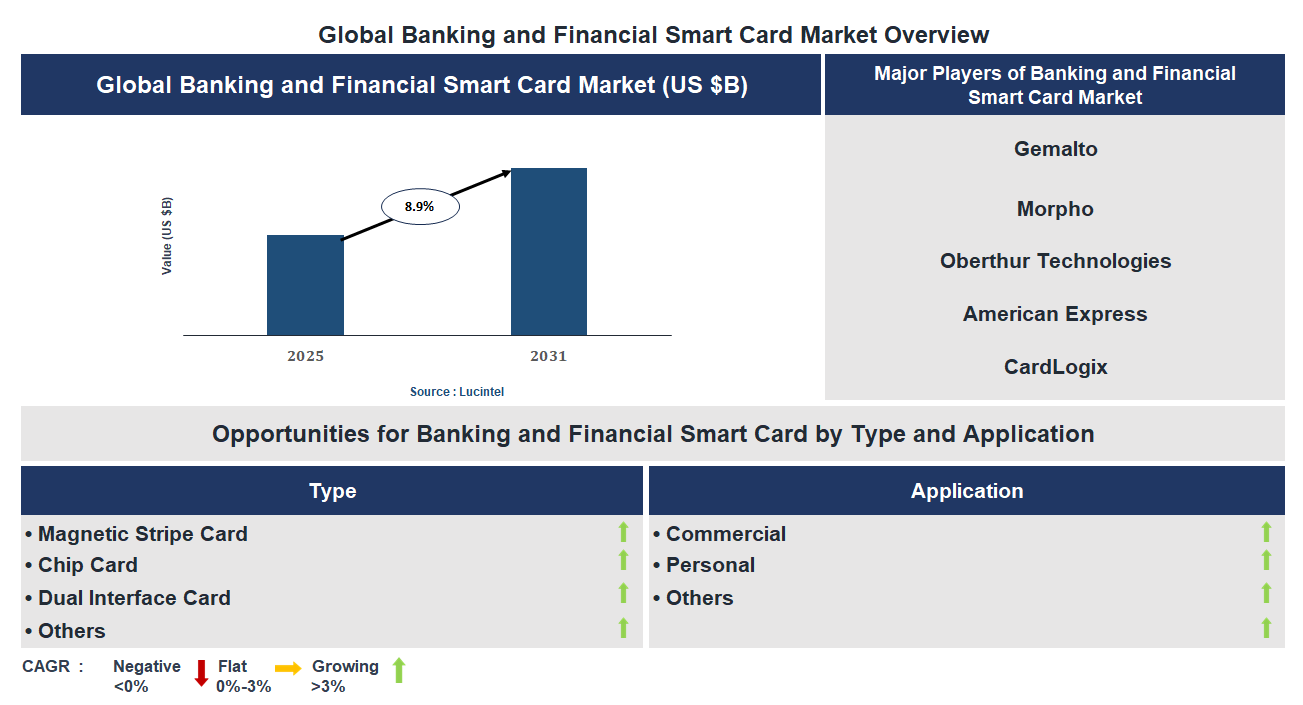
Key data points: The growth forecast = 8.9% annually for the next 7 years. Scroll below to get more insights. This market report covers trends, opportunities and forecasts in banking and financial smart card market to 2031 by type (magnetic stripe card, chip card, dual interface card, and others), application (commercial, personal, and others), and region (North America, Europe, Asia Pacific, and the Rest of the World)
We'll send your sample report shortly.
• Lucintel forecasts that, within the type category, dual interface card is expected to witness the highest growth over the forecast period.
• Within the application category, personal is expected to witness higher growth.
• In terms of region, APAC is expected to witness the highest growth over the forecast period. Gain valuable insights for your business decisions with our comprehensive 150+ page report. Sample figures with some insights are shown below.
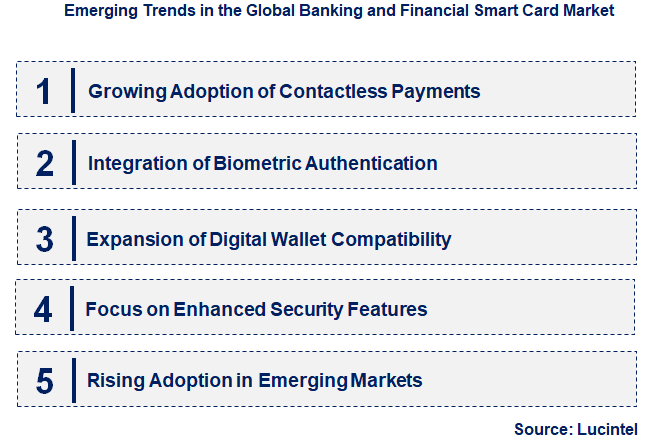
• Growing Adoption of Contactless Payments: The shift towards contactless smart cards is driven by consumer demand for faster, hygienic, and convenient payment options. Contactless technology allows transactions to be completed quickly without physical contact, which is especially relevant in the post-pandemic era. This trend is supported by advancements in NFC (Near Field Communication) technology, enabling seamless integration with smartphones and wearable devices. Financial institutions are increasingly issuing contactless smart cards to meet customer expectations, leading to higher transaction volumes and broader acceptance across retail, transit, and hospitality sectors. This trend enhances user experience and operational efficiency.
• Integration of Biometric Authentication: Biometric features such as fingerprint, facial recognition, and iris scans are being integrated into smart cards to enhance security and reduce fraud. This trend addresses rising concerns over card skimming, cloning, and identity theft. Biometric-enabled smart cards provide a higher level of security by ensuring that only authorized users can access funds or perform transactions. Financial institutions adopting biometric technology benefit from reduced fraud-related costs and increased customer trust. This integration also supports regulatory compliance and helps in creating a more secure transaction environment, fostering greater confidence in digital payments.
• Expansion of Digital Wallet Compatibility: Smart cards are increasingly being integrated with digital wallets and mobile payment platforms, enabling users to make transactions via smartphones and wearable devices. This trend offers consumers a unified, flexible payment experience, combining the security of smart cards with the convenience of mobile technology. Financial service providers are partnering with tech companies to develop interoperable solutions, expanding the reach of smart card technology beyond traditional POS terminals. This integration accelerates cashless transactions, enhances user engagement, and opens new revenue streams for banks and card issuers, ultimately transforming the payment ecosystem.
• Focus on Enhanced Security Features: As cyber threats evolve, the market is witnessing a surge in smart cards equipped with advanced security features such as EMV chip technology, dynamic data authentication, and encryption. These features significantly reduce the risk of fraud and unauthorized access. Financial institutions are prioritizing security to protect sensitive customer data and comply with stringent regulations. The deployment of multi-layered security measures boosts consumer confidence and encourages wider adoption of smart card-based payments. This trend underscores the importance of innovation in security protocols to sustain growth and trust in the market.
• Rising Adoption in Emerging Markets: Developing regions are increasingly adopting smart card technology due to government initiatives, expanding banking infrastructure, and rising smartphone penetration. These markets present significant growth opportunities as they transition from cash-based economies to digital payment systems. Smart cards facilitate financial inclusion by providing unbanked populations with secure and accessible payment options. Local governments and financial institutions are investing in smart card programs for identity verification, social benefits distribution, and microfinance. This trend is expanding the market footprint and driving global growth, making smart cards a vital component of financial inclusion strategies worldwide. In summary, these trends are collectively reshaping the banking and financial smart card market by enhancing security, convenience, and accessibility. The integration of contactless and biometric technologies, along with increased compatibility with digital wallets, is creating a more seamless and secure payment environment. The focus on security features and expansion into emerging markets are further fueling growth and innovation. As these developments continue, the market is poised for significant transformation, driven by technological innovation and evolving consumer needs, ultimately leading to a more inclusive, secure, and efficient financial ecosystem.
• Adoption of Contactless Payment Technology: The integration of contactless payment features in smart cards has accelerated, enabling faster and more convenient transactions. This development enhances user experience and reduces transaction times, especially in retail and transit sectors. It also supports the shift towards cashless economies, boosting market growth and expanding the user base.
• Biometric Authentication Integration: Incorporating biometric features such as fingerprint and facial recognition into smart cards has improved security levels. This advancement reduces fraud and unauthorized access, increasing consumer trust. Financial institutions are increasingly adopting biometric-enabled smart cards to meet regulatory standards and enhance transaction security.
• Rise of Multi-Application Smart Cards: The development of multi-application cards that support various banking, identification, and access functions has expanded their utility. These cards streamline multiple processes into a single device, reducing the need for multiple cards. This trend is particularly impactful in government and corporate sectors, driving demand and market expansion.
• Regulatory and Standardization Initiatives: Governments and industry bodies are establishing standards and regulations to ensure interoperability, security, and privacy. These initiatives foster market confidence and facilitate cross-border transactions. They also encourage innovation by providing clear guidelines, thereby accelerating adoption of smart card solutions globally.
• Growth in Emerging Markets: Increasing smartphone penetration and digital infrastructure development in emerging economies have driven smart card adoption. Financial inclusion initiatives and government programs are promoting smart card issuance for banking and identification purposes. This growth significantly expands the market scope and presents new opportunities for vendors. In summary, these developments are collectively transforming the banking and financial smart card market by enhancing security, convenience, and interoperability. They are driving increased adoption across various sectors and regions, fostering innovation, and supporting the transition towards a more digital and cashless financial ecosystem.
• Contactless Payments: The adoption of contactless smart cards is revolutionizing retail banking by enabling quick, secure transactions. This reduces transaction time, enhances customer experience, and supports social distancing measures, especially during health crises. The convenience and speed of contactless payments are driving widespread acceptance among consumers and merchants, significantly boosting market growth.
• Biometric Integration: Incorporating biometric authentication into smart cards enhances security and reduces fraud. This application is particularly impactful in government and corporate banking, where high-value transactions require robust security measures. Biometric-enabled smart cards improve user trust and compliance with regulatory standards, fostering broader adoption across financial institutions.
• Multi-Application Smart Cards: These cards support multiple functions such as banking, transportation, and identification, offering a unified solution for users. This integration simplifies user experience, reduces the need for multiple cards, and lowers operational costs for institutions. The versatility of multi-application cards is expanding their use across various sectors, driving market expansion.
• Digital Wallet Compatibility: Smart cards integrated with digital wallets facilitate seamless mobile payments and online banking. This synergy enhances user convenience, promotes cashless transactions, and aligns with the growing trend of mobile banking. Compatibility with digital wallets is expanding the reach of smart card technology into everyday financial activities.
• Government and ID Programs: Governments are increasingly deploying smart cards for identity verification, social benefits, and secure access. These applications improve security, reduce fraud, and streamline administrative processes. The deployment of government-issued smart cards is significantly contributing to market growth, especially in emerging economies. In summary, these key growth opportunities are transforming the banking and financial smart card market by enhancing security, convenience, and multifunctionality. They are driving increased adoption across diverse applications, fostering innovation, and expanding market reach. As these opportunities mature, they will continue to shape the future of secure, efficient financial transactions worldwide.
• Technological Innovation: The integration of advanced technologies like EMV chip technology, contactless payment, and biometric authentication enhances security and convenience. These innovations reduce fraud risks and streamline transaction processes, making smart cards more attractive to consumers and financial institutions. As technology continues to evolve, smart cards are becoming more versatile, supporting multiple functions such as identification, access control, and loyalty programs, thereby expanding their market applications.
• Growing Demand for Secure Payment Solutions: Increasing concerns over cyber fraud and data breaches are prompting consumers and banks to adopt more secure payment methods. Smart cards offer enhanced security features like encryption and authentication, which are critical in preventing fraud. The rising adoption of contactless and chip-enabled cards further supports this demand, especially in regions with high transaction volumes, fostering trust and encouraging digital payment adoption.
• Regulatory Support and Standards: Governments and regulatory bodies worldwide are implementing standards such as EMV compliance and PSD2 directives to promote secure and interoperable payment systems. These regulations encourage banks to upgrade their card infrastructure, ensuring compliance and fostering market growth. Regulatory support also facilitates cross-border transactions and enhances consumer confidence, thereby expanding the market reach.
• Increasing Financial Inclusion: Efforts to bring unbanked and underbanked populations into the formal financial system are driving the adoption of smart cards. Governments and financial institutions are deploying smart card-based solutions to provide affordable and accessible banking services, especially in developing regions. This trend not only expands the customer base but also stimulates market growth by promoting digital financial services. The challenges in the banking and financial smart card market are:
• Data Security and Privacy Concerns: Despite advanced security features, smart cards are still vulnerable to hacking, cloning, and skimming attacks. Concerns over data breaches and privacy violations can hinder consumer trust and slow adoption rates. Banks and card providers must invest heavily in security infrastructure and compliance measures, which can increase costs and complicate deployment.
• High Implementation and Maintenance Costs: Upgrading existing payment infrastructure to support smart card technology involves significant capital expenditure. Costs related to hardware, software, and staff training can be prohibitive, especially for smaller financial institutions. Ongoing maintenance and updates further add to the financial burden, potentially limiting market expansion in cost-sensitive regions.
• Regulatory and Standardization Challenges: Variations in regulatory frameworks across countries can create barriers to interoperability and cross-border acceptance of smart cards. Lack of unified standards may lead to compatibility issues, delays in deployment, and increased compliance costs. Navigating complex regulatory environments requires substantial effort and resources, which can impede market growth. In summary, the banking and financial smart card market is driven by technological advancements, security needs, regulatory support, and financial inclusion initiatives. However, challenges such as security concerns, high costs, and regulatory complexities pose significant hurdles. The overall market outlook depends on how effectively stakeholders address these challenges while leveraging technological innovations and regulatory frameworks. Successful navigation of these factors will determine the pace of growth and the extent of market penetration in the coming years.
• Gemalto
• Morpho
• Oberthur Technologies
• American Express
• CardLogix
• MasterCard
• Visa
• Magnetic Stripe Card
• Chip Card
• Dual Interface Card
• Others
• Commercial
• Personal
• Others
• North America
• Europe
• Asia Pacific
• The Rest of the World
• United States: The US market has seen rapid adoption of contactless and biometric smart cards, driven by major banks investing in secure payment solutions. Fintech companies are collaborating with traditional banks to develop innovative card technologies, including tokenization and mobile integration. Regulatory frameworks are evolving to enhance security standards, and there is a growing emphasis on digital wallets and NFC-enabled cards to facilitate seamless transactions. The US also witnesses increased deployment of smart cards in government and corporate sectors for secure access and identification.
• China: China is experiencing a surge in smart card adoption, especially in mobile payments and government services. The widespread use of QR codes and NFC technology in platforms like Alipay and WeChat Pay has accelerated the transition to contactless payments. The government promotes smart card solutions for identity verification, social security, and transportation. Domestic manufacturers are expanding their product portfolios, focusing on integrating biometric features and enhancing security protocols to cater to the large consumer base.
• Germany: The German market emphasizes security and privacy, with a focus on EMV chip technology and biometric authentication. Banks are upgrading existing cards to meet European Union regulations and enhance fraud prevention. There is a notable shift towards contactless payments and integration with mobile banking apps. The government supports initiatives for secure digital identity and e-government services, encouraging the adoption of smart cards for secure access to public services and financial transactions.
• India: India is witnessing rapid growth in smart card deployment, driven by government initiatives like Digital India and financial inclusion programs. The adoption of Aadhaar-based biometric smart cards is widespread for identity verification and subsidy distribution. Banks are increasingly adopting contactless and EMV chip cards to improve security and customer convenience. The expansion of mobile banking and digital wallets further complements smart card usage, with a focus on affordability and accessibility for the large unbanked population.
• Japan: Japans market is characterized by high technological integration and security standards. Banks are adopting contactless and biometric smart cards for enhanced security and convenience. The government promotes smart card solutions for transportation, healthcare, and government services. There is a focus on integrating smart cards with IoT devices and mobile platforms to streamline transactions and access control. The market also emphasizes data privacy and compliance with strict regulatory standards, fostering innovation in secure payment and identification systems.


• Gemalto
• Morpho
• Oberthur Technologies
• American Express
• CardLogix
• MasterCard
• Visa Q5. Which banking and financial smart card market segment will be the largest in future? Answer: Lucintel forecasts that, within the type category, dual interface card is expected to witness the highest growth over the forecast period. Q6. In banking and financial smart card market, which region is expected to be the largest in next 5 years? Answer: In terms of region, APAC is expected to witness the highest growth over the forecast period. Q7. Do we receive customization in this report? Answer: Yes, Lucintel provides 10% customization without any additional cost.


Choose a license that fits your team. Instant PDF delivery.
Prices exclude taxes. Instant delivery. Custom licensing available on request.
Market Report · July 31, 2026
Market Report · July 31, 2026
Market Report · July 31, 2026
Trusted partner for strategic intelligence and business growth


Receive a complimentary market analysis tailored to your industry. Our analysts will identify key growth opportunities and competitive dynamics specific to your business.

Market size, growth rate, and key trend analysis for your specific sector.

Top competitor positioning and market share analysis.

Strategic recommendations backed by data-driven insights.
Get curated market intelligence and competitive moves straight to your inbox.
By subscribing, you agree to receive our monthly insights. Unsubscribe anytime.
Receive a complimentary market analysis tailored to your industry. Our analysts will identify key growth opportunities and competitive dynamics specific to your business.
Market size, growth rate, and key trend analysis for your specific sector.
Top competitor positioning and market share analysis.
Strategic recommendations backed by data-driven insights.
Get curated market intelligence, emerging trends, and competitive moves straight to your inbox each month.
By subscribing, you agree to receive our monthly insights. Unsubscribe anytime.
We'll send your sample report shortly.