
Market Report · May 18, 2026

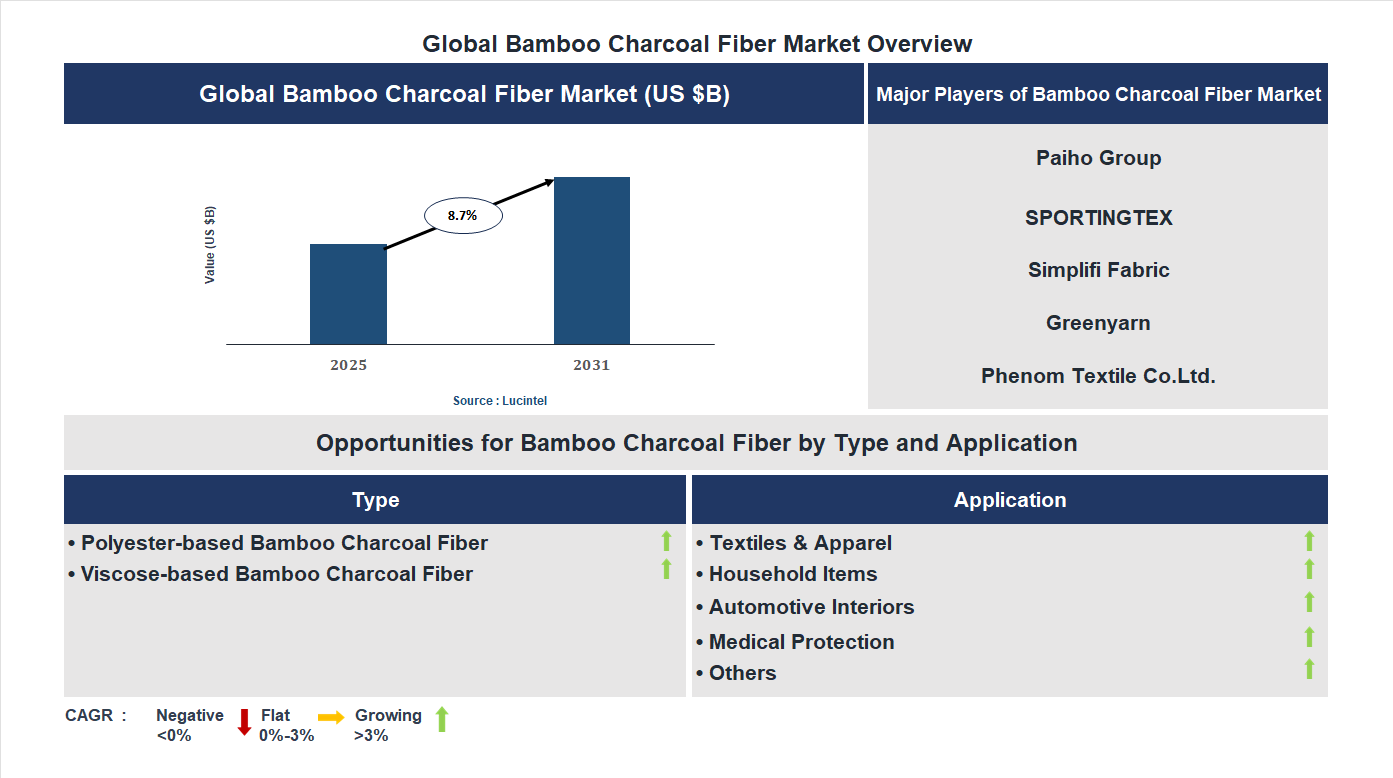
Key data points: The growth forecast = 8.7% annually for the next 7 years. Scroll below to get more insights. This market report covers trends, opportunities and forecasts in bamboo charcoal fiber market to 2031 by type (polyester-based bamboo charcoal fiber and viscose-based bamboo charcoal fiber), application (textiles & apparel, household items, automotive interiors, medical protection, and others), and region (North America, Europe, Asia Pacific, and the Rest of the World)
We'll send your sample report shortly.
• Lucintel forecasts that, within the type category, viscose-based bamboo charcoal fiber is expected to witness higher growth over the forecast period.
• Within the application category, textile & apparel is expected to witness the highest growth.
• In terms of region, APAC is expected to witness the highest growth over the forecast period. Gain valuable insights for your business decisions with our comprehensive 150+ page report. Sample figures with some insights are shown below.
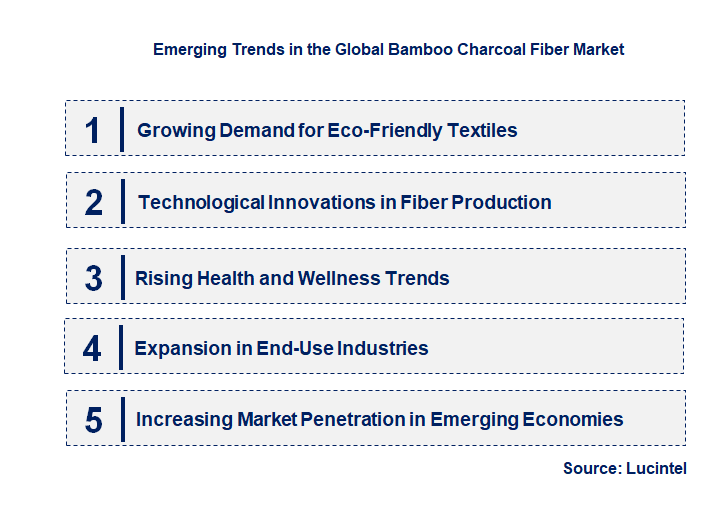
• Growing Demand for Eco-Friendly Textiles: The market is witnessing increased consumer preference for sustainable products, driven by environmental awareness and health consciousness. Bamboo charcoal fiber, being biodegradable and renewable, appeals to eco-conscious buyers. Manufacturers are emphasizing eco-friendly production processes, which enhances brand reputation and meets regulatory standards. This trend is encouraging the adoption of bamboo charcoal fiber in various applications, including clothing, home textiles, and personal care products, thereby expanding market reach and fostering sustainable growth.
• Technological Innovations in Fiber Production: Advances in manufacturing techniques are improving the quality, durability, and functionality of bamboo charcoal fibers. Innovations such as nanotechnology and eco-friendly processing methods are enhancing fiber properties like moisture absorption, odor control, and antibacterial features. These technological developments enable producers to create high-performance textiles that meet diverse consumer needs. As a result, the market is seeing increased product differentiation and the ability to cater to niche segments, boosting overall industry competitiveness.
• Rising Health and Wellness Trends: Consumers are increasingly seeking products that promote health and well-being, which benefits bamboo charcoal fiber due to its natural antibacterial and deodorizing properties. The fibers ability to regulate moisture and improve air quality makes it popular in activewear, sleepwear, and bedding. This health-centric focus is driving demand across various sectors, encouraging brands to incorporate bamboo charcoal fiber into their offerings. The trend aligns with a broader shift towards natural, functional textiles that support a healthier lifestyle.
• Expansion in End-Use Industries: The versatility of bamboo charcoal fiber is leading to its adoption across multiple sectors, including fashion, healthcare, and home furnishings. Its unique properties make it suitable for products requiring breathability, odor control, and antimicrobial features. The expansion into new industries is creating diverse revenue streams and reducing dependency on traditional markets. This diversification is vital for market resilience and growth, as companies explore innovative applications to meet evolving consumer demands.
• Increasing Market Penetration in Emerging Economies: Developing countries are witnessing rising adoption of bamboo charcoal fiber due to increasing disposable incomes and growing environmental awareness. Local manufacturers are investing in sustainable production methods to cater to domestic and export markets. Government initiatives promoting eco-friendly products further support this trend. Market penetration in these regions is expanding the global footprint of bamboo charcoal fiber, offering significant growth opportunities and fostering regional industry development. In summary, these trends are collectively transforming the bamboo charcoal fiber market by emphasizing sustainability, technological progress, health benefits, industry diversification, and geographic expansion. This evolution is not only enhancing product offerings but also reshaping consumer perceptions and industry standards, positioning bamboo charcoal fiber as a key player in the future of eco-friendly textiles.
• Expansion of Product Applications: The use of bamboo charcoal fiber has broadened beyond textiles to include health and wellness products, air purifiers, and skincare items. This diversification increases market reach and consumer interest, driving sales and encouraging innovation in product development.
• Technological Innovations in Manufacturing: Advances in fiber processing techniques have improved the quality, durability, and functionality of bamboo charcoal fibers. These innovations reduce production costs and enhance product performance, making bamboo charcoal fibers more competitive with synthetic alternatives.
• Rising Consumer Awareness and Demand: Growing awareness of environmental issues and health benefits associated with bamboo charcoal fiber has boosted consumer demand. This trend encourages brands to adopt sustainable practices and develop eco-friendly product lines, further expanding the market.
• Strategic Partnerships and Collaborations: Companies are forming alliances with research institutions and other industry players to develop new applications and improve fiber properties. These collaborations accelerate innovation and help establish bamboo charcoal fiber as a versatile, sustainable material.
• Regulatory Support and Sustainability Initiatives: Governments and organizations are promoting eco-friendly materials through policies and certifications. Such support incentivizes manufacturers to adopt bamboo charcoal fiber, fostering market growth and ensuring compliance with environmental standards. In summary, these developments are significantly impacting the bamboo charcoal fiber market by enhancing product diversity, improving manufacturing processes, increasing consumer demand, fostering innovation through collaborations, and benefiting from supportive regulatory frameworks. Collectively, they are positioning bamboo charcoal fiber as a leading sustainable material in various industries, promising continued growth and innovation.
• Textiles: Expanding eco-friendly apparel : The increasing consumer preference for sustainable clothing is driving demand for bamboo charcoal fiber in textiles. Its natural antibacterial and moisture-wicking properties make it ideal for activewear, casual wear, and bedding, promoting health and comfort. This growth enhances brand differentiation and meets eco-conscious consumer expectations.
• Personal Care: Natural skincare and hygiene products : Bamboo charcoal fibers detoxifying and deodorizing qualities are being integrated into personal care items such as masks, wipes, and underwear. This application appeals to consumers seeking natural, chemical-free solutions, boosting product innovation and expanding market reach.
• Home Furnishings: Eco-friendly interior solutions : The use of bamboo charcoal fiber in home textiles like curtains, upholstery, and mattress covers offers sustainable alternatives to synthetic materials. Its odor control and moisture regulation improve indoor air quality, attracting environmentally conscious homeowners and interior designers.
• Industrial Applications: Air and water filtration systems : The fibers porous structure makes it suitable for filtration purposes in industrial settings. Its ability to remove impurities and odors enhances the efficiency of air and water purification systems, opening new revenue streams for manufacturers.
• Healthcare: Medical textiles and hygiene products : Bamboo charcoal fibers antibacterial and moisture-wicking properties are ideal for medical applications such as wound dressings, surgical masks, and hygiene products. This growth opportunity supports the development of safer, more sustainable healthcare solutions. In summary, these growth opportunities are significantly impacting the bamboo charcoal fiber market by expanding its application scope, driving innovation, and meeting the rising demand for sustainable and health-conscious products. As industries increasingly prioritize eco-friendly materials, the market is poised for substantial expansion and diversification.
• Technological Advancements: The development of innovative manufacturing processes has improved fiber quality and production efficiency. These advancements enable producers to meet increasing demand for sustainable textiles, expanding market reach. Enhanced fiber properties, such as durability and breathability, attract a broader consumer base. Continuous R&D efforts are also leading to new applications, further fueling growth. As technology evolves, costs are expected to decrease, making bamboo charcoal fiber more accessible and competitive against traditional fibers.
• Growing Eco-conscious Consumer Demand: Consumers are increasingly prioritizing sustainable and eco-friendly products, driving demand for bamboo charcoal fiber. Its natural origin, biodegradability, and health benefits appeal to environmentally conscious buyers. This shift in consumer preferences encourages brands to incorporate bamboo charcoal fiber into their product lines, boosting market growth. Additionally, awareness campaigns and certifications reinforce consumer confidence, fostering loyalty and expanding market penetration.
• Regulatory Support and Government Initiatives: Governments worldwide are promoting sustainable practices through policies, subsidies, and standards that favor eco-friendly materials. Regulations aimed at reducing plastic waste and promoting renewable resources create a conducive environment for bamboo charcoal fiber adoption. Supportive initiatives, such as grants for green manufacturing and eco-labeling standards, incentivize producers to invest in sustainable fiber production, thereby accelerating market expansion.
• Increasing Applications in Textiles and Non-woven Products: The versatility of bamboo charcoal fiber in textiles, home furnishings, and non-woven products is a significant growth driver. Its antimicrobial, deodorizing, and moisture-wicking properties make it suitable for various end-use industries. As demand for health and wellness products rises, manufacturers are integrating bamboo charcoal fiber into clothing, bedding, and medical textiles, broadening its application scope and boosting market size. The challenges in the bamboo charcoal fiber market are:
• High Production Costs: The manufacturing process of bamboo charcoal fiber involves complex steps, including bamboo cultivation, charcoal production, and fiber processing, which are cost-intensive. Limited economies of scale and the need for specialized equipment further increase costs. These high expenses can hinder price competitiveness and limit adoption among price-sensitive consumers and manufacturers, constraining market growth.
• Regulatory and Certification Barriers: Despite supportive policies, navigating regulatory frameworks and obtaining necessary certifications can be challenging. Variations in standards across regions, lengthy approval processes, and compliance costs pose hurdles for producers. These barriers can delay product launches and increase operational expenses, impacting overall market development.
• Market Competition and Substitute Products: The bamboo charcoal fiber market faces stiff competition from other sustainable fibers like hemp, jute, and recycled polyester. Additionally, traditional synthetic fibers remain dominant due to established supply chains and lower costs. This competitive landscape pressures prices and innovation, making it difficult for bamboo charcoal fiber to gain significant market share without continuous differentiation and cost reduction strategies. In summary, the bamboo charcoal fiber market is driven by technological innovations, rising eco-conscious consumer preferences, supportive regulatory frameworks, and expanding application areas. However, high production costs, regulatory complexities, and intense competition present notable challenges. These factors collectively influence market dynamics, requiring stakeholders to focus on cost efficiencies, regulatory compliance, and product differentiation. Overall, the markets growth potential remains promising, provided these drivers are leveraged effectively and challenges managed strategically.
• Paiho Group
• SPORTINGTEX
• Simplifi Fabric
• Greenyarn
• Phenom Textile Co.Ltd.
• W.ELL Fabric
• GOOD TIME
• Ecogarments
• Pt. Karya Gemilang Putera
• Patagonia
• Polyester-based Bamboo Charcoal Fiber
• Viscose-based Bamboo Charcoal Fiber
• Textiles & Apparel
• Household Items
• Automotive Interiors
• Medical Protection
• Others
• North America
• Europe
• Asia Pacific
• The Rest of the World
• United States: The US market has seen a surge in demand for eco-friendly textiles, with major brands incorporating bamboo charcoal fiber into their product lines. Innovations in manufacturing processes have improved fiber quality and affordability. Regulatory support for sustainable products and increased consumer awareness have driven market growth. Additionally, collaborations between research institutions and companies are advancing new applications, such as health and wellness products. The US also emphasizes eco-labeling and certification, boosting consumer confidence and market credibility.
• China: As the largest producer and consumer of bamboo charcoal fiber, China has expanded its manufacturing capacity significantly. The government promotes bamboo-based industries through subsidies and policies aimed at sustainable development. Chinese companies are investing in R&D to enhance fiber properties and diversify applications, including in textiles, air purification, and skincare. Domestic demand is rising due to increasing health consciousness and environmental concerns. Export markets are also expanding, with China becoming a key player in the global bamboo charcoal fiber trade.
• Germany: Germany’s market focuses on high-quality, sustainable textiles, with a strong emphasis on eco-certifications and organic standards. The country’s advanced textile industry adopts innovative processing techniques to improve fiber performance. Consumer preferences for natural and chemical-free products support market growth. German companies are also involved in research collaborations to develop multifunctional bamboo charcoal fibers, such as antimicrobial and moisture-wicking variants. The emphasis on sustainability and technological innovation positions Germany as a leader in premium bamboo charcoal fiber products.
• India: India is witnessing rapid growth in bamboo cultivation and processing, driven by government initiatives promoting bamboo as a sustainable resource. The domestic market for bamboo charcoal fiber is expanding, especially in health, wellness, and home decor sectors. Small and medium enterprises are adopting traditional and modern techniques to produce affordable bamboo charcoal textiles. The focus on rural employment and sustainable development aligns with national policies. Export opportunities are emerging as quality standards improve, and awareness of eco-friendly products increases among Indian consumers.
• Japan: Japan’s market emphasizes technological innovation and eco-consciousness, with a focus on integrating bamboo charcoal fiber into functional textiles. Japanese companies are developing advanced fibers with enhanced durability, antibacterial properties, and moisture control. The country’s strong environmental policies and consumer preference for sustainable products support market growth. Research institutions collaborate with industry players to explore new applications, including medical textiles and high-performance sportswear. Japan’s reputation for quality and innovation positions it as a key player in the premium segment of the bamboo charcoal fiber market.


• Paiho Group
• SPORTINGTEX
• Simplifi Fabric
• Greenyarn
• Phenom Textile Co.Ltd.
• W.ELL Fabric
• GOOD TIME
• Ecogarments
• Pt. Karya Gemilang Putera
• Patagonia Q5. Which bamboo charcoal fiber market segment will be the largest in future? Answer: Lucintel forecasts that, within the type category, viscose-based bamboo charcoal fiber is expected to witness higher growth over the forecast period. Q6. In bamboo charcoal fiber market, which region is expected to be the largest in next 5 years? Answer: In terms of region, APAC is expected to witness the highest growth over the forecast period. Q7. Do we receive customization in this report? Answer: Yes, Lucintel provides 10% customization without any additional cost.


Choose a license that fits your team. Instant PDF delivery.
Prices exclude taxes. Instant delivery. Custom licensing available on request.
Market Report · May 18, 2026
Market Report · May 18, 2026
Market Report · May 18, 2026
Trusted partner for strategic intelligence and business growth


Receive a complimentary market analysis tailored to your industry. Our analysts will identify key growth opportunities and competitive dynamics specific to your business.

Market size, growth rate, and key trend analysis for your specific sector.

Top competitor positioning and market share analysis.

Strategic recommendations backed by data-driven insights.
Get curated market intelligence and competitive moves straight to your inbox.
By subscribing, you agree to receive our monthly insights. Unsubscribe anytime.
Receive a complimentary market analysis tailored to your industry. Our analysts will identify key growth opportunities and competitive dynamics specific to your business.
Market size, growth rate, and key trend analysis for your specific sector.
Top competitor positioning and market share analysis.
Strategic recommendations backed by data-driven insights.
Get curated market intelligence, emerging trends, and competitive moves straight to your inbox each month.
By subscribing, you agree to receive our monthly insights. Unsubscribe anytime.
We'll send your sample report shortly.