
Market Report · July 22, 2026

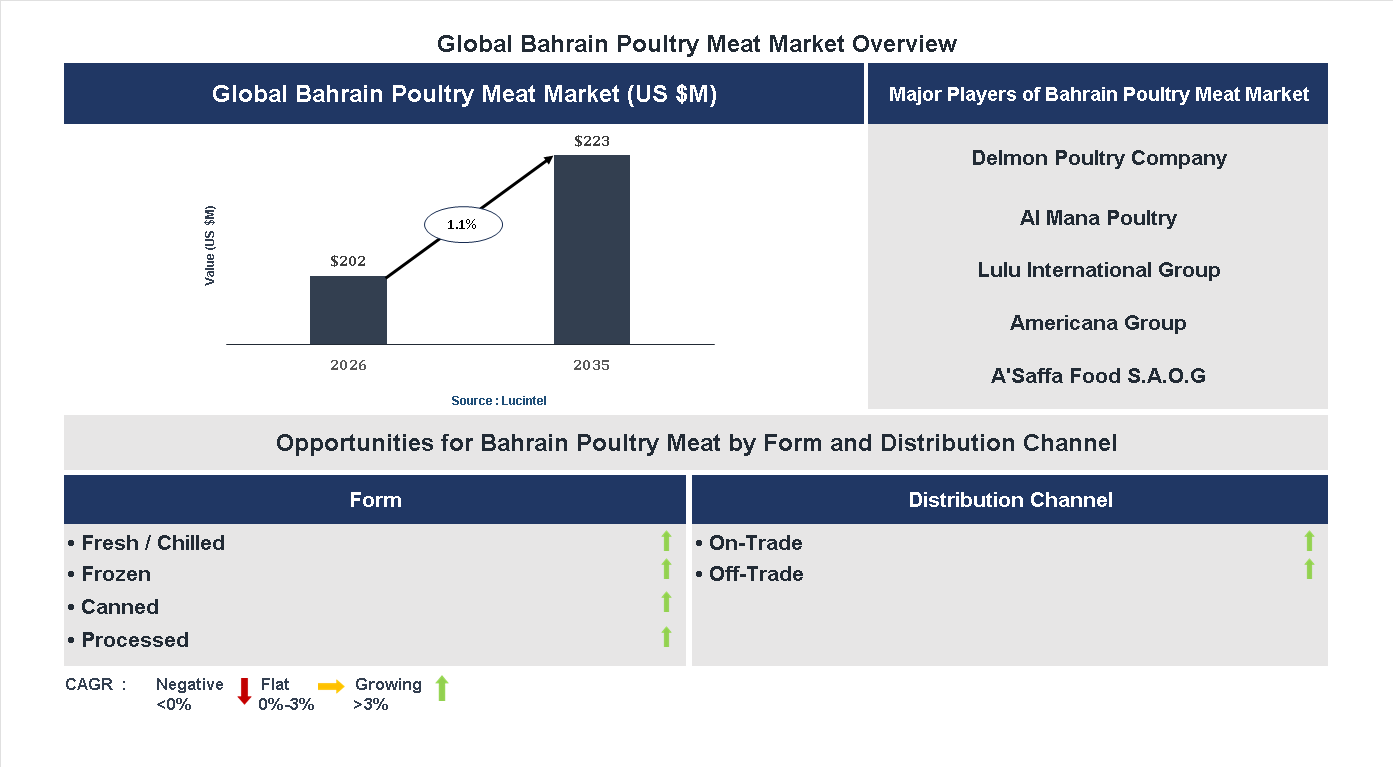
Key data points: The market size in 2035 = $223 million, growth forecast = 1.1% annually for the next 8 years. Scroll below to get more insights. This market report covers trends, opportunities and forecasts in bahrain poultry meat market to 2035 by form (fresh / chilled, frozen, canned, and processed), distribution channel (on-trade and off-trade), and region (North America, Europe, Asia Pacific, and the Rest of the World)
We'll send your sample report shortly.
• Lucintel forecasts that, within the form category, fresh / chilled is expected to witness the highest growth over the forecast period.
• Within the distribution channel category, on-trade is expected to witness higher growth.
• In terms of region, APAC is expected to witness the highest growth over the forecast period. Gain valuable insights for your business decisions with our comprehensive 150+ page report. Sample figures with some insights are shown below.
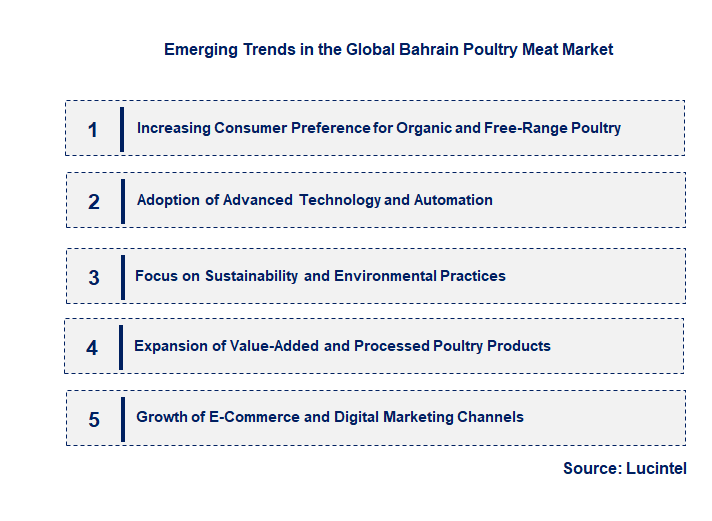
• Increasing Consumer Preference for Organic and Free-Range Poultry: Growing health consciousness among Bahrains consumers is driving demand for organic, free-range, and ethically sourced poultry products. This trend influences retail and foodservice sectors to offer premium options, encouraging producers to adopt sustainable farming practices. The shift enhances product differentiation and allows brands to target health-conscious segments, ultimately expanding market size and encouraging industry innovation.
• Adoption of Advanced Technology and Automation: The integration of automation in poultry farming, processing, and packaging is improving efficiency and product quality. Technologies such as AI-driven monitoring systems, automated feeders, and robotic processing lines reduce labor costs and enhance biosecurity. This trend ensures consistent product standards, reduces waste, and meets increasing demand for safe, high-quality poultry, thereby boosting overall industry productivity and competitiveness.
• Focus on Sustainability and Environmental Practices: Sustainability initiatives are gaining prominence, with companies adopting eco-friendly practices like waste management, water conservation, and renewable energy use. These efforts respond to consumer expectations and regulatory pressures, positioning brands as responsible market leaders. Sustainable practices also reduce operational costs and environmental impact, fostering long-term industry resilience and aligning with global sustainability goals.
• Expansion of Value-Added and Processed Poultry Products: There is a rising demand for processed, ready-to-cook, and value-added poultry products such as marinated cuts, nuggets, and sausages. This trend caters to busy consumers seeking convenience and variety. Manufacturers are innovating with flavors, packaging, and product formats to attract diverse customer segments, thereby increasing market penetration and revenue streams within the poultry sector.
• Growth of E-commerce and Digital Marketing Channels: The rise of online retail platforms and digital marketing is transforming how poultry products are marketed and sold. E-commerce offers consumers easy access to a wide range of products, often with home delivery options, enhancing convenience. Digital campaigns and social media engagement help brands build loyalty and reach younger demographics, expanding market reach and fostering direct consumer relationships. These trends are collectively reshaping the bahrain poultry meat market by fostering innovation, sustainability, and consumer-centric approaches. They are driving industry growth, improving product quality, and expanding market accessibility, positioning Bahrain as a dynamic and forward-looking poultry sector.
• Growing Consumer Demand For Poultry Meat: Increasing health awareness and a shift towards lean protein sources are boosting poultry consumption in Bahrain. Consumers prefer poultry due to its affordability, versatility, and nutritional benefits, leading to higher sales volumes. Retail outlets and supermarkets are expanding poultry product ranges to meet this demand. This trend encourages local producers and importers to innovate and improve product quality, fostering market expansion. The rising demand also attracts new entrants, intensifying competition and encouraging technological advancements in poultry farming.
• Technological Advancements In Poultry Farming: Adoption of modern farming techniques, such as automated feeding systems, climate control, and biosecurity measures, enhances productivity and product quality. These innovations reduce disease outbreaks and improve feed efficiency, leading to cost savings. The integration of IoT and data analytics enables better farm management and forecasting. As a result, producers can meet increasing demand more efficiently, ensuring consistent supply. This technological shift attracts investments and encourages sustainable practices, positively impacting the market’s growth trajectory.
• Government Support And Regulatory Frameworks: Bahrain’s government is implementing policies to promote local poultry production through subsidies, training programs, and infrastructure development. Stricter import regulations and quality standards aim to protect local producers and ensure food safety. These initiatives foster a conducive environment for growth, encouraging investment in poultry farms and processing facilities. Enhanced regulatory oversight also boosts consumer confidence in poultry products. Overall, government support is instrumental in stabilizing supply, improving product standards, and expanding market reach.
• Expansion Of Export Opportunities: Bahrain’s strategic location and trade agreements facilitate poultry exports to neighboring Gulf countries. Export growth is driven by high-quality standards and competitive pricing. This expansion opens new revenue streams for local producers and diversifies market risks. Additionally, export-oriented investments lead to technological upgrades and increased employment. The development of export channels and logistics infrastructure further enhances market competitiveness, positioning Bahrain as a regional poultry supplier and contributing to overall industry growth.
• Rising Investment In Poultry Processing And Packaging: Increased investments in processing plants and packaging facilities improve product shelf life and safety. Modern processing technologies enable value-added products like marinated, frozen, and ready-to-cook poultry items, catering to evolving consumer preferences. Innovative packaging solutions enhance product appeal and convenience, boosting sales. These developments attract international brands and encourage local entrepreneurs to expand their offerings. The focus on quality and branding strengthens Bahrain’s position in the regional poultry market, fostering sustainable growth and competitiveness. These recent developments are transforming Bahrain’s poultry meat market into a more dynamic and competitive sector. Technological innovations, supportive government policies, and expanding export opportunities are driving growth and improving product standards. Increased investments in processing and packaging are meeting consumer demands for convenience and quality. Collectively, these opportunities are attracting new players, enhancing market stability, and positioning Bahrain as a key regional poultry supplier, ensuring long-term industry sustainability and growth.
• Expanding Processed Poultry Products To Meet Convenience Demands: The rising preference for ready-to-eat and processed poultry products presents a substantial growth opportunity. Manufacturers can develop innovative offerings such as marinated, pre-cooked, and packaged poultry items to cater to busy consumers seeking convenience. Investment in packaging technology and product differentiation can help capture a larger market share, especially among urban populations and working professionals seeking quick meal solutions.
• Adoption Of Advanced Farming Technologies For Increased Efficiency: Implementing modern poultry farming technologies like automation, IoT-based monitoring, and biosecurity measures can significantly improve productivity and reduce costs. These innovations enable better disease management, feed optimization, and waste reduction. By adopting sustainable practices and improving farm management, producers can meet rising demand while ensuring product quality and safety, thus strengthening their competitive position in the Bahrain poultry market.
• Diversification Into Organic And Free-Range Poultry Products: Growing health consciousness among consumers is driving demand for organic and free-range poultry options. Producers can tap into this segment by adopting organic farming practices, obtaining relevant certifications, and marketing the health benefits of their products. This diversification can command premium pricing, attract health-focused consumers, and differentiate brands in a competitive market, fostering long-term growth and consumer loyalty.
• Strengthening Supply Chain And Cold Storage Infrastructure: Enhancing logistics, cold chain facilities, and distribution networks is crucial for maintaining product freshness and reducing wastage. Investment in refrigerated transportation and warehousing ensures timely delivery and product integrity, especially for perishable poultry meat. Improved infrastructure supports wider market reach, including retail outlets and export channels, and helps meet stringent safety standards, ultimately boosting consumer confidence and market expansion.
• Strategic Partnerships And Market Expansion Into Neighboring Countries: Collaborations with international suppliers, local distributors, and retail chains can facilitate market penetration and product diversification. Expanding into neighboring Gulf Cooperation Council (GCC) countries offers growth potential due to similar consumer preferences and demand patterns. Strategic alliances can also enable technology transfer, joint marketing efforts, and access to new customer segments, thereby strengthening Bahrain’s position as a regional poultry hub and fostering sustainable growth. These growth opportunities collectively position the Bahrain poultry meat market for robust expansion by addressing consumer preferences, technological advancements, and supply chain improvements. Embracing product innovation, sustainable practices, and strategic collaborations will enable stakeholders to capitalize on emerging trends, enhance competitiveness, and meet increasing demand. As a result, the market is poised for sustained growth, benefiting producers, consumers, and the broader economy through increased efficiency and diversified offerings.
• Technological Advancements: Innovation in poultry farming techniques, such as automated feeding systems, climate control, and disease management, enhances productivity and product quality. These technologies reduce operational costs and improve efficiency, making poultry meat more affordable and accessible to consumers. As technology evolves, farms can scale operations, meet rising demand, and adhere to international standards, boosting export potential. The adoption of such innovations also supports sustainable practices by reducing resource consumption and waste, aligning with Bahrain’s environmental goals.
• Growing Consumer Demand: Increasing awareness of protein-rich diets and health consciousness among Bahrain’s population drives higher consumption of poultry meat. Consumers prefer fresh, safe, and high-quality poultry products, prompting retailers and producers to improve supply chains and product offerings. The rising middle class and urbanization contribute to greater demand, encouraging market expansion. Additionally, cultural preferences and dietary trends favor poultry over other meats, further fueling growth. This demand incentivizes producers to invest in better breeding, feed, and processing facilities to meet consumer expectations.
• Economic Stability and Growth: Bahrain’s stable economy and strategic location foster a conducive environment for the poultry industry. Economic growth increases disposable income, enabling consumers to purchase higher-quality poultry products regularly. Investment in infrastructure, logistics, and cold chain facilities ensures efficient distribution and reduces wastage. Government initiatives aimed at food security and local production support industry growth, while trade agreements facilitate import and export activities. A robust economy also attracts foreign investment, leading to technological transfer and modernization of poultry farms, which collectively bolster market expansion.
• Regulatory Framework and Food Safety Standards: Strict adherence to food safety and quality regulations ensures consumer confidence and market credibility. Bahrain’s regulatory authorities enforce standards related to hygiene, animal health, and product labeling, which compel producers to maintain high operational standards. Compliance with international standards opens avenues for export, expanding market reach. Additionally, government policies promoting local production and sustainable practices influence industry practices positively. These regulations also help mitigate risks associated with disease outbreaks and contamination, safeguarding public health and ensuring long-term industry stability.
• Import Policies and Trade Dynamics: Bahrain’s import policies significantly impact the poultry market by regulating the inflow of foreign poultry products. Favorable trade agreements and tariffs influence the competitiveness of local versus imported poultry. A balanced approach ensures availability of diverse products while protecting local producers from unfair competition. Import restrictions during disease outbreaks or health concerns can temporarily disrupt supply but also encourage local production. Conversely, liberal import policies may lead to increased competition, prompting local producers to innovate and improve efficiency. Overall, trade dynamics shape pricing, product variety, and market stability. The challenges facing the bahrain poultry meat market include:
• Disease Outbreaks and Biosecurity Risks: Poultry farms are vulnerable to diseases such as avian influenza, which can cause significant economic losses and threaten public health. Implementing strict biosecurity measures is costly but essential to prevent outbreaks. Disease outbreaks can lead to culling, trade restrictions, and loss of consumer confidence, disrupting supply chains. Maintaining high standards of hygiene, vaccination programs, and monitoring systems are critical but require substantial investment. The unpredictable nature of such outbreaks poses ongoing risks, necessitating continuous vigilance and preparedness from industry stakeholders.
• Environmental and Sustainability Concerns: Poultry farming has environmental impacts, including waste management, water usage, and greenhouse gas emissions. Addressing these concerns is vital for sustainable growth, but implementing eco-friendly practices can increase operational costs. Limited water resources in Bahrain further complicate sustainable farming efforts. Regulatory pressures to reduce environmental footprints may require investments in waste treatment, renewable energy, and resource-efficient technologies. Balancing productivity with environmental responsibility remains a key challenge, especially as consumer awareness about sustainability grows.
• Market Competition and Price Fluctuations: Intense competition among local producers and imported poultry products influences pricing and profitability. Price volatility driven by feed costs, import tariffs, and global market trends can affect margins. Producers must navigate fluctuating costs of feed ingredients, transportation, and labor, which impact retail prices. Competition also pressures producers to innovate and improve efficiency continuously. Failure to adapt can lead to market share loss. Maintaining competitive pricing while ensuring quality and sustainability is a complex balancing act that requires strategic planning and operational agility. The bahrain poultry meat market is shaped by technological innovations, consumer preferences, economic stability, regulatory standards, and trade policies. While these drivers foster growth and modernization, challenges such as disease risks, environmental concerns, and market competition pose significant hurdles. The industry’s future depends on effective management of these factors through strategic investments, regulatory compliance, and sustainable practices. By addressing these challenges proactively, Bahrain can strengthen its poultry sector, ensuring food security, economic resilience, and market competitiveness in the long term.
• Delmon Poultry Company
• Al Mana Poultry
• Lulu International Group
• Americana Group
• ASaffa Food S.A.O.G
• Almarai Company
• BRF S.A.
• JBS S.A.
• Hassad Food Company
• Mazzraty
• Fresh / Chilled
• Frozen
• Canned
• Processed
• On-Trade
• Off-Trade
• North America
• Europe
• Asia Pacific
• The Rest of the World
• United States: The US poultry market has seen increased adoption of automation and sustainable farming practices, with a focus on reducing environmental impact and improving efficiency. Innovations in breeding and feed technology have enhanced productivity, while regulatory measures aim to improve food safety standards. The growth of organic and free-range poultry products is also notable, driven by consumer demand for healthier options.
• China: China’s poultry industry is rapidly expanding, with significant investments in modernizing production facilities and biosecurity measures. The government has introduced policies to boost domestic poultry production and reduce reliance on imports. Technological integration, such as smart farming and disease control systems, is improving overall productivity and safety standards.
• Germany: Germany emphasizes sustainable and high-quality poultry production, with strict adherence to animal welfare regulations. The market is witnessing a shift towards organic and locally sourced poultry products. Innovations in feed efficiency and waste management are contributing to environmental sustainability, while digital traceability systems enhance transparency and consumer confidence.
• India: India’s poultry sector is experiencing rapid growth due to rising demand for affordable protein sources. The focus is on scaling up integrated poultry farming and improving disease management. Government initiatives support smallholder farmers, and technological adoption, such as mobile-based supply chain management, is improving market access and productivity.
• Japan: Japan’s poultry market is characterized by high standards for food safety and quality. The industry is investing in advanced breeding techniques and biosecurity measures to prevent disease outbreaks. Consumer preferences for premium, locally produced poultry are driving innovation, alongside efforts to reduce environmental impact through sustainable practices.


• Delmon Poultry Company
• Al Mana Poultry
• Lulu International Group
• Americana Group
• ASaffa Food S.A.O.G
• Almarai Company
• BRF S.A.
• JBS S.A.
• Hassad Food Company
• Mazzraty Q6. Which bahrain poultry meat market segment will be the largest in future? Answer: Lucintel forecasts that, within the form category, fresh / chilled is expected to witness the highest growth over the forecast period. Q7. In bahrain poultry meat market, which region is expected to be the largest in next 8 years? Answer: In terms of region, APAC is expected to witness the highest growth over the forecast period. Q8. Do we receive customization in this report? Answer: Yes, Lucintel provides 10% customization without any additional cost.


Choose a license that fits your team. Instant PDF delivery.
Prices exclude taxes. Instant delivery. Custom licensing available on request.
Market Report · July 22, 2026
Market Report · July 22, 2026
Market Report · July 22, 2026
Trusted partner for strategic intelligence and business growth


Receive a complimentary market analysis tailored to your industry. Our analysts will identify key growth opportunities and competitive dynamics specific to your business.

Market size, growth rate, and key trend analysis for your specific sector.

Top competitor positioning and market share analysis.

Strategic recommendations backed by data-driven insights.
Get curated market intelligence and competitive moves straight to your inbox.
By subscribing, you agree to receive our monthly insights. Unsubscribe anytime.
Receive a complimentary market analysis tailored to your industry. Our analysts will identify key growth opportunities and competitive dynamics specific to your business.
Market size, growth rate, and key trend analysis for your specific sector.
Top competitor positioning and market share analysis.
Strategic recommendations backed by data-driven insights.
Get curated market intelligence, emerging trends, and competitive moves straight to your inbox each month.
By subscribing, you agree to receive our monthly insights. Unsubscribe anytime.
We'll send your sample report shortly.