
Market Report · July 29, 2026

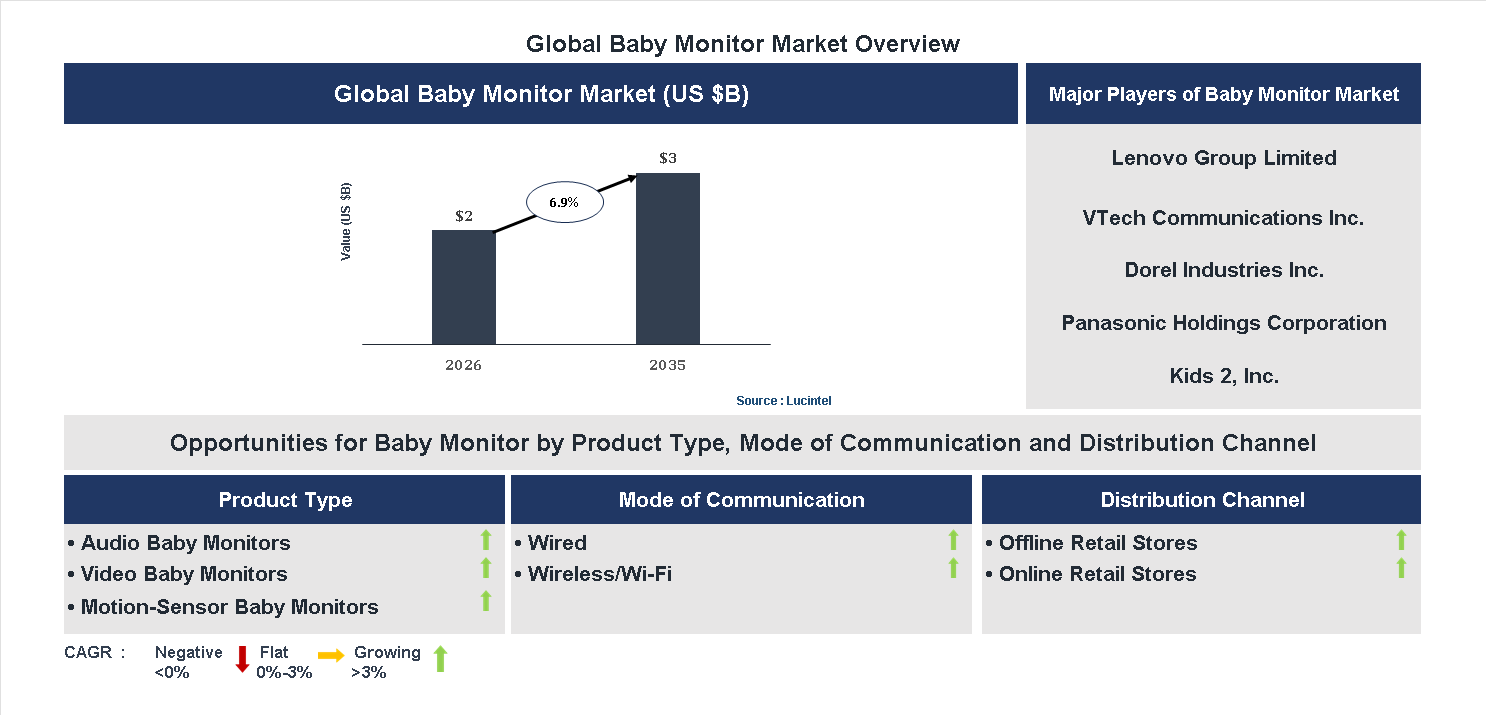
Key data points: The market size in 2035 = $3 billion, growth forecast = 6.9% annually for the next 8 years. Scroll below to get more insights. This market report covers trends, opportunities and forecasts in baby monitor market to 2035 by product type (audio baby monitors, video baby monitors, and motion-sensor baby monitors), mode of communication (wired and wireless/Wi-Fi), distribution channel (offline retail stores and online retail stores), and region (North America, Europe, Asia Pacific, and the Rest of the World)
We'll send your sample report shortly.
• Lucintel forecasts that, within the product type category, motion-sensor baby monitor is expected to witness higher growth over the forecast period.
• Within the distribution channel category, offline retail store is expected to witness higher growth.
• In terms of region, APAC is expected to witness the highest growth over the forecast period. Gain valuable insights for your business decisions with our comprehensive 150+ page report. Sample figures with some insights are shown below.
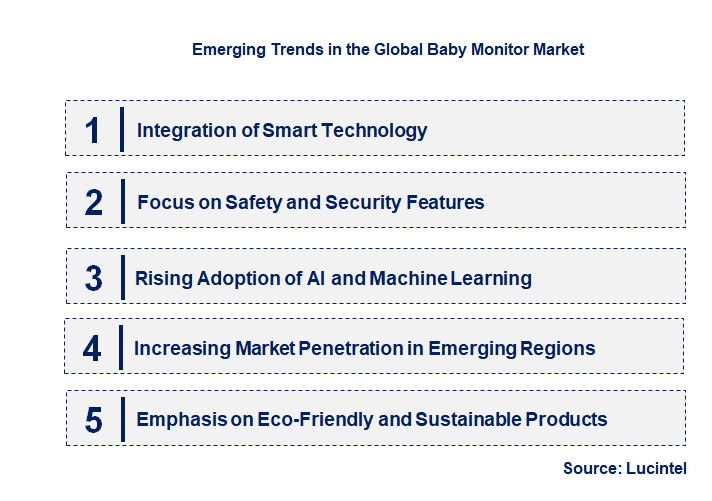
• Integration of Smart Technology: The adoption of IoT-enabled baby monitors allows parents to connect devices to smartphones and tablets. These monitors offer real-time video and audio streaming, remote access, and customizable alerts, providing greater convenience and peace of mind. Smart monitors also incorporate features like temperature sensors and lullabies, enhancing overall functionality. This trend is driven by increasing consumer demand for connected devices that seamlessly integrate into modern smart homes, making baby monitoring more accessible and efficient.
• Focus on Safety and Security Features: Enhanced safety features such as HD video quality, night vision, two-way communication, and secure Wi-Fi connections are becoming standard. Some monitors now include fall detection and movement sensors, alerting parents immediately to any issues. These advancements address parental concerns about safety and privacy, ensuring that monitoring devices are both reliable and secure. As safety remains a top priority, manufacturers are investing heavily in developing features that provide comprehensive protection and peace of mind.
• Rising Adoption of AI and Machine Learning: Artificial intelligence is being integrated into baby monitors to analyze patterns and detect anomalies, such as unusual movements or sounds. Machine learning algorithms can predict potential issues, alerting parents proactively. This trend enhances the predictive capabilities of monitors, reducing false alarms and improving responsiveness. AI-driven features are transforming baby monitors from simple surveillance tools into intelligent health and safety assistants, thereby increasing their value and appeal to tech-savvy consumers.
• Increasing Market Penetration in Emerging Regions: As disposable incomes rise and awareness about child safety increases, developing countries are witnessing growing adoption of baby monitors. Manufacturers are tailoring products to meet local needs, including affordability and language options. Distribution channels are expanding, and marketing strategies are becoming more localized. This trend is expanding the global footprint of the baby monitor market, opening new revenue streams and fostering market growth in regions previously underserved.
• Emphasis on Eco-Friendly and Sustainable Products: Consumers are increasingly seeking environmentally friendly baby monitors made from sustainable materials and energy-efficient components. Brands are adopting eco-conscious manufacturing practices and offering products with low power consumption and recyclable parts. This trend aligns with broader environmental concerns and appeals to eco-conscious parents. The focus on sustainability is influencing product design, packaging, and marketing strategies, contributing to a more responsible and environmentally aware market landscape. These trends are collectively transforming the baby monitor market into a more connected, safe, and sustainable industry. The integration of smart technology, advanced safety features, AI capabilities, regional expansion, and eco-friendly products are reshaping how parents monitor and care for their children, leading to increased market competitiveness and innovation.
• Growing Adoption of Smart Baby Monitors: The increasing preference for smart monitors with Wi-Fi connectivity, remote access, and app integration is transforming the market. These devices offer enhanced features like temperature monitoring, lullabies, and two-way communication, providing parents with comprehensive control and peace of mind. The convenience of real-time alerts and remote monitoring is driving demand, especially among tech-savvy consumers. This trend is expected to continue, fueling market expansion and encouraging manufacturers to develop more advanced, user-friendly products.
• Advancements in Video and Audio Quality: Recent developments in high-definition video, night vision, and crystal-clear audio are significantly improving user experience. These enhancements enable parents to monitor their babies more effectively, even in low-light conditions. The improved quality also facilitates better interaction and reassurance. As consumers increasingly seek reliable and detailed monitoring, manufacturers are investing in innovative camera technologies and sound systems. This focus on quality is boosting consumer confidence and expanding the market for premium baby monitors.
• Rising Demand for Wireless and Wi-Fi-Enabled Devices: The shift towards wireless, Wi-Fi-enabled baby monitors offers unmatched convenience and flexibility. These devices allow parents to monitor their babies from anywhere using smartphones or tablets. The ease of installation, portability, and integration with other smart home devices are key drivers. As internet penetration and smartphone usage grow globally, the demand for such monitors is expected to rise sharply, prompting manufacturers to develop more seamless, secure, and feature-rich wireless solutions.
• Increasing Focus on Safety and Security Features: Enhanced safety features such as encrypted data transmission, motion detection, and alerts for unusual activity are gaining importance. These features address parental concerns about privacy and security, making monitors more trustworthy. Additionally, innovations like temperature sensors and fall detection contribute to child safety. The emphasis on security is encouraging manufacturers to incorporate robust encryption and user authentication, thereby increasing consumer confidence and expanding the market for secure baby monitoring solutions.
• Expansion of Product Portfolios and Strategic Collaborations: Companies are diversifying their product offerings by integrating additional functionalities like sleep tracking, health monitoring, and AI-based analytics. Strategic collaborations with technology firms and healthcare providers are facilitating innovation and market penetration. These partnerships enable the development of smarter, more comprehensive monitoring systems. The expansion of product portfolios and collaborations are helping companies cater to a broader consumer base, enhance brand loyalty, and accelerate market growth through innovative, integrated solutions. The overall impact of these developments is a rapidly evolving market characterized by increased innovation, higher consumer expectations, and expanded adoption. Enhanced features, improved security, and seamless connectivity are making baby monitors more reliable and user-friendly. This growth is attracting new entrants and encouraging existing players to innovate, ultimately leading to a more competitive landscape and greater consumer choice in the baby monitor industry.
• Increasing Adoption of Wireless Baby Monitors: Wireless baby monitors are gaining popularity due to their convenience, ease of installation, and mobility. Parents prefer these devices for real-time audio and video monitoring without cumbersome wiring. The proliferation of Wi-Fi-enabled devices and smartphones enhances user experience, enabling remote access. As technology advances, wireless monitors are becoming more affordable and feature-rich, encouraging wider adoption across various income groups and regions, thus expanding the market significantly.
• Rising Demand for Video Baby Monitors with High-Resolution Cameras: Video baby monitors with high-resolution cameras are increasingly preferred for their ability to provide clear, detailed visuals of infants. These monitors offer features like pan, tilt, zoom, and night vision, improving monitoring accuracy. The demand is driven by parents’ desire for enhanced safety and peace of mind. Manufacturers are integrating smart features such as motion detection and two-way communication, which further boost market growth by offering comprehensive monitoring solutions.
• Integration of IoT and Smart Technologies in Baby Monitors: IoT integration allows baby monitors to connect seamlessly with other smart home devices, providing a centralized control system. Smart features like voice commands, AI-based activity recognition, and automated alerts are enhancing user experience. These innovations enable proactive monitoring and data analysis, leading to personalized safety measures. The adoption of IoT and AI is transforming traditional monitors into intelligent systems, opening new avenues for market expansion and technological leadership.
• Growing Preference for Portable and Wearable Baby Monitors: Portable and wearable monitors cater to active parents and caregivers who need mobility and convenience. These devices are lightweight, battery-operated, and often connect via Bluetooth or Wi-Fi. They enable monitoring on the go, including outdoor activities and travel. The trend is driven by busy lifestyles and the need for flexible monitoring options. As technology improves, these devices are becoming more reliable, affordable, and feature-rich, broadening their appeal and market penetration.
• Expansion of Monitoring Solutions for Multiple Children and Settings: Multi-child monitoring solutions are gaining traction as families with multiple infants seek efficient management. These systems can track several children simultaneously, often with individual cameras and alerts. Additionally, specialized monitors for different settings like nurseries, play areas, and outdoor spaces are emerging. This expansion addresses diverse parental needs, enhances safety, and offers comprehensive coverage, thereby driving market growth through increased product versatility and customization options. The overall market outlook is positively influenced by these growth opportunities, fostering innovation, increasing consumer adoption, and expanding application areas. As technology continues to evolve, the baby monitor market is poised for sustained growth, driven by the demand for safer, smarter, and more versatile monitoring solutions. This dynamic environment encourages strategic investments and product development to meet evolving consumer needs.
• Technological Innovation: The rapid development of wireless and smart technology has revolutionized baby monitors, enabling features like HD video, two-way communication, and mobile app integration. These innovations enhance user experience, safety, and convenience, making products more attractive to consumers. As technology becomes more affordable and accessible, adoption rates increase, fueling market growth. Additionally, advancements in battery life and connectivity stability further improve product reliability, encouraging higher sales and market penetration.
• Increasing Safety Concerns: Growing awareness among parents about child safety has significantly driven demand for baby monitors. Parents seek real-time monitoring to ensure their child's well-being, especially in urban settings and multi-story homes. The rise in parental anxiety and the need for peace of mind have made baby monitors an essential household item. This trend is reinforced by media reports and safety campaigns, which emphasize the importance of constant supervision, thereby boosting market demand.
• Rising Disposable Income and Urbanization: As disposable incomes rise globally, more families can afford advanced baby monitoring devices. Urbanization also plays a crucial role, as densely populated areas with smaller living spaces increase the need for compact, efficient monitoring solutions. These economic factors enable consumers to invest in higher-end, feature-rich monitors, expanding the market. Additionally, increased urban living often correlates with busier lifestyles, prompting parents to seek reliable monitoring options for convenience.
• Growing Adoption of Smart Home Ecosystems: The integration of baby monitors into broader smart home systems is a significant driver. Consumers increasingly prefer interconnected devices that can be controlled via smartphones or voice assistants. This trend enhances functionality, such as remote monitoring and automation, making baby monitors more versatile and appealing. Manufacturers are developing compatible products, which further accelerates market growth as consumers seek seamless, integrated home safety solutions.
• Product Differentiation and Premium Offerings: Manufacturers are focusing on innovative features like night vision, temperature sensors, and lullaby players to differentiate their products. Premium monitors with advanced functionalities command higher prices and attract affluent consumers. This product differentiation encourages brand loyalty and stimulates market expansion, especially in developed regions where consumers are willing to invest in high-quality, feature-rich devices. The challenges in the baby monitor market are:-
• Technological Complexity and Compatibility Issues: Rapid technological advancements can lead to compatibility issues among devices and platforms. Consumers may face difficulties integrating monitors with existing smart home systems or mobile devices, resulting in dissatisfaction and reduced adoption. Additionally, frequent updates and software bugs can compromise device performance, creating barriers for less tech-savvy users. Manufacturers must invest heavily in R&D to ensure seamless integration and user-friendly interfaces, which can increase costs and impact profitability.
• Privacy and Security Concerns: Baby monitors are vulnerable to hacking and data breaches, raising significant privacy issues. Unauthorized access to live feeds or recorded footage can compromise family safety and violate privacy rights. These concerns have led to increased scrutiny from regulatory bodies and demand for enhanced security features. Companies must implement robust encryption and security protocols, which can add to product costs and complicate development processes, potentially hindering market growth.
• Intense Competition and Price Pressure: The market is highly competitive, with numerous players offering similar features at varying price points. This intense rivalry leads to price wars, reducing profit margins and challenging smaller or newer entrants. Additionally, rapid product obsolescence due to technological advancements pressures manufacturers to continuously innovate, increasing R&D expenses. The need to balance quality, innovation, and affordability remains a persistent challenge for sustaining profitability and market share. The baby monitor market is driven by technological advancements, safety concerns, economic growth, and smart home integration, which collectively foster expansion and innovation. However, challenges such as technological compatibility, privacy issues, and fierce competition pose significant hurdles. These factors influence market dynamics, requiring stakeholders to focus on security, user experience, and differentiation to succeed. Overall, the market's future hinges on balancing innovation with addressing consumer concerns, ensuring sustainable growth and increased adoption worldwide.
• Lenovo Group Limited
• VTech Communications Inc.
• Dorel Industries Inc.
• Panasonic Holdings Corporation
• Kids 2, Inc.
• Infant Optics
• Hanwha Corporation
• Samsung Group
• Koninklijke Philips N.V.
• Anker Technology
• Audio Baby Monitors
• Video Baby Monitors
• Motion-Sensor Baby Monitors
• Wired
• Wireless/Wi-Fi
• Offline Retail Stores
• Online Retail Stores
• North America
• Europe
• Asia Pacific
• The Rest of the World
• United States: The US market has seen rapid adoption of smart baby monitors with features like HD video, two-way audio, and mobile app integration. Companies are investing in AI-driven analytics for sleep tracking and health monitoring. Regulatory standards are evolving to ensure data privacy and security, boosting consumer confidence. The demand for eco-friendly and non-toxic materials is also rising, influencing product development. Additionally, the market is witnessing a surge in subscription-based services offering advanced monitoring insights and parental support. Overall, technological innovation and safety concerns continue to drive growth in the US baby monitor market.
• China: China's baby monitor market is expanding quickly, fueled by a large population of young parents and increasing urbanization. Local brands are gaining ground by offering affordable, feature-rich products with Wi-Fi connectivity and remote access. There is a growing preference for smart monitors that integrate with other IoT devices in smart homes. The government’s focus on child safety and digital infrastructure development supports market growth. E-commerce platforms are the primary distribution channels, enabling rapid product adoption. Innovations such as facial recognition and health monitoring are emerging, reflecting China's emphasis on comprehensive child care solutions.
• Germany: In Germany, the market emphasizes high-quality, reliable, and privacy-compliant baby monitors. Consumers prefer products with robust encryption and data protection features due to strict EU regulations. There is a notable shift towards wireless and Wi-Fi-enabled monitors with high-resolution video and sound clarity. Sustainability and eco-friendliness are important factors influencing purchasing decisions. The market also sees increased interest in monitors that offer integration with smart home systems. German consumers value durability and safety certifications, which influence product offerings. Overall, the market is characterized by a focus on security, quality, and technological innovation.
• India: The Indian baby monitor market is witnessing rapid growth driven by rising disposable incomes, increasing awareness of child safety, and urbanization. Affordable, feature-rich monitors with Wi-Fi and mobile app connectivity are popular among middle-class families. Local brands are expanding their presence through online channels, offering competitive pricing and innovative features. The adoption of smart monitors with night vision, two-way audio, and remote access is increasing. Government initiatives promoting digital literacy and child health awareness further support market expansion. The market is expected to grow as consumers seek reliable, easy-to-use monitoring solutions that fit their budget and lifestyle.
• Japan: Japan's baby monitor market is characterized by high technological adoption and a focus on safety and convenience. Consumers prefer monitors with advanced features such as motion sensors, sleep analytics, and integration with other smart home devices. The market is driven by an aging population of parents who value reliability and ease of use. Privacy and data security are critical considerations, leading to the adoption of secure, encrypted devices. Japanese companies are innovating with AI and IoT integration to enhance monitoring capabilities. The market also emphasizes eco-friendly materials and energy-efficient products, aligning with Japan’s sustainability goals.


• Lenovo Group Limited
• VTech Communications Inc.
• Dorel Industries Inc.
• Panasonic Holdings Corporation
• Kids 2, Inc.
• Infant Optics
• Hanwha Corporation
• Samsung Group
• Koninklijke Philips N.V.
• Anker Technology Q6. Which baby monitor market segment will be the largest in future? Answer: Lucintel forecasts that, within the product type category, motion-sensor baby monitor is expected to witness higher growth over the forecast period. Q7. In baby monitor market, which region is expected to be the largest in next 5 years? Answer: In terms of region, APAC is expected to witness the highest growth over the forecast period. Q8. Do we receive customization in this report? Answer: Yes, Lucintel provides 10% customization without any additional cost.


Choose a license that fits your team. Instant PDF delivery.
Prices exclude taxes. Instant delivery. Custom licensing available on request.
Market Report · July 29, 2026
Market Report · July 15, 2026
Market Report · July 13, 2026
Trusted partner for strategic intelligence and business growth


Receive a complimentary market analysis tailored to your industry. Our analysts will identify key growth opportunities and competitive dynamics specific to your business.

Market size, growth rate, and key trend analysis for your specific sector.

Top competitor positioning and market share analysis.

Strategic recommendations backed by data-driven insights.
Get curated market intelligence and competitive moves straight to your inbox.
By subscribing, you agree to receive our monthly insights. Unsubscribe anytime.
Receive a complimentary market analysis tailored to your industry. Our analysts will identify key growth opportunities and competitive dynamics specific to your business.
Market size, growth rate, and key trend analysis for your specific sector.
Top competitor positioning and market share analysis.
Strategic recommendations backed by data-driven insights.
Get curated market intelligence, emerging trends, and competitive moves straight to your inbox each month.
By subscribing, you agree to receive our monthly insights. Unsubscribe anytime.
We'll send your sample report shortly.