
Market Report · July 22, 2026

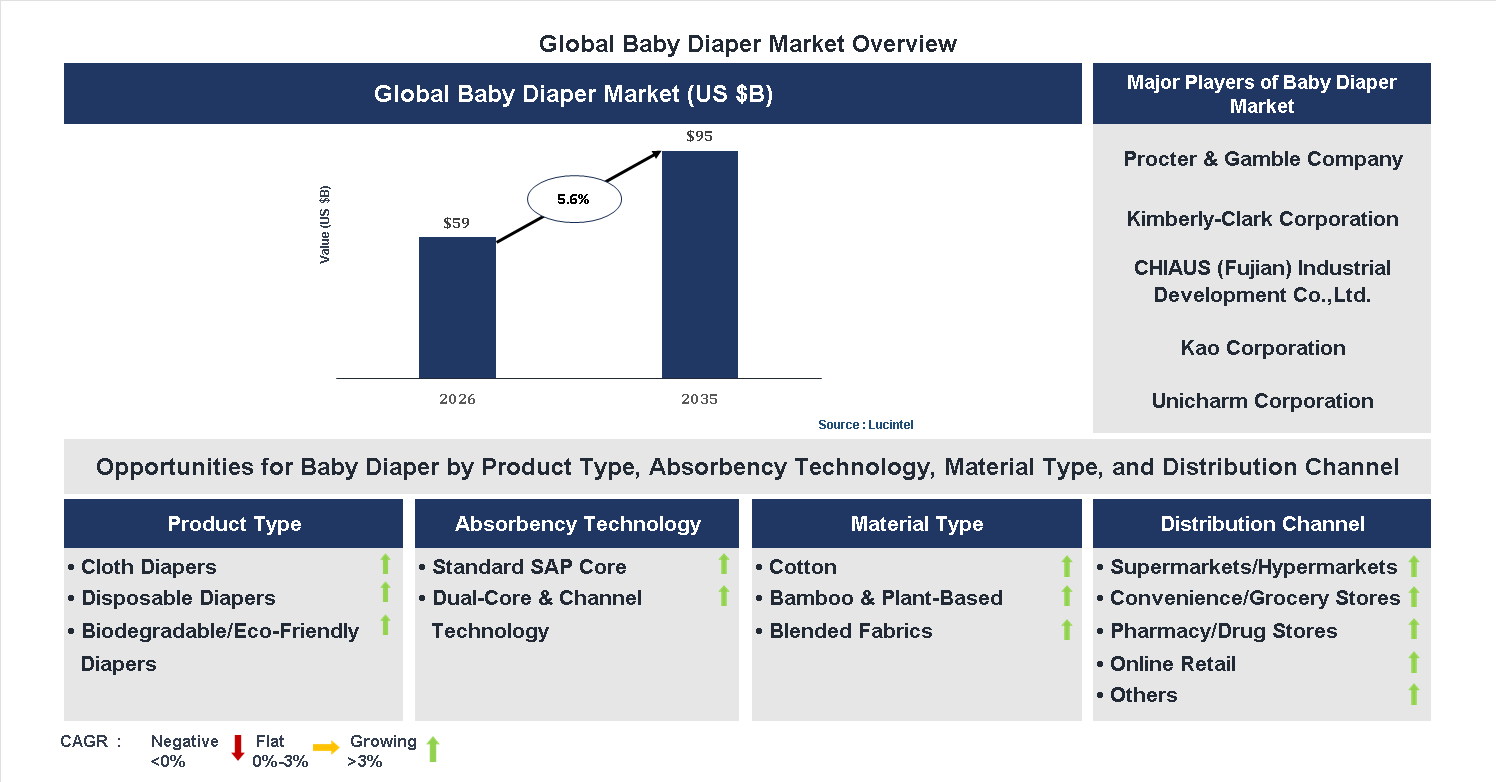
Key data points: The market size in 2035 = $95 billion, growth forecast = 5.6% annually for the next 8 years. Scroll below to get more insights. This market report covers trends, opportunities and forecasts in baby diaper market to 2035 by product type (cloth diapers, disposable diapers, and biodegradable/eco-friendly diapers), absorbency technology (standard sap core and dual-core & channel technology), material type (cotton, bamboo & plant-based, and blended fabrics), distribution channel (supermarkets/hypermarkets, convenience/grocery stores, pharmacy/drug stores, online retail, and others), and region (North America, Europe, Asia Pacific, and the Rest of the World)
We'll send your sample report shortly.
• Lucintel forecasts that, within the product type category, disposable diaper is expected to witness the highest growth over the forecast period.
• Within the material type category, cotton is expected to witness the highest growth.
• In terms of region, APAC is expected to witness the highest growth over the forecast period. Gain valuable insights for your business decisions with our comprehensive 150+ page report. Sample figures with some insights are shown below.
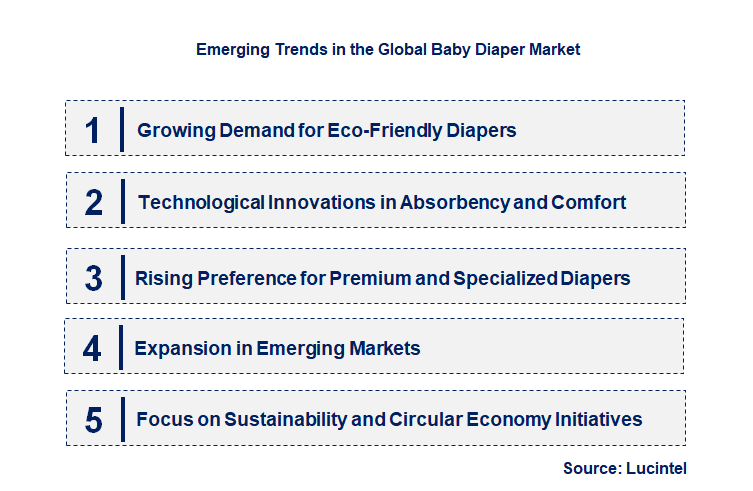
• Growing Demand for Eco-Friendly Diapers: Increasing environmental awareness among consumers is driving demand for biodegradable and sustainable diaper options. Manufacturers are investing in eco-friendly materials, such as plant-based fibers and biodegradable plastics, to reduce environmental impact. This trend is also supported by regulatory pressures and a shift towards greener products, encouraging brands to innovate and offer eco-conscious alternatives. As consumers become more environmentally conscious, the market is witnessing a significant shift towards sustainable products, which are perceived as healthier and more responsible choices for families.
• Technological Innovations in Absorbency and Comfort: Advances in materials science are leading to the development of highly absorbent, breathable, and skin-friendly diapers. Innovations such as super-absorbent polymers, moisture-wicking fabrics, and ergonomic designs enhance comfort and reduce skin irritation. These technological improvements are attracting health-conscious parents seeking products that offer better leakage protection and skin health. The integration of smart features, like indicators for wetness, is also emerging, providing convenience and peace of mind for caregivers. These innovations are setting new standards for product performance and user experience.
• Rising Preference for Premium and Specialized Diapers: Consumers are increasingly opting for premium diapers that offer superior comfort, fit, and skin protection. This trend is driven by rising disposable incomes and a focus on infant health and well-being. Specialized products, such as overnight diapers, hypoallergenic variants, and eco-friendly options, are gaining popularity among discerning parents. The demand for premium products is encouraging brands to differentiate through quality, branding, and added features, thereby expanding the market segment for high-end diapers. This shift is also influencing marketing strategies and product development priorities.
• Expansion in Emerging Markets: Rapid urbanization, increasing birth rates, and rising disposable incomes in countries like India, China, and Southeast Asia are fueling market growth. Manufacturers are expanding distribution channels and customizing products to meet local preferences and affordability. The growth of e-commerce platforms is also facilitating easier access to a broader consumer base. This expansion is creating new opportunities for market players to tap into large, underserved populations, thereby driving overall market growth and diversification. Local innovations and regional marketing strategies are becoming crucial for success in these emerging markets.
• Focus on Sustainability and Circular Economy Initiatives: Companies are adopting circular economy principles by promoting diaper recycling programs and sustainable packaging. Initiatives include biodegradable diaper disposal systems and partnerships with waste management firms to reduce landfill waste. Consumer awareness about sustainability is prompting brands to communicate their eco-friendly efforts more effectively. These initiatives not only address environmental concerns but also enhance brand reputation and consumer loyalty. As sustainability becomes a core aspect of corporate strategy, the market is witnessing a shift towards more responsible manufacturing and disposal practices, shaping a more sustainable future for the industry. These trends are collectively transforming the baby diaper market into a more innovative, sustainable, and consumer-focused industry. The emphasis on eco-friendly products, technological advancements, premium offerings, market expansion, and circular economy initiatives are redefining product development, marketing, and distribution strategies. As a result, the market is becoming more competitive, diverse, and aligned with global sustainability goals, ultimately benefiting consumers, manufacturers, and the environment.
• Growth in Eco-Friendly Diapers: Increasing environmental concerns are driving demand for biodegradable and sustainable diapers, encouraging manufacturers to develop eco-friendly products. This shift is expanding market share for green products, attracting environmentally conscious consumers, and fostering innovation in biodegradable materials. The trend is also prompting regulatory support and partnerships aimed at reducing plastic waste, which enhances brand reputation and market growth.
• Technological Innovations in Diaper Design: Advancements such as moisture sensors, leak-proof materials, and improved absorbency are transforming diaper functionality. These innovations improve user experience by offering better comfort, dryness, and convenience, leading to higher customer satisfaction and brand loyalty. Companies investing in smart diaper technology are opening new revenue streams and differentiating themselves in a competitive market.
• Rising Demand in Emerging Markets: Rapid population growth and increasing disposable incomes in regions like Asia-Pacific and Africa are fueling demand for baby diapers. Market expansion in these areas is driven by urbanization, changing lifestyles, and rising awareness of hygiene. Local manufacturers are entering the market, and international brands are expanding their distribution channels, creating significant growth opportunities and diversifying the global market landscape.
• Focus on Sustainability and Natural Materials: Consumers are increasingly seeking natural, chemical-free, and hypoallergenic diapers, prompting brands to incorporate organic and eco-friendly materials. This focus on sustainability is influencing product development, packaging, and marketing strategies. The shift not only appeals to health-conscious parents but also aligns with global environmental goals, fostering brand loyalty and opening new premium market segments.
• Expansion of Online Sales Channels: The growth of e-commerce platforms has revolutionized how baby diapers are purchased, offering convenience, wider product choices, and competitive pricing. Online channels enable brands to reach rural and urban consumers directly, increasing market penetration. Digital marketing and subscription models are further enhancing customer engagement, leading to increased sales volumes and market share for both established and emerging brands. These developments are significantly transforming the baby diaper market by promoting sustainability, technological innovation, and expanding reach into emerging markets. The focus on eco-friendly products and smart technology is elevating consumer expectations and driving industry standards. Online sales channels are broadening access and convenience, fostering market growth. Overall, these opportunities are creating a dynamic, competitive landscape that benefits consumers through better products and increased choices, ensuring sustained growth and innovation in the industry.
• Growing Demand for Eco-Friendly and Biodegradable Diapers: The shift towards sustainable products is a major growth driver. Consumers are increasingly seeking environmentally friendly options to reduce plastic waste and carbon footprint. Manufacturers are investing in biodegradable materials and eco-conscious packaging, which appeal to environmentally aware parents. This trend is expected to expand as regulations tighten and consumer preferences evolve, opening new market segments and increasing sales of sustainable baby diapers globally.
• Technological Innovations Enhancing Diaper Comfort and Absorbency: Advances in materials science are leading to more comfortable, highly absorbent diapers that prevent leaks and skin irritation. Innovations such as super-absorbent polymers, breathable fabrics, and ergonomic designs improve user experience. These technological improvements attract health-conscious and convenience-seeking consumers, boosting market growth. Companies investing in R&D to develop smarter, more efficient products are gaining competitive advantages, further driving the adoption of advanced diaper solutions.
• Expansion into Emerging Markets with Rising Birth Rates: Developing regions with increasing birth rates and improving disposable incomes present significant growth opportunities. Market players are expanding distribution channels and tailoring products to local preferences and affordability. Urbanization and improved healthcare infrastructure support market penetration. Strategic partnerships and localized marketing are essential to capture market share in these regions, which are expected to contribute substantially to overall market growth in the coming years.
• Increasing Demand for Premium and Specialty Diapers: Consumers are willing to pay more for diapers that offer added benefits such as hypoallergenic properties, dermatologically tested materials, and enhanced comfort. The rise of specialty diapers for premature babies or those with sensitive skin is also notable. This segment caters to niche markets and health-conscious parents, driving revenue growth. Companies focusing on premium product lines and branding are capitalizing on this trend, expanding their market share and fostering brand loyalty.
• Rising Awareness and Adoption of Online Retail Channels: E-commerce platforms are becoming primary distribution channels for baby diapers, offering convenience, wider product selection, and competitive pricing. Digital marketing and targeted advertising increase consumer engagement and brand visibility. Online sales facilitate access to rural and remote areas, boosting market penetration. The shift towards online purchasing is expected to accelerate, encouraging manufacturers to strengthen their digital presence and develop direct-to-consumer strategies to capitalize on this growth avenue. These strategic growth opportunities are poised to significantly influence the baby diaper market by expanding consumer choices, enhancing product innovation, and penetrating new regions. Emphasizing sustainability, technological advancements, and digital channels will enable market players to meet evolving consumer demands. As a result, the overall market is expected to experience sustained growth, increased competition, and diversification, fostering a dynamic environment for innovation and expansion in the coming years.
• Technological Innovations: The development of advanced absorbent materials and eco-friendly diapers has significantly enhanced product performance and sustainability. Innovations such as biodegradable diapers and improved fit increase consumer appeal, encouraging brand loyalty and expanding market share. Continuous R&D efforts are leading to products that are more comfortable, leak-proof, and environmentally friendly, which meet evolving consumer preferences and regulatory standards. These technological advancements are crucial for differentiating brands in a competitive landscape and fostering market growth.
• Rising Disposable Income and Urbanization: Increasing disposable incomes, especially in emerging economies, enable more families to afford higher-quality and premium baby diapers. Urbanization leads to busier lifestyles, creating a demand for convenient, disposable baby care products. As urban populations grow, so does the awareness of hygiene and health, further boosting demand. This economic shift allows manufacturers to introduce innovative products tailored to urban consumers, thereby expanding market penetration and sales volumes.
• Demographic Growth and Birth Rates: Population growth and higher birth rates in developing countries significantly contribute to market expansion. Countries with large young populations, such as India and China, present substantial opportunities for baby diaper sales. The increasing number of infants directly correlates with higher demand for baby care products, prompting manufacturers to increase production capacity and diversify product offerings to meet regional preferences and needs.
• E-commerce and Distribution Channels: The rise of online retail platforms has transformed the distribution landscape for baby diapers. E-commerce provides consumers with easy access to a wide range of products, competitive pricing, and convenient delivery options. This channel expansion allows brands to reach rural and remote areas, previously underserved by traditional retail outlets. The growth of digital marketing and direct-to-consumer sales strategies further accelerates market penetration, making products more accessible and boosting overall sales.
• Environmental Sustainability Trends: Growing awareness of environmental issues has led consumers to prefer eco-friendly and biodegradable diapers. Manufacturers are responding by developing sustainable products that reduce ecological footprints, such as using plant-based materials and recyclable packaging. These trends influence purchasing decisions, especially among environmentally conscious consumers, and encourage companies to adopt sustainable practices. The emphasis on eco-friendly products is expected to drive innovation and create new market segments, fostering long-term growth. The challenges facing the baby diaper market include:
• Environmental Concerns and Waste Management: The widespread use of disposable diapers generates significant waste, raising environmental concerns. Non-biodegradable components contribute to landfill accumulation and pollution, prompting regulatory scrutiny and consumer pushback. Managing diaper waste sustainably is a major challenge for manufacturers, requiring investment in biodegradable materials and waste recycling solutions. Failure to address these concerns could lead to stricter regulations and reduced consumer acceptance, impacting market growth and profitability.
• Fluctuating Raw Material Costs: The cost of raw materials such as fluff pulp, superabsorbent polymers, and non-woven fabrics is highly volatile due to supply chain disruptions, geopolitical tensions, and environmental factors. These fluctuations directly affect manufacturing costs and profit margins. Companies may face difficulties in maintaining competitive pricing while ensuring quality, which can hinder market expansion. Managing supply chain risks and securing stable raw material sources are critical challenges for sustaining growth.
• Stringent Regulatory Standards: Increasing regulations related to product safety, environmental impact, and labeling requirements pose compliance challenges for manufacturers. Different regions have varying standards, complicating product development and distribution strategies. Non-compliance can result in legal penalties, product recalls, and damage to brand reputation. Navigating these regulatory landscapes requires significant investment in testing, certification, and quality assurance processes, which can slow innovation and increase operational costs. The baby diaper market is driven by technological advancements, economic growth, demographic trends, and sustainability initiatives. However, environmental concerns, raw material cost volatility, and regulatory complexities present notable challenges. These factors collectively influence market dynamics, requiring stakeholders to innovate continuously, adapt to regulatory changes, and address environmental impacts. Successfully managing these drivers and challenges will determine the market’s future growth trajectory, with opportunities for innovation and expansion balanced against the need for sustainable and compliant practices.
• Procter & Gamble Company
• Kimberly-Clark Corporation
• CHIAUS (Fujian) Industrial Development Co.,Ltd.
• Kao Corporation
• Unicharm Corporation
• Ontex Group NV
• Daio Paper Corporation
• Hengan International Group
• WEHOO Hygiene
• Hello Bello
• Cloth Diapers
• Disposable Diapers
• Biodegradable/Eco-Friendly Diapers
• Standard SAP Core
• Dual-Core & Channel Technology
• Cotton
• Bamboo & Plant-Based
• Blended Fabrics
• Supermarkets/Hypermarkets
• Convenience/Grocery Stores
• Pharmacy/Drug Stores
• Online Retail
• Others
• North America
• Europe
• Asia Pacific
• The Rest of the World
• United States: The US market has seen a surge in eco-friendly and biodegradable diaper options, driven by consumer demand for sustainability. Major brands are investing in innovative materials that offer better absorbency and skin comfort. Digital marketing and e-commerce sales have grown substantially, expanding access to a broader consumer base. Additionally, premium and specialty diapers targeting sensitive skin are gaining popularity. Regulatory standards for product safety and environmental impact are becoming more stringent, prompting companies to enhance transparency and product quality. The market is also witnessing increased focus on convenience features like wetness indicators and adjustable fits.
• China: China remains the largest market for baby diapers, with rapid growth fueled by urbanization and rising disposable incomes. Local brands are expanding their product portfolios to include premium and eco-friendly options, competing with international brands. Innovations in super-absorbent materials and breathable fabrics are prevalent. E-commerce platforms are crucial for distribution, with online sales accounting for a significant market share. Government policies promoting maternal and child health are encouraging product innovation and safety standards. The market is also witnessing a shift towards more sustainable products, although price sensitivity remains a key factor influencing consumer choices.
• Germany: The German market emphasizes sustainability and high-quality standards, with consumers favoring organic and biodegradable diapers. Companies are investing in environmentally friendly production processes and recyclable packaging. Technological advancements include improved fit and skin-friendly materials. The market is also influenced by strict EU regulations on product safety and environmental impact, encouraging innovation. Premium products with added features like dermatologically tested fabrics are gaining traction. Consumer awareness about ecological footprints and health benefits is driving demand for natural and chemical-free options. Retailers are increasingly promoting eco-conscious brands through specialized outlets and online channels.
• India: The Indian baby diaper market is experiencing rapid growth due to increasing urbanization, rising disposable incomes, and changing lifestyles. Local and international brands are expanding their presence, offering affordable and quality products. Innovations include super-absorbent cores and skin-friendly materials tailored for Indian climates. E-commerce and modern retail outlets are key distribution channels, facilitating wider reach. Awareness campaigns about hygiene and health are boosting demand. The market is gradually shifting towards eco-friendly options, although price remains a critical factor. Manufacturers are also focusing on product affordability and accessibility to cater to a diverse consumer base.
• Japan: Japans market is characterized by high consumer awareness and demand for premium, high-performance diapers. Innovations focus on comfort, fit, and skin health, with features like ultra-thin designs and moisture-wicking fabrics. Sustainability is increasingly important, with brands adopting biodegradable materials and eco-friendly packaging. Strict safety standards and regulations influence product development, ensuring high quality. The aging population also impacts the market, with some products designed for elderly care. Digital marketing and subscription services are popular, enhancing consumer convenience. Overall, Japans market balances technological innovation with environmental responsibility, catering to health-conscious and eco-aware consumers.


• Procter & Gamble Company
• Kimberly-Clark Corporation
• CHIAUS (Fujian) Industrial Development Co.,Ltd.
• Kao Corporation
• Unicharm Corporation
• Ontex Group NV
• Daio Paper Corporation
• Hengan International Group
• WEHOO Hygiene
• Hello Bello Q6. Which baby diaper market segment will be the largest in future? Answer: Lucintel forecasts that, within the product type category, disposable diaper is expected to witness the highest growth over the forecast period. Q7. In baby diaper market, which region is expected to be the largest in next 5 years? Answer: In terms of region, APAC is expected to witness the highest growth over the forecast period. Q8. Do we receive customization in this report? Answer: Yes, Lucintel provides 10% customization without any additional cost.


Choose a license that fits your team. Instant PDF delivery.
Prices exclude taxes. Instant delivery. Custom licensing available on request.
Market Report · July 22, 2026
Market Report · July 16, 2026
Market Report · May 18, 2026
Trusted partner for strategic intelligence and business growth


Receive a complimentary market analysis tailored to your industry. Our analysts will identify key growth opportunities and competitive dynamics specific to your business.

Market size, growth rate, and key trend analysis for your specific sector.

Top competitor positioning and market share analysis.

Strategic recommendations backed by data-driven insights.
Get curated market intelligence and competitive moves straight to your inbox.
By subscribing, you agree to receive our monthly insights. Unsubscribe anytime.
Receive a complimentary market analysis tailored to your industry. Our analysts will identify key growth opportunities and competitive dynamics specific to your business.
Market size, growth rate, and key trend analysis for your specific sector.
Top competitor positioning and market share analysis.
Strategic recommendations backed by data-driven insights.
Get curated market intelligence, emerging trends, and competitive moves straight to your inbox each month.
By subscribing, you agree to receive our monthly insights. Unsubscribe anytime.
We'll send your sample report shortly.