
Market Report · July 31, 2026

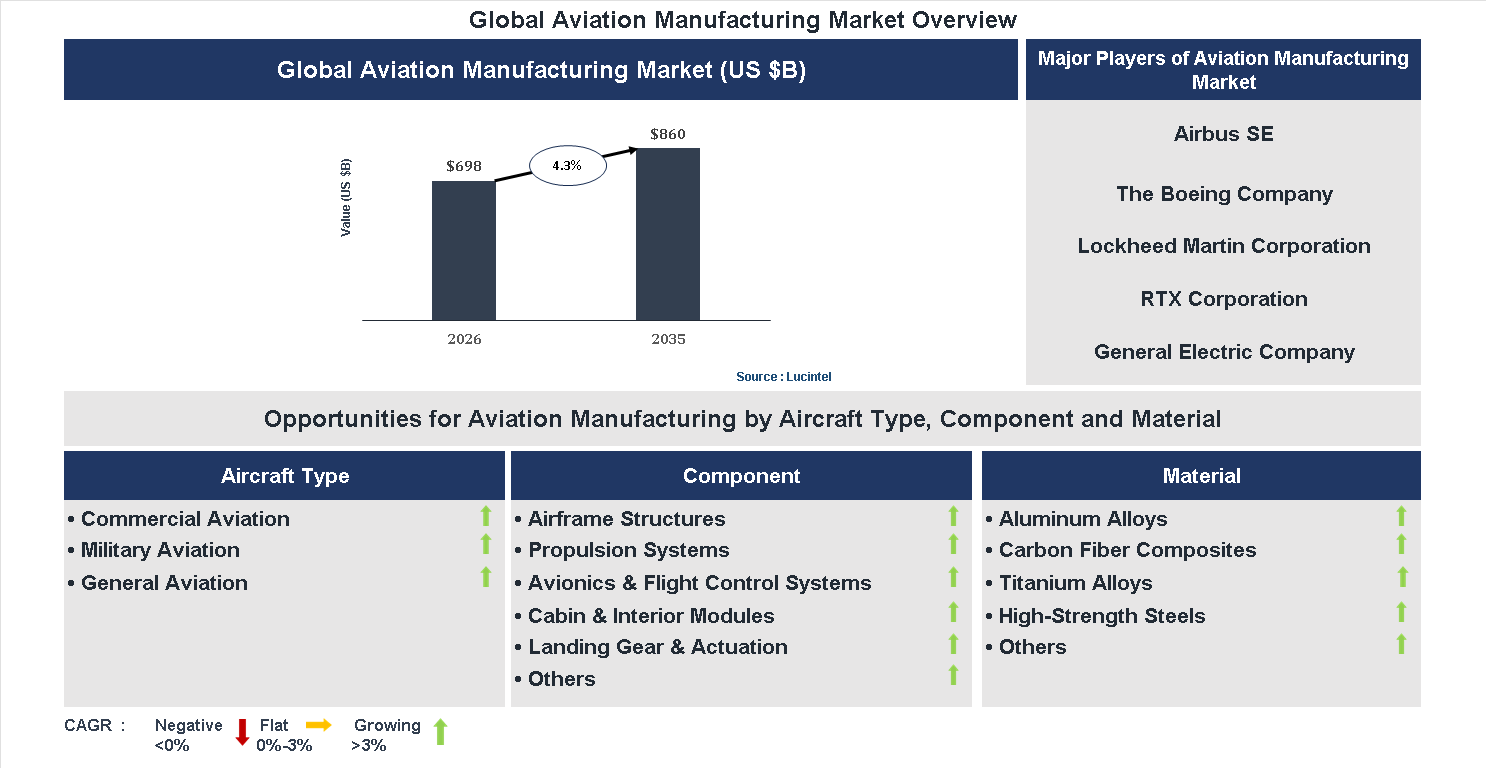
Key data points: The market size in 2035 = $860 billion, growth forecast = 4.3% annually for the next 8 years. Scroll below to get more insights. This market report covers trends, opportunities and forecasts in aviation manufacturing market to 2035 by aircraft type (commercial aviation, military aviation, and general aviation), component (airframe structures, propulsion systems, avionics & flight control systems, cabin & interior modules, landing gear & actuation, and others), material (aluminum alloys, carbon fiber composites, titanium alloys, high-strength steels, and others), and region (North America, Europe, Asia Pacific, and the Rest of the World)
We'll send your sample report shortly.
• Lucintel forecasts that, within the aircraft type category, commercial aviation is expected to witness the highest growth over the forecast period.
• Within the material category, aluminum alloy is expected to witness the highest growth.
• In terms of region, APAC is expected to witness the highest growth over the forecast period. Gain valuable insights for your business decisions with our comprehensive 150+ page report. Sample figures with some insights are shown below.
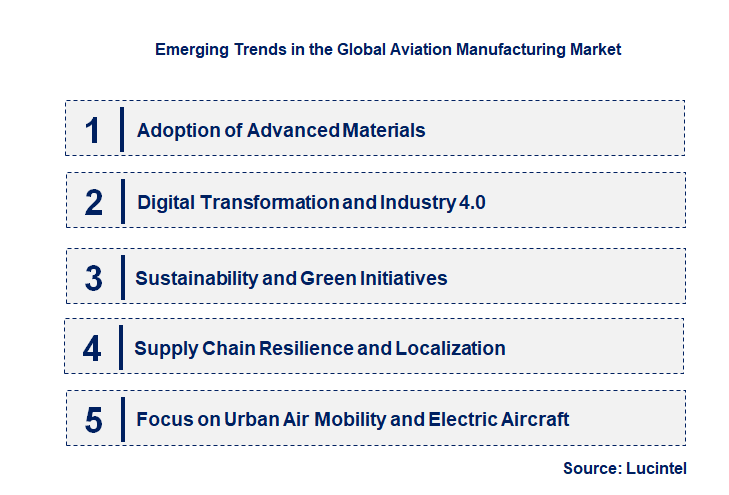
• Adoption of Advanced Materials: The industry is increasingly utilizing lightweight, durable materials such as composites and titanium to improve fuel efficiency and reduce emissions. These materials enable the production of more aerodynamic aircraft, leading to lower operational costs and environmental impact. The shift towards advanced materials also enhances aircraft performance, safety, and longevity, making them a critical focus for manufacturers aiming to meet stringent regulatory standards and customer expectations for sustainability.
• Digital Transformation and Industry 4.0: Digital technologies like IoT, AI, and automation are revolutionizing manufacturing processes. Smart factories enable real-time monitoring, predictive maintenance, and streamlined supply chains, reducing downtime and costs. Digital twin technology allows for virtual testing and optimization of aircraft components, accelerating development cycles. This transformation enhances precision, efficiency, and customization, positioning manufacturers to better respond to market demands and improve overall product quality.
• Sustainability and Green Initiatives: Environmental concerns are prompting the industry to prioritize eco-friendly practices. Manufacturers are investing in sustainable aviation fuels, electric propulsion systems, and recyclable materials. Regulatory pressures and consumer awareness are driving innovations aimed at reducing carbon footprints. These initiatives not only help meet global climate goals but also open new market segments focused on green aviation solutions, fostering a competitive edge for early adopters.
• Supply Chain Resilience and Localization: The pandemic exposed vulnerabilities in global supply chains, prompting a shift towards diversification and localization. Manufacturers are building more resilient supply networks by sourcing components regionally and investing in inventory buffers. This trend reduces dependency on single suppliers, mitigates risks of disruptions, and enhances agility. Strengthening supply chain resilience is vital for maintaining production continuity and meeting delivery deadlines in an increasingly uncertain global environment.
• Focus on Urban Air Mobility and Electric Aircraft: The rise of urban air mobility solutions and electric aircraft is opening new markets for short-distance travel and cargo delivery. Companies are developing eVTOL (electric Vertical Takeoff and Landing) aircraft to address urban congestion and environmental concerns. These innovations promise faster, quieter, and more sustainable urban transportation options. The growth of this segment is expected to significantly influence future aircraft design, regulatory frameworks, and infrastructure development, creating a new frontier for aviation manufacturing. These emerging trends are fundamentally reshaping the aviation manufacturing market by fostering innovation, enhancing sustainability, and improving resilience. They are driving a shift towards smarter, greener, and more adaptable aircraft and manufacturing processes, positioning the industry for sustainable growth and competitive advantage in the evolving global landscape.
• Innovation in Sustainable Aircraft Technologies: The industry is investing heavily in eco-friendly propulsion systems, such as electric and hybrid engines, to reduce carbon emissions. These advancements are enabling manufacturers to develop greener aircraft, aligning with global environmental goals. The impact includes increased market competitiveness, regulatory compliance, and appeal to environmentally conscious consumers. This shift is also fostering new R&D collaborations and accelerating the adoption of sustainable practices across the supply chain.
• Adoption of Advanced Manufacturing Processes: Implementation of automation, 3D printing, and digital twin technologies is transforming production lines. These innovations improve precision, reduce costs, and shorten lead times, allowing manufacturers to meet rising demand efficiently. The impact is a more agile supply chain, enhanced product quality, and the ability to customize aircraft components rapidly. This evolution is positioning the industry for scalable growth and resilience against market fluctuations.
• Expansion of Urban Air Mobility Solutions: The development of eVTOL (electric Vertical Takeoff and Landing) aircraft is opening new markets for urban transportation. These aircraft promise faster, more flexible transit options within congested cities, reducing reliance on traditional infrastructure. The impact includes opening new revenue streams, fostering innovation ecosystems, and addressing urban congestion challenges. This growth is attracting significant investments and regulatory support, shaping the future landscape of urban mobility.
• Focus on Lightweight Materials for Fuel Efficiency: The integration of composites and advanced alloys is significantly reducing aircraft weight, leading to improved fuel efficiency. These materials enhance aircraft performance while lowering operational costs and emissions. The impact involves increased competitiveness for manufacturers, compliance with stricter environmental regulations, and extended aircraft lifespan. This focus is driving material innovation and influencing design strategies across the industry.
• Strengthening Global Supply Chain Resilience: The industry is diversifying suppliers and investing in digital supply chain management to mitigate disruptions. Enhanced logistics, inventory management, and supplier collaboration are ensuring steady production flows amid geopolitical and pandemic-related challenges. The impact includes increased operational stability, reduced lead times, and cost savings. Strengthening supply chain resilience is critical for maintaining market share and supporting the industrys long-term growth trajectory. The recent developments in sustainable technologies, manufacturing processes, urban mobility, lightweight materials, and supply chain resilience are collectively transforming the aviation manufacturing market. These innovations are fostering a more efficient, environmentally friendly, and adaptable industry, positioning it for sustained growth and competitiveness in a rapidly changing global landscape.
• Adoption of Advanced Materials for Lightweight Aircraft Construction: Utilizing composites and innovative alloys reduces aircraft weight, improving fuel efficiency and performance. This shift enhances sustainability and operational cost savings, attracting manufacturers to invest in R&D. The integration of these materials also enables the design of more aerodynamic and durable aircraft, meeting stringent regulatory standards and customer expectations. As demand for eco-friendly and cost-effective aircraft grows, the adoption of advanced materials presents a significant growth avenue.
• Expansion of Automation and Digitalization in Manufacturing Processes: Implementing Industry 4.0 technologies such as robotics, AI, and IoT streamlines production, reduces errors, and shortens lead times. Digital twins and predictive maintenance optimize operations, lowering costs and increasing flexibility. These innovations enable manufacturers to meet rising production volumes efficiently while maintaining high quality standards. The shift toward automation also attracts investments, fostering innovation and competitiveness in the global aviation supply chain.
• Growing Demand for Sustainable and Eco-Friendly Aircraft Solutions: Increasing environmental regulations and consumer awareness drive the development of greener aircraft technologies, including electric propulsion and alternative fuels. Manufacturers are investing in research to reduce carbon footprints and improve fuel efficiency. The market for sustainable aircraft components and systems is expanding, creating opportunities for innovation and differentiation. This focus on sustainability aligns with global climate goals and enhances brand reputation, positioning companies for long-term growth.
• Rising Military and Defense Aircraft Procurement: Geopolitical tensions and security concerns lead to increased defense budgets worldwide, boosting demand for military aircraft, drones, and related systems. Governments seek advanced, multi-role platforms with cutting-edge technology, creating opportunities for defense contractors. The development of next-generation fighter jets, surveillance aircraft, and unmanned systems drives innovation and exports. This segment offers stable growth prospects, supported by government contracts and strategic military modernization initiatives.
• Increasing Focus on Aftermarket Services and Aircraft Lifecycle Management: As fleets expand, the need for maintenance, repair, and overhaul (MRO) services grows significantly. Manufacturers and service providers are offering comprehensive lifecycle management solutions, including predictive analytics and remote diagnostics. This creates recurring revenue streams and strengthens customer relationships. The aftermarket segment is becoming more sophisticated, with digital platforms enabling real-time monitoring and efficient service delivery, thus fueling overall market growth and customer loyalty. The overall impact of these opportunities is a robust, innovative, and sustainable aviation manufacturing market. Stakeholders who leverage technological advancements, focus on sustainability, and expand service offerings will be well-positioned for long-term success. As the industry adapts to evolving demands and global challenges, these growth avenues will shape the future landscape, fostering resilience and competitive advantage across the sector.
• Technological Innovation: The continuous development of advanced materials, automation, and digital manufacturing techniques enhances efficiency, reduces costs, and enables the production of lighter, more fuel-efficient aircraft. Innovations like additive manufacturing and AI-driven design optimize production processes, leading to faster turnaround times and improved product quality. These technological strides attract investments and foster competitive advantages, ultimately expanding market size and capabilities.
• Increasing Air Travel Demand: The global rise in air travel, driven by economic growth, urbanization, and expanding middle classes, boosts demand for new aircraft. Airlines seek to modernize fleets with more fuel-efficient and environmentally friendly models, creating a steady pipeline of orders for manufacturers. This surge in passenger and cargo traffic directly correlates with increased production volumes and revenue opportunities within the industry.
• Focus on Sustainability and Emissions Reduction: Stricter environmental regulations and rising awareness about climate change compel manufacturers to develop greener aircraft solutions. Investments in electric propulsion, sustainable fuels, and lightweight materials are prioritized to meet regulatory standards and consumer expectations. This drive toward sustainability not only opens new market segments but also encourages innovation and collaboration across the industry.
• Economic Growth and Investment: Robust economic conditions in key markets such as North America, Europe, and Asia-Pacific stimulate airline expansions and fleet upgrades. Increased capital investment in aerospace infrastructure and R&D accelerates technological progress and production capacity. Economic stability also encourages airlines to commit to long-term procurement contracts, ensuring sustained demand for manufacturing outputs. The challenges facing this Market include:-
• Supply Chain Disruptions: The global aerospace supply chain is highly complex and sensitive to geopolitical tensions, pandemics, and logistical issues. Shortages of critical components like avionics, engines, and raw materials can delay production schedules and increase costs. These disruptions threaten to hamper growth, reduce profitability, and create uncertainties for manufacturers and customers alike.
• Regulatory Compliance and Certification: Stringent safety, environmental, and quality standards require extensive testing and certification processes, which can be time-consuming and costly. Navigating diverse regulatory environments across countries adds complexity, potentially delaying product launches and increasing compliance expenses. This regulatory landscape demands significant resources and strategic planning from manufacturers.
• Market Volatility and Economic Uncertainty: Fluctuations in fuel prices, interest rates, and global economic conditions influence airline profitability and investment capacity. Economic downturns or geopolitical conflicts can lead to reduced orders, delayed deliveries, and financial strain on manufacturers. Navigating these uncertainties requires adaptive strategies and resilient business models to sustain growth. The Aviation Manufacturing Market is shaped by rapid technological progress, increasing demand driven by global air travel, and a strong focus on sustainability. However, it faces significant challenges such as supply chain vulnerabilities, regulatory hurdles, and economic volatility. These drivers propel growth and innovation, while the challenges necessitate strategic resilience and adaptability. Overall, the markets future depends on how effectively stakeholders can leverage opportunities and mitigate risks, ensuring sustainable development in a highly competitive environment.
• Airbus SE
• The Boeing Company
• Lockheed Martin Corporation
• RTX Corporation
• General Electric Company
• Rolls-Royce Holdings plc
• Safran SA
• Northrop Grumman Corporation
• Embraer S.A.
• Leonardo S.p.A.
• Commercial Aviation
• Military Aviation
• General Aviation
• Airframe Structures
• Propulsion Systems
• Avionics & Flight Control Systems
• Cabin & Interior Modules
• Landing Gear & Actuation
• Others
• Aluminum Alloys
• Carbon Fiber Composites
• Titanium Alloys
• High-Strength Steels
• Others
• North America
• Europe
• Asia Pacific
• The Rest of the World
• United States: The US aviation manufacturing sector has seen substantial growth in electric and hybrid aircraft development, with major companies investing in sustainable technologies. Boeing and Airbus have expanded their production lines, focusing on next-generation aircraft. The US government has increased funding for research into eco-friendly aviation solutions and digital manufacturing processes. Additionally, there is a rising trend in automation and robotics to enhance efficiency and reduce costs. The US also continues to lead in aerospace innovation, with startups and established firms collaborating on advanced materials and AI-driven manufacturing techniques.
• China: China has rapidly advanced its aviation manufacturing capabilities, aiming for self-sufficiency and global competitiveness. The country has launched several large-scale projects to develop indigenous aircraft and expand its commercial fleet. State-backed companies like COMAC are making significant progress in producing regional jets and narrow-body aircraft. China is also investing heavily in sustainable aviation, including electric aircraft prototypes. The government’s strategic initiatives focus on modernizing supply chains and increasing domestic component production to reduce reliance on foreign suppliers. These efforts position China as a rising power in global aviation manufacturing.
• Germany: Germany remains a key player in the aviation manufacturing industry, emphasizing high-precision engineering and sustainable practices. The country’s aerospace sector is innovating in lightweight materials and fuel-efficient aircraft designs. Companies like Airbus and MTU Aero Engines are leading advancements in engine technology and digital manufacturing. Germany is also investing in research on alternative fuels and environmentally friendly aircraft components. The industry benefits from strong collaborations between academia and industry, fostering innovation in automation and additive manufacturing. Overall, Germany continues to strengthen its reputation for quality and technological excellence in aviation manufacturing.
• India: India’s aviation manufacturing sector is experiencing rapid growth, driven by government initiatives and increasing domestic demand. The country is focusing on developing regional aircraft and expanding its aerospace ecosystem through public-private partnerships. Companies like Hindustan Aeronautics Limited (HAL) are modernizing production facilities and working on indigenous aircraft projects. India is also investing in sustainable aviation, including electric propulsion systems and biofuels. The government’s Make in India campaign aims to boost local manufacturing capabilities and reduce reliance on imports. The sector’s growth is supported by a burgeoning aerospace supply chain and a skilled workforce, positioning India as an emerging hub for aviation manufacturing.
• Japan: Japan continues to innovate in aerospace technology, with a focus on advanced materials and eco-friendly aircraft. The country’s aerospace industry is investing in hybrid propulsion systems and lightweight composites to improve fuel efficiency. Major firms like Mitsubishi Heavy Industries are developing next-generation aircraft components and engines. Japan is also exploring sustainable aviation fuels and environmentally conscious manufacturing practices. The government promotes research collaborations with universities and industry to foster innovation. Japan’s emphasis on precision engineering and technological excellence sustains its competitive edge in the global aviation manufacturing market, with a growing emphasis on sustainability and digital transformation.


• Airbus SE
• The Boeing Company
• Lockheed Martin Corporation
• RTX Corporation
• General Electric Company
• Rolls-Royce Holdings plc
• Safran SA
• Northrop Grumman Corporation
• Embraer S.A.
• Leonardo S.p.A. Q6. Which aviation manufacturing market segment will be the largest in future? Answer: Lucintel forecasts that, within the aircraft type category, commercial aviation is expected to witness the highest growth over the forecast period. Q7. In aviation manufacturing market, which region is expected to be the largest in next 8 years? Answer: In terms of region, APAC is expected to witness the highest growth over the forecast period. Q8. Do we receive customization in this report? Answer: Yes, Lucintel provides 10% customization without any additional cost.


Choose a license that fits your team. Instant PDF delivery.
Prices exclude taxes. Instant delivery. Custom licensing available on request.
Market Report · July 31, 2026
Market Report · July 31, 2026
Market Report · July 31, 2026
Trusted partner for strategic intelligence and business growth


Receive a complimentary market analysis tailored to your industry. Our analysts will identify key growth opportunities and competitive dynamics specific to your business.

Market size, growth rate, and key trend analysis for your specific sector.

Top competitor positioning and market share analysis.

Strategic recommendations backed by data-driven insights.
Get curated market intelligence and competitive moves straight to your inbox.
By subscribing, you agree to receive our monthly insights. Unsubscribe anytime.
Receive a complimentary market analysis tailored to your industry. Our analysts will identify key growth opportunities and competitive dynamics specific to your business.
Market size, growth rate, and key trend analysis for your specific sector.
Top competitor positioning and market share analysis.
Strategic recommendations backed by data-driven insights.
Get curated market intelligence, emerging trends, and competitive moves straight to your inbox each month.
By subscribing, you agree to receive our monthly insights. Unsubscribe anytime.
We'll send your sample report shortly.