
Market Report · July 24, 2026

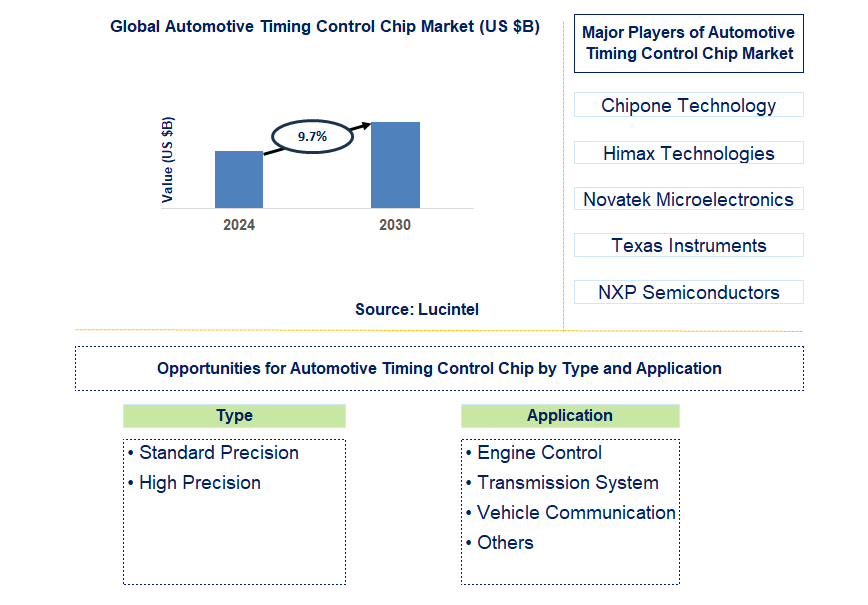
Key data points: The growth forecast = 9.7% annually for the next 6 years. Scroll below to get more insights. This market report covers trends, opportunities, and forecasts in the global automotive timing control chip market to 2030 by type (standard precision and high precision), application (engine control, transmission system, vehicle communication, and others), and region (North America, Europe, Asia Pacific, and the Rest of the World)
We'll send your sample report shortly.
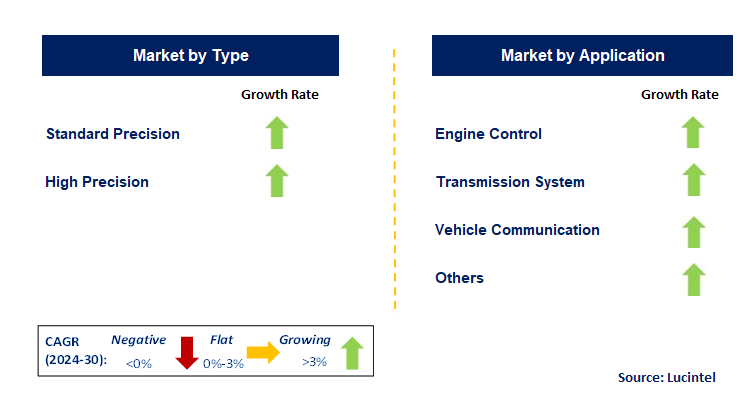
• Lucintel forecasts that, within the type category, standard precision is expected to witness higher growth over the forecast period.
• Within the application category, engine control is expected to witness higher growth.
• In terms of regions, APAC is expected to witness the highest growth over the forecast period. A more than 150-page report is developed to help in your business decisions.
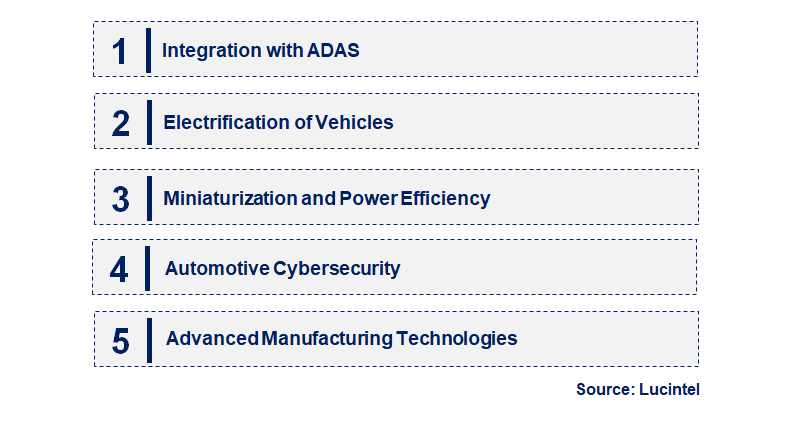
• Integration with ADAS: Timing control chips are increasingly being integrated into advanced driver-assistance systems (ADAS) to enhance safety while driving and achieve self-driving capability. This integration enables real-time processing and communication, thereby increasing overall vehicle performance and safety features.
• Electrification of Vehicles: There has been a considerable increase in demand for advanced timing control chips designed specifically for electrical drive trains as electric vehicles grow in popularity. Such chips regulate precise motor operation timings aimed at achieving efficient and reliable electric vehicle performance.
• Miniaturization and Power Efficiency: There has been an overwhelming preference toward miniaturizing automotive timing control chips that can fit into smaller spaces, making them more efficient in terms of energy consumption. Small-sized, low-power consuming chips are crucial for modern automobile applications, particularly involving hybrid cars or lightweight vehicles.
• Automotive Cybersecurity: It is critical to ensure that cybersecurity is adequate as vehicle connectivity increases. Timing control chips are being designed with improved security features to guard against cyber threats and preserve the integrity of automotive systems.
• Advanced Manufacturing Technologies: The inclusion of emerging manufacturing technologies such as 5G and AI-driven processes has changed the way timing control chips are manufactured. Chip performance, cost reduction, and simplification of manufacturing processes are some of the benefits associated with these technologies. These trends have resulted in major changes in the automotive timing control chip market by improving safety, efficiency, and technological integration. The auto industry is responding to these trends by transforming vehicle performance and promoting innovation throughout the marketplace.
• Enhanced Processing Capabilities: Improvements in semiconductor technology have led to timing control chips that provide better processing power. For example, these chips support complex automotive systems, thereby making driving safer and more efficient.
• Focus on Electric Vehicles: Timing control chips optimized for electric drivetrains are now available due to growth in the electric vehicle market. These chips improve energy efficiency and performance, promoting widespread adoption of EVs and facilitating environmental objectives.
• Increased Industry Collaboration: Car producers and chip makers are joining together through strategic partnerships aimed at developing customized timing control chips. Such collaborations foster innovation while ensuring that modern automotive systems have highly specialized chips that enhance overall functionality.
• Regulatory Compliance Innovations: New regulations demand environmentally friendly and energy-efficient timing control chips (TCC). Manufacturers concentrate on creating TCCs that meet strict emissions and safety requirements, enabling them to comply with rules while fostering sustainable automobile practices.
• Investments in R&D: Considerable investment in research and development is advancing timing control chip technology. Innovation and market growth are driven by these investments through improved chip design, performance, and production efficiencies. These developments have shaped the automotive timing control chip market by improving chip capabilities, assisting in electric vehicle integration, encouraging industry collaboration, ensuring regulatory compliance, and driving technological innovation. These factors collectively influence market dynamics and growth.
• Engine Control Systems: Timing control chips are important for optimizing engine performance and fuel efficiency. For instance, there are prospects of developing advanced chips that support precise engine management, facilitating more economical fuel consumption while reducing emissions in line with both performance objectives and environmental goals.
• Transmission Systems: In transmission systems, accurate gear shifting and overall management depend on timing control chips. The possibilities include designing chips that enhance shifting accuracy, leading to a better ride quality and contributing to improved fuel economy. This also aligns with demand for advanced transmission technologies.
• Vehicle Communication Systems: In the era of connected vehicles, timing control chips play a vital role in vehicle-to-everything (V2X) communication. Opportunities include creating chips that facilitate reliable communication between vehicles, infrastructure, and other entities, thereby supporting the growth of smart transportation systems.
• Infotainment Systems: Sophisticated infotainment systems are increasingly dependent on timing control chips. Opportunities involve enhancing chips to support high-performance multimedia processing, improving audio and video quality, and enabling seamless connectivity features within vehicles.
• Safety and ADAS Systems: Timing control chips are essential for advanced driver-assistance systems (ADAS) and safety feature implementations. Opportunities include developing chips with enhanced processing capabilities to support advanced safety functions and improve overall vehicle safety, meeting growing consumer and regulatory demands. These strategic growth opportunities highlight areas of potential expansion and innovation in the automotive timing control chip market. By focusing on key applications, manufacturers can drive advancements, meet evolving automotive needs, and capitalize on emerging market trends.
• Technological Advancements: The rapid progress in semiconductor technology leads to an increasing need for advanced timing control chips. Chip design innovations and performance improvements enhance vehicle systems that support new automotive technologies, improve energy utilization of vehicles, and increase safety levels.
• Growth of Electric Vehicles: The demand for timing control chips optimized for electric drivetrains arises from the increased adoption of electric vehicles (EVs). These chips have become a necessity because they help govern motor operations, enhancing efficiency and reliability in EV operation.
• Focus on Safety and ADAS: Growing focus on vehicle safety, coupled with advanced driver-assistance systems (ADAS), drives demand for high-performance timing control chips. These modules can play vital roles in advancing existing security features while facilitating autonomous driving platforms, ensuring safe driving zones.
• Automotive Connectivity: Demand for timing control chips enabling robust communication systems supporting efficient V2X communication development is driven by increasing vehicle-to-everything (V2X) communication and connected car technologies. These chips are crucial in the development of smarter and more connected vehicles.
• Investments in R&D: Major investments in research and development are leading to advancements in timing control chip technology. Improved chip performance, reduced costs, and enhanced manufacturing processes resulting from these investments drive market growth. Challenges in the automotive timing control chip market are:
• Supply Chain Disruptions: Global supply chain challenges, including shortages of semiconductor materials and components, pose a significant threat to the automotive timing control chip market. These disruptions can increase production costs and delay market stability.
• Regulatory Compliance: Adherence to strict automotive regulations and environmental standards creates a complex environment for chip manufacturers. This requires additional resources and could impact production processes, altering costs and market dynamics.
• Intense Market Competition: The automotive timing control chip market is highly competitive, with many players struggling for market share. High levels of competition may result in price pressures, impacting profitability, increasing the necessity for innovation, and differentiation by organizations. Technological advancements, electric vehicle growth, safety focus, connectivity, and R&D investments are some of the drivers shaping the automotive timing control chip market. However, strategic navigation is required to overcome challenges like supply chain disruptions and ensure compliance with stringent regulatory requirements without impairing cost-effectiveness or affecting the time-based nature of the manufacturing process. Taken together, these factors influence both opportunities for growth and changes in market dynamics.
• Chipone Technology
• Himax Technologies
• Novatek Microelectronics
• Texas Instruments
• NXP Semiconductors
• Infineon Technologies
• STMicroelectronics
• Standard Precision
• High Precision
• Engine Control
• Transmission System
• Vehicle Communication
• Others
• North America
• Europe
• Asia Pacific
• The Rest of the World
• United States: In America, timing control chips have been incorporated into advanced driver-assistance systems (ADAS) structures and electric vehicles (EVs). Major vehicle manufacturers join hands with chip makers to improve better performing chips that enhance safety measures. Some of these innovations include better processing power coupled with integration within autonomous driving features.
• China: The Chinese automotive timing control chip market is growing rapidly with focus on supporting its transition towards electric cars as well as smart automotive technologies. Chinese companies invest heavily into R&D activities aiming at developing chips which are highly efficient but cost reasonable amounts of money. Government incentives together with strategic partnerships are encouraging innovation while reducing reliance on foreign technology.
• Germany: Germany remains at the forefront of car technology focusing on improvement in timing control chips for better engine management complying with strict emission standards. These recent changes involve making them more durable so they survive longer even when combined next-generation transmission systems which result in increased fuel efficiency as well reduced greenhouse gas emissions per mile travelled by a typical vehicle.
• India: The Indian market for automotive timing control chips is expanding as local manufacturers enhance their capabilities. This includes cost-effective solutions tailored to the country's growing domestic automotive sector. Collaborations with international technology partners are improving local expertise and reducing reliance on imported chips, fostering market growth.
• Japan: Japan is fast tracking development of its automotive timing control chip technology to accommodate hybrid and electric vehicles. Innovations made recently include smaller sizes as well as greater power efficiency in line with advancing automobile technologies while maintaining competitive edge globally.


• Chipone Technology
• Himax Technologies
• Novatek Microelectronics
• Texas Instruments
• NXP Semiconductors
• Infineon Technologies
• STMicroelectronics Q5. Which automotive timing control chip market segment will be the largest in future? Answer: Lucintel forecasts that standard precision is expected to witness higher growth over the forecast period. Q6. In automotive timing control chip market, which region is expected to be the largest in next 5 years? Answer: APAC is expected to witness the highest growth over the forecast period. Q.7 Do we receive customization in this report? Answer: Yes, Lucintel provides 10% customization without any additional cost.


Choose a license that fits your team. Instant PDF delivery.
Prices exclude taxes. Instant delivery. Custom licensing available on request.
Market Report · July 24, 2026
Market Report · July 20, 2026
Market Report · July 20, 2026
Trusted partner for strategic intelligence and business growth


Receive a complimentary market analysis tailored to your industry. Our analysts will identify key growth opportunities and competitive dynamics specific to your business.

Market size, growth rate, and key trend analysis for your specific sector.

Top competitor positioning and market share analysis.

Strategic recommendations backed by data-driven insights.
Get curated market intelligence and competitive moves straight to your inbox.
By subscribing, you agree to receive our monthly insights. Unsubscribe anytime.
Receive a complimentary market analysis tailored to your industry. Our analysts will identify key growth opportunities and competitive dynamics specific to your business.
Market size, growth rate, and key trend analysis for your specific sector.
Top competitor positioning and market share analysis.
Strategic recommendations backed by data-driven insights.
Get curated market intelligence, emerging trends, and competitive moves straight to your inbox each month.
By subscribing, you agree to receive our monthly insights. Unsubscribe anytime.
We'll send your sample report shortly.