
Market Report · July 29, 2026

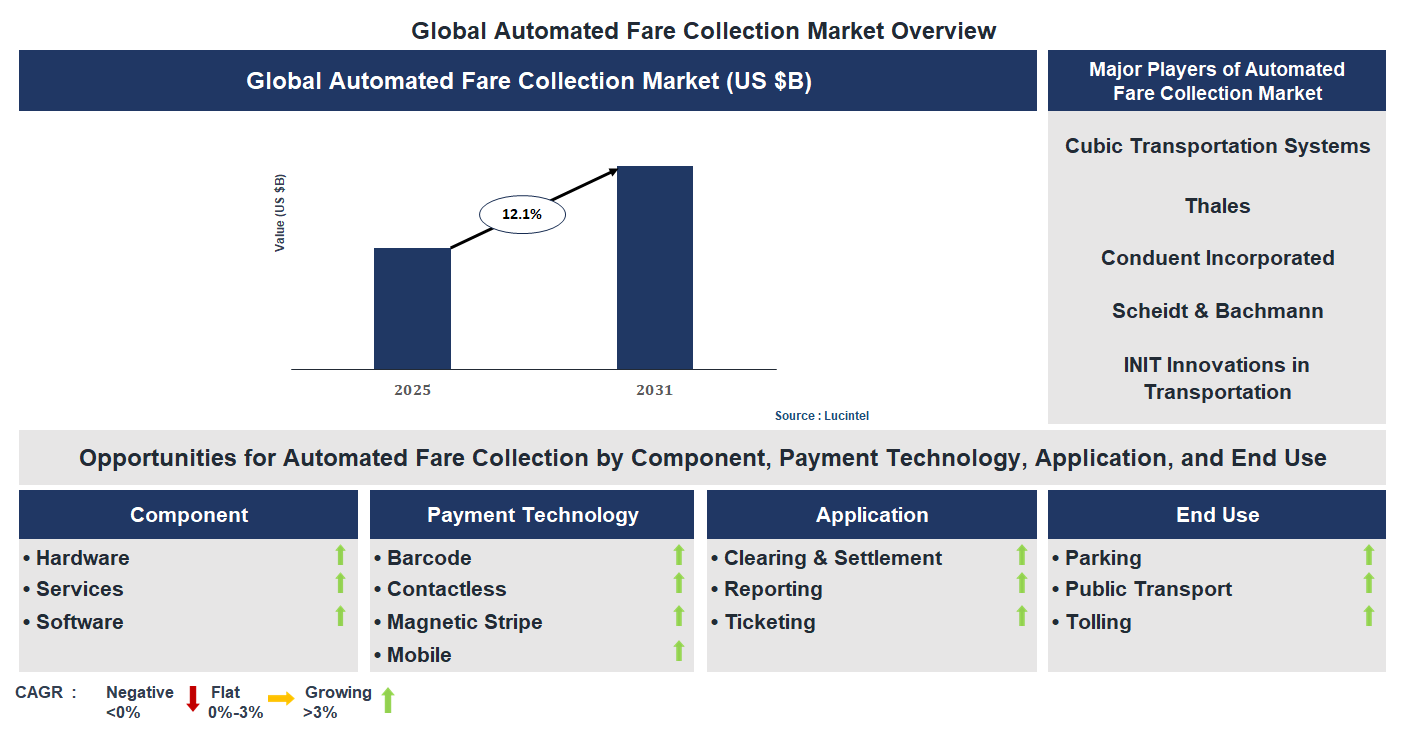
Key data points: The growth forecast = 12.1% annually for the next 7 years. Scroll below to get more insights. This market report covers trends, opportunities and forecasts in automated fare collection market to 2031 by component (hardware, services, and software), payment technology (barcode, contactless, magnetic stripe, and mobile), application (clearing & settlement, reporting, and ticketing), end use (parking, public transport, and tolling), and region (North America, Europe, Asia Pacific, and the Rest of the World)
We'll send your sample report shortly.
• Lucintel forecasts that, within the component category, service is expected to witness the highest growth over the forecast period.
• Within the end use category, public transport is expected to witness the highest growth.
• In terms of region, APAC is expected to witness the highest growth over the forecast period. Gain valuable insights for your business decisions with our comprehensive 150+ page report. Sample figures with some insights are shown below.
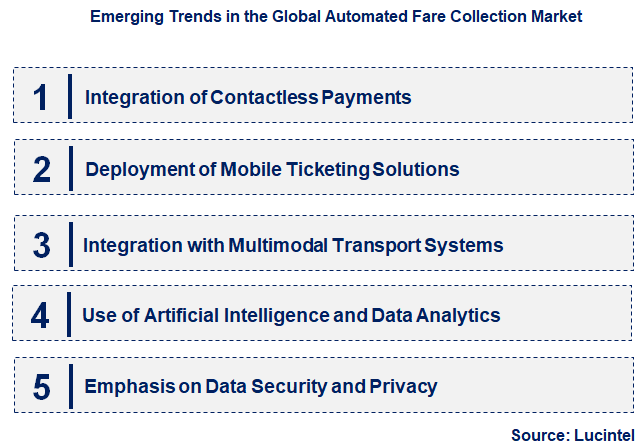
• Integration of Contactless Payments: The adoption of contactless payment methods such as NFC-enabled cards and mobile wallets is revolutionizing fare collection by offering faster, more convenient transactions. This trend reduces queuing times and enhances user experience, encouraging more ridership. Transit agencies are increasingly partnering with financial institutions to enable seamless payments, which also improve security and reduce cash handling costs. The widespread acceptance of contactless payments is making fare collection more efficient and user-friendly, aligning with the digital transformation in urban transportation.
• Deployment of Mobile Ticketing Solutions: Mobile ticketing apps are gaining popularity as they allow passengers to purchase, store, and validate tickets via smartphones. This trend offers flexibility, reduces the need for physical tickets, and enables real-time fare management. Transit authorities benefit from improved data collection and analytics, which aid in service planning and fare policy adjustments. Mobile solutions also support dynamic pricing and personalized offers, enhancing customer engagement. As smartphone penetration increases, mobile ticketing is becoming a vital component of modern AFC systems, driving convenience and operational efficiency.
• Integration with Multimodal Transport Systems: Modern AFC systems are increasingly integrated with multimodal transportation networks, including buses, trains, bike-sharing, and ride-hailing services. This integration facilitates seamless travel across different modes with a single ticket or payment method, improving user convenience. It also enables better data sharing and coordination among transit providers, leading to optimized routes and schedules. Such systems support the development of smart cities by providing comprehensive mobility solutions, reducing congestion, and promoting sustainable transportation options. The trend signifies a move toward holistic, interconnected transit ecosystems.
• Use of Artificial Intelligence and Data Analytics: AI and data analytics are being incorporated into AFC systems to enhance operational efficiency and customer experience. AI-driven algorithms enable predictive maintenance, demand forecasting, and dynamic fare pricing. Data analytics provide insights into passenger behavior, peak travel times, and revenue patterns, allowing transit agencies to optimize services and reduce costs. AI-powered chatbots and virtual assistants improve customer support, while facial recognition and biometric authentication enhance security. These technologies are making AFC systems smarter, more responsive, and capable of supporting future innovations in urban mobility.
• Emphasis on Data Security and Privacy: As AFC systems become more digital and interconnected, ensuring data security and protecting user privacy are paramount. Transit agencies are investing in advanced cybersecurity measures, encryption protocols, and compliance with data protection regulations. Transparent privacy policies and user consent mechanisms are being implemented to build trust among passengers. The focus on security not only safeguards sensitive information but also prevents fraud and cyberattacks, which could disrupt services. This trend underscores the importance of balancing technological innovation with robust security frameworks to sustain market growth and user confidence. In summary, these emerging trends are fundamentally reshaping the automated fare collection market by making systems more integrated, secure, and user-centric. They are driving efficiency, enhancing customer experience, and supporting the development of smarter, more sustainable urban transportation networks. As these trends continue to evolve, they will play a crucial role in shaping the future of public transit worldwide.
• Adoption of Contactless Payment Systems: The integration of contactless payment methods such as NFC-enabled cards and mobile wallets has revolutionized fare collection. This development allows passengers to pay quickly and conveniently, reducing wait times and improving overall transit efficiency. Transit agencies benefit from reduced cash handling and fraud risks, leading to cost savings and enhanced security. The widespread adoption of contactless payments is expected to continue, further modernizing fare collection processes globally.
• Implementation of Mobile Ticketing Solutions: Mobile ticketing apps enable passengers to purchase, store, and validate tickets via smartphones. This development enhances user convenience by eliminating the need for physical tickets and reducing paper waste. It also allows for real-time updates, personalized offers, and integrated journey planning. Transit authorities benefit from improved data collection and operational insights, facilitating better service planning and revenue management. The growth of mobile ticketing is a key driver in the digital transformation of the AFC market.
• Integration of IoT and Big Data Analytics: The incorporation of Internet of Things (IoT) devices and big data analytics into AFC systems provides real-time monitoring and predictive maintenance. This development improves system reliability, reduces downtime, and enhances passenger safety. Data-driven insights enable transit agencies to optimize routes, manage fare evasion, and personalize services. The use of IoT and analytics is fostering smarter, more responsive transit networks, contributing to increased efficiency and passenger satisfaction.
• Deployment of Biometric Authentication: Biometric technologies such as fingerprint and facial recognition are being integrated into AFC systems for secure and contactless fare validation. This development enhances security by reducing fraud and identity theft while providing a seamless user experience. Biometric authentication also expedites boarding processes, decreasing congestion at entry points. As privacy concerns are addressed, biometric solutions are expected to become more prevalent, offering a high level of security and convenience in fare collection.
• Development of Integrated Multimodal Fare Systems: The shift towards unified fare systems that support multiple modes of transportation—buses, trains, bikes, and shared mobility—has gained momentum. This development simplifies fare management for passengers and encourages the use of diverse transit options. It also enables transit agencies to better coordinate services and optimize revenue streams. The integration of multimodal systems is fostering a more connected, flexible, and user-centric transportation ecosystem, driving growth in the AFC market. In summary, these recent developments are significantly transforming the automated fare collection market by enhancing convenience, security, and operational efficiency. The adoption of contactless payments, mobile solutions, IoT integration, biometric authentication, and multimodal systems are collectively driving market expansion and improving passenger experiences. As technology continues to evolve, the AFC market is poised for sustained growth, supporting smarter and more sustainable urban transportation networks worldwide.
• Metro Systems: Expansion and modernization of metro networks are creating opportunities for advanced AFC solutions. Implementing contactless payment systems and integrated ticketing platforms streamline passenger flow and reduce congestion. This enhances user convenience and operational efficiency, encouraging more ridership and supporting urban mobility goals.
• Bus Networks: Adoption of mobile ticketing and smart card systems in bus networks is increasing. These solutions enable quick boarding, reduce cash handling, and improve fare management accuracy. The integration of real-time data analytics further optimizes routes and schedules, boosting overall service quality.
• Railways: The railway sector is investing in interoperable AFC systems that support multiple modes of transportation. This integration facilitates seamless travel across different transit modes, attracting more commuters and increasing revenue. Enhanced security features and data analytics also improve operational safety and efficiency.
• Airports: Implementation of contactless and biometric fare collection at airports enhances passenger experience by reducing wait times and simplifying access to transportation services. These innovations support the growing demand for fast, secure, and hygienic transit options in busy airport environments.
• Toll Collection: The shift towards electronic toll collection systems reduces congestion and vehicle emissions on highways. Advanced RFID and video-based systems enable automated, accurate toll processing, leading to improved traffic flow and reduced operational costs for toll operators. In summary, these growth opportunities across key applications are transforming the automated fare collection market by promoting efficiency, security, and user convenience. They are driving technological innovation, expanding market reach, and supporting sustainable urban mobility solutions, ultimately shaping a more connected and intelligent transportation ecosystem.
• Technological Innovation: The rapid development of contactless payment systems, mobile wallets, and smart card technologies has revolutionized fare collection processes. These innovations enable faster, more convenient transactions for passengers and reduce operational costs for transit agencies. The integration of IoT and AI further enhances system efficiency and data analytics capabilities, supporting smarter transportation networks. As technology continues to evolve, AFC systems are becoming more adaptable and user-friendly, driving widespread adoption across urban and suburban transit systems worldwide.
• Urbanization and Population Growth: Increasing urban populations and the expansion of metropolitan areas are fueling demand for efficient transportation solutions. Automated fare collection systems facilitate seamless travel experiences, reduce congestion, and improve service reliability. Governments and transit authorities are investing heavily in modernizing infrastructure to accommodate growing passenger volumes, which in turn accelerates AFC deployment. This trend is particularly prominent in developing countries where rapid urbanization necessitates scalable and efficient fare management solutions.
• Government Initiatives and Regulatory Support: Many governments are actively promoting the adoption of AFC systems through policies, funding, and regulatory frameworks. These initiatives aim to enhance public transportation efficiency, reduce fare evasion, and promote cashless transactions. Regulatory support ensures interoperability among different transit modes and standardizes fare collection procedures, fostering a cohesive transportation ecosystem. Such backing not only accelerates market growth but also encourages innovation and investment in advanced AFC technologies.
• Cost Efficiency and Revenue Management: Automated fare collection systems significantly reduce operational costs associated with manual ticketing and fare enforcement. They enable real-time revenue tracking, reduce fare leakage, and improve overall financial management for transit agencies. The ability to implement dynamic pricing and integrate with other revenue streams further enhances profitability. As transit authorities seek to optimize budgets and improve service quality, AFC systems become indispensable tools for effective revenue management and cost control.
• Increasing Adoption of Contactless Payments: The global shift towards contactless payment methods, driven by consumer preference for convenience and safety, is a major market driver. NFC-enabled smartphones, contactless credit/debit cards, and wearable devices facilitate quick and hygienic fare transactions. This trend is reinforced by the COVID-19 pandemic, which accelerated the adoption of touchless payment options to minimize physical contact. The widespread acceptance of contactless payments is expanding the user base and encouraging transit agencies to upgrade their fare collection infrastructure accordingly. The challenges facing automated fare collection market include:-
• High Implementation and Maintenance Costs: Deploying advanced AFC systems requires significant capital investment in hardware, software, and infrastructure upgrades. Ongoing maintenance, system updates, and staff training add to operational expenses. For many transit agencies, especially in developing regions, these costs can be prohibitive, limiting widespread adoption. Balancing the initial investment with long-term benefits remains a critical challenge for market growth.
• Cybersecurity and Data Privacy Concerns: As AFC systems become more digitized and interconnected, they are increasingly vulnerable to cyber threats such as hacking, data breaches, and system disruptions. Protecting sensitive passenger data and ensuring system integrity are paramount, yet challenging. Any security lapse can undermine public trust, lead to financial losses, and disrupt transit operations. Developing robust cybersecurity measures and complying with data privacy regulations are ongoing concerns for stakeholders.
• Regulatory and Standardization Challenges: The lack of uniform standards and regulatory frameworks across regions complicates interoperability and system integration. Differing policies regarding data sharing, security protocols, and fare structures hinder seamless operation across multiple transit agencies and modes. Navigating complex regulatory environments can delay deployment and increase costs, impeding the market’s overall growth potential. In summary, the automated fare collection market is driven by technological advancements, urbanization, government support, cost efficiencies, and contactless payment adoption. However, high costs, cybersecurity risks, and regulatory hurdles pose significant challenges. These factors collectively influence the pace and scope of market expansion, requiring stakeholders to innovate and collaborate to overcome obstacles. The market’s future depends on balancing these drivers and challenges to create sustainable, efficient, and secure fare collection solutions that meet evolving transportation needs.
• Cubic Transportation Systems
• Thales
• Conduent Incorporated
• Scheidt & Bachmann
• INIT Innovations in Transportation
• Vix Technology
• Masabi
• Hitachi
• International Business Machines Corporation
• NEC Corporation
• Hardware
• Services
• Software
• Barcode
• Contactless
• Magnetic Stripe
• Mobile
• Clearing & Settlement
• Reporting
• Ticketing
• Parking
• Public Transport
• Tolling
• North America
• Europe
• Asia Pacific
• The Rest of the World
• United States: The US market has seen rapid adoption of contactless and mobile payment systems, driven by major transit agencies upgrading infrastructure. Innovations include integration with smart cards and mobile apps, enhancing user convenience. Public-private partnerships are fostering technological advancements, and there is a focus on implementing AI for fare management and security. The US also emphasizes data analytics to optimize transit operations and improve customer experience.
• China: China leads in AFC deployment, with extensive use of QR code-based systems and mobile payment platforms like Alipay and WeChat Pay. The government promotes digital payment integration across urban transit networks, expanding contactless solutions rapidly. Smart city initiatives are driving the development of integrated fare collection systems, and investments are increasing in AI and IoT to streamline fare management and reduce fraud. The market is characterized by high adoption rates and innovative payment methods.
• Germany: The German market is focusing on integrating AFC systems with existing ticketing infrastructure, emphasizing interoperability across regions. Contactless bank card payments and mobile ticketing are becoming standard. There is a growing trend toward using blockchain technology for secure transactions. The government encourages sustainable transit solutions, and private companies are investing in advanced fare management systems that improve efficiency and user experience, especially in urban and suburban areas.
• India: India is witnessing rapid growth in AFC adoption, driven by government initiatives like the Digital India campaign and Smart Cities Mission. Contactless card payments and mobile wallets are increasingly used in metro and bus systems. The focus is on expanding infrastructure to rural and semi-urban areas, with investments in IoT and AI to enhance fare collection and reduce leakage. The market is characterized by affordability and scalability, aiming to improve urban mobility and reduce congestion.
• Japan: Japans AFC market is characterized by high technological integration, including contactless smart cards and mobile ticketing solutions. The country emphasizes seamless integration with various transportation modes, supporting multi-modal transit. Innovations include the use of AI for fare management and customer service. Japan also invests in secure, contactless payment systems to cater to an aging population and promote accessibility. The market continues to evolve with a focus on sustainability and user convenience.


• Cubic Transportation Systems
• Thales
• Conduent Incorporated
• Scheidt & Bachmann
• INIT Innovations in Transportation
• Vix Technology
• Masabi
• Hitachi
• International Business Machines Corporation
• NEC Corporation Q5. Which automated fare collection market segment will be the largest in future? Answer: Lucintel forecasts that, within the component category, service is expected to witness the highest growth over the forecast period. Q6. In automated fare collection market, which region is expected to be the largest in next 5 years? Answer: In terms of region, APAC is expected to witness the highest growth over the forecast period. Q7. Do we receive customization in this report? Answer: Yes, Lucintel provides 10% customization without any additional cost.


Choose a license that fits your team. Instant PDF delivery.
Prices exclude taxes. Instant delivery. Custom licensing available on request.
Market Report · July 29, 2026
Market Report · July 20, 2026
Market Report · July 20, 2026
Trusted partner for strategic intelligence and business growth


Receive a complimentary market analysis tailored to your industry. Our analysts will identify key growth opportunities and competitive dynamics specific to your business.

Market size, growth rate, and key trend analysis for your specific sector.

Top competitor positioning and market share analysis.

Strategic recommendations backed by data-driven insights.
Get curated market intelligence and competitive moves straight to your inbox.
By subscribing, you agree to receive our monthly insights. Unsubscribe anytime.
Receive a complimentary market analysis tailored to your industry. Our analysts will identify key growth opportunities and competitive dynamics specific to your business.
Market size, growth rate, and key trend analysis for your specific sector.
Top competitor positioning and market share analysis.
Strategic recommendations backed by data-driven insights.
Get curated market intelligence, emerging trends, and competitive moves straight to your inbox each month.
By subscribing, you agree to receive our monthly insights. Unsubscribe anytime.
We'll send your sample report shortly.