
Market Report · June 29, 2026

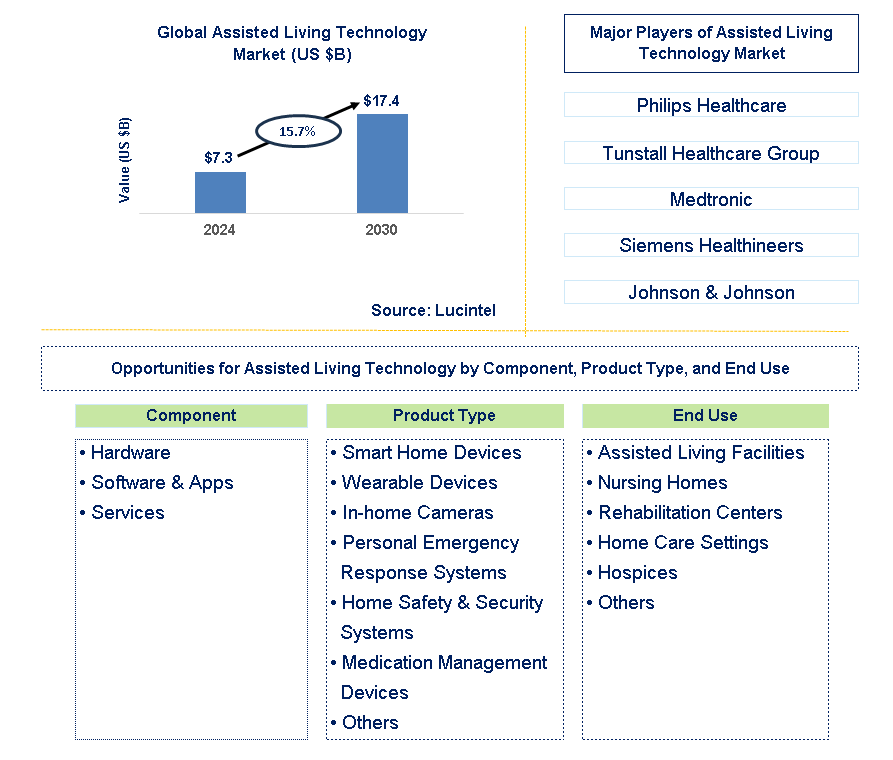
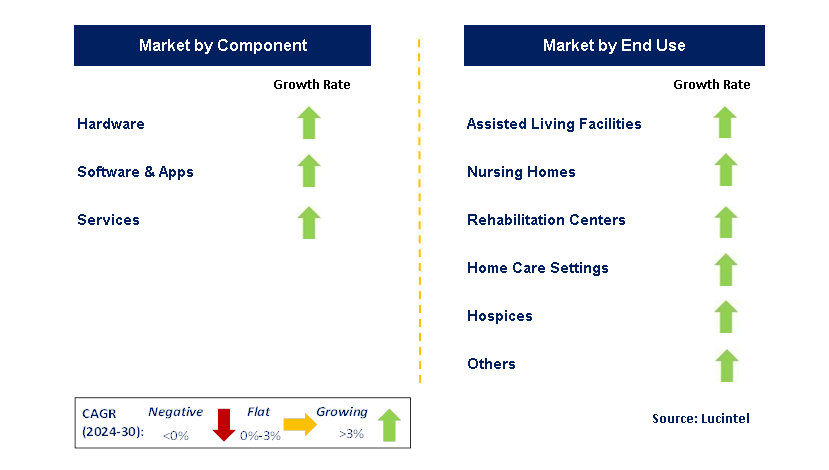
Key data points: The market size in 2030 = $17.4 billion, growth forecast = 15.7% annually next 6 years. Scroll below to get more insights. This market report covers trends, opportunities, and forecast in the global assisted living technology market to 2030 by component (hardware, software & apps, and services), product type (smart home devices, wearable devices, in-home cameras, personal emergency response systems, home safety & security systems, medication management devices, and others), end use (assisted living facilities, nursing homes, rehabilitation centers, home care settings, hospices, and others), and region (North America, Europe, Asia Pacific, and the Rest of the World)
We'll send your sample report shortly.
• United States: In the United States, these technologies have been embraced faster, especially by firms that are making available solutions such as remote monitoring systems and health management apps. Telehealth services have been highly embraced; they facilitate real-time assessment of health. There is also a change in regulation frameworks that would encourage easy access to these seniors in different parts of the country.
• China: China has huge investments in robotics focused on elder care, especially companionship and assistant tasks. The government also emphasizes smart aging initiatives by developing smart communities with integrated monitoring systems and digital health platforms allowing caregivers to trace patient data and coordinate care.
• Germany : Germany has designed to develop assistive technologies, which concentrate on usability and leveraging existing health systems. Recently, Germany developed wearable health monitoring devices and platforms that allow caregivers and family members to communicate with each other. The government is also supporting research in gerontechnology for innovative solutions related to elder care.
• India: Startups that pursue telemedicine and health monitoring are changing the face of elderly care. More recent trends include mobile apps on health monitoring and online consultation services. These strategies focus on affordability and accessibility so assisted living technologies become less exclusive and more available to various population groups. Other collaborations with NGOs have been driving these initiatives forward.
• Japan: The country remains at the top in robotics for elder care through developments on humanoid robots that assist in daily living activities. The country is also investing in smart homes to improve safety and comfort in the life of seniors. With population aging on the rise, there has been a growing concern for integrated solutions taking into account the physical and emotional needs of the elderly.
• AI-powered monitoring systems: With AI technology, real-time health monitoring coupled with predictive analytics supports proactive care management. These systems warn the caregiver about possible health complications before they reach dangerous levels; hence, patient outcomes are improving drastically.
• Telehealth: Telehealth is now being included as part of the norm while seniors can now have medical consultations done away from a hospital. This reduces highly the visitation to the doctors' office and encourages continuous health monitoring, hence making health care easy to access for those with mobility challenges.
• Smart Home Technology: The devices in smart homes include the integrated automated lighting system and safety technologies into assisted living facilities. Such technologies improve safety and enable elders to live independently while caregivers are in a position to monitor their well-being.
• Wearable Health Devices: Use of Worn Health Monitors: Wearable devices, such as heart rate and activity monitors, are gaining much popularity. Both seniors and their caregivers receive their health data in real time to undertake timely interventions and, thus, design personal care strategies.
• Robotics for Companionship: The number of robots used for companion purposes is on the rise, particularly in countries such as Japan. These devices reduce feelings of loneliness and provide physical support for patients, thereby bridging the gap between technology and emotional well-being for seniors.
These trends are transforming the Assisted Living Technology market at its core and both are improving the quality of care and overall experience for seniors as well as their caregivers.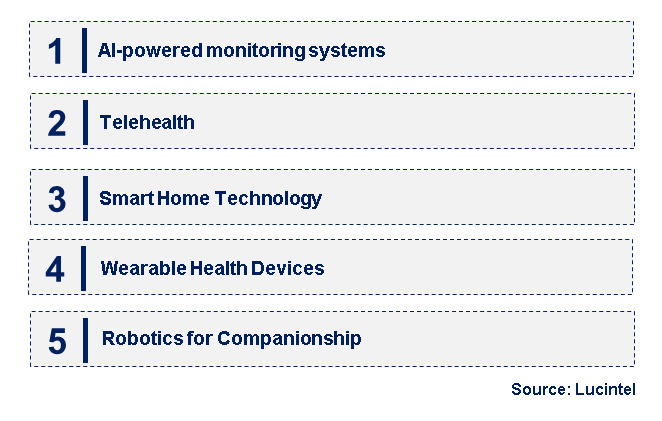
• AI-Based Health Monitoring: The use of emerging AI algorithms in monitoring systems has identified real-time health data for analysis. With this technology, there are timely interventions that cut down the admissions into hospitals and, therefore, enhance the health outcomes in old patients.
• Increased Telehealth: Demand for telehealth has not left a stone unturned and has led to accessing care from home by seniors. This shift also increases access to healthcare and minimizes the risks in direct exposure to several illnesses, particularly imperative in the post-pandemic world of today.
• Smart Home Integration: More sophisticated technologies for smart homes, including those that enhance daily living, are being introduced to support older adults' safety and independence. More sophisticated features, including fall detection and automatic reminders, increase safety and independence, thus enabling older adults to spend more time living in their own homes, free from undue anxiety.
• Robotic Care Assistants: Advanced robotics technology now has more sophisticated new models tailored towards elder care. These robots help with the everyday tasks involved, allow companionship as well, and serve as monitors for health conditions in order to reduce the burden on caregivers and have better quality life for elderly people.
• Wearable Health Tech: Advanced wearable medical devices recording vital signs have become in vogue. Such wearables track health metrics but send this information to caregivers in near real time, so enable more person-centered care and timely intervention of any health changes.
Assisted Living Technology Market in its Fast Evolution towards Efficient and Responsive Solutions for an Aging Population• Remote Patient Monitoring: A significant growth opportunity arises from the increasing demand for remote patient monitoring solutions. With the remote patient monitoring technologies, it becomes possible to track health continuously and intervene in a timely manner and thereby manage chronic conditions more efficiently.
• Telemedicine platforms: The extra functionalities of the telemedicine applications allow elderly people to talk to providers from their home. Besides greater accessibility, this also increases patient satisfaction and better health outcomes.
• Smart Home Innovations: Involvement in technologies in homes built for seniors will lead to safety and independence. Some of these solutions include fall detection systems that can automatically send out emergency alerts and can even enhance the living condition for the elderly.
• Mobile Health Applications: Mobile health applications offering specific personal plans for healthy management are priced quite high because they may be used in supporting seniors to be in contact and have involvement of the caregivers 24/7.
• Robot Assistance Technologies: The rising use of robotic solutions for companion and assistant support has turned into a niche. Robotic devices could emotionally and practically support elderly people regarding their needs and offer helpful solutions to caregivers.
These growth opportunities will, in turn, significantly impact the Assisted Living Technology market by driving innovation that is specific to a current unserved need in the community of seniors and by accelerating improvement in the delivery of care as a whole.• Philips Healthcare
• Tunstall Healthcare Group
• Medtronic
• Siemens Healthineers
• Johnson & Johnson
• Honeywell
• ResMed
• General Electric
• ADT
• Legrand
• Hardware
• Software & Apps
• Services
• Smart Home Devices
• Wearable Devices
• In-home Cameras
• Personal Emergency Response Systems
• Home Safety & Security Systems
• Medication Management Devices
• Others
• Assisted Living Facilities
• Nursing Homes
• Rehabilitation Centers
• Home Care Settings
• Hospices
• Others
• North America
• Europe
• Asia Pacific
• The Rest of the World


• Philips Healthcare
• Tunstall Healthcare Group
• Medtronic
• Siemens Healthineers
• Johnson & Johnson
• Honeywell
• ResMed
• General Electric
• ADT
• Legrand
Q6. Which assisted living technology market segment will be the largest in future?

Choose a license that fits your team. Instant PDF delivery.
Prices exclude taxes. Instant delivery. Custom licensing available on request.
Market Report · June 29, 2026
Market Report · May 18, 2026
Trusted partner for strategic intelligence and business growth


Receive a complimentary market analysis tailored to your industry. Our analysts will identify key growth opportunities and competitive dynamics specific to your business.

Market size, growth rate, and key trend analysis for your specific sector.

Top competitor positioning and market share analysis.

Strategic recommendations backed by data-driven insights.
Get curated market intelligence and competitive moves straight to your inbox.
By subscribing, you agree to receive our monthly insights. Unsubscribe anytime.
Receive a complimentary market analysis tailored to your industry. Our analysts will identify key growth opportunities and competitive dynamics specific to your business.
Market size, growth rate, and key trend analysis for your specific sector.
Top competitor positioning and market share analysis.
Strategic recommendations backed by data-driven insights.
Get curated market intelligence, emerging trends, and competitive moves straight to your inbox each month.
By subscribing, you agree to receive our monthly insights. Unsubscribe anytime.
We'll send your sample report shortly.