
Market Report · July 16, 2026

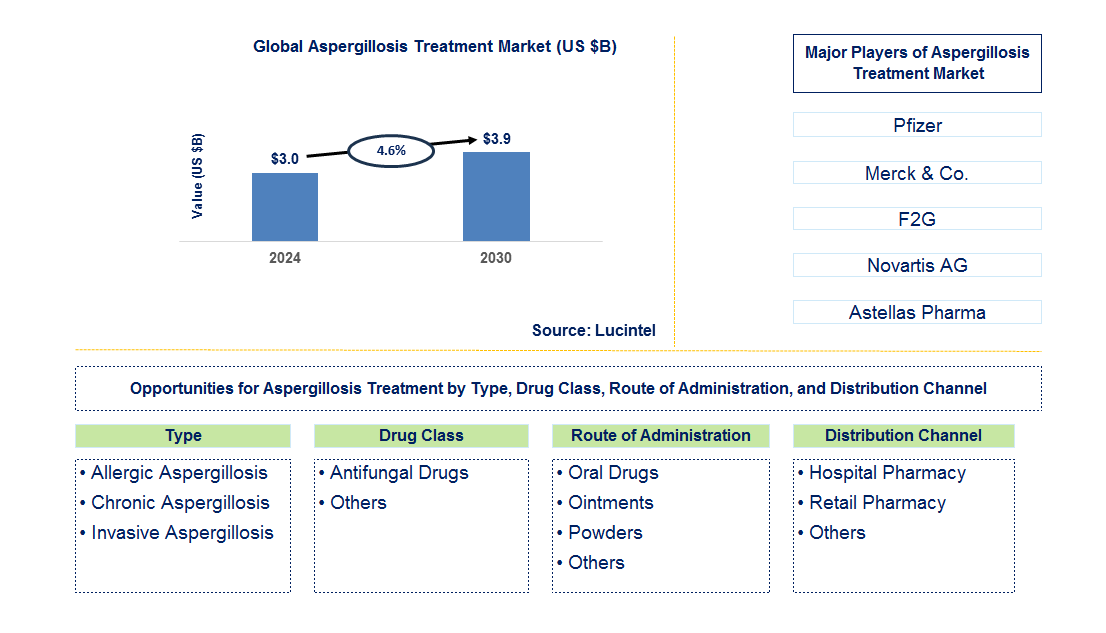
Key data points: The market size in 2030 = $3.9 billion, growth forecast = 4.6% annually next 6 years. Scroll below to get more insights. This market report covers trends, opportunities, and forecasts in the global aspergillosis treatment market to 2030 by type (allergic aspergillosis, chronic aspergillosis, and invasive aspergillosis), drug class (antifungal drugs and others), route of administration (oral drugs, ointments, powders, and others), distribution channel (hospital pharmacy, retail pharmacy, and others), and region (North America, Europe, Asia Pacific, and the Rest of the World)
We'll send your sample report shortly.
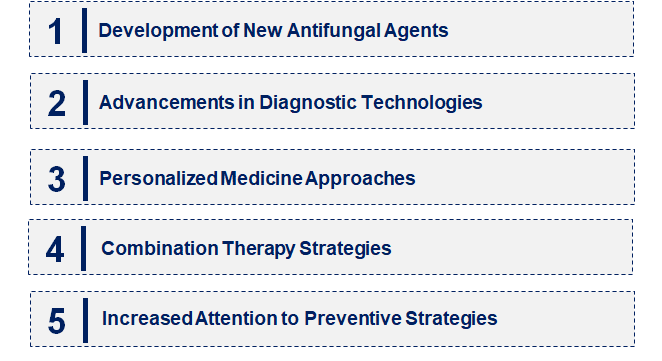
• Development of New Antifungal Agents: Recent developments have introduced newer antifungal agents such as rezafungin and isavuconazole against aspergillosis. These drugs demonstrate better safety profiles and higher efficacy than traditional medicines like voriconazole or amphotericin B. For instance, isavuconazole improves tolerability, allowing for less frequent administration, which is beneficial for patients experiencing serious infections. Consequently, rezafungin, a next-generation echinocandin, could effectively treat invasive fungal infections with fewer side effects than other existing antifungal medications. With this introduction, the limitations associated with earlier treatments have been addressed while ensuring various approaches to personalize medication.
• Advancements in Diagnostic Technologies: The use of high-sensitivity PCR assays, along with galactomannan assays and next-generation sequencing (NGS), has transformed the diagnosis of aspergillosis. This technology allows for early diagnosis by detecting specific biomarkers or fungal DNA from patient samples (Flying et al., 2017). Time is saved in starting therapy because blood tests using galactomannan assays detect the presence of fungal antigens. NGS provides a comprehensive fungal species profile, thereby improving diagnosis and targeting treatment strategies.
• Personalized Medicine Approaches: Personalized medicine targeting aspergillosis involves customizing therapies based on individual patient characteristics such as genetic factors, co-morbidities, and responses to earlier treatments. Pharmacogenomics, which studies drug-gene interactions, integrates this information into treatment planning to increase drug efficacy while minimizing side effects. Consequently, it ensures that patients receive the most suitable and beneficial therapies, leading to improved therapeutic outcomes overall. A case in point is when genetic testing identifies patients who could benefit from specific antifungal agents, indicating better ways of managing aspergillosis.
• Combination Therapy Strategies: Combination therapy, involving multiple antifungal medications, has been recommended for managing aspergillosis due to its potential effectiveness and resistance-breaking capabilities. Researchers in various countries have begun examining combinations between drugs such as azoles and echinocandins to achieve synergistic effects (also see Guinea et al., 2018). For instance, combining isavuconazole with an echinocandin can increase its activity against resistant Aspergillus strains (Muller et al., 2016). This approach addresses the limitations of monotherapy by mounting a stronger defense against severe fungal infections.
• Increased Attention to Preventive Strategies: There is a growing focus on preventive strategies aimed at reducing the incidence of aspergillosis, particularly in high-risk populations such as immunocompromised individuals. The risk of infection is being reduced through prophylactic antifungal therapy, improved infection prevention practices, and environmental controls. For example, the incidence of invasive aspergillosis can be significantly reduced by administering preventive antibiotics before stem cell transplantation or chemotherapy at high doses. These measures are critical in managing high-risk patients and improving treatment outcomes. These ongoing changes include the development of new antifungal drugs, improvements in diagnostic technologies, personalization of therapies, combination therapy options for aspergillosis, and a shift toward a more preventative approach to managing this condition, which will help prevent recurrences. These trends have the potential to improve diagnostic accuracy, treatment efficacy, and overall management of aspergillosis, thus raising hope for better patient outcomes. As research and innovation continue to advance, further improvements in therapeutic options and prevention strategies within the aspergillosis treatment market are expected, enhancing the quality of care for these vulnerable patients exposed to this challenging fungal disease.
• Introduction of New Antifungal Agents: In recent years, several new antifungal agents such as isavuconazole and rezafungin have emerged, which have superior effects and safety profiles compared to traditional drugs. Isavuconazole, a broad-spectrum azole, has improved tolerability and a preferable pharmacokinetic profile, making it a valuable alternative to voriconazole. Rezafungin is a novel echinocandin with strong antifungal activity but longer dosing intervals compared to other drugs in its category. These recent therapeutics address some deficiencies of older medicines, including their toxicity and propensity for resistance, thus creating better choices against invasive aspergillosis in patients.
• Advancements in Diagnostic Technologies: Significant advances have been made in diagnostic technologies, including the development of highly sensitive PCR assays and improved galactomannan tests. This means that susceptibility to aspergillosis can be detected earlier than before, facilitating prompt treatment. Highly sensitive PCR assays can detect fungal DNA with greater precision, whereas enhanced galactomannan assays improve the sensitivity and specificity of antigen detection. Consequently, these innovations speed up the diagnosis timeline, resulting in better patient outcomes and reducing mortality rates.
• Emergence of Personalized Medicine Approaches: The trend toward personalized medicine in treating aspergillosis implies that therapies are individualized based on the patient’s specific characteristics and genetic profile. There is an increasing use of pharmacogenomic studies to predict patients’ responses to particular antifungal drugs, optimizing treatment regimens. This technique leads to the best drug choice with minimal adverse effects and improved overall therapeutic outcomes. In addition, personalized medicine helps in managing drug-resistant strains of Aspergillus more effectively, thereby improving treatment efficacy and patient safety.
• Combination Therapy Strategies: Combination therapy strategies have been a focus of research to improve the efficacy of treatments and address issues regarding drug resistance. Such combinations, encompassing various classes of antifungals like azoles and echinocandins, can enhance treatment outcomes (synergistic effect). For example, the use of isavuconazole combined with an echinocandin may be more effective at controlling resistant Aspergillus strains. These strategies aim to overcome the drawbacks of monotherapy by providing a more comprehensive approach to handling severe fungal infections.
• Increased Focus on Preventive Measures: Regarding high-risk populations such as immunocompromised patients, there is increased attention on preventing aspergillosis from occurring. Preventive measures, including prophylactic antifungal therapies, environmental controls, and improved infection prevention practices, are being implemented to reduce infection risk. For instance, during high-risk medical procedures like stem cell transplants, administering antifungal prophylaxis prevents cases of aspergillosis from developing. These preventive strategies are vital for controlling infection rates, thus contributing to overall patient improvement. Significant progress has been made in the aspergillosis treatment market. This involves the introduction of new diagnostic technologies and therapeutics, as well as preventive measures for patients with aspergillosis. The treatment landscape is changing due to personalized medicine, combination therapies, enhanced prevention strategies, improved diagnostic methods, and the development of new antifungal agents. The purpose of these advancements is to overcome current treatment barriers while improving patient outcomes and managing aspergillosis more effectively. Further improvements are expected in treatment efficacy and the care of patients as research and innovation continue.
• Expansion of Antifungal Drug Portfolio: Expanding the antifungal drug portfolio offers a strategic opportunity to target the management of aspergillosis with new drugs. This includes developing and commercializing novel antifungals that have enhanced safety profiles or improved efficacy rates. There is also the possibility for companies to develop drugs that are more tolerable and can be used once daily or on alternate days, in addition to having a wider spectrum of activity against several other species. Through this strategy, broad-based therapeutic choices capable of combating resistant strains among Aspergillus will be available, thus facilitating personalized medication regimens.
• Advancements in Diagnostic Technologies: Investing in diagnostic technologies may lead to significant growth opportunities. Improved PCR assays, novel biomarkers, and more sensitive diagnostic tools can promote the early diagnosis and detection of aspergillosis. It is important for companies to develop innovative diagnostics that offer quick solutions with high specificity to help initiate treatment in time, before the onset of a crisis, or to manage the disease more effectively.
• Development of Combination Therapy Regimens: Research on combined therapy approaches offers a bright spot for the future expansion of the market. For instance, using different classes of antifungal agents together may result in enhanced disease cure rates when treating aspergillosis. Better treatment outcomes could be achieved if studies on optimal combinations of new and existing drugs are conducted, thereby addressing drug resistance. These strategies will enable more robust treatment alternatives and increase market potential for combination therapy products.
• Personalized Medicine Initiatives: The personalization trend presents an opportunity to strategize on patient-specific treatments. Investment in pharmacogenomics research and personalized care would optimize patient outcomes through the identification of effective therapies with minimal adverse effects. The development of customized care platforms can focus on specific genetic or clinical factors that drive the choice of medication, thereby helping patients suffering from aspergillosis who need such services.
• Preventive and Prophylactic Strategies: There are increasing opportunities to focus on preventive and prophylactic strategies aimed at reducing aspergillosis incidences. This may involve institution-based antifungal prophylaxis targeting patients who have received immunosuppressive therapies, thus reducing the overall infection rate among such groups. Companies can manufacture prophylactic treatments alongside infection control measures, leading to a general reduction in cases involving aspergillosis, thereby enhancing market growth. The strategic growth opportunities in the aspergillosis treatment market include, but are not limited to, increasing antifungal drug portfolios, improving diagnostic technologies, developing combination therapy regimens, personalized medicine approaches, and shifting towards prevention. These opportunities represent the market’s response to the challenges of managing aspergillosis and aim to improve treatment outcomes, promote early detection, and cope with drug resistance. If these opportunities are utilized by all stakeholders, it will help expand the market while enhancing the management of this serious fungal infection.
• Pfizer
• Merck & Co.
• F2G
• Novartis AG
• Astellas Pharma
• Bayer AG
• Mayne Pharma Group
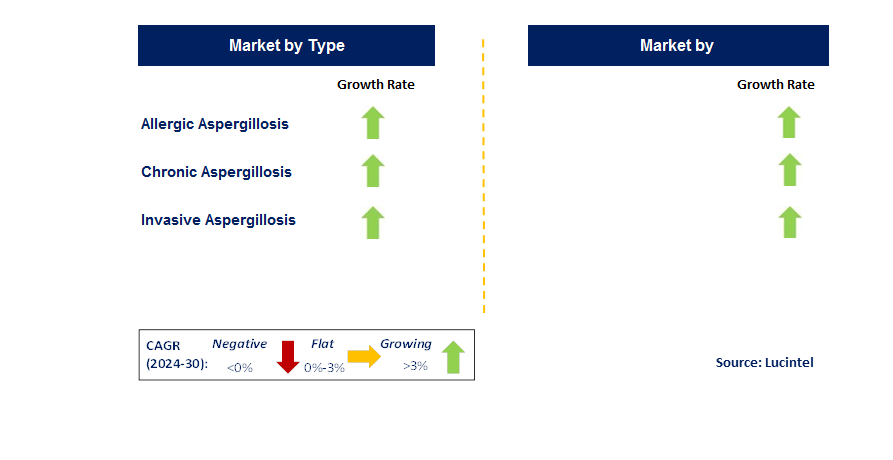
• Allergic Aspergillosis
• Chronic Aspergillosis
• Invasive Aspergillosis
• Antifungal Drugs
• Others
• Oral Drugs
• Ointments
• Powders
• Others
• Hospital Pharmacy
• Retail Pharmacy
• Others
• North America
• Europe
• Asia Pacific
• The Rest of the World
• USA: In the USA, there has been recent progress toward developing more sophisticated therapies for aspergillosis, along with breakthroughs in diagnosis. The approval of newer antifungals like azaconazole offers a better spectrum of choices against invasive Aspergillus fumigatus infections, with greater efficiency and safety than voriconazole or any other older drugs. Additionally, molecular diagnostic techniques, including polymerase chain reaction (PCR) assays, have been developed, allowing for the fast detection of Aspergillus species. This would be beneficial for early treatment since it helps to identify infected individuals at a very early stage, leading to improved treatment outcomes through individualized intervention plans. Research and clinical trials on combination therapies, as well as investigations into new targets, are ongoing, thus advancing the treatment landscape for aspergillosis in the United States.
• China: The need to manage fungal infections effectively has necessitated considerable advances in treating aspergillosis among Chinese citizens, as its prevalence continues to soar. Recent developments include the approval of novel antifungals such as posaconazole and voriconazole for clinical use, alongside their inclusion in the pharmacopeia. Additionally, laboratory testing methods capable of detecting invasive pulmonary disease caused by this pathogen have been introduced, such as the galactomannan assay, whose cost has decreased over time, making it easier for developing countries to adopt. Furthermore, there has been a focus on increasing awareness and education among healthcare providers to improve their understanding of aspergillosis, thereby enhancing rates of diagnosis and treatment. They are also forging research collaborations with global non-governmental organizations, promoting new ideas to enhance the overall management of this fungal infection.
• Germany: In Germany, both drug therapies and diagnostic technologies have seen advancements in the market for treating aspergillosis. Newer formulations of voriconazole have emerged, as well as novel antifungals like azaconazole, all aimed at providing effective drugs with fewer side effects. Moreover, German health facilities have invested heavily in modern diagnostic technologies such as next-generation sequencing (NGS) and biomarkers, making the detection of Aspergillus infections faster and more accurate than before. There are also ongoing clinical trials and research targeting the optimization of treatment regimens and the investigation of combinations thereof. This approach considers individual profiles, thereby improving patient outcomes while easing the burden associated with aspergillosis management in Germany through personalized medicine.
• India: In India, aspergillosis treatment has made significant strides recently due to the availability of new antifungal drugs and improved diagnostics. The inclusion of generic versions of antifungal drugs like voriconazole and posaconazole has made it easier for patients to access such treatments. Adoption rates for quick diagnostic tests like beta-D-glucan assays have also increased, ensuring early identification of the disease and timely commencement of therapy for aspergillosis. Other steps taken by healthcare providers include improving clinical guidelines and educating them on the way forward regarding managing the ailment. Moreover, research projects aimed at optimizing existing therapies and exploring alternatives are proliferating in the Indian market, raising hopes for improved patient care and outcomes.
• Japan: The Japanese market for aspergillosis treatment has been advancing through the introduction of new antifungal agents and improvements in diagnostic techniques. New drug approvals, such as azaconazole, have provided healthcare professionals with a greater number of treatment options. Furthermore, Japan benefits from its advanced diagnostic capabilities, including high-sensitivity PCR assays and imaging methods for more accurate and prompt diagnoses of aspergillosis. A growing interest in personalized medicine is being fueled by attempts to identify genetic and molecular markers that predict drug response or toxicity risks. These efforts have led to better-targeted treatments for patients with Aspergillus infection (aspergillosis), resulting in improved outcomes in Japan today.


• Pfizer
• Merck & Co.
• F2G
• Novartis AG
• Astellas Pharma
• Bayer AG
• Mayne Pharma Group Q6. Which aspergillosis treatment market segment will be the largest in future? Answer: Lucintel forecasts that allergic will remain the largest segment over the forecast period because the diseases like allergic bronchopulmonary aspergillosis (ABPA) have a higher prevalence and a milder manifestation of the disease. Q7. In aspergillosis treatment market, which region is expected to be the largest in next 5 years? Answer: North America will remain the largest region over the forecast period due to the region's cutting-edge medical technologies, vigorous research and development (R&D) initiatives, sophisticated healthcare infrastructure, and unwavering dedication to early diagnosis and treatment.. Q.8 Do we receive customization in this report? Answer: Yes, Lucintel provides 10% customization without any additional cost.


Choose a license that fits your team. Instant PDF delivery.
Prices exclude taxes. Instant delivery. Custom licensing available on request.
Market Report · July 16, 2026
Market Report · July 15, 2026
Market Report · July 15, 2026
Trusted partner for strategic intelligence and business growth


Receive a complimentary market analysis tailored to your industry. Our analysts will identify key growth opportunities and competitive dynamics specific to your business.

Market size, growth rate, and key trend analysis for your specific sector.

Top competitor positioning and market share analysis.

Strategic recommendations backed by data-driven insights.
Get curated market intelligence and competitive moves straight to your inbox.
By subscribing, you agree to receive our monthly insights. Unsubscribe anytime.
Receive a complimentary market analysis tailored to your industry. Our analysts will identify key growth opportunities and competitive dynamics specific to your business.
Market size, growth rate, and key trend analysis for your specific sector.
Top competitor positioning and market share analysis.
Strategic recommendations backed by data-driven insights.
Get curated market intelligence, emerging trends, and competitive moves straight to your inbox each month.
By subscribing, you agree to receive our monthly insights. Unsubscribe anytime.
We'll send your sample report shortly.