
Market Report · July 22, 2026

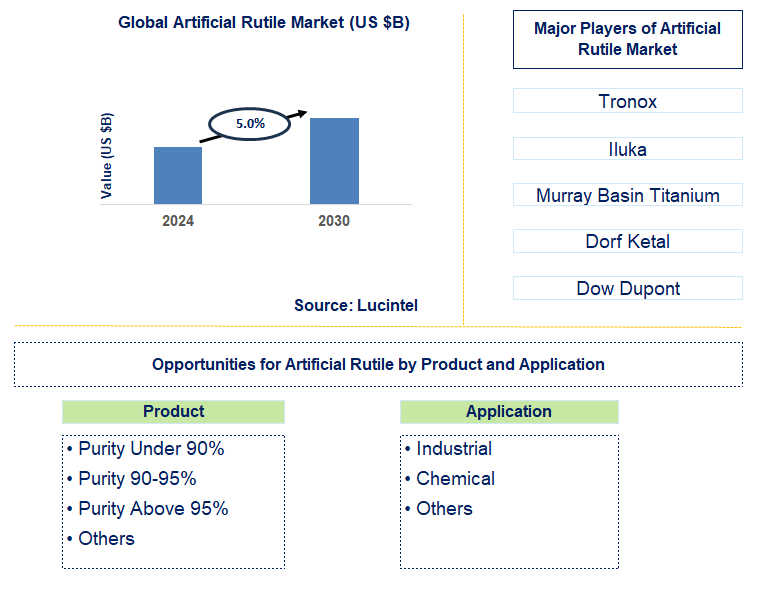
Key data points: The growth forecast = 5.0% annually for the next 6 years. Scroll below to get more insights. This market report covers trends, opportunities, and forecasts in the global artificial rutile market to 2030 by product (purity under 90%, purity 90-95%, purity above 95%, and others), application (industrial, chemical, and others), and region (North America, Europe, Asia Pacific, and the Rest of the World)
We'll send your sample report shortly.
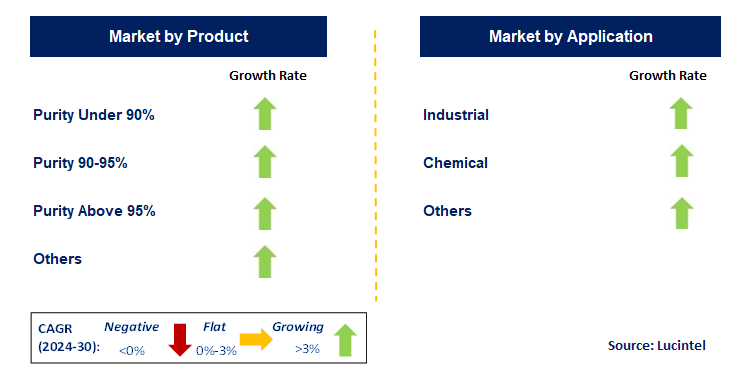
• Lucintel forecasts that, within the type category, purity above 95% will remain the largest segment over the forecast period because the process of extracting rutile naturally is costly and challenging, it is advised to use highly pure synthetic rutile.
• In terms of regions, APAC is expected to witness highest growth over the forecast period due to increasing nations becoming more urbanized and industrialized. A more than 150-page report is developed to help in your business decisions.
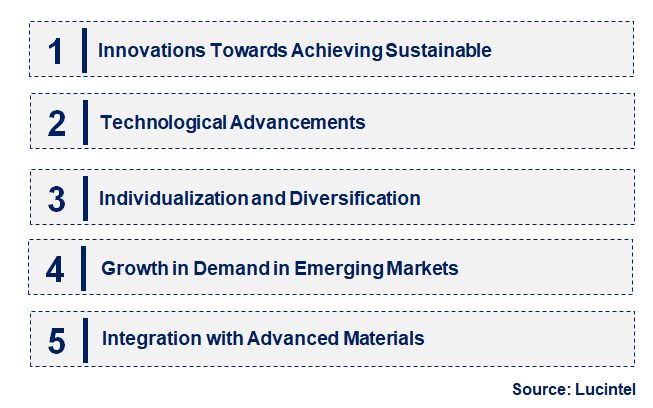
• Innovations Towards Achieving Sustainable Development Goals: Production approaches are increasingly divergent. With growing concerns for eco-friendly products, manufacturers are adopting green methods and raw materials. This trend offers multiple benefits while responding to increasing regulatory pressure.
• Technological Advancements: Improved manufacturing features have led to an increase in the purity and quality of artificial rutile, which, in turn, enhances consumer satisfaction. New manufacturing techniques help companies streamline operations to achieve better cost efficiency and product value.
• Individualization and Diversification: A growing market demands tailor-made artificial rutile designed for specific uses. Manufacturers devote resources to R&D to create particular grades that meet the specific industrial requirements, such as for electronics and optics.
• Growth in Demand in Emerging Markets: Emerging economies, particularly in Asia, are seeing an increase in demand for artificial rutile due to industrialization and urbanization. Manufacturers are targeting these areas to grow their market share and explore new opportunities.
• Integration with Advanced Materials: Combining artificial rutile with other advanced materials is now common practice. This trend enhances the functional characteristics of products in applications like coatings, ceramics, and electronics, thereby promoting progress. These trends are transforming the artificial rutile market by enhancing sustainability, encouraging innovation, and customization, which is critical in meeting the changing needs of consumers.
• Traditional Production Method: Sustainable production methods are becoming the trend among many companies to reduce their carbon emissions. This shift is not only responding to consumer demands for sustainability but also to increasingly stringent regulations.
• Investment in R&D: Investment in research and development to increase the purity and functionality of artificial rutile has been rising. Innovations in production methods have led to the creation of high-quality materials for specialized applications.
• Collaborations and Partnerships: Strategic collaborations are emerging between manufacturers and research institutes to promote the production of artificial rutile. These partnerships are helping improve the development of new materials and technologies with enhanced functionalities.
• Geographic Market Expansion: Companies are looking to expand in emerging markets where demand for artificial rutile is gaining prominence. Rising demand in the construction, ceramics, and electronics industries is driving this expansion.
• Product Category Marketing Orientation: Rutile product manufacturers are beginning to design products that meet the unique requirements of their clients. This trend is improving customer satisfaction and retention in competitive markets. Such interventions and developments have been enhancing the artificial rutile market in a positive way, through improved product quality, the expansion of markets, and the promotion of eco-friendly approaches.
• Ceramics and Tiles: The increasing preference for ornamental ceramics and tiles creates many prospects for artificial rutile manufacturers. Their quest for the production of rutile with the aid of high technology in design, color, and durability can lead companies into the broader market.
• Consumer Electronics and Team Components: As the number of electronic devices continues to grow, the quest for efficient solutions is highly increasing. Due to the characteristics of artificial rutile, the material is suitable for use in capacitors and insulators, making it a great opportunity for manufacturers.
• Optical Applications: The optical industry has an insatiable thirst for materials with high refractive indices, which presents a huge opportunity. This demand can effectively be met by producing specialized grades of artificial rutile for lenses and optical devices.
• Coatings and Paints: Artificial rutile is gradually being employed by the coatings and paints industry, mainly due to its whiteness and opacity attributes. This market can be tapped by companies by formulating products that are active and effective.
• Construction Materials: As construction activities increase globally, there is an opportunity to add artificial rutile to construction materials to increase the strength and durability of these materials. This application aligns with the development of sustainable building materials. These growth opportunities are transforming the artificial rutile market by fostering innovations, improving product and service offerings, and broadening market access.
• Increased Demand for Sustainable Materials: Consumers are increasingly seeking green products. This demand is encouraging manufacturers to incorporate sustainable materials and methods of production, hence increasing the market for artificial rutile.
• Technological Advancements: Improvements in production technology enhance the efficiency and quality of artificial rutile. These technologies enable manufacturers to produce pure products of high purity for specific applications.
• Growth in End-User Industries: The growth of end-user segments like ceramics, electronics, and optical devices is increasing the use of artificial rutile. As these sectors develop, so does the demand for better materials.
• Urbanization and Industrialization: The rapid growth of cities in developing countries has resulted in the need for construction and decoration materials. This creates markets for artificial rutile in other applications.
• Regulatory Support for Sustainability: A wider range of effective measures is being increasingly adopted worldwide to enforce sustainable practices. This supportive regulation has stimulated companies to utilize such practices and produce sustainable products, thereby increasing the artificial rutile market. Challenges in the artificial rutile market are:
• Raw Material Price Volatility: Changes in the prices of raw materials, such as those used to make artificial rutile, tend to influence profit margins. It is imperative for manufacturers to try to contain these costs in order to remain competitive in the market.
• Intense Market Competition: The competition in the artificial rutile market is overcrowded and saturated, with many competitors who are frustrated by the competition. There is a need to come up with new ideas to gain competitive advantages by improving products.
• Regulatory Compliance: The environmental and safety laws and policies posed by the state make compliance quite difficult. Such compliance requires constant expenditure and may negatively affect productivity. These drivers and challenges have a deep impact on the artificial rutile market and thus provide a development outlook and manufacturer strategies. Meeting the challenges while utilizing the available drivers will be vital for continued success in this industry.
• Tronox
• Iluka
• Murray Basin Titanium
• Dorf Ketal
• Dow Dupont
• Rio Tinto
• Chemours
• Venator Materials
• Huntsman
• Kronos International
• Purity Under 90%
• Purity 90-95%
• Purity Above 95%
• Others
• Industrial
• Chemical
• Others
• North America
• Europe
• Asia Pacific
• The Rest of the World
• United States: In the U.S., artificial rutile market growth is being propelled by the use of new productive engineering technologies. Particularly, companies are employing new technologies aimed at enhancing the quality and efficient production of artificial rutile, primarily for ceramics and pigment applications. The demand from the electronics sector is also increasing due to the use of artificial rutile in capacitors and other components. The trend towards sustainability is a primary focus as manufacturers look for clean and responsible ways of producing and obtaining materials. At this stage, the focus on clean and responsible actions is expected to influence the market more as regulations tighten.
• China: China remains a major player in the artificial rutile market, characterized by rapid industrialization and technological advancements. It is evident that adequate funding has been made in research and development to enhance production processes and cut expenses. Manufacturers in China are increasingly producing high-purity artificial rutile due to the rising demand in the electronics and ceramics sectors. In addition, the market is also influenced by increasing government programs promoting greener production practices. It is also apparent that other segments are emerging in the construction industry, leading to increased demand for artificial rutile, elevating the country’s stance even further.
• Germany: Germany’s artificial rutile market is one in which issues related to quality and sustainability dominate. Advanced methods and equipment for enhancing artificial rutile are expected to increase its purity. With the focus on eco-friendly practices, there is a promotion of recycling and waste management within the industry. By design, there are laws and regulations limiting activities that cause environmental degradation in Germany, which encourages investments in environmentally friendly ways of operation. Further, with the strong engineering and manufacturing base in the country, Germany has been strategically positioned as one of the top producers of high-end artificial rutile and its relevant applications.
• India: In India, the demand for artificial rutile is rising, largely due to the growth of the ceramics and building construction industries. Consequently, there has been an increase in the production of artificial rutile targeted at decorative ceramics and tiles. The country has also adopted technology that allows for increased production efficiency as well as cost reduction. Indian manufacturers are now incorporating sustainable materials and processes into their product design due to the rising global demand for sustainable products. Policies aimed at fostering local manufacturing are also aiding the growth of the market, making India a new center for the manufacturing of artificial rutile.
• Japan: Japan’s artificial rutile market is at the intersection of modern innovations and the highest production standards and quality controls. Dependence on domestic manufacturers of artificial rutile has led to the development of an individual perspective within specialties such as flat panel displays and optics. Every company participates in this market, aiming for better properties and improved processing of materials. Regardless, the environmental impact of manufacturing is carefully considered at every stage of production. Japan, being a leader in technology and quality management, emerges as one of the major key players in the international field of artificial rutile for farming industries.


• Tronox
• Iluka
• Murray Basin Titanium
• Dorf Ketal
• Dow Dupont
• Rio Tinto
• Chemours
• Venator Materials
• Huntsman
• Kronos International Q5. Which artificial rutile market segment will be the largest in future? Answer: Lucintel forecasts that purity above 95% will remain the largest segment over the forecast period because the process of extracting rutile naturally is costly and challenging, it is advised to use highly pure synthetic rutile. Q6. In artificial rutile market, which region is expected to be the largest in next 6 years? Answer: APAC is expected to witness highest growth over the forecast period due to increasing nations becoming more urbanized and industrialized. Q.7 Do we receive customization in this report? Answer: Yes, Lucintel provides 10% customization without any additional cost.


Choose a license that fits your team. Instant PDF delivery.
Prices exclude taxes. Instant delivery. Custom licensing available on request.
Market Report · July 22, 2026
Market Report · July 22, 2026
Market Report · July 22, 2026
Trusted partner for strategic intelligence and business growth


Receive a complimentary market analysis tailored to your industry. Our analysts will identify key growth opportunities and competitive dynamics specific to your business.

Market size, growth rate, and key trend analysis for your specific sector.

Top competitor positioning and market share analysis.

Strategic recommendations backed by data-driven insights.
Get curated market intelligence and competitive moves straight to your inbox.
By subscribing, you agree to receive our monthly insights. Unsubscribe anytime.
Receive a complimentary market analysis tailored to your industry. Our analysts will identify key growth opportunities and competitive dynamics specific to your business.
Market size, growth rate, and key trend analysis for your specific sector.
Top competitor positioning and market share analysis.
Strategic recommendations backed by data-driven insights.
Get curated market intelligence, emerging trends, and competitive moves straight to your inbox each month.
By subscribing, you agree to receive our monthly insights. Unsubscribe anytime.
We'll send your sample report shortly.