
Report Feature
Artificial Blood Substitute Market Trends and Forecast
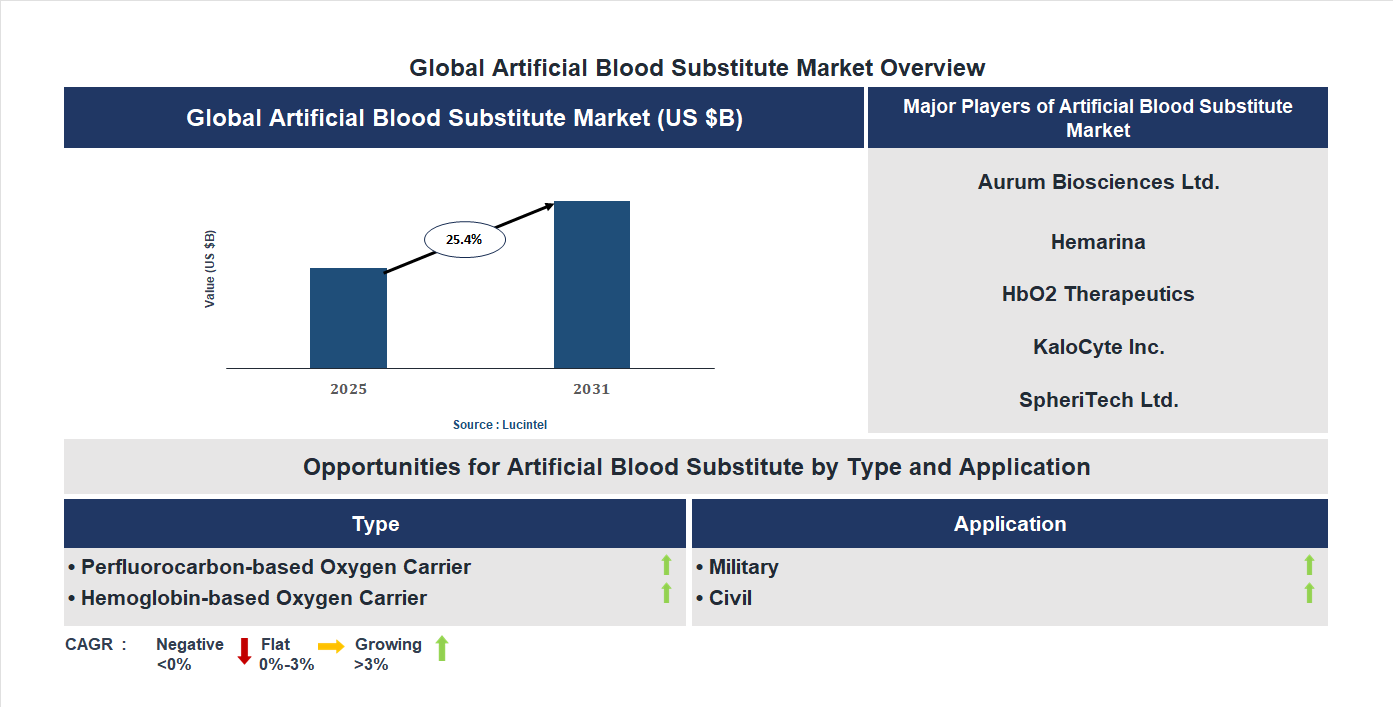
The future of the global artificial blood substitute market looks promising with opportunities in the military and civil markets. The global artificial blood substitute market is expected to grow with a CAGR of 25.4% from 2025 to 2031. The major drivers for this market are the increasing demand for trauma emergency care, the rising shortage of donated blood supply, and the growing research in oxygen carrier technologies.• Lucintel forecasts that, within the type category, perfluorocarbon-based oxygen carrier is expected to witness higher growth over the forecast period.
• Within the application category, military is expected to witness higher growth.
• In terms of region, APAC is expected to witness the highest growth over the forecast period. Gain valuable insights for your business decisions with our comprehensive 150+ page report. Sample figures with some insights are shown below.
Emerging Trends in the Artificial Blood Substitute Market
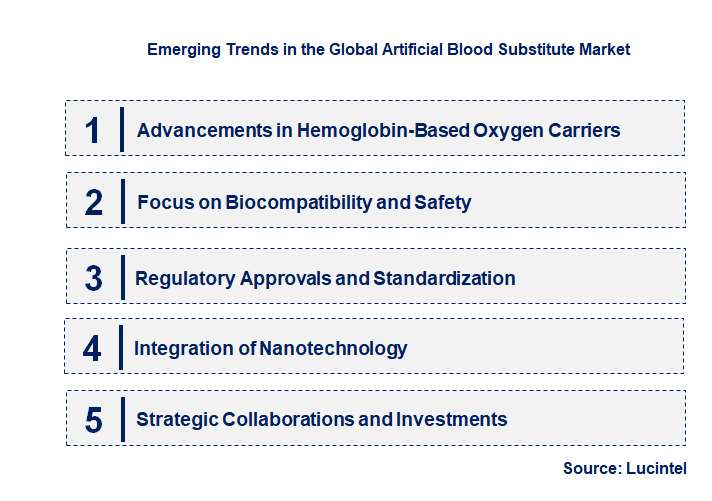
The artificial blood substitute market is experiencing rapid evolution driven by technological advancements, increasing healthcare needs, and a focus on improving patient outcomes. As the demand for safe, effective, and readily available blood alternatives grows, industry players are innovating to address challenges related to safety, storage, and compatibility. These developments are reshaping the landscape, making blood substitutes more accessible and reliable across various medical settings. The following key trends highlight the major shifts influencing this markets future trajectory, reflecting a blend of scientific innovation, regulatory progress, and strategic collaborations that are propelling the industry forward.• Advancements in Hemoglobin-Based Oxygen Carriers (HBOCs): The development of next-generation HBOCs aims to improve safety and efficacy. These substitutes mimic natural hemoglobin more closely, reducing adverse reactions and increasing oxygen delivery efficiency. Innovations include encapsulation techniques and modifications to minimize toxicity. This trend enhances the potential for HBOCs to replace traditional blood transfusions, especially in emergency and remote settings, thereby expanding their application scope and improving patient outcomes.
• Focus on Biocompatibility and Safety: Ensuring biocompatibility remains a primary concern. Researchers are working on reducing immunogenic responses and side effects associated with artificial blood products. New formulations incorporate biocompatible materials and antioxidants to enhance stability and reduce oxidative stress. This focus on safety is critical for gaining regulatory approval and increasing acceptance among healthcare providers, ultimately leading to broader adoption of blood substitutes in clinical practice.
• Regulatory Approvals and Standardization: Governments and regulatory bodies are establishing clearer guidelines for the approval and use of artificial blood products. Streamlined approval processes and standardized testing protocols are facilitating faster market entry for innovative products. This trend promotes confidence among clinicians and investors, encouraging further research and commercialization efforts, and ultimately accelerating the availability of safe blood substitutes worldwide.
• Integration of Nanotechnology: Nanotechnology is being leveraged to improve the delivery, stability, and functionality of artificial blood products. Nanoparticles can enhance oxygen-carrying capacity, target specific tissues, and reduce side effects. This technological integration opens new avenues for creating more efficient and targeted blood substitutes, which could revolutionize treatment protocols, especially in critical care and trauma management.
• Strategic Collaborations and Investments: Major pharmaceutical companies, biotech firms, and research institutions are forming strategic alliances to accelerate innovation. Increased investments in R&D are fueling the development of novel blood substitutes and expanding manufacturing capabilities. These collaborations facilitate knowledge sharing, reduce development costs, and speed up regulatory approval processes, thereby strengthening the market and ensuring a steady pipeline of advanced products. In summary, these emerging trends are collectively transforming the artificial blood substitute market by fostering safer, more effective, and accessible solutions. Technological innovations, regulatory support, and strategic partnerships are driving growth and expanding the potential applications of blood substitutes. As these trends continue to evolve, they are poised to significantly improve patient care, reduce reliance on traditional blood donations, and address critical shortages in blood supply worldwide.
Recent Development in the Artificial Blood Substitute Market
The artificial blood substitute market has experienced significant advancements driven by increasing demand for blood alternatives due to blood shortages, rising awareness of blood-borne diseases, and technological innovations. These developments aim to improve the safety, efficacy, and accessibility of blood substitutes, addressing critical healthcare needs worldwide. As research progresses, new formulations and delivery methods are emerging, promising to revolutionize trauma care, surgeries, and emergency medicine. The markets evolution is also influenced by regulatory approvals and investments from biotech firms, which are accelerating product development and commercialization. These key developments are shaping a future where artificial blood substitutes could become a vital component of modern healthcare systems.• Development of Hemoglobin-Based Oxygen Carriers (HBOCs): These are synthetic products designed to mimic natural hemoglobin, providing oxygen transport without the need for blood donation. HBOCs have shown promise in clinical trials, offering a potential solution for emergency and surgical settings, reducing reliance on donor blood, and minimizing transfusion-related risks.
• Advances in Perfluorocarbon (PFC) Technologies: PFC-based blood substitutes are synthetic liquids capable of carrying oxygen. Recent innovations have improved their oxygen-carrying capacity, stability, and biocompatibility, making them more effective and safer for use in trauma and critical care, thus expanding their application scope.
• Regulatory Approvals and Clinical Trials: Increasing approvals from health authorities and successful clinical trial outcomes are boosting market confidence. These regulatory milestones facilitate commercialization, encourage investment, and accelerate the availability of artificial blood products in healthcare settings.
• Investment and Collaborations in R&D: Major biotech firms and research institutions are investing heavily in developing next-generation blood substitutes. Strategic collaborations are fostering innovation, reducing development costs, and expediting the pathway from research to market, thereby fueling market growth.
• Focus on Biocompatibility and Safety Enhancements: Recent research emphasizes improving the biocompatibility and reducing the adverse effects of blood substitutes. Innovations in formulation and delivery systems are enhancing safety profiles, increasing acceptance among healthcare providers, and broadening potential applications. The recent developments in the artificial blood substitute market are significantly enhancing product safety, efficacy, and availability. These advancements are reducing dependence on donor blood, improving patient outcomes, and expanding the scope of emergency and surgical care. As regulatory approvals increase and technological innovations continue, the market is poised for rapid growth, transforming healthcare practices and addressing critical blood supply challenges worldwide.
Strategic Growth Opportunities in the Artificial Blood Substitute Market
The artificial blood substitute market is experiencing rapid development driven by increasing demand for innovative solutions in trauma care, surgeries, and emergency medicine. As the healthcare industry seeks safer, more effective alternatives to traditional blood transfusions, key growth opportunities are emerging across various applications. These opportunities are poised to transform patient outcomes, reduce dependency on blood banks, and address shortages in the blood supply globally. Stakeholders are investing heavily in research and development to capitalize on these prospects, which promise to expand market reach and improve healthcare delivery standards worldwide.• Trauma Care: Artificial blood substitutes offer immediate availability and ease of storage, making them ideal for emergency trauma situations. They can rapidly restore blood volume, stabilize patients, and reduce mortality rates, especially in remote or disaster-stricken areas. This development improves survival chances and streamlines emergency medical procedures, ultimately saving lives and reducing healthcare costs.
• Surgical Applications: In surgical settings, artificial blood substitutes provide a safer alternative to traditional blood transfusions by minimizing risks of infections and immune reactions. They enable longer shelf life and easier storage, facilitating better blood management during complex surgeries. This growth opportunity enhances patient safety, reduces transfusion-related complications, and optimizes surgical outcomes.
• Military and Defense: The military sector benefits from artificial blood substitutes by ensuring rapid, portable, and safe blood replacement options for injured soldiers in combat zones. These substitutes improve survival rates, reduce logistical challenges of blood supply, and enable quick medical response in austere environments. This application significantly enhances battlefield medical capabilities and readiness.
• Chronic Disease Management: Artificial blood substitutes present promising solutions for patients with chronic anemia or blood disorders who require frequent transfusions. They reduce the dependency on donor blood, lower the risk of transfusion reactions, and improve the quality of life. This opportunity expands the market by addressing long-term healthcare needs and fostering innovation in treatment protocols.
• Blood Supply Shortages: The growing global shortage of donated blood drives the demand for artificial substitutes as a sustainable alternative. These products can be produced at scale, stored longer, and transported easily, helping to bridge supply gaps. This growth opportunity is critical for ensuring consistent blood availability, especially in regions with limited blood donation infrastructure. In summary, these key growth opportunities are significantly impacting the artificial blood substitute market by expanding its applications, improving patient safety, and addressing critical supply challenges. As innovation accelerates, the market is poised for substantial growth, transforming healthcare practices and saving more lives worldwide.
Artificial Blood Substitute Market Driver and Challenges
The artificial blood substitute market is influenced by a complex interplay of technological advancements, economic factors, and regulatory frameworks. Innovations in biomedical engineering and nanotechnology are driving product development, while economic considerations such as healthcare costs and funding impact market growth. Regulatory policies shape the approval process and safety standards, affecting market entry and expansion. Additionally, demographic shifts, such as aging populations and increasing trauma cases, create demand for effective blood substitutes. These factors collectively shape the market landscape, presenting opportunities and challenges that require strategic navigation by industry stakeholders to ensure sustainable growth and innovation. The factors responsible for driving the artificial blood substitute market include:-• Technological Innovation: The development of advanced biomaterials and nanotechnology has enabled the creation of more effective and safer blood substitutes. Innovations such as hemoglobin-based oxygen carriers and perfluorocarbon emulsions improve oxygen delivery and reduce side effects, making these products more viable for clinical use. Continuous R&D efforts are expanding the potential applications, including trauma care and chronic anemia treatment, thus fueling market growth. The rapid pace of technological progress also attracts investments and partnerships, further accelerating market expansion.
• Increasing Prevalence of Blood Disorders: Rising incidences of anemia, thalassemia, and other blood-related disorders globally are driving demand for blood substitutes. As these conditions often require frequent transfusions, artificial blood products offer a safer, more sustainable alternative, especially in regions with limited blood supply. The growing awareness and diagnosis rates contribute to market expansion, with healthcare providers seeking innovative solutions to meet patient needs and reduce reliance on donor blood.
• Growing Trauma and Emergency Cases: The increasing number of accidents, surgeries, and trauma incidents worldwide necessitates immediate blood transfusions. Artificial blood substitutes provide a readily available, long shelf-life alternative that can be stored and transported easily, especially in remote or disaster-stricken areas. This capability enhances emergency response efficiency and reduces dependency on donor blood, thereby expanding the market. The rising burden of trauma cases globally underscores the importance of developing reliable blood substitutes.
• Regulatory Approvals and Support: Favorable regulatory pathways and government initiatives aimed at addressing blood shortages are propelling market growth. Regulatory agencies are establishing clear guidelines for the approval of blood substitutes, which encourages innovation and commercialization. Supportive policies, funding for research, and public-private partnerships facilitate product development and market entry, boosting confidence among manufacturers and investors. These regulatory frameworks are crucial for ensuring safety and efficacy, ultimately fostering market expansion.
• Strategic Collaborations and Investments: Partnerships between biotech firms, pharmaceutical companies, and research institutions are accelerating product development and commercialization. Investments in R&D enable the creation of next-generation blood substitutes with improved safety profiles and efficacy. Strategic collaborations also facilitate access to new markets and distribution channels, enhancing market reach. The influx of venture capital and government funding further supports innovation, making the market more competitive and dynamic. The challenges facing this artificial blood substitute market include:-
• Stringent Regulatory Hurdles: The approval process for artificial blood products is complex and time-consuming, involving rigorous safety and efficacy evaluations. Regulatory agencies demand extensive clinical trials, which can delay product launches and increase costs. This uncertainty discourages investment and slows innovation, limiting market growth. Additionally, differing regulations across regions create barriers to global commercialization, complicating market entry strategies for manufacturers.
• Safety and Efficacy Concerns: Ensuring the safety of artificial blood substitutes remains a significant challenge. Potential adverse reactions, such as immune responses or toxicity, hinder regulatory approval and market acceptance. Long-term effects are often unknown, raising concerns among healthcare providers and patients. Overcoming these safety issues requires extensive research and clinical validation, which can be costly and time-consuming, impacting the pace of market development.
• Limited Product Availability and Acceptance: Despite technological advances, the market still faces limited product options and low acceptance among clinicians and patients. Many artificial blood substitutes are in experimental or early commercialization stages, restricting widespread adoption. Healthcare providers may be hesitant to replace traditional transfusions due to safety concerns or lack of familiarity. Overcoming these barriers requires extensive education, clinical evidence, and demonstration of clear benefits, which can slow market penetration. In summary, the artificial blood substitute market is shaped by rapid technological innovations, increasing demand due to blood disorders and trauma cases, and supportive regulatory environments. However, challenges such as regulatory hurdles, safety concerns, and limited acceptance pose significant barriers. These drivers and challenges collectively influence the pace and scope of market growth. While technological and regulatory advancements offer promising opportunities, addressing safety and acceptance issues is crucial for sustainable expansion. Overall, the market holds substantial potential, provided stakeholders effectively navigate these complexities to deliver safe, effective, and accessible blood substitutes worldwide.
List of Artificial Blood Substitute Companies
Companies in the market compete on the basis of product quality offered. Major players in this market focus on expanding their manufacturing facilities, R&D investments, infrastructural development, and leverage integration opportunities across the value chain. With these strategies artificial blood substitute companies cater increasing demand, ensure competitive effectiveness, develop innovative products & technologies, reduce production costs, and expand their customer base. Some of the artificial blood substitute companies profiled in this report include-• Aurum Biosciences Ltd.
• Hemarina
• HbO2 Therapeutics
• KaloCyte Inc.
• SpheriTech Ltd.
• NuvOx Pharma
• Safi Biotherapeutics
Artificial Blood Substitute Market by Segment
The study includes a forecast for the global artificial blood substitute market by type, application, and region.Artificial Blood Substitute Market by Type [Value from 2019 to 2031]:
• Perfluorocarbon-based Oxygen Carrier
• Hemoglobin-based Oxygen Carrier
Artificial Blood Substitute Market by Application [Value from 2019 to 2031]:
• Military
• Civil
Artificial Blood Substitute Market by Region [Value from 2019 to 2031]:
• North America
• Europe
• Asia Pacific
• The Rest of the World
Country Wise Outlook for the Artificial Blood Substitute Market
The artificial blood substitute market has experienced significant advancements driven by technological innovations, increasing healthcare needs, and growing research investments worldwide. As countries seek to improve trauma care, surgical outcomes, and emergency medicine, developments in this sector are accelerating. Regulatory approvals, new product launches, and expanding clinical trials are shaping the landscape. Each country’s unique healthcare infrastructure and research focus influence their progress. The following summarizes recent developments in the United States, China, Germany, India, and Japan, highlighting key advancements and strategic initiatives in this evolving market.• United States: The US has seen substantial growth with several companies advancing in clinical trials for oxygen-carrying blood substitutes. Regulatory agencies like the FDA are streamlining approval processes, encouraging innovation. Major investments are directed toward nanotechnology-based solutions and hemoglobin-based oxygen carriers. Hospitals are increasingly adopting these substitutes for trauma and surgical procedures, boosting market demand. Additionally, collaborations between biotech firms and research institutions are fostering new product development, positioning the US as a leader in artificial blood innovation.
• China: China is rapidly expanding its artificial blood substitute research, supported by government funding and strategic initiatives. Several domestic companies are conducting clinical trials for hemoglobin-based products, aiming to reduce reliance on blood transfusions. The country’s focus on emergency medicine and trauma care has driven demand for these substitutes. Recent approvals of certain products for clinical use mark significant progress. China’s large population and healthcare infrastructure improvements are expected to propel market growth further, with an emphasis on cost-effective solutions suitable for mass deployment.
• Germany: Germany’s market is characterized by advanced research and high-quality product development. Leading biotech firms are focusing on hemoglobin-based oxygen carriers with enhanced safety profiles. The country’s strong healthcare system and regulatory framework facilitate the adoption of innovative solutions. Recent collaborations between academia and industry have resulted in novel formulations with improved shelf life and reduced side effects. Germany is also investing in clinical trials to validate efficacy, aiming to establish new standards in artificial blood substitutes and expand their use in emergency and surgical settings.
• India: India is witnessing increasing interest in artificial blood substitutes driven by rising trauma cases and blood shortages. Local companies are developing affordable hemoglobin-based products tailored for the Indian market. Government initiatives to improve healthcare infrastructure and blood transfusion services are supporting market growth. Several clinical trials are underway to assess safety and efficacy, with some products nearing regulatory approval. The focus remains on cost-effective, scalable solutions to address the country’s large population and resource constraints, positioning India as a potential emerging market for artificial blood substitutes.
• Japan: Japan’s market is characterized by technological innovation and rigorous safety standards. Leading research institutions are developing next-generation oxygen carriers with improved biocompatibility. The country’s aging population and increasing surgical procedures are driving demand for artificial blood substitutes. Recent advancements include the development of bioengineered products with longer shelf life and reduced immunogenicity. Japan’s strong regulatory environment ensures high safety and efficacy standards, fostering trust and adoption in clinical settings. Ongoing clinical trials and collaborations aim to bring innovative solutions to market, supporting Japan’s position as a key player in this sector.

Features of the Global Artificial Blood Substitute Market
Market Size Estimates: Artificial blood substitute market size estimation in terms of value ($B). Trend and Forecast Analysis: Market trends (2019 to 2024) and forecast (2025 to 2031) by various segments and regions. Segmentation Analysis: Artificial blood substitute market size by type, application, and region in terms of value ($B). Regional Analysis: Artificial blood substitute market breakdown by North America, Europe, Asia Pacific, and Rest of the World. Growth Opportunities: Analysis of growth opportunities in different types, applications, and regions for the artificial blood substitute market. Strategic Analysis: This includes M&A, new product development, and competitive landscape of the artificial blood substitute market. Analysis of competitive intensity of the industry based on Porter’s Five Forces model.
FAQ
Q1. What is the growth forecast for artificial blood substitute market? Answer: The global artificial blood substitute market is expected to grow with a CAGR of 25.4% from 2025 to 2031. Q2. What are the major drivers influencing the growth of the artificial blood substitute market? Answer: The major drivers for this market are the increasing demand for trauma emergency care, the rising shortage of donated blood supply, and the growing research in oxygen carrier technologies. Q3. What are the major segments for artificial blood substitute market? Answer: The future of the artificial blood substitute market looks promising with opportunities in the military and civil markets. Q4. Who are the key artificial blood substitute market companies? Answer: Some of the key artificial blood substitute companies are as follows:• Aurum Biosciences Ltd.
• Hemarina
• HbO2 Therapeutics
• KaloCyte Inc.
• SpheriTech Ltd.
• NuvOx Pharma
• Safi Biotherapeutics Q5. Which artificial blood substitute market segment will be the largest in future? Answer: Lucintel forecasts that, within the type category, perfluorocarbon-based oxygen carrier is expected to witness higher growth over the forecast period. Q6. In artificial blood substitute market, which region is expected to be the largest in next 5 years? Answer: In terms of region, APAC is expected to witness the highest growth over the forecast period. Q7. Do we receive customization in this report? Answer: Yes, Lucintel provides 10% customization without any additional cost.
Table of Contents
List of Figures
List of Tables
Methodology
- In-depth interviews of the major players in this market
- Detailed secondary research from competitors’ financial statements and published data
- Extensive searches of published works, market, and database information pertaining to industry news, company press releases, and customer intentions
- A compilation of the experiences, judgments, and insights of Lucintel’s professionals, who have analyzed and tracked this market over the years.


Buy Now
Choose a license that fits your team. Instant PDF delivery.
Prices exclude taxes. Instant delivery. Custom licensing available on request.
Key Questions
- • What are some of the most promising, high-growth opportunities for the artificial blood substitute market by type (perfluorocarbon-based oxygen carrier and hemoglobin-based oxygen carrier), application (military and civil), and region (North America, Europe, Asia Pacific, and the Rest of the World)?
- • Which segments will grow at a faster pace and why?
- • Which region will grow at a faster pace and why?
- • What are the key factors affecting market dynamics? What are the key challenges and business risks in this market?
- • What are the business risks and competitive threats in this market?
- • What are the emerging trends in this market and the reasons behind them?
- • What are some of the changing demands of customers in the market?
- • What are the new developments in the market? Which companies are leading these developments?
- • Who are the major players in this market? What strategic initiatives are key players pursuing for business growth?
- • What are some of the competing products in this market and how big of a threat do they pose for loss of market share by material or product substitution?
- • What M&A activity has occurred in the last 5 years and what has its impact been on the industry? For any questions related to Artificial Blood Substitute Market, Artificial Blood Substitute Market Size, Artificial Blood Substitute Market Growth, Artificial Blood Substitute Market Analysis, Artificial Blood Substitute Market Report, Artificial Blood Substitute Market Share, Artificial Blood Substitute Market Trends, Artificial Blood Substitute Market Forecast, Artificial Blood Substitute Companies, write Lucintel analyst at email: helpdesk@lucintel.com. We will be glad to get back to you soon.


