
Report Feature
Art and Craft Tool Market Trends and Forecast
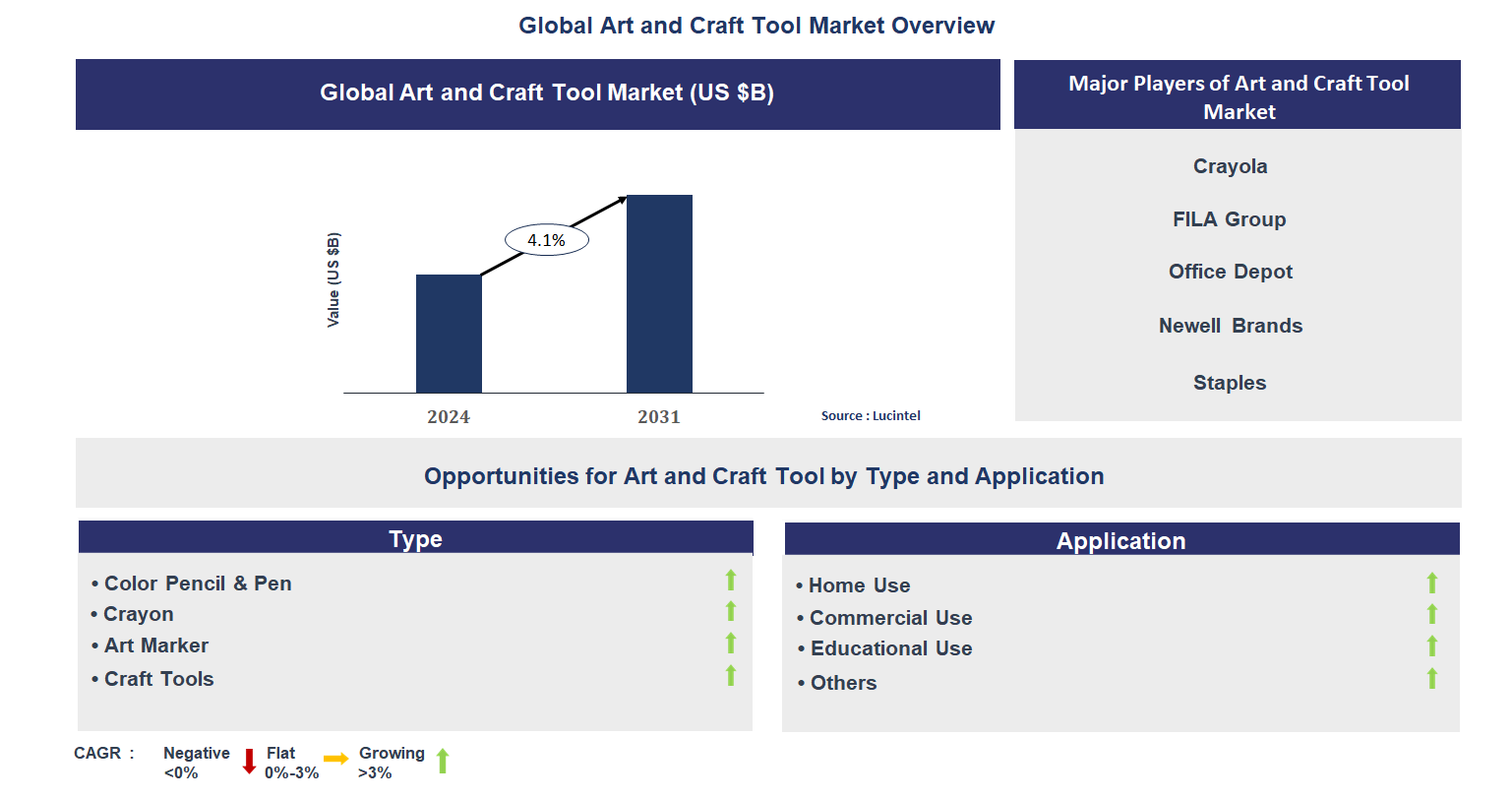
The future of the global art and craft tool market looks promising with opportunities in the home use, commercial use, and educational use markets. The global art and craft tool market is expected to grow with a CAGR of 4.1% from 2025 to 2031. The major drivers for this market are the increasing demand for personalized craft products, the rising interest in DIY art projects, and the growing popularity of eco-friendly art supplies.• Lucintel forecasts that, within the type category, art marker is expected to witness the highest growth over the forecast period.
• Within the application category, home use is expected to witness the highest growth.
• In terms of region, APAC is expected to witness the highest growth over the forecast period. Gain valuable insights for your business decisions with our comprehensive 150+ page report. Sample figures with some insights are shown below.
Emerging Trends in the Art and Craft Tool Market
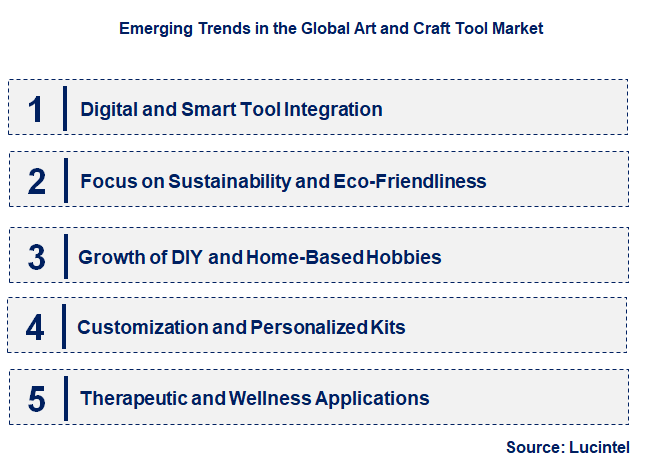
The art and craft tool market is being reshaped by several key trends, from technological integration to a focus on sustainability, reflecting a shift in consumer values and creative practices. These trends are moving the industry beyond traditional tools, focusing on personalized experiences, eco-conscious production, and blurring the lines between physical and digital art.• Digital and Smart Tool Integration: The market is seeing a rise in smart tools that connect to digital platforms, such as automated cutting machines and smart drawing pads. These innovations provide a seamless transition between physical and digital creation. This trend is impacting the market by offering new levels of precision and efficiency, attracting tech-savvy consumers, and expanding the possibilities of creative expression.
• Focus on Sustainability and Eco-Friendliness: There is a growing consumer demand for environmentally conscious products. This trend involves using recycled materials, non-toxic components, and sustainable manufacturing processes. Adopting sustainable practices not only appeals to a new generation of eco-aware consumers but also positions brands as responsible leaders, enhancing their reputation and marketability.
• Growth of DIY and Home-Based Hobbies: The market is experiencing a significant surge due to the rise of DIY culture and a renewed interest in home-based hobbies. This trend is fueled by online tutorials and social media, which make crafting more accessible. This is impacting the market by creating a high demand for beginner-friendly toolkits and supplies, broadening the consumer base beyond professional artists.
• Customization and Personalized Kits: There is a growing trend for brands to offer customized kits and personalized tool sets. This trend allows consumers to choose supplies based on their skill level, project type, and personal preferences. This personalization enhances the user experience, creates a premium market segment, and fosters a more direct relationship between brands and their customers.
• Therapeutic and Wellness Applications: Art and crafting are increasingly being recognized for their mental health benefits. This trend is driven by a growing awareness of art therapy and mindfulness. The impact is a new market segment that views art tools as a means of relaxation and stress relief, positioning creative activities not just as a hobby but as a form of self-care. The combination of these trends is fundamentally reshaping the art and craft tool market. Digital integration and advanced manufacturing are enhancing performance, while customization and sustainability are catering to modern consumer values. The shift towards home-based hobbies and therapeutic applications is changing how products are used, creating a more responsive and consumer-friendly market.
Recent Development in the Art and Craft Tool Market
The art and craft tool market is seeing several significant developments, driven by a blend of technological innovation, changing consumer habits, and a renewed focus on the user experience. These advancements are impacting everything from the design and materials of the tools to how they are distributed and marketed, making creative activities more accessible and engaging.• Advanced Cutting and Die-Cutting Machines: A key development is the widespread adoption of smart cutting and die-cutting machines. These devices, often controlled by software, can precisely cut intricate designs from various materials. This technology is revolutionizing paper crafts and other hobbies by providing unprecedented accuracy and speed, allowing crafters to achieve professional results at home.
• Rise of 3D Printing and Modeling Tools: The market is witnessing the increasing use of 3D printing pens and compact 3D printers for artistic and craft projects. This development allows creators to transition from two-dimensional art to three-dimensional objects. This is impacting the market by introducing a new medium for creative expression and expanding the possibilities of what can be made at home.
• Ergonomic and Multi-functional Tools: There is a strong focus on developing tools with enhanced ergonomics to reduce hand strain and improve comfort during long creative sessions. Many new tools are also multi-functional, combining several uses into one product. This is impacting the market by prioritizing user well-being and convenience, making crafting more enjoyable and accessible to people of all ages and abilities.
• Expansion of Subscription Box Services: The emergence of subscription box services for art and craft supplies is a major development. These services curate and deliver themed kits to consumers doorsteps on a regular basis. This is impacting the market by providing a convenient and exciting way for crafters to discover new materials and techniques, ensuring a consistent revenue stream for brands.
• Use of Augmented Reality for Inspiration: A notable recent development is the use of augmented reality (AR) in mobile apps to provide virtual project ideas and tutorials. Users can visualize a finished project in their space before they begin. This is impacting the market by offering a new, interactive way to engage consumers and inspire creative projects, bridging the gap between digital and physical creativity. These recent developments are collectively transforming the art and craft tool market. The introduction of smart and digital tools is elevating creative possibilities, while a focus on ergonomics and multi-functionality is broadening the user base. The shift to subscription models and AR is changing how products are sold and used, making the market more dynamic and responsive to a wider range of consumer needs.
Strategic Growth Opportunities in the Art and Craft Tool Market
The art and craft tool market presents numerous strategic growth opportunities across various applications, driven by a growing global interest in creative pursuits. By focusing on specific market segments, manufacturers and retailers can tap into new revenue streams and expand their market presence. These opportunities range from serving professional artists to catering to the burgeoning educational and therapeutic markets.• DIY and Home Decor Applications: The DIY and home decor segment is a key growth area. Opportunities lie in developing and marketing tools and kits for projects like custom home furnishings, personalized gifts, and small-scale renovations. The impact is significant as this market is vast and appeals to a wide demographic, driving high-volume sales and fostering repeat business as consumers tackle new projects.
• Educational and School Applications: The educational segment is a substantial growth opportunity. This application requires safe, durable, and easy-to-use tools for school curricula. Strategic growth involves creating bulk-purchase options and classroom-friendly kits. The impact is long-term market growth by fostering creativity at a young age and building brand loyalty among a new generation of creators.
• Therapeutic and Wellness Applications: The therapeutic market is an emerging growth opportunity. This segment requires tools and supplies for activities like adult coloring, journaling, and mindful crafting. The impact is a broader market reach beyond traditional art forms, attracting a new segment of consumers seeking to relieve stress and improve mental well-being through creative expression.
• Professional and Commercial Art: The professional and commercial art segment is a stable growth area. Opportunities lie in providing high-quality, precision tools for professional artists, designers, and artisans. This includes specialized brushes, cutting tools, and easels. The impact is a premium market segment that commands higher prices and drives innovation in product quality and design.
• Digital and Hybrid Art Applications: The market for digital and hybrid tools is a promising area. Opportunities involve creating products that bridge the gap between physical and digital art, such as stylus pens, digital drawing pads, and software-integrated tools. The impact is access to a rapidly growing, tech-savvy consumer base, positioning the market at the forefront of creative technology. These strategic growth opportunities are reshaping the art and craft tool market by encouraging companies to diversify their product portfolios and target specific applications. By catering to the distinct needs of DIY enthusiasts, educators, therapists, professional artists, and tech-savvy creators, the industry can achieve sustainable growth, innovate new products, and foster a more inclusive and dynamic creative community.
Art and Craft Tool Market Driver and Challenges
The art and craft tool markets dynamics are shaped by a complex interplay of drivers and challenges, including various technological, economic, and social factors. The market is propelled by a growing global interest in creative hobbies and continuous innovation. However, it is also constrained by high costs, competition from digital alternatives, and the discretionary nature of consumer spending. The factors responsible for driving the art and craft tool market include: 1. Growth of DIY and Hobbyist Culture: The increasing global trend of do-it-yourself (DIY) projects and personal hobbies is a significant driver. This is fueled by online tutorials and social media platforms like Pinterest and YouTube. This trend expands the consumer base, as more people are motivated to create personalized items for home decor and gifts, leading to a high demand for tools. 2. E-commerce and Online Retail Expansion: The widespread adoption of e-commerce has made art and craft tools more accessible than ever. Online platforms offer a vast selection, direct-to-consumer sales, and targeted marketing. This driver lowers the barrier to entry for both consumers and smaller brands, democratizing the market and facilitating global reach. 3. Focus on Mental Health and Wellness: The growing recognition of art and craft activities as a form of therapy and stress relief is a major driver. This is leading to a new market segment of consumers who engage in creative hobbies for well-being. This trend positions art tools not just as materials for creation but as instruments for self-care. 4. Educational Initiatives and Curriculum Inclusion: The increasing inclusion of art and craft activities in school curricula worldwide is a key driver. This is based on the understanding of their benefits in developing motor skills and creativity. This institutional support ensures a consistent demand for basic and educational-grade tools, and fosters long-term consumer interest from a young age. 5. Technological Integration in Tools: Continuous innovation in the form of smart tools, 3D printing, and digital drawing pads is driving market growth. These advancements enhance user experience, precision, and efficiency. The integration of technology appeals to a new, tech-savvy generation of creators and expands the creative possibilities beyond traditional methods. Challenges in the art and craft tool market are: 1. High Cost of Specialized Tools: The high cost of professional and specialized art and craft tools, such as high-quality drawing tablets or automated cutting machines, is a significant challenge. This can be a major barrier to entry for hobbyists and students. The expense limits the markets accessibility and may lead to a reliance on low-cost alternatives. 2. Competition from Digital Alternatives: The art and craft tool market faces stiff competition from digital alternatives like graphic design software and virtual art programs. These alternatives often offer flexibility and a lower cost of entry, particularly for a younger audience. This challenge requires traditional tool manufacturers to innovate and find new ways to bridge the gap between physical and digital creation. 3. Discretionary Nature of Spending: The market is susceptible to economic downturns, as art and craft supplies are often considered non-essential, discretionary purchases. During times of economic uncertainty, consumers may reduce spending on hobbies. This makes the market sensitive to economic fluctuations and creates a challenge for maintaining consistent sales. The art and craft tool market is navigating a dual landscape of potent drivers and significant challenges. While the rise of DIY culture, e-commerce, and a focus on wellness propel the market forward, it must contend with the hurdles of high costs, competition from digital alternatives, and the discretionary nature of consumer spending. The ability of manufacturers to innovate and adapt will be crucial for sustained growth in this dynamic industry.List of Art and Craft Tool Companies
Companies in the market compete on the basis of product quality offered. Major players in this market focus on expanding their manufacturing facilities, R&D investments, infrastructural development, and leverage integration opportunities across the value chain. With these strategies art and craft tool companies cater increasing demand, ensure competitive effectiveness, develop innovative products & technologies, reduce production costs, and expand their customer base. Some of the art and craft tool companies profiled in this report include-• Crayola
• FILA Group
• Office Depot
• Newell Brands
• Staples
• Shanghai M&G Stationery
• Faber-Castell
• Societe BIC
• Pilot-Pen
• Kokuyo Camlin
Art and Craft Tool Market by Segment
The study includes a forecast for the global art and craft tool market by type, application, and region.Art and Craft Tool Market by Type [Value from 2019 to 2031]:
• Color Pencil & Pen
• Crayon
• Art Marker
• Craft Tools
Art and Craft Tool Market by Application [Value from 2019 to 2031]:
• Home Use
• Commercial Use
• Educational Use
• Others
Art and Craft Tool Market by Region [Value from 2019 to 2031]:
• North America
• Europe
• Asia Pacific
• The Rest of the World
Country Wise Outlook for the Art and Craft Tool Market
The art and craft tool market is currently in a state of innovation, driven by a global surge in DIY culture, digital integration, and a growing focus on sustainability. Recent developments are centered on improving user experience, enhancing precision, and catering to a diverse range of artistic and crafting disciplines, from traditional methods to modern digital creation.• United States: The U.S. market is a leader in consumer-driven innovation, with a strong focus on DIY and hobbyist segments. Recent developments include a surge in demand for smart crafting tools like automated cutting and engraving machines. The market is also seeing a rise in subscription boxes for curated craft kits, offering convenience and introducing consumers to new materials and projects.
• China: Chinas market is rapidly expanding, fueled by rising disposable incomes and a growing middle class with more leisure time. Developments are centered on both mass-produced, affordable tools and the growth of local brands creating high-quality, professional-grade supplies. Theres a high demand for tools used in paper crafts and traditional Chinese art forms, with e-commerce driving sales.
• Germany: Germanys market is characterized by a strong emphasis on precision, quality, and sustainability. Developments involve the use of eco-friendly and non-toxic materials in art supplies. German manufacturers are known for their durable, high-quality tools for professional artists and educators, with a focus on products that meet strict safety and environmental standards.
• India: The art and craft tool market in India is emerging, driven by increasing interest in creative hobbies and a growing educational sector. Developments are focused on affordable, entry-level products for schools and childrens crafts. The market is seeing a rise in online retail channels, which are making a wider variety of products accessible to a large, young, and geographically dispersed consumer base.
• Japan: Japans market is mature and highly specialized, with a strong emphasis on traditional art forms and meticulous craftsmanship. Developments are focused on high-precision tools for specific applications, such as manga drawing and calligraphy. The market is also a major hub for high-quality stationery and hobby supplies, with a consumer base that values innovative design and flawless functionality.

Features of the Global Art and Craft Tool Market
Market Size Estimates: Art and craft tool market size estimation in terms of value ($B). Trend and Forecast Analysis: Market trends (2019 to 2024) and forecast (2025 to 2031) by various segments and regions. Segmentation Analysis: Art and craft tool market size by type, application, and region in terms of value ($B). Regional Analysis: Art and craft tool market breakdown by North America, Europe, Asia Pacific, and Rest of the World. Growth Opportunities: Analysis of growth opportunities in different types, applications, and regions for the art and craft tool market. Strategic Analysis: This includes M&A, new product development, and competitive landscape of the art and craft tool market. Analysis of competitive intensity of the industry based on Porter’s Five Forces model.
FAQ
Q1. What is the growth forecast for art and craft tool market? Answer: The global art and craft tool market is expected to grow with a CAGR of 4.1% from 2025 to 2031. Q2. What are the major drivers influencing the growth of the art and craft tool market? Answer: The major drivers for this market are the increasing demand for personalized craft products, the rising interest in diy art projects, and the growing popularity of eco-friendly art supplies. Q3. What are the major segments for art and craft tool market? Answer: The future of the art and craft tool market looks promising with opportunities in the home use, commercial use, and educational use markets. Q4. Who are the key art and craft tool market companies? Answer: Some of the key art and craft tool companies are as follows:• Crayola
• FILA Group
• Office Depot
• Newell Brands
• Staples
• Shanghai M&G Stationery
• Faber-Castell
• Societe BIC
• Pilot-Pen
• Kokuyo Camlin Q5. Which art and craft tool market segment will be the largest in future? Answer: Lucintel forecasts that, within the type category, art marker is expected to witness the highest growth over the forecast period. Q6. In art and craft tool market, which region is expected to be the largest in next 5 years? Answer: In terms of region, APAC is expected to witness the highest growth over the forecast period. Q7. Do we receive customization in this report? Answer: Yes, Lucintel provides 10% customization without any additional cost.
Table of Contents
List of Figures
List of Tables
Methodology
- In-depth interviews of the major players in this market
- Detailed secondary research from competitors’ financial statements and published data
- Extensive searches of published works, market, and database information pertaining to industry news, company press releases, and customer intentions
- A compilation of the experiences, judgments, and insights of Lucintel’s professionals, who have analyzed and tracked this market over the years.


Buy Now
Choose a license that fits your team. Instant PDF delivery.
Prices exclude taxes. Instant delivery. Custom licensing available on request.
Key Questions
- • What are some of the most promising, high-growth opportunities for the art and craft tool market by type (color pencil & pen, crayon, art marker, and craft tools), application (home use, commercial use, educational use, and others), and region (North America, Europe, Asia Pacific, and the Rest of the World)?
- • Which segments will grow at a faster pace and why?
- • Which region will grow at a faster pace and why?
- • What are the key factors affecting market dynamics? What are the key challenges and business risks in this market?
- • What are the business risks and competitive threats in this market?
- • What are the emerging trends in this market and the reasons behind them?
- • What are some of the changing demands of customers in the market?
- • What are the new developments in the market? Which companies are leading these developments?
- • Who are the major players in this market? What strategic initiatives are key players pursuing for business growth?
- • What are some of the competing products in this market and how big of a threat do they pose for loss of market share by material or product substitution?
- • What M&A activity has occurred in the last 5 years and what has its impact been on the industry? For any questions related to Art and Craft Tool Market, Art and Craft Tool Market Size, Art and Craft Tool Market Growth, Art and Craft Tool Market Analysis, Art and Craft Tool Market Report, Art and Craft Tool Market Share, Art and Craft Tool Market Trends, Art and Craft Tool Market Forecast, Art and Craft Tool Companies, write Lucintel analyst at email: helpdesk@lucintel.com. We will be glad to get back to you soon.


