
Report Feature
Arcade Game Machine Market Trends and Forecast
The future of the global arcade game machine market looks promising with opportunities in the video game, pinball machine, skill crane machine, and redemption game markets. The global arcade game machine market is expected to grow with a CAGR of 5.1% from 2025 to 2031. The major drivers for this market are the increasing consumer interest in retro gaming experiences, the rising popularity of competitive gaming events, and the growing demand for interactive arcade gaming technologies.• Lucintel forecasts that, within the power source category, electric is expected to witness the highest growth over the forecast period.
• Within the machine type category, video game is expected to witness the highest growth.
• In terms of region, APAC is expected to witness the highest growth over the forecast period. Gain valuable insights for your business decisions with our comprehensive 150+ page report. Sample figures with some insights are shown below.

Emerging Trends in the Arcade Game Machine Market
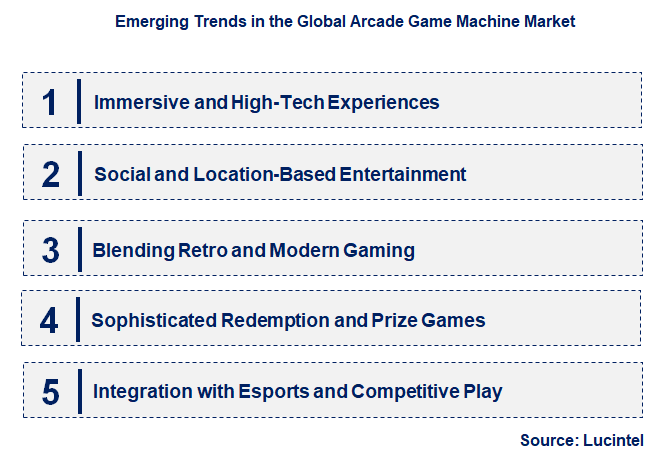
The arcade game machine market is experiencing a significant revival, driven by a blend of nostalgia and futuristic innovation. This resurgence is fundamentally altering the industrys business model, moving it from a simple coin-op service to a multifaceted entertainment experience. These trends highlight the industry’s adaptability and its ability to compete in a world dominated by home and mobile gaming.• Immersive and High-Tech Experiences: Arcade manufacturers are pushing beyond traditional cabinets, incorporating virtual and augmented reality (VR/AR). These technologies create deeply immersive, physical experiences that are difficult to replicate at home. This shift impacts the market by attracting new players seeking a premium, next-level entertainment that justifies the cost of visiting a physical location.
• Social and Location-Based Entertainment: Arcades are repositioning themselves as social hubs, focusing on the shared, competitive experience. This trend is embodied in the rise of "barcades," family entertainment centers, and large-scale venues. It impacts the market by leveraging a key advantage over home gaming: the ability to bring people together for a fun, interactive, and communal activity.
• Blending Retro and Modern Gaming: Theres a strong trend of nostalgia, with classic titles like Pac-Man and Street Fighter finding new life. This is often blended with modern technology, like updated graphics and online leaderboards. This trend impacts the market by appealing to both nostalgic older players and new generations curious about gaming history, creating a broad, multi-generational audience.
• Sophisticated Redemption and Prize Games: Redemption games and claw machines are becoming more complex and technologically advanced. Machines are now designed with compelling mechanics, higher-value prizes, and digital payment systems. This trend impacts the market by creating a secondary revenue stream and enhancing the overall entertainment value, moving beyond simple gameplay to a rewarding consumer experience.
• Integration with Esports and Competitive Play: Arcades are becoming venues for organized gaming tournaments and esports events. Machines are designed with features that facilitate competitive play, such as online leaderboards and spectator modes. This impacts the market by elevating arcades from casual entertainment to legitimate competitive venues, attracting a dedicated community of serious players and spectators. These trends are fundamentally reshaping the arcade market from a niche pastime into a vibrant component of the broader entertainment industry. By combining advanced technology with the social appeal of out-of-home entertainment, arcades are creating a unique value proposition. This strategic pivot ensures the industrys relevance and profitability in a competitive global landscape.
Recent Development in the Arcade Game Machine Market
The arcade game machine market is experiencing a period of revitalization and reinvention, driven by key developments that are redefining its business model and appeal. These changes are moving the industry beyond its traditional reliance on coin-operated machines, introducing modern technology and business strategies to compete with the dominance of home consoles and mobile gaming. This evolution is vital for its continued growth and relevance.• VR and AR Arcade Machines: A major development is the widespread adoption of Virtual Reality (VR) and Augmented Reality (AR) in arcade machines. Companies are creating dedicated, large-scale VR experiences that are too expensive for home use. This development significantly impacts the market by offering unique, high-end entertainment that attracts a new generation of players seeking cutting-edge technology and immersive gameplay.
• Cashless Payment Systems: Traditional coin and token systems are being replaced by cashless, card-based payment systems. This development simplifies transactions for customers and provides arcade operators with valuable data on player behavior and revenue. It improves operational efficiency and allows for loyalty programs, enhancing customer engagement and providing better insights for strategic business decisions.
• Revival of Barcades and FECs: There is a notable resurgence in the popularity of "barcades" (bars with arcades) and Family Entertainment Centers (FECs). These hybrid venues combine gaming with food, drinks, and other leisure activities. This development is impactful because it positions arcade gaming as part of a larger social outing, appealing to a broader audience than just dedicated gamers and increasing overall foot traffic and revenue.
• IP-Based and Licensed Machines: Arcade manufacturers are increasingly collaborating with popular entertainment franchises to create licensed games. Machines based on major movies, TV shows, and video game franchises are now common. This development is impactful as it leverages existing brand recognition and fan bases, guaranteeing a built-in audience and a higher likelihood of commercial success for new titles.
• Global Supply Chain and Manufacturing: The global nature of the arcade market is increasingly evident, with manufacturers in Asia, particularly China and Japan, dominating production and innovation. Developments in this area include the refinement of manufacturing processes and the expansion of distribution networks to new, emerging markets. This allows for a wider variety of arcade machines to reach a global audience. These developments are collectively revitalizing the arcade game market. By embracing technological innovation, new business models, and a focus on the social experience, the industry is creating a compelling reason for consumers to seek out-of-home entertainment. The synergy between technology and tradition ensures that arcades remain a unique and viable component of the global leisure and entertainment landscape.
Strategic Growth Opportunities in the Arcade Game Machine Market
The arcade game machine market is full of strategic growth opportunities by application, moving beyond simple coin-op models to a more diversified and integrated entertainment experience. By applying arcade technology in innovative new venues and formats, the industry can unlock new revenue streams and attract a wider audience. This diversification is crucial for the markets long-term sustainability and profitability in the face of competition from home gaming.• Family Entertainment Centers: One major opportunity is the application of arcade machines within large-scale Family Entertainment Centers. These venues combine arcade games with attractions like bowling, laser tag, and restaurants. This model drives growth by positioning arcades as a key attraction in a one-stop-shop for family outings, increasing per-visit spending and repeat customer visits.
• Barcades and Social Venues: The barcade concept, which combines a bar with retro and modern arcade games, is a lucrative growth opportunity. This application targets a specific demographic—young adults and millennials—by creating a social, nostalgic atmosphere. It drives growth by capitalizing on the demand for unique nightlife and social experiences, with food and beverage sales providing a significant revenue stream.
• VR and High-End Gaming Lounges: The application of high-end VR and full-motion simulators in dedicated gaming lounges offers a premium growth opportunity. These venues provide experiences too costly for home users, such as multi-player VR arenas or intricate racing simulators. This application drives growth by attracting a high-spending, tech-enthusiast demographic and positioning arcades as a destination for cutting-edge entertainment.
• Niche and Themed Arcades: Creating specialized, themed arcades is a strategic opportunity. This could include arcades focused on a specific genre like fighting games, rhythm games, or even eSports. This application drives growth by catering to passionate, dedicated communities, which ensures a steady and loyal customer base willing to spend on their specific interests.
• Amusement Park and Resort Integration: Integrating arcade game machines and mini-arcades into amusement parks, resorts, and cruise ships is a significant growth opportunity. This application captures a captive audience with disposable income looking for additional entertainment options. It drives growth by providing a supplementary revenue stream for these larger entertainment venues, while adding to their overall entertainment value. These opportunities demonstrate that the arcade markets future lies in its ability to innovate and integrate with other sectors of the leisure industry. By strategically applying arcade machines in diverse venues and creating unique experiences, the industry is moving from a stand-alone product to an essential component of the broader entertainment and hospitality landscape.
Arcade Game Machine Market Driver and Challenges
The arcade game machine market is shaped by a complex interplay of major drivers and challenges, including various technological, economic, and regulatory factors. The industry is navigating the shift from a physical, print-based model to a digital, multimedia ecosystem. This transition presents significant opportunities for growth, yet it also introduces new hurdles that publishers and creators must overcome to ensure long-term sustainability and profitability in an evolving market. The factors responsible for driving the arcade game machine market include: 1. Technological Innovation: The continuous development of new technologies like VR, AR, and advanced motion simulators is a primary driver. These technologies allow arcade machines to offer experiences that are far superior to home gaming, attracting a new generation of players. This innovation ensures that arcades remain a relevant and exciting destination for entertainment. 2. Social and Experiential Demand: Theres a growing consumer demand for out-of-home, social entertainment experiences. Arcades, especially those that have evolved into "barcades" or FECs, provide a communal space for friends and family to interact and compete. This driver capitalizes on the human need for shared experiences that are increasingly rare in a digital world. 3. Nostalgia and Retro Revival: A significant driver is the strong sense of nostalgia among older generations who grew up with arcades. This has led to a revival of retro-themed arcades and the re-release of classic machines. This trend draws in not only older players but also younger generations curious about the history of gaming. 4. Growth of Location-Based Entertainment: The expansion of LBE venues, such as large-scale entertainment centers in malls and resorts, is a major driver. Arcade games are a central component of these venues, attracting a broad customer base. This business model diversifies revenue streams and provides a stable environment for arcade machines to thrive. 5. Rising Disposable Incomes in Emerging Markets: In countries like China and India, rising disposable incomes are fueling growth in the entertainment sector. As more people have money to spend on leisure activities, the demand for arcades and amusement centers is increasing. This economic driver opens up vast new markets for arcade manufacturers. Challenges in the arcade game machine market are: 1. High Initial and Maintenance Costs: The most significant challenge is the high cost of arcade machines. The initial investment for high-end VR or simulator machines is substantial, and maintenance can be complex and expensive. This challenge makes it difficult for small businesses to enter the market and compete with larger, more established chains. 2. Competition from Home Consoles and Mobile Gaming: The biggest threat to arcades is the pervasive presence of powerful home consoles, PCs, and mobile devices. These platforms offer a vast library of games at a lower per-play cost and with the convenience of playing at home. Arcades must constantly innovate to provide a compelling reason for consumers to leave their homes. 3. Risk of Technological Obsolescence: Due to the rapid pace of technological innovation, arcade machines risk becoming outdated very quickly. The need to constantly invest in new hardware to stay competitive can be a major financial burden for operators. This challenge requires constant capital investment to keep a venue fresh and appealing to a modern audience. The arcade game market is successfully navigating a complex landscape by embracing technological innovation and capitalizing on the demand for social, out-of-home entertainment. However, significant challenges, including high costs and competition from home gaming, continue to test the industrys resilience. The markets future success depends on its ability to leverage its unique experiential offerings while managing the financial burdens of constant technological upgrades.List of Arcade Game Machine Companies
Companies in the market compete on the basis of product quality offered. Major players in this market focus on expanding their manufacturing facilities, R&D investments, infrastructural development, and leverage integration opportunities across the value chain. With these strategies arcade game machine companies cater increasing demand, ensure competitive effectiveness, develop innovative products & technologies, reduce production costs, and expand their customer base. Some of the arcade game machine companies profiled in this report include-• WMS Gaming
• Nintendo
• AtGames
• Taito
• Konami
• Bay Tek Games
• Lucky Draw Amusement
• Phoenix Amusement
• Sega
• BANDAI NAMCO
Arcade Game Machine Market by Segment
The study includes a forecast for the global arcade game machine market by machine type, gaming experience, control mechanism, power source, and region.Arcade Game Machine Market by Machine Type [Value from 2019 to 2031]:
• Video Games
• Pinball Machines
• Skill Crane Machines
• Redemption Games
Arcade Game Machine Market by Gaming Experience [Value from 2019 to 2031]:
• Single-Player
• Multiplayer
• Virtual Reality
• Augmented Reality
Arcade Game Machine Market by Control Mechanism [Value from 2019 to 2031]:
• Joystick
• Buttons
• Trackball
• Motion Controls
Arcade Game Machine Market by Power Source [Value from 2019 to 2031]:
• Electric
• Battery
• Hybrid
Arcade Game Machine Market by Region [Value from 2019 to 2031]:
• North America
• Europe
• Asia Pacific
• The Rest of the World
Country Wise Outlook for the Arcade Game Machine Market
The arcade game machine market is undergoing a significant transformation, moving beyond its traditional image as a relic of the past. The industry is being revitalized by technological innovations like virtual reality and augmented reality, creating highly immersive experiences that home consoles cant replicate. This resurgence is also fueled by a renewed appreciation for social, location-based entertainment and a wave of nostalgia for classic titles.• United States: The US market is characterized by a strong nostalgia-driven revival and the integration of cutting-edge technology. Family entertainment centers (FECs) and "barcades" are thriving, blending classic games with modern offerings like VR and AR. These venues emphasize a social, out-of-home experience, positioning arcades as a unique form of entertainment.
• China: Chinas arcade market is experiencing rapid expansion, driven by urbanization and rising disposable incomes. Arcades are often large, high-tech entertainment hubs within malls and commercial centers. The focus is on high-tech immersive experiences and redemption games that appeal to a younger, tech-savvy population, often with a social media component.
• Germany: The German market is smaller but stable, with a strong emphasis on quality and niche experiences. Arcades often cater to specific genres like racing or simulation games. The market has seen a moderate increase in VR arcades, but the overall growth is less explosive compared to Asian markets, with a focus on premium and well-maintained machines.
• India: Indias arcade market is emerging as a significant growth area. The increasing number of shopping malls and entertainment complexes is a key driver. Developments are centered on affordable, family-friendly entertainment and integrating arcade games with other leisure activities, such as bowling alleys and food courts, to attract a broad consumer base.
• Japan: Japan remains the heart of the arcade industry, with a focus on continuous innovation and dedicated gaming culture. Companies like Bandai Namco and Sega are constantly releasing new, high-tech machines, particularly in rhythm and fighting game genres. Japan is a leader in introducing advanced features like networked play and sophisticated motion-based simulators.

Features of the Global Arcade Game Machine Market
Market Size Estimates: Arcade game machine market size estimation in terms of value ($B). Trend and Forecast Analysis: Market trends (2019 to 2024) and forecast (2025 to 2031) by various segments and regions. Segmentation Analysis: Arcade game machine market size by various segments, such as by machine type, gaming experience, control mechanism, power source, and region in terms of value ($B). Regional Analysis: Arcade game machine market breakdown by North America, Europe, Asia Pacific, and Rest of the World. Growth Opportunities: Analysis of growth opportunities in different machine types, gaming experience, control mechanism, power sources, and regions for the arcade game machine market. Strategic Analysis: This includes M&A, new product development, and competitive landscape of the arcade game machine market. Analysis of competitive intensity of the industry based on Porter’s Five Forces model.
FAQ
Q1. What is the growth forecast for arcade game machine market? Answer: The global arcade game machine market is expected to grow with a CAGR of 5.1% from 2025 to 2031. Q2. What are the major drivers influencing the growth of the arcade game machine market? Answer: The major drivers for this market are the increasing consumer interest in retro gaming experiences, the rising popularity of competitive gaming events, and the growing demand for interactive arcade gaming technologies. Q3. What are the major segments for arcade game machine market? Answer: The future of the arcade game machine market looks promising with opportunities in the video game, pinball machine, skill crane machine, and redemption game markets. Q4. Who are the key arcade game machine market companies? Answer: Some of the key arcade game machine companies are as follows:• WMS Gaming
• Nintendo
• AtGames
• Taito
• Konami
• Bay Tek Games
• Lucky Draw Amusement
• Phoenix Amusement
• Sega
• BANDAI NAMCO Q5. Which arcade game machine market segment will be the largest in future? Answer: Lucintel forecasts that, within the power source category, electric is expected to witness the highest growth over the forecast period. Q6. In arcade game machine market, which region is expected to be the largest in next 5 years? Answer: In terms of region, APAC is expected to witness the highest growth over the forecast period. Q7. Do we receive customization in this report? Answer: Yes, Lucintel provides 10% customization without any additional cost.
Table of Contents
List of Figures
List of Tables
Methodology
- In-depth interviews of the major players in this market
- Detailed secondary research from competitors’ financial statements and published data
- Extensive searches of published works, market, and database information pertaining to industry news, company press releases, and customer intentions
- A compilation of the experiences, judgments, and insights of Lucintel’s professionals, who have analyzed and tracked this market over the years.


Buy Now
Choose a license that fits your team. Instant PDF delivery.
Prices exclude taxes. Instant delivery. Custom licensing available on request.
Key Questions
- • What are some of the most promising, high-growth opportunities for the arcade game machine market by machine type (video games, pinball machines, skill crane machines, and redemption games), gaming experience (single-player, multiplayer, virtual reality, and augmented reality), control mechanism (joystick, buttons, trackball, and motion controls), power source (electric, battery, and hybrid), and region (North America, Europe, Asia Pacific, and the Rest of the World)?
- • Which segments will grow at a faster pace and why?
- • Which region will grow at a faster pace and why?
- • What are the key factors affecting market dynamics? What are the key challenges and business risks in this market?
- • What are the business risks and competitive threats in this market?
- • What are the emerging trends in this market and the reasons behind them?
- • What are some of the changing demands of customers in the market?
- • What are the new developments in the market? Which companies are leading these developments?
- • Who are the major players in this market? What strategic initiatives are key players pursuing for business growth?
- • What are some of the competing products in this market and how big of a threat do they pose for loss of market share by material or product substitution?
- • What M&A activity has occurred in the last 5 years and what has its impact been on the industry? For any questions related to Arcade Game Machine Market, Arcade Game Machine Market Size, Arcade Game Machine Market Growth, Arcade Game Machine Market Analysis, Arcade Game Machine Market Report, Arcade Game Machine Market Share, Arcade Game Machine Market Trends, Arcade Game Machine Market Forecast, Arcade Game Machine Companies, write Lucintel analyst at email: helpdesk@lucintel.com. We will be glad to get back to you soon.


