
Market Report · July 22, 2026

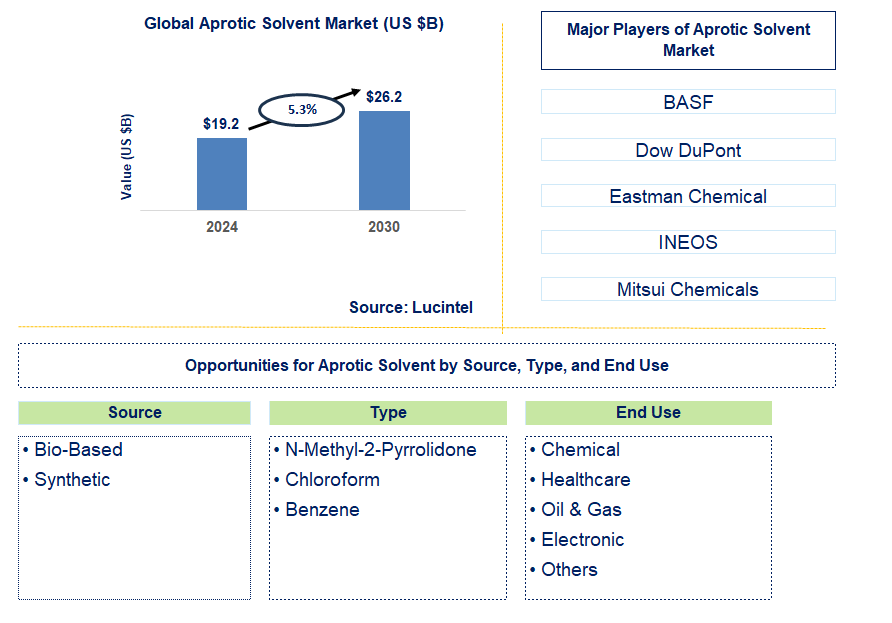
Key data points: The market size in 2030 = $26.2 billion, growth forecast = 5.3% annually for the next 6 years. Scroll below to get more insights. This market report covers trends, opportunities, and forecasts in the global aprotic solvent market to 2030 by source (bio-based and synthetic), type (N-methyl-2-pyrrolidone, chloroform, and benzene), end use (chemical, healthcare, oil & gas, electronic, and others), and region (North America, Europe, Asia Pacific, and the Rest of the World)
We'll send your sample report shortly.
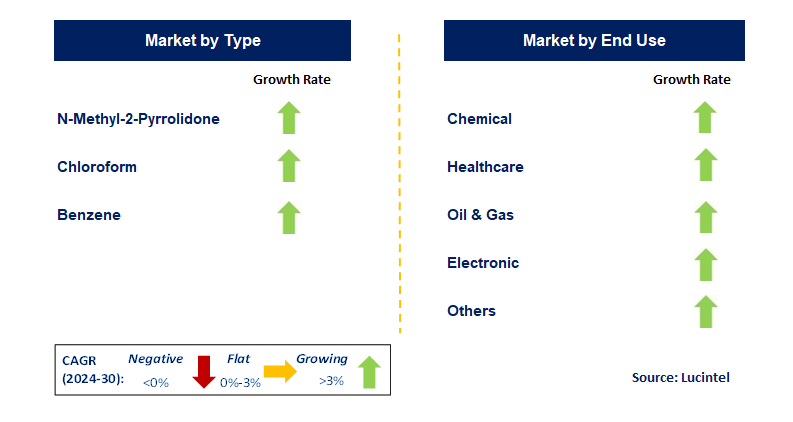
• Lucintel forecasts that, within the type category, N-methyl-2-pyrrolidone will remain the largest segment over the forecast period because it plays a crucial role in drug synthesis, extraction, and purification, as well as, its high solvency power helps to dissolve various drug precursors and intermediates.
• In terms of regions, APAC will remain the largest region over the forecast period due to rising demand in developing nations including China, Japan, India, and South Korea for aprotic solvents, as well as, growing building and construction industry. A more than 150-page report is developed to help in your business decisions.
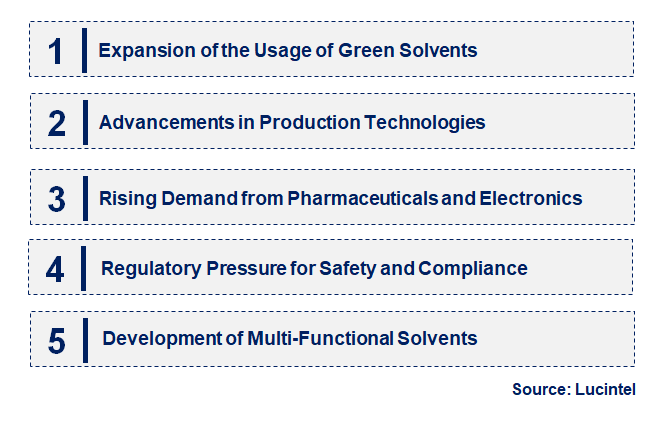
• Expansion of the Usage of Green Solvents: Efforts are being made to synthesize solvents that are more sustainable than most of the solvents present in the market today. Companies are implementing policies to promote the development of such solvents, which will lower toxicity levels in the environment, foster reduced solvent use in industries, and hence decrease the environmental impact.
• Advancements in Production Technologies: Enhancing the production processes of aprotic solvents improves their efficiency and purity. These improvements allow for the introduction of new, high-performance solvents with better stability and fewer contaminants, making them suitable for various industries.
• Rising Demand from Pharmaceuticals and Electronics: The need for high-purity aprotic solvents is being driven by the pharmaceutical and electronics industries. These industries require specific types of solvents for drug production and electronics manufacturing, which expands the market and fosters innovative developments.
• Regulatory Pressure for Safety and Compliance: The development of aprotic solvents is being influenced by increasing demand for safer and more regulatory-compliant solvents. Many industries are required to meet high safety standards and minimize pollution levels to ensure their products are approved for market entry.
• Development of Multi-Functional Solvents: There is a growing trend toward the development of multi-functional aprotic solvents, which improve the range of their usefulness. These solvents serve multiple functions in industrial operations, reducing the need for various types of solvents, thus enhancing productivity. These trends are transforming the aprotic solvent market by encouraging pragmatism, improving eco-friendliness, and broadening usage. The increasing market orientation toward eco-friendly solvents, advancements in production technologies, and growth of key solvent-consuming industries are guiding the market's forward path.
• Advancement in Green Solvents: The trend toward promoting green Aprotic Solvents is gaining traction. Industries are focusing on producing solvents that are environmentally friendly by utilizing greener processes and materials that comply with upcoming legal requirements and clients' needs.
• Enhanced Purity and Efficiency: Production technologies are improving the purity and efficiency of Aprotic Solvents. New high-purity organic solvents with greater stability and efficiency are being developed for demanding applications in pharmaceuticals and electronics.
• Regulatory Compliance: Companies are responding to increased safety and environmental requirements. Recent advancements include the reformulation of solvents to meet international standards, ensuring that products are not only legal but also environmentally friendly
• Growth Opportunities in Emerging Markets: The demand for Aprotic Solvents is forecast to grow, driven by expansion in new markets, including India and Southeast Asia. With improvements in production, many companies are venturing into these regions by offering low-cost services and adapting to local production requirements.
• Innovations in Manufacturing Technologies: New developments in manufacturing technologies are enhancing the efficiency of Aprotic Solvents production. Innovative processes and tools are being introduced to improve solvent quality and reduce production costs. These trends are transforming the Aprotic Solvent market through better products, adherence to legislative requirements, and expanded market reach. The emphasis on eco-friendly solvents, technology integration, and the growth of new markets is introducing fresh ideas and changing the course of the industry.
• Expansion into Emerging Markets: Emerging markets, such as India and Southeast Asia, where industrialization and manufacturing activities are steadily increasing, present enormous growth prospects. Companies can expand their reach in these markets by providing suitable Aprotic Solvents and aligning with local market demands.
• Development of Eco-Friendly Solvents: Global trends and regulatory endorsements are pushing investment in the production of green Aprotic Solvents. Companies that invest in developing new technologies for manufacturing green solvents can differentiate themselves and appeal to environmentally conscious customers.
• Embracing Cross-Functional Unit-Purity Approaches: The growing demand from pharmaceutical and electronic sectors creates opportunities for high-purity Aprotic Solvents. Companies should focus on developing solvents with high purity, enabling them to serve a broader range of industries and specialized applications.
• Implementation of Novel Production Techniques: Adopting novel production techniques will enhance the efficiency and quality of Aprotic Solvent production. Companies that invest in sophisticated equipment and processes will focus on improving product performance and reducing costs.
• Liability of Enhanced Regulation Compliance: Enforcing stringent safety and compliance regulations can become a growth opportunity for companies in this market. By ensuring adherence to global standards, businesses can build customer confidence and open new market opportunities. These growth opportunities highlight niches for capturing market growth and differentiation within the Aprotic Solvent sector. By embracing new economies, developing green technologies, and ensuring effective regulatory compliance, businesses can unlock significant growth potential.
• Technological Innovations: The development of new solvent systems and production processes contributes to the market's growth. The increased performance, purity, and efficiency of aprotic solvents make them more desirable in various fields of application.
• Increasing Demand from Industries: Growing demand from industries such as pharmaceuticals, electronics, and chemicals is driving the growth of the aprotic solvent market. This demand creates opportunities for further growth, as new high-performance solvents are needed in these sectors.
• Regulatory Pressure for Sustainable Development: Stricter environmental regulations are facilitating the production of greener aprotic solvents. Corporations are turning to eco-friendly solutions in order to comply with the law and meet societal expectations.
• Growth in Developing Economies: Increasing industrialization and manufacturing in developing economies provide significant growth potential for the aprotic solvent market. Companies are targeting these regions, hoping to capitalize on emerging economic opportunities as demand rises.
• Focus on Product Development: The market is being driven by the growing demand for advanced aprotic solvents with improved features, including better stability and multi-functional capabilities. Change is the order of the day in any industrial sector, which helps companies stay competitive. Challenges in the aprotic solvent market include:
• Raw Material Price Volatility: The variability of raw material costs, particularly for crude aprotic solvents, complicates production costs and pricing. It is crucial to manage these issues in order to maintain profitability and stabilize the market.
• Regulatory Compliance Costs: Compliance with strict environmental and occupational safety standards is expensive. Organizations must invest in compliance to avoid litigation and gain market access, or else profit margins will be constrained.
• Intense Market Competition: The aprotic solvent market is highly competitive, with many players offering similar products. One of the most important strategies for winning customers is differentiating products through new features, higher quality, and excellent service. These drivers and challenges influence the aprotic solvent industry by determining market opportunities and the level of competition. Resolving issues related to raw material costs, addressing regulatory compliance risks, and handling growing competition trends are critical for survival in this ever-changing industry.
• BASF
• Dow DuPont
• Eastman Chemical
• INEOS
• Mitsui Chemicals
• Shell International
• Asahi Kasei
• Ashland
• AlzChem
• Celanese
• Bio-Based
• Synthetic
• N-Methyl-2-Pyrrolidone
• Chloroform
• Benzene
• Chemical
• Healthcare
• Oil & Gas
• Electronic
• Others
• North America
• Europe
• Asia Pacific
• The Rest of the World
• United States: In the U.S., the Aprotic Solvent market is in an emerging stage, where more formulation products are being developed to enhance safety and efficiency. These developments are making it mandatory to formulate new solvents that are environmentally friendly. Industries that produce high-purity solvents are seeing strides in production, driven by the demand from the pharmaceutical and electronic sectors.
• China: Due to growing industrialization and an expanding manufacturing base, the Aprotic Solvent market in China is growing at a rapid pace. Recent advances include improvements in production technology and a reduction in environmental hazards associated with the use of solvents. The focus is on enhancing efficiency and ensuring the safety of equipment to meet international quality assurance standards.
• Germany: Germany leads in the incorporation of emerging, affordable, and yield-efficient Aprotic Solvent components with advanced safety features. These advances include the development of novel green solvents and technologies to increase their potency in manufacturing processes. Germany’s strong regulatory framework ensures safety and quality compliance in the use of industrial solvents.
• India: India is investing in indenes and Aprotic Solvents economically. The growth of the pharmaceutical and chemical industries is driving the increasing demand for Aprotic Solvents in India. New technologies are accelerating production and improving the formulation of solvents, surpassing the effectiveness of current solutions. Emphasis is placed on adhering to and exceeding both local and global market requirements.
• Japan: Japan’s Aprotic Solvent market is characterized by high-tech innovations and a focus on performance and safety. Advances include solvent technologies that enhance both performance and safety. Japan is also engaging in research to eliminate the use of toxic and inefficient solvents in industrial applications.


• BASF
• Dow DuPont
• Eastman Chemical
• INEOS
• Mitsui Chemicals
• Shell International
• Asahi Kasei
• Ashland
• AlzChem
• Celanese Q6. Which aprotic solvent market segment will be the largest in future? Answer: Lucintel forecasts that N-methyl-2-pyrrolidone will remain the largest segment over the forecast period because it plays a crucial role in drug synthesis, extraction, and purification, as well as, its high solvency power helps to dissolve various drug precursors and intermediates. Q7. In aprotic solvent market, which region is expected to be the largest in next 6 years? Answer: APAC will remain the largest region over the forecast period due to rising demand in developing nations including China, Japan, India, and South Korea for aprotic solvents, as well as, growing building and construction industry. Q.8 Do we receive customization in this report? Answer: Yes, Lucintel provides 10% customization without any additional cost.


Choose a license that fits your team. Instant PDF delivery.
Prices exclude taxes. Instant delivery. Custom licensing available on request.
Market Report · July 22, 2026
Market Report · July 22, 2026
Market Report · July 22, 2026
Trusted partner for strategic intelligence and business growth


Receive a complimentary market analysis tailored to your industry. Our analysts will identify key growth opportunities and competitive dynamics specific to your business.

Market size, growth rate, and key trend analysis for your specific sector.

Top competitor positioning and market share analysis.

Strategic recommendations backed by data-driven insights.
Get curated market intelligence and competitive moves straight to your inbox.
By subscribing, you agree to receive our monthly insights. Unsubscribe anytime.
Receive a complimentary market analysis tailored to your industry. Our analysts will identify key growth opportunities and competitive dynamics specific to your business.
Market size, growth rate, and key trend analysis for your specific sector.
Top competitor positioning and market share analysis.
Strategic recommendations backed by data-driven insights.
Get curated market intelligence, emerging trends, and competitive moves straight to your inbox each month.
By subscribing, you agree to receive our monthly insights. Unsubscribe anytime.
We'll send your sample report shortly.