
Market Report · July 16, 2026

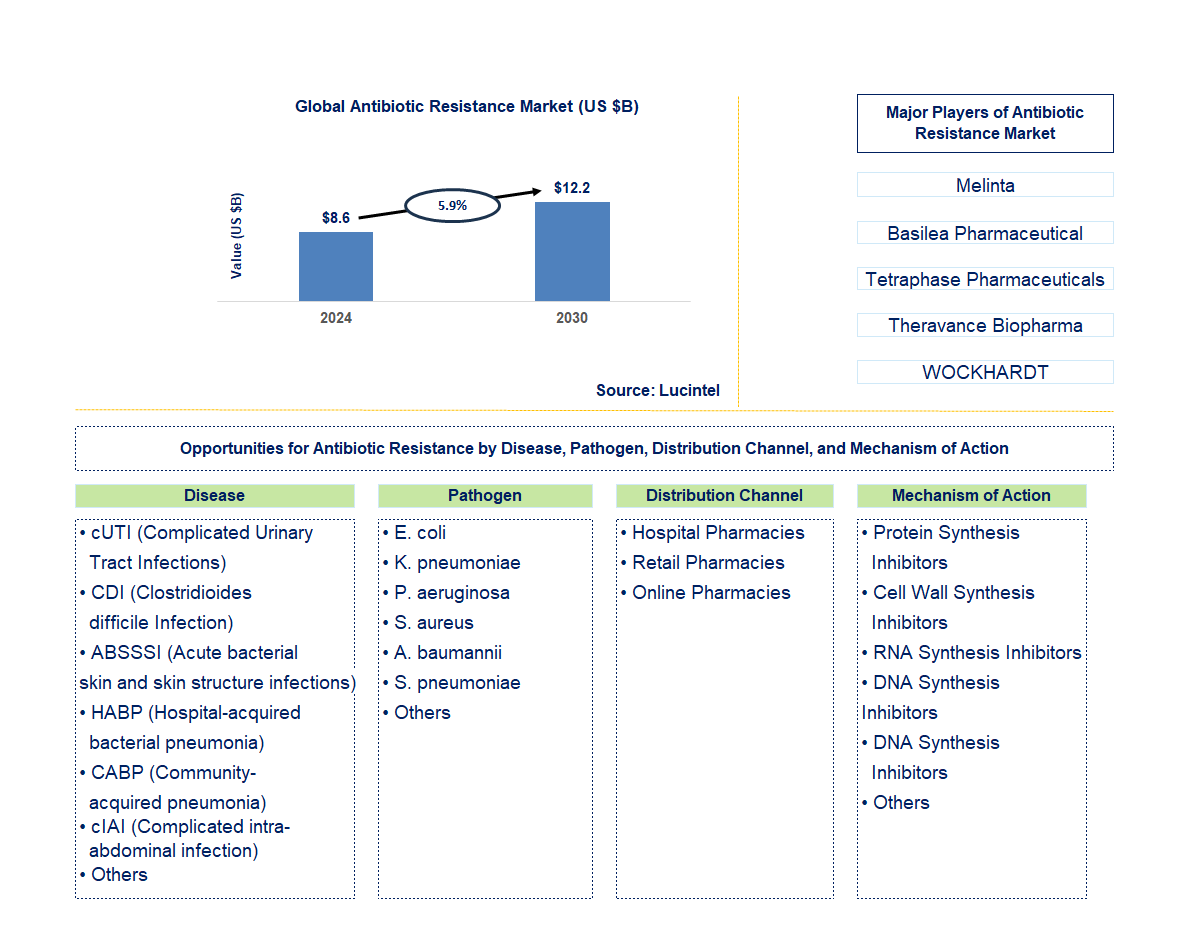
Key data points: The market size in 2030 = $12.2 billion, growth forecast = 5.9% annually for the next 6 years. Scroll below to get more insights. This market report covers trends, opportunities, and forecasts in the global antibiotic resistance market to 2030 by disease (cUTI (complicated urinary tract infections), CDI (clostridioides difficile infection), ABSSSI (acute bacterial skin and skin structure infections), HABP (hospital-acquired bacterial pneumonia), CABP (community-acquired pneumonia), CIAI (complicated intra-abdominal infection), and others), pathogen (e. coli, k. pneumoniae, p. aeruginosa, s. aureus, a. baumannii, s. pneumoniae, and others), distribution channel (hospital pharmacies, retail pharmacies, and online pharmacies), mechanism of action (protein synthesis inhibitors, cell wall synthesis inhibitors, rna synthesis inhibitors, dna synthesis inhibitors, and others), and region (North America, Europe, Asia Pacific, and the Rest of the World)
We'll send your sample report shortly.
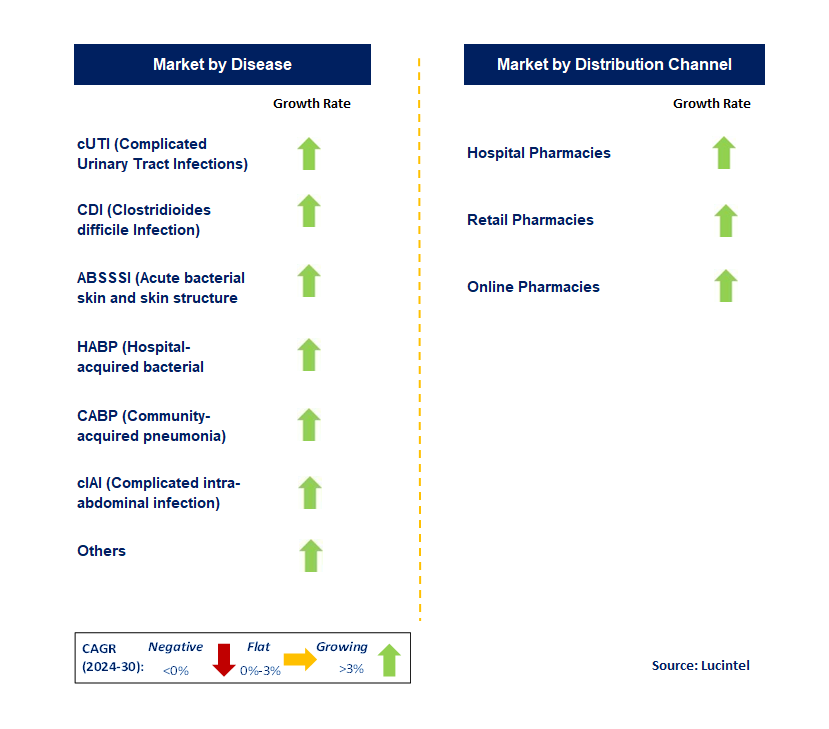
• Lucintel forecasts that, within the disease category, cUTI (complicated urinary tract infection) will remain the largest segment over the forecast period due to existence of a robust product development pipeline.
• Within the distribution channel category, hospital pharmacy will remain the largest segment as it plays a vital role in overseeing drug formularies, tracking resistance patterns, delivering education, and guaranteeing medication safety.
• In terms of regions,
• In terms of regions, North America will remain the largest region over the forecast period due to increasing number of government programs and mandatory insurance policies in the region. Gain valuable insight for your business decisions with our comprehensive 150+ page report
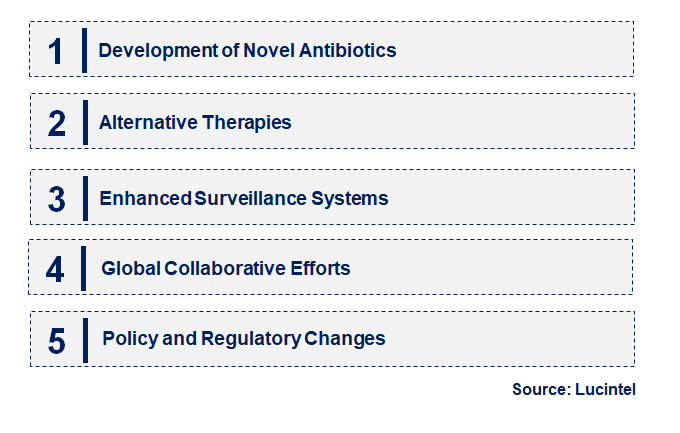
• Development of Novel Antibiotics: There is a growing focus on developing new classes of antibiotics to combat resistant strains. Research increasingly targets overcoming the mechanisms that bacteria use to resist existing drugs. This trend aims to provide more effective treatment options and address gaps in current antibiotic therapies.
• Alternative Therapies: Interest in alternative therapies, such as bacteriophage therapy and antimicrobial peptides, is rising. These treatments offer potential solutions where traditional antibiotics fail. They are being explored for their ability to target resistant bacteria specifically without impacting beneficial microorganisms.
• Enhanced Surveillance Systems: Improved surveillance systems are being developed to monitor and track antibiotic resistance patterns more effectively. These systems aim to provide real-time data to help guide treatment decisions and inform public health strategies. Enhanced surveillance is crucial for responding swiftly to emerging resistance trends.
• Global Collaborative Efforts: There is an increase in international collaboration to tackle antibiotic resistance. Global initiatives and partnerships are focusing on shared research, data exchange, and coordinated responses. These efforts aim to create a unified approach to combating resistance on a global scale.
• Policy and Regulatory Changes: Countries are enacting stricter policies and regulations to control antibiotic use. These include restrictions on over-the-counter sales and new guidelines for prescribing practices. Policy changes are designed to reduce the misuse and overuse of antibiotics, which are key drivers of resistance. These trends are reshaping the antibiotic resistance market by emphasizing innovation in treatment, enhanced monitoring, and global cooperation. They aim to address the shortcomings of current antibiotics and provide a more robust framework for managing resistance.
• National Action Plans: Countries, including the US and Germany, have implemented national action plans to combat antibiotic resistance. These plans focus on improving surveillance, promoting stewardship, and incentivizing research. The impact includes a more structured approach to resistance and coordinated efforts at the national level.
• Advancements in Diagnostics: New diagnostic technologies are being developed to rapidly identify resistant bacteria and guide appropriate treatment. These advancements are crucial for ensuring accurate and timely treatment, reducing unnecessary antibiotic use, and improving patient outcomes.
• Increased Research Funding: There has been a notable increase in funding for research into new antibiotics and alternative treatments. Governments and private organizations are investing in this area to accelerate the development of novel therapies and address the limitations of existing antibiotics.
• Stricter Regulations: Countries are introducing stricter regulations on antibiotic use in agriculture and healthcare settings. These regulations aim to reduce overuse and misuse, which are major contributors to resistance. The impact includes better stewardship practices and a reduced spread of resistant bacteria.
• Global Collaborations: International collaborations and partnerships are enhancing the global response to antibiotic resistance. These efforts focus on sharing data, coordinating research, and implementing joint strategies. The collaborative approach aims to create a unified global response to the resistance crisis. These developments are driving progress in the fight against antibiotic resistance by improving treatment options, enhancing surveillance, and fostering global cooperation. They are critical for addressing the evolving challenges of resistance and shaping the future of antibiotic therapy.
• Development of Rapid Diagnostic Tools: There is significant potential for growth in the development of rapid diagnostic tools that can quickly identify resistant bacteria. These tools are essential for guiding effective treatment and reducing unnecessary antibiotic use. Their development can enhance patient outcomes and reduce healthcare costs.
• Investment in Alternative Therapies: Investment in alternative therapies, such as bacteriophage therapy and antimicrobial peptides, offers growth opportunities. These therapies have the potential to target resistant bacteria specifically and offer new treatment options. Their development can address gaps left by traditional antibiotics.
• Expansion of Stewardship Programs: Expanding antibiotic stewardship programs in healthcare settings presents growth opportunities. These programs are designed to promote the responsible use of antibiotics and reduce resistance. Implementing and scaling these programs can improve treatment practices and patient safety.
• Enhancement of Surveillance Systems: There is an opportunity to enhance surveillance systems for tracking antibiotic resistance. Improved systems can provide real-time data and insights, helping to guide public health responses and treatment strategies. Enhanced surveillance is critical for managing resistance effectively.
• Collaboration and Partnership Initiatives: Collaborative initiatives between governments, pharmaceutical companies, and research organizations offer growth opportunities. These partnerships can drive innovation, share resources, and coordinate efforts to combat resistance. Collaborative approaches can lead to more effective and comprehensive solutions. These growth opportunities highlight the potential for advancements in diagnostics, therapies, stewardship, surveillance, and collaboration. They reflect the need for innovative solutions and coordinated efforts to address antibiotic resistance effectively.
• Increasing Prevalence of Resistant Infections: The rising incidence of infections caused by resistant bacteria is a major driver for market growth. As resistance becomes more common, there is a greater demand for new treatments and diagnostic tools to address these challenging infections.
• Technological Advancements: Advancements in technology, including new diagnostic tools and research methods, are driving innovation in the antibiotic resistance market. These technologies enable faster detection, better monitoring, and the development of new therapies, enhancing the ability to combat resistance.
• Government and Regulatory Support: Increased government funding and regulatory support for research and development of new antibiotics are significant drivers. Policies and incentives aimed at promoting innovation and stewardship practices contribute to market growth and development.
• Rising Awareness and Stewardship Initiatives: Growing awareness of antibiotic resistance and the implementation of stewardship programs are driving the market. These initiatives focus on responsible antibiotic use and reducing overuse, which can help mitigate resistance and improve public health outcomes.
• Global Health Collaborations: International collaborations and partnerships are driving efforts to address antibiotic resistance on a global scale. Shared resources, data, and strategies enhance the effectiveness of responses and contribute to market growth and innovation. Challenges in the antibiotic resistance market are:
• High Costs of Research and Development: The high costs associated with developing new antibiotics and alternative therapies pose a significant challenge. Funding constraints and financial risks can limit the ability of companies to invest in research and bring new products to market.
• Slow Regulatory Approval Processes: Regulatory approval processes for new antibiotics can be lengthy and complex. Delays in approval can hinder the timely availability of new treatments and impact the overall progress in combating resistance.
• Limited Market Incentives: The lack of financial incentives for developing antibiotics, due to their lower profitability compared to other drugs, presents a challenge. This can discourage pharmaceutical companies from investing in antibiotic research and development. The drivers and challenges in the antibiotic resistance market are interconnected, influencing the development and implementation of solutions. While technological advancements and supportive policies drive progress, high costs and regulatory hurdles pose significant challenges. Addressing these factors is crucial for advancing the fight against antibiotic resistance and improving global health outcomes.
• Melinta
• Basilea Pharmaceutical
• Tetraphase Pharmaceuticals
• Theravance Biopharma
• WOCKHARDT
• cUTI (Complicated Urinary Tract Infections)
• CDI (Clostridioides difficile Infection)
• ABSSSI (Acute bacterial skin and skin structure infections)
• HABP (Hospital-acquired bacterial pneumonia)
• CABP (Community-acquired pneumonia)
• cIAI (Complicated
• E. coli
• K. pneumoniae
• P. aeruginosa
• S. aureus
• A. baumannii
• S. pneumoniae
• Others
• Hospital Pharmacies
• Retail Pharmacies
• Online Pharmacies
• Protein Synthesis Inhibitors
• Cell Wall Synthesis Inhibitors
• RNA Synthesis Inhibitors
• DNA Synthesis Inhibitors
• Others
• North America
• Europe
• Asia Pacific
• The Rest of the World
• United States: The US has made strides in addressing antibiotic resistance through the implementation of the National Action Plan for Combating Antibiotic-Resistant Bacteria (CARB). Recent advancements include increased funding for research, development of novel antibiotics, and stricter regulations on antibiotic use in agriculture. The FDA has also introduced incentives for pharmaceutical companies to develop new antibiotics.
• China: China has intensified its efforts to combat antibiotic resistance by enhancing regulations on antibiotic sales and use. The government has launched national programs to promote stewardship and reduce overuse in both human and veterinary medicine. There is also a focus on improving surveillance systems to monitor resistance patterns more effectively.
• Germany: Germany has made progress by integrating antibiotic stewardship programs into its healthcare system. The country is investing in research and development of new antibiotics and alternative treatments. Additionally, Germany is working on a European level to harmonize antibiotic resistance strategies and share data across borders for a coordinated response.
• India: In India, efforts to address antibiotic resistance have been bolstered by initiatives to improve healthcare infrastructure and regulatory oversight. There is a focus on raising awareness among healthcare providers and the public about the responsible use of antibiotics. India is also working on strengthening its surveillance systems to better track resistance trends.
• Japan: Japan has implemented new guidelines to promote antibiotic stewardship and reduce resistance. The country is investing in the development of new antibiotics and alternative therapies. Japan’s approach includes enhancing infection control measures in hospitals and increasing public education on the proper use of antibiotics.


• Melinta
• Basilea Pharmaceutical
• Tetraphase Pharmaceuticals
• Theravance Biopharma
• WOCKHARDT Q6. Which antibiotic resistance market segment will be the largest in future? Answer: Lucintel forecasts that cUTI (complicated urinary tract infection) will remain the largest segment over the forecast period due to existence of a robust product development pipeline. Q7. In antibiotic resistance market, which region is expected to be the largest in next 5 years? Answer:
• In terms of regions, North America will remain the largest region over the forecast period due to increasing number of government programs and mandatory insurance policies in the region. Q.8 Do we receive customization in this report? Answer: Yes, Lucintel provides 10% customization without any additional cost.


Choose a license that fits your team. Instant PDF delivery.
Prices exclude taxes. Instant delivery. Custom licensing available on request.
Market Report · July 16, 2026
Market Report · July 15, 2026
Market Report · July 15, 2026
Trusted partner for strategic intelligence and business growth


Receive a complimentary market analysis tailored to your industry. Our analysts will identify key growth opportunities and competitive dynamics specific to your business.

Market size, growth rate, and key trend analysis for your specific sector.

Top competitor positioning and market share analysis.

Strategic recommendations backed by data-driven insights.
Get curated market intelligence and competitive moves straight to your inbox.
By subscribing, you agree to receive our monthly insights. Unsubscribe anytime.
Receive a complimentary market analysis tailored to your industry. Our analysts will identify key growth opportunities and competitive dynamics specific to your business.
Market size, growth rate, and key trend analysis for your specific sector.
Top competitor positioning and market share analysis.
Strategic recommendations backed by data-driven insights.
Get curated market intelligence, emerging trends, and competitive moves straight to your inbox each month.
By subscribing, you agree to receive our monthly insights. Unsubscribe anytime.
We'll send your sample report shortly.