
Report Feature
Antibacterial Wound Gel Market Trends and Forecast
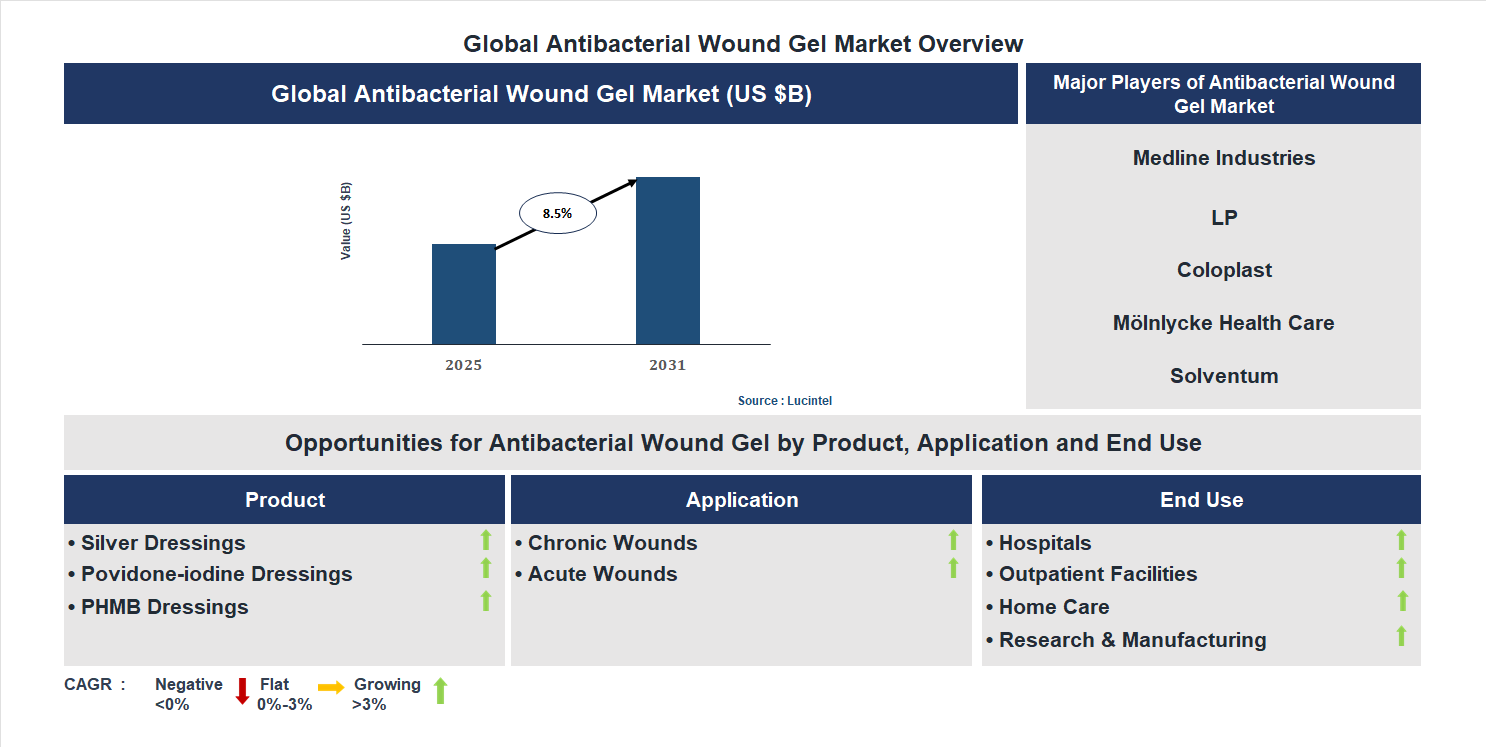
The future of the global antibacterial wound gel market looks promising with opportunities in the hospital, outpatient facility, home care, and research & manufacturing markets. The global antibacterial wound gel market is expected to grow with a CAGR of 8.5% from 2025 to 2031. The major drivers for this market are the increasing demand for advanced wound care, the rising incidence of chronic wounds, and the growing adoption of antibacterial wound gels.• Lucintel forecasts that, within the product category, silver dressing is expected to witness the highest growth over the forecast period.
• Within the end use category, hospital is expected to witness the highest growth.
• In terms of region, APAC is expected to witness the highest growth over the forecast period. Gain valuable insights for your business decisions with our comprehensive 150+ page report. Sample figures with some insights are shown below.
Emerging Trends in the Antibacterial Wound Gel Market
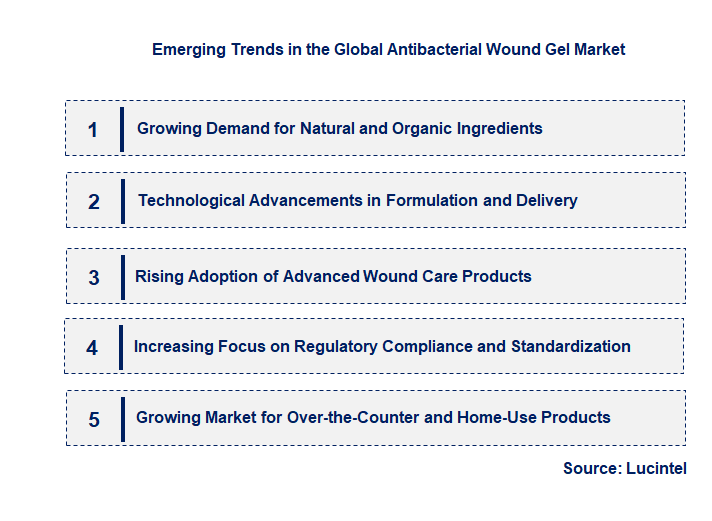
The antibacterial wound gel market is experiencing rapid growth driven by increasing awareness of infection control, advancements in medical technology, and a rising prevalence of chronic wounds and injuries worldwide. As healthcare providers and consumers seek more effective and convenient wound care solutions, innovative products and strategies are emerging to meet these demands. These developments are not only transforming product offerings but also influencing market dynamics, regulatory standards, and consumer preferences. Understanding these key trends is essential for stakeholders aiming to capitalize on the markets potential and address evolving healthcare needs effectively.• Growing Demand for Natural and Organic Ingredients: Consumers and healthcare providers are increasingly favoring wound gels formulated with natural and organic ingredients. This trend is driven by concerns over chemical additives and a desire for safer, eco-friendly products. Natural antibacterial agents like honey, aloe vera, and plant extracts are gaining popularity due to their proven efficacy and minimal side effects. This shift is encouraging manufacturers to innovate with plant-based formulations, which can enhance product safety, appeal to a broader consumer base, and meet regulatory standards for natural products.
• Technological Advancements in Formulation and Delivery: Innovations in formulation technology are enhancing the efficacy and usability of antibacterial wound gels. Controlled-release systems, nanotechnology, and bioactive compounds are being integrated to improve antibacterial activity, prolong shelf life, and promote faster healing. These advancements enable targeted delivery of active ingredients, reduce the frequency of application, and improve patient compliance. As a result, products become more effective and user-friendly, driving market growth and expanding applications in both clinical and home-care settings.
• Rising Adoption of Advanced Wound Care Products: The market is witnessing increased adoption of advanced wound care products, including antibacterial gels with enhanced healing properties. These products often incorporate growth factors, stem cells, or antimicrobial peptides to accelerate tissue regeneration and prevent infections. The integration of smart technologies, such as sensors for monitoring wound conditions, is also emerging. This trend is transforming traditional wound management, offering more personalized and effective treatment options, and expanding the scope of antibacterial gels in complex and chronic wound care.
• Increasing Focus on Regulatory Compliance and Standardization: As the market expands, regulatory agencies are imposing stricter standards for safety, efficacy, and quality. Manufacturers are investing in rigorous testing, clinical trials, and compliance with international standards to gain approval and consumer trust. Standardization efforts are also promoting consistency in product formulation and labeling. This trend ensures product safety, enhances credibility, and facilitates market entry across different regions, ultimately fostering innovation while safeguarding patient health.
• Growing Market for Over-the-Counter (OTC) and Home-Use Products: There is a rising demand for OTC antibacterial wound gels suitable for home use, driven by the increasing prevalence of minor wounds and a shift towards self-care. Consumers prefer convenient, easy-to-apply products that provide effective infection control without the need for professional intervention. This trend is encouraging companies to develop user-friendly packaging, clear instructions, and affordable pricing. The expansion of OTC offerings is broadening market reach, reducing healthcare costs, and empowering consumers to manage minor wounds effectively at home. In summary, these trends are reshaping the antibacterial wound gel market by fostering innovation, improving product safety and efficacy, and expanding accessibility. The focus on natural ingredients, technological advancements, regulatory compliance, and consumer-driven products is creating a dynamic landscape that promises sustained growth and improved wound care outcomes worldwide.
Recent Development in the Antibacterial Wound Gel Market
The antibacterial wound gel market is experiencing rapid growth driven by increasing demand for effective wound care solutions, advancements in formulation technology, and rising awareness about infection prevention. The expanding healthcare infrastructure and growing prevalence of chronic wounds and injuries are fueling market expansion. Additionally, innovations in natural and biocompatible ingredients are attracting consumers seeking safer options. Regulatory approvals and strategic collaborations further boost market confidence. These developments collectively create significant opportunities for industry players to innovate, expand their product portfolios, and capture new market segments.• Technological Innovations in Formulation: Enhanced efficacy and safety of antibacterial gels are achieved through nanotechnology and bioactive compounds, leading to better infection control and faster healing. These advancements improve product performance, increase consumer trust, and open new avenues for market growth. Companies investing in R&D are gaining competitive advantages by offering innovative solutions tailored to specific wound types. The focus on natural ingredients also appeals to health-conscious consumers, expanding market reach and driving sales.
• Rising Prevalence of Chronic Wounds: The increasing incidence of diabetic foot ulcers, pressure sores, and venous leg ulcers is creating a substantial demand for effective wound care products. Antibacterial gels are crucial in preventing infections and promoting healing in these cases. This trend encourages healthcare providers and patients to adopt advanced wound management solutions, boosting market sales. The growing aging population further amplifies this demand, making chronic wound management a key growth driver.
• Growing Adoption in Home Healthcare: The shift towards home-based wound care is expanding the use of antibacterial gels outside clinical settings. Patients prefer convenient, easy-to-apply solutions for minor wounds, which increases product sales in retail and online channels. This trend is supported by telemedicine and remote monitoring, enabling better wound management at home. Market players are developing user-friendly packaging and formulations to cater to this segment, thereby broadening their consumer base and increasing revenue streams.
• Regulatory Approvals and Strategic Collaborations: Stringent regulatory standards ensure product safety and efficacy, fostering consumer confidence. Recent approvals of innovative antibacterial gels facilitate market entry and expansion. Strategic collaborations between pharmaceutical companies, biotech firms, and healthcare providers accelerate product development and distribution. These partnerships enable access to new markets and technologies, enhancing competitiveness. Regulatory support and collaborations are vital for sustaining growth and ensuring compliance in a highly regulated industry.
• Increasing Focus on Natural and Biocompatible Ingredients: Consumers are demanding safer, eco-friendly wound care options, prompting companies to incorporate natural and biocompatible ingredients into antibacterial gels. This shift enhances product safety profiles and appeals to a broader demographic. The trend also aligns with global sustainability initiatives, boosting brand reputation. Market players investing in natural formulations are gaining a competitive edge, expanding their market share, and meeting the rising consumer preference for organic and non-toxic products. The overall impact of these developments is a dynamic, expanding market characterized by innovation, increased consumer adoption, and strategic growth initiatives. These factors are driving higher sales, broadening application areas, and fostering competitive differentiation, ultimately shaping a robust future for the antibacterial wound gel industry.
Strategic Growth Opportunities in the Antibacterial Wound Gel Market
The antibacterial wound gel market is experiencing rapid expansion driven by increasing incidences of chronic wounds, rising awareness of infection control, and technological advancements in wound care products. Growing aging populations and the prevalence of diabetic foot ulcers further fuel demand. Market players are focusing on innovation, strategic collaborations, and expanding distribution channels to capitalize on emerging opportunities. This dynamic environment offers significant potential for growth, with applications across healthcare settings, home care, and emergency response sectors, shaping the future landscape of wound management solutions.• Growing Prevalence of Chronic Wounds and Diabetic Foot Ulcers: The rising incidence of chronic wounds, including diabetic foot ulcers and pressure sores, creates a substantial demand for effective antibacterial wound gels. As the aging population increases, so does the need for advanced wound care products that prevent infections and promote faster healing. This trend encourages manufacturers to develop specialized formulations, expand product portfolios, and invest in research to address unmet clinical needs, thereby driving market growth.
• Increasing Adoption of Advanced Wound Care Technologies: Innovations such as bioactive dressings, nanotechnology, and antimicrobial agents are transforming wound management. Antibacterial gels integrated with these advanced technologies offer enhanced infection control, faster healing, and reduced complications. Healthcare providers are increasingly adopting these solutions for their superior efficacy, prompting manufacturers to focus on R&D and product differentiation. This technological shift is expected to significantly expand the market scope and application areas.
• Rising Awareness and Demand for Infection Control in Healthcare Settings: The heightened focus on infection prevention, especially amid global health crises, is boosting demand for antibacterial wound gels in hospitals, clinics, and emergency services. Stringent sterilization protocols and infection control standards necessitate effective topical solutions. This awareness drives procurement of advanced wound care products, encourages regulatory approvals, and fosters collaborations between manufacturers and healthcare providers, ultimately expanding the market footprint.
• Growing Use of Wound Gels in Home Care and Emergency Response: The shift towards home-based healthcare and self-care management is increasing the utilization of antibacterial wound gels outside clinical settings. Easy-to-apply, portable, and effective formulations are preferred for first aid, minor injuries, and chronic wound management at home. Additionally, emergency response teams rely on these gels for quick infection control. This trend broadens market reach, stimulates product innovation, and opens new revenue streams for manufacturers.
• Strategic Collaborations and Market Expansion Initiatives: Companies are forming strategic alliances, licensing agreements, and distribution partnerships to enhance product availability and market penetration. Expanding into emerging markets with unmet healthcare needs offers significant growth opportunities. Investment in marketing, education, and training programs further boosts adoption rates. These initiatives enable market players to strengthen their competitive position, accelerate innovation, and capitalize on the increasing global demand for effective antibacterial wound care solutions. The overall impact of these opportunities is poised to significantly accelerate market growth, foster innovation, and improve patient outcomes. As demand for advanced, effective, and accessible wound care solutions rises, the antibacterial wound gel market is set to become more competitive and diverse. Strategic focus on technological advancements, expanding applications, and global outreach will shape a robust future landscape for wound management products.
Antibacterial Wound Gel Market Driver and Challenges
The antibacterial wound gel market is influenced by a variety of technological, economic, and regulatory factors that shape its growth trajectory. Advances in biomedical technology and formulation techniques have led to more effective and user-friendly products. Economic factors such as increasing healthcare expenditure and rising prevalence of chronic wounds drive demand. Regulatory frameworks ensure product safety and efficacy, impacting market entry and innovation. Additionally, growing awareness about infection control and the need for rapid wound healing further propel market expansion. However, challenges like stringent regulations, high R&D costs, and market competition also pose significant hurdles. Understanding these drivers and challenges is essential for stakeholders aiming to capitalize on market opportunities. The factors responsible for driving the antibacterial wound gel market include:• Technological Advancements: The development of innovative formulations incorporating nanotechnology, bioactive compounds, and sustained-release mechanisms has significantly improved the efficacy of antibacterial wound gels. These advancements enable faster healing, better infection control, and enhanced patient compliance. As research continues, new delivery systems and biocompatible materials are emerging, further expanding market potential. The integration of smart technology, such as sensors for wound monitoring, is also on the rise, offering personalized treatment options. These technological innovations attract healthcare providers and consumers, fueling market growth and opening avenues for new product development.
• Rising Prevalence of Chronic Wounds: The increasing incidence of diabetes, obesity, and vascular diseases has led to a surge in chronic wounds like diabetic foot ulcers, pressure sores, and venous leg ulcers. These wounds require effective antibacterial management to prevent infections and promote healing. The aging population globally further amplifies this trend, as older individuals are more susceptible to wound-related complications. This growing patient base creates a sustained demand for advanced antibacterial wound gels, encouraging manufacturers to innovate and expand their product portfolios to meet clinical needs.
• Increasing Healthcare Expenditure: Governments and private healthcare sectors are investing more in wound care management, driven by the rising burden of wound-related infections and complications. Enhanced healthcare infrastructure, especially in developing countries, improves access to advanced wound care products. Reimbursement policies and insurance coverage for wound management products also support market growth. As healthcare budgets expand, there is greater funding for research, development, and procurement of antibacterial wound gels, which boosts market size and encourages innovation in product offerings.
• Growing Awareness and Adoption: Increased awareness among healthcare professionals and patients about infection prevention and wound care best practices has led to higher adoption rates of antibacterial gels. Educational campaigns, clinical guidelines, and product marketing emphasize the benefits of using antibacterial wound gels for faster healing and infection control. Hospitals, clinics, and home care settings are increasingly incorporating these products into standard wound management protocols. This trend enhances market penetration and encourages manufacturers to develop targeted, user-friendly products that meet evolving clinical and consumer needs.
• Product Innovation and Market Expansion: The ongoing development of new formulations, including natural and organic antibacterial agents, broadens the product landscape. Companies are exploring plant-based extracts, peptides, and novel antimicrobials to address antibiotic resistance concerns. Additionally, expanding into emerging markets with unmet healthcare needs offers significant growth opportunities. Strategic collaborations, acquisitions, and regional expansion initiatives further facilitate market penetration. These innovations and expansion strategies enable companies to capture a larger share of the growing wound care market and meet diverse customer preferences. The challenges facing this Market include:
• Stringent Regulatory Environment: The antibacterial wound gel market faces complex regulatory hurdles related to safety, efficacy, and quality standards imposed by agencies like the FDA and EMA. Navigating these regulations requires extensive clinical trials, documentation, and compliance measures, which can delay product launches and increase costs. Variability in regulatory requirements across regions complicates global expansion efforts. Moreover, evolving standards and the need for post-market surveillance add to the compliance burden. These regulatory challenges can hinder innovation, limit market entry, and impact profitability for manufacturers.
• High Research and Development Costs: Developing effective antibacterial wound gels involves significant investment in research, clinical testing, and manufacturing processes. The high costs associated with discovering new antimicrobial agents, conducting trials, and obtaining regulatory approvals can be prohibitive, especially for small and medium-sized enterprises. This financial barrier may slow down innovation and limit the introduction of novel products. Additionally, the lengthy development timelines increase financial risks, making it challenging for companies to sustain continuous innovation and stay competitive in a rapidly evolving market.
• Market Competition and Price Pressures: The market is highly competitive, with numerous established players and new entrants vying for market share. Intense competition leads to price wars, which can erode profit margins and reduce incentives for innovation. Differentiating products becomes challenging amid similar formulations and claims, forcing companies to invest heavily in marketing and branding. Additionally, generic and private-label products offer lower-cost alternatives, impacting premium product sales. This competitive landscape necessitates strategic differentiation and cost management to maintain profitability and market relevance. In summary, the antibacterial wound gel market is driven by technological innovations, increasing prevalence of chronic wounds, rising healthcare investments, growing awareness, and product development efforts. However, regulatory complexities, high R&D costs, and intense competition pose significant challenges. These factors collectively influence market dynamics, requiring stakeholders to innovate strategically, navigate regulatory pathways efficiently, and adapt to competitive pressures. Overall, the markets growth potential remains substantial, provided these drivers are harnessed effectively and challenges are managed proactively.
List of Antibacterial Wound Gel Companies
Companies in the market compete on the basis of product quality offered. Major players in this market focus on expanding their manufacturing facilities, R&D investments, infrastructural development, and leverage integration opportunities across the value chain. With these strategies antibacterial wound gel companies cater increasing demand, ensure competitive effectiveness, develop innovative products & technologies, reduce production costs, and expand their customer base. Some of the antibacterial wound gel companies profiled in this report include-• Medline Industries
• LP
• Coloplast
• Mölnlycke Health Care
• Solventum
• Convatec
• Smith+Nephew
• B. Braun
• DermaRite Industries
• Integra LifeSciences
Antibacterial Wound Gel Market by Segment
The study includes a forecast for the global antibacterial wound gel market by product, application, end use, and region.Antibacterial Wound Gel Market by Product [Value from 2019 to 2031]:
• Silver Dressings
• Povidone-iodine Dressings
• PHMB Dressings
Antibacterial Wound Gel Market by Application [Value from 2019 to 2031]:
• Chronic Wounds
• Acute Wounds
Antibacterial Wound Gel Market by End Use [Value from 2019 to 2031]:
• Hospitals
• Outpatient Facilities
• Home Care
• Research & Manufacturing
Antibacterial Wound Gel Market by Region [Value from 2019 to 2031]:
• North America
• Europe
• Asia Pacific
• The Rest of the World
Country Wise Outlook for the Antibacterial Wound Gel Market
The antibacterial wound gel market has experienced significant growth driven by increasing awareness of infection control, advancements in biomedical technology, and rising demand for effective wound care solutions worldwide. Countries are investing in research and development to improve product efficacy, safety, and ease of use. Regulatory frameworks are evolving to accommodate innovative formulations, while consumer preferences shift towards more natural and biocompatible options. The markets expansion is also fueled by the rising prevalence of chronic wounds, diabetic foot ulcers, and surgical site infections. These developments reflect a global effort to enhance wound management and reduce healthcare costs through innovative antibacterial products.• United States: The US market has seen rapid innovation with the introduction of advanced formulations incorporating nanotechnology and bioactive agents. Major companies are focusing on developing products with enhanced antimicrobial efficacy and minimal side effects. Regulatory agencies like the FDA are streamlining approval processes for new wound care products, encouraging innovation. The increasing prevalence of diabetes and chronic wounds has driven demand, alongside rising healthcare expenditure. Additionally, there is a growing trend toward natural and organic antibacterial gels, aligning with consumer preferences for safer, eco-friendly products. Market players are also expanding distribution channels through e-commerce platforms.
• China: Chinas antibacterial wound gel market is expanding due to rising healthcare awareness and government initiatives to improve wound care infrastructure. Local manufacturers are investing in research to develop cost-effective, locally sourced products that meet international standards. The government’s focus on reducing infection rates in hospitals and rural areas has boosted demand. The market is also benefiting from increasing urbanization and a growing middle class seeking advanced wound care solutions. Innovations include herbal-based formulations and biodegradable gels, catering to traditional medicine preferences. The rapid adoption of new technologies and supportive policies is expected to sustain growth in the coming years.
• Germany: Germanys market is characterized by a focus on high-quality, scientifically validated antibacterial gels. The country emphasizes sustainable and environmentally friendly products, with many companies adopting green manufacturing practices. Advances in biocompatible and biodegradable gels are gaining traction, driven by strict EU regulations. The aging population and rising incidence of chronic wounds have increased demand for effective wound management solutions. Germany also leads in clinical research, validating the efficacy of new products. Collaborations between academia and industry are fostering innovation, while regulatory compliance remains a key focus to ensure market access across Europe.
• India: The Indian market is witnessing rapid growth due to increasing awareness of wound care and a large patient population with chronic wounds and diabetic foot ulcers. Local companies are developing affordable, effective antibacterial gels tailored to regional needs. The government’s initiatives to improve healthcare infrastructure and promote generic formulations are supporting market expansion. Traditional medicine integration, such as herbal-based gels, remains popular. The rise of e-commerce and rural healthcare outreach programs is expanding product reach. Innovations focus on cost-effectiveness, ease of application, and natural ingredients, aligning with consumer preferences for safer, affordable wound care options.
• Japan: Japans antibacterial wound gel market is driven by technological innovation and aging demographics. Companies are investing in research to develop advanced gels with enhanced healing properties and minimal adverse effects. The focus on minimally invasive and easy-to-apply products aligns with Japan’s preference for high-quality, user-friendly healthcare solutions. Regulatory agencies are facilitating faster approval processes for innovative products. The market also emphasizes environmentally sustainable manufacturing practices. The increasing prevalence of chronic wounds among elderly populations and a strong healthcare infrastructure support steady growth. Collaborations between biotech firms and healthcare providers are fostering the development of next-generation wound care products.

Features of the Global Antibacterial Wound Gel Market
Market Size Estimates: Antibacterial wound gel market size estimation in terms of value ($B). Trend and Forecast Analysis: Market trends (2019 to 2024) and forecast (2025 to 2031) by various segments and regions. Segmentation Analysis: Antibacterial wound gel market size by product, application, end use, and region in terms of value ($B). Regional Analysis: Antibacterial wound gel market breakdown by North America, Europe, Asia Pacific, and Rest of the World. Growth Opportunities: Analysis of growth opportunities in different products, applications, end uses, and regions for the antibacterial wound gel market. Strategic Analysis: This includes M&A, new product development, and competitive landscape of the antibacterial wound gel market. Analysis of competitive intensity of the industry based on Porter’s Five Forces model.
FAQ
Q1. What is the growth forecast for antibacterial wound gel market? Answer: The global antibacterial wound gel market is expected to grow with a CAGR of 8.5% from 2025 to 2031. Q2. What are the major drivers influencing the growth of the antibacterial wound gel market? Answer: The major drivers for this market are the increasing demand for advanced wound care, the rising incidence of chronic wounds, and the growing adoption of antibacterial wound gels. Q3. What are the major segments for antibacterial wound gel market? Answer: The future of the antibacterial wound gel market looks promising with opportunities in the hospital, outpatient facility, home care, and research & manufacturing markets. Q4. Who are the key antibacterial wound gel market companies? Answer: Some of the key antibacterial wound gel companies are as follows:• Medline Industries
• LP
• Coloplast
• Mölnlycke Health Care
• Solventum
• Convatec
• Smith+Nephew
• B. Braun
• DermaRite Industries
• Integra LifeSciences Q5. Which antibacterial wound gel market segment will be the largest in future? Answer: Lucintel forecasts that, within the product category, silver dressing is expected to witness the highest growth over the forecast period. Q6. In antibacterial wound gel market, which region is expected to be the largest in next 5 years? Answer: In terms of region, APAC is expected to witness the highest growth over the forecast period. Q7. Do we receive customization in this report? Answer: Yes, Lucintel provides 10% customization without any additional cost.
Table of Contents
List of Figures
List of Tables
Methodology
- In-depth interviews of the major players in this market
- Detailed secondary research from competitors’ financial statements and published data
- Extensive searches of published works, market, and database information pertaining to industry news, company press releases, and customer intentions
- A compilation of the experiences, judgments, and insights of Lucintel’s professionals, who have analyzed and tracked this market over the years.


Buy Now
Choose a license that fits your team. Instant PDF delivery.
Prices exclude taxes. Instant delivery. Custom licensing available on request.
Key Questions
- • What are some of the most promising, high-growth opportunities for the antibacterial wound gel market by product (silver dressings, povidone-iodine dressings, and PHMB dressings), application (chronic wounds and acute wounds), end use (hospitals, outpatient facilities, home care, and research & manufacturing), and region (North America, Europe, Asia Pacific, and the Rest of the World)?
- • Which segments will grow at a faster pace and why?
- • Which region will grow at a faster pace and why?
- • What are the key factors affecting market dynamics? What are the key challenges and business risks in this market?
- • What are the business risks and competitive threats in this market?
- • What are the emerging trends in this market and the reasons behind them?
- • What are some of the changing demands of customers in the market?
- • What are the new developments in the market? Which companies are leading these developments?
- • Who are the major players in this market? What strategic initiatives are key players pursuing for business growth?
- • What are some of the competing products in this market and how big of a threat do they pose for loss of market share by material or product substitution?
- • What M&A activity has occurred in the last 6 years and what has its impact been on the industry? For any questions related to Antibacterial Wound Gel Market, Antibacterial Wound Gel Market Size, Antibacterial Wound Gel Market Growth, Antibacterial Wound Gel Market Analysis, Antibacterial Wound Gel Market Report, Antibacterial Wound Gel Market Share, Antibacterial Wound Gel Market Trends, Antibacterial Wound Gel Market Forecast, Antibacterial Wound Gel Companies, write Lucintel analyst at email: helpdesk@lucintel.com. We will be glad to get back to you soon.


