
Report Feature
Anti-Tumor Drug Market Trends and Forecast
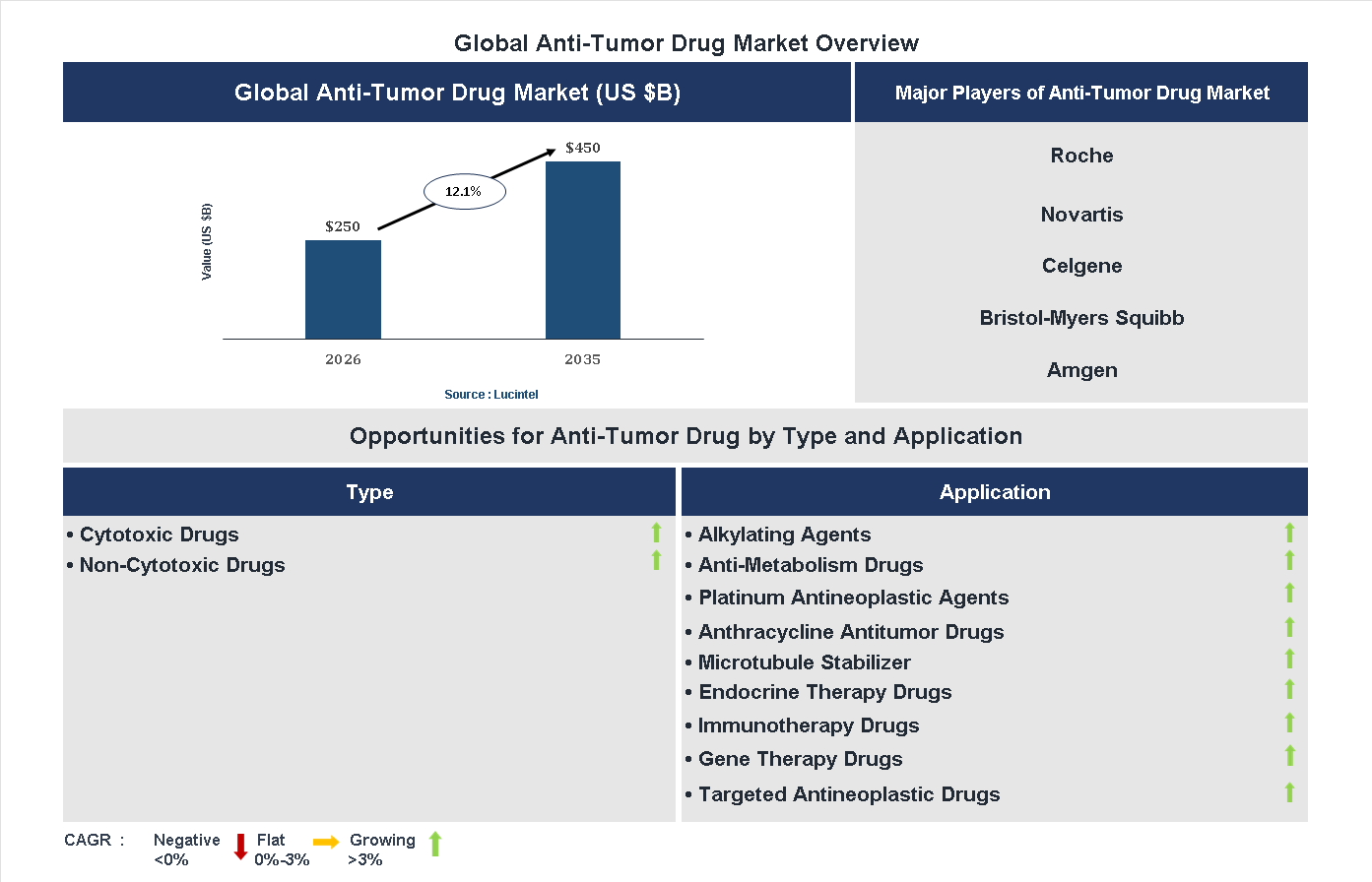
The future of the global anti-tumor drug market looks promising with opportunities in the alkylating agent, anti-metabolism drug, platinum antineoplastic agent, anthracycline antitumor drug, microtubule stabilizer, endocrine therapy drug, immunotherapy drug, gene therapy drug, and targeted antineoplastic drug markets. The global anti-tumor drug market is expected to reach an estimated $450 billion by 2035 with a CAGR of 12.1% from 2026 to 2035. The major drivers for this market are the rising demand government healthcare initiatives, the increasing demand investment in oncology research, and the growing awareness about cancer treatment.• Lucintel forecasts that, within the type category, cytotoxic drug is expected to witness higher growth over the forecast period.
• Within the application category, targeted antineoplastic drug is expected to witness the highest growth.
• In terms of region, APAC is expected to witness the highest growth over the forecast period. Gain valuable insights for your business decisions with our comprehensive 150+ page report. Sample figures with some insights are shown below.
Emerging Trends in the Anti-Tumor Drug Market
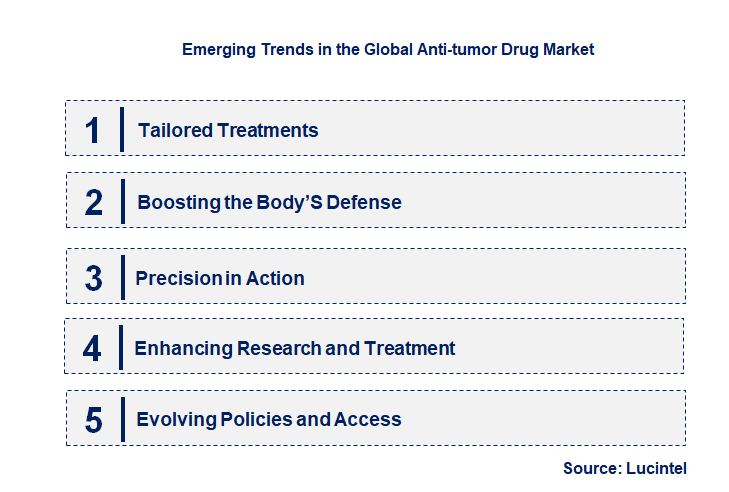
The anti-tumor drug market is experiencing rapid evolution driven by technological advancements, increased research investments, and a deeper understanding of cancer biology. These developments are transforming treatment paradigms, improving patient outcomes, and expanding market opportunities. As the landscape shifts, stakeholders must stay informed about emerging trends that are shaping the future of oncology therapeutics. The following five key trends highlight the most significant developments currently influencing this dynamic market.• Tailored Treatments: The shift towards personalized medicine involves developing therapies based on individual genetic profiles, enabling more effective and targeted cancer treatments. Advances in genomics and biomarker identification allow for precise drug matching, reducing side effects and improving efficacy. This trend is fostering the growth of companion diagnostics and precision oncology, leading to more customized patient care and higher success rates in treatment outcomes.
• Boosting the Body’s Defense: Immunotherapy, including checkpoint inhibitors and CAR-T cell therapies, is revolutionizing cancer treatment by harnessing the immune system. Its expanding application across various tumor types is offering new hope for patients with previously untreatable cancers. The market is witnessing increased R&D investments, regulatory approvals, and combination therapies, which are enhancing effectiveness and broadening the scope of immunotherapy options.
• Precision in Action: The development of targeted therapies focuses on specific molecular pathways involved in tumor growth. These drugs offer higher specificity and fewer side effects compared to traditional chemotherapies. Advances in molecular biology and drug delivery systems are accelerating the pipeline of targeted agents, enabling more effective management of complex and resistant cancers, and expanding treatment options for diverse patient populations.
• Enhancing Research and Treatment: Integration of digital technologies, big data analytics, and artificial intelligence is transforming drug discovery, clinical trials, and patient monitoring. These tools enable faster identification of potential drug candidates, optimize trial designs, and facilitate real-time treatment adjustments. This trend is increasing efficiency, reducing costs, and accelerating the development and deployment of anti-tumor drugs.
• Evolving Policies and Access: Regulatory agencies are adapting to the rapid pace of innovation by streamlining approval processes and encouraging accelerated pathways for breakthrough therapies. Market access strategies are also evolving to address pricing, reimbursement, and patient affordability. These changes are impacting drug commercialization, encouraging innovation, and expanding patient access to cutting-edge treatments. These emerging trends are collectively reshaping the anti-tumor drug market by fostering innovation, improving treatment precision, and enhancing patient outcomes. They are driving a more personalized, efficient, and accessible oncology landscape, ultimately transforming how cancer is diagnosed, treated, and managed worldwide.
Recent Development in the Anti-Tumor Drug Market
The anti-tumor drug market is experiencing rapid growth driven by technological advancements, increasing cancer prevalence, and expanding research initiatives. Innovations in targeted therapies and immunotherapies are transforming treatment paradigms, leading to improved patient outcomes. Regulatory support and strategic collaborations are accelerating drug development and commercialization. Additionally, personalized medicine approaches are enabling more effective treatments tailored to individual genetic profiles. These developments collectively are reshaping the landscape, creating new opportunities for stakeholders and expanding market potential globally.• Growth in Targeted Therapies: The development of targeted anti-tumor drugs allows for precise treatment, reducing side effects and increasing efficacy. Advances in molecular biology enable the identification of specific genetic mutations, leading to personalized treatment options. This approach is attracting significant investment and research focus, resulting in a broader pipeline of innovative drugs. The market benefits from increased patient response rates and longer survival times, driving demand and expanding market share for targeted therapies.
• Immunotherapy Revolutionizes Treatment Options: Immunotherapies, such as checkpoint inhibitors and CAR-T cell therapies, have revolutionized cancer treatment by harnessing the immune system. These therapies offer durable responses and have shown success in previously resistant cancers. The growing approval of immunotherapies and ongoing clinical trials are expanding their application across various tumor types. This shift is attracting substantial investments, fostering innovation, and significantly impacting market growth by offering new hope to patients with limited options.
• Advances in Precision Medicine: Precision medicine enables treatments tailored to individual genetic profiles, improving efficacy and minimizing adverse effects. The integration of genomics, proteomics, and bioinformatics is facilitating the development of personalized anti-tumor drugs. This approach is transforming clinical practices and encouraging the development of companion diagnostics. As a result, the market is witnessing increased demand for customized therapies, fostering innovation and opening new revenue streams for pharmaceutical companies.
• Regulatory Support and Strategic Collaborations: Governments and regulatory agencies are streamlining approval processes for innovative anti-tumor drugs, accelerating market entry. Strategic collaborations between biotech firms, pharma companies, and research institutions are fostering innovation and resource sharing. These partnerships facilitate faster development, clinical trials, and commercialization of new therapies. Enhanced regulatory frameworks and collaborations are boosting investor confidence, expanding the pipeline of anti-tumor drugs, and driving overall market growth.
• Rising Prevalence of Cancer Globally: The increasing incidence of cancer worldwide is fueling demand for effective treatments. Factors such as aging populations, lifestyle changes, and environmental exposures contribute to rising cancer cases. This growing burden is prompting healthcare systems to invest more in anti-tumor therapies, expanding access and coverage. The increased demand is encouraging pharmaceutical companies to innovate and expand their portfolios, ultimately driving market expansion and improving patient outcomes. These recent developments are significantly impacting the anti-tumor drug market by fostering innovation, improving treatment efficacy, and expanding access. The integration of targeted therapies, immunotherapies, and personalized medicine is transforming cancer care, leading to better patient outcomes. Regulatory support and strategic collaborations are accelerating drug development and commercialization. Overall, these advancements are propelling market growth, attracting investments, and creating new opportunities for stakeholders, ultimately shaping a more effective and accessible cancer treatment landscape.
Strategic Growth Opportunities in the Anti-Tumor Drug Market
The anti-tumor drug market is experiencing rapid expansion driven by technological advancements, increasing cancer prevalence, and rising investments in research and development. The demand for targeted therapies and personalized medicine is fueling innovation, while regulatory support and strategic collaborations are accelerating product launches. Market players are focusing on expanding their pipelines and geographic reach to capitalize on unmet medical needs. These growth opportunities are shaping a dynamic landscape poised for significant growth over the coming years.• Expansion of Targeted Therapy Options for Personalized Treatment: The development of targeted anti-tumor drugs allows for more precise treatment, reducing side effects and improving patient outcomes. Advances in genomics and biomarker identification enable therapies tailored to individual tumor profiles. This personalization increases treatment efficacy and market demand, encouraging pharmaceutical companies to invest heavily in research. As understanding of tumor biology deepens, the pipeline of targeted therapies is expected to grow, opening new revenue streams and improving survival rates for various cancers.
• Growing Adoption of Immunotherapy as a Standard Treatment: Immunotherapy has revolutionized cancer treatment by harnessing the bodys immune system to fight tumors. Its ability to produce durable responses in certain cancers makes it a preferred option. The market is witnessing increased approval of immune checkpoint inhibitors and CAR-T cell therapies. Rising awareness among clinicians and patients, along with supportive regulatory policies, is driving adoption. Continued research into combination therapies and novel immuno-oncology agents will further expand this segment, offering new opportunities for market growth.
• Increasing Focus on Combination Therapies to Enhance Efficacy: Combining anti-tumor drugs with other treatment modalities, such as chemotherapy, radiation, or immunotherapy, aims to improve response rates and overcome resistance. This strategy is gaining traction as monotherapies often face limitations. Pharmaceutical companies are investing in clinical trials to evaluate synergistic effects, leading to more effective treatment regimens. The development of combination therapies addresses unmet needs in resistant or advanced cancers, creating a lucrative market segment and encouraging innovation in drug development.
• Rising Investments in Research and Development for Novel Therapies: The anti-tumor drug market benefits from substantial R&D investments aimed at discovering innovative treatments. Advances in molecular biology, genomics, and bioinformatics facilitate the identification of new drug targets. Increased funding from governments, private investors, and industry players accelerates clinical trials and regulatory approvals. This focus on innovation is expected to yield breakthrough therapies for hard-to-treat cancers, expanding the market and offering new hope for patients with limited options.
• Expansion into Emerging Markets to Increase Patient Access: Developing regions present significant growth opportunities due to rising cancer incidence and improving healthcare infrastructure. Market players are entering these regions through partnerships, licensing, and local manufacturing. Addressing affordability and regulatory challenges is crucial for market penetration. Expanding access to anti-tumor drugs in emerging markets not only broadens the customer base but also contributes to global health improvements, making cancer treatment more accessible and driving overall market growth. The overall impact of these opportunities is a robust, innovative, and expanding anti-tumor drug market. Strategic focus on personalized medicine, immunotherapy, combination treatments, R&D, and emerging markets will foster sustained growth. This evolution will improve patient outcomes, diversify treatment options, and stimulate competitive advancements, ultimately shaping a more effective and accessible landscape for cancer care worldwide.
Anti-Tumor Drug Market Driver and Challenges
The anti-tumor drug market is influenced by a complex interplay of technological advancements, economic factors, and regulatory frameworks. Innovations in biotechnology and personalized medicine are driving the development of targeted therapies, while increasing cancer prevalence worldwide fuels demand. Economic considerations such as healthcare expenditure and drug pricing impact market growth, alongside regulatory policies that govern drug approval and safety standards. These factors collectively shape the landscape, creating growth opportunities but also presenting significant challenges. Understanding these drivers and challenges is essential for stakeholders aiming to navigate this dynamic and rapidly evolving market effectively. The factors responsible for driving the anti-tumor drug market include:-• Technological Innovations: The advent of precision medicine and targeted therapies has revolutionized cancer treatment, enabling more effective and personalized approaches. Advances in genomics, proteomics, and biomarker identification facilitate the development of drugs tailored to individual patient profiles. These innovations reduce side effects and improve survival rates, thereby increasing market demand. Additionally, improvements in drug delivery systems and nanotechnology enhance drug efficacy and patient compliance, further propelling market growth. The continuous evolution of these technologies promises to open new avenues for research and commercialization, making the market highly dynamic and competitive.
• Rising Cancer Incidence: The global increase in cancer cases due to aging populations, lifestyle changes, and environmental factors significantly drives the demand for anti-tumor drugs. As cancer remains a leading cause of death worldwide, the need for effective treatments intensifies. This growing prevalence compels healthcare providers and pharmaceutical companies to invest heavily in research and development of new therapies. The expanding patient pool ensures sustained revenue streams and encourages innovation in drug formulations and combination therapies. Consequently, the rising incidence of cancer acts as a primary catalyst for market expansion, attracting investments and fostering competitive advancements.
• Regulatory Approvals and Policies: Stringent regulatory frameworks and approval processes influence the development and commercialization of anti-tumor drugs. While these regulations ensure drug safety and efficacy, they can also pose barriers to market entry due to lengthy approval timelines and high compliance costs. Conversely, supportive policies and accelerated approval pathways for breakthrough therapies can expedite market access. Governments and regulatory agencies worldwide are increasingly fostering collaborations and providing incentives to promote innovation. Navigating these regulatory landscapes is crucial for pharmaceutical companies to bring new drugs to market efficiently, impacting overall market dynamics significantly.
• Strategic Collaborations and Mergers: Partnerships between biotech firms, pharmaceutical companies, and research institutions are vital for advancing anti-tumor drug development. Collaborations facilitate resource sharing, access to novel technologies, and accelerated clinical trials. Mergers and acquisitions enable companies to expand their pipelines and market presence, fostering innovation and competitiveness. These strategic alliances often lead to the development of combination therapies and novel drug delivery systems, enhancing treatment efficacy. The trend toward consolidation and collaboration is expected to continue, driving market growth by enabling faster development cycles and broader distribution networks.
• Increasing Investment in R&D: The surge in research and development expenditure is a key driver fueling innovation in anti-tumor therapies. Investment from both public and private sectors supports the discovery of novel targets, drug candidates, and personalized treatment options. This financial backing accelerates clinical trials and regulatory approvals, reducing time-to-market for new drugs. Moreover, increased R&D spending fosters the development of next-generation therapies, such as immunotherapies and gene therapies, expanding treatment options. The focus on R&D underscores the commitment of stakeholders to combat cancer more effectively, ensuring sustained growth and technological progress in the market. The challenges facing this Market include:-
• High Cost of Drug Development: Developing anti-tumor drugs involves extensive research, clinical trials, and regulatory compliance, resulting in substantial costs. These high expenses often translate into expensive final products, limiting accessibility for some patient populations and healthcare systems. The lengthy development timelines and high failure rates further strain resources, making it difficult for smaller companies to compete. Additionally, pricing pressures and reimbursement challenges can impact profitability, discouraging innovation. Overcoming these financial barriers is crucial for maintaining a steady pipeline of new therapies and ensuring market sustainability.
• Regulatory Hurdles and Approval Delays: Navigating complex regulatory environments remains a significant challenge. Lengthy approval processes, stringent safety and efficacy requirements, and evolving policies can delay the introduction of new drugs to the market. These delays increase costs and reduce the competitive advantage of innovative therapies. Moreover, regulatory uncertainties in different regions complicate global commercialization strategies. Companies must allocate substantial resources to meet diverse regulatory standards, which can hinder timely market entry and affect overall market growth.
• Market Competition and Patent Expirations: The anti-tumor drug market is highly competitive, with numerous players vying for market share. Patent expirations on blockbuster drugs lead to generic competition, significantly reducing revenues and impacting profitability. Companies must continuously innovate to develop new therapies and maintain market relevance. The pressure to innovate quickly, coupled with patent cliffs, challenges sustained growth. Additionally, pricing wars and reimbursement constraints further intensify competition, requiring strategic planning and investment to stay ahead in this evolving landscape. The anti-tumor drug market is shaped by rapid technological advancements, increasing cancer prevalence, supportive regulatory policies, strategic collaborations, and substantial R&D investments. However, high development costs, regulatory delays, and intense competition pose significant hurdles. These drivers foster innovation and growth, while challenges necessitate strategic navigation to sustain market expansion. Overall, the markets future depends on balancing technological progress with effective management of regulatory and financial barriers, ensuring continued advancements in cancer treatment and improved patient outcomes.
List of Anti-Tumor Drug Companies
Companies in the market compete on the basis of product quality offered. Major players in this market focus on expanding their manufacturing facilities, R&D investments, infrastructural development, and leverage integration opportunities across the value chain. With these strategies anti-tumor drug companies cater increasing demand, ensure competitive effectiveness, develop innovative products & technologies, reduce production costs, and expand their customer base. Some of the anti-tumor drug companies profiled in this report include-• Roche
• Novartis
• Celgene
• Bristol-Myers Squibb
• Amgen
• Johnson & Johnson
• Pfizer
• Takeda
• Eli Lilly
• AstraZeneca
Anti-Tumor Drug Market by Segment
The study includes a forecast for the global anti-tumor drug market by type, application, and region.Anti-Tumor Drug Market by Type [Value from 2019 to 2035]:
• Cytotoxic Drugs
• Non-Cytotoxic Drugs
Anti-Tumor Drug Market by Application [Value from 2019 to 2035]:
• Alkylating Agents
• Anti-Metabolism Drugs
• Platinum Antineoplastic Agents
• Anthracycline Antitumor Drugs
• Microtubule Stabilizer
• Endocrine Therapy Drugs
• Immunotherapy Drugs
• Gene Therapy Drugs
• Targeted Antineoplastic Drugs
Anti-Tumor Drug Market by Region [Value from 2019 to 2035]:
• North America
• Europe
• Asia Pacific
• The Rest of the World
Country Wise Outlook for the Anti-Tumor Drug Market
The anti-tumor drug market has experienced rapid growth driven by technological advancements, increased research funding, and a rising global incidence of cancer. Countries are investing heavily in innovative therapies, including immunotherapies, targeted treatments, and personalized medicine. Regulatory approvals and collaborations between biotech firms and pharmaceutical giants are accelerating the development and commercialization of new drugs. The landscape is also shaped by evolving healthcare policies and a focus on improving patient outcomes. These developments reflect a global effort to combat cancer more effectively, with each country contributing through research, innovation, and strategic initiatives.• United States: The US market has seen significant breakthroughs in immunotherapy, with FDA approvals for several novel agents. Biotech companies are expanding their pipelines with personalized cancer treatments, and there is increased investment in clinical trials. The government’s support through initiatives like the Cancer Moonshot has accelerated research efforts. Additionally, the adoption of digital health tools is improving drug development and patient monitoring.
• China: China has rapidly advanced in biopharmaceutical research, with a focus on innovative targeted therapies and immunotherapies. The government’s policies favor domestic innovation, leading to increased R&D investments. Several new drugs have received approval, and local companies are forming strategic partnerships with international firms. The market is also witnessing a surge in clinical trials, especially for lung and liver cancers.
• Germany: Germany remains a leader in precision medicine and targeted therapies within Europe. The country has seen an increase in clinical research collaborations and regulatory approvals for new anti-tumor drugs. Investment in biotech startups and research institutions is fostering innovation. Germany’s focus on integrating diagnostics with therapeutics is enhancing personalized treatment options for cancer patients.
• India: India’s anti-tumor drug market is expanding with a focus on affordable therapies and generic formulations. The country is increasing its R&D capabilities, with several domestic firms developing biosimilars and targeted treatments. Government initiatives aim to improve healthcare infrastructure and facilitate clinical trials. The market is also witnessing a rise in partnerships with global pharmaceutical companies to access advanced therapies.
• Japan: Japan continues to innovate in targeted therapies and immuno-oncology, supported by strong research institutions. Regulatory reforms have expedited drug approvals, and there is a growing emphasis on personalized medicine. Japanese firms are investing in novel drug delivery systems and combination therapies. The market benefits from a well-established healthcare system and increasing patient awareness about advanced cancer treatments.

Features of the Global Anti-Tumor Drug Market
Market Size Estimates: Anti-tumor drug market size estimation in terms of value ($B). Trend and Forecast Analysis: Market trends (2019 to 2025) and forecast (2026 to 2035) by various segments and regions. Segmentation Analysis: Anti-tumor drug market size by type, application, and region in terms of value ($B). Regional Analysis: Anti-tumor drug market breakdown by North America, Europe, Asia Pacific, and Rest of the World. Growth Opportunities: Analysis of growth opportunities in different types, applications, and regions for the anti-tumor drug market. Strategic Analysis: This includes M&A, new product development, and competitive landscape of the anti-tumor drug market. Analysis of competitive intensity of the industry based on Porter’s Five Forces model.
FAQ
Q1. What is the anti-tumor drug market size? Answer: The global anti-tumor drug market is expected to reach an estimated $450 billion by 2035. Q2. What is the growth forecast for anti-tumor drug market? Answer: The global anti-tumor drug market is expected to grow with a CAGR of 12.1% from 2026 to 2035. Q3. What are the major drivers influencing the growth of the anti-tumor drug market? Answer: The major drivers for this market are the rising demand government healthcare initiatives, the increasing demand investment in oncology research, and the growing awareness about cancer treatment. Q4. What are the major segments for anti-tumor drug market? Answer: The future of the anti-tumor drug market looks promising with opportunities in the alkylating agent, anti-metabolism drug, platinum antineoplastic agent, anthracycline antitumor drug, microtubule stabilizer, endocrine therapy drug, immunotherapy drug, gene therapy drug, and targeted antineoplastic drug markets. Q5. Who are the key anti-tumor drug market companies? Answer: Some of the key anti-tumor drug companies are as follows:• Roche
• Novartis
• Celgene
• Bristol-Myers Squibb
• Amgen
• Johnson & Johnson
• Pfizer
• Takeda
• Eli Lilly
• AstraZeneca Q6. Which anti-tumor drug market segment will be the largest in future? Answer: Lucintel forecasts that, within the type category, cytotoxic drug is expected to witness higher growth over the forecast period. Q7. In anti-tumor drug market, which region is expected to be the largest in next 5 years? Answer: In terms of region, APAC is expected to witness the highest growth over the forecast period. Q8. Do we receive customization in this report? Answer: Yes, Lucintel provides 10% customization without any additional cost.
Table of Contents
List of Figures
List of Tables
Methodology
- In-depth interviews of the major players in this market
- Detailed secondary research from competitors’ financial statements and published data
- Extensive searches of published works, market, and database information pertaining to industry news, company press releases, and customer intentions
- A compilation of the experiences, judgments, and insights of Lucintel’s professionals, who have analyzed and tracked this market over the years.


Buy Now
Choose a license that fits your team. Instant PDF delivery.
Prices exclude taxes. Instant delivery. Custom licensing available on request.
Key Questions
- • What are some of the most promising, high-growth opportunities for the anti-tumor drug market by type (cytotoxic drugs and non-cytotoxic drugs), application (alkylating agents, anti-metabolism drugs, platinum antineoplastic agents, anthracycline antitumor drugs, microtubule stabilizer, endocrine therapy drugs, immunotherapy drugs, gene therapy drugs, and targeted antineoplastic drugs), and region (North America, Europe, Asia Pacific, and the Rest of the World)?
- • Which segments will grow at a faster pace and why?
- • Which region will grow at a faster pace and why?
- • What are the key factors affecting market dynamics? What are the key challenges and business risks in this market?
- • What are the business risks and competitive threats in this market?
- • What are the emerging trends in this market and the reasons behind them?
- • What are some of the changing demands of customers in the market?
- • What are the new developments in the market? Which companies are leading these developments?
- • Who are the major players in this market? What strategic initiatives are key players pursuing for business growth?
- • What are some of the competing products in this market and how big of a threat do they pose for loss of market share by material or product substitution?
- • What M&A activity has occurred in the last 7 years and what has its impact been on the industry? For any questions related to Anti-Tumor Drug Market, Anti-Tumor Drug Market Size, Anti-Tumor Drug Market Growth, Anti-Tumor Drug Market Analysis, Anti-Tumor Drug Market Report, Anti-Tumor Drug Market Share, Anti-Tumor Drug Market Trends, Anti-Tumor Drug Market Forecast, Anti-Tumor Drug Companies, write Lucintel analyst at email: helpdesk@lucintel.com. We will be glad to get back to you soon.


