
Market Report · July 22, 2026

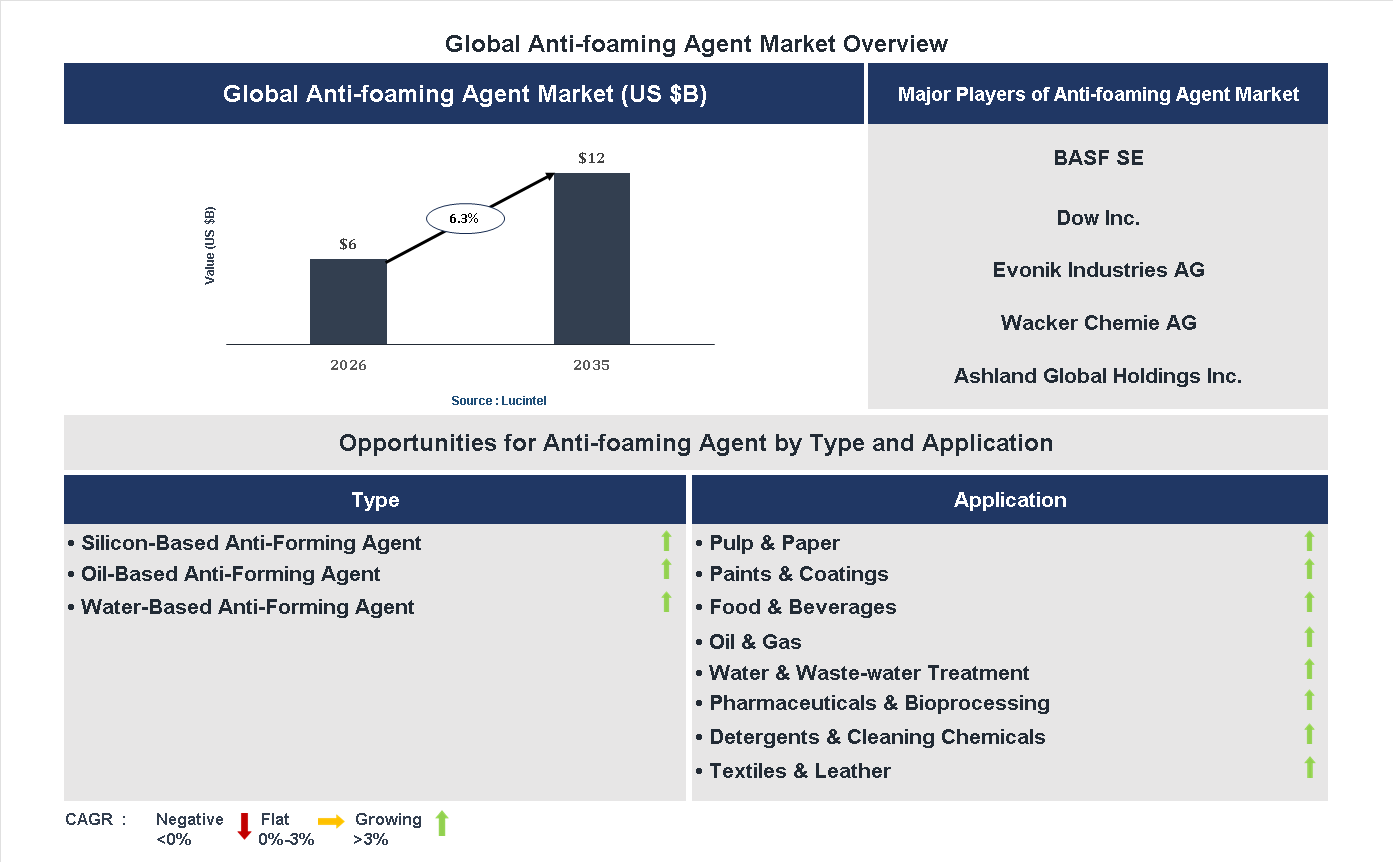
Key data points: The market size in 2035 = $12 billion, growth forecast = 6.3% annually for the next 8 years. Scroll below to get more insights. This market report covers trends, opportunities and forecasts in anti-foaming agent market to 2035 by type (silicon-based anti-forming agent, oil-based anti-forming agent, and water-based anti-forming agent), application (pulp & paper, paints & coatings, food & beverages, oil & gas, water & waste-water treatment, pharmaceuticals & bioprocessing, detergents & cleaning chemicals, and textiles & leather), and region (North America, Europe, Asia Pacific, and the Rest of the World)
We'll send your sample report shortly.
• Lucintel forecasts that, within the type category, silicon-based anti-forming agent is expected to witness the highest growth over the forecast period.
• Within the application category, pulp & paper is expected to witness the highest growth.
• In terms of region, APAC is expected to witness the highest growth over the forecast period. Gain valuable insights for your business decisions with our comprehensive 150+ page report. Sample figures with some insights are shown below.
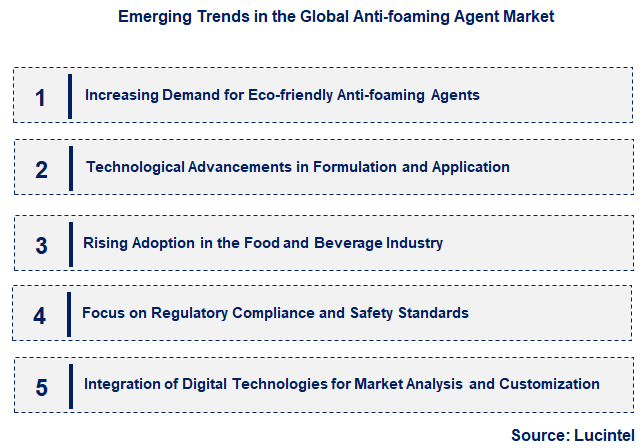
• Increasing Demand for Eco-friendly Anti-foaming Agents: Growing environmental awareness and stricter regulations are pushing manufacturers to develop biodegradable and non-toxic formulations. These eco-friendly agents reduce environmental impact and align with sustainability goals, appealing to environmentally conscious consumers and industries. This trend is driving innovation in natural and plant-based ingredients, expanding market options, and fostering a shift away from traditional chemical-based agents.
• Technological Advancements in Formulation and Application: Innovations such as nanotechnology, improved emulsification techniques, and smart delivery systems are enhancing the efficacy and stability of anti-foaming agents. These advancements enable precise control over foam suppression, extend product shelf life, and improve compatibility with various industrial processes. As a result, industries benefit from more efficient, cost-effective solutions that meet specific operational requirements.
• Rising Adoption in the Food and Beverage Industry: The food processing sector increasingly relies on anti-foaming agents to improve product quality, processing efficiency, and safety. These agents help control foam during manufacturing, packaging, and storage, ensuring consistency and reducing waste. The demand is driven by the need for cleaner, more efficient production lines and compliance with food safety standards, opening new growth avenues for market players.
• Focus on Regulatory Compliance and Safety Standards: Stringent regulations regarding chemical usage and environmental impact are compelling manufacturers to reformulate products and adopt safer ingredients. Compliance ensures market access and reduces legal risks, prompting companies to invest in research and development of compliant, safer anti-foaming agents. This trend emphasizes transparency, safety, and sustainability, shaping product development and marketing strategies.
• Integration of Digital Technologies for Market Analysis and Customization: The adoption of data analytics, AI, and IoT is enabling companies to better understand customer needs, optimize formulations, and predict market trends. Digital tools facilitate customized solutions, improve supply chain efficiency, and enhance product innovation. This technological integration is transforming traditional market approaches, making them more agile, data-driven, and customer-centric. These emerging trends are fundamentally reshaping the anti-foaming agent market by fostering sustainability, technological innovation, regulatory compliance, and digital transformation. These developments are driving market growth, expanding application areas, and creating new opportunities for stakeholders to innovate and compete effectively in a dynamic environment.
• Growing Industrial Applications: The expanding use of anti-foaming agents in industries such as food processing, pharmaceuticals, and chemicals is boosting market growth. These agents improve process efficiency, reduce equipment downtime, and enhance product quality. As industrial activities increase globally, the demand for effective foam control solutions rises, creating a lucrative opportunity for manufacturers to develop tailored products. This trend is expected to continue, driven by industrial expansion and stricter quality standards.
• Environmental Regulations and Sustainability: Stricter environmental policies are pushing companies to adopt eco-friendly anti-foaming agents. Biodegradable and non-toxic formulations are gaining popularity, aligning with sustainability goals. This shift encourages innovation in green chemistry, leading to the development of sustainable products that meet regulatory standards. The market benefits from increased consumer awareness and regulatory compliance, fostering growth in eco-conscious segments and expanding the overall market scope.
• Technological Innovations in Formulation: Advances in chemical formulations have led to more effective and versatile anti-foaming agents. Innovations such as silicone-based and polymeric agents offer improved stability and performance across diverse applications. These technological developments enable manufacturers to address specific industry needs, enhance product efficacy, and reduce costs. As research progresses, the market is poised for the introduction of next-generation solutions that will further improve foam control and expand application possibilities.
• Rising Demand in Food and Beverage Industry: The food and beverage sectors growth is significantly impacting the anti-foaming agent market. These agents are essential in processes like brewing, dairy, and oil refining to prevent foam-related issues. The demand for high-quality, food-grade, and safe anti-foaming agents is increasing, prompting manufacturers to innovate safer and more effective products. This trend supports market expansion, driven by the global increase in food production and processing activities.
• Expansion in Emerging Markets: Rapid industrialization and urbanization in emerging economies are creating new opportunities for anti-foaming agents. Growing sectors such as wastewater treatment, pulp and paper, and textiles are adopting foam control solutions. Market players are expanding their presence in these regions, offering customized products to meet local needs. This expansion is expected to significantly boost market size and diversify application areas, contributing to overall industry growth. These recent developments are transforming the anti-foaming agent market by fostering innovation, sustainability, and regional expansion. The integration of eco-friendly formulations, technological advancements, and increased industrial adoption is driving market growth. As industries prioritize efficiency and environmental compliance, the market is poised for continued expansion. These opportunities are enabling manufacturers to develop specialized, sustainable solutions, ultimately shaping a dynamic and resilient foam control industry with broad global implications.
• Market Demand for Eco-Friendly Anti-Foaming Agents Is Rising: Increasing environmental concerns and stricter regulations are prompting manufacturers to develop biodegradable and non-toxic anti-foaming agents. These eco-friendly solutions are gaining popularity across industries like food, pharmaceuticals, and wastewater treatment, where safety and sustainability are paramount. The shift towards green products is creating new opportunities for innovation and market differentiation, encouraging companies to invest in sustainable formulations that meet regulatory standards and consumer preferences.
• Technological Innovations Enhance Anti-Foaming Agent Effectiveness: Advances in chemical formulations and delivery systems are improving the performance of anti-foaming agents. Innovations such as nano-emulsions, encapsulation, and hybrid formulations enable better foam control, stability, and compatibility with various processes. These technological developments allow for lower dosages, reduced costs, and enhanced efficiency, making anti-foaming agents more adaptable to complex industrial environments and expanding their application scope.
• Growing Adoption in Food and Beverage Industry Presents Opportunities: The food and beverage sector increasingly relies on anti-foaming agents to improve product quality, processing efficiency, and shelf life. Applications include dairy, beverages, and baked goods, where foam control is critical. Rising demand for processed foods and beverages, coupled with stringent quality standards, drives the need for safe, effective anti-foaming solutions. This trend offers manufacturers opportunities to develop specialized, food-grade products tailored to industry-specific requirements.
• Expansion in Wastewater Treatment and Environmental Applications: The need for efficient foam control in wastewater treatment plants is escalating due to stricter environmental regulations and increasing industrial discharge. Anti-foaming agents are essential for preventing foam formation, which can hinder treatment processes and cause environmental hazards. Growing industrialization and urbanization create a substantial market for environmentally safe anti-foaming solutions, encouraging research into biodegradable and non-toxic formulations suitable for large-scale environmental applications.
• Strategic Collaborations and Market Penetration Drive Growth in Emerging Regions: Emerging markets in Asia-Pacific, Latin America, and Africa present significant growth opportunities due to expanding industrial bases and infrastructure development. Companies are forming strategic alliances, joint ventures, and local partnerships to penetrate these regions effectively. Tailoring products to regional needs, complying with local regulations, and establishing distribution networks are key strategies that will facilitate market expansion and increase adoption of anti-foaming agents in these high-growth areas. These growth opportunities collectively position the anti-foaming agent market for robust expansion, driven by technological innovation, environmental sustainability, and expanding industrial applications. As companies adapt to evolving regulatory landscapes and consumer preferences, the market is poised for increased diversification and global reach. Strategic investments and product development aligned with these opportunities will be crucial for sustained growth and competitive advantage in the evolving landscape.
• Technological Innovations: The development of advanced anti-foaming formulations, including biodegradable and eco-friendly options, enhances product efficiency and broadens application scope. Innovations in nanotechnology and polymer chemistry enable the creation of more durable and effective agents, meeting industry demands for safety and performance. These technological advancements reduce environmental impact and improve compatibility with various industrial processes, thereby expanding market opportunities.
• Growing Industrialization: Rapid industrial growth in sectors such as chemicals, food processing, pharmaceuticals, and wastewater treatment increases the demand for anti-foaming agents. As industries expand, the need to control foam formation for process efficiency and product quality becomes critical. This growth is driven by urbanization, infrastructure development, and increased manufacturing activities, which collectively boost market demand across regions.
• Stringent Regulatory Frameworks: Governments and environmental agencies are implementing stricter regulations concerning the use of chemical agents, emphasizing safety, biodegradability, and environmental impact. These regulations compel manufacturers to develop compliant products, fostering innovation and market differentiation. Compliance with standards such as REACH and EPA guidelines ensures market access and enhances consumer trust.
• Rising Environmental Concerns: The shift towards sustainable and eco-friendly products influences market trends. Consumers and industries prefer biodegradable, non-toxic, and environmentally safe anti-foaming agents. This demand encourages research into natural and bio-based formulations, which not only meet regulatory requirements but also open new market segments focused on sustainability. The challenges facing the anti-foaming agent market include:
• Fluctuating Raw Material Prices: The market relies heavily on raw materials like silicones, alcohols, and surfactants, which are subject to price volatility due to supply chain disruptions, geopolitical tensions, and fluctuating oil prices. These fluctuations increase production costs and can lead to pricing pressures, affecting profit margins and market stability.
• Environmental and Health Concerns: Despite the shift towards eco-friendly products, some anti-foaming agents contain chemicals that pose environmental and health risks. Managing these concerns requires significant R&D investment to develop safer alternatives, which can be time-consuming and costly. Non-compliance or failure to meet safety standards can result in legal penalties and damage to brand reputation.
• Regulatory Complexities: Navigating diverse and evolving regulatory landscapes across different regions presents a significant challenge. Compliance requires continuous monitoring and adaptation of formulations, documentation, and testing procedures. This complexity can delay product launches, increase costs, and restrict market entry, especially for small and medium-sized enterprises. The anti-foaming agent market is shaped by technological advancements, industrial growth, regulatory pressures, and environmental considerations. While these drivers foster innovation and expansion, challenges such as raw material price volatility, environmental concerns, and regulatory complexities pose risks that require strategic management. Overall, the markets future depends on balancing innovation with sustainability and regulatory compliance, ensuring long-term growth and competitiveness.
• BASF SE
• Dow Inc.
• Evonik Industries AG
• Wacker Chemie AG
• Ashland Global Holdings Inc.
• Clariant AG
• Shin-Etsu Chemical Co., Ltd.
• Ecolab Inc.
• Kemira Oyj
• Elementis plc
• Silicon-Based Anti-Forming Agent
• Oil-Based Anti-Forming Agent
• Water-Based Anti-Forming Agent
• Pulp & Paper
• Paints & Coatings
• Food & Beverages
• Oil & Gas
• Water & Waste-water Treatment
• Pharmaceuticals & Bioprocessing
• Detergents & Cleaning Chemicals
• Textiles & Leather
• North America
• Europe
• Asia Pacific
• The Rest of the World
• United States: The U.S. market for anti-foaming agents has seen increased demand in the food and beverage sector, driven by stricter safety regulations and consumer preferences for natural ingredients. Innovations in biodegradable and eco-friendly formulations are gaining traction, aligning with sustainability goals. The pharmaceutical industry’s growth has also boosted demand for high-purity anti-foaming agents. Additionally, technological advancements in manufacturing processes have improved product efficiency and reduced costs, further expanding market opportunities. The U.S. regulatory environment continues to influence product development, emphasizing safety and environmental impact.
• China: China remains a dominant player in the anti-foaming agent market, with rapid industrialization fueling demand across sectors such as chemicals, textiles, and food processing. The government’s focus on environmental regulations has prompted companies to develop greener, biodegradable products. Local manufacturers are investing in R&D to enhance product performance and comply with international standards. The expanding automotive and electronics industries are also contributing to increased consumption. Moreover, China’s growing export market for processed foods and pharmaceuticals is driving demand for high-quality anti-foaming agents, positioning the country as a key global supplier.
• Germany: Germany’s market is characterized by a strong emphasis on sustainability and innovation, with a focus on eco-friendly and biodegradable anti-foaming agents. The chemical and pharmaceutical sectors are major consumers, adopting advanced formulations to meet stringent EU regulations. Germany’s leadership in chemical research and development has led to the introduction of novel, high-performance products. The automotive industry’s growth and the push for environmentally friendly manufacturing processes further support market expansion. Additionally, Germany’s emphasis on circular economy principles encourages the development of sustainable solutions, making it a hub for innovative anti-foaming agents.
• India: India’s anti-foaming agent market is witnessing rapid growth due to expanding industries such as food processing, textiles, and chemicals. The government’s initiatives to promote manufacturing and ease of doing business are attracting investments in R&D and production facilities. There is a rising demand for cost-effective, eco-friendly anti-foaming agents, driven by increasing environmental awareness and regulatory pressures. The pharmaceutical sector’s growth also contributes to market expansion, especially in the production of medicines requiring high-purity agents. Local companies are increasingly adopting innovative formulations to compete globally, positioning India as a significant emerging market.
• Japan: Japan’s market for anti-foaming agents is driven by technological innovation and stringent safety standards. The pharmaceutical, food, and chemical industries are key consumers, with a focus on high-performance, environmentally friendly products. Japan’s emphasis on sustainable development has led to the adoption of biodegradable and non-toxic formulations. The country’s advanced manufacturing sector benefits from innovative anti-foaming solutions that improve efficiency and reduce waste. Additionally, Japan’s aging population and health-conscious consumers are influencing product development, emphasizing safety and eco-friendliness. The market continues to evolve with a focus on integrating new materials and sustainable practices.


• BASF SE
• Dow Inc.
• Evonik Industries AG
• Wacker Chemie AG
• Ashland Global Holdings Inc.
• Clariant AG
• Shin-Etsu Chemical Co., Ltd.
• Ecolab Inc.
• Kemira Oyj
• Elementis plc Q6. Which anti-foaming agent market segment will be the largest in future? Answer: Lucintel forecasts that, within the type category, silicon-based anti-forming agent is expected to witness the highest growth over the forecast period. Q7. In anti-foaming agent market, which region is expected to be the largest in next 8 years? Answer: In terms of region, APAC is expected to witness the highest growth over the forecast period. Q8. Do we receive customization in this report? Answer: Yes, Lucintel provides 10% customization without any additional cost.


Choose a license that fits your team. Instant PDF delivery.
Prices exclude taxes. Instant delivery. Custom licensing available on request.
Market Report · July 22, 2026
Market Report · July 22, 2026
Market Report · July 22, 2026
Trusted partner for strategic intelligence and business growth


Receive a complimentary market analysis tailored to your industry. Our analysts will identify key growth opportunities and competitive dynamics specific to your business.

Market size, growth rate, and key trend analysis for your specific sector.

Top competitor positioning and market share analysis.

Strategic recommendations backed by data-driven insights.
Get curated market intelligence and competitive moves straight to your inbox.
By subscribing, you agree to receive our monthly insights. Unsubscribe anytime.
Receive a complimentary market analysis tailored to your industry. Our analysts will identify key growth opportunities and competitive dynamics specific to your business.
Market size, growth rate, and key trend analysis for your specific sector.
Top competitor positioning and market share analysis.
Strategic recommendations backed by data-driven insights.
Get curated market intelligence, emerging trends, and competitive moves straight to your inbox each month.
By subscribing, you agree to receive our monthly insights. Unsubscribe anytime.
We'll send your sample report shortly.