
Market Report · July 16, 2026

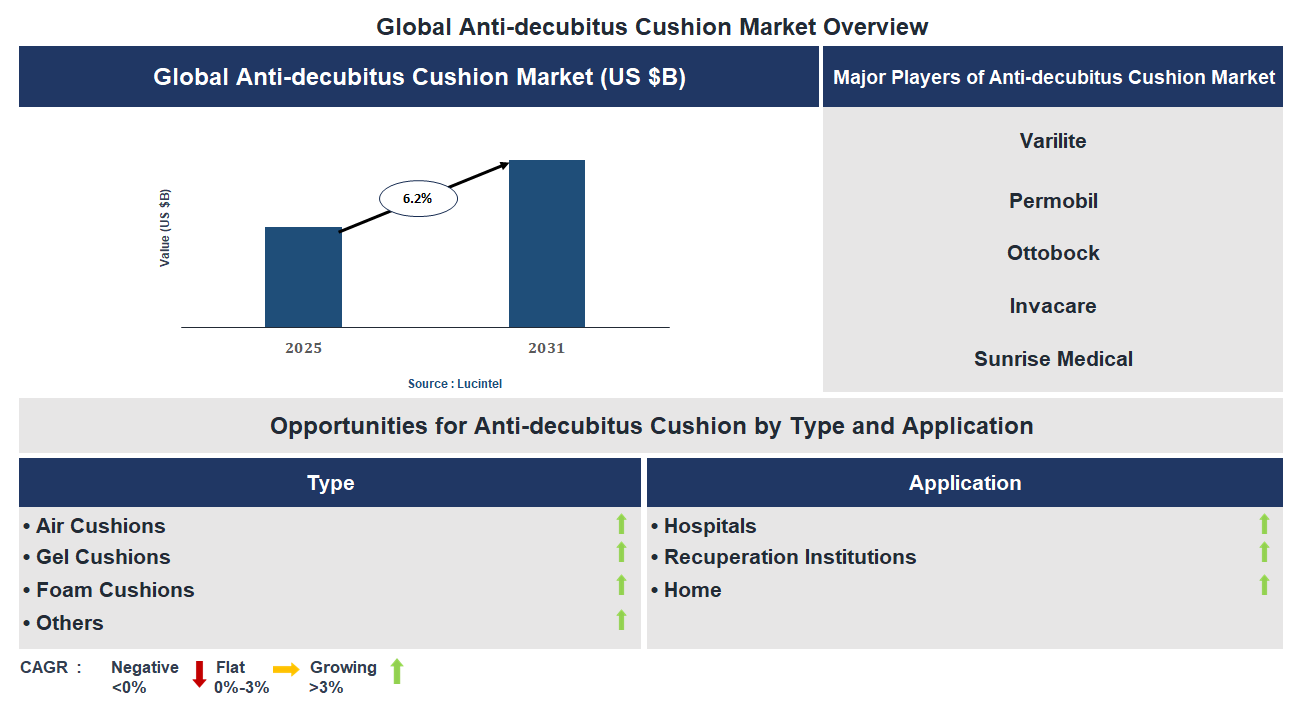
Key data points: The growth forecast = 6.2% annually for the next 7 years. Scroll below to get more insights. This market report covers trends, opportunities and forecasts in anti-decubitus cushion market to 2031 by type (air cushions, gel cushions, foam cushions, and others), application (hospitals, recuperation institutions, and home), and region (North America, Europe, Asia Pacific, and the Rest of the World)
We'll send your sample report shortly.
• Lucintel forecasts that, within the type category, air cushion is expected to witness the highest growth over the forecast period.
• Within the application category, home is expected to witness the highest growth.
• In terms of region, APAC is expected to witness the highest growth over the forecast period. Gain valuable insights for your business decisions with our comprehensive 150+ page report. Sample figures with some insights are shown below.
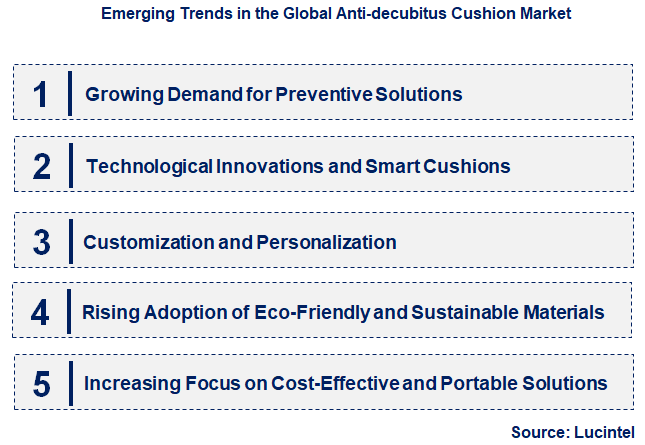
• Growing Demand for Preventive Solutions: The increasing prevalence of pressure ulcers, especially among elderly and immobile patients, is driving demand for preventive cushions. Healthcare providers are prioritizing early intervention to reduce complications and hospital stays. This trend encourages manufacturers to develop more effective, comfortable, and affordable cushions that can be used in hospitals, nursing homes, and at home. The focus on prevention rather than treatment is reshaping product development and market strategies, emphasizing durability, ease of use, and patient comfort.
• Technological Innovations and Smart Cushions: Integration of technology into anti-decubitus cushions is a significant trend. Smart cushions equipped with sensors monitor pressure points, body position, and movement, providing real-time data to caregivers. This innovation enhances personalized care, reduces the risk of pressure ulcers, and improves patient outcomes. The adoption of IoT-enabled cushions is also facilitating remote monitoring, which is especially valuable during home care and telemedicine. These advancements are setting new standards for proactive pressure ulcer management and expanding market opportunities.
• Customization and Personalization: The market is witnessing a shift towards customized cushions tailored to individual patient needs. Factors such as body shape, weight, mobility level, and specific medical conditions influence cushion design. Personalized solutions improve comfort, pressure distribution, and overall effectiveness in preventing ulcers. Manufacturers are investing in adjustable, modular, and customizable products to cater to diverse patient profiles. This trend enhances patient satisfaction and compliance, fostering a more patient-centric approach in pressure ulcer prevention strategies.
• Rising Adoption of Eco-Friendly and Sustainable Materials: Environmental concerns are prompting manufacturers to develop cushions using sustainable, biodegradable, and non-toxic materials. Eco-friendly products appeal to healthcare facilities aiming to reduce their carbon footprint and promote sustainability. The use of recyclable foams, natural fabrics, and eco-conscious manufacturing processes is gaining traction. This trend not only aligns with global sustainability goals but also appeals to environmentally conscious consumers and healthcare providers, influencing purchasing decisions and market growth.
• Increasing Focus on Cost-Effective and Portable Solutions: The demand for affordable, lightweight, and portable cushions is rising, especially in resource-limited settings and home care. Cost-effective products enable wider accessibility and adoption, reducing the financial burden on healthcare systems. Portable cushions facilitate ease of use in various environments, including ambulatory and outpatient settings. This trend supports the expansion of the market into emerging regions and enhances the flexibility of pressure ulcer prevention strategies, making effective solutions more accessible to a broader population. In summary, these trends are collectively reshaping the anti-decubitus cushion market by emphasizing prevention, technological integration, customization, sustainability, and affordability. They are driving innovation, expanding market reach, and improving patient care standards, ultimately leading to a more efficient and patient-centric approach to pressure ulcer management.
• Technological Innovations: Advanced materials such as memory foam and gel-infused cushions are improving pressure distribution and comfort, leading to better patient outcomes and increased adoption in hospitals and home care settings.
• Rising Aging Population: The global increase in elderly populations is driving demand for anti-decubitus cushions, as seniors are more susceptible to pressure ulcers, prompting healthcare providers to invest in preventive solutions.
• Regulatory Approvals and Clinical Validation: New certifications and clinical studies validating cushion efficacy are enhancing market credibility, encouraging healthcare providers to adopt these products more confidently.
• Expansion of Distribution Channels: Online platforms and specialized medical supply distributors are broadening access to anti-decubitus cushions, making them more available to a wider customer base, including home care patients.
• Increasing Healthcare Expenditure: Growing healthcare budgets and emphasis on preventive care are fueling investments in pressure ulcer prevention products, including advanced cushions, thereby expanding market size. In summary, these developments are collectively driving market growth by improving product efficacy, expanding accessibility, and aligning with healthcare priorities. The integration of innovative materials, demographic shifts, regulatory support, and increased spending is making the anti-decubitus cushion market more robust and poised for continued expansion.
• Expanding Use of Advanced Cushions: Hospitals are increasingly adopting high-tech anti-decubitus cushions to prevent pressure ulcers among bedridden and immobile patients, reducing treatment costs and improving patient care quality. This trend enhances hospital reputation and compliance with healthcare standards, driving market growth.
• Focus on Patient Comfort and Safety: Long-term care facilities are prioritizing pressure ulcer prevention through specialized cushions, which improve patient comfort and reduce hospital readmissions. This focus supports market expansion by increasing demand for durable, effective cushion solutions.
• Rising Demand for Portable Solutions: The growing preference for home-based care is fueling demand for portable, easy-to-use anti-decubitus cushions. These products enable patients to receive effective pressure relief outside clinical settings, broadening market reach and encouraging innovation in lightweight designs.
• Integration with Therapy Protocols: Rehabilitation centers are incorporating anti-decubitus cushions into therapy routines to facilitate faster recovery and prevent secondary complications. This integration enhances patient outcomes and stimulates demand for customized cushion solutions.
• Prevention of Pressure-Related Injuries: In sports medicine, anti-decubitus cushions are used to prevent pressure injuries during prolonged activities or recovery periods. This application opens new avenues for market growth by targeting athletes and active individuals seeking injury prevention. In summary, these growth opportunities across key applications are significantly impacting the anti-decubitus cushion market by expanding its scope, fostering innovation, and improving patient care standards. The increasing adoption across healthcare settings and emerging applications are driving sustained market growth and technological advancements.
• Technological Innovations: The development of advanced materials and ergonomic designs enhances cushion effectiveness, comfort, and durability. Innovations such as gel-based, foam, and hybrid cushions improve pressure distribution and patient outcomes. These technological advancements attract healthcare providers and consumers seeking better solutions, thereby expanding market reach. Continuous R&D efforts foster product differentiation and competitive advantage, fueling market growth.
• Aging Population and Rising Chronic Diseases: An increasing elderly population worldwide faces higher risks of pressure ulcers due to reduced mobility. Chronic conditions like diabetes and obesity further elevate this risk, necessitating preventive measures such as anti-decubitus cushions. The growing prevalence of these health issues boosts demand for specialized pressure-relief products, creating a substantial market opportunity.
• Healthcare Infrastructure Expansion: The expansion of healthcare facilities, especially in emerging economies, increases access to pressure ulcer prevention products. Hospitals, nursing homes, and home healthcare services are adopting anti-decubitus cushions to improve patient care. Investments in healthcare infrastructure and rising healthcare expenditure support market growth by enabling wider distribution and adoption.
• Regulatory Approvals and Standards: Stringent regulatory frameworks ensure product safety, quality, and efficacy, fostering consumer confidence. Compliance with standards such as FDA approval or CE marking facilitates market entry and international trade. Regulatory support encourages innovation while maintaining safety, thus positively impacting market development. The challenges in the anti-decubitus cushion market are:
• High Product Costs: Advanced cushions often involve expensive materials and manufacturing processes, leading to high retail prices. This cost barrier limits accessibility, especially in low-income regions and for uninsured patients. Consequently, market penetration slows, and affordability remains a concern for widespread adoption.
• Regulatory Hurdles: Navigating complex approval processes can delay product launches and increase costs for manufacturers. Variations in regulations across countries create additional barriers to international expansion. These hurdles can hinder innovation and slow down the availability of new, improved products in the market.
• Limited Reimbursement and Insurance Coverage: Inadequate reimbursement policies restrict patient access to anti-decubitus cushions. Without insurance coverage, many patients or healthcare providers are reluctant to invest in these products, impacting sales and market growth. This challenge emphasizes the need for policy advocacy and healthcare system reforms. In summary, the anti-decubitus cushion market is driven by technological advancements, demographic shifts, healthcare infrastructure growth, and regulatory support. However, high costs, regulatory complexities, and reimbursement issues pose significant challenges. These factors collectively influence market dynamics, requiring stakeholders to innovate cost-effective solutions, navigate regulatory landscapes efficiently, and advocate for better reimbursement policies. Addressing these drivers and challenges will be crucial for sustainable growth and improved patient outcomes in this evolving market.
• Varilite
• Permobil
• Ottobock
• Invacare
• Sunrise Medical
• Winncare Group
• Action Products
• Yuwell
• Drive DeVilbiss
• Trulife
• Air Cushions
• Gel Cushions
• Foam Cushions
• Others
• Hospitals
• Recuperation Institutions
• Home
• North America
• Europe
• Asia Pacific
• The Rest of the World
• United States: United States, the market is characterized by technological innovation and high adoption rates of advanced cushions. Leading companies are focusing on integrating smart features and eco-friendly materials to enhance patient care. The aging population and rising healthcare expenditure further drive market growth, with increasing demand in hospitals and long-term care facilities.
• China: Chinas market is rapidly expanding due to increasing healthcare infrastructure and government initiatives to improve patient care standards. Local manufacturers are investing in R&D to develop cost-effective, high-quality cushions. The rising prevalence of pressure ulcers among the elderly and hospitalized patients is a key factor fueling market growth.
• Germany: Germany exhibits a mature market with a strong emphasis on quality and regulatory compliance. The country is known for its innovative healthcare solutions, with a focus on ergonomic design and sustainable materials. Growing awareness about pressure ulcer prevention and government support for healthcare improvements are driving demand.
• India: Indias market is emerging, driven by a large and aging population, increasing healthcare access, and rising awareness of pressure ulcer management. Local manufacturers are expanding their product portfolios, and international companies are entering the market to capitalize on growth opportunities. Cost-effective solutions are particularly in demand.
• Japan: Japans market is characterized by advanced healthcare infrastructure and a focus on technological integration. The country emphasizes patient comfort and innovative materials, with a significant presence of multinational companies. Aging demographics and a high prevalence of pressure ulcers contribute to steady market growth.


• Varilite
• Permobil
• Ottobock
• Invacare
• Sunrise Medical
• Winncare Group
• Action Products
• Yuwell
• Drive DeVilbiss
• Trulife Q5. Which anti-decubitus cushion market segment will be the largest in future? Answer: Lucintel forecasts that, within the type category, air cushion is expected to witness the highest growth over the forecast period. Q6. In anti-decubitus cushion market, which region is expected to be the largest in next 5 years? Answer: In terms of region, APAC is expected to witness the highest growth over the forecast period. Q7. Do we receive customization in this report? Answer: Yes, Lucintel provides 10% customization without any additional cost.


Choose a license that fits your team. Instant PDF delivery.
Prices exclude taxes. Instant delivery. Custom licensing available on request.
Market Report · July 16, 2026
Market Report · July 15, 2026
Market Report · July 15, 2026
Trusted partner for strategic intelligence and business growth


Receive a complimentary market analysis tailored to your industry. Our analysts will identify key growth opportunities and competitive dynamics specific to your business.

Market size, growth rate, and key trend analysis for your specific sector.

Top competitor positioning and market share analysis.

Strategic recommendations backed by data-driven insights.
Get curated market intelligence and competitive moves straight to your inbox.
By subscribing, you agree to receive our monthly insights. Unsubscribe anytime.
Receive a complimentary market analysis tailored to your industry. Our analysts will identify key growth opportunities and competitive dynamics specific to your business.
Market size, growth rate, and key trend analysis for your specific sector.
Top competitor positioning and market share analysis.
Strategic recommendations backed by data-driven insights.
Get curated market intelligence, emerging trends, and competitive moves straight to your inbox each month.
By subscribing, you agree to receive our monthly insights. Unsubscribe anytime.
We'll send your sample report shortly.