
Market Report · July 22, 2026

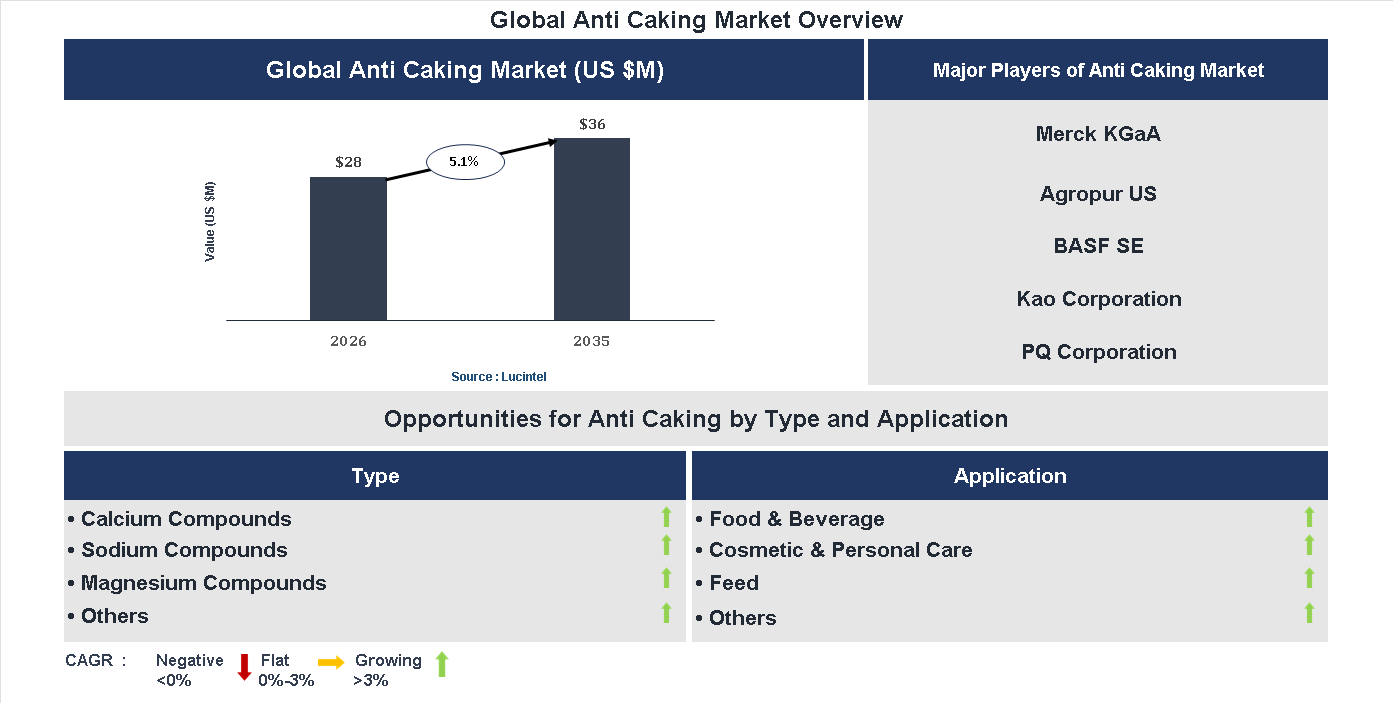
Key data points: The market size in 2035 = $36 million, growth forecast = 5.1% annually for the next 8 years. Scroll below to get more insights. This market report covers trends, opportunities and forecasts in anti caking market to 2035 by type (calcium compounds, sodium compounds, magnesium compounds, and others), application (food & beverage, cosmetic & personal care, feed, and others), and region (North America, Europe, Asia Pacific, and the Rest of the World)
We'll send your sample report shortly.
• Lucintel forecasts that, within the type category, calcium compound is expected to witness the highest growth over the forecast period.
• Within the application category, food & beverage is expected to witness the highest growth.
• In terms of region, APAC is expected to witness the highest growth over the forecast period. Gain valuable insights for your business decisions with our comprehensive 150+ page report. Sample figures with some insights are shown below.
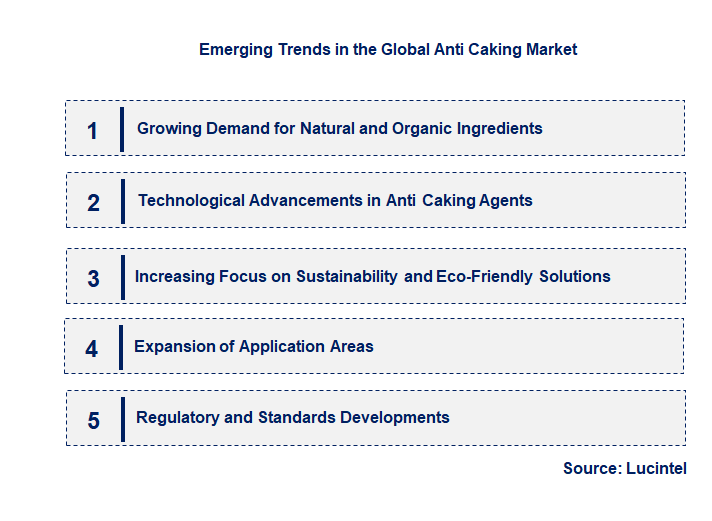
• Growing Demand for Natural and Organic Ingredients: Increasing consumer preference for clean-label products is driving the adoption of natural anti-caking agents such as silica, calcium carbonate, and plant-based extracts. Food manufacturers are shifting away from synthetic additives to meet regulatory standards and consumer expectations for healthier options. This trend enhances product transparency and appeals to health-conscious markets, fostering innovation in natural ingredient sourcing and formulation techniques.
• Technological Advancements in Anti Caking Agents: Innovations in nanotechnology and encapsulation are improving the efficacy and stability of anti-caking agents. These advancements enable better control over particle size, dispersibility, and moisture absorption, leading to longer shelf life and improved product quality. Such technological progress allows for the development of more efficient, cost-effective, and environmentally friendly anti-caking solutions, thereby expanding their application scope across various food products.
• Increasing Focus on Sustainability and Eco-Friendly Solutions: Environmental concerns are prompting manufacturers to develop sustainable anti-caking agents derived from renewable resources. The shift towards biodegradable and eco-friendly ingredients reduces environmental impact and aligns with global sustainability goals. This trend encourages research into plant-based and mineral-based agents that are both effective and environmentally responsible, influencing supply chain practices and regulatory policies.
• Expansion of Application Areas: The anti-caking market is broadening beyond traditional food products to include pharmaceuticals, cosmetics, and agricultural sectors. In pharmaceuticals, anti-caking agents improve powder flow and stability, while in cosmetics, they enhance product texture and shelf life. The diversification of applications is driven by the need for consistent quality and safety across industries, opening new growth avenues and increasing market size.
• Regulatory and Standards Developments: Stricter regulations and standards regarding food additives are shaping the market landscape. Governments and international bodies are implementing more rigorous testing and labelling requirements for anti-caking agents. Compliance with these standards is essential for market players, prompting innovation in formulation and transparency. This trend ensures consumer safety and fosters trust, but also challenges manufacturers to adapt quickly to evolving regulatory environments. These emerging trends are collectively transforming the anti caking market by emphasizing natural ingredients, technological innovation, sustainability, application diversification, and regulatory compliance. These developments are not only enhancing product performance and safety but also aligning the market with broader consumer and environmental expectations, ultimately reshaping industry standards and competitive dynamics.
• Growing Food Industry Demand: The increasing consumption of processed foods necessitates anti-caking agents to maintain product quality and shelf life. Food manufacturers seek effective solutions to prevent clumping in powders like spices, salt, and powdered dairy. This demand is driven by urbanization, changing lifestyles, and the need for convenience foods. As a result, the market for anti-caking agents in food applications is expanding rapidly, offering significant growth opportunities for suppliers and innovators.
• Pharmaceutical Industry Expansion: The pharmaceutical sector requires anti-caking agents to ensure the stability and uniformity of powdered medicines and supplements. These agents prevent clumping during storage and transportation, maintaining efficacy and safety. The rising prevalence of chronic diseases and the growth of nutraceuticals further boost demand. Innovations in biocompatible and food-grade anti-caking agents are opening new avenues, making this sector a vital growth driver for the market.
• Technological Innovations in Formulation: Advances in chemical and natural anti-caking agents are enhancing product performance and safety. New formulations offer improved dispersibility, stability, and compatibility with various ingredients. These innovations enable manufacturers to meet stringent regulatory standards and consumer preferences for natural and organic products. The development of eco-friendly and biodegradable agents is also gaining traction, positioning technological progress as a key factor in market growth.
• Regulatory and Safety Standards: Increasing regulatory scrutiny and safety standards worldwide are influencing market dynamics. Governments are imposing stricter guidelines on food and pharmaceutical additives, prompting companies to develop safer, compliant anti-caking agents. Certification processes and quality assurance are becoming more rigorous, encouraging innovation and higher product standards. This regulatory environment is fostering trust among consumers and stakeholders, ultimately driving market growth through enhanced product safety and credibility.
• Rising Use in Chemical and Industrial Applications: Anti-caking agents are increasingly used in chemicals, fertilizers, and industrial powders to improve flowability and prevent clumping. The expanding chemical manufacturing sector and the need for efficient handling of bulk powders are key drivers. These agents help optimize production processes, reduce wastage, and improve safety. The growing industrialization and automation trends are expected to sustain demand, making this a significant growth segment within the market. The recent developments in the anti caking market are significantly enhancing product quality, safety, and efficiency across multiple industries. Innovations in formulation, regulatory compliance, and expanding applications are driving robust growth. These opportunities are attracting investments and fostering technological advancements, which collectively are transforming the market landscape. As industries continue to evolve, the anti-caking segment is poised for sustained expansion, offering promising prospects for manufacturers, suppliers, and consumers alike.
• Expanding Food Industry Applications: The rising global demand for processed and packaged foods is a key driver for anti-caking agents. These additives prevent clumping in powdered ingredients like salt, spices, and baking powders, ensuring product consistency and ease of use. As consumers seek convenience and longer shelf life, food manufacturers are increasingly incorporating anti-caking agents. This trend is particularly prominent in emerging markets, where urbanization and changing lifestyles boost processed food consumption, creating substantial growth opportunities for the anti-caking market.
• Growing Pharmaceutical Industry Use: The pharmaceutical sector relies on anti-caking agents to maintain the stability and flowability of powdered medicines and supplements. These agents prevent clumping during manufacturing, storage, and transportation, ensuring accurate dosing and efficacy. The increasing prevalence of chronic diseases and the rising demand for over-the-counter medications are fueling pharmaceutical production. Additionally, advancements in pharmaceutical formulations and stricter quality standards are encouraging the adoption of anti-caking solutions, presenting significant growth prospects in this sector.
• Rising Demand in Chemical Manufacturing: Anti-caking agents are essential in chemical production to prevent clumping of powders like fertilizers, dyes, and industrial chemicals. They facilitate smooth handling, mixing, and application, improving process efficiency. The expanding chemical industry, driven by infrastructure development and agricultural needs, is boosting demand for anti-caking solutions. Innovations in environmentally friendly and food-grade agents are also opening new avenues, especially in sectors requiring high purity and safety standards, thereby supporting market growth.
• Technological Innovations and Product Development: Continuous research and development efforts are leading to the creation of advanced anti-caking agents with improved efficacy, safety, and environmental compatibility. Innovations such as biodegradable and natural agents are gaining traction, aligning with consumer preferences for sustainable products. These technological advancements enable manufacturers to cater to diverse industry needs, enhance product performance, and meet regulatory requirements. Consequently, innovation-driven growth is expected to expand the market’s scope and application range significantly.
• Strategic Collaborations and Market Expansion: Key players are forming strategic alliances, mergers, and acquisitions to strengthen their market position and expand geographically. Entering emerging markets with high growth potential, such as Asia-Pacific and Latin America, is a primary focus. These collaborations facilitate technology transfer, product diversification, and increased distribution channels. Market expansion efforts are also supported by regulatory approvals and certifications, which help penetrate new industries and regions, ultimately driving overall market growth and competitiveness. The overall impact of these opportunities is set to significantly enhance the growth trajectory of the anti caking market, fostering innovation, expanding applications, and increasing global reach. This dynamic environment promises sustained development, benefiting manufacturers, consumers, and related industries alike.
• Technological Advancements: The development of innovative anti-caking agents and improved manufacturing processes enhances product efficacy and safety. These advancements enable producers to create more effective formulations that meet stringent quality standards, thereby increasing consumer confidence and expanding application scopes across food, pharmaceuticals, and industrial sectors. Continuous R&D investments foster product differentiation and open new market segments, fueling overall growth.
• Growing Food Industry Demand: The rising global population and changing dietary preferences have led to increased consumption of powdered and granular food products. This surge necessitates effective anti-caking solutions to maintain product quality, shelf life, and ease of handling. The expansion of processed foods, spices, and condiments directly correlates with higher demand for anti-caking agents, driving market expansion.
• Regulatory Frameworks and Food Safety Standards: Governments and international bodies impose strict regulations on food additives, including anti-caking agents. Compliance with these standards ensures consumer safety and product acceptance. Evolving regulations often encourage innovation in natural and organic anti-caking solutions, influencing market offerings and fostering trust among consumers and manufacturers alike.
• Environmental and Sustainability Initiatives: Increasing emphasis on sustainable sourcing and eco-friendly manufacturing practices impacts the market. Companies are adopting biodegradable and natural anti-caking agents to meet environmental standards and consumer preferences for clean-label products. These initiatives promote responsible production and open avenues for eco-conscious product development.
• Expansion in End-Use Industries: The diversification of end-use sectors such as pharmaceuticals, cosmetics, and industrial chemicals contributes to market growth. The need for anti-caking agents in these sectors to ensure product stability and flowability broadens the market scope, encouraging innovation and investment across multiple industries. The challenges facing the anti caking market include:
• Stringent Regulatory Compliance: Navigating complex and evolving regulations can be challenging for manufacturers. Ensuring compliance with safety standards and obtaining approvals for new anti-caking agents often involve lengthy and costly processes. This regulatory landscape can hinder innovation, delay product launches, and increase operational costs, impacting overall market growth.
• Consumer Preference for Natural Ingredients: Increasing demand for natural and organic products limits the use of synthetic anti-caking agents. Manufacturers face the challenge of developing effective natural alternatives that meet performance expectations while adhering to consumer preferences. This shift necessitates significant research and development investments and may restrict the range of available ingredients.
• Price Volatility of Raw Materials: Fluctuations in the cost of raw materials used in anti-caking agents, such as silica or mineral-based substances, can impact profit margins. Price volatility affects supply chain stability and pricing strategies, potentially leading to increased product costs for consumers and manufacturers. Managing these fluctuations is crucial for maintaining market competitiveness and profitability. The anti caking market is shaped by technological innovations, expanding demand from the food and other industries, and regulatory standards that ensure safety and quality. However, challenges such as regulatory compliance, consumer preferences for natural ingredients, and raw material price volatility pose significant hurdles. These factors collectively influence market dynamics, requiring stakeholders to innovate continuously, adapt to regulatory changes, and manage supply chain risks. Overall, the market's growth prospects depend on balancing these drivers and challenges through strategic planning and innovation.
• Merck KGaA
• Agropur US
• BASF SE
• Kao Corporation
• PQ Corporation
• IMAC Inc.
• Huber Engineered Materials
• Calcium Compounds
• Sodium Compounds
• Magnesium Compounds
• Others
• Food & Beverage
• Cosmetic & Personal Care
• Feed
• Others
• North America
• Europe
• Asia Pacific
• The Rest of the World
• United States: The U.S. market for anti-caking agents has seen substantial growth due to the expanding food processing industry and rising demand for packaged foods. Innovations in natural and organic anti-caking agents are gaining popularity, driven by consumer preferences for clean-label products. Regulatory agencies like the FDA are implementing stricter guidelines, encouraging companies to adopt safer ingredients. Additionally, technological advancements in packaging have enhanced product shelf life and stability. The U.S. market is also witnessing increased adoption of anti-caking agents in pharmaceuticals and agricultural sectors, further broadening its scope.
• China: China remains a major player in the anti-caking market, fueled by its large food manufacturing sector and rapid urbanization. The country is focusing on developing natural and plant-based anti-caking agents to meet domestic demand and export requirements. Government initiatives aimed at food safety and quality standards are encouraging innovation and stricter regulations. The growth of the dairy, bakery, and snack food industries has significantly contributed to market expansion. Moreover, Chinese companies are investing in R&D to create sustainable and eco-friendly anti-caking solutions, aligning with global trends toward environmental responsibility.
• Germany: Germany's anti-caking market is characterized by a strong emphasis on quality, safety, and sustainability. The country is a leader in adopting innovative, natural, and biodegradable anti-caking agents, driven by stringent EU regulations and consumer awareness. The food industry, especially bakery and dairy sectors, is a major consumer. Germany is also investing in research to develop eco-friendly solutions that reduce environmental impact. The pharmaceutical and chemical industries are exploring specialized anti-caking agents for various applications. Overall, Germany's market is focused on high-quality, sustainable products that comply with international standards.
• India: The Indian anti-caking market is experiencing rapid growth due to the expanding food processing industry and increasing urbanization. The demand for processed and packaged foods, especially in rural and semi-urban areas, is boosting market prospects. Indian companies are increasingly adopting natural and organic anti-caking agents to cater to health-conscious consumers. Government initiatives promoting food safety and quality standards are encouraging innovation. The dairy, spice, and snack food sectors are key drivers. Additionally, the market is witnessing a shift toward sustainable and biodegradable solutions, aligning with global environmental concerns.
• Japan: Japan's anti-caking market is driven by high consumer safety standards and a focus on natural ingredients. The country emphasizes the development of eco-friendly and biodegradable anti-caking agents, supported by strict regulations and consumer preferences for clean-label products. The food and pharmaceutical sectors are primary markets, with innovations aimed at enhancing product stability and shelf life. Japanese companies are investing in advanced research to create highly effective, safe, and sustainable solutions. The market also benefits from technological advancements in packaging and processing, ensuring high-quality standards and environmental sustainability.


• Merck KGaA
• Agropur US
• BASF SE
• Kao Corporation
• PQ Corporation
• IMAC Inc.
• Huber Engineered Materials Q6. Which anti caking market segment will be the largest in future? Answer: Lucintel forecasts that, within the type category, calcium compound is expected to witness the highest growth over the forecast period. Q7. In anti caking market, which region is expected to be the largest in next 5 years? Answer: In terms of region, APAC is expected to witness the highest growth over the forecast period. Q8. Do we receive customization in this report? Answer: Yes, Lucintel provides 10% customization without any additional cost.


Choose a license that fits your team. Instant PDF delivery.
Prices exclude taxes. Instant delivery. Custom licensing available on request.
Market Report · July 22, 2026
Market Report · July 22, 2026
Market Report · July 22, 2026
Trusted partner for strategic intelligence and business growth


Receive a complimentary market analysis tailored to your industry. Our analysts will identify key growth opportunities and competitive dynamics specific to your business.

Market size, growth rate, and key trend analysis for your specific sector.

Top competitor positioning and market share analysis.

Strategic recommendations backed by data-driven insights.
Get curated market intelligence and competitive moves straight to your inbox.
By subscribing, you agree to receive our monthly insights. Unsubscribe anytime.
Receive a complimentary market analysis tailored to your industry. Our analysts will identify key growth opportunities and competitive dynamics specific to your business.
Market size, growth rate, and key trend analysis for your specific sector.
Top competitor positioning and market share analysis.
Strategic recommendations backed by data-driven insights.
Get curated market intelligence, emerging trends, and competitive moves straight to your inbox each month.
By subscribing, you agree to receive our monthly insights. Unsubscribe anytime.
We'll send your sample report shortly.