
Market Report · July 31, 2026

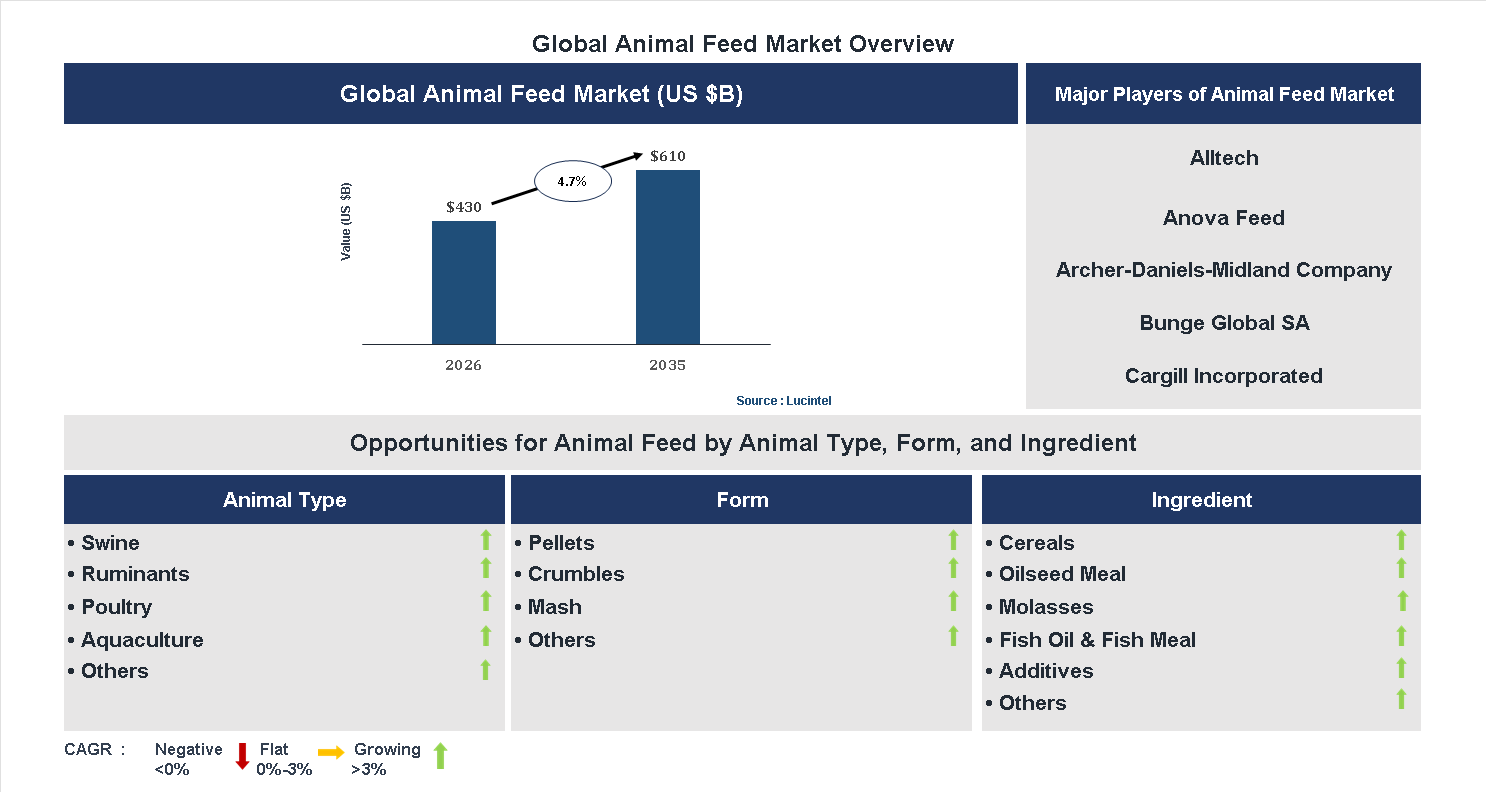
Key data points: The market size in 2035 = $610 billion, growth forecast = 4.7% annually for the next 8 years. Scroll below to get more insights. This market report covers trends, opportunities and forecasts in animal feed market to 2035 by animal type (swine, ruminants, poultry, aquaculture, and others), form (pellets, crumbles, mash, and others), ingredient (cereals, oilseed meal, molasses, fish oil & fish meal, additives, and others), and region (North America, Europe, Asia Pacific, and the Rest of the World)
We'll send your sample report shortly.
• Lucintel forecasts that, within the ingredient category, cereal is expected to witness the highest growth over the forecast period.
• Within the animal type category, ruminant is expected to witness the highest growth.
• In terms of region, APAC is expected to witness the highest growth over the forecast period. Gain valuable insights for your business decisions with our comprehensive 150+ page report. Sample figures with some insights are shown below.
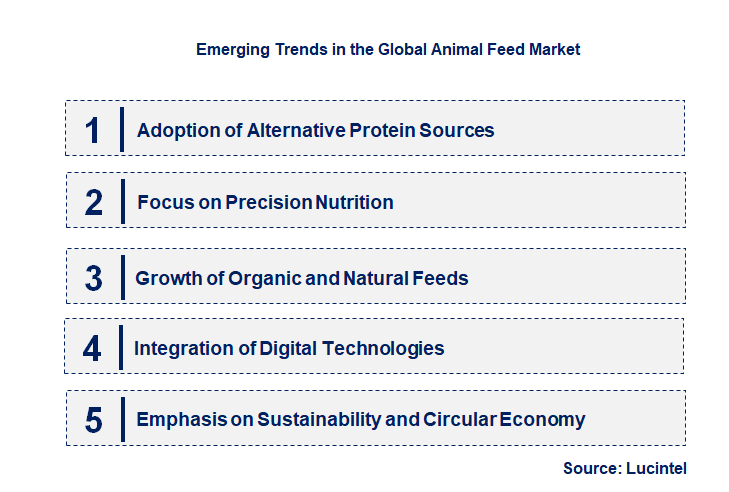
• Adoption of Alternative Protein Sources: The industry is increasingly incorporating plant-based, insect-based, and lab-grown proteins into animal feed formulations. This shift aims to reduce reliance on traditional ingredients like soy and fishmeal, which face sustainability and supply challenges. Alternative proteins offer environmental benefits, lower costs, and improved nutritional profiles, appealing to eco-conscious consumers and producers. This trend is expected to drive innovation in feed formulations, enhance sustainability, and meet the rising demand for ethically produced animal products.
• Focus on Precision Nutrition: Precision nutrition involves tailoring animal feed to meet specific health, age, and productivity needs of different livestock. Advanced data analytics, IoT devices, and genetic information enable producers to optimize feed efficiency and animal health. This trend reduces waste, lowers costs, and improves productivity by providing animals with exactly what they need for optimal growth and health. It also supports sustainable practices by minimizing excess feed and reducing environmental impact, thus transforming traditional feeding strategies into more scientific and targeted approaches.
• Growth of Organic and Natural Feeds: Consumer demand for organic, non-GMO, and natural animal products is fueling the growth of organic and natural feed options. These feeds are produced without synthetic additives, antibiotics, or growth hormones, aligning with health-conscious and environmentally aware consumers. The trend encourages farmers to adopt organic farming practices and meet certification standards, which can command premium prices. As awareness of animal welfare and food safety increases, the market for organic feeds is expected to expand, influencing product development and regulatory standards across the industry.
• Integration of Digital Technologies: Digital tools such as blockchain, AI, and IoT are revolutionizing supply chain management, quality control, and traceability in the animal feed industry. Blockchain enhances transparency and traceability from raw material sourcing to end-product delivery, ensuring safety and compliance. AI-driven analytics optimize production processes and demand forecasting, reducing waste and costs. IoT devices monitor animal health and environmental conditions in real-time, enabling proactive management. These technologies improve efficiency, safety, and consumer trust, positioning digital transformation as a key driver of innovation in the market.
• Emphasis on Sustainability and Circular Economy: Sustainability initiatives focus on reducing environmental impact through sustainable sourcing, waste reduction, and circular economy practices. This includes utilizing by-products and waste materials from other industries as feed ingredients, promoting recycling and resource efficiency. Companies are adopting eco-friendly manufacturing processes and reducing greenhouse gas emissions. This trend aligns with global efforts to combat climate change and meet regulatory standards. Emphasizing sustainability not only enhances brand reputation but also appeals to environmentally conscious consumers, shaping the future of the animal feed industry toward more responsible and sustainable practices. These trends are collectively reshaping the animal feed market by fostering innovation, promoting sustainability, and aligning with evolving consumer preferences. They are driving the industry toward more efficient, ethical, and technologically advanced practices, ensuring its resilience and growth in a competitive global landscape.
• Growing Demand for High-Quality Animal Feed: The rising global population and meat consumption are boosting demand for nutritious, high-quality feed. This trend encourages manufacturers to develop specialized formulations that enhance animal health and productivity, leading to increased market size and diversification of product offerings. It also prompts innovation in feed ingredients, including organic and sustainable options, to meet consumer preferences and regulatory standards.
• Adoption of Sustainable and Alternative Ingredients: The shift towards sustainability is driving the use of alternative ingredients like insect meal, algae, and plant-based proteins. These ingredients reduce environmental impact and provide cost-effective solutions. Their adoption improves the sustainability profile of animal feed, attracts eco-conscious consumers, and complies with stricter environmental regulations. This development fosters innovation and diversification in feed formulations, expanding market opportunities and encouraging eco-friendly practices.
• Technological Advancements in Feed Formulation: Innovations such as precision nutrition, feed additives, and digital monitoring are revolutionizing feed formulation. These technologies optimize nutrient delivery, improve feed efficiency, and reduce waste. They enable producers to tailor feeds to specific animal needs, enhancing productivity and health. The integration of data analytics and automation is also streamlining production processes, reducing costs, and increasing competitiveness in the market.
• Regulatory Changes and Quality Standards: Governments and industry bodies are implementing stricter regulations on feed safety, labeling, and ingredient transparency. These changes compel manufacturers to enhance quality control, adopt safer ingredients, and improve traceability. Compliance boosts consumer confidence and opens new markets, especially in regions with stringent standards. It also encourages innovation in safe, compliant ingredients and formulations, fostering a more transparent and trustworthy industry environment.
• Expansion of Emerging Markets: Rapid economic growth in regions like Asia-Pacific and Africa is driving demand for animal protein and, consequently, animal feed. Market expansion is supported by increasing livestock populations, urbanization, and rising disposable incomes. Local manufacturers are investing in capacity expansion and product development to meet regional preferences. This growth presents significant opportunities for global players to establish a foothold and capitalize on the expanding consumer base in these emerging markets. The recent developments in the animal feed market are significantly shaping its future, fostering innovation, sustainability, and regulatory compliance. These opportunities are driving market expansion, improving product quality, and enhancing competitiveness, ultimately leading to a more dynamic and resilient industry landscape.
• Growing Demand for Specialty and Organic Feeds: The rising consumer preference for organic and specialty animal feeds is creating new opportunities. Producers are developing formulations that cater to specific dietary needs, such as gluten-free, non-GMO, and organic options, to meet health and sustainability standards. This trend is driven by increased awareness of animal health and environmental concerns, encouraging manufacturers to innovate and expand their product portfolios to capture niche markets and premium pricing.
• Adoption of Precision Feeding Technologies: Precision feeding involves using advanced technologies like IoT sensors, data analytics, and automation to optimize feed efficiency and reduce waste. This approach enhances productivity, improves animal health, and lowers costs for farmers. As technology becomes more accessible and affordable, adoption is expected to grow, enabling tailored nutrition plans that meet specific growth stages and health requirements, thereby transforming traditional feeding practices and boosting overall market growth.
• Expansion into Emerging Markets: Rapid urbanization, rising disposable incomes, and increasing meat consumption are fueling demand for animal feed in developing regions such as Asia-Pacific, Africa, and Latin America. Companies are establishing local manufacturing facilities, forming strategic partnerships, and customizing products to suit regional preferences and regulations. This expansion offers significant growth potential by tapping into large, underserved markets, diversifying revenue streams, and establishing a strong regional presence.
• Focus on Sustainable and Eco-Friendly Feed Solutions: Environmental concerns and regulatory pressures are prompting the industry to develop sustainable feed options. Innovations include using alternative protein sources like insects, algae, and plant-based ingredients to reduce reliance on traditional feedstocks. Sustainable practices not only lower the carbon footprint but also appeal to eco-conscious consumers and regulators. Investing in eco-friendly formulations and production methods is expected to be a key differentiator and growth driver in the evolving market landscape.
• Increasing Demand for Functional and Fortified Feeds: Functional feeds enriched with vitamins, minerals, probiotics, and other additives are gaining popularity for their role in improving animal health, productivity, and disease resistance. This trend is driven by the need to reduce antibiotic use and enhance overall farm efficiency. Manufacturers are developing targeted formulations for specific animals and health conditions, creating opportunities for premium products. The focus on functional feeds aligns with global health initiatives and consumer preferences for safer, healthier animal products. The overall market outlook is positively influenced by these growth opportunities, promising increased innovation, regional expansion, and sustainability efforts. Stakeholders who leverage these trends can expect to strengthen their market position, meet regulatory standards, and satisfy evolving consumer demands, ultimately driving long-term growth and profitability in the animal feed industry.
• Technological Innovations: The development of advanced feed formulations, including precision nutrition and bioengineering, improves feed efficiency and animal health. Automation and digital monitoring systems streamline production processes, reduce waste, and enhance traceability. These technological advancements enable producers to meet increasing demand for high-quality, sustainable feed, thereby expanding market reach and profitability.
• Rising Livestock Production: Growing global demand for meat, dairy, and other animal products fuels the need for animal feed. Population growth, urbanization, and rising incomes in developing regions contribute to increased livestock farming. This surge in production necessitates scalable, cost-effective feed solutions, driving innovation and expansion within the market.
• Focus on Sustainable and Organic Feed: Consumer preferences are shifting towards organic and sustainably produced animal feed. This trend encourages manufacturers to adopt eco-friendly ingredients and production practices, aligning with environmental regulations and market demand. The emphasis on sustainability also opens new avenues for premium product offerings, boosting market growth.
• Regulatory Frameworks and Food Safety Standards: Governments and international bodies implement strict regulations concerning animal feed ingredients, safety, and environmental impact. Compliance ensures market access and consumer trust but also requires significant investment in quality control and R&D. These regulations shape product development and influence market competitiveness. The challenges in the animal feed market are:
• Fluctuating Raw Material Prices: The cost of key ingredients such as grains, soy, and other commodities is highly volatile due to weather conditions, geopolitical tensions, and global supply chain disruptions. These fluctuations impact profit margins and pricing strategies, making it difficult for producers to maintain stable operations and competitive pricing.
• Environmental and Sustainability Regulations: Increasingly stringent environmental policies aimed at reducing carbon footprints and waste management pose operational challenges. Compliance often requires significant investment in eco-friendly technologies and sustainable sourcing, which can increase production costs and limit flexibility for manufacturers.
• Supply Chain Disruptions: The global nature of raw material sourcing makes the animal feed industry vulnerable to disruptions caused by pandemics, trade restrictions, and logistical issues. These disruptions can lead to shortages, delays, and increased costs, adversely affecting production schedules and market stability. The animal feed market is shaped by technological progress, rising demand, and sustainability trends, which present significant growth opportunities. However, volatility in raw material prices, regulatory pressures, and supply chain vulnerabilities pose substantial challenges. Navigating these factors requires strategic innovation, efficient supply chain management, and compliance with evolving standards. Overall, the markets future depends on how effectively stakeholders adapt to these dynamic drivers and challenges, balancing growth with sustainability and resilience.
• Alltech
• Anova Feed
• Archer-Daniels-Midland Company
• Bunge Global SA
• Cargill Incorporated
• Charoen Pokphand Foods PCL
• Godrej Agrovet Limited
• Swine
• Ruminants
• Poultry
• Aquaculture
• Others
• Pellets
• Crumbles
• Mash
• Others
• Cereals
• Oilseed Meal
• Molasses
• Fish Oil & Fish Meal
• Additives
• Others
• North America
• Europe
• Asia Pacific
• The Rest of the World
• United States: The US animal feed market has seen increased adoption of organic and non-GMO ingredients, driven by consumer demand for healthier animal products. Innovations in feed additives, such as probiotics and enzymes, aim to improve animal health and productivity. Regulatory updates focus on reducing antibiotic use, promoting sustainable sourcing, and enhancing traceability. The rise of plant-based and alternative protein sources, including insect meal, reflects efforts to reduce environmental impact. Technological integration, like precision feeding and data analytics, is optimizing feed efficiency and reducing waste.
• China: China’s animal feed industry is rapidly expanding, fueled by rising meat consumption and livestock production. The country is investing heavily in modernizing feed manufacturing with advanced automation and quality control systems. There is a growing emphasis on incorporating alternative ingredients such as soybean meal and locally sourced grains to reduce reliance on imports. Government policies promote sustainable practices and biosecurity measures to prevent disease outbreaks. The market is also witnessing increased research into feed additives that enhance growth rates and disease resistance, aligning with the country’s goal of self-sufficiency in animal protein.
• Germany: Germany’s animal feed sector emphasizes sustainability and environmental responsibility, with a focus on reducing greenhouse gas emissions and minimizing waste. The adoption of organic and eco-friendly ingredients is on the rise, supported by strict EU regulations. Innovations include the development of functional feeds that improve gut health and nutrient absorption. Germany is also investing in digital solutions for supply chain transparency and quality assurance. The market is characterized by a shift toward plant-based proteins and novel ingredients like algae and insect meal, aiming to meet both consumer preferences and regulatory standards.
• India: India’s animal feed industry is experiencing rapid growth due to increasing demand for meat, dairy, and poultry products. The sector is witnessing a surge in the use of locally available ingredients such as rice bran, maize, and oilseed cakes to reduce costs. Government initiatives promote the use of fortified feeds and biosecurity measures to improve livestock health. There is a rising trend toward incorporating nutritional supplements and additives to enhance productivity. Small-scale farmers are adopting affordable, locally formulated feeds, while larger companies invest in research to develop specialized formulations suited to regional needs.
• Japan: Japan’s animal feed market is characterized by high-quality, specialized products aimed at premium markets. The focus is on functional feeds that support animal health, longevity, and productivity, often incorporating natural ingredients and probiotics. Regulatory standards are stringent, emphasizing safety and traceability. The industry is exploring sustainable ingredients, including insect protein and plant-based alternatives, to reduce environmental impact. Technological advancements such as automated feeding systems and data-driven management are improving efficiency. Japan’s market also emphasizes innovation in feed formulations to meet the specific needs of its livestock, including aquaculture and pet food sectors.


• Alltech
• Anova Feed
• Archer-Daniels-Midland Company
• Bunge Global SA
• Cargill Incorporated
• Charoen Pokphand Foods PCL
• Godrej Agrovet Limited Q6. Which animal feed market segment will be the largest in future? Answer: Lucintel forecasts that, within the ingredient category, cereal is expected to witness the highest growth over the forecast period. Q7. In animal feed market, which region is expected to be the largest in next 5 years? Answer: In terms of region, APAC is expected to witness the highest growth over the forecast period. Q8. Do we receive customization in this report? Answer: Yes, Lucintel provides 10% customization without any additional cost.


Choose a license that fits your team. Instant PDF delivery.
Prices exclude taxes. Instant delivery. Custom licensing available on request.
Market Report · July 31, 2026
Market Report · July 31, 2026
Market Report · July 31, 2026
Trusted partner for strategic intelligence and business growth


Receive a complimentary market analysis tailored to your industry. Our analysts will identify key growth opportunities and competitive dynamics specific to your business.

Market size, growth rate, and key trend analysis for your specific sector.

Top competitor positioning and market share analysis.

Strategic recommendations backed by data-driven insights.
Get curated market intelligence and competitive moves straight to your inbox.
By subscribing, you agree to receive our monthly insights. Unsubscribe anytime.
Receive a complimentary market analysis tailored to your industry. Our analysts will identify key growth opportunities and competitive dynamics specific to your business.
Market size, growth rate, and key trend analysis for your specific sector.
Top competitor positioning and market share analysis.
Strategic recommendations backed by data-driven insights.
Get curated market intelligence, emerging trends, and competitive moves straight to your inbox each month.
By subscribing, you agree to receive our monthly insights. Unsubscribe anytime.
We'll send your sample report shortly.