
Market Report · July 22, 2026

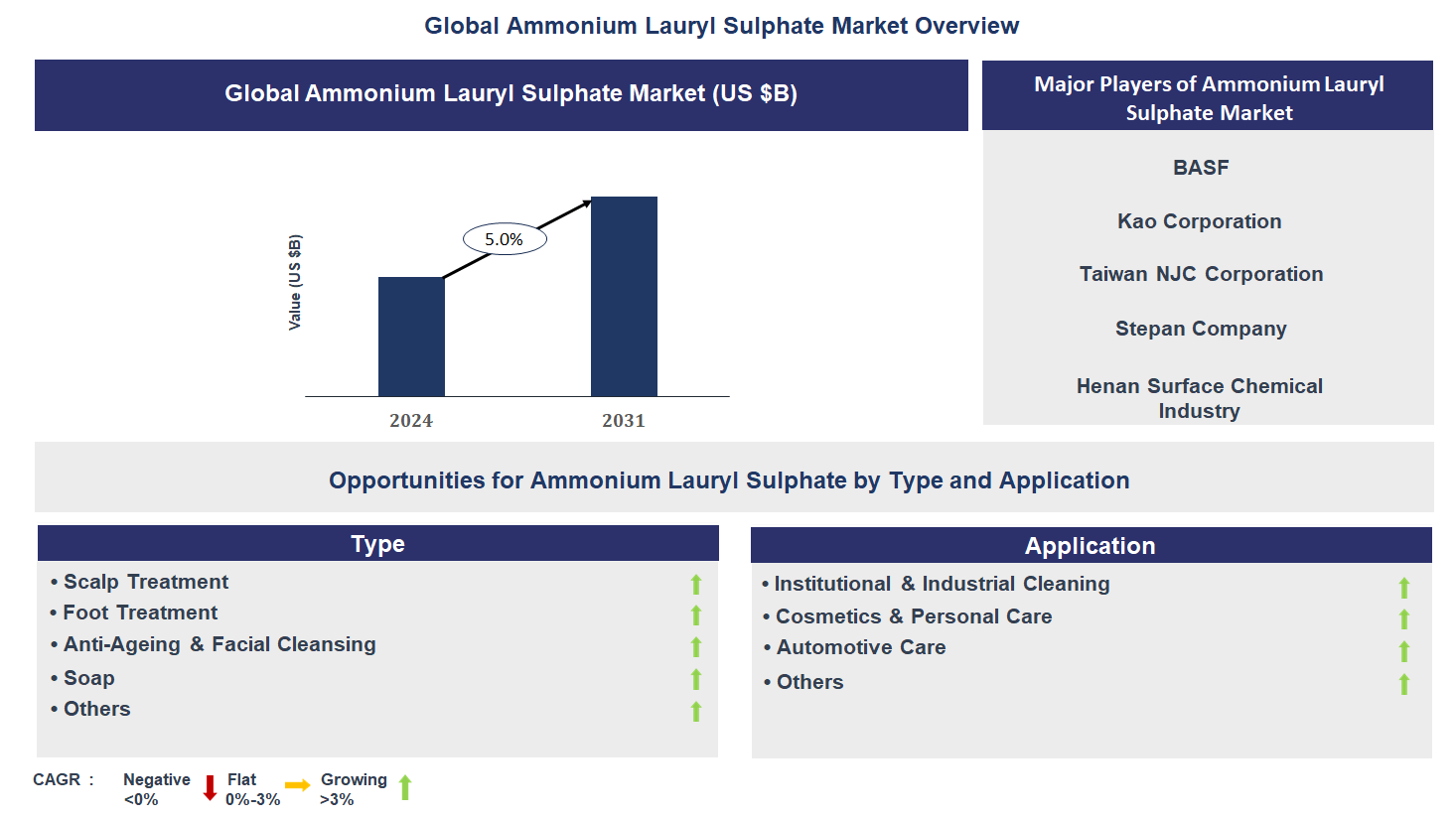
Key data points: The growth forecast = 5.0% annually for the next 7 years. Scroll below to get more insights. This market report covers trends, opportunities and forecasts in ammonium lauryl sulphate market to 2031 by type (scalp treatment, foot treatment, anti-ageing & facial cleansing, soap, and others), application (institutional & industrial cleaning, cosmetics & personal care, automotive care, and others), and region (North America, Europe, Asia Pacific, and the Rest of the World)
We'll send your sample report shortly.
• Lucintel forecasts that, within the type category, anti-ageing & facial cleansing is expected to witness the highest growth over the forecast period.
• Within the application category, cosmetics & personal care is expected to witness the highest growth.
• In terms of region, APAC is expected to witness the highest growth over the forecast period. Gain valuable insights for your business decisions with our comprehensive 150+ page report. Sample figures with some insights are shown below.
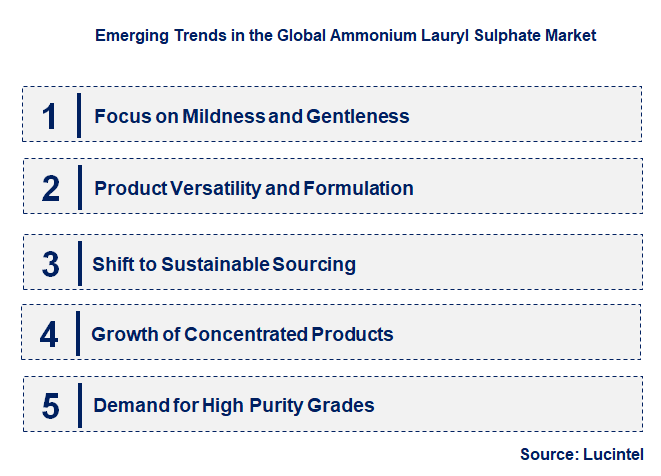
• Focus on Mildness and Gentleness: A major trend is the market’s increasing focus on mildness, with ALS being favored over Sodium Lauryl Sulphate (SLS). Formulators are utilizing ALS for its superior low-irritation profile and ability to produce a creamy, stable foam. This trend is driven by consumer demand for products that are gentle on sensitive skin and less damaging to hair.
• Product Versatility and Formulation: There is a growing trend toward using ALS in a wider range of formulations. Its compatibility with other surfactants and ingredients allows for the creation of multifunctional products, such as 2-in-1 shampoo-conditioners and facial cleansers. This versatility enhances product performance, simplifies manufacturing, and meets consumer demand for streamlined personal care routines.
• Shift to Sustainable Sourcing: The market is trending toward more sustainable sourcing of raw materials. While traditionally derived from petrochemicals, manufacturers are increasingly exploring plant-based alternatives for lauryl alcohol. This trend is driven by corporate sustainability goals and consumer demand for bio-based and biodegradable ingredients, which in turn reduces the environmental footprint of final products.
• Growth of Concentrated Products: The market is seeing a growing trend toward the use of ALS in concentrated products. These formulations, such as solid bars or highly concentrated liquids, reduce packaging waste and lower shipping costs. This trend appeals to environmentally conscious consumers and businesses seeking to improve logistics and operational efficiency.
• Demand for High Purity Grades: There is an emerging trend toward a demand for high-purity grades of ALS. This is particularly relevant for premium personal care, pharmaceutical, and baby care products where ingredient quality is paramount. Manufacturers are investing in processes to reduce impurities and ensure consistent quality, which adds value and enhances product safety. These trends are collectively reshaping the ALS market by positioning it as a mild, versatile, and sustainable ingredient. The move toward gentleness and versatility is expanding its use in premium product segments, while the focus on sustainable sourcing and concentrated formats is aligning the market with global environmental goals. These shifts are making ALS a key component for the future of personal care.
• Advancements in Production Processes: A key development is the advancement in production processes, leading to the creation of purer, more consistent grades of ALS. Manufacturers are implementing new technologies to refine the sulfonation and neutralization steps, resulting in an ALS product with fewer impurities. This development is crucial for meeting the stringent quality requirements of the cosmetics and pharmaceutical industries.
• Increased Use in Solid Formats: A major recent development is the growing use of ALS in solid personal care products like shampoo bars and soap bars. Formulators are leveraging ALS’s excellent foaming and lathering properties in these water-free formulations. This development is driven by the consumer demand for products that are more sustainable and reduce plastic waste.
• Expansion into Baby Care and Sensitive Skin Products: There has been a notable development in the expansion of ALS into the baby care and sensitive skin product segments. Given its mildness compared to other sulfates, it is being used in gentle baby washes and hypoallergenic cleansers. This development creates a new, high-value market for ALS, as parents and consumers prioritize safety and non-irritating ingredients.
• Strategic Partnerships and Acquisitions: The market is witnessing a trend of consolidation and strategic partnerships. Key players are acquiring smaller, specialized companies to gain access to new technologies or expand their product portfolios. This development is a strategic move to secure a competitive edge and address the evolving needs of a fragmented market.
• Development of Bio-based ALS: A recent and significant development is the focus on developing bio-based ALS. This involves using lauryl alcohol derived from renewable sources, such as coconut or palm kernel oil, instead of petrochemicals. This development is a direct response to the global push for sustainability and positions ALS as an eco-friendly ingredient. These developments are profoundly impacting the ALS market by repositioning it as a versatile and sustainable ingredient. The focus on higher purity and new formats is enhancing its appeal, while the expansion into baby care and bio-based sourcing is broadening its market reach and aligning the industry with key consumer trends.
• Baby and Children’s Personal Care: The baby and children’s personal care market represents a significant growth opportunity. Parents are increasingly seeking mild and hypoallergenic ingredients for their children’s shampoos and body washes. ALS, with its gentle cleansing action and good foaming properties, is a preferred alternative to harsher surfactants, making it a key component in this high-growth segment.
• Premium and Salon Hair Care: The premium and professional salon hair care sector offers a strategic growth opportunity. Consumers in this segment are willing to pay more for high-performance products. ALS can be formulated into clarifying shampoos and luxurious cleansers that provide a rich lather and effective cleansing without stripping hair’s natural oils.
• Solid and Water-free Formulations: The rising trend toward solid personal care products, such as shampoo and conditioner bars, presents a major opportunity. These water-free products reduce packaging waste and shipping costs. ALS’s excellent lathering capabilities are essential for making these formats appealing and effective for consumers seeking sustainable alternatives to liquid products.
• Dermatological and Sensitive Skin Products: The dermatological and sensitive skin care segment offers a key growth opportunity. Formulations for sensitive skin conditions require extremely mild surfactants. ALS, with its proven low-irritation profile, is an ideal ingredient for dermatologist-recommended cleansers and facial washes, providing gentle yet effective cleansing for delicate skin.
• Industrial and Home Cleaning: While personal care is a primary application, the industrial and home cleaning sectors present a growth opportunity. ALS can be used in gentle household cleaners and industrial degreasers. Its excellent wetting and foaming properties make it effective for various cleaning applications, creating a potential for market diversification beyond personal care. These opportunities are profoundly impacting the ALS market by driving innovation toward specialized and premium product lines. The focus on baby care, sensitive skin, and salon products is creating high-value segments. The shift toward sustainable solid formats and new applications in the industrial sector is further diversifying the market, ensuring its long-term growth and relevance.
• BASF
• Kao Corporation
• Taiwan NJC Corporation
• Stepan Company
• Henan Surface Chemical Industry
• Scalp Treatment
• Foot Treatment
• Anti-Ageing & Facial Cleansing
• Soap
• Others
• Institutional & Industrial Cleaning
• Cosmetics & Personal Care
• Automotive Care
• Others
• North America
• Europe
• Asia Pacific
• The Rest of the World
• United States: The U.S. market for ALS is experiencing growth, fueled by rising consumer demand for sulfate-free personal care products, particularly in the hair and body care segments. Brands are leveraging ALS’s mildness and excellent foaming properties to replace harsher surfactants. The focus is on clean label formulations and transparent ingredient lists to attract conscious consumers.
• China: China’s ALS market is expanding rapidly, propelled by its booming personal care and home care industries. The country’s rising middle class and increasing hygiene awareness are driving the demand for high-quality, professional-grade cleaning products. Manufacturers are investing in production to meet this surge, with a focus on both domestic consumption and exports.
• Germany: Germany’s market is characterized by a strong emphasis on sustainability and stringent regulations. Manufacturers are prioritizing the development of biodegradable and low-VOC formulations containing ALS to comply with REACH standards. This focus on green chemistry is positioning Germany as a leader in providing high-quality, eco-conscious ingredients for both domestic and international markets.
• India: India’s ALS market is witnessing significant growth, driven by its large population and increasing disposable income. The expanding personal care and cosmetics sectors are major consumers, with a notable shift toward products that offer a balance of effectiveness and mildness. Domestic players are increasing production capacity to capitalize on this rising demand.
• Japan: Japan’s market is highly sophisticated, with a strong preference for high-quality and gentle products. Demand for ALS is growing in the premium personal care and baby care segments. Japanese manufacturers are focused on developing concentrated and high-purity grades of ALS to meet the high standards of their consumers who prioritize product safety and performance.


• BASF
• Kao Corporation
• Taiwan NJC Corporation
• Stepan Company
• Henan Surface Chemical Industry Q5. Which ammonium lauryl sulphate market segment will be the largest in future? Answer: Lucintel forecasts that, within the type category, anti-ageing & facial cleansing is expected to witness the highest growth over the forecast period. Q6. In ammonium lauryl sulphate market, which region is expected to be the largest in next 5 years? Answer: In terms of region, APAC is expected to witness the highest growth over the forecast period. Q7. Do we receive customization in this report? Answer: Yes, Lucintel provides 10% customization without any additional cost.


Choose a license that fits your team. Instant PDF delivery.
Prices exclude taxes. Instant delivery. Custom licensing available on request.
Market Report · July 22, 2026
Market Report · July 22, 2026
Market Report · July 22, 2026
Trusted partner for strategic intelligence and business growth


Receive a complimentary market analysis tailored to your industry. Our analysts will identify key growth opportunities and competitive dynamics specific to your business.

Market size, growth rate, and key trend analysis for your specific sector.

Top competitor positioning and market share analysis.

Strategic recommendations backed by data-driven insights.
Get curated market intelligence and competitive moves straight to your inbox.
By subscribing, you agree to receive our monthly insights. Unsubscribe anytime.
Receive a complimentary market analysis tailored to your industry. Our analysts will identify key growth opportunities and competitive dynamics specific to your business.
Market size, growth rate, and key trend analysis for your specific sector.
Top competitor positioning and market share analysis.
Strategic recommendations backed by data-driven insights.
Get curated market intelligence, emerging trends, and competitive moves straight to your inbox each month.
By subscribing, you agree to receive our monthly insights. Unsubscribe anytime.
We'll send your sample report shortly.