
Report Feature
Amino Acid API Market Trends and Forecast
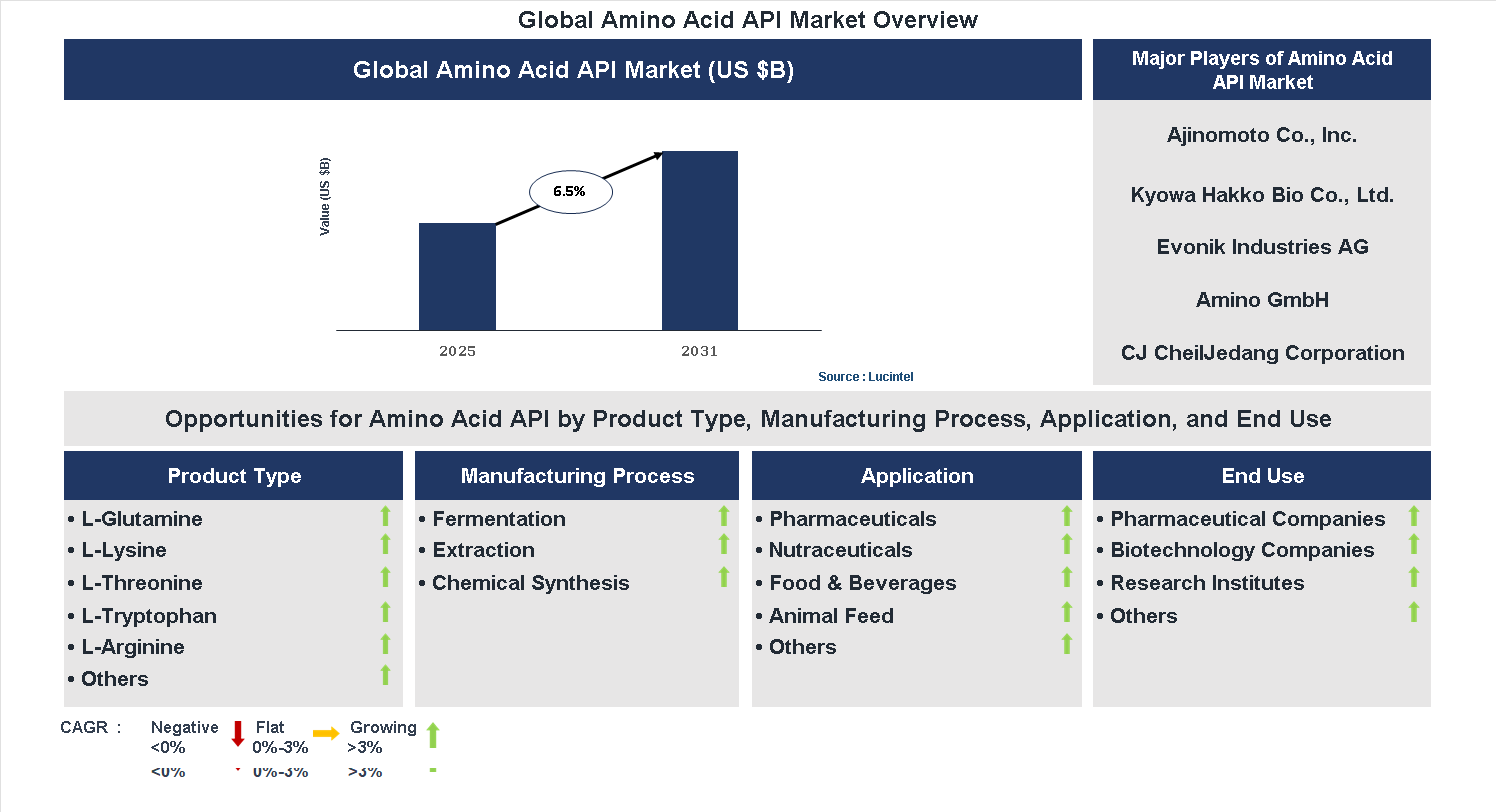
The future of the global amino acid API market looks promising with opportunities in the pharmaceutical company, biotechnology company, and research institute markets. The global amino acid API market is expected to grow with a CAGR of 6.5% from 2025 to 2031. The major drivers for this market are the increasing demand for parenteral nutrition, the rising use in pharmaceutical formulations, and the growing prevalence of metabolic disorders.• Lucintel forecasts that, within the product type category, L-glutamine is expected to witness the highest growth over the forecast period.
• Within the end use category, pharmaceutical company is expected to witness the highest growth.
• In terms of region, APAC is expected to witness the highest growth over the forecast period. Gain valuable insights for your business decisions with our comprehensive 150+ page report. Sample figures with some insights are shown below.
Emerging Trends in the Amino Acid API Market
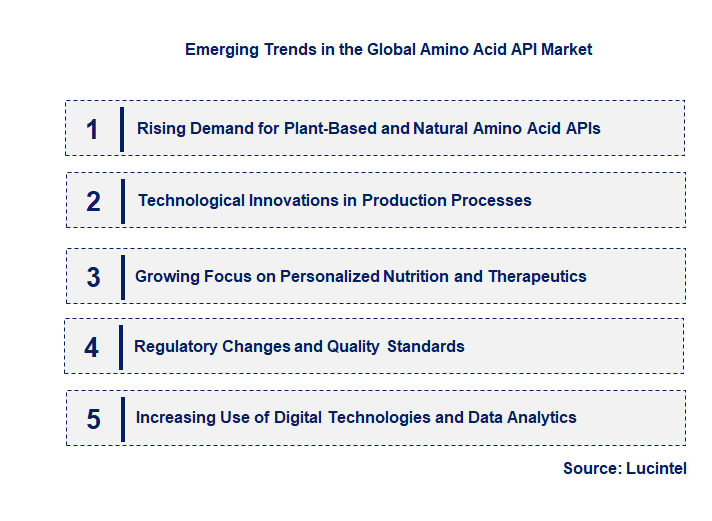
The amino acid API market is experiencing rapid evolution driven by technological advancements, increasing demand from various industries, and shifting consumer preferences. As global health awareness and nutritional needs grow, manufacturers are innovating to meet these demands with sustainable practices and personalized solutions. Regulatory landscapes are also adapting, influencing market strategies. These developments are creating new opportunities and challenges, reshaping the competitive landscape. Understanding these emerging trends is crucial for stakeholders aiming to capitalize on the markets growth potential and navigate its complexities effectively.• Rising Demand for Plant-Based and Natural Amino Acid APIs: The shift towards plant-based and natural products is significantly impacting the market. Consumers are increasingly seeking clean-label, organic, and sustainable options, prompting manufacturers to develop plant-derived amino acid APIs. This trend enhances product appeal, aligns with health-conscious consumer preferences, and supports sustainability goals. It also encourages innovation in extraction and production processes, leading to a broader product portfolio. As a result, companies investing in plant-based amino acids are gaining competitive advantages, and the market is witnessing a diversification of sources and formulations.
• Technological Innovations in Production Processes: Advances in biotechnology, fermentation, and enzymatic synthesis are transforming amino acid API manufacturing. These innovations improve yield, purity, and cost-efficiency, enabling large-scale production of high-quality APIs. They also reduce environmental impact by minimizing waste and energy consumption. Such technological progress allows for the development of novel amino acids and customized formulations tailored to specific applications in pharmaceuticals, nutraceuticals, and animal feed. This trend is fostering a more sustainable, efficient, and versatile production landscape, ultimately expanding market capacity and product innovation.
• Growing Focus on Personalized Nutrition and Therapeutics: The market is witnessing a shift towards personalized health solutions, with amino acids playing a key role. Customized amino acid blends are being developed to address individual nutritional deficiencies and therapeutic needs. This trend is driven by advancements in genomics and diagnostics, enabling targeted interventions. It enhances treatment efficacy and consumer engagement, especially in managing chronic conditions and optimizing athletic performance. The demand for personalized amino acid APIs is expected to grow, prompting companies to invest in research and development to create tailored products that meet specific health profiles.
• Regulatory Changes and Quality Standards: Evolving regulatory frameworks and stringent quality standards are shaping the market landscape. Governments and international bodies are implementing stricter guidelines for manufacturing, labeling, and the safety of amino acid APIs. This drives companies to enhance quality control measures, adopt Good Manufacturing Practices (GMP), and ensure compliance. While these regulations increase operational costs, they also boost consumer confidence and open up opportunities in premium and pharmaceutical segments. Navigating these regulatory changes is crucial for market players aiming to expand globally and maintain a competitive advantage.
• Increasing Use of Digital Technologies and Data Analytics: Digital transformation is revolutionizing market operations, from R&D to supply chain management. Data analytics, artificial intelligence, and automation are enabling more precise formulation, demand forecasting, and inventory management. These technologies improve efficiency, reduce costs, and accelerate product development cycles. They also facilitate better market insights and customer engagement. As digital adoption accelerates, companies can respond more swiftly to market trends and regulatory requirements, fostering innovation and operational excellence. This trend is fundamentally reshaping how market players strategize and compete. In summary, these emerging trends are collectively reshaping the amino acid API market by fostering innovation, enhancing sustainability, and improving regulatory compliance. They are enabling companies to meet evolving consumer demands, expand into new applications, and operate more efficiently. As these trends continue to develop, the market is poised for sustained growth, driven by technological advancements and a focus on personalized, sustainable health solutions.
Recent Development in the Amino Acid API Market
The amino acid API market is experiencing rapid growth driven by increasing demand across pharmaceuticals, nutrition, and animal feed industries. Innovations in production processes and expanding applications are fueling market expansion globally. As consumer awareness about health and wellness rises, the need for high-quality amino acids is surging. Regulatory support and technological advancements are further propelling this sector. These developments are creating new opportunities for manufacturers and investors, shaping the future landscape of the amino acid API industry.• Growing Demand for Pharmaceutical Applications: The rising prevalence of chronic diseases and the need for effective treatments are boosting demand for amino acid APIs in pharmaceuticals. These compounds are essential in drug formulations, nutritional supplements, and medical nutrition products. Increased R&D activities and approvals of new drugs utilizing amino acids are expanding market opportunities. This growth is also driven by the aging population seeking better healthcare solutions, making amino acids a critical component in modern medicine.
• Expansion in Nutritional Supplement Industry: The global shift towards health-conscious lifestyles is significantly increasing the consumption of dietary supplements containing amino acids. Consumers seek products that enhance muscle growth, recovery, and overall wellness. Manufacturers are investing in innovative formulations and plant-based amino acids to meet diverse consumer preferences. This trend is expected to continue, with the market witnessing substantial growth in both developed and emerging economies, driven by rising awareness of nutritional benefits.
• Innovations in Production Technologies: Advances in biotechnological processes and fermentation techniques are reducing production costs and improving amino acid purity. These innovations enable large-scale, sustainable manufacturing, meeting the increasing global demand. Enhanced efficiency and eco-friendly methods are attracting investments and expanding supply chains. As technology evolves, the market will benefit from higher quality products, lower prices, and broader application scopes, further fueling industry growth.
• Increasing Use in Animal Feed Industry: The demand for amino acids in animal nutrition is rising due to the need for healthier livestock and increased meat production. Amino acids like lysine and methionine are vital for animal growth and feed efficiency. Innovations in feed formulations and cost-effective production methods are expanding their use. This trend supports sustainable farming practices and meets the global food security challenge, making amino acids indispensable in modern animal husbandry.
• Regulatory and Market Expansion in Emerging Economies: Governments in emerging markets are implementing supportive policies to promote amino acid API production and usage. Market expansion is driven by rising healthcare infrastructure, increasing investments, and growing consumer awareness. These regions offer significant growth potential due to the expanding pharmaceutical and nutrition sectors. Regulatory harmonization and local manufacturing are further boosting market penetration, making emerging economies key players in the global amino acid API landscape. The overall impact of these developments is a robust, expanding market characterized by innovation, increased application diversity, and global reach. Enhanced production methods, rising demand across sectors, and supportive policies are driving sustained growth. This dynamic environment offers lucrative opportunities for stakeholders, fostering a competitive landscape and ensuring the availability of high-quality amino acid APIs worldwide.
Strategic Growth Opportunities in the Amino Acid API Market
The amino acid API market is experiencing significant growth driven by increasing demand across pharmaceuticals, nutrition, and animal feed industries. Innovations in production processes and expanding applications are creating new opportunities for market players. Rising health awareness and regulatory support further bolster growth prospects. Companies are focusing on strategic collaborations and product diversification to capture market share. This dynamic environment offers substantial potential for sustainable expansion and technological advancements, shaping the future landscape of amino acid APIs globally.• Expansion in Pharmaceutical Applications: The rising prevalence of chronic diseases and the need for specialized medications are fueling demand for amino acid APIs in drug formulations. These APIs are essential in producing therapeutic agents, nutritional supplements, and medical nutrition products. Advances in biotechnology and increased R&D investments are enabling the development of novel amino acid-based drugs, expanding their application scope. Regulatory approvals and quality standards are also driving market growth, making amino acid APIs a critical component in pharmaceutical innovation.
• Growing Use in Nutritional Supplements: The global focus on health and wellness is boosting the demand for amino acid APIs in dietary supplements. Consumers seek products that enhance muscle growth, improve recovery, and support overall health, especially in sports nutrition and aging populations. Manufacturers are developing specialized amino acid blends and formulations to meet these needs. The rise of e-commerce and direct-to-consumer sales channels further accelerates market penetration, making amino acid APIs a vital ingredient in the expanding nutritional supplement industry.
• Increased Adoption in Animal Feed Industry: The livestock sectors demand for high-quality feed additives is driving amino acid API utilization. These APIs improve feed efficiency, promote growth, and enhance animal health, addressing the global need for sustainable protein sources. Innovations in feed formulations and the development of cost-effective amino acid solutions are expanding market opportunities. Regulatory support for animal health and nutrition, along with rising meat consumption, further propels the adoption of amino acid APIs in animal feed applications.
• Technological Advancements in Production Processes: Innovations such as biotechnological synthesis and green manufacturing methods are enhancing the efficiency and sustainability of amino acid API production. These advancements reduce costs, improve purity, and minimize environmental impact, making products more competitive. Continuous research into novel synthesis pathways and fermentation techniques is enabling the development of specialty amino acids. Such technological progress is critical for meeting evolving market demands and maintaining a competitive edge.
• Strategic Collaborations and Market Expansion: Companies are forming strategic alliances, joint ventures, and partnerships to expand their product portfolios and geographic reach. Entering emerging markets and investing in local manufacturing facilities are key strategies to capitalize on untapped opportunities. These collaborations facilitate technology transfer, regulatory compliance, and distribution network development. Market expansion efforts are essential for capturing new customer segments and strengthening global presence, ultimately driving overall growth in the amino acid API industry. The overall impact of these opportunities is a robust, innovative, and expanding amino acid API market. Strategic focus on application diversification, technological progress, and global expansion will enable industry players to capitalize on emerging trends. This will foster sustainable growth, meet increasing demand, and support advancements in healthcare, nutrition, and animal husbandry sectors worldwide.
Amino Acid API Market Driver and Challenges
The amino acid API market is influenced by a complex interplay of technological advancements, economic shifts, and regulatory frameworks. Innovations in biotechnology and synthesis methods are enhancing production efficiency and product quality. Economic factors such as rising demand from the pharmaceutical, food, and animal feed industries drive market growth. Regulatory policies concerning safety, quality standards, and environmental impact shape manufacturing practices and market entry. Additionally, consumer preferences for health and wellness products are fueling demand. These drivers collectively shape the market landscape, while challenges related to regulatory compliance, high production costs, and supply chain disruptions pose significant hurdles. Understanding these factors is essential for stakeholders to navigate the evolving market environment effectively. The factors responsible for driving the amino acid API market include:• Technological Innovation: Advancements in biotechnology and synthesis techniques have significantly improved the efficiency and purity of amino acid APIs. These innovations enable manufacturers to produce high-quality products at lower costs, meeting stringent regulatory standards and increasing market competitiveness. Enhanced fermentation processes and genetic engineering are also expanding the range of amino acids available, catering to diverse applications in pharmaceuticals, food, and feed industries. As technology continues to evolve, it is expected to further reduce production time and costs, thereby boosting market growth and enabling new product development.
• Growing Pharmaceutical and Nutraceutical Demand: The increasing prevalence of chronic diseases and the rising awareness of health and wellness are driving demand for amino acids as dietary supplements and therapeutic agents. Amino acids are essential for protein synthesis, immune function, and metabolic processes, making them vital in pharmaceutical formulations. The expanding nutraceutical sector leverages amino acids for functional foods and dietary supplements, contributing to market expansion. This trend is supported by a growing aging population and increased healthcare spending, which collectively enhance the demand for high-quality amino acid APIs globally.
• Expansion in Food and Beverage Industry: The food industry’s focus on fortification and functional foods is a key driver for amino acid API demand. Amino acids are used as flavor enhancers, nutritional additives, and preservatives, improving taste and nutritional value. The rising consumer preference for natural and health-oriented products encourages manufacturers to incorporate amino acids into various food products. Additionally, the increasing use of amino acids in infant formulas and sports nutrition products further propels market growth, driven by consumer demand for health-conscious and functional food options.
• Regulatory and Safety Standards: Stringent regulatory frameworks in major markets such as the US, Europe, and Asia are shaping the amino acid API industry. Compliance with safety, quality, and environmental standards is essential for market entry and sustained growth. Regulatory agencies enforce rigorous testing and documentation processes, which can increase production costs but also ensure product safety and market credibility. Companies investing in compliance and quality assurance are better positioned to access global markets, fostering innovation and higher standards within the industry.
• Rising Investment in R&D: Increased research and development activities are fueling innovation in amino acid synthesis, extraction, and application. Investment in R&D helps develop novel amino acids with specific functionalities, expanding their use in pharmaceuticals, cosmetics, and specialty foods. It also facilitates the development of more sustainable and cost-effective production methods. This focus on innovation enhances product differentiation and market competitiveness, enabling companies to meet evolving consumer needs and regulatory requirements, ultimately driving market growth. The challenges facing this Market include:
• Regulatory Compliance and Stringent Standards: Navigating complex regulatory landscapes remains a significant challenge. Different countries have varying safety, quality, and environmental standards, requiring companies to adapt their processes and documentation accordingly. Compliance often involves high costs and lengthy approval processes, which can delay product launches and increase operational expenses. Failure to meet these standards can result in market bans, legal penalties, and damage to reputation, making regulatory adherence a critical yet challenging aspect of market sustainability.
• High Production Costs: The manufacturing of amino acid APIs involves expensive raw materials, sophisticated technology, and energy-intensive processes. These high costs can limit profit margins and make it difficult for smaller players to compete. Additionally, fluctuations in raw material prices and energy costs can impact overall production expenses. To remain competitive, companies must invest in cost-efficient technologies and supply chain optimization, which requires significant capital and strategic planning.
• Supply Chain Disruptions: The global supply chain for raw materials and intermediates is vulnerable to disruptions caused by geopolitical tensions, pandemics, and logistical issues. Such disruptions can lead to shortages, delays, and increased costs, affecting product availability and market stability. Ensuring a resilient supply chain is crucial for continuous production and meeting customer demands. Companies need to diversify sourcing strategies and build inventory buffers, which can increase operational complexity and costs. In summary, the amino acid API market is driven by technological progress, expanding demand across pharmaceuticals, food, and nutraceutical sectors, and supportive regulatory environments. However, challenges such as regulatory compliance, high production costs, and supply chain vulnerabilities pose significant hurdles. These factors collectively influence market dynamics, requiring stakeholders to innovate, adapt, and strategize effectively. The overall impact is a market poised for growth, provided companies can navigate regulatory complexities and manage operational costs efficiently.
List of Amino Acid API Companies
Companies in the market compete on the basis of product quality offered. Major players in this market focus on expanding their manufacturing facilities, R&D investments, infrastructural development, and leverage integration opportunities across the value chain. With these strategies amino acid API companies cater increasing demand, ensure competitive effectiveness, develop innovative products & technologies, reduce production costs, and expand their customer base. Some of the amino acid API companies profiled in this report include-• Ajinomoto Co., Inc.
• Kyowa Hakko Bio Co., Ltd.
• Evonik Industries AG
• Amino GmbH
• CJ CheilJedang Corporation
• Fufeng Group Company Limited
• Meihua Holdings Group Co., Ltd.
• Shijiazhuang Donghua Jinlong Chemical Co., Ltd.
• Daesang Corporation
• Global Bio-Chem Technology Group Company Limited
Amino Acid API Market by Segment
The study includes a forecast for the global amino acid API market by product type, manufacturing process, application, end use, and region.Amino Acid API Market by Product Type [Value from 2019 to 2031]:
• L-Glutamine
• L-Lysine
• L-Threonine
• L-Tryptophan
• L-Arginine
• Others
Amino Acid API Market by Manufacturing Process [Value from 2019 to 2031]:
• Fermentation
• Extraction
• Chemical Synthesis
Amino Acid API Market by Application [Value from 2019 to 2031]:
• Pharmaceuticals
• Nutraceuticals
• Food & Beverages
• Animal Feed
• Others
Amino Acid API Market by End Use [Value from 2019 to 2031]:
• Pharmaceutical Companies
• Biotechnology Companies
• Research Institutes
• Others
Amino Acid API Market by Region [Value from 2019 to 2031]:
• North America
• Europe
• Asia Pacific
• The Rest of the World
Country Wise Outlook for the Amino Acid API Market
The amino acid API market has experienced significant growth driven by increasing demand from pharmaceuticals, nutrition, and animal feed industries worldwide. Technological advancements, regulatory changes, and expanding applications have shaped recent developments across major economies. Countries are investing in research and infrastructure to enhance production capacity, improve sustainability, and meet rising global demand. The markets evolution reflects a shift towards more efficient, cost-effective, and environmentally friendly manufacturing processes. As the industry continues to grow, regional players are expanding their footprints, fostering innovation, and forming strategic alliances to strengthen their market positions.• United States: The US market has seen increased investment in biotech and pharmaceutical sectors, leading to higher demand for amino acid APIs for drug development and nutritional supplements. Regulatory agencies have introduced stricter quality standards, prompting manufacturers to adopt advanced production techniques. Innovation in personalized medicine and functional foods is driving new applications, while domestic companies focus on sustainable and cost-efficient manufacturing processes to stay competitive.
• China: China remains a dominant player, with rapid expansion in amino acid API production capacity driven by government support and rising domestic demand. The country is investing heavily in research and development to improve product quality and diversify applications, especially in animal feed and pharmaceuticals. Export growth is significant, with Chinese manufacturers increasingly meeting international standards and expanding their global footprint.
• Germany: Germanys market is characterized by high-quality standards and technological innovation. The country focuses on sustainable production methods and environmentally friendly processes, aligning with European regulations. German companies are leading in research for specialty amino acids used in niche pharmaceutical applications and functional foods, emphasizing product purity and safety. Strategic collaborations and investments in R&D are key drivers of growth.
• India: India is experiencing rapid growth in amino acid API production, fueled by increasing demand from the pharmaceutical and animal feed sectors. The government’s initiatives to promote pharmaceutical manufacturing and export are boosting industry expansion. Indian companies are adopting advanced manufacturing technologies and focusing on cost-effective production to compete globally. The market is also witnessing a rise in domestic consumption of amino acid-based nutritional products.
• Japan: Japans market is driven by innovation in health and wellness sectors, with a focus on high-quality, specialty amino acids for pharmaceuticals and functional foods. The country emphasizes sustainable and eco-friendly manufacturing practices, complying with strict environmental regulations. Japanese firms are investing in R&D to develop novel amino acids with unique health benefits, maintaining a competitive edge in the global market through technological advancements and strategic partnerships.

Features of the Global Amino Acid API Market
Market Size Estimates: Amino acid API market size estimation in terms of value ($B). Trend and Forecast Analysis: Market trends (2019 to 2024) and forecast (2025 to 2031) by various segments and regions. Segmentation Analysis: Amino acid API market size by various segments, such as by product type, manufacturing process, application, end use, and region in terms of value ($B). Regional Analysis: Amino acid API market breakdown by North America, Europe, Asia Pacific, and Rest of the World. Growth Opportunities: Analysis of growth opportunities in different product types, manufacturing processes, applications, end uses, and regions for the amino acid API market. Strategic Analysis: This includes M&A, new product development, and competitive landscape of the amino acid API market. Analysis of competitive intensity of the industry based on Porter’s Five Forces model.
FAQ
Q1. What is the growth forecast for amino acid API market? Answer: The global amino acid API market is expected to grow with a CAGR of 6.5% from 2025 to 2031. Q2. What are the major drivers influencing the growth of the amino acid API market? Answer: The major drivers for this market are the increasing demand for parenteral nutrition, the rising use in pharmaceutical formulations, and the growing prevalence of metabolic disorders. Q3. What are the major segments for amino acid API market? Answer: The future of the amino acid API market looks promising with opportunities in the pharmaceutical company, biotechnology company, and research institute markets. Q4. Who are the key amino acid API market companies? Answer: Some of the key amino acid API companies are as follows:• Ajinomoto Co., Inc.
• Kyowa Hakko Bio Co., Ltd.
• Evonik Industries AG
• Amino GmbH
• CJ CheilJedang Corporation
• Fufeng Group Company Limited
• Meihua Holdings Group Co., Ltd.
• Shijiazhuang Donghua Jinlong Chemical Co., Ltd.
• Daesang Corporation
• Global Bio-Chem Technology Group Company Limited Q5. Which amino acid API market segment will be the largest in future? Answer: Lucintel forecasts that, within the product type category, L-glutamine is expected to witness the highest growth over the forecast period. Q6. In amino acid API market, which region is expected to be the largest in next 5 years? Answer: In terms of region, APAC is expected to witness the highest growth over the forecast period. Q7. Do we receive customization in this report? Answer: Yes, Lucintel provides 10% customization without any additional cost.
Table of Contents
List of Figures
List of Tables
Methodology
- In-depth interviews of the major players in this market
- Detailed secondary research from competitors’ financial statements and published data
- Extensive searches of published works, market, and database information pertaining to industry news, company press releases, and customer intentions
- A compilation of the experiences, judgments, and insights of Lucintel’s professionals, who have analyzed and tracked this market over the years.


Buy Now
Choose a license that fits your team. Instant PDF delivery.
Prices exclude taxes. Instant delivery. Custom licensing available on request.
Key Questions
- • What are some of the most promising, high-growth opportunities for the amino acid API market by product type (L-glutamine, L-lysine, L-threonine, L-tryptophan, L-arginine, and others), manufacturing process (fermentation, extraction, and chemical synthesis), application (pharmaceuticals, nutraceuticals, food & beverages, animal feed, and others), end use (pharmaceutical companies, biotechnology companies, research institutes, and others), and region (North America, Europe, Asia Pacific, and the Rest of the World)?
- • Which segments will grow at a faster pace and why?
- • Which region will grow at a faster pace and why?
- • What are the key factors affecting market dynamics? What are the key challenges and business risks in this market?
- • What are the business risks and competitive threats in this market?
- • What are the emerging trends in this market and the reasons behind them?
- • What are some of the changing demands of customers in the market?
- • What are the new developments in the market? Which companies are leading these developments?
- • Who are the major players in this market? What strategic initiatives are key players pursuing for business growth?
- • What are some of the competing products in this market and how big of a threat do they pose for loss of market share by material or product substitution?
- • What M&A activity has occurred in the last 6 years and what has its impact been on the industry? For any questions related to Amino Acid API Market, Amino Acid API Market Size, Amino Acid API Market Growth, Amino Acid API Market Analysis, Amino Acid API Market Report, Amino Acid API Market Share, Amino Acid API Market Trends, Amino Acid API Market Forecast, Amino Acid API Companies, write Lucintel analyst at email: helpdesk@lucintel.com. We will be glad to get back to you soon.


