
Report Feature
Alkaline Battery Market Trends and Forecast
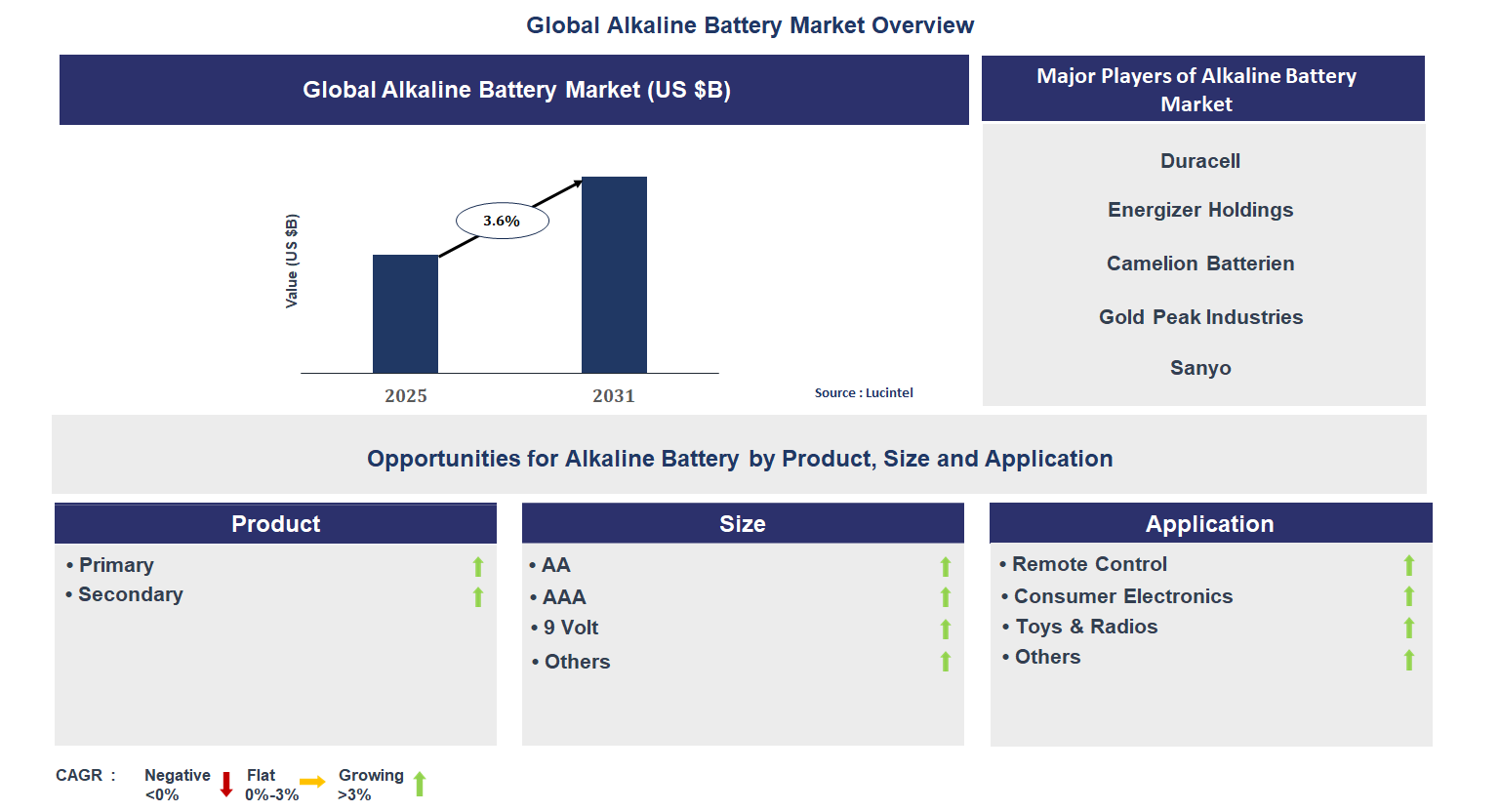
The future of the global alkaline battery market looks promising with opportunities in the remote control, consumer electronics, toy & radio markets. The global alkaline battery market is expected to grow with a CAGR of 3.6% from 2025 to 2031. The major drivers for this market are the increasing demand for household electronic devices, the rising use in portable medical equipment, and the growing adoption in toys & remote controls.• Lucintel forecasts that, within the product category, primary is expected to witness higher growth over the forecast period.
• Within the application category, consumer electronics is expected to witness the highest growth.
• In terms of region, APAC is expected to witness the highest growth over the forecast period. Gain valuable insights for your business decisions with our comprehensive 150+ page report. Sample figures with some insights are shown below.
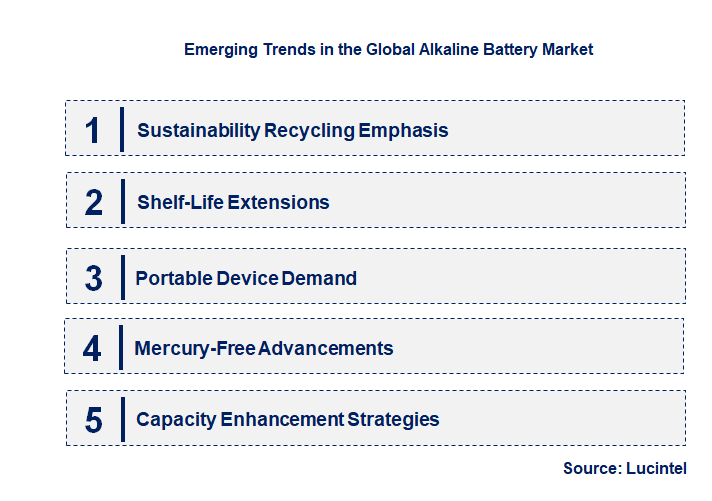
Emerging Trends in the Alkaline Battery Market
Trends in the alkaline battery market reflect a balance between tradition and eco-innovation amid device proliferation. Focus shifts to recyclability, capacity tweaks, and niche durability against lithium alternatives. These adaptations sustain relevance in non-rechargeable niches. They promote accessible, waste-minimizing power solutions.• Sustainability Recycling Emphasis: Advanced recovery processes reclaim zinc and manganese from spent cells, curbing mining demands. Mandates accelerate closed-loop systems. Impact reduces ecological footprints, complies with regs, and appeals to green consumers, fostering circular economies in manufacturing.
• Shelf-Life Extensions: Electrolyte optimizations achieve years of standby without leakage, suiting emergency kits. Packaging innovations seal against humidity. This boosts reliability in storage-heavy apps, cuts replacements, and elevates trust in remote or infrequent uses.
• Portable Device Demand: Surge in gadgets like remotes and sensors drives compact, high-output variants. Miniaturization fits wearables. The trend expands market volumes, supports IoT growth, and maintains alkalines edge in low-drain, cost-sensitive electronics.
• Mercury-Free Advancements: Complete elimination of toxins enhances safety for toys and disposables. Material substitutions maintain performance. Impact eases disposal regs, widens child-safe applications, and positions brands as ethical leaders in family products.
• Capacity Enhancement Strategies: Cathode refinements yield 20% more power in standard sizes for flashlights. Alloy tweaks improve discharge rates. This revitalizes industrial tools, prolongs runtime in backups, and counters obsolescence perceptions. These trends reshape the alkaline battery market by blending legacy strengths with modern imperatives. They expand eco-viable niches, from households to industrials. Overall, adaptations ensure longevity amid transitions. This secures alkalines foundational role in everyday energy.
Recent Development in the Alkaline Battery Market
The alkaline battery developments highlight eco-refinements and production boosts for consumer resilience. From recycling pacts to formula upgrades, they tackle waste and performance gaps. These milestones integrate policy with innovation for sustained viability. They signal a sector adapting to green demands.• Mercury-Free Line Expansion: Global firms launch toxin-free series for toys, achieving full compliance without capacity loss. Scalable formulas suit mass runs. This broadens safe usages, accelerates approvals, and models ethical manufacturing standards.
• Recycling Network Launch: U.S.-EU partnerships build collection hubs reclaiming 90% materials from household waste. Tech extracts metals efficiently. Impact slashes landfill burdens, recovers resources, and incentivizes consumer returns through rebates.
• High-Capacity AA Variant Debut: Asian producers unveil denser cathodes for extended runtime in remotes, rivaling rechargeables in bursts. Testing validates leakage resistance. The development refreshes shelf staples, boosts sales in gadgets, and inspires hybrid integrations.
• Shelf-Life Breakthrough Achievement: Japanese R&D hits decade-long stability via polymer seals, targeting emergency stockpiles. Durability suits harsh storage. This fortifies backup reliability, appeals to preppers, and elevates alkaline in crisis preparedness.
• Export Production Surge: Chinese facilities ramp output for developing markets, focusing on affordable packs for solar aids. Automation cuts costs. Consequences flood supply chains, democratize access, and embed alkaline in off-grid solutions. These developments impact the alkaline battery market by fortifying sustainability and utility. They ignite recoveries, align with consumer shifts, and diversify roles. Collectively, they overcome environmental drags, spurring vitality. This propels a greener, more integrated energy landscape.
Strategic Growth Opportunities in the Alkaline Battery Market
Growth opportunities in the alkaline battery market exploit reliability in underserved segments. From toys to backups, they leverage low-cost disposability for penetration. These targets merge tradition with niche demands, yielding revenues. They sustain volumes in a rechargeable-dominated era.• Remote Control Powering: Standard AA sizes energize TV and device controllers with leak-proof longevity. Bulk packs suit households. Impact sustains everyday convenience, drives multipacks sales, and embeds in smart home ecosystems.
• Toy and Game Applications: Safe, high-drain cells fuel interactive playsets without recharge hassles. Color-coded variants aid kids. This surges seasonal demands, boosts parental trust, and expands in educational tech.
• Flashlight Emergency Use: Robust formats deliver steady lumens for outages, with water-resistant casings. Multi-packs target preps. Growth enhances safety stocks, opens disaster kit markets, and supports rural reliability.
• Hearing Aid Integration: Compact, stable power extends daily wear without bulk, minimizing swaps. Biocompatibility ensures comfort. The opportunity improves accessibility, cuts healthcare interruptions, and aligns with aging populations.
• Industrial Sensor Deployment: Durable batteries monitor remote equipment with low self-discharge for months. Vibration-proof designs fit harsh sites. This optimizes maintenance, reduces downtime, and penetrates IoT industrials. These opportunities impact the alkaline battery market by revitalizing application diversity. They amplify disposables niche, foster innovations, and match lifestyle evolutions. Ultimately, this cultivates a balanced portfolio. It advances practical, inclusive power access worldwide.
Alkaline Battery Market Driver and Challenges
The alkaline battery market faces technological, economic, and regulatory influences shaping its trajectory. Drivers like portable surges propel volumes, while eco-concerns test adaptations. These dynamics demand balanced strategies for endurance. They define a stable yet evolving competitive space. The factors responsible for driving the alkaline battery market include: 1. Portable Device Proliferation: Gadget boom requires affordable, reliable primaries for remotes and sensors. Urbanization amplifies needs. Implications include steady demand, volume efficiencies, and entrenched roles in low-power consumer tech. 2. Cost Affordability Edge: Low production expenses versus rechargeables suit budget markets and bulk buys. Scale yields margins. This democratizes access, penetrates emerging economies, and sustains household staples. 3. Shelf-Life Reliability: Extended standby without degradation appeals to infrequent users like backups. Testing validates claims. The driver builds loyalty, reduces waste perceptions, and positions alkaline as prep essentials. 4. Recycling Mandate Compliance: Policies favoring recoverable designs unlock subsidies and green branding. Recovery tech matures. Consequences ease disposal, attract eco-buyers, and integrate into circular supply models. 5. Emerging Market Expansion: Population growth in Asia drives electronics adoption, favoring simple disposables. Local assembly rises. This fuels exports, diversifies revenues, and bridges urban-rural power gaps. Challenges in the alkaline battery market are: 1. Environmental Waste Concerns: Non-rechargeable nature swells landfills, drawing scrutiny on zinc disposal. Bans loom in regions. This pressures innovations, hikes compliance costs, and risks market contractions without green shifts. 2. Rechargeable Competition Intensity: Lithium primaries erode shares in high-drain apps with reusability. Price gaps narrow. Implications confine alkaline to niches, demand differentiation, and spur hybrid explorations. 3. Raw Material Price Volatility: Manganese and zinc fluctuations disrupt margins amid supply strains. Geopolitics adds risks. The challenge tempers profitability, slows expansions, and necessitates hedging for stability. Drivers such as portables and costs anchor alkaline batteries in core uses. Challenges like waste urge eco-resolutions to preserve grounds. Net, resilient progression emerges via ingenuity. This carves a niche for enduring, adaptable energy contributions.List of Alkaline Battery Companies
Companies in the market compete on the basis of product quality offered. Major players in this market focus on expanding their manufacturing facilities, R&D investments, infrastructural development, and leverage integration opportunities across the value chain. With these strategies alkaline battery companies cater increasing demand, ensure competitive effectiveness, develop innovative products & technologies, reduce production costs, and expand their customer base. Some of the alkaline battery companies profiled in this report include-• Duracell
• Energizer Holdings
• Camelion Batterien
• Gold Peak Industries
• Sanyo
• Sony
• Maxell Holdings
• Toshiba International
• Zhejiang Mustang Battery
• Panasonic Corporation
Alkaline Battery Market by Segment
The study includes a forecast for the global alkaline battery market by product, size, application, and region.Alkaline Battery Market by Product [Value from 2019 to 2031]:
• Primary
• Secondary
Alkaline Battery Market by Size [Value from 2019 to 2031]:
• AA
• AAA
• 9 Volt
• Others
Alkaline Battery Market by Application [Value from 2019 to 2031]:
• Remote Control
• Consumer Electronics
• Toys & Radios
• Others
Alkaline Battery Market by Region [Value from 2019 to 2031]:
• North America
• Europe
• Asia Pacific
• The Rest of the World
Country Wise Outlook for the Alkaline Battery Market
The alkaline battery market sustains steady growth amid rising portable device usage and sustainability pushes. Innovations target eco-friendly designs and extended lifespans to counter rechargeable rivals. Key nations advance via manufacturing, recycling, and consumer-focused R&D. These efforts bolster affordability and reliability in global supply chains.• United States: Major players expand mercury-free production lines for household essentials, emphasizing recycling programs. Federal incentives promote sustainable sourcing, reducing landfill waste. This strengthens consumer trust, cuts environmental impacts, and supports domestic jobs in electronics packaging.
• China: Vast manufacturing hubs scale output for exports, integrating advanced electrolytes for higher capacity. State policies drive low-cost variants for gadgets and toys. This dominates global shares, lowers prices worldwide, and fuels electronics assembly in emerging sectors.
• Germany: European regulations spur recyclable alkaline designs for industrial tools and remotes. Collaborations enhance shelf-life testing for automotive backups. These align with green standards, improve material recovery, and enhance competitiveness in precision consumer goods.
• India: Local assembly grows for affordable AA/AAA sizes, targeting rural electrification and toys. Incentives boost indigenous production amid population surges. This addresses access gaps, spurs economic activity, and integrates into off-grid household applications.
• Japan: Precision refinements yield ultra-long shelf-life batteries for medical and hearing aids. Exports focus on compact, high-drain formats. This maintains innovation leadership, extends device usability, and supports aging demographics with reliable power sources.

Features of the Global Alkaline Battery Market
Market Size Estimates: Alkaline battery market size estimation in terms of value ($B). Trend and Forecast Analysis: Market trends (2019 to 2024) and forecast (2025 to 2031) by various segments and regions. Segmentation Analysis: Alkaline battery market size by product, size, application, and region in terms of value ($B). Regional Analysis: Alkaline battery market breakdown by North America, Europe, Asia Pacific, and Rest of the World. Growth Opportunities: Analysis of growth opportunities in different products, sizes, applications, and regions for the alkaline battery market. Strategic Analysis: This includes M&A, new product development, and competitive landscape of the alkaline battery market. Analysis of competitive intensity of the industry based on Porter’s Five Forces model.
FAQ
Q1. What is the growth forecast for alkaline battery market? Answer: The global alkaline battery market is expected to grow with a CAGR of 3.6% from 2025 to 2031. Q2. What are the major drivers influencing the growth of the alkaline battery market? Answer: The major drivers for this market are the increasing demand for household electronic devices, the rising use in portable medical equipment, and the growing adoption in toys & remote controls. Q3. What are the major segments for alkaline battery market? Answer: The future of the alkaline battery market looks promising with opportunities in the remote control, consumer electronics, toy & radio markets. Q4. Who are the key alkaline battery market companies? Answer: Some of the key alkaline battery companies are as follows:• Duracell
• Energizer Holdings
• Camelion Batterien
• Gold Peak Industries
• Sanyo
• Sony
• Maxell Holdings
• Toshiba International
• Zhejiang Mustang Battery
• Panasonic Corporation Q5. Which alkaline battery market segment will be the largest in future? Answer: Lucintel forecasts that, within the product category, primary is expected to witness higher growth over the forecast period. Q6. In alkaline battery market, which region is expected to be the largest in next 5 years? Answer: In terms of region, APAC is expected to witness the highest growth over the forecast period. Q7. Do we receive customization in this report? Answer: Yes, Lucintel provides 10% customization without any additional cost.
Table of Contents
List of Figures
List of Tables
Methodology
- In-depth interviews of the major players in this market
- Detailed secondary research from competitors’ financial statements and published data
- Extensive searches of published works, market, and database information pertaining to industry news, company press releases, and customer intentions
- A compilation of the experiences, judgments, and insights of Lucintel’s professionals, who have analyzed and tracked this market over the years.


Buy Now
Choose a license that fits your team. Instant PDF delivery.
Prices exclude taxes. Instant delivery. Custom licensing available on request.
Key Questions
- • What are some of the most promising, high-growth opportunities for the alkaline battery market by product (primary and secondary), size (AA, AAA, 9 volt, and others), application (remote control, consumer electronics, toys & radios, and others), and region (North America, Europe, Asia Pacific, and the Rest of the World)?
- • Which segments will grow at a faster pace and why?
- • Which region will grow at a faster pace and why?
- • What are the key factors affecting market dynamics? What are the key challenges and business risks in this market?
- • What are the business risks and competitive threats in this market?
- • What are the emerging trends in this market and the reasons behind them?
- • What are some of the changing demands of customers in the market?
- • What are the new developments in the market? Which companies are leading these developments?
- • Who are the major players in this market? What strategic initiatives are key players pursuing for business growth?
- • What are some of the competing products in this market and how big of a threat do they pose for loss of market share by material or product substitution?
- • What M&A activity has occurred in the last 5 years and what has its impact been on the industry? For any questions related to Alkaline Battery Market, Alkaline Battery Market Size, Alkaline Battery Market Growth, Alkaline Battery Market Analysis, Alkaline Battery Market Report, Alkaline Battery Market Share, Alkaline Battery Market Trends, Alkaline Battery Market Forecast, Alkaline Battery Companies, write Lucintel analyst at email: helpdesk@lucintel.com. We will be glad to get back to you soon.


