Alcoholic Beverage Market Trends and Forecast
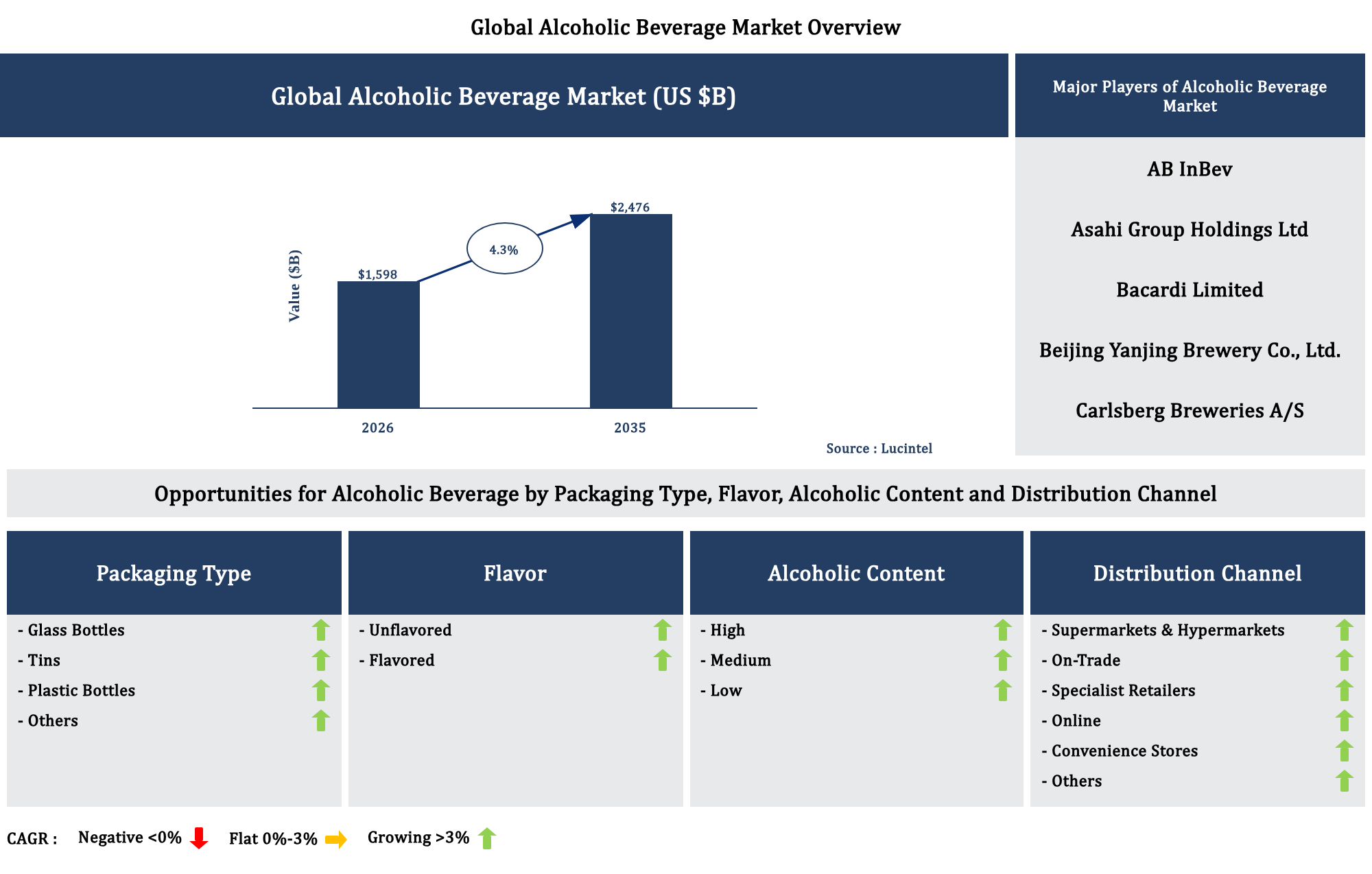
The future of the global alcoholic beverage market looks promising with opportunities in the glass bottle, tin, and plastic bottle markets. The global alcoholic beverage market is expected to reach an estimated $4,596 billion by 2035 with a CAGR of 5.9% from 2026 to 2035. The major drivers for this market are the rising popularity of craft beer & artisanal spirits, the growing alcohol consumption trends, and the increasing consumer preference for low-alcohol & organic beverages.
• Lucintel forecasts that, within the product type category, beer is expected to witness the highest growth over the forecast period.
• Within the packaging type category, glass bottle is expected to witness the highest growth.
• In terms of region, APAC is expected to witness the highest growth over the forecast period.
Gain valuable insights for your business decisions with our comprehensive 150+ page report. Sample figures with some insights are shown below.
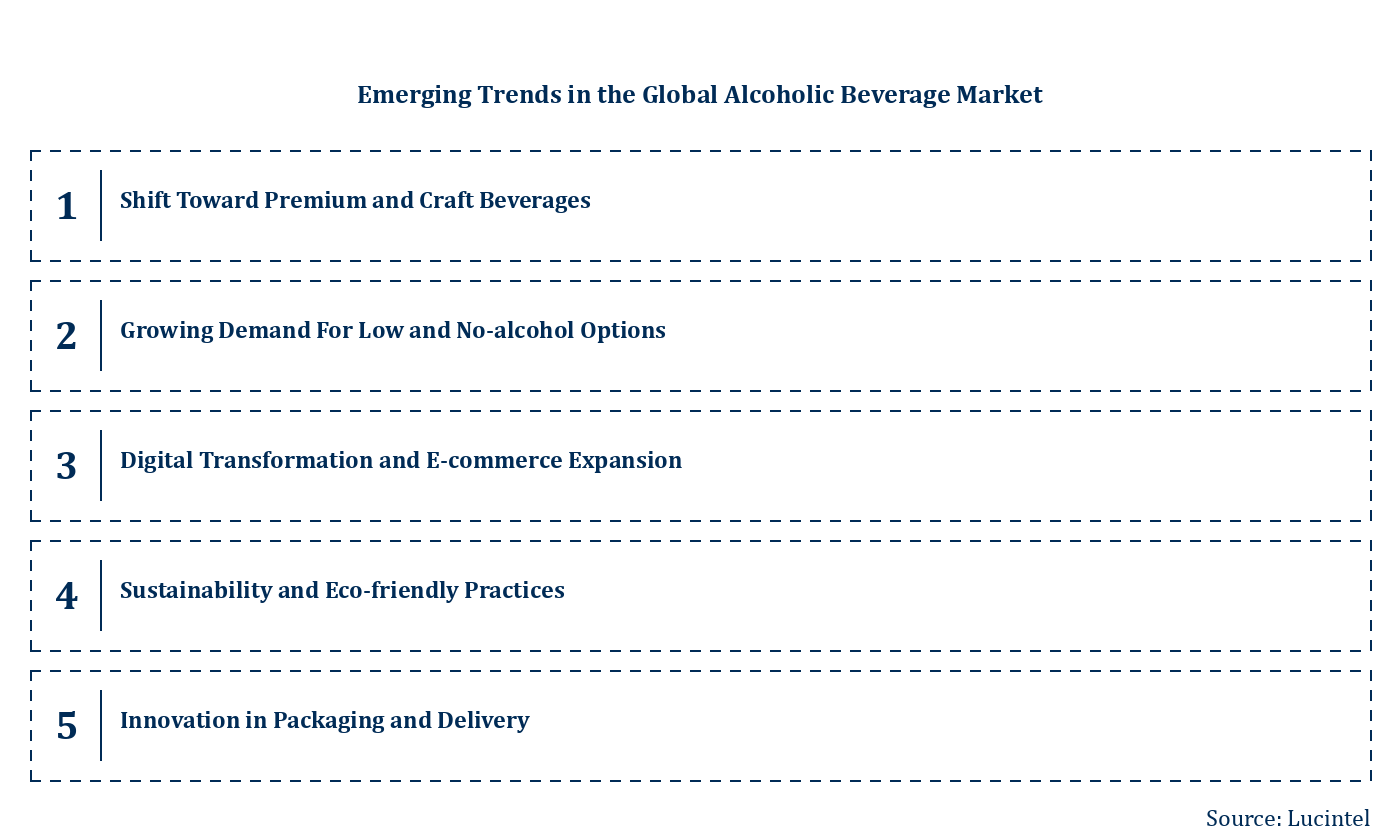
Emerging Trends in the Alcoholic Beverage Market
The alcoholic beverage market is experiencing rapid transformation driven by changing consumer preferences, technological advancements, and evolving regulatory landscapes. As consumers seek more personalized, health-conscious, and innovative options, companies are adapting their strategies to stay competitive. Sustainability and digital engagement are also becoming central to market growth. These trends are not only reshaping product offerings but also redefining marketing, distribution, and production processes. Understanding these key developments is essential for stakeholders aiming to capitalize on emerging opportunities and navigate potential challenges in this dynamic industry.
• Rise of Craft and Artisanal Beverages: Consumers increasingly favor unique, locally-produced, and handcrafted drinks. This trend boosts small-scale breweries and distilleries, encouraging innovation and diversity in product portfolios. It fosters a sense of authenticity and premium quality, appealing to a growing demographic seeking personalized experiences. The market sees a shift from mass-produced brands to niche, artisanal options, which often command higher price points and foster brand loyalty. This trend drives competition and diversification, encouraging traditional producers to innovate and collaborate with local artisans.
• Health-Conscious and Low-Alcohol Options: There is a significant shift towards healthier lifestyles, prompting demand for low-alcohol, alcohol-free, and functional beverages. Consumers are seeking products that offer enjoyment without compromising health, leading to the growth of non-alcoholic beers, spirits, and wellness-oriented drinks. This trend expands market reach to health-conscious demographics and those reducing alcohol intake. Companies are investing in developing flavorful, sophisticated alternatives that mimic traditional alcoholic beverages, thus broadening consumer choices and fostering inclusivity. It also encourages innovation in ingredients and production techniques.
• Digital Engagement and E-Commerce Growth: The rise of digital platforms and e-commerce channels is transforming how consumers discover, purchase, and share alcoholic beverages. Virtual tastings, social media marketing, and online sales have become vital, especially post-pandemic. This trend enables brands to reach wider audiences, gather consumer data, and personalize marketing efforts. It also facilitates direct-to-consumer sales, reducing reliance on traditional retail outlets. Digital engagement fosters community building and brand loyalty, while e-commerce provides convenience and access to niche products. This shift is reshaping distribution strategies and marketing approaches across the industry.
• Sustainability and Eco-Friendly Practices: Consumers and regulators are increasingly emphasizing sustainability in production, packaging, and sourcing. Brands adopting eco-friendly practices—such as biodegradable bottles, sustainable sourcing, and energy-efficient production—gain a competitive advantage. This trend responds to environmental concerns and enhances brand reputation. It encourages innovation in packaging, waste reduction, and supply chain management. Sustainability initiatives also appeal to younger, environmentally conscious consumers, influencing purchasing decisions. As a result, the market is witnessing a shift towards greener practices that balance profitability with environmental responsibility.
• Innovation in Packaging and Branding: Creative packaging designs and branding strategies are becoming crucial for differentiation in a crowded market. Consumers are attracted to visually appealing, functional, and sustainable packaging. Innovative formats like cans, mini bottles, and reusable containers enhance convenience and sustainability. Branding efforts focus on storytelling, authenticity, and social responsibility, resonating with modern consumers. This trend boosts product visibility and consumer engagement, encouraging experimentation and premium positioning. It also allows brands to communicate their values effectively, fostering emotional connections and loyalty in a competitive landscape.
These emerging trends are fundamentally reshaping the alcoholic beverage market by fostering innovation, emphasizing health and sustainability, and leveraging digital platforms. They are driving diversification, enhancing consumer engagement, and promoting responsible practices, ultimately creating a more dynamic, inclusive, and sustainable industry landscape.
Recent Development in the Alcoholic Beverage Market
The alcoholic beverage market is experiencing rapid transformation driven by technological advancements, changing consumer preferences, and regulatory shifts. Innovations in product development, marketing strategies, and distribution channels are creating new growth opportunities. Additionally, increasing health consciousness and premiumization are influencing product offerings. These developments are reshaping the competitive landscape, encouraging market players to adapt swiftly. As a result, the industry is poised for significant expansion, attracting investments and fostering innovation to meet evolving consumer demands.
• Growth in Craft and Premium Spirits: The craft and premium spirits segment is expanding rapidly as consumers seek unique, high-quality products. This trend is driven by a desire for authenticity, artisanal craftsmanship, and exclusivity. Market players are investing in small-batch production and innovative flavors, which enhance brand differentiation. The growth boosts revenue streams and encourages new entrants, fostering competition and innovation. Overall, this segments expansion is elevating the market’s quality standards and consumer engagement.
• Digital Marketing and E-commerce Expansion: Digital platforms and e-commerce channels are revolutionizing alcohol marketing and sales. Brands leverage social media, influencer collaborations, and targeted advertising to reach niche audiences effectively. Online sales channels provide convenience and wider accessibility, especially during pandemic-related restrictions. This shift enhances consumer engagement, broadens market reach, and reduces reliance on traditional retail outlets. The integration of digital strategies is crucial for market growth, enabling brands to adapt to modern purchasing behaviors and expand their customer base.
• Regulatory Changes and Market Accessibility: Evolving regulations around alcohol advertising, sales, and distribution are impacting market dynamics. Some regions are relaxing restrictions, allowing for broader market access and increased sales opportunities. Conversely, stricter regulations in certain areas pose challenges but also create opportunities for compliance-driven innovation. These regulatory shifts influence pricing, marketing strategies, and distribution channels, ultimately shaping the competitive landscape. Navigating these changes is essential for market players aiming to capitalize on emerging opportunities.
• Focus on Health-Conscious and Low-Alcohol Products: Rising health awareness is prompting demand for low-alcohol, non-alcoholic, and functional beverages. Consumers seek healthier alternatives without sacrificing taste or social experience. Companies are developing innovative products, including zero-proof spirits and fortified drinks, to cater to this trend. This shift opens new market segments and diversifies product portfolios. The focus on health-conscious options is driving industry innovation and expanding the consumer base, contributing to overall market growth and diversification.
• Sustainability and Eco-Friendly Packaging: Sustainability initiatives are gaining prominence as consumers demand environmentally responsible products. Brands are adopting eco-friendly packaging, reducing carbon footprints, and sourcing sustainable ingredients. These efforts enhance brand reputation and appeal to environmentally conscious consumers. The emphasis on sustainability influences supply chain practices and product development, fostering innovation. This trend not only aligns with global environmental goals but also provides a competitive edge, encouraging market players to prioritize eco-friendly practices for long-term growth.
These developments are significantly impacting the alcoholic beverage market by fostering innovation, expanding consumer segments, and enhancing competitiveness. The industry is becoming more dynamic, with a focus on quality, digital engagement, regulatory navigation, health trends, and sustainability. These factors collectively drive growth, attract investments, and shape the future landscape of the market.
Strategic Growth Opportunities in the Alcoholic Beverage Market
The alcoholic beverage market is experiencing dynamic growth driven by changing consumer preferences, technological advancements, and expanding global markets. Innovation in product offerings, premiumization, and health-conscious options is shaping the landscape. Emerging markets and e-commerce channels further contribute to growth opportunities. Companies that adapt to these trends and diversify their portfolios can capitalize on increasing demand across various regions and demographics, ensuring sustained expansion and competitive advantage in this evolving industry.
• Expansion into Emerging Markets Offers Significant Growth Potential: Emerging economies present untapped consumer bases with rising disposable incomes and evolving drinking habits. Companies investing in local production, distribution, and marketing can establish a strong foothold. This expansion not only increases sales volume but also enhances brand recognition in new regions, driving long-term growth. Tailoring products to local tastes and preferences is crucial for success in these diverse markets.
• Premiumization of Products Drives Higher Profit Margins: Consumers are increasingly seeking high-quality, premium alcoholic beverages, willing to pay more for exclusivity and craftsmanship. This trend encourages brands to develop luxury offerings, limited editions, and craft spirits. Premiumization enhances brand image and profitability, attracting affluent consumers and connoisseurs. Companies focusing on quality, storytelling, and unique ingredients can differentiate themselves and capitalize on this lucrative segment.
• Innovation in Product Formats and Flavors Attracts New Consumers: Introducing novel formats such as ready-to-drink cocktails, low-alcohol options, and unique flavor profiles appeals to diverse consumer segments. Younger demographics and health-conscious drinkers seek convenience and variety, prompting brands to innovate continuously. Creative packaging and marketing strategies further boost appeal. This diversification helps expand the customer base and adapt to evolving consumption patterns, ensuring sustained market relevance.
• E-commerce and Digital Marketing Expand Distribution Channels: The rise of online sales platforms and social media marketing offers new avenues for reaching consumers directly. E-commerce enables brands to access wider markets, especially during restrictions like the COVID-19 pandemic. Digital campaigns enhance brand engagement and loyalty, while data analytics optimize targeting. Leveraging these channels allows companies to reduce distribution costs, increase sales, and gather consumer insights for tailored offerings.
• Focus on Health-Conscious and Low-Alcohol Options Meets Changing Consumer Demands: Growing awareness of health and wellness influences drinking habits, leading to increased demand for low- and no-alcohol beverages. Brands developing functional drinks, organic spirits, and reduced-calorie options cater to health-conscious consumers. This trend opens new market segments and enhances brand reputation. Investing in product development and marketing of healthier alternatives positions companies favorably in a competitive landscape.
These growth opportunities collectively shape a vibrant and expanding alcoholic beverage market. By strategically leveraging emerging markets, premiumization, innovation, digital channels, and health trends, companies can enhance their market share and sustain long-term growth. Embracing these trends will enable brands to meet evolving consumer preferences and stay ahead in a competitive industry landscape.
Alcoholic Beverage Market Driver and Challenges
The alcoholic beverage market is influenced by a complex interplay of technological advancements, economic conditions, and regulatory frameworks. Innovations in production and distribution, shifting consumer preferences, and evolving legal standards significantly shape market dynamics. Economic factors such as disposable income levels and global trade policies also impact growth prospects. Additionally, regulatory challenges related to health concerns, taxation, and advertising restrictions influence market strategies and product offerings. Understanding these drivers and challenges is essential for stakeholders aiming to navigate the evolving landscape effectively and capitalize on emerging opportunities while mitigating risks.
The factors responsible for driving the alcoholic beverage market include:
• Technological Innovations: The integration of advanced brewing, distillation, and packaging technologies enhances product quality, efficiency, and safety. Automation and digitalization streamline production processes, reduce costs, and enable customization to meet consumer preferences. Innovations like craft brewing and premiumization have created new market segments, attracting a broader consumer base. Additionally, e-commerce platforms facilitate direct-to-consumer sales, expanding reach and convenience. These technological advancements foster product differentiation and operational efficiency, fueling market growth and enabling brands to stay competitive in a rapidly evolving industry.
• Changing Consumer Preferences: Modern consumers are increasingly seeking premium, craft, and artisanal alcoholic beverages, driven by a desire for unique flavors and authentic experiences. The rising popularity of low-alcohol, organic, and health-conscious options reflects a shift towards moderation and wellness. Millennials and Gen Z consumers prioritize brand storytelling, sustainability, and social responsibility, influencing product development and marketing strategies. This evolving demand encourages innovation and diversification within the market, opening avenues for new product launches and niche segments, ultimately expanding the consumer base and boosting sales.
• Economic Growth and Disposable Income: Economic stability and growth directly impact consumer spending on alcoholic beverages. Higher disposable incomes enable consumers to indulge in premium and imported products, increasing overall market value. Conversely, economic downturns can lead to reduced consumption and a shift towards more affordable options. Global economic trends, including inflation rates and employment levels, influence purchasing power and consumption patterns. As economies expand, the market experiences increased demand, especially for luxury and premium segments, while economic contractions pose challenges to growth and profitability.
• Regulatory Environment and Legal Frameworks: Stringent regulations related to advertising, labeling, taxation, and distribution significantly influence market operations. Governments impose taxes to curb excessive consumption and generate revenue, which can increase retail prices and affect demand. Advertising restrictions and licensing requirements limit promotional activities, impacting brand visibility. Compliance with health and safety standards is essential but can entail high costs. Navigating diverse regulatory landscapes across regions requires strategic planning, and non-compliance can result in penalties or market restrictions. These regulatory factors shape product offerings, marketing strategies, and overall market accessibility.
• Global Trade Dynamics: International trade policies, tariffs, and import-export regulations influence the availability and pricing of alcoholic beverages across markets. Trade agreements can facilitate market entry and expansion, while trade barriers may restrict access to certain regions. Fluctuations in currency exchange rates impact profitability and pricing strategies. Additionally, geopolitical tensions and trade disputes can disrupt supply chains and market stability. Companies must adapt to changing trade environments to maintain competitiveness and ensure a consistent supply. These global trade factors are crucial for market players aiming to expand their footprint and optimize their supply chain operations.
The challenges in the alcoholic beverage market are:
• Regulatory and Taxation Challenges: The industry faces increasing regulatory scrutiny aimed at reducing alcohol consumption and promoting public health. Stringent advertising restrictions, higher taxes, and licensing hurdles can limit marketing efforts and increase operational costs. These regulations vary across regions, complicating compliance and market entry strategies. Additionally, rising excise taxes on alcoholic beverages can lead to higher retail prices, potentially dampening demand. Navigating this complex regulatory landscape requires significant legal expertise and strategic planning, and failure to comply can result in fines, bans, or reputational damage, hindering growth prospects.
• Health and Social Concerns: Growing awareness of alcohol-related health issues and social problems poses a significant challenge. Governments and health organizations advocate for reduced consumption through campaigns and regulations, impacting sales volumes. The stigma associated with excessive drinking and the push for healthier lifestyles influence consumer behavior, leading to declining demand for traditional alcoholic beverages. Companies must innovate to develop healthier options or risk losing market share. Addressing these concerns requires balancing product offerings with social responsibility, which can involve increased costs and strategic shifts to align with public health initiatives.
• Market Saturation and Intense Competition: Many regions exhibit high levels of market saturation, with numerous established brands vying for consumer attention. The proliferation of craft and premium brands intensifies competition, making differentiation difficult. Price wars and promotional battles can erode profit margins, while consumer loyalty shifts require continuous innovation and marketing efforts. Additionally, emerging markets may lack brand recognition, posing challenges for new entrants. Overcoming saturation and competition necessitates significant investment in branding, product innovation, and distribution channels, which can strain resources and impact profitability, especially for smaller players.
The alcoholic beverage market is shaped by technological progress, shifting consumer preferences, economic factors, and regulatory frameworks, which collectively drive growth and innovation. However, challenges such as regulatory hurdles, health concerns, and intense competition pose risks that require strategic navigation. The interplay of these drivers and challenges determines the markets trajectory, demanding agility and foresight from industry participants. Successful adaptation to these dynamics will be crucial for sustained growth and competitive advantage in this evolving landscape.
List of Alcoholic Beverage Companies
Companies in the market compete on the basis of product quality offered. Major players in this market focus on expanding their manufacturing facilities, R&D investments, infrastructural development, and leverage integration opportunities across the value chain. With these strategies alcoholic beverage companies cater increasing demand, ensure competitive effectiveness, develop innovative products & technologies, reduce production costs, and expand their customer base. Some of the alcoholic beverage companies profiled in this report include-
• Diageo Plc
• Heineken International B.V.
• Anheuser-Busch InBev
• Pernod Ricard SA
• Kweichow Moutai Co., Ltd.
Alcoholic Beverage Market by Segment
The study includes a forecast for the global alcoholic beverage market by product type, packaging type, distribution channel, and region.
Alcoholic Beverage Market by Product Type [Value from 2019 to 2035]:
• Beer
• Spirits
• Wine
• Others
Alcoholic Beverage Market by Packaging Type [Value from 2019 to 2035]:
• Glass Bottles
• Tins
• Plastic Bottles
• Others
Alcoholic Beverage Market by Distribution Channel [Value from 2019 to 2035]:
• Open Markets
• Supermarkets/Hypermarkets
• Hotels/Restaurants/Bars
• Specialty Stores
• Others
Alcoholic Beverage Market by Region [Value from 2019 to 2035]:
• North America
• Europe
• Asia Pacific
• The Rest of the World
Country Wise Outlook for the Alcoholic Beverage Market
The alcoholic beverage market has experienced significant shifts globally, driven by changing consumer preferences, technological innovations, and regulatory adjustments. Countries are adapting to new health trends, premiumization, and sustainability concerns, which influence production, marketing, and consumption patterns. The United States, China, Germany, India, and Japan are key players, each exhibiting unique developments that shape the global landscape. These changes reflect broader economic, cultural, and technological trends, impacting market growth, product innovation, and distribution channels. Understanding these regional dynamics is essential for stakeholders aiming to capitalize on emerging opportunities and navigate challenges effectively.
• United States: The US market has seen a surge in craft and premium spirits, with consumers favoring artisanal products and local brands. There is increased interest in low-alcohol and non-alcoholic beverages, driven by health-conscious trends. E-commerce sales have grown substantially, especially during the pandemic, transforming distribution channels. Regulatory changes favoring direct-to-consumer sales and innovative marketing strategies are also shaping the landscape. Additionally, sustainability initiatives, such as eco-friendly packaging and responsible sourcing, are gaining importance among producers and consumers alike.
• China: China’s alcoholic beverage market continues to expand rapidly, with a strong focus on baijiu and premium spirits. The rise of middle-class consumers and urbanization fuels demand for high-quality and imported products. E-commerce platforms and social media marketing are crucial for brand penetration, especially among younger consumers. The government’s efforts to regulate alcohol advertising and promote responsible drinking are influencing marketing strategies. Craft beer and wine segments are also growing, reflecting shifting tastes and increasing exposure to Western drinking habits. Local brands are increasingly competing with international players, emphasizing innovation and cultural relevance.
• Germany: Germany remains a leader in beer production, with a strong tradition of brewing excellence and a focus on craft and specialty beers. The market is witnessing a trend toward organic and sustainable brewing practices, aligning with consumer preferences for health and environmental consciousness. Premiumization continues as consumers seek unique flavors and high-quality ingredients. The craft beer segment is expanding, supported by a vibrant brewing community and festivals. Additionally, there is a growing interest in low-alcohol and non-alcoholic beers, catering to health trends. Export markets are also vital, with German beers enjoying popularity worldwide.
• India: The Indian alcoholic beverage market is experiencing rapid growth, driven by urbanization, rising disposable incomes, and changing social norms. Whisky remains dominant, but there is increasing demand for wine, beer, and spirits. The craft beer segment is emerging, appealing to younger, urban consumers seeking variety and quality. Regulatory hurdles, such as state-level restrictions, pose challenges but are gradually easing. The market is also witnessing innovation in packaging and marketing, including digital campaigns. Foreign brands are expanding their presence, while local producers focus on affordability and regional flavors to capture market share.
• Japan: Japan’s market is characterized by a strong tradition of sake and shochu, alongside a growing interest in Western spirits and craft cocktails. The premium segment is expanding, with consumers willing to pay more for high-quality and artisanal products. Health-conscious trends influence demand for low-alcohol and functional beverages. The craft spirits movement is gaining momentum, supported by local distilleries experimenting with unique ingredients and flavors. E-commerce and direct sales channels are increasingly important, especially during the pandemic. Sustainability practices, such as eco-friendly packaging and responsible sourcing, are also becoming more prominent in Japanese industry strategies.
Features of the Global Alcoholic Beverage Market
Market Size Estimates: Alcoholic beverage market size estimation in terms of value ($B).
Trend and Forecast Analysis: Market trends (2019 to 2025) and forecast (2026 to 2035) by various segments and regions.
Segmentation Analysis: Alcoholic beverage market size by product type, packaging type, distribution channel, and region in terms of value ($B).
Regional Analysis: Alcoholic beverage market breakdown by North America, Europe, Asia Pacific, and Rest of the World.
Growth Opportunities: Analysis of growth opportunities in different product types, packaging types, distribution channels, and regions for the alcoholic beverage market.
Strategic Analysis: This includes M&A, new product development, and competitive landscape of the alcoholic beverage market.
Analysis of competitive intensity of the industry based on Porter’s Five Forces model.
FAQ
Q1. What is the market size and growth forecast for alcoholic beverage market?
Answer: The global alcoholic beverage market is expected to reach an estimated $4,596 billion by 2035 and grow with a CAGR of 5.9% from 2026 to 2035.
Q2. What are the major drivers influencing the growth of the alcoholic beverage market?
Answer: The major drivers for this market are the rising popularity of craft beer & artisanal spirits, the growing alcohol consumption trends, and the increasing consumer preference for low-alcohol & organic beverages.
Q3. What are the major segments for alcoholic beverage market?
Answer: The future of the alcoholic beverage market looks promising with opportunities in the glass bottle, tin, and plastic bottle markets.
Q4. Who are the key alcoholic beverage market companies?
Answer: Some of the key alcoholic beverage companies are as follows:
• Diageo Plc
• Heineken International B.V.
• Anheuser-Busch InBev
• Pernod Ricard SA
• Kweichow Moutai Co., Ltd.
Q5. Which alcoholic beverage market segment will be the largest in future?
Answer: Lucintel forecasts that, within the product type category, beer is expected to witness the highest growth over the forecast period.
Q6. In alcoholic beverage market, which region is expected to be the largest in next 5 years?
Answer: In terms of region, APAC is expected to witness the highest growth over the forecast period.
Q7. Do we receive customization in this report?
Answer: Yes, Lucintel provides 10% customization without any additional cost.
This report answers following 11 key questions:
Q.1. What are some of the most promising, high-growth opportunities for the alcoholic beverage market by product type (beer, spirits, wine, and others), packaging type (glass bottles, tins, plastic bottles, and others), distribution channel (open markets, supermarkets/hypermarkets, hotels/restaurants/bars, specialty stores, and others), and region (North America, Europe, Asia Pacific, and the Rest of the World)?
Q.2. Which segments will grow at a faster pace and why?
Q.3. Which region will grow at a faster pace and why?
Q.4. What are the key factors affecting market dynamics? What are the key challenges and business risks in this market?
Q.5. What are the business risks and competitive threats in this market?
Q.6. What are the emerging trends in this market and the reasons behind them?
Q.7. What are some of the changing demands of customers in the market?
Q.8. What are the new developments in the market? Which companies are leading these developments?
Q.9. Who are the major players in this market? What strategic initiatives are key players pursuing for business growth?
Q.10. What are some of the competing products in this market and how big of a threat do they pose for loss of market share by material or product substitution?
Q.11. What M&A activity has occurred in the last 7 years and what has its impact been on the industry?
For any questions related to Alcoholic Beverage Market, Alcoholic Beverage Market Size, Alcoholic Beverage Market Growth, Alcoholic Beverage Market Analysis, Alcoholic Beverage Market Report, Alcoholic Beverage Market Share, Alcoholic Beverage Market Trends, Alcoholic Beverage Market Forecast, Alcoholic Beverage Companies, write Lucintel analyst at email: helpdesk@lucintel.com. We will be glad to get back to you soon.