Airport Service Market Trends and Forecast
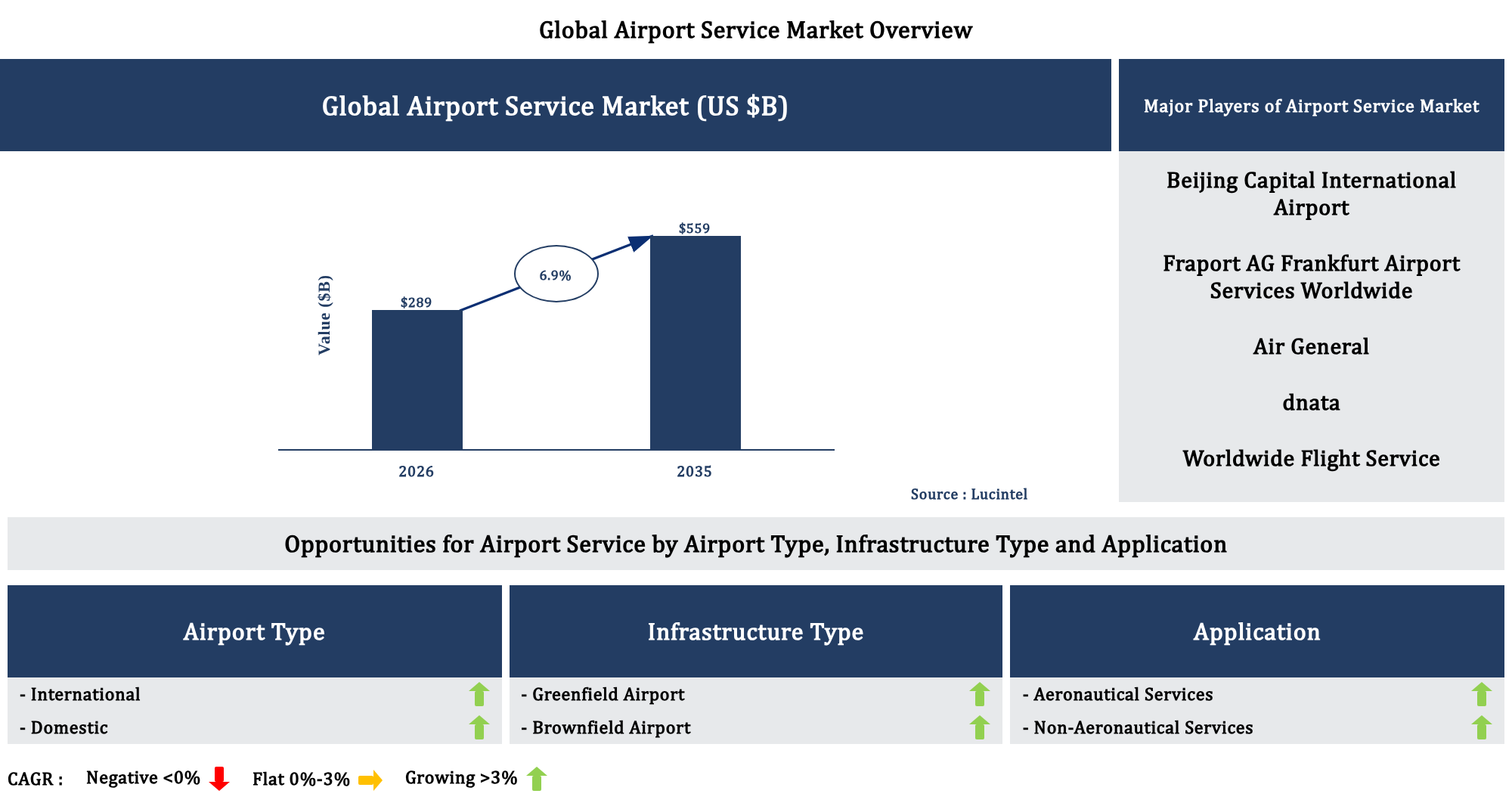
The future of the global airport service market looks promising with opportunities in the aeronautical service and non-aeronautical service markets. The global airport service market is expected to grow with a CAGR of 14.4% from 2025 to 2031. The major drivers for this market are the increasing demand for efficient airport operations, the rising passenger expectations for premium services, and the growing investments in smart airport technologies.
• Lucintel forecasts that, within the airport type category, international is expected to witness higher growth over the forecast period.
• Within the application category, aeronautical service is expected to witness higher growth.
• In terms of region, APAC is expected to witness the highest growth over the forecast period.
Gain valuable insights for your business decisions with our comprehensive 150+ page report. Sample figures with some insights are shown below.
Emerging Trends in the Airport Service Market
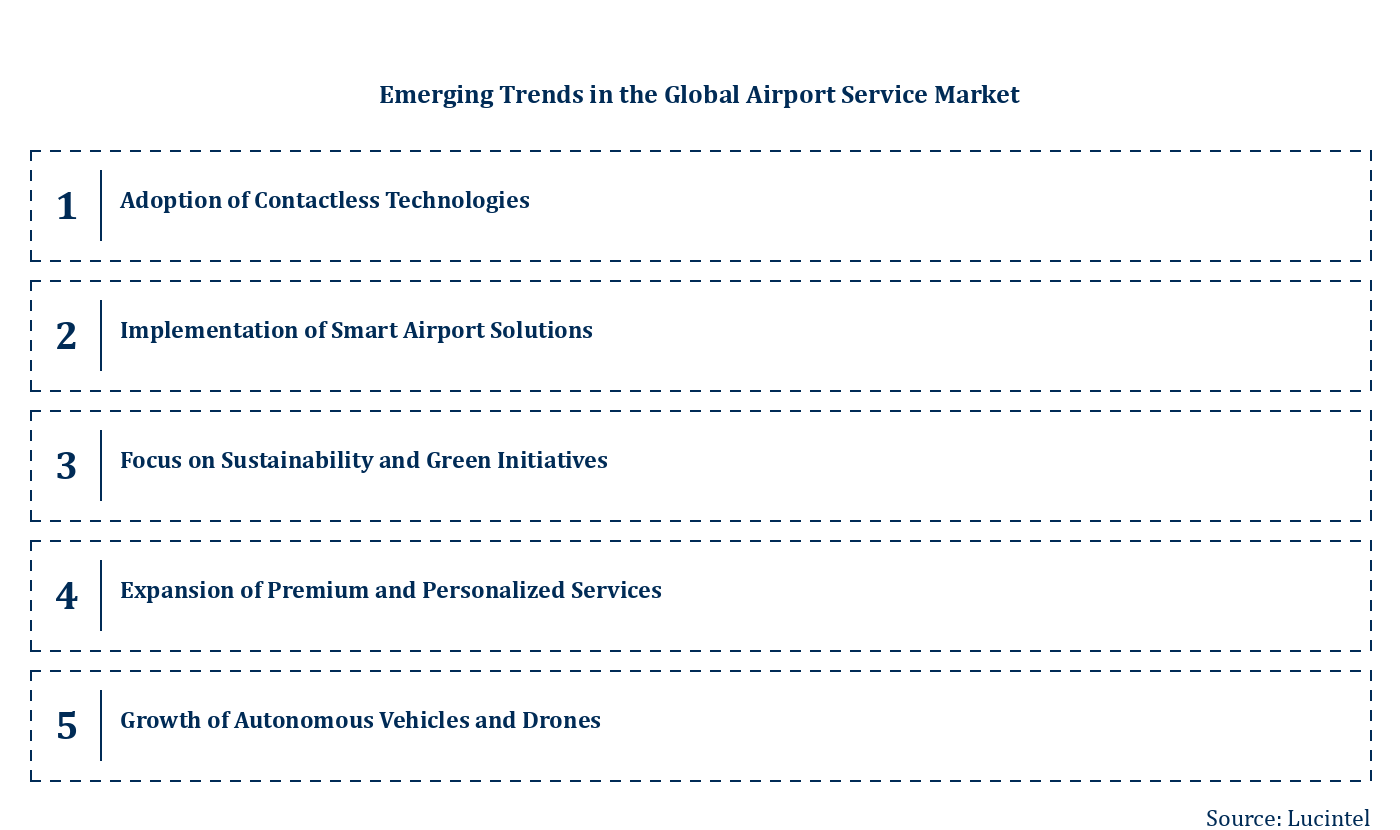
The airport service market is shaped by several emerging trends that are transforming passenger experiences, airport operations, and sustainability. These trends reflect a global shift towards innovation, convenience, and sustainability, as airports race to meet evolving demands. Here are five key trends that are influencing the future of the airport service industry.
• Biometric and Contactless Technologies: Biometric systems, such as facial recognition and fingerprint scanning, are revolutionizing the airport service market. By allowing passengers to check-in, pass through security, and board flights without physical touchpoints, these technologies are reducing wait times and enhancing security. This trend is gaining momentum as airports look to streamline operations and create a seamless travel experience.
• Sustainability and Green Initiatives: Sustainability is becoming a central focus for airports worldwide. The integration of green technologies, such as solar panels, electric vehicle charging stations, and zero-emission ground transport, is reshaping airport services. Airports are striving to reduce their carbon footprint, not only in their operations but also in design and construction, with the goal of achieving carbon-neutral airports in the future.
• Automation and AI Integration: Automation is making airports more efficient. From automated baggage handling to AI-driven check-in systems, airports are adopting cutting-edge technologies to reduce human intervention and improve operational efficiency. AI is being used to predict delays, optimize baggage flow, and provide real-time updates to passengers. This trend is increasing productivity and reducing errors in airport operations.
• Personalized Passenger Services: Airports are leveraging data analytics and AI to offer personalized services to passengers. Through mobile apps, passengers can receive personalized flight updates, dining recommendations, and shopping offers tailored to their preferences. This trend is enhancing the overall travel experience, making airports more customer-centric and catering to the growing demand for individualized services.
• Expansion of Retail and Leisure Services: Airports are increasingly becoming destinations rather than just transit points. The expansion of premium retail stores, luxury brands, art exhibitions, and dining options is making airports more attractive to travelers with long layovers. These additions not only improve the passenger experience but also serve as additional revenue streams for airports, contributing to a more diversified business model.
Emerging trends such as biometric systems, sustainability initiatives, AI integration, personalized services, and retail expansion are reshaping the airport service market. These innovations are improving the passenger experience, increasing operational efficiency, and creating new business opportunities for airports. As these trends continue to evolve, airports will remain at the forefront of customer-centric and technologically advanced services.
Recent Development in the Airport Service Market
The airport service market has witnessed significant developments, with airports focusing on efficiency, sustainability, and enhancing passenger experience. These developments are driven by technological advancements, shifting consumer preferences, and the need for greater operational capacity. Below are five key recent developments that are shaping the future of airport services globally.
• Automation of Passenger Processing: Many airports are integrating automation to improve passenger flow and minimize human error. Automated check-in kiosks, biometric security systems, and self-service baggage handling have become common in major airports. This development is enhancing the speed and accuracy of passenger processing while reducing wait times, which is crucial for managing the increasing number of air travelers.
• Introduction of Biometric Identification: Facial recognition technology is being rolled out at airports worldwide to improve security and speed up the boarding process. With biometric systems, passengers can check in, pass through security, and board flights seamlessly without the need for physical documents. This technology is enhancing the overall efficiency of airport operations while improving the travel experience for passengers.
• Sustainability and Eco-Friendly Services: Sustainability is at the forefront of many airport development projects. Airports are focusing on reducing energy consumption, utilizing renewable energy sources like solar panels, and reducing waste through sustainable construction practices. Some airports are even incorporating green certifications for their terminal buildings, contributing to the global push toward environmental responsibility in the aviation sector.
• Expansion of Digital Passenger Services: Airports are increasingly adopting digital tools to enhance passenger services. Mobile apps now provide travelers with real-time flight updates, gate information, and personalized services like retail promotions and food ordering. Additionally, contactless check-ins and virtual assistants are becoming commonplace, enabling passengers to navigate airports more easily while improving overall efficiency and satisfaction.
• Growth in Premium Travel and Lounge Services: With the rise of affluent travelers, airports are expanding their premium services, including luxury lounges, concierge services, and personalized amenities. Airports like Singapore’s Changi and Dubai International are setting the standard for luxury travel experiences. This development not only meets the needs of high-end travelers but also creates new revenue streams for airports.
Recent developments such as automation, biometric identification, sustainability initiatives, digital services, and premium travel experiences are significantly improving the airport service market. These advancements enhance operational efficiency, reduce wait times, and improve the overall passenger experience. As these trends continue, airports are becoming more efficient, customer-centric, and sustainable, shaping the future of air travel.
Strategic Growth Opportunities in the Airport Service Market
The airport service market presents several growth opportunities driven by changing consumer preferences, technological advancements, and the increasing demand for personalized and sustainable services. By capitalizing on these opportunities, airports can increase passenger satisfaction, improve operational efficiency, and generate new revenue streams. Below are five key growth opportunities in the airport service market.
• Expansion of Digital and Mobile Services: With the growing use of smartphones, airports can expand their digital offerings by integrating mobile apps for check-in, navigation, and real-time updates. By offering passengers the ability to manage their entire journey through a mobile device, airports can enhance the travel experience while streamlining operations. This shift also presents an opportunity to generate new revenue from in-app services.
• Sustainability and Green Technology Investment: Investing in green technologies such as solar power, electric vehicles, and energy-efficient terminals presents a major growth opportunity. Airports can not only reduce their environmental impact but also meet regulatory requirements and attract eco-conscious travelers. Additionally, sustainable practices contribute to long-term operational savings, making this a win-win opportunity for airport operators.
• Automation and AI-Powered Services: The implementation of AI-powered services like smart baggage handling and predictive analytics for passenger flow presents a growth opportunity for airports. Automation of routine tasks, such as security screening and check-in, can reduce operational costs, improve security, and enhance the passenger experience. Airports that adopt these technologies will lead in operational efficiency and customer satisfaction.
• Premium and Personalized Travel Services: With an increasing demand for personalized services, airports have an opportunity to enhance premium offerings such as VIP lounges, personalized concierge services, and luxury retail experiences. By catering to high-end travelers, airports can generate new revenue streams and differentiate themselves from competitors. This is especially important as the market for affluent travelers grows globally.
• Expansion of Retail and Leisure Offerings: Airports can capitalize on the trend of airports becoming destinations by expanding their retail and leisure offerings. The introduction of more shopping options, entertainment areas, and dining experiences provides travelers with a reason to stay longer, enhancing their experience and generating additional revenue for airports. This trend is particularly important for airports with long layovers.
Strategic growth opportunities in digital services, sustainability, automation, premium services, and retail expansion are transforming the airport service market. These opportunities enable airports to enhance operational efficiency, improve passenger experience, and diversify revenue streams. As airports continue to innovate, these opportunities will play a critical role in shaping the future of air travel and airport services globally.
Airport Service Market Driver and Challenges
The airport service market is influenced by a combination of technological, economic, and regulatory drivers, along with challenges that hinder its growth. Technological advancements, changing passenger expectations, and sustainability requirements are key drivers, while economic pressures, cybersecurity threats, and regulatory complexities present challenges. Below, we explore the major drivers and challenges shaping the market.
The factors responsible for driving the airport service market include:
1. Technological Advancements: The rapid adoption of technologies like AI, biometrics, and automation is driving efficiency and enhancing passenger experiences at airports. By incorporating these technologies, airports can streamline processes, reduce wait times, and improve security. This driver is particularly influential as airports aim to stay competitive in a growing and dynamic market.
2. Sustainability Regulations and Pressure: Environmental sustainability is becoming a key driver for airport services. As regulations around carbon emissions tighten, airports are increasingly investing in green technologies such as solar power, electric vehicles, and energy-efficient terminals. These measures not only reduce operational costs but also attract eco-conscious travelers who prioritize sustainability in their travel choices.
3. Growing Passenger Demand: With global air traffic increasing, airports are under pressure to improve efficiency and service quality. The rising number of travelers is driving the demand for advanced technologies, efficient check-in processes, and improved airport infrastructure. Airports must innovate to handle growing traffic while maintaining high levels of customer satisfaction.
4. Shift Towards Contactless and Biometric Technologies: Contactless and biometric systems are becoming essential to improve the efficiency of airport operations. Biometric technology enables seamless check-ins and security clearances, improving the overall passenger experience. As passengers seek safer and quicker services, airports are investing in these systems to meet expectations and enhance operational efficiency.
5. Increasing Focus on Customer Experience: Airports are investing more in personalized and premium services to improve customer experience. From high-end lounges and concierge services to personalized shopping and dining options, airports are focusing on offering more than just a transit hub. This driver is crucial as customer experience becomes a competitive differentiator in the global airport service market.
Challenges in the airport service market are:
1. Cybersecurity Threats: With the increasing reliance on digital technologies, cybersecurity has become a critical challenge for airports. The vast amount of sensitive passenger data, including biometric information, creates vulnerabilities that can be targeted by cybercriminals. Ensuring robust security measures is essential to protect data and maintain trust with passengers.
2. Regulatory Compliance and Complexity: The airport service market is subject to numerous regulatory requirements that vary by region. Compliance with aviation regulations, environmental standards, and data protection laws can be complex and costly. Navigating these regulatory challenges is a key obstacle for airports aiming to implement new technologies and services.
3. Economic Uncertainty and Funding Constraints: Economic challenges, such as fluctuating passenger traffic, reduced budgets, and high capital investment needs, are significant barriers to growth. Many airports are struggling to secure funding for infrastructure upgrades, especially in developing regions. Economic downturns and disruptions, such as those caused by the COVID-19 pandemic, can exacerbate these challenges.
The airport service market is being shaped by strong drivers such as technological advancements, sustainability pressures, and increased demand for premium services. However, challenges like cybersecurity threats, regulatory complexity, and economic constraints are impacting growth. Airports must balance innovation with risk management to capitalize on these drivers while addressing the challenges effectively.
List of Airport Service Companies
Companies in the market compete on the basis of product quality offered. Major players in this market focus on expanding their manufacturing facilities, R&D investments, infrastructural development, and leverage integration opportunities across the value chain. With these strategies airport service companies cater increasing demand, ensure competitive effectiveness, develop innovative products & technologies, reduce production costs, and expand their customer base. Some of the airport service companies profiled in this report include-
• Beijing Capital International Airport
• Fraport AG Frankfurt Airport Services Worldwide
• Air General
• dnata
• Worldwide Flight Service
• S.A.S. Services Group
• LHR Airports Limited
• Acciona
• Signature Aviation
• Tokyo International Air Terminal Corporation
Airport Service Market by Segment
The study includes a forecast for the global airport service market by airport type, infrastructure type, application, and region.
Airport Service Market by Airport Type [Value from 2019 to 2031]:
• International
• Domestic
Airport Service Market by Infrastructure Type [Value from 2019 to 2031]:
• Greenfield Airport
• Brownfield Airport
Airport Service Market by Application [Value from 2019 to 2031]:
• Aeronautical Services
• Non-Aeronautical Services
Airport Service Market by Region [Value from 2019 to 2031]:
• North America
• Europe
• Asia Pacific
• The Rest of the World
Country Wise Outlook for the Airport Service Market
The airport service market is rapidly evolving as global airports adapt to shifting traveler expectations, technological advancements, and the need for operational efficiency. Airports in the United States, China, Germany, India, and Japan are embracing innovation, from digital services to sustainability initiatives, to enhance the passenger experience. These developments are setting new industry standards for convenience, speed, and sustainability.
• United States: In the U.S., airports are focusing on enhancing passenger experience through contactless technologies, biometric screening, and mobile services. Airports like LAX and JFK have implemented automated baggage handling systems and streamlined security processes. Additionally, major airports are investing in sustainability by incorporating electric vehicles and solar energy to reduce carbon footprints, meeting the increasing demand for eco-friendly travel.
• China: Chinese airports are embracing cutting-edge technologies such as AI-driven check-in kiosks, facial recognition, and smart baggage handling systems. Airports like Beijing Daxing are becoming hubs for innovation, offering seamless and quick passenger processing. China is also focusing on expanding luxury lounges and premium services to cater to high-income travelers, contributing to the rise of the affluent passenger segment.
• Germany: Germany’s airports, particularly Frankfurt and Munich, are heavily investing in sustainable infrastructure and digital transformation. These airports have integrated AI-driven tools for efficient security checks and baggage management. Moreover, eco-friendly initiatives such as energy-efficient terminals, green transport systems, and waste reduction practices are reshaping operations, aligning with the global trend toward sustainability in aviation services.
• India: Indian airports, especially Delhi and Mumbai, are focusing on improving digital services such as self-check-in kiosks and biometric boarding. With an emphasis on reducing wait times and enhancing security, these airports are integrating mobile apps for smoother navigation. Additionally, infrastructure is expanding to accommodate growing air traffic, and airports are upgrading lounges and dining experiences for a better overall passenger journey.
• Japan: Japan’s airports are known for their technological innovations and efficiency. Narita and Kansai airports are introducing biometric authentication for smoother immigration and boarding processes. The emphasis is also on clean, contactless environments, with innovations such as robotic cleaners and self-check-in terminals. These developments are enhancing the overall traveler experience and ensuring that Japan remains a leader in airport service excellence.
Features of the Global Airport Service Market
Market Size Estimates: Airport service market size estimation in terms of value ($B).
Trend and Forecast Analysis: Market trends (2019 to 2024) and forecast (2025 to 2031) by various segments and regions.
Segmentation Analysis: Airport service market size by airport type, infrastructure type, application, and region in terms of value ($B).
Regional Analysis: Airport service market breakdown by North America, Europe, Asia Pacific, and Rest of the World.
Growth Opportunities: Analysis of growth opportunities in different airport types, infrastructure types, applications, and regions for the airport service market.
Strategic Analysis: This includes M&A, new product development, and competitive landscape of the airport service market.
Analysis of competitive intensity of the industry based on Porter’s Five Forces model.
FAQ
Q1. What is the growth forecast for airport service market?
Answer: The global airport service market is expected to grow with a CAGR of 14.4% from 2025 to 2031.
Q2. What are the major drivers influencing the growth of the airport service market?
Answer: The major drivers for this market are the increasing demand for efficient airport operations, the rising passenger expectations for premium services, and the growing investments in smart airport technologies.
Q3. What are the major segments for airport service market?
Answer: The future of the airport service market looks promising with opportunities in the aeronautical service and non-aeronautical service markets.
Q4. Who are the key airport service market companies?
Answer: Some of the key airport service companies are as follows:
• Beijing Capital International Airport
• Fraport AG Frankfurt Airport Services Worldwide
• Air General
• dnata
• Worldwide Flight Service
• S.A.S. Services Group
• LHR Airports Limited
• Acciona
• Signature Aviation
• Tokyo International Air Terminal Corporation
Q5. Which airport service market segment will be the largest in future?
Answer: Lucintel forecasts that, within the airport type category, international is expected to witness higher growth over the forecast period.
Q6. In airport service market, which region is expected to be the largest in next 5 years?
Answer: In terms of region, APAC is expected to witness the highest growth over the forecast period.
Q7. Do we receive customization in this report?
Answer: Yes, Lucintel provides 10% customization without any additional cost.
This report answers following 11 key questions:
Q.1. What are some of the most promising, high-growth opportunities for the airport service market by airport type (international and domestic), infrastructure type (greenfield airport and brownfield airport), application (aeronautical services and non-aeronautical services), and region (North America, Europe, Asia Pacific, and the Rest of the World)?
Q.2. Which segments will grow at a faster pace and why?
Q.3. Which region will grow at a faster pace and why?
Q.4. What are the key factors affecting market dynamics? What are the key challenges and business risks in this market?
Q.5. What are the business risks and competitive threats in this market?
Q.6. What are the emerging trends in this market and the reasons behind them?
Q.7. What are some of the changing demands of customers in the market?
Q.8. What are the new developments in the market? Which companies are leading these developments?
Q.9. Who are the major players in this market? What strategic initiatives are key players pursuing for business growth?
Q.10. What are some of the competing products in this market and how big of a threat do they pose for loss of market share by material or product substitution?
Q.11. What M&A activity has occurred in the last 5 years and what has its impact been on the industry?
For any questions related to Airport Service Market, Airport Service Market Size, Airport Service Market Growth, Airport Service Market Analysis, Airport Service Market Report, Airport Service Market Share, Airport Service Market Trends, Airport Service Market Forecast, Airport Service Companies, write Lucintel analyst at email: helpdesk@lucintel.com. We will be glad to get back to you soon.