
Market Report · July 31, 2026

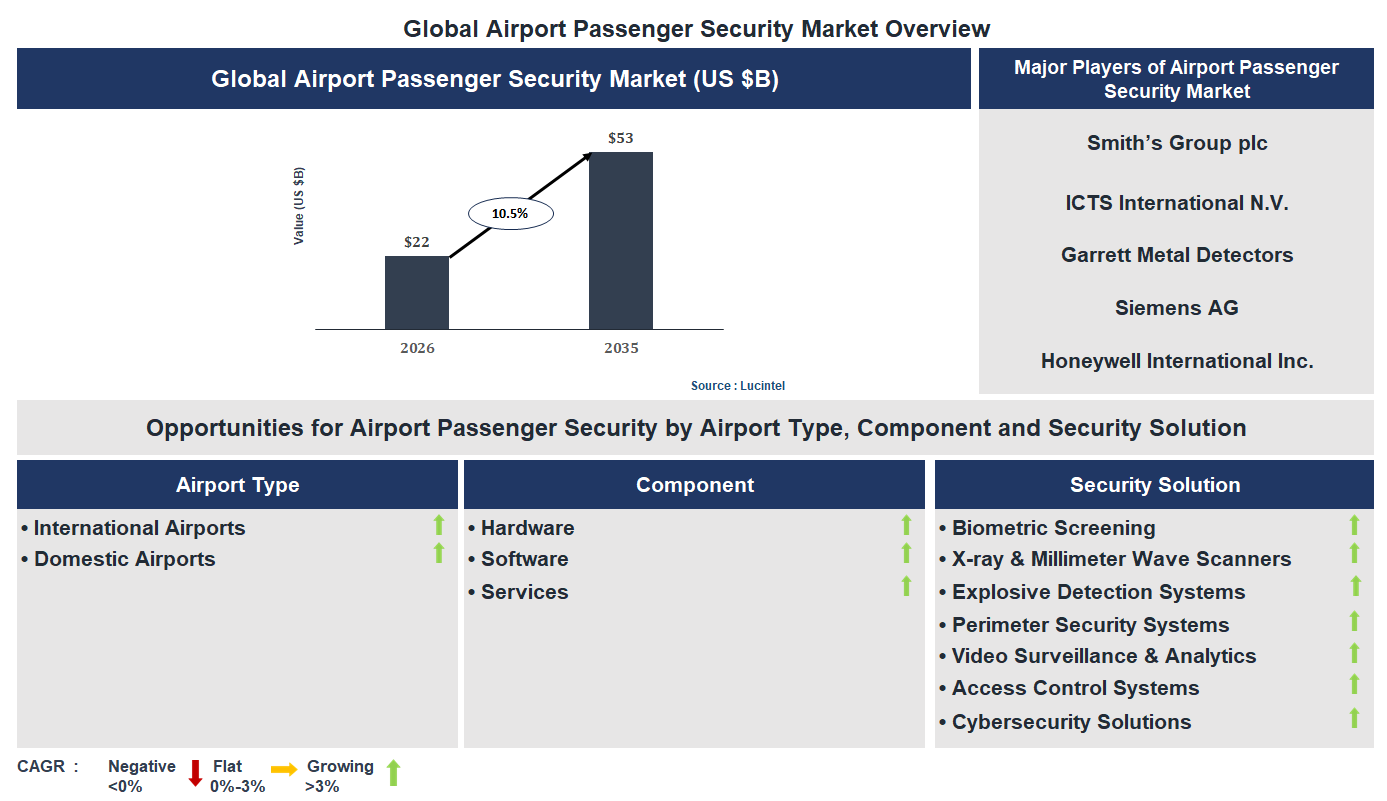
Key data points: The market size in 2035 = $53 billion, growth forecast = 10.5% annually for the next 8 years. Scroll below to get more insights. This market report covers trends, opportunities and forecasts in airport passenger security market to 2035 by airport type (international airports and domestic airports), component (hardware, software, and services), security solution (biometric screening, X-ray & millimeter wave scanners, explosive detection systems, perimeter security systems, video surveillance & analytics, access control systems, and cybersecurity solutions), and region (North America, Europe, Asia Pacific, and the Rest of the World)
We'll send your sample report shortly.
• Lucintel forecasts that, within the airport type category, domestic airport is expected to witness higher growth over the forecast period.
• Within the security solution category, cybersecurity solution is expected to witness the highest growth.
• In terms of region, North America is expected to witness the highest growth over the forecast period. Gain valuable insights for your business decisions with our comprehensive 150+ page report. Sample figures with some insights are shown below.
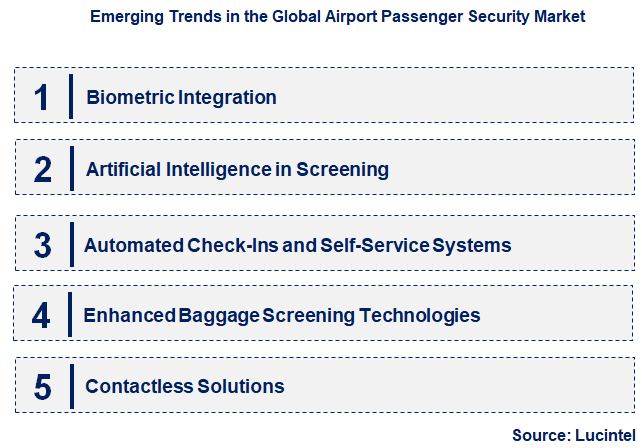
• Biometric Integration: Biometric systems, such as facial recognition and fingerprint scanning, are becoming standard at airports worldwide. These systems enable quicker identity verification and reduce the need for manual checks. By enhancing the passenger experience with faster processing times, biometrics are improving airport efficiency. Additionally, they help to increase security by making identity verification more accurate and difficult to bypass.
• Artificial Intelligence in Screening: AI is revolutionizing baggage screening by improving threat detection accuracy. AI-powered systems can identify prohibited items with greater precision, reducing the risk of human error. AI is also being integrated into passenger flow management, helping airports predict and manage peak times more effectively. As AI becomes more advanced, it will continue to drive efficiencies and strengthen security measures in the airport environment.
• Automated Check-ins and Self-service Systems: Automated check-ins, including self-service kiosks and mobile-based apps, are becoming increasingly common at airports. These systems streamline the process, allowing passengers to check in, print boarding passes, and even scan their baggage without waiting in long lines. The automation trend is also reducing the need for human intervention, increasing security and passenger satisfaction.
• Enhanced Baggage Screening Technologies: New baggage screening technologies, including 3D and CT scanners, are improving the detection capabilities of airport security systems. These devices allow security personnel to examine the contents of bags in greater detail without needing to open them. This not only speeds up the process but also ensures that potentially dangerous items are identified before they can reach a plane.
• Contactless Solutions: Contactless technology is gaining traction as a way to reduce physical contact between passengers and airport staff, which has become especially important in the post-pandemic era. Touchless kiosks, biometric scanning, and mobile boarding passes are part of the broader trend toward minimizing physical interactions. These systems are faster, safer, and more hygienic, aligning with the growing emphasis on health and safety. The emerging trends in the airport passenger security market, such as the integration of biometrics, AI-driven screening, automated check-ins, and contactless solutions, are revolutionizing how airports handle passenger flow and security. These trends are reshaping security protocols to be more efficient and secure, with an emphasis on improving the passenger experience. As these technologies evolve, they will continue to drive the market toward more automation, faster processing times, and enhanced detection capabilities, making air travel both safer and more convenient for passengers worldwide.
• Integration of Biometric Screening Systems: Biometric technology, such as facial recognition and fingerprint scanning, has become a crucial part of airport security. This technology enhances security by providing a quick and accurate means of identifying passengers. It also reduces the need for manual checks and improves the overall passenger experience by speeding up the boarding process.
• Adoption of Advanced Screening Technologies: Advanced screening technologies, including 3D CT scanners and AI-powered systems, are transforming baggage security. These systems offer more detailed and accurate scans of baggage, helping to detect potential threats more effectively. They also speed up the screening process, allowing for a smoother passenger experience.
• Expansion of Automated Check-In and Border Control Systems: Automated check-in systems and border control kiosks have been implemented to streamline passenger flow and reduce wait times. Self-service kiosks and automated gates use biometric data to verify identity, speeding up the process and reducing congestion at security checkpoints. This shift to automation is enhancing both security and operational efficiency.
• Increased Use of Artificial Intelligence: AI is being increasingly deployed to manage security screenings and passenger flow. AI systems are capable of analyzing patterns in security data and predicting peak travel times, helping airports better allocate resources and manage security operations. Additionally, AI-driven threat detection improves the accuracy and reliability of screening processes.
• Integration of Contactless Technologies: Contactless technologies, such as mobile boarding passes and touchless security checks, are reducing physical interactions between passengers and airport staff. These solutions are becoming standard practice in many airports to improve efficiency, reduce the spread of germs, and enhance the passenger experience, particularly post-pandemic. Key developments in the airport passenger security market are transforming the way security is managed across global airports. The integration of biometrics, advanced baggage screening, AI-driven systems, and automated check-ins are not only improving the efficiency of security measures but also enhancing the passenger experience. These technologies reduce wait times, increase accuracy, and allow for smoother operations. As airports continue to adopt these advancements, the security market will continue to grow, with a focus on innovation, safety, and convenience for passengers.
• Biometric Authentication: Biometric authentication systems are one of the most significant growth opportunities in airport security. As biometric technology improves, airports are adopting facial recognition, fingerprint scanning, and iris recognition to enhance identity verification. This leads to faster boarding, more accurate passenger tracking, and increased security, making biometric solutions highly desirable.
• Artificial Intelligence Driven Screening: AI-driven screening technologies are revolutionizing baggage and passenger security. AI can process large volumes of data quickly, identify potential threats, and predict peak times to optimize airport operations. As AI continues to improve, its integration into security measures will lead to more efficient and accurate screening processes.
• Self-Service Check-In and Bag Drop: Self-service check-in kiosks and automated bag-drop systems are growing in popularity due to their ability to streamline airport processes. These systems reduce congestion, increase operational efficiency, and enhance the passenger experience. Airlines and airports that implement these technologies can expect a higher level of customer satisfaction and improved security outcomes.
• 3D and CT Scanning for Baggage: 3D and CT scanning technology provides detailed and accurate scans of baggage, making it easier to detect concealed threats. The integration of these technologies offers airports an opportunity to upgrade their baggage screening infrastructure while improving detection capabilities and speeding up the process.
• Contactless and Mobile Solutions: The demand for contactless and mobile solutions, such as mobile check-ins, biometric boarding passes, and touchless security checks, is growing. These technologies enhance the passenger experience by reducing wait times and physical contact, which is especially relevant in the post-pandemic world. Airports investing in these solutions can expect higher efficiency and improved passenger satisfaction. Strategic growth opportunities in the airport passenger security market are abundant, particularly with the integration of biometric systems, AI-driven technologies, self-service check-ins, and contactless solutions. These applications are positioned to reshape the future of airport security by offering faster, more accurate, and efficient systems that improve the overall passenger experience. With increasing demand for seamless, secure, and efficient travel, airports that invest in these technologies will not only enhance security but also gain a competitive advantage in the rapidly evolving market.
• Technological Advancements: Technological innovations, such as AI, biometrics, and automated systems, are key drivers in the airport passenger security market. These technologies enhance efficiency, improve security accuracy, and reduce wait times. They are being adopted rapidly across airports worldwide to streamline passenger processing while strengthening security measures.
• Increased Passenger Volumes: As global air travel continues to grow, the need for efficient and scalable security systems becomes more critical. Airports are investing in advanced technologies and automation to handle higher passenger volumes without compromising security. This demand is driving growth in the security market.
• Regulatory Compliance: Countries and regions are enforcing stricter security regulations to ensure that airports meet international standards. Compliance with these regulations requires constant investment in new technologies and systems, pushing the market forward. Regulatory frameworks drive the development of advanced screening technologies and security protocols.
• Rising Security Threats: The increasing number of security threats, such as terrorism and cyberattacks, is pushing airports to adopt more advanced security systems. New technologies like AI-driven surveillance, biometric verification, and advanced baggage screening are being used to combat these threats and safeguard passengers.
• Demand for Enhanced Passenger Experience: There is growing pressure on airports to provide smoother, faster, and more convenient passenger experiences. Technologies like biometrics, mobile check-ins, and self-service kiosks help achieve these goals while improving overall security. Airports are increasingly prioritizing passenger convenience alongside safety measures. The challenges facing the airport passenger security market include:
• High Implementation Costs: One of the major challenges in the airport passenger security market is the high initial cost of implementing new technologies. While these systems offer long-term benefits, their upfront costs can be a significant barrier for airports, especially in developing countries.
• Privacy Concerns: The use of biometric and surveillance technologies raises privacy concerns, particularly regarding the collection and storage of personal data. Airports need to balance security and privacy rights, which can complicate the adoption of certain technologies, especially biometrics.
• Resistance to Change: The implementation of new security technologies can face resistance from both airport staff and passengers. Training personnel and educating passengers about new systems can be time-consuming and costly, delaying the adoption of innovations. The airport passenger security market is being reshaped by emerging trends, key developments, and strategic growth opportunities, driven primarily by technological advancements and regulatory changes. While challenges such as high implementation costs and privacy concerns remain, the overall trajectory of the market is toward greater efficiency, security, and improved passenger experiences. These drivers and challenges are shaping the future of airport security, making it more automated, data-driven, and responsive to evolving threats.
• Smith’s Group plc
• ICTS International N.V.
• Garrett Metal Detectors
• Siemens AG
• Honeywell International Inc.
• OSI Systems Inc.
• Analogic Corporation
• Bosch Limited
• C.E.I.A. S.p.A.
• IDEMIA
• International Airports
• Domestic Airports
• Hardware
• Software
• Services
• Biometric Screening
• X-ray & Millimeter Wave Scanners
• Explosive Detection Systems
• Perimeter Security Systems
• Video Surveillance & Analytics
• Access Control Systems
• Cybersecurity Solutions
• North America
• Europe
• Asia Pacific
• The Rest of the World
• United States: In the United States, airport security continues to evolve with the implementation of advanced screening technologies such as biometric authentication, facial recognition systems, and automated baggage handling. The Transportation Security Administration (TSA) has prioritized the modernization of security checkpoints to reduce delays and improve passenger experience. New systems allow for quicker identity verification, enabling smoother passenger flow. In addition, there are ongoing efforts to integrate Artificial Intelligence (AI) and machine learning for more accurate threat detection, enhancing overall security.
• China: China is rapidly adopting advanced security solutions as part of its efforts to manage the growing volume of air passengers. The country has invested heavily in biometric systems, including facial recognition, which has significantly improved the speed and accuracy of identity checks at major airports. Additionally, the use of automated self-check-in kiosks has streamlined the passenger journey, allowing for quicker boarding. China has also been implementing AI-powered baggage screening technologies to increase detection capabilities, particularly for the handling of hazardous materials.
• Germany: Germany is at the forefront of integrating innovative technologies into its airport security processes. Airports such as Frankfurt and Munich are incorporating state-of-the-art biometrics for automated passport control and check-ins, reducing wait times for passengers. The country is also expanding its use of advanced scanners, such as 3D CT scanners, to enhance the detection of concealed threats in carry-on luggage. Additionally, Germany’s security protocols are being upgraded to meet EU regulations while ensuring that the passenger experience remains smooth and efficient.
• India: India is experiencing rapid growth in air travel, necessitating the upgrading of its airport security infrastructure. The Airports Authority of India (AAI) is enhancing security measures through the installation of biometric-based identification systems and automated baggage screening technologies. With the rise in air passenger numbers, India is also working to streamline passenger flow by introducing automated check-in kiosks, thereby reducing congestion at security checkpoints. The country is also adopting AI-powered surveillance and monitoring systems to enhance the overall security framework.
• Japan: Japan has made significant strides in enhancing airport security, focusing on improving the efficiency of passenger processing. Japan’s airports are incorporating facial recognition systems for faster boarding and enhanced security checks. The use of advanced X-ray and CT scanners is being expanded to improve baggage screening, while airports are also focusing on improving the overall passenger experience. Japan is working toward implementing security measures that comply with international standards while ensuring a high level of convenience for travelers.


• Smith’s Group plc
• ICTS International N.V.
• Garrett Metal Detectors
• Siemens AG
• Honeywell International Inc.
• OSI Systems Inc.
• Analogic Corporation
• Bosch Limited
• C.E.I.A. S.p.A.
• IDEMIA Q6. Which airport passenger security market segment will be the largest in future? Answer: Lucintel forecasts that, within the airport type category, domestic airport is expected to witness higher growth over the forecast period. Q7. In airport passenger security market, which region is expected to be the largest in next 8 years? Answer: In terms of region, North America is expected to witness the highest growth over the forecast period. Q8. Do we receive customization in this report? Answer: Yes, Lucintel provides 10% customization without any additional cost.


Choose a license that fits your team. Instant PDF delivery.
Prices exclude taxes. Instant delivery. Custom licensing available on request.
Market Report · July 31, 2026
Market Report · July 31, 2026
Market Report · July 22, 2026
Trusted partner for strategic intelligence and business growth


Receive a complimentary market analysis tailored to your industry. Our analysts will identify key growth opportunities and competitive dynamics specific to your business.

Market size, growth rate, and key trend analysis for your specific sector.

Top competitor positioning and market share analysis.

Strategic recommendations backed by data-driven insights.
Get curated market intelligence and competitive moves straight to your inbox.
By subscribing, you agree to receive our monthly insights. Unsubscribe anytime.
Receive a complimentary market analysis tailored to your industry. Our analysts will identify key growth opportunities and competitive dynamics specific to your business.
Market size, growth rate, and key trend analysis for your specific sector.
Top competitor positioning and market share analysis.
Strategic recommendations backed by data-driven insights.
Get curated market intelligence, emerging trends, and competitive moves straight to your inbox each month.
By subscribing, you agree to receive our monthly insights. Unsubscribe anytime.
We'll send your sample report shortly.