
Market Report · May 18, 2026

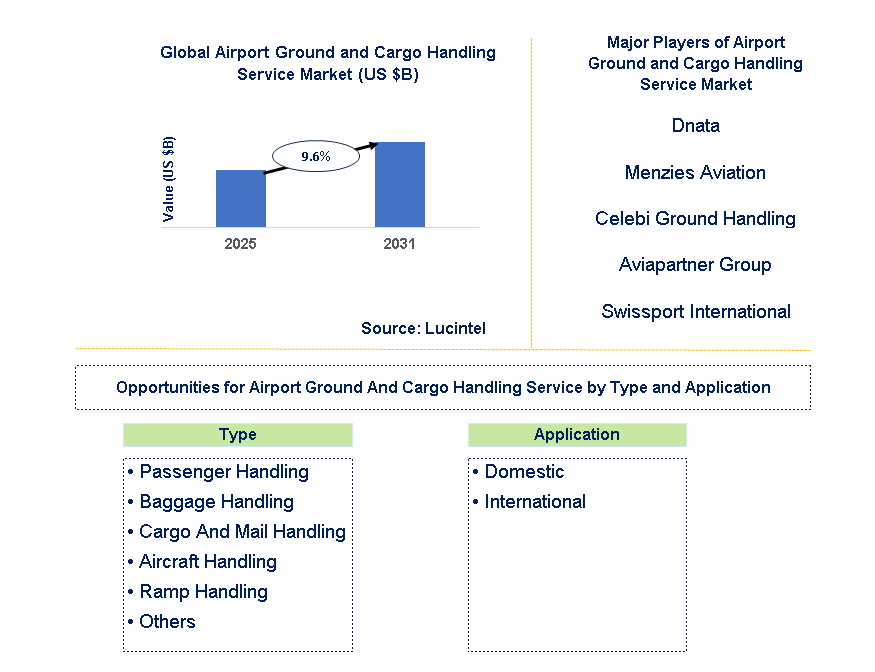
Key data points: The growth forecast = 9.6% annually for the next 7 years. Scroll below to get more insights. This market report covers Trends, opportunity and forecast in airport ground and cargo handling service market to 2031 by type (passenger handling, baggage handling, cargo and mail handling, aircraft handling, ramp handling, and others), application (domestic and international), and region (North America, Europe, Asia Pacific, and the Rest of the World)
We'll send your sample report shortly.
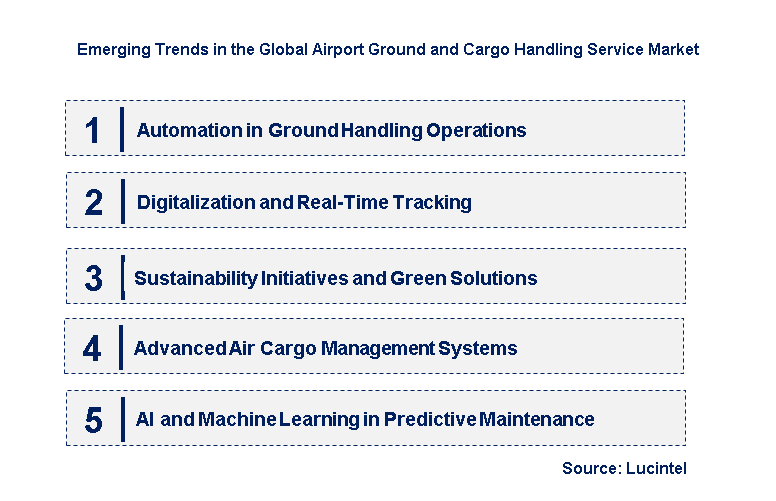
• Automation in Ground Handling Operations: The integration of automation in ground handling operations is one of the most significant trends in the industry. Airports are increasingly using automated baggage handling systems, robotics for aircraft servicing, and autonomous vehicles for cargo transportation. Automation improves efficiency, reduces human error, and accelerates turnaround times. As automation technologies advance, they allow airports to handle greater volumes of passengers and cargo while ensuring smooth and secure operations. The use of AI and machine learning in automation further enhances predictive maintenance and operational optimization.
• Digitalization and Real-Time Tracking: The digitalization of airport ground and cargo handling service is revolutionizing the industry. Airports are leveraging digital platforms for real-time tracking of luggage and cargo, allowing passengers and logistics companies to track their items more efficiently. These digital systems enhance transparency and streamline operations, improving both customer experience and operational efficiency. IoT devices, sensors, and cloud technologies are expected to grow in tracking baggage and cargo, thereby providing more data-driven insights and enabling faster problem resolution.
• Sustainability Initiatives and Green Solutions: Sustainability is increasingly becoming a priority in the airport ground and cargo handling service market. Most of the airports across the globe are investing in green initiatives, which include electric GSE, energy-efficient cargo facilities, and sustainable infrastructure. The airports are reducing their carbon footprint as they transition towards electric vehicles to handle luggage, aircraft servicing, and cargo transportation. Moreover, environmentally friendly technologies in cargo management, such as energy-efficient warehouses and automated cargo handling, help airports and ground services providers better align with global sustainability goals and meet regulatory standards.
• Advanced Air Cargo Management Systems: The emerging challenges of e-commerce and international trade need to be met with efficient air cargo management. Airports are now introducing advanced cargo handling systems that allow for the seamless storage, sorting, and movement of freight. Digital platforms for managing cargo logistics are also gaining popularity, enabling real-time updates on cargo status and improving shipment tracking. The growth of international trade and air freight transportation is driving investments in infrastructure and systems to handle the increasing volume of cargo more efficiently. This trend is helping to reduce bottlenecks and delays in cargo processing.
• AI and Machine Learning in Predictive Maintenance: AI and machine learning are being integrated into airport ground and cargo handling service for better predictive maintenance of operations. With AI-powered systems, airports will be able to predict when there is a higher chance of ground support equipment or cargo handling systems failure, thus reducing the chances of unexpected failures. Predictive maintenance reduces costs, increases equipment reliability, and ensures consistency in service delivery. The deployment of AI in airport operations is enabling better management of passenger flows, baggage handling, and cargo logistics, ensuring improved overall operational efficiency. The emerging trends are changing the airport ground and cargo handling service market by efficiency improvement, cost reduction, and customer delight. Automation, digitalization, and sustainability initiatives at airports have been making airports become more streamlined and environmentally friendly. The increasing need for efficient air cargo management systems is driving investment in technology and infrastructure, while the adoption of AI and machine learning enhances maintenance strategies and operational optimization. As these trends continue to evolve, they will reshape the landscape of airport ground and cargo handling service, ensuring airports are prepared to handle growing passenger and cargo traffic.
• Increased Deployment of Automated Baggage Handling Systems: Automated baggage handling systems are increasingly being deployed at airports around the world. The introduction of automated baggage handling systems saves labor, minimizes human errors in the handling process, and allows for faster turnaround times. Passengers are more satisfied since the automation has reduced the frequency of delays and lost luggage occurrences. This trend is prominent at international hubs, where high volumes of passengers are increasing demand for investment in automation in order to reduce operational inefficiency.
• Digital Cargo Tracking and Management Platforms: Digital cargo tracking platforms are increasingly becoming popular, which provide real-time visibility and control over the movement of cargo. These platforms combine IoT sensors, GPS tracking, and cloud-based data systems to give accurate and up-to-date information about cargo shipments. This digital transformation is enhancing the efficiency and transparency of cargo operations, enabling logistics companies and customers to monitor shipments at all stages. As the air freight demand continues to increase, these platforms are becoming more crucial in effective cargo management and reduced delays.
• Sustainability Focus with Electric Ground Support Equipment (GSE): The use of electric ground support equipment at airports is increasing. The use of electric ground support equipment from the traditional fuel-based vehicles reduces the impact of airports on the environment. Aircraft tugs, baggage tractors, and pushback vehicles are examples of electric GSE. Many airports are embracing electric vehicles to achieve sustainability goals and comply with environmental regulations. This trend is likely to be sustained as governments and airlines look toward carbon neutrality and the sustainability of airport operations.
• Implementation of AI for Cargo Sorting and Handling: Artificial intelligence is being integrated into cargo sorting and handling systems to enhance efficiency and minimize human error. AI-powered systems can automate the sorting process by analyzing cargo dimensions, weight, and destination, and routing items accordingly. This advancement in technology helps reduce processing time and allows for faster cargo delivery. AI’s ability to optimize logistics operations and predict demand is driving its adoption in air cargo handling, enabling airports to improve service speed and capacity.
• Emergence of Smart Airports with Digital Solutions: Smart airports are increasing in number by using digital solutions to make operational performance better. In smart airports, IoT devices, digital signage, biometric systems, and other digital solutions are used for the handling of passengers and cargo. Smart airport technology provides better baggage handling, optimization of passenger flow, and reduces the waiting time of passengers. Introducing these solutions leads to customer satisfaction and enhances the operational performance of the airports. Smart airports also give better insight into the real-time performance, hence facilitating better decision-making. The recent developments in the airport ground and cargo handling service market are revolutionizing the business with automation, increased efficiency, and better quality services. The focus is on digitalization and sustainability to meet increasing demand and modernize airport operations. Investments in smart technologies, automation, and AI will pave the way for streamlined processes, higher capacity, and faster turnarounds that prepare airports to handle future challenges.
• Electric Ground Support Equipment (GSE): An important growth opportunity for airport ground handling is the adoption of electric GSE. Electric GSE like baggage tugs, aircraft pushbacks, and ground handling vehicles are on a rise due to the increased focus of airports on carbon footprint reduction and abiding by environmental regulations. Companies developing and offering electric GSE solutions are well poised for growth as the aviation industry continues to adopt greener technologies toward meeting sustainability goals.
• AI-Based Cargo Handling Systems Development: AI-based cargo handling systems offer an opportunity for growth in the space of air cargo management. The AI-based solutions can optimize cargo handling by automating sorting and logistics processes, reducing operational delays. Airports as well as cargo companies are in increasing investment towards AI technologies and improving efficiency through speed and reducing errors in sorting. The interconnection of AI through cargo management system helps to straighten out work and respond to the surge in global demands for air cargo.
• Smart Investment in Airport Infrastructure: Growth opportunities abound through the expansion of smart airports for firms that provide digital solutions, IoT devices, and automated systems. Smart airports are built for efficiency and improvement in customer experiences through the use of biometric systems, digital tracking, and self-driving vehicles. Companies with advanced software, tracking systems, and IoT-infrastructure would be able to enter this new market by looking into each solution for airport operation improvements and enriched passenger services.
• Digital Cargo Management Platforms Growth: Digital cargo management platforms are also growing as logistics companies and airports are adopting them for better tracking, booking, and management. These pressures reflect rising demand for efficiency in air cargo solutions due to rapidly growing e-commerce and international trade. The strategic development of electronic platforms that promote online cargo tracking capabilities, automated reservation, and a seamless communication culture across the value chain will further position businesses ahead of the competitive and growing air cargo sector.
• Autonomous Ground Handling Operations: Growth prospects in the autonomous ground handling operation sector include robotic baggage handling and aircraft servicing. Since airports seek cost savings on labor, improvements in operational efficiency are likely through automation. Companies producing autonomous vehicles and robots for ground handling operations at airports are likely to benefit from an increased trend of automation in the near future. Such growth opportunities, including strategic ones, further emphasize the rapid growth in reliance on technology, which will influence the handling of services at airports for ground and cargo. Airports and cargo handling companies will make efforts toward full automation, full digitalization, and sustainability, while there is substantial scope for companies offering innovative solutions for trends. Electric vehicle investments, AI-based systems, and smart infrastructure-oriented businesses are thus well placed to cater to the fast-changing needs in the aviation market.
• Dnata
• Menzies Aviation
• Celebi Ground Handling
• Aviapartner Group
• Swissport International AG
• Worldwide Flight Services
• Fraport AG
• Airport Associates
• Qatar Aviation Services
• AirPart GmbH
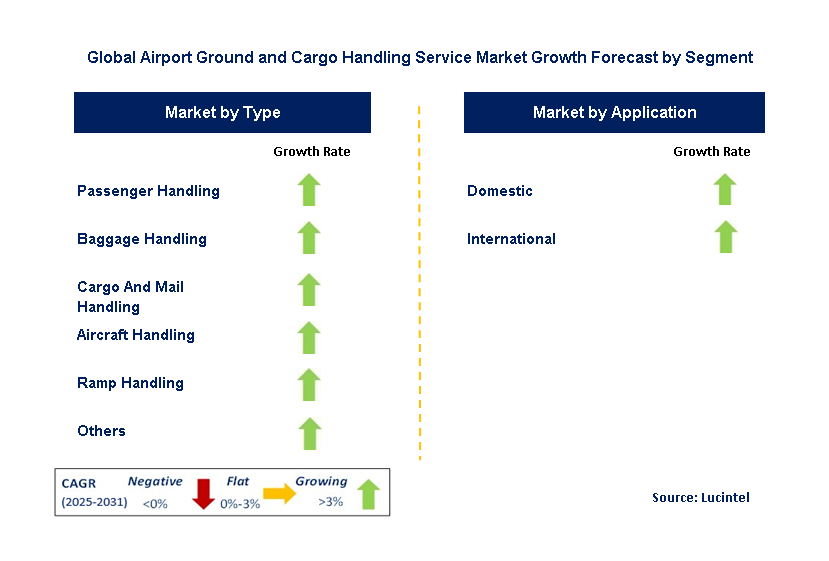
• Passenger Handling
• Baggage Handling
• Cargo And Mail Handling
• Aircraft Handling
• Ramp Handling
• Others
• Domestic
• International
• North America
• Europe
• Asia Pacific
• The Rest of the World
• United States: The United States has witnessed tremendous advancements in airport ground and cargo handling service. This has been seen in the increasing demand for efficient logistics and automation technologies. Many airports are now investing in the most advanced baggage handling systems and automated cargo storage solutions. Ground handling companies are also experiencing a transformation as they start adopting advance tracking and monitoring systems to move cargo around. Environmental sustainability comes under the forefront, as airports opt for electric vehicles and much more eco-friendly infrastructures. The demand for air cargo services is increasing, driven by the increasing e-commerce trade, which has made more investment in cargo handling technology and infrastructure improvements.
• China: Airport ground and cargo handling services market growth in China was rapid due to the expansion of the aviation industry and the role of the country in global trade. China is also embracing automation for baggage handling in key Chinese airports, while sorting systems are the most advanced nowadays, improving efficiency and reducing labor costs. Moreover, China is investing heavily in air cargo facilities, as airports have increased their capacity to handle the increasing volumes of freight, dominated by the rising e-commerce orders. The government is promoting the development of smart airport technologies, as well as digital platforms, to track and manage ground services and cargo operations more efficiently.
• Germany: Germany is a benchmark in precision and efficiency in industrial sectors. It is the pioneer in integrating advanced technologies into airport ground and cargo handling service. German airports invest in automated systems for baggage handling and freight management which cut down the delay and improve the service efficiency as a whole. The country is specially putting an emphasis on sustainability, where carbon footprints reductions are being sought through the use of electric ground support equipment. Increasing demand for air cargo, specifically in the European Union, fuels investment in the establishment of logistics centers and digitalization enhancing the cargo throughput efficiency while streamlining the handling processes.
• India: In India, there is high development of airports through ground and cargo handling services in line with rising passenger demand, along with booming trade. The Indian government modernizes airports by investing more on infrastructural changes. In many of the major airports, automation in baggage handling is being implemented. This has reduced turnaround times and enhanced passenger experience. In India, cargo sector expansion has also been seen, with a focus on improving air cargo handling systems, and there has been an increase in the adoption of digital technologies for tracking and managing shipments. This trend will further accelerate as India becomes more prominent in global logistics and e-commerce.
• Japan: The Japanese airport ground and cargo handling service market is highly innovative and efficient. The Japanese airports are implementing the latest automation solutions in baggage handling, using robotics and AI to enhance productivity. Sustainability is also being emphasized as airports are switching to electric ground support vehicles to minimize emissions. Cargo handling in Japan is significantly influenced by the growth in e-commerce, which is creating a strong requirement for advanced air cargo management systems. At the same time, the airports of Japan have approached the implementation of digital platforms for real-time cargo tracking that would promote enhanced service quality and operational efficiency.


• Dnata
• Menzies Aviation
• Celebi Ground Handling
• Aviapartner Group
• Swissport International AG
• Worldwide Flight Services
• Fraport AG
• Airport Associates
• Qatar Aviation Services
• AirPart GmbH Q5. Which airport ground and cargo handling service market segment will be the largest in future? Answer: Lucintel forecasts that passenger handling is expected to witness the highest growth over the forecast period. Q6. In airport ground and cargo handling service market, which region is expected to be the largest in next 5 years? Answer: APAC is expected to witness the highest growth over the forecast period. Q7. Do we receive customization in this report? Answer: Yes, Lucintel provides 10% customization without any additional cost.


Choose a license that fits your team. Instant PDF delivery.
Prices exclude taxes. Instant delivery. Custom licensing available on request.
Market Report · May 18, 2026
Market Report · May 18, 2026
Market Report · May 18, 2026
Trusted partner for strategic intelligence and business growth


Receive a complimentary market analysis tailored to your industry. Our analysts will identify key growth opportunities and competitive dynamics specific to your business.

Market size, growth rate, and key trend analysis for your specific sector.

Top competitor positioning and market share analysis.

Strategic recommendations backed by data-driven insights.
Get curated market intelligence and competitive moves straight to your inbox.
By subscribing, you agree to receive our monthly insights. Unsubscribe anytime.
Receive a complimentary market analysis tailored to your industry. Our analysts will identify key growth opportunities and competitive dynamics specific to your business.
Market size, growth rate, and key trend analysis for your specific sector.
Top competitor positioning and market share analysis.
Strategic recommendations backed by data-driven insights.
Get curated market intelligence, emerging trends, and competitive moves straight to your inbox each month.
By subscribing, you agree to receive our monthly insights. Unsubscribe anytime.
We'll send your sample report shortly.