
Market Report · July 31, 2026

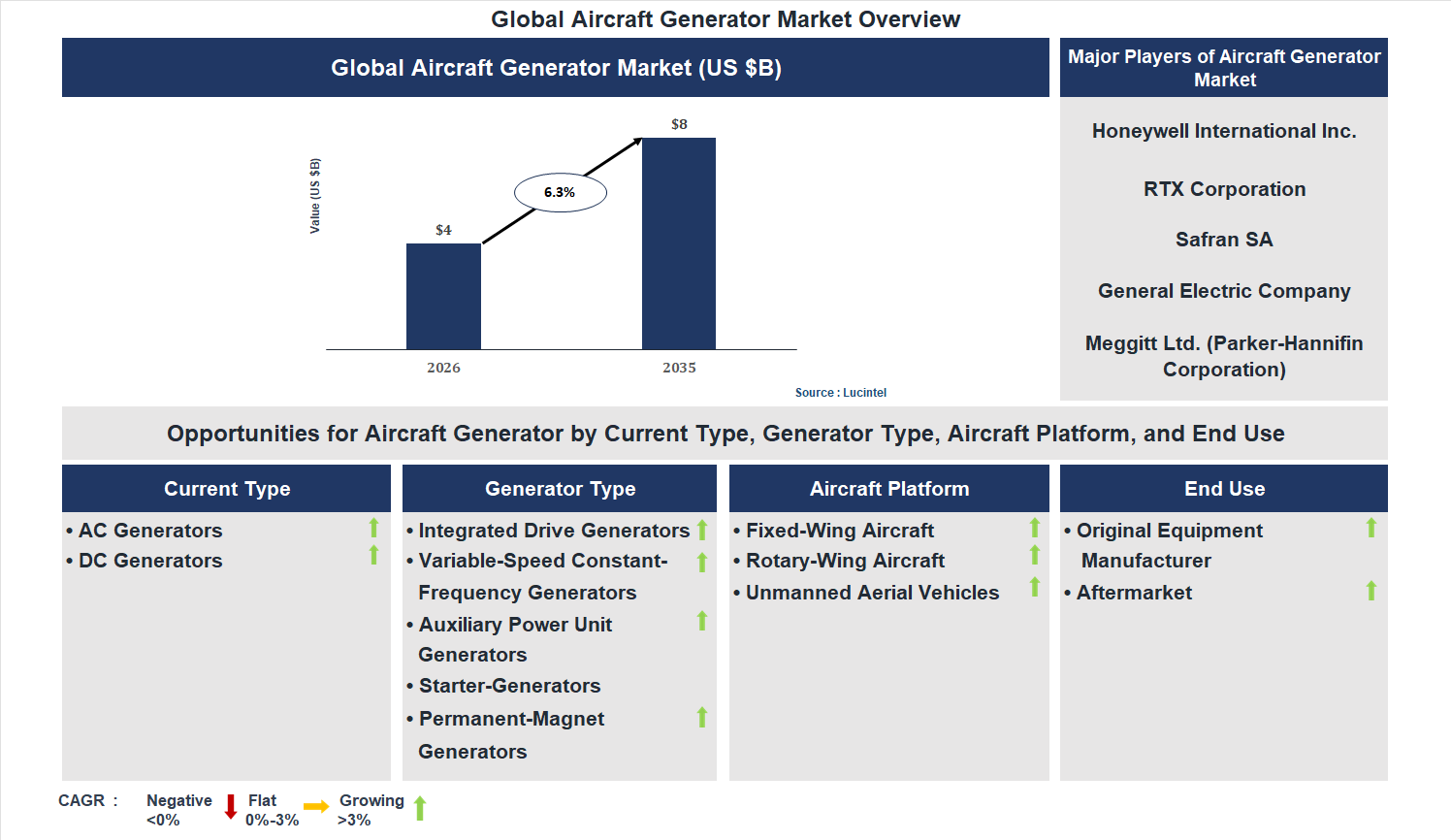
Key data points: The market size in 2035 = $8 billion, growth forecast = 6.3% annually for the next 8 years. Scroll below to get more insights. This market report covers trends, opportunities and forecasts in aircraft generator market to 2035 by current type (AC generators and DC generators), generator type (integrated drive generators, variable-speed constant-frequency generators, auxiliary power unit generators, starter-generators, and permanent-magnet generators), aircraft platform (fixed-wing aircraft, rotary-wing aircraft, and unmanned aerial vehicles), end use (original equipment manufacturer and aftermarket), and region (North America, Europe, Asia Pacific, and the Rest of the World)
We'll send your sample report shortly.
• Lucintel forecasts that, within the current type category, AC generator is expected to witness higher growth over the forecast period.
• Within the aircraft platform category, fixed-wing aircraft is expected to witness the highest growth.
• In terms of region, APAC is expected to witness the highest growth over the forecast period. Gain valuable insights for your business decisions with our comprehensive 150+ page report. Sample figures with some insights are shown below.
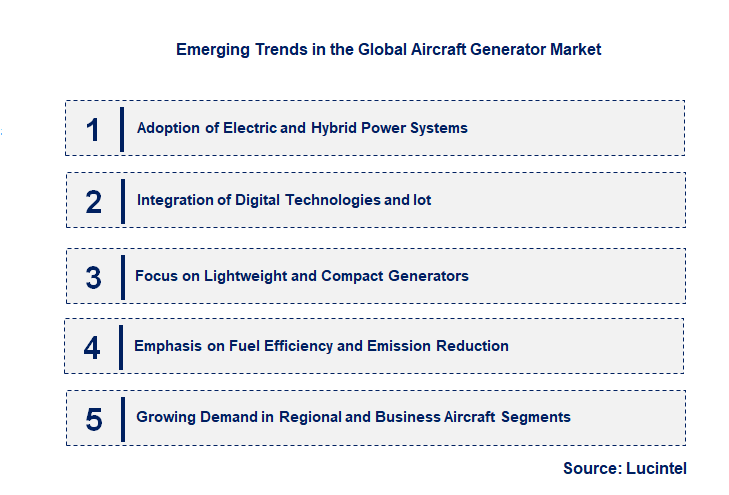
• Adoption of Electric and Hybrid Power Systems: The shift towards electric and hybrid propulsion systems is significantly impacting the aircraft generator market. These systems offer reduced emissions, lower fuel consumption, and enhanced efficiency, aligning with global sustainability goals. As aircraft manufacturers focus on greener solutions, the demand for advanced generators compatible with electric and hybrid engines is increasing. This trend encourages innovation in generator design, emphasizing lightweight, high-capacity, and energy-dense solutions. It also opens new avenues for market growth, especially in regional and small aircraft segments, where electric propulsion is gaining traction.
• Integration of Digital Technologies and IoT: Digitalization is revolutionizing aircraft generator management through the integration of Internet of Things (IoT) and smart monitoring systems. These technologies enable real-time data collection, predictive maintenance, and enhanced operational efficiency. Airlines and manufacturers benefit from reduced downtime, lower maintenance costs, and improved safety. The adoption of digital solutions is also facilitating remote diagnostics and automated control systems, leading to more reliable and efficient power generation. This trend is driving the market towards smarter, more connected power systems that optimize performance and lifespan.
• Focus on Lightweight and Compact Generators: The demand for lightweight and space-efficient generators is rising, driven by the need to maximize aircraft payload and fuel efficiency. Innovations in materials and design are enabling manufacturers to produce smaller, more powerful generators without adding weight. This trend is particularly important for commercial and military aircraft, where space and weight constraints are critical. The development of compact generators also supports the integration of additional onboard systems, enhancing overall aircraft performance and operational flexibility.
• Emphasis on Fuel Efficiency and Emission Reduction: Increasing regulatory pressures and environmental concerns are pushing the market towards more fuel-efficient and low-emission generators. Manufacturers are investing in advanced technologies such as high-efficiency turbines and alternative fuel-compatible generators. These innovations help airlines meet stringent emission standards while reducing operational costs. The focus on sustainability is also encouraging the development of hybrid systems that combine traditional and renewable energy sources, further reducing the carbon footprint of aircraft operations.
• Growing Demand in Regional and Business Aircraft Segments: The regional and business aircraft markets are experiencing increased demand for reliable, efficient generators tailored to smaller aircraft. These segments require generators that are lightweight, compact, and capable of supporting advanced avionics and cabin systems. The growth is driven by rising regional travel, corporate jet usage, and the expansion of private aviation. Manufacturers are customizing generator solutions to meet specific needs, which is expanding market opportunities and fostering innovation tailored to these niche segments. These emerging trends are reshaping the aircraft generator market by fostering innovation, enhancing efficiency, and promoting sustainability. The industry is moving towards smarter, greener, and more compact power solutions, which are crucial for meeting the evolving demands of modern aviation. These developments are not only expanding market opportunities but also setting new standards for performance, safety, and environmental responsibility in aircraft power systems.
• Growth in Demand for Fuel-Efficient Generators: The push for sustainability and cost reduction is driving the adoption of fuel-efficient aircraft generators. Airlines and OEMs are investing in advanced technologies to improve efficiency, reduce emissions, and comply with environmental standards. This trend is expanding the market by creating opportunities for innovative products that deliver higher performance with lower fuel consumption, ultimately benefiting operators and manufacturers alike.
• Integration of Digital Technologies: The incorporation of digital systems such as IoT, predictive maintenance, and real-time monitoring is transforming aircraft generator operations. These technologies enhance reliability, reduce downtime, and optimize maintenance schedules, leading to cost savings. The market benefits from increased demand for smart, connected generators that improve operational efficiency and safety, fostering a competitive edge for manufacturers adopting these innovations.
• Growing Demand in Emerging Markets: Rapid economic growth and expanding air travel infrastructure in regions like Asia-Pacific and the Middle East are fueling the need for reliable power generation systems. These markets are witnessing increased aircraft deliveries, which boost demand for aircraft generators. This growth presents significant opportunities for market players to establish a presence and cater to the rising demand for advanced, durable, and efficient generator systems in developing economies.
• Focus on Lightweight and Compact Designs: The need for weight reduction to improve fuel efficiency and aircraft performance is prompting the development of lightweight generators. Manufacturers are innovating with new materials and compact designs to meet space constraints and weight limitations. This trend enhances aircraft efficiency, reduces operational costs, and opens avenues for new product development tailored to modern aircraft specifications.
• Regulatory and Environmental Standards: Stricter emissions and safety regulations are compelling manufacturers to innovate and upgrade their products. The market is witnessing increased R&D investments to develop generators that meet these standards while maintaining performance. This focus on compliance drives technological advancements, influences product design, and creates a competitive landscape that encourages sustainable and environmentally friendly solutions. The aircraft generator market is being reshaped by technological, regulatory, and regional developments, leading to increased efficiency, sustainability, and market expansion. These opportunities are fostering innovation, driving growth, and positioning the industry for a more sustainable and competitive future.
• Integration of Advanced Power Management Systems: The adoption of sophisticated power management solutions in aircraft generators enhances efficiency, reduces weight, and improves reliability. These systems enable better load balancing, fault detection, and energy optimization, which are critical for modern aircraft. As airlines seek to lower operational costs and meet stringent environmental standards, manufacturers are investing in innovative generator technologies that integrate seamlessly with aircraft electrical systems, opening new growth avenues.
• Development of Lightweight, Fuel-Efficient Generators: The push for fuel economy and reduced emissions is driving the development of lightweight aircraft generators. Using advanced materials and design techniques, manufacturers are creating generators that consume less fuel while maintaining high performance. This not only benefits commercial airlines by lowering operating costs but also supports the growth of smaller regional and business aircraft markets, expanding the overall market scope.
• Expansion into Emerging Markets with Growing Aviation Sectors: Rapid economic growth in regions such as Asia-Pacific and the Middle East is fueling increased air travel and infrastructure development. Companies are targeting these emerging markets by establishing local manufacturing facilities, forming strategic alliances, and customizing products to meet regional requirements. This expansion offers substantial growth opportunities as demand for reliable aircraft power systems rises alongside the expanding aviation industry.
• Adoption of Hybrid and Electric Aircraft Generator Systems: The shift towards sustainable aviation fuels and electric propulsion systems is creating demand for innovative generator solutions. Hybrid and electric aircraft require specialized generators capable of supporting electric motors and energy storage systems. Developing these advanced generators positions market players at the forefront of eco-friendly aviation technology, opening new revenue streams and enabling compliance with evolving environmental regulations.
• Focus on Maintenance, Repair, and overhaul (MRO) Services for Aircraft Generators: As the installed base of aircraft generators grows, so does the need for efficient MRO services. Companies are expanding their service networks, investing in predictive maintenance technologies, and offering comprehensive support packages. This focus on after-sales services ensures operational reliability, reduces downtime, and generates recurring revenue, making it a vital growth opportunity within the aircraft generator market. The overall market is poised for significant growth as technological innovations, regional expansion, and sustainability initiatives converge. These opportunities will enable industry players to strengthen their market positions, meet evolving customer demands, and contribute to the modernization of global aviation power systems.
• Technological Innovation: The continuous development of advanced generator systems, such as lightweight, high-efficiency, and environmentally friendly models, is a primary driver. These innovations enable airlines and aircraft manufacturers to meet stringent emission standards and improve overall aircraft performance. The integration of digital monitoring and automation further enhances reliability and maintenance efficiency, reducing operational costs. As technology progresses, the adoption of more sophisticated generators becomes inevitable, fueling market growth and opening new avenues for product development.
• Increasing Air Travel Demand: The global rise in air travel, driven by economic growth and expanding middle classes, significantly boosts demand for aircraft and, consequently, aircraft generators. Airlines are expanding their fleets to accommodate increasing passenger numbers, which necessitates more power generation solutions. This surge in demand encourages manufacturers to innovate and scale production, ensuring supply meets industry needs. The growth in regional and low-cost carriers also contributes to a broader market base, fostering competitive pricing and product diversification.
• Regulatory and Environmental Standards: Stricter regulations aimed at reducing carbon emissions and enhancing safety standards are compelling manufacturers to develop cleaner, more efficient generators. Compliance with international standards such as ICAO’s CORSIA and EPA regulations drives innovation in low-emission technologies. These regulatory pressures push the market toward sustainable solutions, encouraging investment in alternative fuels and hybrid systems. While challenging, these standards also create opportunities for companies to differentiate their offerings and gain a competitive edge in a rapidly evolving regulatory landscape.
• OEM and Aftermarket Growth: The expansion of original equipment manufacturers (OEMs) and aftermarket services is a key driver. OEMs are investing heavily in R&D to develop next-generation generators, while aftermarket services ensure ongoing maintenance, upgrades, and repairs. This ecosystem supports the lifecycle management of aircraft generators, fostering customer loyalty and recurring revenue streams. The aftermarket segment, in particular, benefits from the aging fleet and the need for retrofitting, creating a sustained demand for replacement parts and maintenance services.
• Strategic Partnerships and Mergers: Collaborations between aircraft manufacturers, technology providers, and component suppliers accelerate innovation and market penetration. Strategic alliances enable sharing of expertise, reducing development costs and time-to-market. Mergers and acquisitions further consolidate market players, enhancing their capabilities and market reach. These partnerships facilitate the adoption of cutting-edge technologies and expand distribution networks, ultimately driving market growth and competitiveness. The challenges facing the aircraft generator market include:
• High Development and Certification Costs: Developing advanced aircraft generators involves significant investment in research, testing, and certification processes. Regulatory approval is rigorous and time-consuming, often delaying product launches and increasing costs. These financial barriers can limit entry for smaller players and slow innovation, impacting overall market competitiveness. Additionally, the need for compliance with evolving standards requires continuous R&D, further escalating expenses and risk.
• Supply Chain Disruptions: The global supply chain for critical components such as rare earth materials, electronic parts, and specialized metals is vulnerable to geopolitical tensions, natural disasters, and pandemics. Disruptions can lead to delays in manufacturing, increased costs, and inventory shortages, affecting the timely delivery of aircraft generators. Such uncertainties hinder market stability and can dampen growth prospects, especially for companies heavily reliant on complex global supply networks.
• Environmental and Regulatory Uncertainty: While regulations are driving innovation, unpredictable changes in environmental policies and standards pose challenges. Sudden tightening of emission limits or new safety requirements can render existing products obsolete, necessitating costly redesigns. Companies must stay agile to adapt to shifting regulatory landscapes, which can divert resources and impact profitability. This uncertainty complicates long-term planning and investment strategies within the market. The aircraft generator market is shaped by rapid technological advancements, increasing demand driven by global air travel, and stringent environmental regulations. While these drivers foster innovation and growth, challenges such as high development costs, supply chain vulnerabilities, and regulatory uncertainties pose significant hurdles. Navigating these factors requires strategic agility and continuous innovation, which will ultimately determine the market’s trajectory. The overall impact is a dynamic environment where opportunities for growth coexist with substantial risks, demanding proactive adaptation from industry players.
• Honeywell International Inc.
• RTX Corporation
• Safran SA
• General Electric Company
• Meggitt Ltd. (Parker-Hannifin Corporation)
• Thales Group
• Rolls-Royce Holdings plc
• Astronics Corporation
• PBS Group, a. s.
• Calnetix Technologies, LLC
• AC Generators
• DC Generators
• Integrated Drive Generators
• Variable-Speed Constant-Frequency Generators
• Auxiliary Power Unit Generators
• Starter-Generators
• Permanent-Magnet Generators
• Fixed-Wing Aircraft
• Rotary-Wing Aircraft
• Unmanned Aerial Vehicles
• Original Equipment Manufacturer
• Aftermarket
• North America
• Europe
• Asia Pacific
• The Rest of the World
• United States: The US market has seen substantial innovation in electric and hybrid aircraft generators, driven by major aerospace companies like Boeing and Lockheed Martin. There is a focus on integrating digital monitoring systems for improved reliability and maintenance. The US government’s investments in sustainable aviation fuel and green technologies are fostering advancements in environmentally friendly generator systems. Additionally, the expansion of commercial aviation and military modernization programs are boosting demand for high-efficiency generators.
• China: China is rapidly advancing its aircraft generator technology, emphasizing indigenous development to reduce reliance on imports. The country’s aerospace industry is investing heavily in lightweight, high-performance generators to support its growing commercial and military fleets. Government initiatives aim to enhance domestic capabilities through research and development, with a focus on energy efficiency and integration with new aircraft platforms. The expansion of China’s civil aviation sector is also driving demand for reliable, cost-effective generator solutions.
• Germany: Germany’s aerospace sector is characterized by innovation in sustainable and energy-efficient generator systems, often driven by collaborations between industry and research institutions. The country is focusing on developing generators that support eco-friendly aircraft, including electric and hybrid propulsion systems. Germany’s emphasis on quality and technological excellence is reflected in the adoption of advanced materials and digital control systems. The country’s strong aerospace manufacturing base supports the integration of these innovations into both commercial and military aircraft.
• India: India’s aircraft generator market is witnessing growth fueled by expanding civil aviation and military modernization efforts. The country is investing in indigenous development of generators to support its domestic aircraft manufacturing industry. There is a focus on lightweight, durable, and energy-efficient systems to meet the demands of regional and commercial aircraft. Government initiatives like Make in India are encouraging local innovation and production, with increasing collaborations between domestic firms and global aerospace players.
• Japan: Japan is advancing its aircraft generator technology through innovations in compact, lightweight, and energy-efficient systems. The country’s aerospace industry emphasizes reliability and integration with advanced avionics. Japan is also exploring environmentally sustainable solutions, including generators compatible with hybrid and electric aircraft. The government and private sector are collaborating on research projects to develop next-generation generators that align with global trends toward greener aviation and enhanced aircraft performance.


• Honeywell International Inc.
• RTX Corporation
• Safran SA
• General Electric Company
• Meggitt Ltd. (Parker-Hannifin Corporation)
• Thales Group
• Rolls-Royce Holdings plc
• Astronics Corporation
• PBS Group, a. s.
• Calnetix Technologies, LLC Q6. Which aircraft generator market segment will be the largest in future? Answer: Lucintel forecasts that, within the current type category, AC generator is expected to witness higher growth over the forecast period. Q7. In aircraft generator market, which region is expected to be the largest in next 8 years? Answer: In terms of region, APAC is expected to witness the highest growth over the forecast period. Q8. Do we receive customization in this report? Answer: Yes, Lucintel provides 10% customization without any additional cost.


Choose a license that fits your team. Instant PDF delivery.
Prices exclude taxes. Instant delivery. Custom licensing available on request.
Market Report · July 31, 2026
Market Report · July 31, 2026
Market Report · July 22, 2026
Trusted partner for strategic intelligence and business growth


Receive a complimentary market analysis tailored to your industry. Our analysts will identify key growth opportunities and competitive dynamics specific to your business.

Market size, growth rate, and key trend analysis for your specific sector.

Top competitor positioning and market share analysis.

Strategic recommendations backed by data-driven insights.
Get curated market intelligence and competitive moves straight to your inbox.
By subscribing, you agree to receive our monthly insights. Unsubscribe anytime.
Receive a complimentary market analysis tailored to your industry. Our analysts will identify key growth opportunities and competitive dynamics specific to your business.
Market size, growth rate, and key trend analysis for your specific sector.
Top competitor positioning and market share analysis.
Strategic recommendations backed by data-driven insights.
Get curated market intelligence, emerging trends, and competitive moves straight to your inbox each month.
By subscribing, you agree to receive our monthly insights. Unsubscribe anytime.
We'll send your sample report shortly.