
Market Report · July 31, 2026

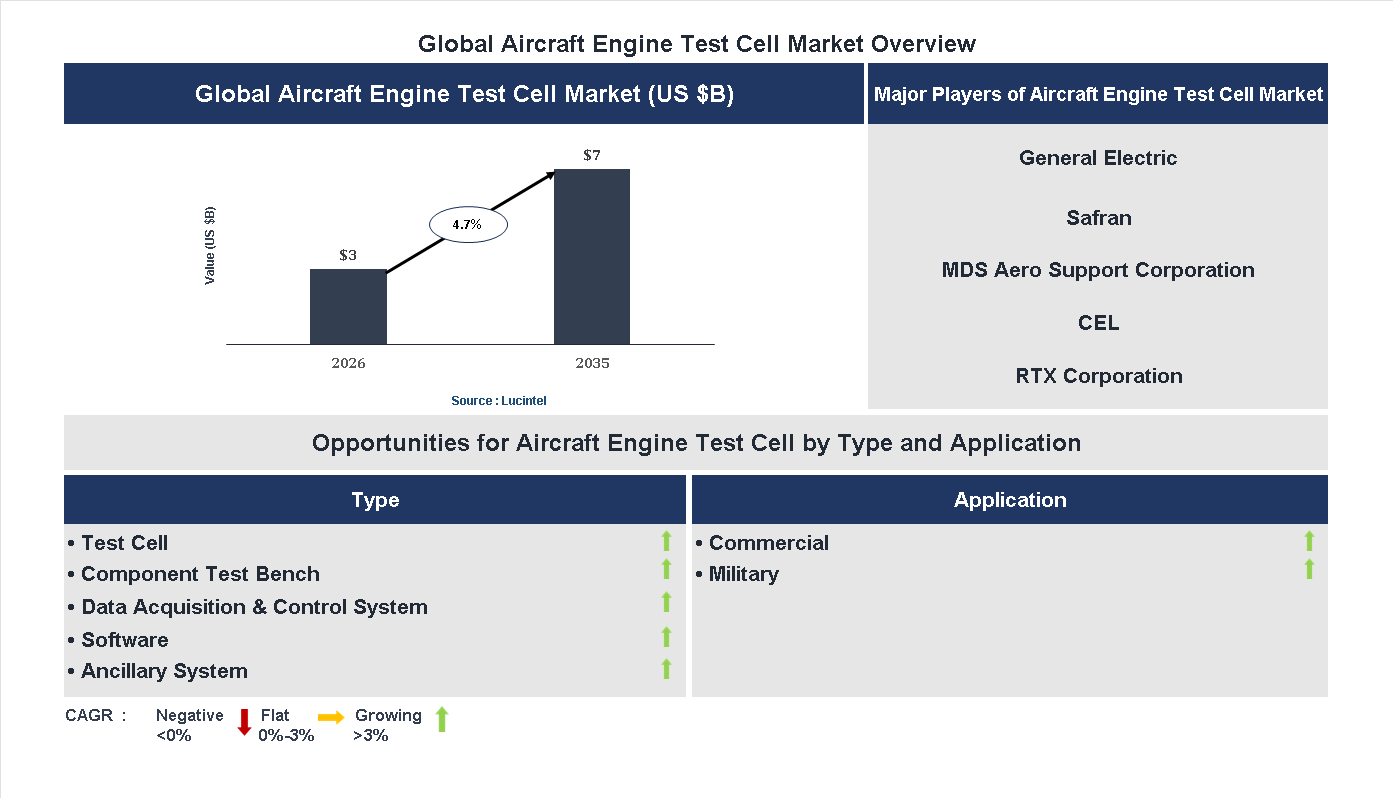
Key data points: The market size in 2035 = $7 billion, growth forecast = 4.7% annually for the next 8 years. Scroll below to get more insights. This market report covers trends, opportunities and forecasts in aircraft engine test cell market to 2035 by type (test cell, component test bench, data acquisition & control system, software, and ancillary system), application (commercial and military), and region (North America, Europe, Asia Pacific, and the Rest of the World)
We'll send your sample report shortly.
• Lucintel forecasts that, within the type category, data acquisition & control system is expected to witness the highest growth over the forecast period.
• Within the application category, commercial is expected to witness higher growth.
• In terms of region, APAC is expected to witness the highest growth over the forecast period. Gain valuable insights for your business decisions with our comprehensive 150+ page report. Sample figures with some insights are shown below.
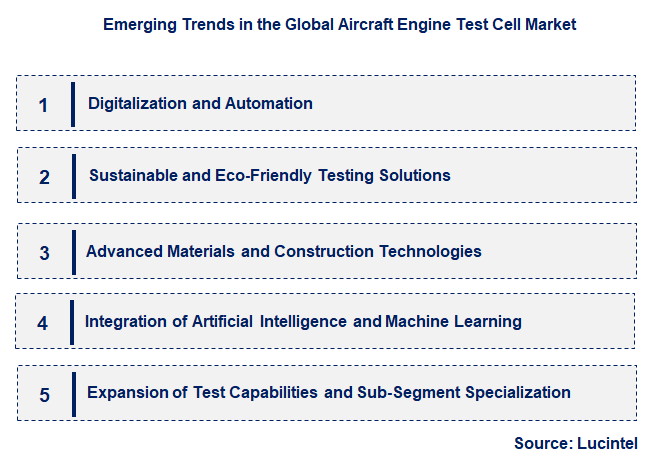
• Digitalization and Automation: The integration of digital technologies and automation in test cells is revolutionizing engine testing processes. Advanced sensors, IoT connectivity, and data analytics enable real-time monitoring and precise control, reducing human error and increasing efficiency. Automated testing procedures shorten cycle times and improve repeatability, leading to faster development and certification of engines. This trend also facilitates predictive maintenance, minimizing downtime and operational costs. As a result, manufacturers can achieve higher throughput and better data accuracy, ultimately accelerating innovation in engine design and performance optimization.
• Sustainable and Eco-Friendly Testing Solutions: Growing environmental concerns and stricter regulations are driving the adoption of sustainable testing practices. Test cells are increasingly equipped with energy-efficient systems, noise reduction technologies, and emissions control measures. The use of renewable energy sources and waste heat recovery systems further reduces the environmental footprint. These eco-friendly solutions not only comply with regulatory standards but also appeal to environmentally conscious stakeholders. The shift toward sustainability is fostering innovation in test cell design, promoting greener aviation technologies, and supporting the industry’s overall goal of reducing carbon emissions.
• Advanced Materials and Construction Technologies: The development of new materials and construction techniques is enhancing the durability and performance of test cells. Lightweight, high-strength materials such as composites and advanced alloys improve structural integrity while reducing overall weight. Modular construction methods allow for flexible and scalable test cell configurations, accommodating various engine sizes and testing requirements. These innovations lead to cost savings, quicker installation, and easier maintenance. As a result, test facilities can adapt more rapidly to technological changes, supporting diverse testing needs and expanding market reach.
• Integration of Artificial Intelligence and Machine Learning: AI and ML are increasingly being incorporated into test cell operations to optimize performance and data analysis. These technologies enable predictive analytics, anomaly detection, and automated decision-making, enhancing test accuracy and safety. AI-driven insights help identify potential issues early, reducing risks and improving engine reliability. Machine learning algorithms can also optimize testing parameters in real-time, increasing efficiency and reducing resource consumption. This integration is transforming traditional testing paradigms, making processes smarter, faster, and more reliable, and providing a competitive edge to industry players.
• Expansion of Test Capabilities and Sub-Segment Specialization: The market is witnessing diversification with specialized test cells tailored for different engine types, such as turbofan, turboprop, and electric propulsion systems. This expansion allows manufacturers to address specific testing needs more effectively. Additionally, the development of high-altitude, cold-weather, and endurance test cells broadens testing capabilities, supporting diverse operational environments. Sub-segment growth is driven by the increasing complexity of engines and the emergence of alternative propulsion technologies. This specialization enhances testing precision, accelerates certification processes, and opens new revenue streams for test facility providers. These emerging trends are fundamentally reshaping the aircraft engine test cell market by fostering innovation, promoting sustainability, and enhancing operational efficiency. The integration of digital and AI technologies, coupled with advancements in materials and specialized testing capabilities, is enabling the industry to meet evolving regulatory standards and technological demands. As a result, the market is poised for significant growth, driven by a focus on greener, smarter, and more adaptable testing solutions that support the future of aviation technology.
• Technological Innovations in Test Cell Design: Advancements in automation and digital controls are revolutionizing engine testing. Modern test cells incorporate AI-driven analytics, real-time monitoring, and remote operation capabilities, significantly increasing accuracy and efficiency. These innovations reduce testing time, lower operational costs, and improve safety standards. Enhanced data collection and analysis enable better engine performance assessment, supporting faster development cycles. The integration of sustainable materials and energy-efficient systems further aligns with environmental goals, making test cells more eco-friendly and cost-effective.
• Growing Demand for Aircraft and Engine Production: The surge in commercial and military aircraft production is fueling the need for advanced testing facilities. As aircraft models become more complex, engines require rigorous testing to meet safety and performance standards. This demand drives investments in new test cells and upgrades of existing infrastructure. The expansion of aerospace manufacturing hubs in Asia-Pacific and North America is particularly notable. Increased production volume necessitates scalable, high-capacity test cells capable of handling larger engines and more frequent testing, boosting market growth.
• Implementation of Sustainable and Eco-Friendly Testing Solutions: Environmental concerns are prompting the adoption of green testing practices. Manufacturers are developing energy-efficient test cells with reduced carbon footprints, utilizing renewable energy sources and waste heat recovery systems. These sustainable solutions not only comply with stricter regulations but also lower operational costs over time. The focus on eco-friendly testing aligns with global efforts to reduce aviation’s environmental impact, attracting environmentally conscious clients and stakeholders. This shift enhances market competitiveness and promotes long-term industry sustainability.
• Digital Transformation and Data Analytics Integration: The integration of digital technologies is transforming engine testing processes. Advanced data analytics, machine learning, and IoT enable predictive maintenance, anomaly detection, and performance optimization. Digital twin technology allows virtual testing, reducing physical testing needs and accelerating development cycles. These innovations improve test accuracy, reduce downtime, and facilitate better decision-making. The adoption of cloud-based platforms enhances collaboration among global teams. Overall, digital transformation is increasing operational efficiency and providing a competitive edge in the market.
• Strategic Collaborations and Market Expansion: Partnerships between OEMs, test cell manufacturers, and research institutions are driving innovation. Collaborations facilitate the development of next-generation test solutions and expand market reach. Geographic expansion into emerging markets like Asia-Pacific and the Middle East offers new growth opportunities. Investment in infrastructure and technology upgrades supports industry growth. These strategic alliances and regional expansions are strengthening the market position of key players, fostering innovation, and enabling the industry to meet increasing global demand for aircraft engines and testing facilities. These recent developments are significantly impacting the aircraft engine test cell market by enhancing technological capabilities, expanding capacity, and promoting sustainability. Digital integration and strategic collaborations are driving innovation and operational efficiency. The market is poised for substantial growth as demand for aircraft increases and environmental considerations become more prominent. Overall, these advancements are creating a more efficient, eco-friendly, and competitive landscape, positioning the industry for sustained expansion and technological leadership.
• Increasing Demand for Advanced Engine Testing Facilities: The need for high-precision testing to ensure engine performance and safety is driving investments in modern test cells. Aerospace manufacturers seek facilities capable of simulating real-flight conditions, including high-altitude and extreme temperature testing. This demand is fueled by the development of next-generation engines, such as those with increased fuel efficiency and reduced emissions, requiring sophisticated testing environments to meet regulatory standards and improve reliability.
• Growth in Commercial Aircraft Production Boosts Test Cell Requirements: The surge in commercial aircraft orders, especially from emerging markets, necessitates expanded testing infrastructure. Manufacturers are investing in larger, more versatile test cells to accommodate various engine sizes and models. This growth supports the development of twin-engine and wide-body aircraft, which demand extensive testing for certification. The expansion of production facilities worldwide directly correlates with increased demand for specialized test cell solutions.
• Technological Innovations in Test Cell Design and Automation: Advances in automation, data analytics, and remote monitoring are transforming test cell operations. Incorporating IoT and AI enhances testing accuracy, reduces downtime, and improves safety. Modular and scalable test cell designs allow for flexible testing of different engine types. These innovations enable faster certification processes, lower operational costs, and higher throughput, making them attractive for aerospace companies aiming to optimize testing efficiency and meet stringent quality standards.
• Rising Focus on Environmental Regulations and Emission Testing: Stricter environmental standards compel engine manufacturers to conduct comprehensive emissions testing. Test cells equipped with advanced pollution control systems and real-time monitoring are in high demand. This focus on sustainability drives the development of eco-friendly test facilities capable of measuring NOx, CO, and particulate emissions. Compliance with global regulations, such as ICAO standards, is essential for market players, fostering innovation in test cell technology to support greener engine designs.
• Expansion of Military and Space Engine Testing Capabilities: The increasing deployment of military aircraft and space exploration missions necessitates specialized engine testing facilities. Military engines require rigorous testing for durability and performance under extreme conditions, while space engines demand vacuum and thermal testing environments. Investments in high-altitude, vibration, and thermal test cells are expanding to support defense and space programs. This diversification broadens the market scope, creating new opportunities for test cell manufacturers to serve both commercial and government sectors. The overall growth of the aircraft engine test cell market is driven by technological advancements, increased aircraft production, and evolving regulatory standards. These opportunities collectively enhance testing capabilities, improve safety, and support innovation in aerospace engineering. As the industry continues to evolve, strategic investments in test infrastructure will be crucial for maintaining competitive advantage and ensuring compliance with global standards.
• Technological Innovation: The rapid development of advanced testing technologies enhances accuracy, efficiency, and safety in engine testing processes. Innovations such as automation, data analytics, and real-time monitoring enable manufacturers to reduce testing time and costs while improving engine performance assessments. This technological evolution attracts investments and encourages the adoption of new test cell solutions, fueling market growth.
• Increasing Aircraft Production: The global rise in aircraft manufacturing, driven by expanding air travel and fleet modernization, directly boosts demand for engine testing facilities. As OEMs and MROs ramp up production, the need for reliable, high-capacity test cells becomes critical to ensure engine quality and compliance with safety standards, thereby expanding the market.
• Stringent Regulatory Standards: Governments and aviation authorities impose strict safety, environmental, and emissions regulations. These regulations necessitate comprehensive engine testing to meet certification requirements, prompting airlines and manufacturers to invest in advanced test cells. Compliance ensures market access and safety assurance, driving demand.
• Focus on Fuel Efficiency and Emissions Reduction: The push for greener aviation solutions encourages the development of engines that meet stringent emissions standards. Testing these engines in specialized test cells ensures they operate efficiently and within regulatory limits, fostering innovation and market expansion in environmentally compliant engine testing. The challenges in the aircraft engine test cell market are:
• High Capital Investment: Establishing advanced test cells requires significant capital expenditure on infrastructure, equipment, and skilled personnel. This high initial investment can be a barrier for smaller players and limits rapid market expansion, especially in emerging regions where funding may be constrained.
• Regulatory Compliance Complexity: Navigating the complex landscape of international safety, environmental, and certification standards poses a challenge. Ensuring compliance across different jurisdictions involves substantial time and resources, which can delay project implementation and increase operational costs.
• Technological Obsolescence: Rapid technological advancements can render existing test cell equipment outdated quickly. Keeping pace with innovations requires continuous upgrades and maintenance, leading to increased costs and operational disruptions, which can hinder long-term planning and investment stability. The aircraft engine test cell market is driven by technological advancements, increasing aircraft production, regulatory demands, and environmental considerations. However, high capital costs, compliance complexities, and rapid technological changes pose significant challenges. These factors collectively influence market dynamics, requiring stakeholders to balance innovation with strategic investments. The markets growth potential remains substantial, provided companies effectively navigate these drivers and challenges through innovation, collaboration, and regulatory compliance.
• General Electric
• Safran
• MDS Aero Support Corporation
• CEL
• RTX Corporation
• Calspan Corporation
• Atec, Inc.
• Test Cell
• Component Test Bench
• Data Acquisition & Control System
• Software
• Ancillary System
• Commercial
• Military
• North America
• Europe
• Asia Pacific
• The Rest of the World
• United States: The US market is witnessing significant investments in automation and digitalization of test cells, with major aerospace companies adopting advanced simulation technologies. There is a growing emphasis on environmentally friendly testing processes, including noise reduction and emissions control. The government’s defense and commercial sectors are expanding their testing capacities, fostering innovation in engine performance evaluation. Additionally, collaborations between industry and research institutions are driving the development of next-generation test cells with enhanced precision and efficiency.
• China: China is rapidly expanding its aircraft engine testing infrastructure to support its growing aerospace industry. The country is investing heavily in state-of-the-art test facilities equipped with advanced data acquisition and analysis systems. Chinese firms are focusing on developing indigenous testing solutions to reduce reliance on foreign technology, emphasizing automation and environmental sustainability. The government’s strategic initiatives aim to boost domestic engine manufacturing, which directly fuels the demand for sophisticated test cells. This growth aligns with China’s broader goal of becoming a global aerospace leader.
• Germany: Germany remains at the forefront of aerospace testing technology, with a strong focus on innovation and sustainability. The country’s test cells incorporate cutting-edge automation, data analytics, and eco-friendly features to minimize environmental impact. German companies are also pioneering in the integration of digital twins and AI-driven diagnostics to improve testing accuracy and efficiency. The aerospace sector’s emphasis on high-performance engines and compliance with strict European environmental standards continues to drive advancements in test cell technology.
• India: India’s aircraft engine test cell market is experiencing rapid growth driven by increased aircraft manufacturing and modernization efforts. The country is investing in new test facilities with advanced instrumentation and automation to support indigenous engine development. Government initiatives aim to boost the aerospace sector’s self-reliance, leading to the adoption of innovative testing solutions. India is also focusing on environmentally sustainable testing practices, including noise reduction and emissions control, to meet global standards. The expanding aerospace ecosystem presents significant opportunities for local and international players.
• Japan: Japan is advancing its aircraft engine test cell capabilities through technological innovation and environmental initiatives. The country emphasizes the integration of automation, IoT, and AI to enhance testing precision and operational efficiency. Japanese firms are also investing in eco-friendly test cell designs that reduce energy consumption and emissions. The government’s support for aerospace R&D and collaborations with global aerospace companies are fostering the development of high-performance, sustainable testing solutions. Japan’s focus remains on maintaining technological leadership and supporting its aerospace industry’s growth in a competitive global market.


• General Electric
• Safran
• MDS Aero Support Corporation
• CEL
• RTX Corporation
• Calspan Corporation
• Atec, Inc. Q6. Which aircraft engine test cell market segment will be the largest in future? Answer: Lucintel forecasts that, within the type category, data acquisition & control system is expected to witness the highest growth over the forecast period. Q7. In aircraft engine test cell market, which region is expected to be the largest in next 8 years? Answer: In terms of region, APAC is expected to witness the highest growth over the forecast period. Q8. Do we receive customization in this report? Answer: Yes, Lucintel provides 10% customization without any additional cost.


Choose a license that fits your team. Instant PDF delivery.
Prices exclude taxes. Instant delivery. Custom licensing available on request.
Market Report · July 31, 2026
Market Report · July 31, 2026
Market Report · July 31, 2026
Trusted partner for strategic intelligence and business growth


Receive a complimentary market analysis tailored to your industry. Our analysts will identify key growth opportunities and competitive dynamics specific to your business.

Market size, growth rate, and key trend analysis for your specific sector.

Top competitor positioning and market share analysis.

Strategic recommendations backed by data-driven insights.
Get curated market intelligence and competitive moves straight to your inbox.
By subscribing, you agree to receive our monthly insights. Unsubscribe anytime.
Receive a complimentary market analysis tailored to your industry. Our analysts will identify key growth opportunities and competitive dynamics specific to your business.
Market size, growth rate, and key trend analysis for your specific sector.
Top competitor positioning and market share analysis.
Strategic recommendations backed by data-driven insights.
Get curated market intelligence, emerging trends, and competitive moves straight to your inbox each month.
By subscribing, you agree to receive our monthly insights. Unsubscribe anytime.
We'll send your sample report shortly.