
Market Report · July 31, 2026

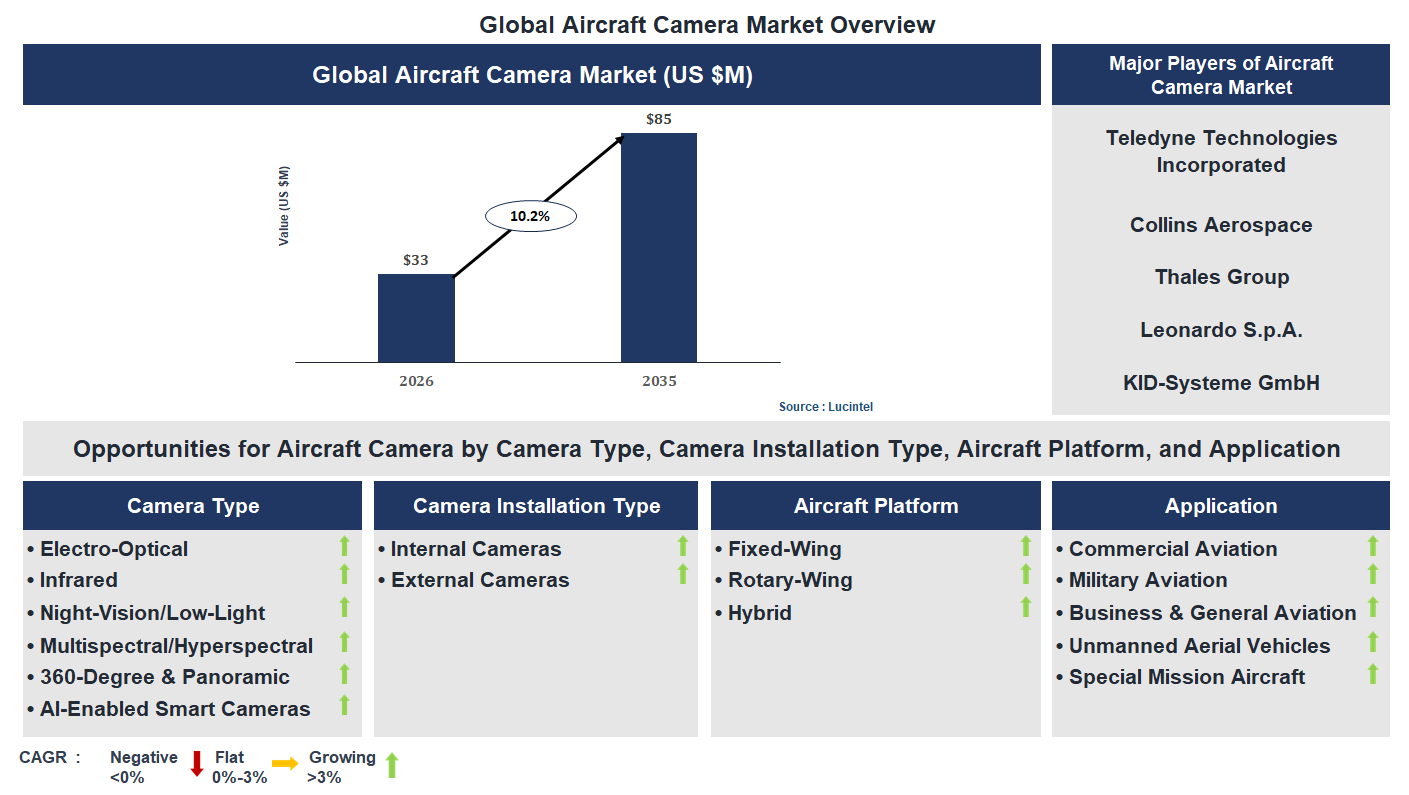
Key data points: The market size in 2035 = $85 million, growth forecast = 10.2% annually for the next 8 years. Scroll below to get more insights. This market report covers trends, opportunities and forecasts in aircraft camera market to 2035 by type (electro-optical, infrared, night-vision/low-light, multispectral/hyperspectral, 360-degree & panoramic, and AI-enabled smart cameras), camera installation type (internal cameras and external cameras), aircraft platform (fixed-wing, rotary-wing, and hybrid), application (commercial aviation, military aviation, business & general aviation, unmanned aerial vehicles, and special mission aircraft), and region (North America, Europe, Asia Pacific, and the Rest of the World)
We'll send your sample report shortly.
• Lucintel forecasts that, within the type category, multispectral/hyperspectral is expected to witness the highest growth over the forecast period.
• Within the application category, commercial aviation is expected to witness the highest growth.
• In terms of region, North America is expected to witness the highest growth over the forecast period. Gain valuable insights for your business decisions with our comprehensive 150+ page report. Sample figures with some insights are shown below.
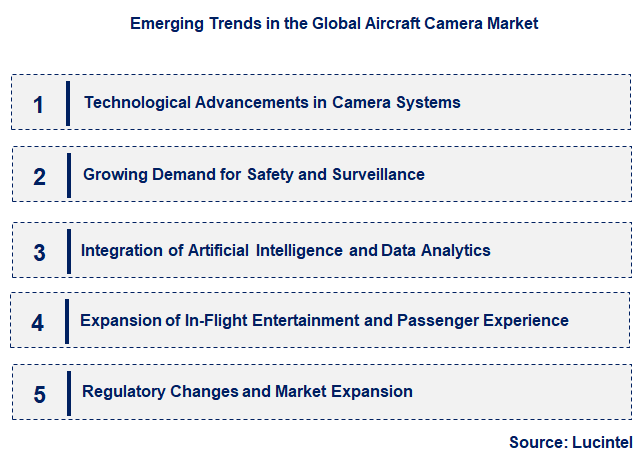
• Technological Advancements in Camera Systems: The integration of high-resolution, lightweight, and durable camera technologies is revolutionizing aircraft imaging. Innovations such as 4K and thermal imaging cameras enable clearer, more detailed visuals, improving safety and maintenance procedures. These advanced systems facilitate real-time monitoring of aircraft components, enhance surveillance capabilities, and support autonomous operations. The continuous miniaturization and increased efficiency of camera components reduce weight and power consumption, making them more suitable for various aircraft types. This trend is driving the market toward smarter, more reliable imaging solutions that meet the rigorous demands of modern aviation.
• Growing Demand for Safety and Surveillance: Enhanced safety measures and security protocols are fueling the adoption of advanced cameras in aircraft. Cameras are now integral to cockpit monitoring, passenger surveillance, and baggage screening, helping prevent security threats and ensuring passenger safety. The ability to record and analyze in-flight incidents provides valuable data for investigations and safety improvements. Additionally, airports and airlines are deploying cameras for perimeter security and operational monitoring. This increased focus on safety and surveillance is expanding the market, prompting manufacturers to develop specialized camera systems that meet stringent aviation standards and regulatory requirements.
• Integration of Artificial Intelligence and Data Analytics: The incorporation of AI and data analytics into aircraft camera systems is transforming how data is utilized. AI-powered cameras can automatically detect anomalies, monitor passenger behavior, and assist in maintenance diagnostics, reducing human error and operational costs. These intelligent systems enable predictive maintenance, improve security screening, and enhance passenger experience through personalized services. The ability to analyze vast amounts of visual data in real-time is creating new opportunities for airlines and airports to optimize operations. This trend is making aircraft camera systems more proactive, efficient, and integral to overall flight safety and management.
• Expansion of In-Flight Entertainment and Passenger Experience: Cameras are increasingly being used to enhance passenger engagement and comfort. In-flight cameras provide live views of the outside scenery, creating immersive experiences for passengers. They are also used for cabin monitoring to improve service delivery and ensure safety. The integration of cameras with entertainment systems allows for interactive content and personalized experiences. As airlines seek to differentiate themselves, the deployment of advanced camera systems in passenger cabins is expected to grow, contributing to a more engaging and secure flying experience. This trend is aligning technological innovation with customer satisfaction priorities.
• Regulatory Changes and Market Expansion: Evolving regulations regarding safety, security, and data privacy are shaping the aircraft camera market. Governments and aviation authorities are setting stricter standards for camera performance, installation, and data handling, prompting manufacturers to innovate compliant solutions. Additionally, emerging markets in Asia-Pacific and the Middle East are experiencing rapid growth due to expanding air travel infrastructure and increased investment in aviation safety. These regulatory and geographic factors are expanding the market scope, encouraging global collaboration and technological standardization. As a result, the aircraft camera market is poised for substantial growth driven by regulatory compliance and market diversification. Technological innovations, safety enhancements, AI integration, passenger experience improvements, and regulatory developments are collectively reshaping the aircraft camera market. These trends are fostering a more connected, intelligent, and safety-focused aviation environment, paving the way for sustained growth and technological leadership in the industry.
• Technological Integration in Camera Systems: The integration of high-resolution, lightweight, and durable cameras is revolutionizing aircraft surveillance and monitoring capabilities. These advanced systems enable real-time data collection, improved image quality, and better operational insights. As aircraft cameras become more sophisticated, they enhance safety, support maintenance, and facilitate navigation, leading to increased adoption across commercial and military sectors. This evolution is driving market growth and innovation.
• Growing Demand for In-Flight Surveillance and Security: Increasing concerns over passenger safety and security are fueling demand for onboard surveillance cameras. Airlines and airports are investing in advanced camera systems to monitor cabin activities, prevent security threats, and ensure compliance with safety regulations. These cameras also assist in incident investigations and improve overall passenger experience. The rising emphasis on security measures is significantly expanding the market, prompting manufacturers to develop specialized solutions.
• Expansion of Military and Defense Applications: The military sector is adopting aircraft cameras for reconnaissance, surveillance, and combat missions. Enhanced imaging capabilities, night vision, and real-time data transmission are critical for defense operations. The growing need for border security, tactical surveillance, and drone integration is further boosting demand. This expansion is creating lucrative opportunities for market players to develop specialized military-grade camera systems, thereby strengthening the overall market position.
• Integration of Artificial Intelligence and Data Analytics: AI-powered cameras are transforming aircraft surveillance by enabling automated image analysis, threat detection, and predictive maintenance. These intelligent systems reduce human error, improve decision-making, and optimize operational efficiency. The integration of data analytics with camera technology is also facilitating better asset management and safety protocols. This technological convergence is a key driver, attracting investments and fostering innovation within the aircraft camera market.
• Rising Adoption in Commercial and Private Aviation: The commercial aviation sector is increasingly deploying advanced cameras for passenger monitoring, cabin management, and maintenance diagnostics. Private jet owners are also investing in high-end camera systems for security and entertainment. The trend towards personalized, secure, and efficient flying experiences is expanding the market. As aircraft operators seek to differentiate their services, the demand for innovative camera solutions continues to grow, fueling industry expansion. These developments are significantly impacting the aircraft camera market by enhancing safety, operational efficiency, and security across aviation sectors. Technological innovations, expanding applications, and integration with AI are driving market growth and competitiveness. As demand from commercial, military, and private sectors continues to rise, the industry is poised for sustained expansion, fostering new opportunities for manufacturers and service providers. Overall, these advancements are shaping the future landscape of aircraft surveillance and imaging solutions.
• Increasing Adoption of High-Resolution Cameras for Enhanced Surveillance: The demand for high-resolution cameras in aircraft is rising to improve surveillance capabilities, both for security and operational monitoring. These cameras provide clearer images, aiding in maintenance, safety, and security protocols. As airlines and defense agencies prioritize better situational awareness, the integration of advanced imaging technology becomes essential, driving growth in high-quality camera systems tailored for aircraft environments.
• Growing Use of AI and Machine Learning for Real-Time Data Analysis: The integration of AI and machine learning algorithms with aircraft cameras enables real-time data processing, anomaly detection, and predictive maintenance. This technological advancement enhances safety, reduces downtime, and improves operational efficiency. As the industry shifts toward smarter systems, manufacturers are investing in AI-enabled camera solutions, creating significant growth opportunities in automated monitoring and decision-making processes onboard aircraft.
• Expansion of In-Flight Entertainment and Passenger Experience Solutions: Airlines are increasingly incorporating cameras into in-flight entertainment systems to enhance passenger engagement and safety. These cameras support features like personalized content, security monitoring, and passenger behavior analysis. The focus on improving passenger experience and meeting regulatory safety standards is driving the development and deployment of innovative camera solutions within cabin environments, opening new revenue streams for market players.
• Rising Demand for Aircraft Maintenance and Safety Monitoring Cameras: The aviation industry emphasizes safety and maintenance efficiency, leading to increased adoption of cameras for aircraft inspections and monitoring. These cameras facilitate early detection of faults, corrosion, or structural issues, reducing maintenance costs and downtime. The need for compliance with stringent safety regulations further accelerates the deployment of specialized monitoring cameras, fostering growth in this segment as airlines and manufacturers seek reliable, non-invasive inspection tools.
• Increasing Focus on Security and Defense Applications of Aircraft Cameras: Military and defense sectors are investing heavily in aircraft camera systems for surveillance, reconnaissance, and combat missions. Advanced imaging systems, including infrared and night-vision cameras, are critical for operational success. The rising geopolitical tensions and security concerns are propelling demand for rugged, high-performance cameras capable of functioning in extreme conditions, thus expanding the market scope within defense applications. The overall market outlook indicates that these growth opportunities will significantly enhance technological innovation, operational efficiency, and safety standards in the aircraft camera industry, fostering sustained expansion and competitive advantage for key players.
• Technological Innovation: The rapid development of high-resolution, lightweight, and durable camera systems has revolutionized aircraft surveillance, navigation, and safety. Integration of AI and machine learning enhances real-time data processing, enabling predictive maintenance and improved situational awareness. These technological advancements reduce costs and improve operational efficiency, making aircraft cameras indispensable across commercial, military, and private sectors. As technology continues to evolve, the market is expected to see increased adoption of advanced imaging solutions, further fueling growth.
• Rising Air Traffic and Defense Spending: The global increase in air travel demands enhanced safety and security measures, prompting airlines and airports to invest in advanced surveillance systems, including aircraft cameras. Additionally, governments and defense agencies are increasing budgets for military aircraft equipped with sophisticated imaging systems for reconnaissance, surveillance, and combat operations. This surge in demand from both commercial and defense sectors significantly contributes to market expansion, encouraging manufacturers to innovate and expand their product portfolios.
• Regulatory and Safety Standards: Stringent safety regulations and standards imposed by aviation authorities worldwide necessitate the deployment of high-quality, reliable aircraft cameras. Compliance with these standards ensures operational safety, security, and data integrity, which are critical for market acceptance. Regulatory frameworks also influence the design, testing, and certification processes, impacting product development timelines and costs. As safety remains a top priority, adherence to evolving regulations will continue to shape market dynamics.
• Growing Adoption of UAVs and Drones: The increasing use of unmanned aerial vehicles (UAVs) and drones in commercial, military, and surveillance applications is expanding the scope of aircraft camera deployment. These platforms require lightweight, high-resolution cameras for navigation, inspection, and reconnaissance. The proliferation of UAVs has opened new revenue streams and market segments, encouraging innovation in camera technology tailored for unmanned systems, thus driving overall market growth.
• Integration of IoT and Big Data Analytics: The incorporation of Internet of Things (IoT) technology and big data analytics into aircraft camera systems enables real-time data collection, remote monitoring, and predictive analytics. This integration enhances operational efficiency, safety, and decision-making processes. Airlines and defense agencies leverage these capabilities for maintenance, security, and strategic planning. As data-driven approaches become standard, the demand for intelligent camera systems that can seamlessly connect and analyze data is expected to rise, further propelling market expansion. The challenges facing the aircraft camera market include:
• Regulatory and Certification Hurdles: Navigating complex regulatory landscapes and obtaining necessary certifications can delay product deployment and increase costs. Different countries have varying standards for safety, data security, and export controls, complicating international market entry. Compliance requirements often demand extensive testing and documentation, which can hinder rapid innovation and market responsiveness. These hurdles pose significant challenges for manufacturers aiming for global reach and consistent product quality.
• Data Privacy and Security Concerns: The deployment of advanced aircraft cameras raises concerns over data privacy and cybersecurity. Sensitive surveillance data must be protected against hacking, unauthorized access, and misuse. Stringent data protection laws and increasing cyber threats necessitate robust security measures, which can add to the complexity and cost of camera systems. Failure to address these concerns can lead to legal liabilities, reputational damage, and restrictions on data sharing, impacting market growth.
• High Development and Maintenance Costs: Developing cutting-edge aircraft camera systems involves substantial investment in research, testing, and certification. Additionally, maintaining and upgrading these systems to meet evolving standards and technological advancements incurs ongoing costs. These high expenses can limit adoption, especially among smaller operators or in cost-sensitive markets. Balancing innovation with affordability remains a key challenge for manufacturers seeking to expand their customer base. The aircraft camera market is shaped by rapid technological advancements, increasing demand from commercial and defense sectors, and evolving regulatory standards. While these drivers foster growth and innovation, challenges such as regulatory hurdles, data security concerns, and high costs pose significant obstacles. The markets future will depend on how effectively stakeholders navigate these factors, leveraging technological progress while addressing regulatory and security issues. Overall, the market is poised for substantial growth, driven by innovation and expanding applications, provided that challenges are managed strategically.
• Teledyne Technologies Incorporated
• Collins Aerospace
• Thales Group
• Leonardo S.p.A.
• KID-Systeme GmbH
• LATECOERE S.A
• Cabin Avionics Limited
• Elbit Systems Ltd.
• L3Harris Technologies, Inc.
• Parker-Meggitt Corporation
• Electro-Optical
• Infrared
• Night-Vision/Low-Light
• Multispectral/Hyperspectral
• 360-Degree & Panoramic
• AI-Enabled Smart Cameras
• Internal Cameras
• External Cameras
• Fixed-Wing
• Rotary-Wing
• Hybrid
• Commercial Aviation
• Military Aviation
• Business & General Aviation
• Unmanned Aerial Vehicles
• Special Mission Aircraft
• North America
• Europe
• Asia Pacific
• The Rest of the World
• United States: The US aircraft camera market has seen rapid innovation, with major aerospace companies investing in high-definition, infrared, and AI-enabled cameras for both commercial and defense applications. The focus is on enhancing safety, surveillance, and operational efficiency, supported by government contracts and military modernization programs. The adoption of lightweight, durable systems is also a key trend, alongside integration with advanced data analytics for real-time decision-making.
• China: China is rapidly expanding its aircraft camera capabilities, driven by military modernization and commercial aviation growth. The country is developing high-resolution cameras with enhanced night vision and AI features to improve surveillance and security. Domestic manufacturers are increasingly competing with international suppliers, supported by government initiatives to boost indigenous technology and reduce reliance on foreign imports.
• Germany: Germanys market emphasizes precision engineering and high-quality imaging systems, primarily serving the defense and commercial aviation sectors. Innovations include the integration of multispectral sensors and improved stabilization technology for better image clarity. The country also focuses on sustainable and lightweight camera solutions, aligning with broader European Union regulations on environmental impact and safety standards.
• India: India is witnessing a surge in aircraft camera deployment, especially in military and surveillance applications. The government’s focus on modernizing its defense infrastructure has led to increased procurement of advanced imaging systems. Local manufacturers are collaborating with international firms to develop cost-effective, high-performance cameras, with an emphasis on ruggedness and adaptability to diverse operational environments.
• Japan: Japans aircraft camera market is characterized by technological sophistication, with a strong emphasis on surveillance, reconnaissance, and research applications. The country invests heavily in developing high-resolution, infrared, and multispectral cameras, often integrating AI for enhanced image analysis. Japans focus on innovation is driven by both military needs and commercial aviation safety enhancements, with a keen interest in lightweight and energy-efficient systems.


• Teledyne Technologies Incorporated
• Collins Aerospace
• Thales Group
• Leonardo S.p.A.
• KID-Systeme GmbH
• LATECOERE S.A
• Cabin Avionics Limited
• Elbit Systems Ltd.
• L3Harris Technologies, Inc.
• Parker-Meggitt Corporation Q6. Which aircraft camera market segment will be the largest in future? Answer: Lucintel forecasts that, within the type category, multispectral/hyperspectral is expected to witness the highest growth over the forecast period. Q7. In aircraft camera market, which region is expected to be the largest in next 8 years? Answer: In terms of region, North America is expected to witness the highest growth over the forecast period. Q8. Do we receive customization in this report? Answer: Yes, Lucintel provides 10% customization without any additional cost.


Choose a license that fits your team. Instant PDF delivery.
Prices exclude taxes. Instant delivery. Custom licensing available on request.
Market Report · July 31, 2026
Market Report · July 31, 2026
Market Report · July 22, 2026
Trusted partner for strategic intelligence and business growth


Receive a complimentary market analysis tailored to your industry. Our analysts will identify key growth opportunities and competitive dynamics specific to your business.

Market size, growth rate, and key trend analysis for your specific sector.

Top competitor positioning and market share analysis.

Strategic recommendations backed by data-driven insights.
Get curated market intelligence and competitive moves straight to your inbox.
By subscribing, you agree to receive our monthly insights. Unsubscribe anytime.
Receive a complimentary market analysis tailored to your industry. Our analysts will identify key growth opportunities and competitive dynamics specific to your business.
Market size, growth rate, and key trend analysis for your specific sector.
Top competitor positioning and market share analysis.
Strategic recommendations backed by data-driven insights.
Get curated market intelligence, emerging trends, and competitive moves straight to your inbox each month.
By subscribing, you agree to receive our monthly insights. Unsubscribe anytime.
We'll send your sample report shortly.