
Market Report · July 31, 2026

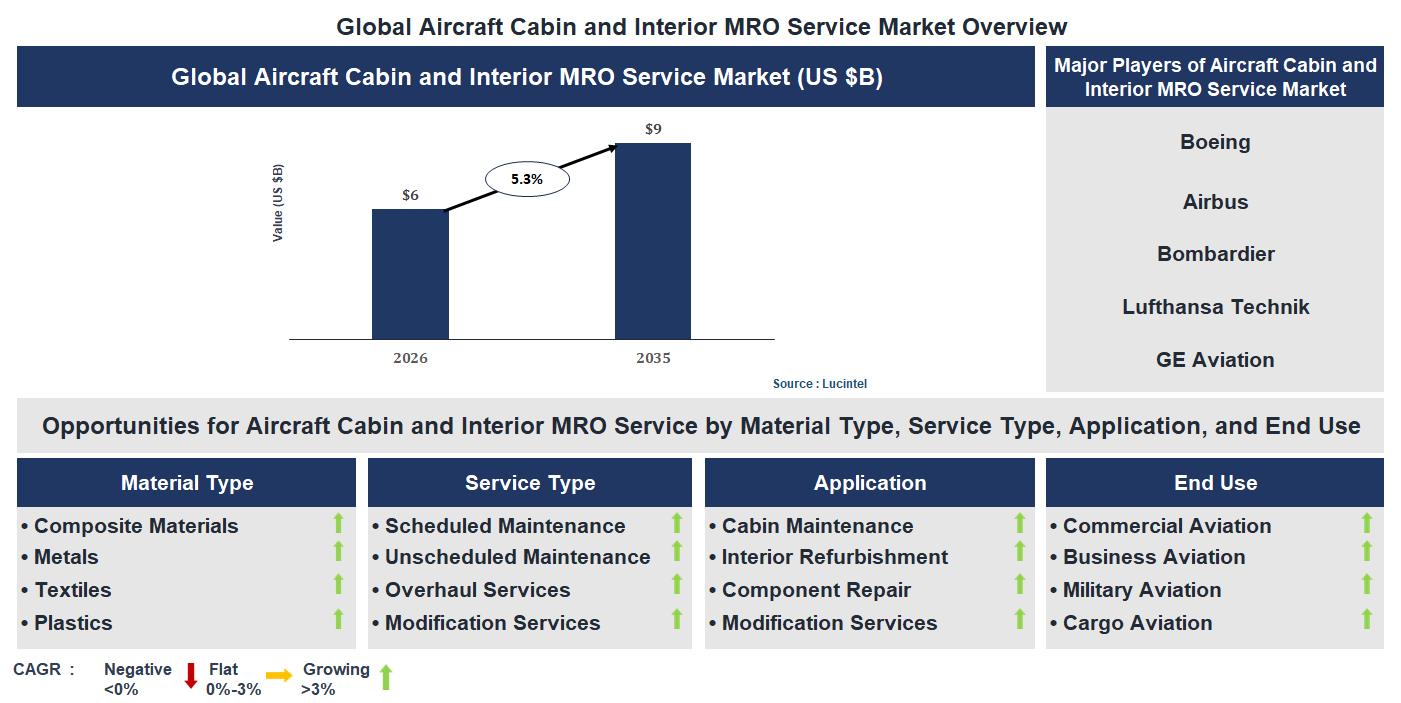
Key data points: The market size in 2035 = $9 billion, growth forecast = 5.3% annually for the next 8 years. Scroll below to get more insights. This market report covers trends, opportunities and forecasts in aircraft cabin and interior MRO service market to 2035 by material type (composite materials, metals, textiles, and plastics), service type (scheduled maintenance, unscheduled maintenance, overhaul services, and modification services), application (cabin maintenance, interior refurbishment, component repair, and modification services), end use (commercial aviation, business aviation, military aviation, and cargo aviation), and region (North America, Europe, Asia Pacific, and the Rest of the World)
We'll send your sample report shortly.
• Lucintel forecasts that, within the material type category, composite material is expected to witness the highest growth over the forecast period.
• Within the end use category, commercial aviation is expected to witness the highest growth.
• In terms of region, North America is expected to witness the highest growth over the forecast period. Gain valuable insights for your business decisions with our comprehensive 150+ page report. Sample figures with some insights are shown below.
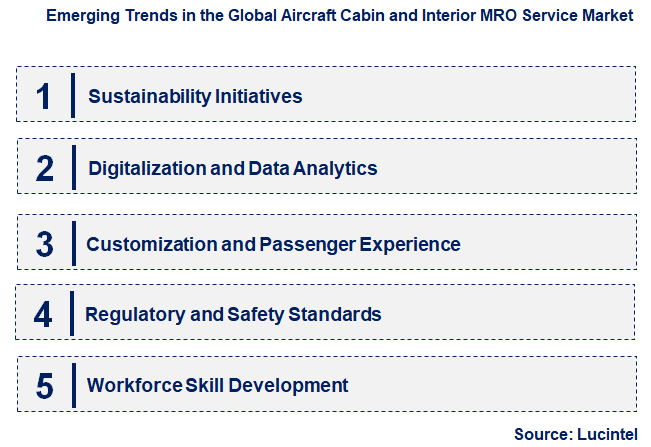
• Sustainability Initiatives: Increasing focus on eco-friendly materials and processes is transforming the market. Airlines and MRO providers are adopting sustainable cabin materials, reducing waste, and implementing energy-efficient practices. This trend aligns with global environmental regulations and passenger preferences for greener travel options. The shift towards sustainability is also driving innovation in recycling and waste management, ultimately reducing the carbon footprint of cabin maintenance activities and enhancing brand reputation.
• Digitalization and Data Analytics: The integration of digital tools and data analytics is revolutionizing cabin maintenance. Real-time monitoring systems enable predictive maintenance, reducing downtime and operational costs. Digital platforms facilitate streamlined communication between airlines and MRO providers, improving service efficiency. Data-driven insights help optimize inventory management and scheduling, leading to faster turnaround times. This trend enhances overall reliability and safety, while also providing a competitive edge through improved customer service and operational transparency.
• Customization and Passenger Experience: There is a growing emphasis on personalized passenger experiences through cabin interior upgrades. Airlines are investing in customizable seating, lighting, and entertainment options to differentiate themselves. MRO providers are offering modular interior solutions that allow for quick upgrades and repairs, minimizing passenger disruption. This trend responds to evolving passenger expectations for comfort and connectivity, ultimately boosting customer satisfaction and loyalty, which are critical in a competitive market.
• Regulatory and Safety Standards: Stricter safety and regulatory standards are shaping maintenance practices. MRO service providers must ensure compliance with evolving international regulations, which often require advanced inspection techniques and documentation. This trend drives investment in specialized training and certification, ensuring safety and quality assurance. Adherence to these standards not only mitigates risks but also enhances trust among airlines and passengers, reinforcing the importance of rigorous maintenance protocols in the market.
• Workforce Skill Development: The demand for highly skilled technicians and engineers is increasing as cabin interiors become more complex. Continuous training programs and certification are essential to keep pace with technological and regulatory changes. This trend emphasizes the importance of talent acquisition and retention strategies, fostering innovation and efficiency. A skilled workforce ensures high-quality service delivery, reduces errors, and supports the adoption of new maintenance techniques, ultimately strengthening the market’s resilience and growth potential. These trends are collectively reshaping the aircraft cabin and interior MRO service market by promoting sustainability, digital innovation, personalized passenger experiences, regulatory compliance, and workforce development. They are driving efficiency, safety, and customer satisfaction, positioning the market for sustainable growth in a highly competitive environment.
• Growing Demand for Cabin Refurbishments: The rise in air travel has led airlines to invest in cabin upgrades to improve passenger experience, driving demand for specialized MRO services. This trend enhances airline branding and passenger satisfaction, creating a lucrative market for interior refurbishment providers. The focus on modern, comfortable cabins also encourages airlines to adopt innovative interior materials and designs, boosting the overall market size and service scope.
• Adoption of Advanced Technologies in Maintenance: Integration of AI, IoT, and predictive analytics in MRO processes is revolutionizing aircraft interior maintenance. These technologies enable real-time monitoring, predictive diagnostics, and efficient repairs, reducing downtime and operational costs. The adoption of such advanced tools improves safety standards and service quality, attracting more airlines to upgrade their maintenance protocols and invest in smarter, more reliable interior solutions.
• Emphasis on Sustainability and Eco-Friendly Materials: The industry is shifting towards sustainable practices by incorporating eco-friendly materials and recycling initiatives in cabin interiors. This focus reduces environmental impact and aligns with global sustainability goals. Airlines and MRO providers adopting green solutions are gaining competitive advantages, attracting environmentally conscious customers, and complying with stricter regulations, thereby expanding the market for sustainable interior maintenance and refurbishment services.
• Expansion of Aftermarket Services and Customization: The increasing demand for personalized passenger experiences is fueling growth in aftermarket interior services. Customization options, such as unique seating arrangements and branding elements, are becoming popular. MRO providers are expanding their service portfolios to include bespoke interior modifications, which enhances passenger satisfaction and airline branding. This trend opens new revenue streams and fosters long-term customer relationships within the market.
• Rising Focus on Safety and Regulatory Compliance: Stringent safety standards and regulatory requirements are prompting airlines to prioritize interior inspections and maintenance. MRO providers are investing in compliance-driven solutions, ensuring interiors meet evolving safety norms. This focus enhances passenger safety, reduces liability risks, and ensures operational continuity. The increased emphasis on safety standards is driving demand for specialized interior inspection and repair services, strengthening the overall market stability and growth prospects. These developments are significantly transforming the aircraft cabin and interior MRO service market by enhancing operational efficiency, passenger experience, and sustainability. The integration of advanced technologies, focus on customization, and regulatory compliance are creating new growth avenues for industry players. As these trends continue, the market is expected to become more innovative, competitive, and resilient, ultimately benefiting airlines, passengers, and service providers through improved safety, comfort, and environmental responsibility.
• Expansion of Cabin Refurbishment Services to Meet Passenger Expectations: As airlines seek to improve passenger comfort and differentiate their offerings, there is a significant opportunity for MRO providers to expand cabin refurbishment services. This includes upgrading seating, lighting, and in-flight entertainment systems, which require specialized maintenance and repair. The growing demand for modern, aesthetically appealing interiors drives investments in refurbishment projects, creating a lucrative market segment for service providers.
• Adoption of Advanced Technologies for Interior Inspection and Maintenance: The integration of AI, IoT, and drone technology into interior inspection processes offers enhanced accuracy, efficiency, and safety. These innovations enable real-time monitoring of interior components, predictive maintenance, and faster turnaround times. MRO companies adopting such advanced tools can reduce costs, improve service quality, and gain a competitive edge, fueling growth in the interior maintenance sector.
• Increasing Focus on Cabin Safety and Regulatory Compliance: Stringent safety standards and regulatory requirements necessitate regular inspections, repairs, and upgrades of aircraft interiors. Opportunities exist for specialized MRO services that ensure compliance with evolving safety protocols, including fire-retardant materials, emergency equipment, and structural integrity assessments. This focus on safety enhances market demand for expert maintenance services, fostering trust and operational reliability.
• Rising Demand for Customization and Premium Interior Solutions: Airlines are increasingly investing in customized, luxury interior options to attract high-end travelers. This trend opens avenues for MRO providers to offer bespoke interior design, installation, and maintenance services. The need for ongoing support for premium cabins, including high-quality materials and advanced features, creates a niche market with substantial growth potential.
• Strategic Partnerships and Mergers to Expand Service Capabilities: Collaborations between OEMs, MRO providers, and technology firms enable comprehensive service offerings and innovation. Mergers and acquisitions facilitate access to new markets, advanced technologies, and skilled workforce, strengthening market position. Such strategic alliances are crucial for addressing complex maintenance needs and accelerating growth in the competitive aircraft interior MRO landscape. These growth opportunities are poised to significantly influence the aircraft cabin and interior MRO service market by fostering innovation, enhancing safety, and meeting evolving passenger and airline demands. Embracing technological advancements, expanding service offerings, and strategic collaborations will be key drivers in shaping a resilient and competitive market environment.
• Technological Advancements: The integration of innovative materials, digital diagnostics, and automation in cabin interiors enhances maintenance efficiency and passenger experience. These advancements reduce downtime, improve safety, and enable predictive maintenance, which is crucial for airline operations. As technology evolves, MRO providers are better equipped to deliver high-quality services, driving market growth. The adoption of lightweight materials and smart cabin systems also contributes to fuel efficiency and passenger satisfaction, further fueling demand for specialized MRO services.
• Rising Air Travel Demand: The global increase in air travel, driven by economic growth and expanding middle classes, results in higher aircraft utilization. This surge necessitates more frequent maintenance and interior refurbishments, boosting demand for MRO services. Airlines seek to maintain high standards of passenger comfort and safety, which directly correlates with the need for regular cabin and interior maintenance. Consequently, the market experiences sustained growth as airlines invest in maintaining their fleets to meet passenger expectations and regulatory standards.
• Regulatory and Safety Standards: Stringent safety regulations and environmental policies compel airlines and MRO providers to adhere to strict maintenance protocols. Compliance with international standards such as FAA and EASA mandates ensures safety and operational efficiency. These regulations often require regular inspections, upgrades, and certifications, which drive demand for specialized MRO services. The evolving regulatory landscape encourages continuous innovation and investment in maintenance capabilities, fostering market expansion while ensuring safety compliance.
• Increasing Focus on Passenger Experience: Airlines are prioritizing passenger comfort through cabin refurbishments, upgraded interiors, and enhanced amenities. This focus drives demand for interior MRO services, including seat repairs, lighting upgrades, and cabin reconfigurations. As passenger expectations grow, airlines invest more in maintaining and upgrading cabin interiors to differentiate themselves competitively. This trend sustains a steady demand for MRO services tailored to improving passenger experience, thereby supporting market growth.
• Economic Growth and Fleet Expansion: Economic development in emerging markets leads to increased airline profitability and fleet expansion. Airlines are expanding their fleets and investing in new aircraft, which requires comprehensive interior maintenance and refurbishment services. Additionally, the aging fleet in many regions necessitates extensive interior overhauls. These factors contribute to a robust demand for MRO services, fostering market growth driven by both new aircraft and fleet modernization initiatives. The challenges facing the aircraft cabin and interior MRO service market include:-
• High Maintenance Costs: The complexity of modern aircraft interiors and the need for specialized skills result in high maintenance costs. These expenses include parts, labor, and compliance with regulatory standards, which can strain airline budgets. Additionally, the need for frequent inspections and repairs increases operational costs, potentially impacting profitability. MRO providers must innovate to reduce costs while maintaining quality, but the high expense remains a significant challenge for market growth.
• Rapid Technological Changes: The fast pace of technological innovation in cabin interiors and diagnostic tools can render existing maintenance practices obsolete quickly. Keeping up with new materials, systems, and digital diagnostics requires continuous investment in training and equipment. This rapid evolution can lead to increased costs and operational disruptions, posing challenges for MRO providers to stay current and competitive in the market.
• Regulatory Compliance and Certification Delays: Navigating complex regulatory environments and obtaining necessary certifications can be time-consuming and costly. Delays in certification processes can hinder timely maintenance and refurbishment activities, affecting airline schedules and profitability. Additionally, evolving safety and environmental standards require ongoing adjustments in maintenance procedures, adding to operational complexities and costs. The aircraft cabin and interior MRO service market is shaped by technological innovations, rising air travel, regulatory standards, passenger experience focus, and economic growth. However, high maintenance costs, rapid technological changes, and regulatory compliance challenges pose significant hurdles. These drivers and challenges collectively influence the market’s growth trajectory, requiring stakeholders to adapt strategically. While opportunities for expansion are substantial, addressing cost and compliance issues will be critical for sustained success in this evolving industry landscape.
• Boeing
• Airbus
• Bombardier
• Lufthansa Technik
• GE Aviation
• Safran
• Rockwell Collins
• Composite Materials
• Metals
• Textiles
• Plastics
• Scheduled Maintenance
• Unscheduled Maintenance
• Overhaul Services
• Modification Services
• Cabin Maintenance
• Interior Refurbishment
• Component Repair
• Modification Services
• Commercial Aviation
• Business Aviation
• Military Aviation
• Cargo Aviation
• North America
• Europe
• Asia Pacific
• The Rest of the World
• United States: The US market is characterized by advanced technological integration and a focus on sustainability. Major MRO providers are investing in digital solutions like predictive maintenance and automation to reduce downtime and costs. The adoption of eco-friendly cabin materials and energy-efficient systems is also rising, aligning with regulatory pressures and consumer preferences. Additionally, the US sees increased collaboration between OEMs and MRO service providers to develop innovative interior solutions.
• China: China’s market is rapidly expanding due to the surge in domestic and international air travel. The country is investing heavily in infrastructure and MRO capabilities, with a focus on localizing supply chains and services. Chinese MRO providers are adopting advanced repair techniques and digital tools to improve turnaround times. Government policies supporting aviation growth and modernization are further boosting the market, alongside increased fleet expansion by domestic airlines.
• Germany: Germany remains a key hub for aircraft interior MRO services in Europe, driven by high standards of quality and safety. The market is witnessing technological upgrades such as 3D printing for interior components and enhanced cabin customization options. German MRO companies are also focusing on sustainability initiatives, including the use of recyclable materials and energy-efficient processes. Strategic partnerships with OEMs and research institutions are fostering innovation in cabin design and maintenance.
• India: The Indian market is experiencing significant growth due to rising passenger traffic and fleet expansion. MRO providers are expanding their service networks and adopting digital maintenance solutions to improve efficiency. The focus is on cost-effective repairs and refurbishments, with an increasing emphasis on local talent development. Government initiatives to boost the aviation sector and ease of doing business are attracting investments, leading to modernization of existing facilities and new service centers.
• Japan: Japan’s market is characterized by technological innovation and high safety standards. MRO providers are integrating IoT and AI technologies for predictive maintenance and real-time monitoring of cabin systems. The country is also emphasizing eco-friendly interior solutions and lightweight materials to improve fuel efficiency. Collaboration with global OEMs and research institutions is driving advancements in cabin comfort, safety, and maintenance practices, maintaining Japan’s position as a leader in quality and innovation.


• Boeing
• Airbus
• Bombardier
• Lufthansa Technik
• GE Aviation
• Safran
• Rockwell Collins Q6. Which aircraft cabin and interior MRO service market segment will be the largest in future? Answer: Lucintel forecasts that, within the material type category, composite material is expected to witness the highest growth over the forecast period. Q7. In aircraft cabin and interior MRO service market, which region is expected to be the largest in next 8 years? Answer: In terms of region, North America is expected to witness the highest growth over the forecast period. Q8. Do we receive customization in this report? Answer: Yes, Lucintel provides 10% customization without any additional cost.


Choose a license that fits your team. Instant PDF delivery.
Prices exclude taxes. Instant delivery. Custom licensing available on request.
Market Report · July 31, 2026
Market Report · July 31, 2026
Market Report · July 22, 2026
Trusted partner for strategic intelligence and business growth


Receive a complimentary market analysis tailored to your industry. Our analysts will identify key growth opportunities and competitive dynamics specific to your business.

Market size, growth rate, and key trend analysis for your specific sector.

Top competitor positioning and market share analysis.

Strategic recommendations backed by data-driven insights.
Get curated market intelligence and competitive moves straight to your inbox.
By subscribing, you agree to receive our monthly insights. Unsubscribe anytime.
Receive a complimentary market analysis tailored to your industry. Our analysts will identify key growth opportunities and competitive dynamics specific to your business.
Market size, growth rate, and key trend analysis for your specific sector.
Top competitor positioning and market share analysis.
Strategic recommendations backed by data-driven insights.
Get curated market intelligence, emerging trends, and competitive moves straight to your inbox each month.
By subscribing, you agree to receive our monthly insights. Unsubscribe anytime.
We'll send your sample report shortly.