
Market Report · July 31, 2026

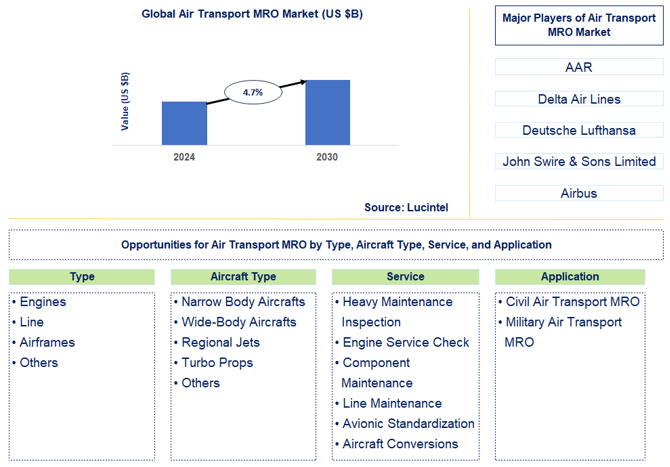
Key data points: The growth forecast = 4.7% annually next for the 6 years. Scroll below to get more insights. This market report covers trends, opportunities, and forecasts in the global air transport mro market to 2030 by type (engine, line, airframes, and others), aircraft type (narrow body aircraft, wide-body aircraft, regional jet, turbo prop, and others), service (heavy maintenance inspection, engine service check, component maintenance, line maintenance, avionic standardization, and aircraft conversions), application (civil air transport MRO and military air transport MRO), and region (North America, Europe, Asia Pacific, and the Rest of the World)
We'll send your sample report shortly.
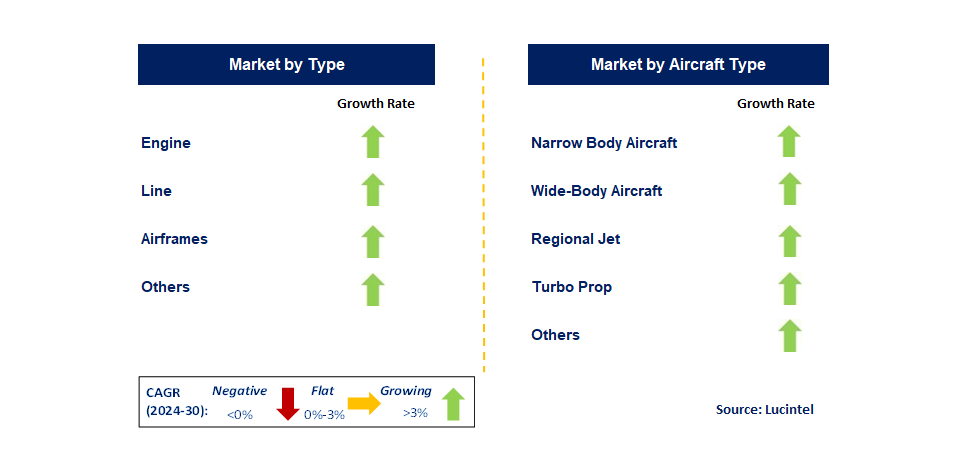
• Lucintel forecasts that, within the type category, engine is expected to witness the highest growth over the forecast period.
• Within this application category, civil air transport MRO is expected to witness higher growth.
• In terms of regions, is expected to witness the highest growth over the forecast period. A more than 150-page report is developed to help in your business decisions.
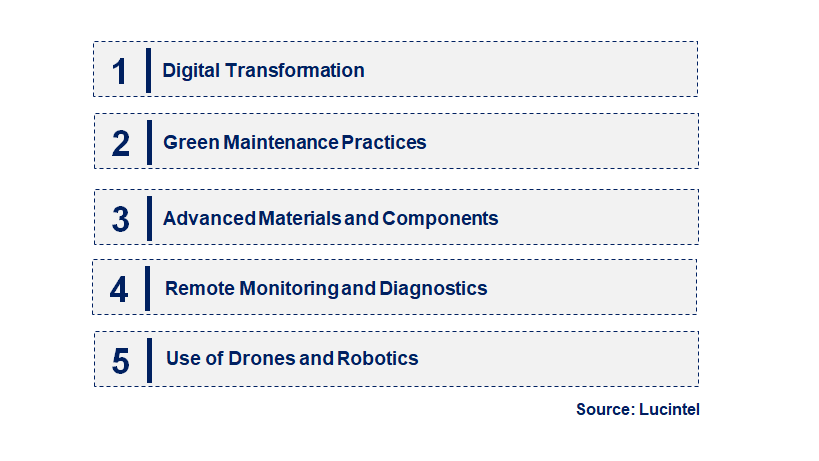
• Digital Transformation: The airline maintenance, repair, and overhaul (MRO) sector is increasingly relying on predictive maintenance, data analytics, and artificial intelligence (AI), among other digital technologies. These innovations significantly contribute to accurate predictions about when machinery or equipment may need servicing or repairs. As a result, operational efficiencies have risen sharply, lowering costs for airlines that adopt these innovative tools to help their businesses thrive.
• Green Maintenance Practices: In MRO operations, there is increasing attention to sustainability due to environmental regulations and corporate social responsibility. Some green maintenance practices include waste reduction, energy efficiency improvement, and the use of eco-friendly materials and processes. This minimizes the environmental impact of MRO activities and aligns with global sustainability objectives.
• Advanced Materials and Components: The air transport MRO market is shifting towards using advanced materials like composites and high-strength alloys that have superior performance characteristics and durability. This shift results in lower maintenance frequency and an extended life of components. Advances in material science have improved the reliability and efficiency of aircraft systems.
• Remote Monitoring and Diagnostics: MRO operations are now witnessing a rise in remote monitoring and diagnostics, where aircraft performance and condition can be tracked in real time. This includes capturing data through sensors or IoT devices to detect potential problems before they cause harm to the aircraft or become severe enough to affect operations. Remote diagnostics improve maintenance planning while reducing the need for physical inspections.
• Use of Drones and Robotics: Drones are increasingly used for inspections and monitoring, while robotics can automate various repair tasks, improving efficiency and safety. Digital transformation, green maintenance practices, advanced material adoption, and remote monitoring techniques are some of the factors influencing the air transport MRO market today. These emerging trends lead to better operational efficiency, higher sustainability, and increased reliability, resulting in the development of more innovative practices that shape future approaches to MRO.
• Adoption of predictive maintenance technologies: Predictive maintenance technologies are transforming the air transport MRO industry through the use of analytics for big data, machine learning programs, and Internet-connected devices such as sensors. These technologies determine beforehand when equipment will fail by anticipating potential problems and allowing for preemptive measures instead of reactive fixes. This proactive nature limits unplanned repairs, which may lead airlines to be unavailable whenever demand arises, thus causing inefficiencies. Airlines and MRO providers are increasingly investing in these technologies to optimize maintenance schedules and lower costs.
• Expansion of MRO facilities in emerging markets: Emerging markets, particularly in Asia and the Middle East, have seen a rapid increase in the number of MRO facilities. This growth is due to the increasing number of airplanes and airlines in these regions. Investments in sophisticated infrastructure and modern technology have improved local capabilities, thus reducing turnaround times and enhancing service provision within the growing air transport industry.
• Implementation of green MRO practices: In line with sustainable development goals, green initiatives are being prioritized by players in this sector. The use of eco-friendly materials, energy-saving technologies, and waste reduction activities are among these practices. Companies adopt green MRO practices to comply with environmental regulations and meet corporate sustainability goals.
• Integration of robotics and automation: MRO operations today involve more robotics and automation systems, which improve efficiency while increasing accuracy. The use of automated systems for component inspection, repair, and assembly leads to shorter turnaround times and reduced instances of human error. This trend has enhanced efficiency throughout the MRO process chain. The adoption of predictive maintenance technologies, expansion of facilities in emerging markets, implementation of green practices, and integration of robotics and automation are key aspects observed recently in the air transport MRO market. These innovations have brought about significant changes that enhance efficiency and enable the system to be both productive and environmentally friendly, thus shaping the future direction of the airline industry.
• Digital Solutions Investment: Investments in digital solutions such as predictive maintenance, data analytics, and AI have great growth prospects for the air transport MRO market. These technologies enhance operational efficiency, reduce costs, and support better accuracy in maintenance. Companies that implement these digital tools can outsmart their rivals by providing much improved and reliable MRO services.
• Expansion into Emerging Markets: Expanding into emerging markets, especially in Asia, Africa, and Latin America, offers significant opportunities to grow business. These regions are experiencing rapid growth in air travel and fleet expansion, leading to increased demand for MRO services. Penetrating these markets allows companies to access new revenue streams and support the changing aviation sector.
• Sustainable MRO Development: Increasing environmental regulations and corporate responsibility are driving the need for sustainable MRO practices globally. Developing eco-friendly materials or energy-efficient technologies could provide opportunities for differentiation and compliance with sustainability requirements. Market leaders in green initiatives enhance their brand reputation among environmentally conscious customers.
• Advanced Robotics and Automation Adoption: The adoption of advanced robotics and automation in operations has created opportunities for improvement in efficiency and precision within MRO operations. Automated inspection systems, repair tools, and maintenance robots can streamline processes and reduce human errors, thereby lowering operating expenses incurred during service provision. Investments in robotics and automation help to increase service quality and operational performance. Digital solutions investments, expansion into emerging markets, sustainable practices development, and advanced robotics and automation adoption represent strategic growth opportunities for the air transport MRO market, aligning with industry trends and regulatory compliance while enabling innovative ideas and growth potential in a changing MRO landscape.
• Increasing Fleet Size: The rise in global fleet sizes due to growing air travel demand is a major driver for the MRO market. As airlines expand their fleets, they also need more maintenance, repair, and overhaul services, providing MRO providers with a constant workflow. This growth supports market expansion and investment in new technologies and facilities.
• Advancements in Technology: The air transport MRO market is driven by technological advancements in predictive maintenance, data analytics, and automation. These innovations improve maintenance efficiency, reduce downtime, and enhance operational performance. Adapting to advanced technology allows MRO providers to offer competitive services that are more accurate and reliable, helping them cope with changes in the aviation industry.
• Regulatory Requirements: Stringent regulatory requirements and safety standards for aircraft maintenance drive the demand for MRO services. Compliance with these regulations ensures aircraft safety and operational reliability. Regulatory agencies’ emphasis on the quality of maintenance operations encourages the adoption of advanced MRO technologies.
• Growth in Air Travel: The growing demand for air travel, especially from emerging markets, fuels the growth of the air transport MRO market. As passenger numbers increase, airline companies must maintain or upgrade their planes, which means their mechanical departments must be enhanced. This growth drives the need for efficient and scalable MRO services.
• Sustainability Initiatives: The increasing focus on sustainability and reducing the environmental impact of aviation is becoming a significant driver for the MRO market. MRO providers are investing in eco-friendly technologies and practices to meet the rising demand for sustainable aviation solutions. Challenges in the air transport MRO market include:
• High Overhaul Costs: The MRO market faces high costs of aircraft maintenance, which include labor, parts, and materials. MRO providers are concerned about maintaining high service quality despite these costs in order to manage their expenses. Profitability can suffer when cost pressures arise, as well as investments in new technologies.
• Lack of Skilled Workforce: The lack of skilled technicians and engineers remains a major challenge for the air transport MRO industry. Specialized knowledge is required due to the complex nature of modern aircraft systems, which often results in low-quality services and poor operational efficiency.
• Regulatory Compliance: This is one of the biggest challenges that MRO providers face: navigating complicated and changing regulations. There must be ongoing investment in training, technology, and processes to comply with safety and environmental regulations. Adapting to regulatory changes may hinder operational efficiency or cost management. Fleet growth, technological advancements, regulatory requirements, and increasing air travel are some factors contributing to growth in the air transport MRO market. However, this sector needs to address issues such as high overhaul costs, a lack of skilled workforce, regulatory compliance, and technology integration. Balancing these drivers with these hurdles is critical for continued expansion and success within the MRO industry.
• AAR
• Delta Air Lines
• Deutsche Lufthansa
• John Swire & Sons Limited
• Airbus
• Engine
• Line
• Airframes
• Others
• Narrow Body Aircraft
• Wide-Body Aircraft
• Regional Jet
• Turbo Prop
• Others
• Heavy Maintenance Inspection
• Engine Service Check
• Component Maintenance
• Line Maintenance
• Avionic Standardization
• Aircraft Conversions
• Civil Air Transport MRO
• Military Air Transport MRO
• North America
• Europe
• Asia Pacific
• The Rest of the World
• United States: The US is moving forward with digital transformation, including predictive maintenance and data analytics, as the aviation sector embraces new technologies. Investments by airlines and MRO providers in AI technology have increased efficiency during operations, resulting in less downtime. The Federal Aviation Administration (FAA) is also pushing for regulatory changes that support innovations in the aircraft MRO industry, allowing for more efficient maintenance procedures to be implemented.
• China: China expanding aviation sector and fleet size have propelled the development of air transport MRO capabilities, with significant investments made in the latest MRO facilities, such as advanced engine overhaul capabilities coupled with state-of-the-art diagnostic technologies. To support domestic growth in the aviation industry, Chinese authorities have engaged global partners to strengthen local skills and improve the quality of service provided by these new-generation maintenance organizations.
• Germany: Sustainability and efficiency are key focus areas, placing Germany as a front-runner in the air transport MRO market segment based on emerging trends within this sector. The adoption of green maintenance practices, along with the implementation of energy-efficient technologies in facilities, represents recent developments within German MRO. Digi-solutions have been embraced by German companies to expedite operations and ensure compliance with the environmental regulations of the European Union (EU), thereby enhancing competition in the global MRO industry.
• India: India air transport MRO market is growing due to the rise in the number of airlines and the increasing fleet size. Recent developments include the establishment of new MRO facilities and various partnerships between Indian firms and global corporations aimed at upgrading local capacities. Skill development programs are being initiated to train more technicians for India aspiring MRO sector, which demands a skilled workforce and is thus developing skills for a more efficient MRO system.
• Japan: Japan has advanced its air transport MRO market by focusing on incorporating advanced technologies, such as robotics and automation, into maintenance activities. Some of the latest projects include smart MRO systems that use data analytics and AI for planning maintenance schedules. In addition, Japan is currently investing in R&D to ensure the reliability and safety of its aircraft during maintenance overhauls.


• AAR
• Delta Air Lines
• Deutsche Lufthansa
• John Swire & Sons Limited
• Airbus Q5. Which air transport MRO market segment will be the largest in future? Answer: Lucintel forecasts that engine is expected to witness the highest growth over the forecast period. Q6. In air transport MRO market, which region is expected to be the largest in next 5 years? Answer: APAC is expected to witness the highest growth over the forecast period. Q.7 Do we receive customization in this report? Answer: Yes, Lucintel provides 10% customization without any additional cost.


Choose a license that fits your team. Instant PDF delivery.
Prices exclude taxes. Instant delivery. Custom licensing available on request.
Market Report · July 31, 2026
Market Report · July 31, 2026
Market Report · July 22, 2026
Trusted partner for strategic intelligence and business growth


Receive a complimentary market analysis tailored to your industry. Our analysts will identify key growth opportunities and competitive dynamics specific to your business.

Market size, growth rate, and key trend analysis for your specific sector.

Top competitor positioning and market share analysis.

Strategic recommendations backed by data-driven insights.
Get curated market intelligence and competitive moves straight to your inbox.
By subscribing, you agree to receive our monthly insights. Unsubscribe anytime.
Receive a complimentary market analysis tailored to your industry. Our analysts will identify key growth opportunities and competitive dynamics specific to your business.
Market size, growth rate, and key trend analysis for your specific sector.
Top competitor positioning and market share analysis.
Strategic recommendations backed by data-driven insights.
Get curated market intelligence, emerging trends, and competitive moves straight to your inbox each month.
By subscribing, you agree to receive our monthly insights. Unsubscribe anytime.
We'll send your sample report shortly.