
Market Report · July 31, 2026

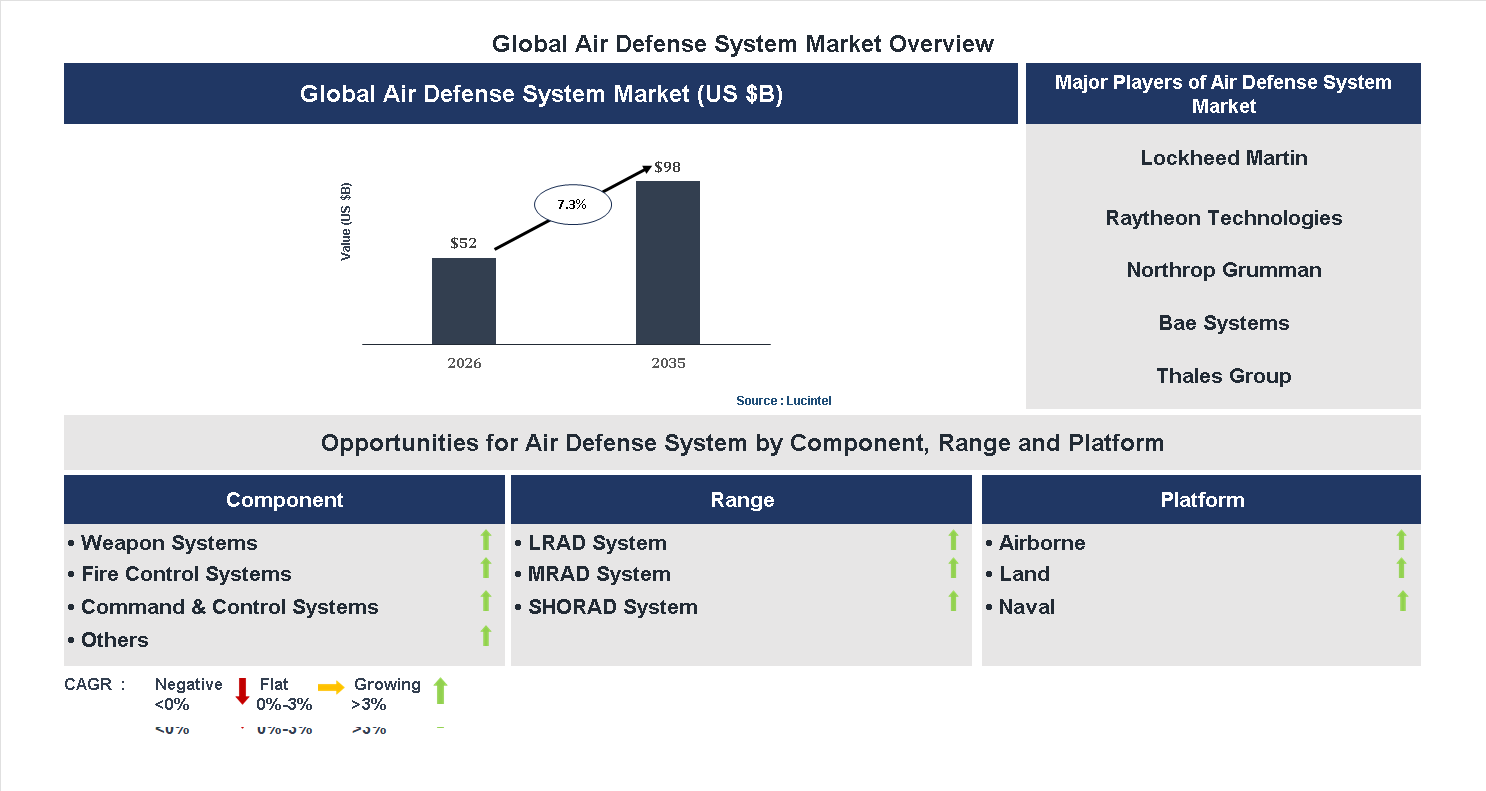
Key data points: The market size in 2035 = $98 billion, growth forecast = 7.3% annually for the next 8 years. Scroll below to get more insights. This market report covers trends, opportunities and forecasts in air defense system market to 2035 by component (weapon systems, fire control systems, command & control systems, and others), range (LRAD system, MRAD system, and SHORAD system), platform (airborne, land, and naval), and region (North America, Europe, Asia Pacific, and the Rest of the World)
We'll send your sample report shortly.
• Lucintel forecasts that, within the component category, weapon system is expected to witness the highest growth over the forecast period.
• Within the platform category, airborne is expected to witness the highest growth.
• In terms of region, APAC is expected to witness the highest growth over the forecast period. Gain valuable insights for your business decisions with our comprehensive 150+ page report. Sample figures with some insights are shown below.
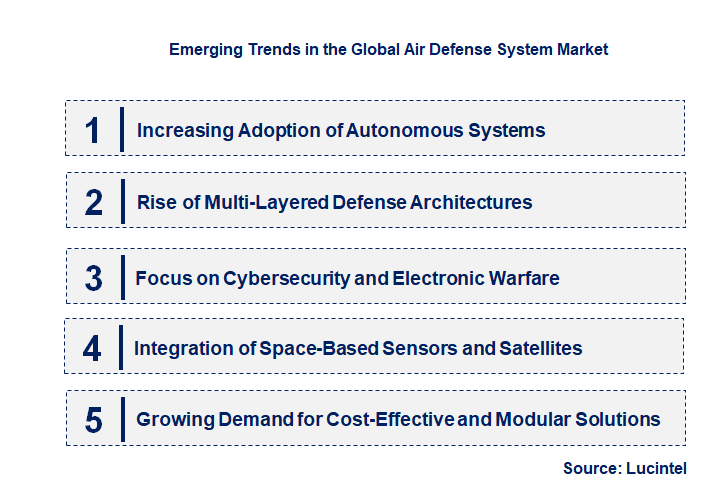
• Increasing Adoption of Autonomous Systems: The integration of AI and machine learning into air defense systems is enabling autonomous operations. These systems can identify, track, and engage threats with minimal human intervention, improving response times and operational efficiency. This trend enhances the capability to counter fast-moving threats like swarms of drones and hypersonic missiles. Autonomous systems also reduce personnel risk and operational costs, making them attractive for modern defense strategies. As technology matures, we expect a significant shift towards fully autonomous air defense networks, transforming traditional defense paradigms.
• Rise of Multi-Layered Defense Architectures: Modern air defense strategies are moving towards layered defense systems that combine different technologies such as short-range, medium-range, and long-range interceptors. This multi-tiered approach provides comprehensive coverage against a wide spectrum of threats, from low-flying drones to high-altitude ballistic missiles. The integration of radar, missile systems, and command centers enhances situational awareness and response capabilities. This trend is driven by the need for flexible, scalable, and resilient defense solutions capable of adapting to evolving threat landscapes, thereby increasing overall effectiveness and survivability of defense assets.
• Focus on Cybersecurity and Electronic Warfare: As air defense systems become more digitized and networked, cybersecurity has become a critical concern. Protecting these systems from cyber-attacks and electronic warfare is essential to maintain operational integrity. Innovations include advanced encryption, intrusion detection systems, and electronic countermeasures that disrupt or deceive enemy sensors and communications. This trend underscores the importance of securing defense infrastructure against cyber threats, which can compromise or disable air defense capabilities. Strengthening cybersecurity measures is now a core component of modern air defense system development and deployment.
• Integration of Space-Based Sensors and Satellites: The use of space-based assets for early warning and surveillance is transforming air defense. Satellites provide persistent, wide-area coverage, enabling faster detection of incoming threats and enhancing situational awareness. This integration allows for more accurate tracking of missile trajectories and better coordination of interceptors. The trend towards space-based sensors also supports network-centric warfare, facilitating real-time data sharing across defense platforms. As space technology advances, its role in air defense is expected to expand, offering strategic advantages in threat detection and response.
• Growing Demand for Cost-Effective and Modular Solutions: Budget constraints and the need for adaptable systems are driving demand for modular, scalable air defense solutions. These systems allow for incremental upgrades and customization based on specific operational needs. Cost-effective solutions enable smaller nations to enhance their defense capabilities without significant financial burdens. Modular designs also facilitate easier maintenance and faster deployment of new technologies. This trend is reshaping procurement strategies, emphasizing flexibility, affordability, and future-proofing, which are critical for maintaining robust defense postures in a rapidly changing threat environment. These emerging trends are fundamentally reshaping the air defense system market by fostering technological innovation, enhancing system resilience, and enabling more flexible and comprehensive defense strategies. As autonomous systems, multi-layered architectures, cybersecurity, space integration, and modular solutions become mainstream, the market is poised for significant growth and transformation, ultimately leading to more robust and adaptive air defense capabilities worldwide.
• Growing Threats and Geopolitical Tensions: The rise in regional conflicts and global tensions has heightened the demand for sophisticated air defense systems. Countries are prioritizing the protection of critical infrastructure and borders, leading to increased procurement of missile defense and radar systems. This trend is expected to continue, fueling market expansion and encouraging innovation in detection and interception technologies.
• Technological Advancements in Missile Defense: Innovations such as directed energy weapons, AI-enabled targeting, and improved interceptor missiles are revolutionizing missile defense capabilities. These advancements enhance accuracy, response time, and operational efficiency, enabling systems to counter more complex threats. The integration of these technologies is creating new market segments and expanding the scope of air defense solutions globally.
• Integration of AI and Data Analytics: The incorporation of artificial intelligence and big data analytics into air defense systems is improving threat detection and decision-making processes. AI-driven systems can analyze vast amounts of data in real-time, enabling faster response to incoming threats. This development is leading to smarter, more autonomous defense platforms, which are increasingly in demand by military forces seeking enhanced operational effectiveness.
• Increasing Adoption of Network-Centric Defense: The shift towards network-centric warfare involves linking various defense assets for coordinated operations. This approach improves situational awareness and response coordination across multiple platforms. The market is witnessing growth in integrated command and control systems, which facilitate seamless communication between radars, interceptors, and other defense assets, thereby strengthening overall defense capabilities.
• Rising Investments in Modernization and Upgrades: Countries are investing heavily in upgrading existing air defense infrastructure with cutting-edge technology. Modernization projects include replacing outdated radars, enhancing missile systems, and deploying advanced sensors. These upgrades extend the lifespan of defense assets and improve overall system performance, creating lucrative opportunities for defense contractors and technology providers in the evolving market landscape. The recent developments in the air defense system market are significantly enhancing national security capabilities worldwide. Technological innovations, increased investments, and integrated defense strategies are driving market growth and diversification. These advancements are enabling countries to better detect, intercept, and neutralize emerging threats, fostering a more secure environment. As the market continues to evolve, industry players are poised to benefit from expanding opportunities in modernization, innovation, and integrated defense solutions.
• Enhanced Threat Detection Capabilities: Developing advanced radar and sensor systems to identify and track a wider range of aerial threats, including low-flying drones and hypersonic missiles, thereby improving response times and operational effectiveness.
• Integration of Artificial Intelligence and Automation: Incorporating AI-driven analytics and autonomous systems to enable faster decision-making, reduce human error, and improve the efficiency of air defense operations across various platforms.
• Expansion in Regional Markets: Growing defense budgets in Asia-Pacific, Middle East, and Africa present opportunities for localized solutions, including mobile and portable air defense systems tailored to regional threats and terrains.
• Development of Multi-Layered Defense Systems: Creating integrated, multi-tiered defense architectures combining long-range, medium-range, and short-range systems to provide comprehensive protection against diverse aerial threats.
• Focus on Cost-Effective and Modular Solutions: Designing scalable, modular air defense systems that can be customized for different military sizes and budgets, facilitating easier upgrades and maintenance, and expanding market reach. These growth opportunities are poised to significantly influence the air defense system market by fostering innovation, expanding regional presence, and enhancing operational capabilities. As technological integration deepens and regional demands evolve, market players will be better positioned to meet emerging security challenges, ensuring sustained growth and competitiveness in this critical defense sector.
• Technological Innovation: The continuous evolution of missile detection, tracking, and interception technologies enhances system efficiency and reliability. Integration of AI, machine learning, and sensor fusion improves threat identification and response times, making air defense systems more effective against sophisticated threats. This technological progress attracts investments and accelerates market growth, as countries seek to modernize their defense capabilities to counter emerging aerial threats.
• Increasing Defense Budgets: Many nations are allocating substantial funds toward modernizing their military forces, with a focus on air defense. Rising geopolitical tensions and regional conflicts compel countries to invest in advanced defense systems to safeguard strategic assets and borders. This surge in defense spending directly correlates with increased procurement and development of air defense solutions, fueling market expansion.
• Geopolitical Tensions and Regional Conflicts: Ongoing conflicts and regional disputes heighten the demand for robust air defense systems. Countries seek to protect critical infrastructure and military assets from aerial threats, prompting increased procurement of missile defense systems, radar networks, and command centers. These tensions create a sustained demand, encouraging innovation and market competitiveness.
• Strategic Alliances and Defense Partnerships: International collaborations and defense pacts facilitate technology sharing and joint procurement initiatives. Countries forming strategic alliances benefit from access to advanced air defense technologies, boosting market growth. These partnerships also promote standardization and interoperability, expanding market opportunities across regions.
• Regulatory and Export Controls: Stringent international regulations and export restrictions influence the development and sale of air defense systems. While these controls aim to prevent proliferation, they can also limit market access and complicate international trade. Navigating these regulatory frameworks is crucial for manufacturers and governments to optimize market potential. The challenges facing the air defense system market include:
• High Costs and Budget Constraints: Developing, deploying, and maintaining advanced air defense systems require significant financial investment. Many countries face budget limitations, which can delay procurement or lead to reliance on outdated systems. Costly maintenance and upgrades further strain defense budgets, potentially hindering market growth and technological adoption.
• Technological Complexity and Integration: The sophisticated nature of modern air defense systems demands seamless integration of various subsystems, including radar, missile interceptors, and command centers. Achieving interoperability across different platforms and ensuring system reliability pose technical challenges. Rapid technological changes can also render existing systems obsolete, necessitating continuous innovation and investment.
• Geopolitical and Regulatory Restrictions: International regulations and geopolitical considerations can restrict the transfer of defense technology and limit market access. Export controls and sanctions may prevent countries from acquiring the latest systems, impacting market competitiveness. Additionally, regional conflicts and diplomatic tensions can disrupt supply chains and hinder collaborative development efforts. The air defense system market is driven by technological advancements, increased defense spending, geopolitical tensions, strategic alliances, and regulatory factors. However, high costs, technological complexities, and geopolitical restrictions present significant challenges. These dynamics collectively shape the markets growth trajectory, requiring stakeholders to navigate a landscape marked by innovation opportunities and regulatory hurdles. The overall impact is a competitive, evolving market with substantial potential for growth amid ongoing global security concerns.
• Lockheed Martin
• Raytheon Technologies
• Northrop Grumman
• Bae Systems
• Thales Group
• Saab Ab
• Leonardo S.P.A.
• Kongsberg Gruppen
• Rafael Advanced Defense Systems
• Almaz-Antey
• Weapon Systems
• Fire Control Systems
• Command & Control Systems
• Others
• LRAD System
• MRAD System
• SHORAD System
• Airborne
• Land
• Naval
• North America
• Europe
• Asia Pacific
• The Rest of the World
• United States: The US has made substantial investments in next-generation missile defense systems, including the development of the THAAD and Aegis Ashore platforms. The country is focusing on integrating AI and machine learning for threat detection and response, enhancing interoperability among allied forces, and expanding its naval defense capabilities to counter emerging threats from adversaries like China and Russia.
• China: China has accelerated its air defense modernization, deploying advanced systems such as the HQ-9 and the newer HQ-19 missile systems. The country is emphasizing indigenous development, expanding its missile defense network, and investing in stealth technology and drone defense systems to bolster its regional security and assert its military presence.
• Germany: Germany is upgrading its air defense infrastructure by integrating the Patriot missile system with NATO allies. The country is also investing in radar and surveillance technology to improve early warning capabilities. Germany’s focus remains on enhancing interoperability within NATO and adopting more automated, network-centric defense solutions to address evolving aerial threats.
• India: India has increased its defense budget significantly, focusing on indigenous development of missile defense systems like the Akash-NG and the development of the S-400 Triumf system from Russia. The country aims to strengthen its regional security posture by modernizing its air defense network, incorporating advanced radar and missile technology, and enhancing its capabilities against both aerial and missile threats.
• Japan: Japan continues to modernize its air defense systems by upgrading its Patriot missile batteries and deploying advanced radar systems. The country is also investing in missile defense cooperation with the US and enhancing its capabilities to counter North Korean missile threats. Japan emphasizes technological innovation and networked defense systems to maintain regional security stability.


• Lockheed Martin
• Raytheon Technologies
• Northrop Grumman
• Bae Systems
• Thales Group
• Saab Ab
• Leonardo S.P.A.
• Kongsberg Gruppen
• Rafael Advanced Defense Systems
• Almaz-Antey Q6. Which air defense system market segment will be the largest in future? Answer: Lucintel forecasts that, within the component category, weapon system is expected to witness the highest growth over the forecast period. Q7. In air defense system market, which region is expected to be the largest in next 8 years? Answer: In terms of region, APAC is expected to witness the highest growth over the forecast period. Q8. Do we receive customization in this report? Answer: Yes, Lucintel provides 10% customization without any additional cost.


Choose a license that fits your team. Instant PDF delivery.
Prices exclude taxes. Instant delivery. Custom licensing available on request.
Market Report · July 31, 2026
Market Report · July 31, 2026
Market Report · July 31, 2026
Trusted partner for strategic intelligence and business growth


Receive a complimentary market analysis tailored to your industry. Our analysts will identify key growth opportunities and competitive dynamics specific to your business.

Market size, growth rate, and key trend analysis for your specific sector.

Top competitor positioning and market share analysis.

Strategic recommendations backed by data-driven insights.
Get curated market intelligence and competitive moves straight to your inbox.
By subscribing, you agree to receive our monthly insights. Unsubscribe anytime.
Receive a complimentary market analysis tailored to your industry. Our analysts will identify key growth opportunities and competitive dynamics specific to your business.
Market size, growth rate, and key trend analysis for your specific sector.
Top competitor positioning and market share analysis.
Strategic recommendations backed by data-driven insights.
Get curated market intelligence, emerging trends, and competitive moves straight to your inbox each month.
By subscribing, you agree to receive our monthly insights. Unsubscribe anytime.
We'll send your sample report shortly.