
Report Feature
Air Conditioner Market Trends and Forecast
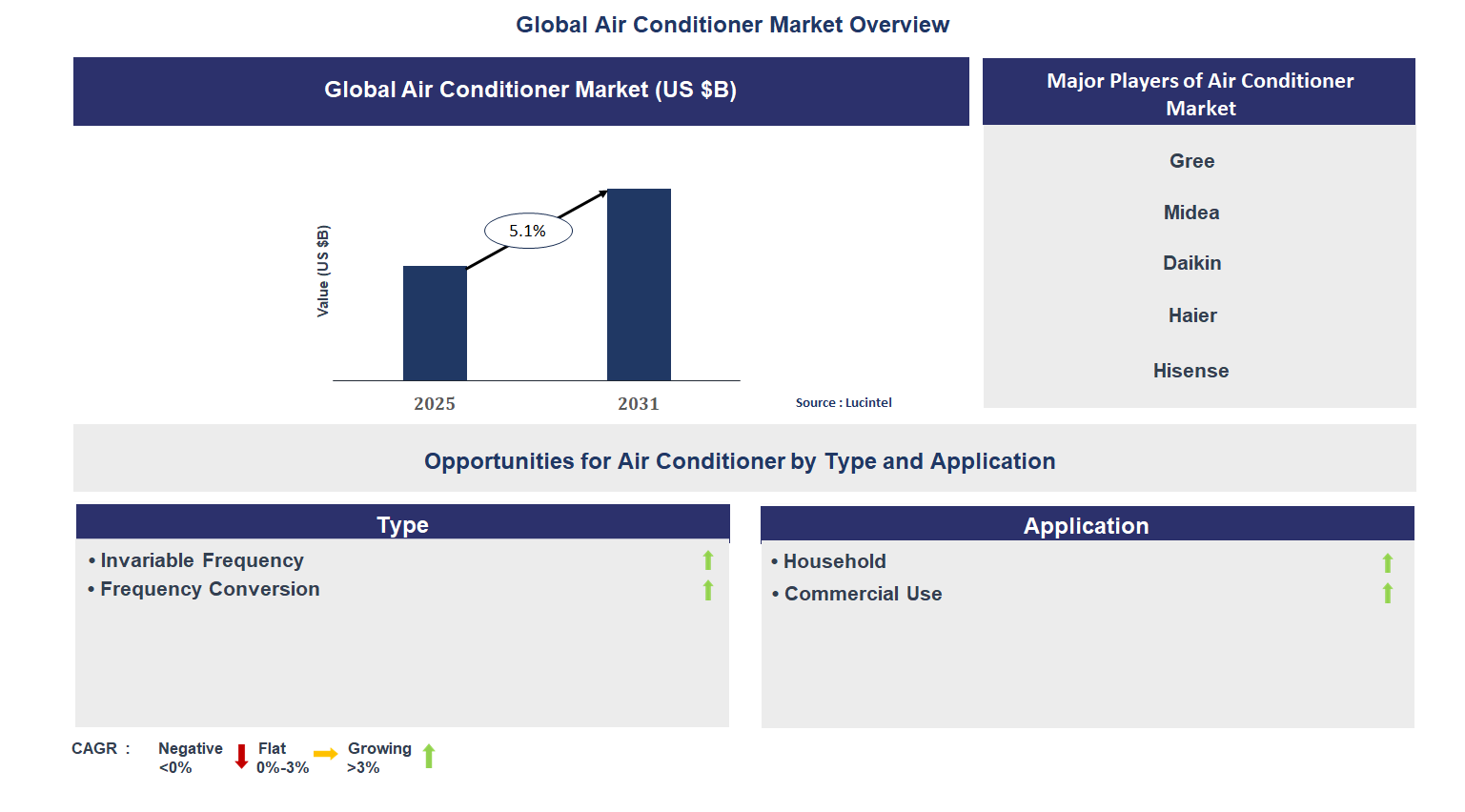
The future of the global air conditioner market looks promising with opportunities in the household and commercial use markets. The global air conditioner market is expected to grow with a CAGR of 5.1% from 2025 to 2031. The major drivers for this market are the increasing demand for energy-efficient cooling systems and the growing adoption of smart home climate control systems.• Lucintel forecasts that, within the type category, frequency conversion is expected to witness higher growth over the forecast period.
• Within the application category, commercial use is expected to witness higher growth.
• In terms of region, APAC is expected to witness the highest growth over the forecast period. Gain valuable insights for your business decisions with our comprehensive 150+ page report. Sample figures with some insights are shown below.
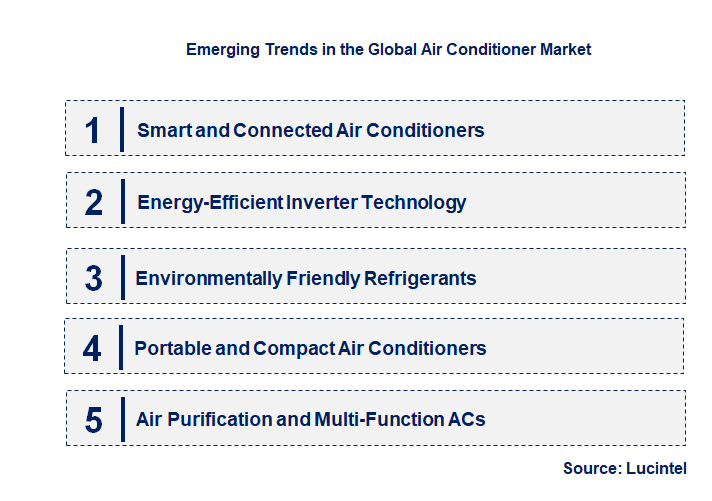
Emerging Trends in the Air Conditioner Market
The air conditioner market is undergoing a rapid transformation as consumers seek more efficient, sustainable, and connected cooling solutions. Emerging trends are reshaping the way air conditioning systems are designed, operated, and integrated into modern living and working environments, driven by technological advancements and environmental considerations.• Smart and Connected Air Conditioners: The integration of IoT and AI into air conditioning systems allows for remote control, real-time monitoring, and personalized comfort. Smart features such as voice control, app integration, and automated climate adjustments are gaining popularity, enhancing user convenience and energy efficiency.
• Energy-Efficient Inverter Technology: Inverter-based air conditioners, which adjust compressor speed to match cooling needs, are becoming standard in the market. These systems consume less energy compared to traditional air conditioners, offering long-term cost savings and reducing environmental impact. As energy prices rise, consumers are increasingly prioritizing these energy-efficient systems.
• Environmentally Friendly Refrigerants: The phase-out of harmful refrigerants like R-22 is accelerating the adoption of alternative, eco-friendly refrigerants. New refrigerants with low Global Warming Potential (GWP), such as R-32 and R-290, are becoming the standard in air conditioners. These alternatives reduce environmental impact and help manufacturers meet regulatory standards.
• Portable and Compact Air Conditioners: As urbanization increases, so does the demand for compact and portable air conditioners, particularly for smaller spaces like apartments and dormitories. These units are lightweight, easy to install, and cost-effective, providing an ideal solution for consumers with limited space.
• Air Purification and Multi-Function ACs: Air conditioning units with integrated air purifiers and dehumidifiers are gaining traction. Consumers are looking for all-in-one solutions that not only cool but also improve indoor air quality, addressing concerns about allergens, pollutants, and viruses, especially in urban environments. The air conditioner market is evolving with a focus on smart, energy-efficient, and environmentally-friendly solutions. The trends of connected devices, inverter technology, and eco-friendly refrigerants are reshaping the industry, while demand for compact and multifunctional AC units continues to rise, driven by consumer preferences for convenience and sustainability.
Recent Development in the Air Conditioner Market
Recent developments in the air conditioner market highlight advancements in energy efficiency, smart technology, and environmental sustainability. These innovations are meeting the growing demand for more intelligent, eco-friendly, and cost-effective cooling solutions, while addressing increasing concerns about climate change and energy consumption.• Rise of Smart, AI-Driven Air Conditioners: Leading air conditioner manufacturers are incorporating AI and IoT into their systems. Smart air conditioners allow users to control settings remotely via apps, optimize energy use, and adjust cooling based on real-time data. This trend is driving convenience and energy savings for consumers.
• Introduction of Solar-Powered AC Units: Solar-powered air conditioners are gaining traction, particularly in regions with abundant sunlight. These units use solar energy to power the compressor, reducing electricity consumption and lowering operating costs. This innovation is appealing to eco-conscious consumers and those looking to reduce their carbon footprint.
• Energy Efficiency Improvements: In response to increasing energy prices and stricter environmental regulations, manufacturers are focusing on developing more energy-efficient units. The introduction of inverter technology, variable speed compressors, and enhanced insulation are all part of the push towards energy savings and reduced environmental impact.
• Widespread Adoption of Eco-Friendly Refrigerants: The air conditioning industry is transitioning away from high-GWP refrigerants towards more eco-friendly options such as R-32 and R-290. These refrigerants have a lower environmental impact, helping manufacturers comply with global standards while providing sustainable cooling solutions to consumers.
• Focus on Multi-Functional Air Conditioning Units: There is a growing demand for air conditioners that do more than just cool. Manufacturers are integrating features like air purifiers, humidity control, and even heating functions into their units. These multi-functional ACs are appealing to consumers seeking convenience and value for money in a single device. Recent developments in the air conditioner market reflect a shift towards smarter, more energy-efficient, and environmentally-friendly products. With innovations in AI, solar-powered units, and eco-friendly refrigerants, manufacturers are meeting consumer demands for convenience, sustainability, and cost-effectiveness, which are shaping the future of the industry.
Strategic Growth Opportunities in the Air Conditioner Market
The air conditioner market offers significant growth opportunities, particularly in regions experiencing rapid urbanization and increasing temperatures. Manufacturers are focusing on specific applications to address diverse consumer needs, from energy-efficient solutions to multi-functional systems. These strategic opportunities are aligned with technological innovations and shifting consumer preferences.• Smart Home Integration: As the smart home market grows, integrating air conditioners with smart home systems presents a major growth opportunity. Consumers are seeking air conditioners that can be controlled via voice assistants or mobile apps, allowing for seamless integration into their connected home environments.
• Portable Air Conditioners for Small Spaces: The demand for portable air conditioners is rising in urban areas with limited space, such as apartments and dorms. Manufacturers can capitalize on this demand by offering compact, energy-efficient solutions that cater to consumers looking for convenient, space-saving cooling options.
• Eco-Friendly and Energy-Efficient Solutions: As environmental concerns grow, there is a strong opportunity to develop air conditioners with low-GWP refrigerants, inverter technology, and solar-powered features. These products not only appeal to eco-conscious consumers but also meet increasingly stringent regulatory standards for energy efficiency and emissions reductions.
• Health-Focused Air Conditioning Units: With the rising importance of indoor air quality, air conditioners that incorporate filtration and purification features offer a significant growth opportunity. Units that help remove allergens, dust, and pollutants while cooling the air can attract health-conscious consumers seeking to improve their home environments.
• Emerging Markets and Developing Regions: The air conditioner market in emerging markets, such as Southeast Asia, Africa, and parts of Latin America, is expected to grow rapidly. Expanding access to affordable, energy-efficient AC units in these regions presents manufacturers with a significant growth opportunity as urbanization increases and temperatures rise. Strategic growth opportunities in the air conditioner market are abundant, particularly in smart home integration, eco-friendly solutions, and emerging markets. Manufacturers that focus on energy-efficient, portable, and health-focused air conditioning units will capture consumer interest, meeting the evolving demand for comfort, sustainability, and innovation in a changing climate.
Air Conditioner Market Driver and Challenges
The air conditioner market is influenced by several drivers and challenges, including technological advancements, environmental regulations, and changing consumer preferences. Understanding these factors is critical for manufacturers aiming to succeed in an increasingly competitive and dynamic market. The factors responsible for driving the air conditioner market include: 1. Rising Global Temperatures: Increasing global temperatures, especially in urban areas, are driving the demand for air conditioning systems. Hotter summers and extreme weather events are pushing consumers to invest in more efficient cooling solutions to improve comfort and productivity. 2. Technological Advancements in Energy Efficiency: Innovations such as inverter technology and variable speed compressors are making air conditioners more energy-efficient. As energy prices rise and environmental concerns intensify, energy-efficient models are becoming increasingly popular among consumers looking to reduce energy bills and environmental impact. 3. Smart Technology Adoption: The rise of smart homes is a significant driver for the air conditioner market. Consumers are increasingly seeking air conditioners that offer smart features such as app-based controls, voice assistant integration, and AI-driven temperature management for enhanced convenience and efficiency. 4. Environmental Regulations and Eco-Friendly Products: Stricter environmental regulations are pushing manufacturers to develop air conditioners with low-GWP refrigerants and more sustainable materials. The shift towards eco-friendly products is driven by consumer demand for sustainable solutions and regulatory requirements for reducing carbon emissions. 5. Economic Growth in Emerging Markets: Economic growth in emerging markets, particularly in Asia -Pacific, is driving demand for air conditioners. Rising disposable incomes and urbanization are increasing the need for cooling solutions, providing manufacturers with significant growth opportunities in these regions. Challenges in the air conditioner market are: 1. High Initial Costs of Energy-Efficient Models: While energy-efficient air conditioners offer long-term savings, their initial purchase cost can be a barrier for many consumers. Manufacturers must balance innovation with affordability to make these technologies accessible to a broader consumer base. 2. Supply Chain Disruptions: Ongoing disruptions in global supply chains, including raw material shortages and logistical challenges, are affecting the production and distribution of air conditioners. These disruptions can lead to delays in product launches and higher costs for both manufacturers and consumers. 3. Regulatory Compliance and Innovation Costs: Meeting the stringent environmental and energy efficiency standards set by governments around the world requires substantial investment in R&D. Manufacturers must continuously innovate to stay ahead of regulatory changes, which can be costly and time-consuming. The air conditioner market is influenced by rising temperatures, technological advancements, and growing demand for eco-friendly solutions. While challenges such as high costs and supply chain disruptions persist, the market is poised for growth as manufacturers address consumer needs for energy efficiency, smart technology, and sustainable products.List of Air Conditioner Companies
Companies in the market compete on the basis of product quality offered. Major players in this market focus on expanding their manufacturing facilities, R&D investments, infrastructural development, and leverage integration opportunities across the value chain. With these strategies air conditioner companies cater increasing demand, ensure competitive effectiveness, develop innovative products & technologies, reduce production costs, and expand their customer base. Some of the air conditioner companies profiled in this report include-• Gree
• Midea
• Daikin
• Haier
• Hisense
• Chigo
• TCL
• Panasonic
• AUX
• Mitsubishi
Air Conditioner Market by Segment
The study includes a forecast for the global air conditioner market by type, application, and region.Air Conditioner Market by Type [Value from 2019 to 2031]:
• Invariable Frequency
• Frequency Conversion
Air Conditioner Market by Application [Value from 2019 to 2031]:
• Household
• Commercial Use
Air Conditioner Market by Region [Value from 2019 to 2031]:
• North America
• Europe
• Asia Pacific
• The Rest of the World
Country Wise Outlook for the Air Conditioner Market
The global air conditioner market is undergoing significant transformations as demand for cooling solutions rises due to climate change, urbanization, and technological advancements. Countries like the U.S., China, Germany, India, and Japan are witnessing shifts in consumer preferences towards energy-efficient, smart, and environmentally friendly air conditioning systems. These developments reflect both the increasing need for comfort and the push for sustainability.• United States: In the U.S., the air conditioner market is evolving with a focus on energy efficiency and smart technology integration. With climate change driving hotter summers, more consumers are opting for smart, connected air conditioners that can be controlled via apps and voice assistants. Energy efficiency standards are also being enhanced to reduce power consumption and lower environmental impact.
• China: China remains a dominant player in the global air conditioner market, largely driven by rapid urbanization and rising disposable income. Recent advancements include the widespread adoption of smart air conditioners that use AI for temperature optimization. There’s also growing interest in eco-friendly systems, as the country seeks to reduce its carbon footprint amid stricter environmental regulations.
• Germany: Germanys air conditioner market has traditionally been smaller, but it is growing as European summers become increasingly hot. German consumers are gravitating toward eco-friendly solutions, such as air conditioners with low-GWP (Global Warming Potential) refrigerants and high energy efficiency ratings. The integration of smart features for more personalized and energy-efficient cooling is also gaining traction.
• India: India’s air conditioner market is expanding rapidly, driven by extreme summer temperatures and a growing middle class. Energy-efficient models with inverter technology are in high demand, as consumers look for cost-effective solutions. The Indian market also sees a preference for budget-friendly ACs with cooling capabilities suitable for homes and offices in both urban and rural areas.
• Japan: Japan is witnessing the rise of advanced air conditioning technologies, including the use of solar-powered air conditioners and smart units with integrated AI. The focus is on energy conservation, with systems that adapt to room occupancy and weather conditions to minimize energy waste. Additionally, Japan is incorporating advanced filtration technologies in air conditioners to improve indoor air quality.

Features of the Global Air Conditioner Market
Market Size Estimates: Air conditioner market size estimation in terms of value ($B). Trend and Forecast Analysis: Market trends (2019 to 2024) and forecast (2025 to 2031) by various segments and regions. Segmentation Analysis: Air conditioner market size by type, application, and region in terms of value ($B). Regional Analysis: Air conditioner market breakdown by North America, Europe, Asia Pacific, and Rest of the World. Growth Opportunities: Analysis of growth opportunities in different types, applications, and regions for the air conditioner market. Strategic Analysis: This includes M&A, new product development, and competitive landscape of the air conditioner market. Analysis of competitive intensity of the industry based on Porter’s Five Forces model.
FAQ
Q1. What is the growth forecast for air conditioner market? Answer: The global air conditioner market is expected to grow with a CAGR of 5.1% from 2025 to 2031. Q2. What are the major drivers influencing the growth of the air conditioner market? Answer: The major drivers for this market are the increasing demand for energy-efficient cooling systems and the growing adoption of smart home climate control systems. Q3. What are the major segments for air conditioner market? Answer: The future of the air conditioner market looks promising with opportunities in the household and commercial use markets. Q4. Who are the key air conditioner market companies? Answer: Some of the key air conditioner companies are as follows:• Gree
• Midea
• Daikin
• Haier
• Hisense
• Chigo
• TCL
• Panasonic
• AUX
• Mitsubishi Q5. Which air conditioner market segment will be the largest in future? Answer: Lucintel forecasts that, within the type category, frequency conversion is expected to witness higher growth over the forecast period. Q6. In air conditioner market, which region is expected to be the largest in next 5 years? Answer: In terms of region, APAC is expected to witness the highest growth over the forecast period. Q7. Do we receive customization in this report? Answer: Yes, Lucintel provides 10% customization without any additional cost.
Table of Contents
List of Figures
List of Tables
Methodology
- In-depth interviews of the major players in this market
- Detailed secondary research from competitors’ financial statements and published data
- Extensive searches of published works, market, and database information pertaining to industry news, company press releases, and customer intentions
- A compilation of the experiences, judgments, and insights of Lucintel’s professionals, who have analyzed and tracked this market over the years.


Buy Now
Choose a license that fits your team. Instant PDF delivery.
Prices exclude taxes. Instant delivery. Custom licensing available on request.
Key Questions
- • What are some of the most promising, high-growth opportunities for the air conditioner market by type (invariable frequency and frequency conversion), application (household and commercial use), and region (North America, Europe, Asia Pacific, and the Rest of the World)?
- • Which segments will grow at a faster pace and why?
- • Which region will grow at a faster pace and why?
- • What are the key factors affecting market dynamics? What are the key challenges and business risks in this market?
- • What are the business risks and competitive threats in this market?
- • What are the emerging trends in this market and the reasons behind them?
- • What are some of the changing demands of customers in the market?
- • What are the new developments in the market? Which companies are leading these developments?
- • Who are the major players in this market? What strategic initiatives are key players pursuing for business growth?
- • What are some of the competing products in this market and how big of a threat do they pose for loss of market share by material or product substitution?
- • What M&A activity has occurred in the last 5 years and what has its impact been on the industry? For any questions related to Air Conditioner Market, Air Conditioner Market Size, Air Conditioner Market Growth, Air Conditioner Market Analysis, Air Conditioner Market Report, Air Conditioner Market Share, Air Conditioner Market Trends, Air Conditioner Market Forecast, Air Conditioner Companies, write Lucintel analyst at email: helpdesk@lucintel.com. We will be glad to get back to you soon.


