
Market Report · June 29, 2026

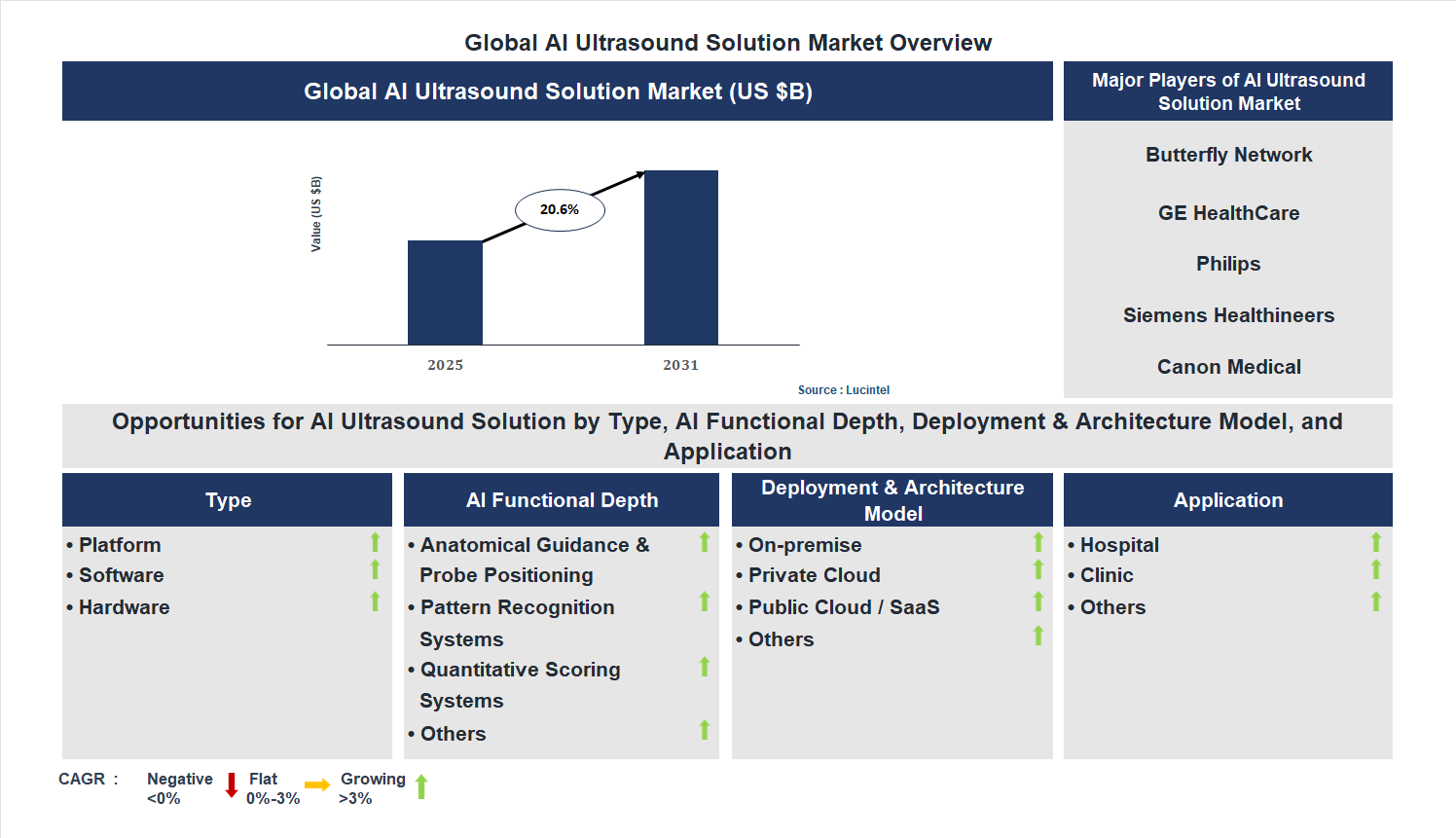
Key data points: The growth forecast = 20.6% annually for the next 6 years. Scroll below to get more insights. This market report covers trends, opportunities and forecasts in AI ultrasound solution market to 2031 by type (platform, software, and hardware), AI functional depth (anatomical guidance & probe positioning, pattern recognition systems, quantitative scoring systems, and others), deployment & architecture model (on-premise, private cloud, public cloud / SaaS, and others), application (hospital, clinic, and others), and region (North America, Europe, Asia Pacific, and the Rest of the World)
We'll send your sample report shortly.
• Lucintel forecasts that, within the type category, software is expected to witness the highest growth over the forecast period.
• Within the application category, hospital is expected to witness higher growth.
• In terms of region, APAC is expected to witness the highest growth over the forecast period. Gain valuable insights for your business decisions with our comprehensive 150+ page report. Sample figures with some insights are shown below.
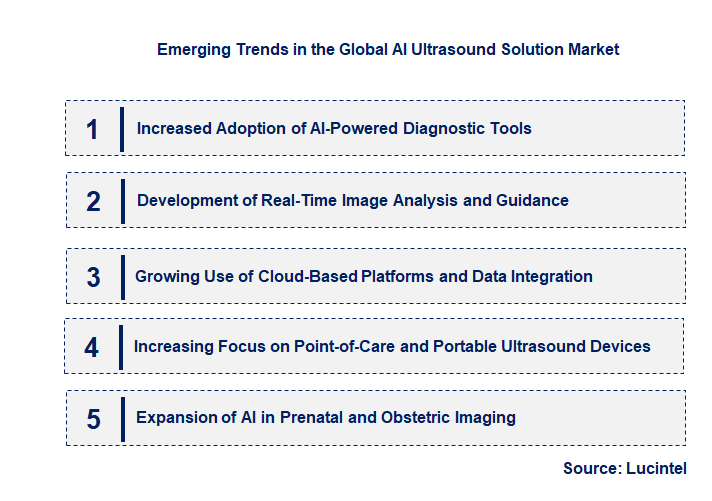
• Increased Adoption of AI-Powered Diagnostic Tools: The integration of AI algorithms into ultrasound devices is enabling more accurate and faster diagnoses. These tools assist clinicians by automatically identifying abnormalities, reducing human error, and streamlining workflows. The adoption is driven by the need for early detection of diseases such as cancer, cardiovascular conditions, and fetal anomalies. As AI models become more sophisticated, their ability to interpret complex imaging data improves, leading to better patient management and outcomes. This trend is making AI-powered ultrasound solutions a standard in many healthcare settings.
• Development of Real-Time Image Analysis and Guidance: Real-time AI analysis is revolutionizing ultrasound procedures by providing instant feedback during imaging. This capability enhances the precision of interventions such as biopsies, surgeries, and fetal monitoring. AI-driven guidance systems help less experienced operators achieve results comparable to experts, expanding access to high-quality care in remote or underserved areas. The ability to analyze images on-the-fly reduces procedure times and improves accuracy, ultimately leading to better clinical decisions. This trend is fostering more dynamic and interactive ultrasound applications across various medical disciplines.
• Growing Use of Cloud-Based Platforms and Data Integration: Cloud technology is facilitating seamless storage, sharing, and analysis of ultrasound data. AI solutions integrated with cloud platforms enable remote diagnostics, telemedicine consultations, and collaborative workflows among healthcare providers. This trend enhances data accessibility and security while supporting large-scale AI model training with diverse datasets. It also allows for continuous updates and improvements to AI algorithms. As data integration becomes more prevalent, healthcare providers can leverage comprehensive patient information for more personalized and effective treatment plans, broadening the reach of advanced ultrasound diagnostics.
• Increasing Focus on Point-of-Care and Portable Ultrasound Devices: The demand for portable and handheld ultrasound devices equipped with AI capabilities is rising, driven by the need for rapid diagnostics in emergency, primary care, and remote settings. These compact solutions offer high-quality imaging and AI-assisted analysis, enabling clinicians to perform quick assessments without the need for bulky equipment. This trend improves healthcare accessibility, especially in rural or resource-limited environments, and supports point-of-care decision-making. The proliferation of portable AI ultrasound devices is expanding the market and transforming traditional diagnostic pathways.
• Expansion of AI in Prenatal and Obstetric Imaging: AI is increasingly being used to enhance prenatal screening and fetal health assessment. Automated image analysis helps detect anomalies early and accurately, reducing the dependency on highly specialized radiologists. AI-driven tools improve the consistency and reliability of obstetric ultrasound results, facilitating early interventions and better pregnancy management. This trend is also enabling more widespread screening programs, especially in regions with limited access to expert care. The integration of AI in prenatal imaging is significantly improving maternal and fetal health outcomes worldwide. These trends are collectively reshaping the AI ultrasound solution market by making diagnostic processes faster, more accurate, and accessible. The adoption of AI-powered tools, real-time analysis, cloud integration, portable devices, and advanced prenatal imaging is driving innovation and expanding the reach of ultrasound technology. As these developments continue, they are set to improve clinical workflows, enhance patient care, and reduce healthcare costs, ultimately transforming ultrasound diagnostics into a more intelligent, efficient, and inclusive field.
• Growing Adoption of AI in Medical Imaging: The integration of AI algorithms into ultrasound devices enhances image quality, automates diagnosis, and reduces operator dependency. This advancement improves diagnostic accuracy, speeds up procedures, and minimizes human error. As a result, healthcare providers can deliver more reliable and timely diagnoses, leading to better patient management. The increasing adoption is driven by technological improvements, regulatory approvals, and the need for cost-effective solutions, positioning AI ultrasound as a vital component in modern diagnostics.
• Expansion of Point-of-Care Ultrasound Devices: Portable and handheld ultrasound devices equipped with AI are revolutionizing point-of-care diagnostics. These devices enable rapid assessments in emergency, rural, and outpatient settings, improving access to essential imaging. AI enhances image interpretation and guides clinicians during procedures, reducing reliance on specialists. This expansion addresses healthcare disparities, shortens diagnosis times, and supports timely treatment decisions, especially in resource-limited environments. The market growth is fueled by technological miniaturization, affordability, and increasing demand for immediate diagnostic insights.
• Advances in Deep Learning Algorithms for Image Analysis: Deep learning models are significantly improving ultrasound image analysis by detecting subtle abnormalities and providing automated measurements. These algorithms assist radiologists and clinicians in making more accurate diagnoses, especially in complex cases. Enhanced image analysis reduces diagnostic variability and increases confidence in results. Continuous improvements in AI models are expanding their capabilities, leading to broader clinical acceptance. This progress is crucial for early disease detection, personalized treatment planning, and reducing diagnostic turnaround times.
• Increasing Use in Obstetrics and Gynecology: AI-powered ultrasound solutions are transforming obstetric and gynecological imaging by providing precise fetal monitoring and anomaly detection. These tools improve the accuracy of gestational age, fetal health assessments, and anomaly screenings. AI enhances workflow efficiency and reduces operator dependency, leading to better patient outcomes. The growing demand for non-invasive, reliable prenatal diagnostics is driving market expansion. This development supports early intervention and personalized care, making AI ultrasound indispensable in maternal healthcare.
• Rising Focus on Regulatory Approvals and Market Penetration: Regulatory bodies are increasingly approving AI ultrasound solutions, boosting market confidence and adoption. Clear guidelines ensure safety and efficacy, encouraging manufacturers to innovate and expand their offerings. Market penetration is accelerating as hospitals and clinics recognize the benefits of AI-driven diagnostics. Strategic collaborations and investments are further fueling growth. This focus on regulation and market expansion ensures the deployment of reliable, standardized AI ultrasound solutions, fostering trust among healthcare providers and patients, and driving overall market growth. The overall impact of these developments is a more efficient, accurate, and accessible ultrasound market. Enhanced diagnostic capabilities, broader application areas, and regulatory support are accelerating adoption, improving patient outcomes, and reducing healthcare costs. These innovations are positioning AI ultrasound solutions as essential tools in modern medical diagnostics, promising sustained growth and technological evolution in the healthcare industry.
• Enhanced Diagnostic Accuracy and Efficiency: AI ultrasound solutions significantly improve diagnostic precision by automating image analysis, reducing human error, and enabling early detection of diseases. These systems streamline workflows, decrease interpretation time, and support clinicians in making faster, more informed decisions. The integration of machine learning algorithms allows continuous improvement in image quality and diagnostic capabilities, making AI-powered ultrasound indispensable in modern healthcare settings and expanding its application scope.
• Growing Adoption in Point-of-Care and Remote Settings: The portability and ease of use of AI ultrasound devices make them ideal for point-of-care and remote healthcare environments. These solutions facilitate immediate diagnosis in emergencies, rural areas, and outpatient clinics, where access to advanced imaging facilities is limited. The increasing demand for telemedicine and mobile health services accelerates adoption, enabling healthcare providers to deliver timely care, reduce patient transfer costs, and improve health outcomes in underserved regions.
• Rising Investment in Healthcare AI Technologies: Increased funding from private investors, government grants, and healthcare organizations fuels innovation in AI ultrasound solutions. Investment focuses on developing more sophisticated algorithms, improving hardware capabilities, and expanding clinical applications. This financial support accelerates product development, regulatory approvals, and market penetration, fostering a competitive landscape that drives technological advancements and broadens the availability of AI ultrasound solutions across diverse healthcare settings.
• Expansion of Clinical Applications and Use Cases: AI ultrasound solutions are increasingly applied beyond traditional imaging, including in oncology, cardiology, obstetrics, and musculoskeletal diagnostics. The ability to detect subtle abnormalities and quantify tissue characteristics enhances clinical decision-making. As research uncovers new applications, the market expands into preventive care, personalized medicine, and surgical planning, creating opportunities for vendors to diversify their offerings and meet the complex needs of modern medicine.
• Integration with Other Healthcare Technologies for Holistic Solutions: Combining AI ultrasound with electronic health records (EHR), imaging systems, and robotic surgery platforms creates comprehensive diagnostic and treatment ecosystems. This integration improves workflow efficiency, data sharing, and patient management. It enables real-time decision support, remote monitoring, and precision interventions, positioning AI ultrasound as a central component in smart healthcare infrastructure. Such synergy enhances overall patient care quality and fosters innovation in medical technology development. The overall impact of these growth opportunities is a dynamic, innovative market that enhances diagnostic capabilities, broadens access to advanced imaging, and supports personalized, efficient healthcare delivery. As technological integration deepens, the AI ultrasound solution market is set to transform medical diagnostics and treatment paradigms, ultimately improving patient outcomes worldwide.
• Technological Advancements: The rapid development of AI algorithms and machine learning models enhances ultrasound imaging accuracy, speed, and diagnostic capabilities. These innovations enable real-time analysis, automated image interpretation, and improved detection of abnormalities, which significantly benefit healthcare providers and patients. As technology continues to evolve, the integration of AI with ultrasound devices becomes more seamless, fostering widespread adoption. This progress not only improves clinical outcomes but also reduces operational costs, making AI ultrasound solutions more attractive to hospitals and clinics worldwide.
• Rising Healthcare Expenditure: Increasing investments in healthcare infrastructure and services globally are fueling demand for advanced diagnostic tools like AI ultrasound solutions. Governments and the private sector are prioritizing early diagnosis and minimally invasive procedures, which AI-powered ultrasound can facilitate efficiently. The growing prevalence of chronic diseases and the aging population further amplify the need for accurate, rapid diagnostics, driving market growth. As healthcare budgets expand, there is a greater willingness to adopt innovative technologies that promise improved patient outcomes and operational efficiencies.
• Regulatory Approvals and Standards: The evolving regulatory landscape plays a crucial role in shaping the AI ultrasound market. Clear guidelines and approval pathways from authorities such as the FDA and EMA instill confidence among manufacturers and healthcare providers. Regulatory support accelerates product launches and adoption, ensuring safety and efficacy standards are met. Conversely, stringent or unclear regulations can delay market entry and increase compliance costs. As regulatory frameworks become more defined and supportive, they are likely to facilitate broader deployment of AI ultrasound solutions across diverse healthcare settings.
• Increasing Adoption of Point-of-Care Ultrasound: The shift towards point-of-care diagnostics is a significant driver, with AI-enhanced portable ultrasound devices enabling bedside assessments in emergency, primary care, and remote settings. This trend improves access to quality diagnostics, especially in underserved regions, and reduces dependence on centralized imaging facilities. AI integration simplifies image acquisition and interpretation, making ultrasound more user-friendly for non-specialists. The convenience and immediacy of point-of-care ultrasound are transforming clinical workflows, expanding market reach, and fostering widespread adoption.
• Growing Focus on Personalized Medicine: AI ultrasound solutions are instrumental in advancing personalized healthcare by providing detailed, patient-specific diagnostic insights. These technologies enable tailored treatment plans, monitor disease progression, and predict therapeutic responses more accurately. The ability to analyze large datasets and generate individualized reports enhances clinical decision-making. As healthcare shifts towards personalized approaches, demand for sophisticated diagnostic tools like AI ultrasound increases, driving innovation and market expansion in this domain. The challenges facing this AI ultrasound solution market include:-
• Data Privacy and Security Concerns: The integration of AI in ultrasound imaging involves handling vast amounts of sensitive patient data, raising significant privacy and security issues. Ensuring compliance with data protection regulations such as HIPAA and GDPR is complex and costly. Data breaches or misuse can undermine trust and lead to legal repercussions, hindering market growth. Additionally, safeguarding data during transmission and storage remains a technical challenge, requiring robust cybersecurity measures. Addressing these concerns is critical for the widespread acceptance and deployment of AI ultrasound solutions.
• High Development and Implementation Costs: Developing advanced AI algorithms and integrating them into ultrasound devices requires substantial investment in research, technology, and regulatory approval processes. These costs can be prohibitive for smaller companies and slow down innovation. Furthermore, implementing AI solutions in clinical settings involves training personnel and upgrading infrastructure, adding to expenses. The high initial investment may limit adoption, especially in resource-constrained healthcare systems, impacting overall market growth.
• Limited Clinical Validation and Acceptance: Despite technological advancements, many AI ultrasound solutions face challenges related to clinical validation and acceptance among healthcare professionals. Lack of extensive clinical trials and real-world evidence can hinder trust and regulatory approval. Resistance from clinicians accustomed to traditional methods may slow adoption. Ensuring consistent performance, reliability, and demonstrating clear clinical benefits are essential to overcoming skepticism and fostering confidence in AI-powered ultrasound diagnostics. In summary, the AI ultrasound solution market is driven by technological innovations, increasing healthcare investments, supportive regulatory environments, and evolving clinical practices. However, challenges such as data security, high costs, and clinical validation hurdles must be addressed to realize its full potential. The interplay of these factors will shape the market’s growth trajectory, influencing adoption rates and technological development. Overall, the market is poised for significant expansion, provided stakeholders effectively navigate these drivers and challenges to harness AI’s transformative potential in ultrasound diagnostics.
• Butterfly Network
• GE HealthCare
• Philips
• Siemens Healthineers
• Canon Medical
• Samsung Medison
• Clarius
• Exo
• UltraSight
• DiA Imaging
• Platform
• Software
• Hardware
• Anatomical Guidance & Probe Positioning
• Pattern Recognition Systems
• Quantitative Scoring Systems
• Others
• On-premise
• Private Cloud
• Public Cloud / SaaS
• Others
• Hospital
• Clinic
• Others
• North America
• Europe
• Asia Pacific
• The Rest of the World
• United States: The US market is leading in AI ultrasound innovations, with major tech firms and healthcare providers investing heavily in R&D. Recent developments include the approval of AI-powered diagnostic tools by the FDA, enhancing early detection of diseases such as cancer and cardiovascular conditions. Telemedicine integration and cloud-based solutions are expanding access to advanced ultrasound diagnostics, especially in rural areas. Collaborations between tech companies and hospitals are accelerating the deployment of real-time AI analysis, improving workflow efficiency and diagnostic accuracy. The US also sees increased adoption of portable AI ultrasound devices, facilitating point-of-care diagnostics.
• China: China is rapidly advancing in AI ultrasound technology, driven by government initiatives to modernize healthcare infrastructure. Key developments include the deployment of AI-enabled portable ultrasound devices in rural clinics, improving access to diagnostics. Domestic companies are launching innovative AI algorithms for faster image analysis and disease detection, particularly in obstetrics and cardiology. The government’s focus on AI research and large-scale investments is fostering a competitive environment. Additionally, partnerships between Chinese tech giants and healthcare institutions are expanding the use of AI ultrasound solutions across urban and rural settings, aiming to reduce healthcare disparities.
• Germany: Germany’s market is characterized by a focus on integrating AI ultrasound solutions into existing healthcare systems, emphasizing precision medicine. Recent advancements include the development of AI algorithms that assist in early cancer detection and vascular imaging. The country’s strong regulatory framework ensures safety and efficacy, encouraging innovation. German medical device companies are collaborating with AI startups to enhance diagnostic capabilities and streamline workflows. There is also a growing emphasis on training healthcare professionals to utilize AI tools effectively. The adoption of AI ultrasound solutions is particularly prominent in hospitals specializing in oncology, cardiology, and radiology.
• India: India’s AI ultrasound market is expanding rapidly, driven by increasing healthcare needs and a large population with limited access to advanced diagnostics. Recent developments include affordable, portable AI ultrasound devices tailored for rural and semi-urban areas. Government initiatives aim to improve healthcare infrastructure and promote AI adoption in diagnostics. Local startups are developing cost-effective AI algorithms for disease screening, including maternal health and infectious diseases. Partnerships with international firms are facilitating technology transfer and training. The focus remains on making AI ultrasound solutions accessible and affordable, addressing the country’s unique healthcare challenges.
• Japan: Japan is advancing in AI ultrasound technology with a focus on the aging population's healthcare needs. Recent developments include AI-powered solutions for early detection of age-related conditions such as osteoporosis and cardiovascular diseases. Japanese companies are investing in research to improve image quality and diagnostic precision. Integration of AI with robotic ultrasound systems is also underway, enhancing minimally invasive procedures. Regulatory approval processes are streamlined to facilitate innovation. The country emphasizes precision medicine and personalized diagnostics, with AI ultrasound solutions playing a crucial role in early intervention and improved patient management, especially in geriatric care.


• Butterfly Network
• GE HealthCare
• Philips
• Siemens Healthineers
• Canon Medical
• Samsung Medison
• Clarius
• Exo
• UltraSight
• DiA Imaging Q5. Which AI ultrasound solution market segment will be the largest in future? Answer: Lucintel forecasts that, within the type category, software is expected to witness the highest growth over the forecast period. Q6. In AI ultrasound solution market, which region is expected to be the largest in next 5 years? Answer: In terms of region, APAC is expected to witness the highest growth over the forecast period. Q7. Do we receive customization in this report? Answer: Yes, Lucintel provides 10% customization without any additional cost.


Choose a license that fits your team. Instant PDF delivery.
Prices exclude taxes. Instant delivery. Custom licensing available on request.
Market Report · June 29, 2026
Market Report · May 18, 2026
Trusted partner for strategic intelligence and business growth


Receive a complimentary market analysis tailored to your industry. Our analysts will identify key growth opportunities and competitive dynamics specific to your business.

Market size, growth rate, and key trend analysis for your specific sector.

Top competitor positioning and market share analysis.

Strategic recommendations backed by data-driven insights.
Get curated market intelligence and competitive moves straight to your inbox.
By subscribing, you agree to receive our monthly insights. Unsubscribe anytime.
Receive a complimentary market analysis tailored to your industry. Our analysts will identify key growth opportunities and competitive dynamics specific to your business.
Market size, growth rate, and key trend analysis for your specific sector.
Top competitor positioning and market share analysis.
Strategic recommendations backed by data-driven insights.
Get curated market intelligence, emerging trends, and competitive moves straight to your inbox each month.
By subscribing, you agree to receive our monthly insights. Unsubscribe anytime.
We'll send your sample report shortly.