
Market Report · July 13, 2026

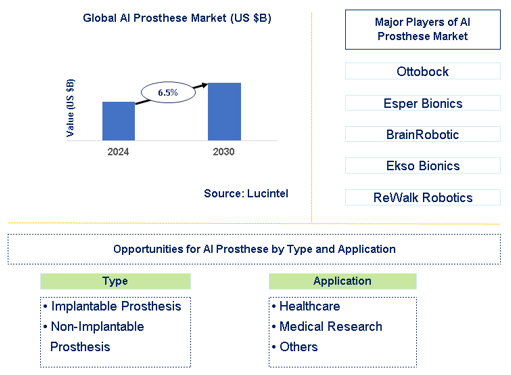
Key data points: The growth forecast = 6.5% annually for the next 6 years. Scroll below to get more insights. This market report covers trends, opportunities, and forecasts in the global AI prosthese market to 2030 by type (implantable prosthesis and non-implantable prosthesis), application (healthcare, medical research, and others), and region (North America, Europe, Asia Pacific, and the Rest of the World)
We'll send your sample report shortly.
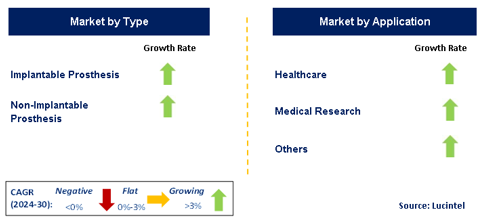
• Lucintel forecasts that, within the type category, the implantable prosthesis is expected to witness higher growth over the forecast period.
• Within the application category, healthcare is expected to witness the higher growth.
• In terms of regions, APAC is expected to witness the highest growth over the forecast period. Gain valuable insights for your business decisions with our comprehensive 150+ page report.
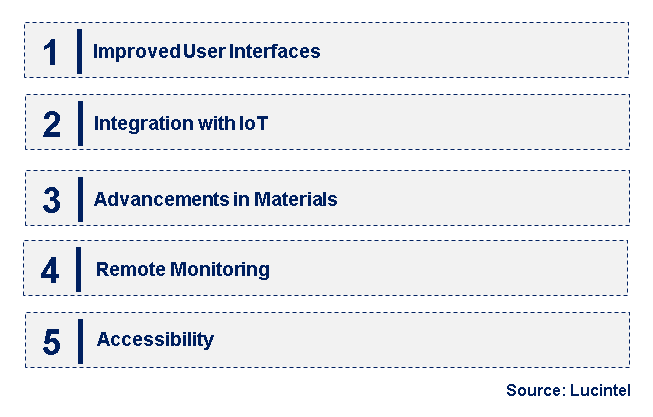
• Improved User Interfaces: Advances in user interfaces have finally allowed a better seamless relationship between prosthetics and users, enhancing user satisfaction and control over their prostheses.
• Integration with IoT: In tandem, AI prosthetics can be integrated with the Internet of Things to collect and analyze data in real time, allowing for adjustments and more performance tailored individually.
• Advancements in Materials: Innovative materials are used in prosthetic design—lightweight, durable, and elastic materials provide comfort and functionality to the user.
• Remote Monitoring: AI prosthetics have become remotely monitorable, meaning that healthcare providers can track how the user is progressing with the device in terms of performance. This further enhances rehabilitation strategies through effective follow-up.
• Accessibility: Innovations are currently underway to improve the affordability of AI prosthetic solutions, enhancing access in low-income regions. This creates avenues for a higher quality of life and increased opportunities for inclusion. These trends modify the AI prosthesis market by focusing more on user experience and technology updates, ultimately providing more workable and accessible prosthetic aids to those who need them.
• Launch of Smart Prosthetics: Companies are launching smart prosthetic devices with built-in AI algorithms that learn movement patterns to adapt performance according to the individual's activities, enhancing user experience while improving mobility.
• Advancements in Neural Interfaces: Technologies explored in neural interfacing support control of prosthetics directly from one's brain, leading to more natural movement and a closer bond between the user and the prosthetic.
• Investment in Research: Accelerated government and private funding for prosthetic research fuels advances in AI prosthetics, leading to breakthroughs in functionality, comfort, and personalization options for end-users.
• Collaboration for Innovation: Partnerships between tech companies and healthcare providers lead to innovation in prosthetic devices, with advanced technology becoming the mainstay of effectiveness and improving treatment outcomes.
• Focus on Affordability: Recent innovations are focusing on cost-effective prosthetic solutions, enabling advanced AI prosthetics to reach a wider population, especially in developing regions. These developments significantly influence the functionality, user experience, and accessibility of AI prosthetics, enhancing the overall quality of life for people using these solutions.
• Rehabilitation Services: AI prosthetics increasingly feature in rehabilitation programs that use real-time feedback and adaptive learning to enhance recovery processes and outcomes for users.
• Veteran Care: The need for advanced prosthetics among veterans offers an opportunity for growth, primarily through targeted initiatives that provide cutting-edge solutions to improve their quality of life.
• Sports and Fitness Applications: Advancements in AI prosthetics offer a growing market related to athletes, focusing on improvement in performance and participation in sports and fitness activities.
• Aging Population Solutions: The increasing aging population necessitates the gradual advancement of sophisticated prosthetic solutions required by older adults to manage their unique mobility challenges, offering opportunities for bespoke products.
• Telehealth Integration: The integration of AI technology in prosthetics with telehealth services yields benefits such as remotely accessing consultations and monitoring, thus offering greater reach and access to ongoing care and support for users in the long term. Changes in the AI prosthesis market, targeting various needs in different sectors, enhance innovation and provide an optimal user experience across all users.
• Technological Advancement: Rapid advancements in artificial intelligence, robotics, and materials science lead to further innovations in prosthetic design, making prosthetics more functional and satisfying for users.
• Individualized Prosthetics: The global demand for prosthetic materials that meet the specific needs of users is on the rise. This trend encourages manufacturers to focus on features and designs that are more customized.
• Government Initiatives and Funding: Government support for medical technology innovation has provided funding and invested in research and development resources, driving forward advancements in AI prosthetics.
• Greater Awareness and Acceptance: Increased awareness of the advantages of AI prosthetics builds acceptance and demand among users, leading to market growth.
• Aging Population: The rising demand for prosthetics is largely due to the aging population, as more people require aids to ensure mobility and maintain a decent standard of living. Challenges in the AI prosthese market include:
• Expensive Development Costs: The costs associated with developing advanced prosthetics with AI can be prohibitive for small companies, resulting in less competition and innovation.
• Regulatory Barriers: Regulatory requirements governing medical devices pose significant challenges, potentially delaying new products and technologies from entering the market.
• Skills Deficit: A scarcity of skilled professionals in AI and prosthetic design restrains innovation and advanced solution development. In summary, the AI prosthetics market is influenced by a combination of drivers and challenges that impact its growth trajectory and strategic decisions, making it challenging for stakeholders. Understanding these dynamics is critical to leveraging opportunities and overcoming obstacles in this changing landscape.
• Ottobock
• Esper Bionics
• BrainRobotic
• Ekso Bionics
• ReWalk Robotics
• Synchron
• Xilloc Medical
• Mobius Bionics
• Marsi Bionics
• Cyberdyne
• Implantable Prosthesis
• Non-Implantable Prosthesis
• Healthcare
• Medical Research
• Others
• North America
• Europe
• Asia Pacific
• The Rest of the World
• United States: Prosthetic innovations in the U.S. are at the forefront, with leading companies like Össur and Enable Biomedics developing advanced smart prosthetics that work in harmony with users' movements. Recent public and private sector funding has facilitated further research in neural interfacing, advancing user control over prosthetic limbs. Intercompany collaboration between technology companies and healthcare providers maximizes user experience and rehabilitation outcomes.
• China: The AI prosthesis market in China is rapidly gaining pace due to government pursuits for innovation in medical technology. Companies like Shanghai Shenli and Huashan Medical are working on low-cost AI-enabled prosthetics to improve access to rehabilitation for disabled individuals. Strong research capabilities and local manufacturing enhance the speed of product implementation within the healthcare system.
• Germany: Advanced robotics and AI are applied in prosthetics in Germany. Research institutions collaborate with industrial leaders like Ottobock to develop prosthetic limbs that utilize machine learning for enhanced effectiveness tailored to individual users. Recent projects include adaptive algorithms that enable prosthetics to adjust in real time to various activities, enhancing user comfort and mobility.
• India: India's growing AI prosthetics market is driven by domestic startups supported by government initiatives in medical technology. Companies like Aatma and Aipha are working on affordable prosthetic solutions with integrated AI, maximizing accessibility while enhancing functionality for a large population needing prosthetic care and fostering local manufacturing capabilities.
• Japan: Japan excels in robotics for the advancement of AI prosthetic technology. Companies like Panasonic and Toyota are investing in smart prosthetics that enhance interaction between users and devices, utilizing lightweight, energy-efficient materials suitable for both daily and professional needs.


• Ottobock
• Esper Bionics
• BrainRobotic
• Ekso Bionics
• ReWalk Robotics
• Synchron
• Xilloc Medical
• Mobius Bionics
• Marsi Bionics
• Cyberdyne Q5. Which AI prosthese market segment will be the largest in future? Answer: Lucintel forecasts that, within the type category, the implantable prosthesis is expected to witness higher growth over the forecast period. Q6. In AI prosthese market, which region is expected to be the largest in next 5 years? Answer: In terms of regions, APAC is expected to witness the highest growth over the forecast period. Q.7 Do we receive customization in this report? Answer: Yes, Lucintel provides 10% customization without any additional cost.


Choose a license that fits your team. Instant PDF delivery.
Prices exclude taxes. Instant delivery. Custom licensing available on request.
Market Report · July 13, 2026
Market Report · July 13, 2026
Market Report · July 2, 2026
Trusted partner for strategic intelligence and business growth


Receive a complimentary market analysis tailored to your industry. Our analysts will identify key growth opportunities and competitive dynamics specific to your business.

Market size, growth rate, and key trend analysis for your specific sector.

Top competitor positioning and market share analysis.

Strategic recommendations backed by data-driven insights.
Get curated market intelligence and competitive moves straight to your inbox.
By subscribing, you agree to receive our monthly insights. Unsubscribe anytime.
Receive a complimentary market analysis tailored to your industry. Our analysts will identify key growth opportunities and competitive dynamics specific to your business.
Market size, growth rate, and key trend analysis for your specific sector.
Top competitor positioning and market share analysis.
Strategic recommendations backed by data-driven insights.
Get curated market intelligence, emerging trends, and competitive moves straight to your inbox each month.
By subscribing, you agree to receive our monthly insights. Unsubscribe anytime.
We'll send your sample report shortly.