
Market Report · July 13, 2026

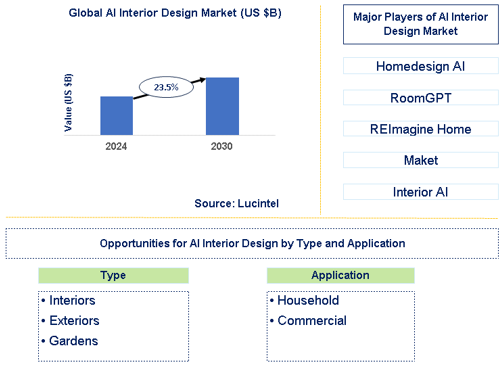
Key data points: The growth forecast = 23.5% annually for the next 6 years. Scroll below to get more insights. This market report covers trends, opportunities, and forecasts in the global AI interior design market to 2030 by type (interiors, exteriors, and gardens), application (household and commercial), and region (North America, Europe, Asia Pacific, and the Rest of the World)
We'll send your sample report shortly.
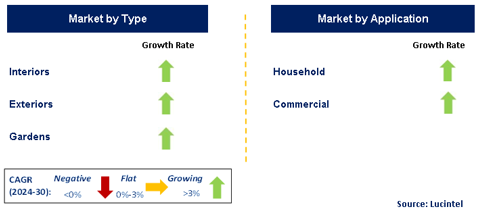
• Lucintel forecasts that, within the type category, interior is expected to witness the highest growth over the forecast period.
• Within the application category, household will remain the largest segment.
• In terms of regions, APAC is expected to witness the highest growth over the forecast period. Gain valuable insights for your business decisions with our comprehensive 150+ page report.
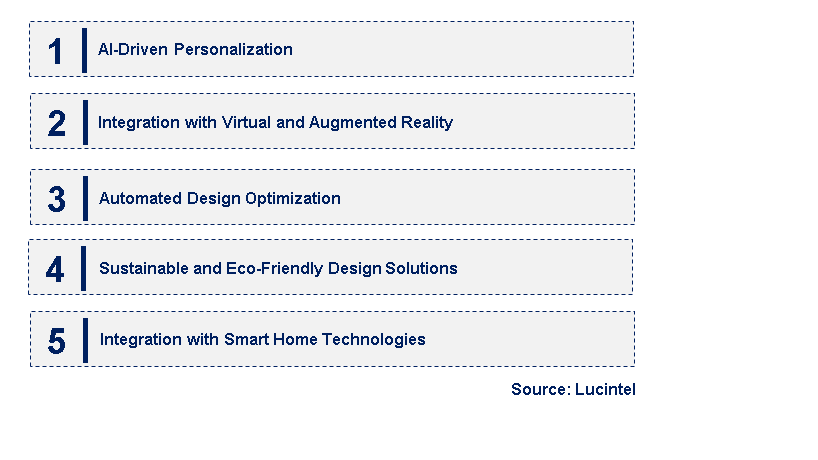
• AI-Driven Personalization: AI is enhancing personalization in interior design by analyzing user preferences and behavior to offer customized design recommendations. This trend allows for highly tailored design solutions that reflect individual tastes and needs, improving user satisfaction and engagement in the design process.
• Integration with Virtual and Augmented Reality: The integration of AI with virtual reality (VR) and augmented reality (AR) technologies is becoming increasingly prevalent. These tools allow users to visualize and interact with design concepts in real-time, providing a more immersive and accurate representation of how designs will look and function in their spaces.
• Automated Design Optimization: AI is being used to automate the design optimization process, including space planning, furniture arrangement, and lighting. This trend helps streamline the design process by offering data-driven suggestions that maximize space utilization and enhance functionality, reducing the time and effort required for design iterations.
• Sustainable and Eco-Friendly Design Solutions: There is a growing focus on using AI to support sustainable and eco-friendly design practices. AI tools help designers select sustainable materials, optimize energy efficiency, and reduce waste, aligning with the increasing demand for environmentally responsible design solutions.
• Integration with Smart Home Technologies: AI interior design is increasingly integrating with smart home technologies to create connected and automated living spaces. This trend involves designing interiors that seamlessly integrate with smart devices and systems, enhancing convenience, comfort, and efficiency in home environments. These trends are reshaping the AI interior design market by driving innovation, improving personalization, and integrating advanced technologies. The focus on AI-driven personalization, VR/AR integration, and sustainability is enhancing the design process and user experience, while smart home integration is creating more connected and efficient living spaces.
• Launch of Advanced AI Design Platforms: New AI design platforms have been launched, offering advanced features such as real-time visualization and customization. These platforms use machine learning algorithms to provide personalized design recommendations and interactive design experiences, enhancing the overall design process.
• Development of AI-Powered Virtual Staging Tools: AI-powered virtual staging tools are being developed to assist in property marketing and real estate. These tools allow users to create realistic, digitally staged interiors for properties, helping potential buyers visualize spaces and make informed decisions.
• Introduction of AI-Enhanced Sustainable Design Solutions: Innovations in AI are being applied to sustainable design practices, with tools that help select eco-friendly materials and optimize energy usage. These AI-enhanced solutions support environmentally responsible design and align with the growing emphasis on sustainability in the interior design industry.
• Integration of AI with Smart Home Systems: AI interior design solutions are increasingly being integrated with smart home systems. This development allows for the creation of interconnected and automated living environments, enhancing convenience and efficiency through seamless integration with smart devices and technologies.
• Emergence of AI-Driven Design Assistants: AI-driven design assistants are being introduced to support interior designers and homeowners. These virtual assistants use AI to provide design suggestions, manage project tasks, and streamline the design process, improving productivity and decision-making. These developments are shaping the AI interior design market by advancing technology, enhancing user experiences, and addressing evolving industry needs. The introduction of advanced platforms, virtual staging tools, and sustainable solutions is driving growth and innovation in the sector.
• Expansion into Real Estate Marketing: AI-driven interior design tools offer growth opportunities in real estate marketing by providing virtual staging and design visualization. These tools help real estate professionals showcase properties more effectively, attracting potential buyers and enhancing property sales.
• Development of Customized Design Solutions: The growing demand for personalized design solutions presents an opportunity for AI-driven platforms to offer highly tailored recommendations. Customized design tools that analyze user preferences and provide bespoke solutions can capture a significant share of the market.
• Integration with Home Automation Systems: Integrating AI interior design with home automation systems offers growth potential by creating smart, connected living environments. This integration enhances user convenience and efficiency, making it an attractive option for consumers seeking advanced home technology.
• Focus on Sustainable Design Practices: There is a significant opportunity in developing AI tools that support sustainable design practices. By focusing on eco-friendly materials and energy-efficient solutions, businesses can address the growing demand for environmentally responsible design and differentiate themselves in the market.
• Enhancement of Virtual and Augmented Reality Applications: The integration of AI with VR and AR technologies offers growth opportunities by providing immersive design experiences. These technologies allow users to visualize and interact with design concepts in real-time, improving the design process and user engagement. These growth opportunities are driving the expansion and innovation of the AI interior design market. By focusing on real estate marketing, customized solutions, home automation, sustainability, and immersive technologies, companies can address emerging trends and meet the evolving needs of consumers and businesses.
• Technological Advancements in AI: Advancements in AI technology are driving the AI interior design market by enabling more sophisticated design tools and solutions. Improved algorithms and computational power enhance design capabilities, personalization, and efficiency, fueling market growth and innovation.
• Growing Demand for Personalized Design Solutions: The increasing demand for personalized interior design solutions is a major driver. AI tools that offer customized recommendations based on user preferences and behavior are becoming popular, reflecting a shift towards more tailored and individualized design experiences.
• Rising Interest in Sustainable Design: The emphasis on sustainability and eco-friendly practices is driving the AI interior design market. AI tools that support sustainable design, such as material selection and energy optimization, align with the growing focus on environmental responsibility and green building practices.
• Integration with Smart Home Technologies: The integration of AI interior design with smart home technologies is expanding market opportunities. AI-driven design solutions that connect with smart devices enhance convenience, efficiency, and user experience, driving adoption and growth in the smart home sector.
• Increasing Adoption of Virtual and Augmented Reality: The adoption of VR and AR technologies in interior design is a significant driver. AI-powered design tools that integrate with VR/AR provide immersive and interactive design experiences, improving visualization and decision-making in the design process. Challenges in the AI interior design market are:
• High Development and Implementation Costs: The development and implementation of advanced AI interior design tools involve high costs, including research, development, and integration expenses. These costs can be a barrier for smaller companies and startups, impacting market entry and competition.
• Technology Integration and Compatibility Issues: Integrating AI with existing design systems and technologies can present challenges. Compatibility issues and technical complexities can affect the performance and effectiveness of AI tools, posing obstacles for seamless implementation and user adoption.
• Regulatory and Data Privacy Concerns: Regulatory and data privacy concerns related to AI and user data can impact the AI interior design market. Compliance with regulations and addressing privacy issues are crucial for ensuring data security and maintaining user trust in AI-driven design solutions. Drivers and challenges significantly influence the AI interior design market by shaping technological advancements, market demand, and operational considerations. Addressing these factors effectively is essential for stakeholders to navigate the market and capitalize on growth opportunities.
• Homedesign AI
• RoomGPT
• REImagine Home
• Maket
• Interior AI
• ZMO.ai
• Manycore Technology
• Interiors
• Exteriors
• Gardens
• Household
• Commercial
• North America
• Europe
• Asia Pacific
• The Rest of the World
• United States: In the US, recent developments in AI interior design include the launch of advanced design platforms that leverage machine learning to offer personalized interior solutions. Major tech companies are integrating AI tools that help users visualize and customize their living spaces with virtual reality and augmented reality features. This trend is driven by a growing interest in home automation and a desire for more interactive design experiences.
• China: China has seen significant advancements in AI interior design, with local startups and tech giants developing sophisticated AI-driven platforms for home and office design. These platforms use AI to analyze user preferences and optimize space utilization, providing tailored design recommendations. The rapid adoption of smart home technologies and a burgeoning real estate market are fueling these innovations.
• Germany: In Germany, AI interior design is focused on integrating sustainable and eco-friendly solutions into design practices. Recent developments include AI tools that assist in selecting sustainable materials and optimizing energy efficiency in interior spaces. This reflects Germany’s commitment to green technology and its emphasis on environmentally responsible design practices.
• India: India’s AI interior design market is evolving with a focus on affordability and accessibility. New AI-powered design applications are being developed to cater to a growing middle class, offering budget-friendly and customizable design solutions. These tools aim to make advanced interior design accessible to a broader audience, driven by increasing digital engagement and home renovation trends.
• Japan: In Japan, AI interior design innovations are centered around integrating traditional aesthetics with modern technology. Recent developments include AI tools that combine Japanese design principles with advanced technology to create harmonious and functional living spaces. This trend highlights Japan’s unique approach to blending cultural heritage with contemporary design solutions.


• Homedesign AI
• RoomGPT
• REImagine Home
• Maket
• Interior AI
• ZMO.ai
• Manycore Technology Q5. Which AI interior design market segment will be the largest in future? Answer: Lucintel forecasts that, within the type category, interior is expected to witness the highest growth over the forecast period. Q6. In AI interior design market, which region is expected to be the largest in next 5 years? Answer: In terms of regions, APAC is expected to witness the highest growth over the forecast period. Q7. Do we receive customization in this report? Answer: Yes, Lucintel provides 10% customization without any additional cost.


Choose a license that fits your team. Instant PDF delivery.
Prices exclude taxes. Instant delivery. Custom licensing available on request.
Market Report · July 13, 2026
Market Report · July 13, 2026
Market Report · July 2, 2026
Trusted partner for strategic intelligence and business growth


Receive a complimentary market analysis tailored to your industry. Our analysts will identify key growth opportunities and competitive dynamics specific to your business.

Market size, growth rate, and key trend analysis for your specific sector.

Top competitor positioning and market share analysis.

Strategic recommendations backed by data-driven insights.
Get curated market intelligence and competitive moves straight to your inbox.
By subscribing, you agree to receive our monthly insights. Unsubscribe anytime.
Receive a complimentary market analysis tailored to your industry. Our analysts will identify key growth opportunities and competitive dynamics specific to your business.
Market size, growth rate, and key trend analysis for your specific sector.
Top competitor positioning and market share analysis.
Strategic recommendations backed by data-driven insights.
Get curated market intelligence, emerging trends, and competitive moves straight to your inbox each month.
By subscribing, you agree to receive our monthly insights. Unsubscribe anytime.
We'll send your sample report shortly.