
Market Report · July 31, 2026

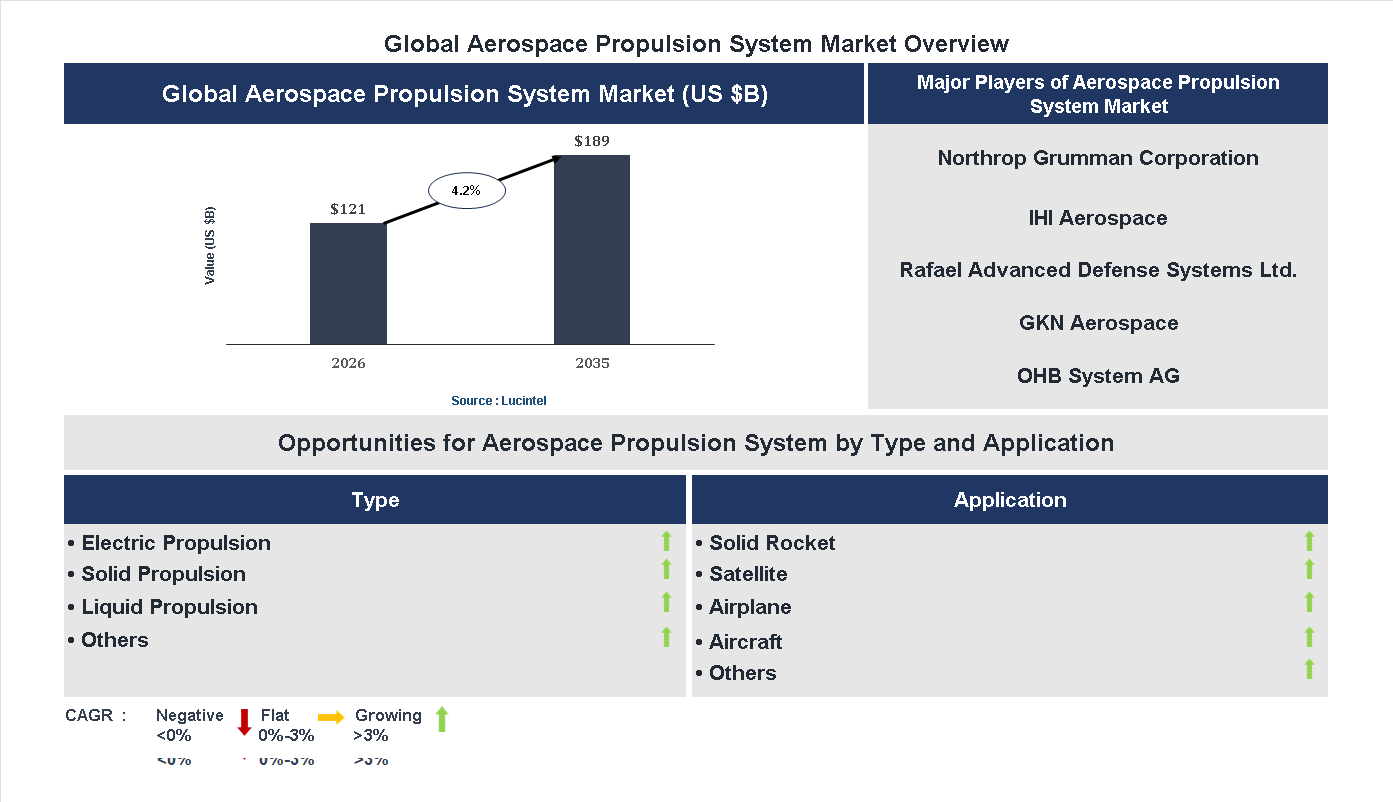
Key data points: The market size in 2035 = $189 billion, growth forecast = 4.2% annually for the next 8 years. Scroll below to get more insights. This market report covers trends, opportunities and forecasts in aerospace propulsion system market to 2035 by type (electric propulsion, solid propulsion, liquid propulsion, and others), application (solid rocket, satellite, airplane, aircraft, and others), and region (North America, Europe, Asia Pacific, and the Rest of the World)
We'll send your sample report shortly.
• Lucintel forecasts that, within the type category, electric propulsion is expected to witness the highest growth over the forecast period.
• Within the application category, satellite is expected to witness the highest growth.
• In terms of region, APAC is expected to witness the highest growth over the forecast period. Gain valuable insights for your business decisions with our comprehensive 150+ page report. Sample figures with some insights are shown below.
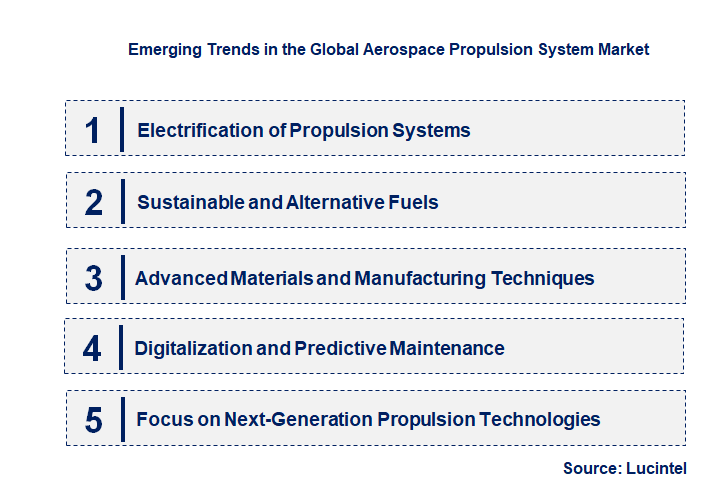
• Electrification of Propulsion Systems: The shift towards electric and hybrid propulsion solutions is gaining momentum, driven by the need for reduced emissions and lower operational costs. Electric propulsion offers benefits such as lower noise levels, fewer moving parts, and enhanced reliability. Hybrid systems combine traditional engines with electric power, providing flexibility and efficiency. This trend is particularly prominent in small aircraft, urban air mobility vehicles, and experimental aircraft. The impact includes opening new markets for electric propulsion startups, encouraging regulatory support, and fostering innovation in battery technology and power management systems.
• Sustainable and Alternative Fuels: The push for greener aviation is accelerating the adoption of sustainable aviation fuels (SAFs) and alternative energy sources. These fuels, derived from renewable resources, significantly reduce carbon emissions compared to conventional jet fuels. Manufacturers are investing in engines compatible with SAFs, and airlines are increasingly adopting these fuels to meet environmental targets. The trend promotes a shift towards biofuels, synthetic fuels, and hydrogen-powered engines, which could revolutionize long-haul and regional aircraft operations. This development enhances the market’s focus on environmental compliance and long-term sustainability.
• Advanced Materials and Manufacturing Techniques: Innovations in materials such as composites, ceramics, and lightweight alloys are enhancing propulsion system performance. Additive manufacturing (3D printing) allows for complex component designs, reducing weight and manufacturing costs. These advancements lead to more efficient engines with higher thrust-to-weight ratios and improved durability. The impact extends to faster prototyping, customization, and reduced lead times, enabling manufacturers to respond swiftly to market demands. This trend is crucial for developing next-generation engines that meet stringent emissions and performance standards.
• Digitalization and Predictive Maintenance: The integration of digital technologies, including IoT sensors, data analytics, and AI, is transforming propulsion system maintenance and operation. Predictive maintenance enables early detection of component failures, reducing downtime and maintenance costs. Digital twin technology allows virtual modeling of engines for performance optimization and troubleshooting. This trend enhances reliability, safety, and operational efficiency, providing airlines and manufacturers with real-time insights. The market benefits from reduced lifecycle costs and improved asset management, fostering a more resilient and responsive aerospace ecosystem.
• Focus on Next-Generation Propulsion Technologies: Research and development efforts are intensifying around innovative propulsion concepts such as open-rotor engines, turboelectric systems, and nuclear propulsion. These technologies aim to achieve higher efficiency, lower emissions, and greater operational flexibility. Open-rotor engines promise significant fuel savings, while turboelectric systems combine gas turbines with electric motors for hybrid propulsion. Nuclear propulsion, though still in experimental stages, offers potential for long-duration, high-power applications. These advancements are poised to redefine propulsion paradigms, opening new avenues for commercial, military, and space exploration markets. These emerging trends are collectively reshaping the aerospace propulsion system market by fostering sustainability, technological innovation, and operational efficiency. They are driving industry transformation towards cleaner, smarter, and more adaptable propulsion solutions, ensuring the sectors growth and competitiveness in a rapidly changing global landscape.
• Electric and Hybrid Propulsion Technologies: The shift towards electric and hybrid propulsion systems is transforming aerospace, offering cleaner, more efficient alternatives to traditional engines. These systems reduce carbon emissions, lower fuel costs, and meet stricter environmental regulations. The adoption of battery advancements and hybrid configurations is expanding, especially in regional and small aircraft segments. This innovation is expected to accelerate market growth, attract new entrants, and open avenues for sustainable aviation solutions.
• Development of Next-Generation Turbofan Engines: Next-generation turbofan engines are designed to deliver higher fuel efficiency, lower emissions, and increased durability. Innovations include advanced materials, aerodynamics, and noise reduction technologies. These engines are crucial for long-haul commercial aircraft, providing airlines with cost savings and environmental benefits. The ongoing development and certification of these engines are expected to boost market competitiveness and meet the rising demand for eco-friendly, high-performance propulsion systems.
• Integration of Digital and Smart Technologies: Incorporating digital solutions such as predictive maintenance, real-time monitoring, and AI-driven analytics is revolutionizing propulsion system management. These technologies enhance reliability, reduce downtime, and optimize performance. The integration of smart systems also facilitates design improvements and customization. As aerospace companies adopt digital transformation, the market will see increased efficiency, reduced operational costs, and improved safety standards, fostering innovation and customer satisfaction.
• Focus on Sustainable and Alternative Fuels: The push for sustainable aviation fuels (SAFs) and alternative energy sources is reshaping propulsion system development. These fuels significantly lower lifecycle emissions and are vital for meeting global climate targets. Manufacturers are investing in engines compatible with biofuels, synthetic fuels, and hydrogen. This shift not only supports environmental goals but also opens new markets and regulatory incentives, positioning the industry for a greener, more sustainable future.
• Expansion in Defense and Space Propulsion: The defense sectors demand for advanced propulsion systems for missiles, drones, and space exploration is increasing. Innovations include high-thrust, lightweight engines, and propulsion modules capable of operating in extreme conditions. The space industry’s growth, driven by satellite launches and exploration missions, is fueling demand for reliable, high-performance propulsion solutions. This expansion offers significant revenue opportunities and technological advancements that benefit both commercial and military applications. These developments are significantly impacting the aerospace propulsion system market by fostering innovation, enhancing efficiency, and promoting sustainability. The integration of new technologies and fuels is opening up diverse opportunities across commercial, defense, and space sectors. As these trends continue, the market is expected to experience accelerated growth, increased competitiveness, and a stronger focus on environmentally friendly solutions, shaping the future of aerospace propulsion and global mobility.
• Increasing Adoption of Electric and Hybrid Propulsion Systems: The shift towards electric and hybrid propulsion systems offers significant growth potential by reducing emissions and fuel consumption. Advances in battery technology and electric motor efficiency are enabling these systems to power a broader range of aircraft, from small drones to regional jets. Governments and industry stakeholders are investing heavily in R&D to overcome current limitations, making sustainable propulsion a key focus for future market expansion.
• Growing Demand for Fuel-Efficient Turbofan Engines: The need for more fuel-efficient engines is driven by rising fuel costs and environmental regulations. Turbofan engines with advanced materials, aerodynamics, and noise reduction features are gaining popularity. OEMs are developing next-generation engines that deliver higher thrust with lower emissions, catering to commercial airlines seeking operational cost savings and regulatory compliance. This trend is expected to significantly boost the market for high-efficiency propulsion systems.
• Expansion of Military Aircraft and Defense Modernization: Increasing defense budgets and modernization programs are fueling demand for advanced propulsion systems in military aircraft. Stealth fighters, unmanned aerial vehicles (UAVs), and strategic bombers require high-performance, reliable engines. Innovations in turbojet and turboprop technologies are enhancing operational capabilities. The integration of afterburners and adaptive cycle engines further expands opportunities, making defense a vital segment for market growth and technological development.
• Rising Use of Sustainable Fuels and Green Technologies: The push for sustainability is encouraging the adoption of biofuels, synthetic fuels, and other green technologies in aerospace propulsion. These fuels reduce carbon footprints and comply with stringent environmental standards. Engine manufacturers are developing compatible systems, and regulatory bodies are incentivizing green initiatives. This shift not only supports environmental goals but also opens new markets for sustainable propulsion solutions, fostering innovation and long-term growth.
• Increasing Investment in Space Propulsion Technologies: The expanding space industry is driving demand for advanced propulsion systems for satellites, space exploration, and launch vehicles. Electric propulsion, ion thrusters, and chemical propulsion systems are being developed for higher efficiency and longer mission durations. Governments and private companies are investing heavily in space propulsion R&D, creating opportunities for technological breakthroughs. This segment is poised to become a significant growth driver within the overall aerospace propulsion market. The overall market outlook is positively influenced by these growth opportunities, promising technological innovation, environmental sustainability, and expanded applications. As companies capitalize on these trends, the aerospace propulsion system market is set to experience substantial growth, supporting the evolving needs of commercial, military, and space sectors worldwide.
• Technological Innovation: The continuous development of more efficient, lightweight, and environmentally friendly propulsion systems fuels market growth. Advances in materials, additive manufacturing, and digital engineering enable manufacturers to produce engines with higher performance and lower emissions. These innovations meet stringent regulatory standards and customer demands for sustainability, opening new markets and expanding existing ones. Moreover, integration of digital technologies like AI and IoT enhances engine diagnostics and maintenance, reducing downtime and operational costs, thus boosting adoption across commercial and military sectors.
• Increasing Commercial Aircraft Demand: The global rise in air travel, driven by economic growth and expanding middle classes, significantly boosts demand for new aircraft. Airlines seek fuel-efficient, reliable engines to reduce operating costs and meet environmental regulations. The proliferation of low-cost carriers and the expansion of existing routes further accelerate aircraft orders, directly impacting propulsion system sales. Additionally, the modernization of aging fleets with newer, more efficient engines sustains market growth, creating opportunities for engine manufacturers to innovate and capture market share.
• Defense and Military Spending: Growing defense budgets worldwide, especially in North America and Asia-Pacific, drive demand for advanced propulsion systems in military aircraft, drones, and space vehicles. Countries invest heavily in next-generation fighter jets and unmanned systems, requiring high-performance, durable engines. These defense-driven projects often involve cutting-edge propulsion technologies, fostering innovation and competition within the market. Increased military activity and strategic priorities also lead to sustained government contracts, ensuring a steady revenue stream for propulsion system manufacturers.
• Environmental Regulations and Sustainability Goals: Stricter emission standards and global commitments to reduce carbon footprints compel manufacturers to develop cleaner propulsion technologies. The push for sustainable aviation fuels and hybrid-electric engines influences R&D investments, fostering the development of alternative propulsion systems. These regulatory pressures create a dual challenge: compliance costs and the need for technological innovation. However, they also present opportunities for market differentiation and leadership in green aviation, encouraging companies to invest in eco-friendly propulsion solutions to meet future standards.
• Supply Chain and Material Advancements: The availability of advanced materials such as composites and ceramics enhances engine performance and durability. Supply chain resilience, especially in the wake of geopolitical tensions and global disruptions, is critical for timely production and delivery. Strategic sourcing and localization efforts help mitigate risks associated with raw material shortages and geopolitical conflicts. Additionally, innovations in manufacturing processes, including additive manufacturing, reduce costs and lead times, enabling faster market response and customization, which are vital for maintaining competitive advantage. The challenges facing the aerospace propulsion system market include:-
• Regulatory Compliance Costs: The increasing stringency of environmental and safety regulations imposes significant costs on manufacturers. Developing engines that meet evolving standards requires substantial R&D investment, testing, and certification processes, which can delay product launches and increase expenses. Smaller players may struggle to bear these costs, leading to market consolidation. Moreover, compliance with international standards complicates global supply chains and market entry strategies, potentially limiting growth opportunities and increasing operational risks.
• Technological Complexity and High R&D Expenses: The development of next-generation propulsion systems involves complex engineering, extensive testing, and high capital expenditure. The need for cutting-edge materials, digital integration, and alternative fuels adds layers of complexity, demanding specialized expertise and significant financial resources. This high barrier to entry can hinder innovation and limit competition, while also increasing the risk of project failures. Companies must balance innovation with cost management to remain competitive in a rapidly evolving technological landscape.
• Market Volatility and Geopolitical Risks: Fluctuations in fuel prices, economic downturns, and geopolitical tensions can disrupt supply chains and affect customer budgets. Trade restrictions, tariffs, and sanctions may limit access to key markets or materials, impacting production and sales. Additionally, political instability in key regions can lead to project delays or cancellations, creating uncertainty for investors and manufacturers. Navigating these risks requires strategic planning and diversification to ensure market resilience amid global uncertainties. The aerospace propulsion system market is shaped by rapid technological progress, increasing demand from commercial and defense sectors, and stringent environmental regulations. While these drivers present significant growth opportunities, challenges such as high compliance costs, technological complexity, and geopolitical risks pose hurdles. The market’s future will depend on how effectively companies innovate, adapt to regulatory changes, and manage supply chain and geopolitical uncertainties. Overall, the industry is poised for growth, driven by innovation and strategic adaptation, but must navigate complex challenges to sustain long-term success.
• Northrop Grumman Corporation
• IHI Aerospace
• Rafael Advanced Defense Systems Ltd.
• GKN Aerospace
• OHB System AG
• Dassault Systèmes
• Safran S.A.
• CU Aerospace
• GE Aerospace
• Moog Inc.
• Electric Propulsion
• Solid Propulsion
• Liquid Propulsion
• Others
• Solid Rocket
• Satellite
• Airplane
• Aircraft
• Others
• North America
• Europe
• Asia Pacific
• The Rest of the World
• United States: The US aerospace propulsion system market is characterized by significant technological innovation, with major companies like GE Aviation and Rolls-Royce leading advancements in fuel-efficient engines. The focus is on developing next-generation turbofan engines and integrating hybrid-electric propulsion systems. The US government’s investments in aerospace R&D and initiatives like the Clean Sky program are fostering sustainable propulsion solutions. Additionally, the rise of urban air mobility and drone technology is creating new opportunities for propulsion system applications. The market is also witnessing increased collaboration between aerospace firms and tech companies to develop smarter, more efficient engines.
• China: China is rapidly expanding its aerospace propulsion capabilities through substantial government investments and strategic partnerships. The country is focusing on indigenous engine development to reduce reliance on foreign technology, exemplified by the progress of the AECC (Aviation Industry Corporation of China). China’s emphasis on green aviation is evident in its research into environmentally friendly propulsion systems, including electric and hybrid engines. The market is also benefiting from the growth of commercial aviation, with new aircraft programs requiring advanced propulsion solutions. Domestic companies are increasingly competing with international players, aiming to establish China as a major aerospace propulsion hub.
• Germany: Germany remains a key player in the aerospace propulsion market, driven by its strong engineering expertise and innovation in sustainable propulsion technologies. Companies like MTU Aero Engines are developing advanced engine components and collaborating on European projects such as the Clean Sky initiative. Germany is also investing in electric and hybrid propulsion systems for smaller aircraft and urban mobility solutions. The country’s focus on reducing emissions and improving fuel efficiency aligns with European Union regulations. Additionally, Germany’s aerospace sector benefits from a robust supply chain and research infrastructure, fostering continuous advancements in propulsion system technology.
• India: India’s aerospace propulsion market is witnessing rapid growth, supported by government initiatives like the Make in India program and collaborations with global aerospace firms. The country is investing in developing indigenous engine technology, with organizations like HAL (Hindustan Aeronautics Limited) working on military and commercial propulsion systems. India is also exploring electric and hybrid propulsion options to support sustainable aviation. The expanding commercial aircraft fleet and increasing defense requirements are driving demand for advanced propulsion solutions. The government’s focus on self-reliance and innovation is positioning India as a significant emerging player in the global aerospace propulsion industry.
• Japan: Japan’s aerospace propulsion market is characterized by technological innovation and a focus on eco-friendly solutions. Companies such as IHI Corporation are developing high-efficiency engines and exploring hybrid propulsion systems. Japan is also investing in research to improve engine durability and reduce emissions, aligning with global environmental standards. The country’s aerospace industry benefits from strong government support and collaborations with international aerospace firms. Japan’s emphasis on sustainable aviation fuels and electric propulsion is shaping future developments. The market is also seeing increased interest in urban air mobility and small aircraft, creating new opportunities for propulsion system advancements.


• Northrop Grumman Corporation
• IHI Aerospace
• Rafael Advanced Defense Systems Ltd.
• GKN Aerospace
• OHB System AG
• Dassault Systèmes
• Safran S.A.
• CU Aerospace
• GE Aerospace
• Moog Inc. Q6. Which aerospace propulsion system market segment will be the largest in future? Answer: Lucintel forecasts that, within the type category, electric propulsion is expected to witness the highest growth over the forecast period. Q7. In aerospace propulsion system market, which region is expected to be the largest in next 8 years? Answer: In terms of region, APAC is expected to witness the highest growth over the forecast period. Q8. Do we receive customization in this report? Answer: Yes, Lucintel provides 10% customization without any additional cost.


Choose a license that fits your team. Instant PDF delivery.
Prices exclude taxes. Instant delivery. Custom licensing available on request.
Market Report · July 31, 2026
Market Report · July 31, 2026
Market Report · July 31, 2026
Trusted partner for strategic intelligence and business growth


Receive a complimentary market analysis tailored to your industry. Our analysts will identify key growth opportunities and competitive dynamics specific to your business.

Market size, growth rate, and key trend analysis for your specific sector.

Top competitor positioning and market share analysis.

Strategic recommendations backed by data-driven insights.
Get curated market intelligence and competitive moves straight to your inbox.
By subscribing, you agree to receive our monthly insights. Unsubscribe anytime.
Receive a complimentary market analysis tailored to your industry. Our analysts will identify key growth opportunities and competitive dynamics specific to your business.
Market size, growth rate, and key trend analysis for your specific sector.
Top competitor positioning and market share analysis.
Strategic recommendations backed by data-driven insights.
Get curated market intelligence, emerging trends, and competitive moves straight to your inbox each month.
By subscribing, you agree to receive our monthly insights. Unsubscribe anytime.
We'll send your sample report shortly.