
Market Report · July 31, 2026

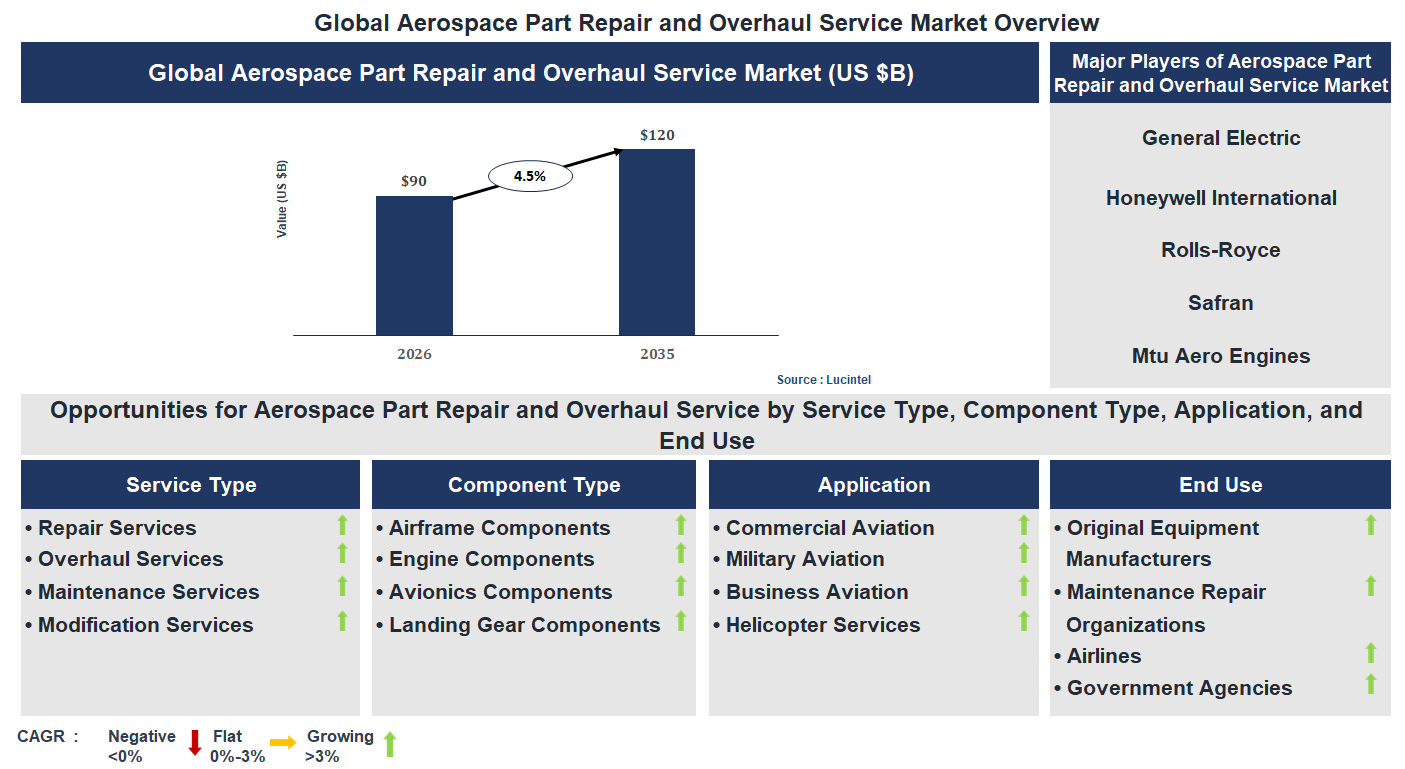
Key data points: The market size in 2035 = $120 billion, growth forecast = 4.5% annually for the next 8 years. Scroll below to get more insights. This market report covers trends, opportunities and forecasts in aerospace part repair and overhaul service market to 2035 by service type (repair services, overhaul services, maintenance services, and modification services), component type (airframe components, engine components, avionics components, and landing gear components), application (commercial aviation, military aviation, business aviation, and helicopter services), end use (original equipment manufacturers, maintenance repair organizations, airlines, and government agencies), and region (North America, Europe, Asia Pacific, and the Rest of the World)
We'll send your sample report shortly.
• Lucintel forecasts that, within the service type category, repair service is expected to witness the highest growth over the forecast period.
• Within the application category, commercial aviation is expected to witness the highest growth.
• In terms of region, North America is expected to witness the highest growth over the forecast period. Gain valuable insights for your business decisions with our comprehensive 150+ page report. Sample figures with some insights are shown below.
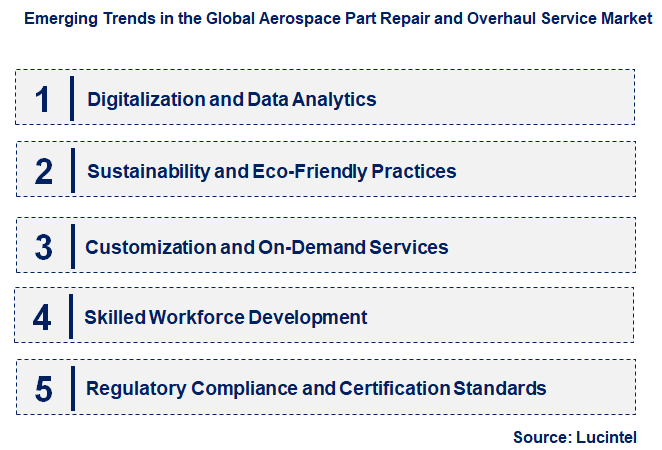
• Digitalization and Data Analytics: The integration of digital tools and data analytics is revolutionizing repair and overhaul processes. By leveraging real-time data, predictive maintenance, and digital twins, service providers can optimize workflows, reduce downtime, and improve accuracy. This trend enhances decision-making, minimizes errors, and accelerates turnaround times, ultimately leading to cost savings and increased customer satisfaction. As digital adoption grows, it will enable more proactive and efficient maintenance strategies, transforming traditional repair models into smarter, data-driven operations.
• Sustainability and Eco-Friendly Practices: Increasing environmental concerns are prompting the aerospace industry to adopt sustainable repair and overhaul practices. This includes using eco-friendly materials, reducing waste, and implementing energy-efficient processes. Market players are investing in green technologies and seeking certifications to meet regulatory standards and customer expectations. These initiatives not only reduce the environmental footprint but also enhance brand reputation and compliance. As sustainability becomes a core focus, the market will see a shift towards more responsible and environmentally conscious repair solutions, aligning with global efforts to combat climate change.
• Customization and On-Demand Services: Customers are demanding more tailored repair solutions that cater to specific aircraft needs and operational requirements. The trend toward customization involves flexible service packages, rapid turnaround times, and on-demand repair options. This approach improves fleet availability and reduces operational disruptions. Service providers are adopting modular repair techniques and flexible scheduling to meet these needs. The shift towards personalized services is fostering stronger customer relationships and differentiating providers in a competitive landscape, ultimately driving growth through enhanced customer-centric offerings.
• Skilled Workforce Development: As repair technologies become more sophisticated, there is a growing need for highly skilled technicians and engineers. The industry is investing in workforce training, certification programs, and knowledge-sharing initiatives to address this demand. Developing a skilled workforce ensures high-quality repairs, safety compliance, and innovation adoption. Additionally, attracting new talent and retaining experienced professionals are critical challenges. This trend emphasizes the importance of continuous education and skill enhancement, which will be vital for maintaining service excellence and supporting technological advancements in the market.
• Regulatory Compliance and Certification Standards: Stringent safety and quality standards are shaping the repair and overhaul landscape. Market players must adhere to evolving regulations from aviation authorities, which influence process protocols, documentation, and certification requirements. Compliance ensures safety, reliability, and market access, but also increases operational complexity and costs. Companies are investing in quality management systems and certification processes to meet these standards efficiently. This trend underscores the importance of regulatory adherence as a competitive advantage, fostering trust among customers and regulators while driving continuous improvement in repair practices. These emerging trends are collectively reshaping the aerospace part repair and overhaul service market by fostering innovation, sustainability, customization, workforce development, and regulatory compliance. They are enabling industry stakeholders to deliver safer, more efficient, and environmentally responsible services, positioning the market for sustained growth and technological evolution in the future.
• Technological Innovations in Repair Techniques: The adoption of advanced materials and precision repair methods is revolutionizing the aerospace overhaul industry. Innovations such as additive manufacturing and robotic repairs enable faster, more accurate, and cost-effective services. These advancements reduce turnaround times and extend component lifespan, boosting customer confidence and operational efficiency. As a result, service providers can handle complex repairs with higher quality, meeting increasing demand while maintaining safety standards.
• Digitalization and Predictive Maintenance: Integration of digital tools and IoT sensors is transforming maintenance practices. Predictive analytics enable early detection of component failures, minimizing unplanned downtime and optimizing repair schedules. Digital records streamline workflows and improve traceability, enhancing compliance with safety regulations. This shift toward data-driven maintenance reduces costs and improves reliability, making overhaul services more efficient and appealing to airlines seeking to maximize aircraft availability.
• Growing Demand for Sustainable Repair Solutions: Environmental concerns and regulatory pressures are pushing the industry toward eco-friendly repair practices. Use of sustainable materials, waste reduction techniques, and energy-efficient processes are gaining prominence. These initiatives lower the environmental footprint of repair operations and align with global sustainability goals. As airlines and OEMs prioritize green practices, service providers investing in sustainable solutions will gain competitive advantage and meet evolving customer expectations.
• Expansion of Service Networks and Global Reach: Market players are expanding their service networks to cater to the increasing global aircraft fleet. Strategic partnerships and acquisitions are enabling faster response times and localized support. This expansion enhances customer convenience, reduces logistical costs, and improves service quality. A broader network also allows providers to tap into emerging markets, driving revenue growth and strengthening their market position amid rising demand for overhaul services worldwide.
• Regulatory Changes and Certification Standards: Evolving safety and quality standards are influencing repair and overhaul processes. Stricter certification requirements demand higher compliance levels, prompting investments in quality management systems and workforce training. These regulatory shifts ensure safer, more reliable repairs but also increase operational costs. Service providers adapting swiftly to these standards can differentiate themselves through superior quality assurance, gaining trust and expanding their customer base in a highly regulated industry. The overall impact of these developments is a more efficient, sustainable, and technologically advanced aerospace repair and overhaul market. Enhanced service quality, reduced costs, and expanded global reach are driving growth, attracting new entrants, and fostering innovation. These trends are positioning the industry to meet future demands while maintaining safety and environmental standards, ultimately benefiting stakeholders across the aerospace sector.
• Growing Demand for Cost-Effective Repair and Overhaul Solutions: The increasing number of aging aircraft and the need to reduce operational costs are driving demand for efficient repair and overhaul services. Airlines and OEMs seek innovative, cost-effective methods to extend aircraft lifespan, minimize downtime, and optimize maintenance budgets. This trend encourages service providers to adopt advanced technologies and streamlined processes, creating opportunities for market expansion and improved profitability.
• Adoption of Digital Technologies for Enhanced Maintenance Efficiency: Digitalization, including IoT, AI, and predictive analytics, is transforming aerospace maintenance. These technologies enable real-time monitoring, predictive diagnostics, and optimized scheduling, reducing downtime and repair costs. Companies investing in digital solutions can improve service quality, increase operational efficiency, and gain competitive advantages. The integration of digital tools is expected to be a key growth driver in the coming years.
• Expansion of Aftermarket Services in Emerging Markets: Rapid growth in aviation infrastructure and fleet expansion in regions like Asia-Pacific and the Middle East offers substantial opportunities for aftermarket repair and overhaul services. Local service providers can capitalize on increasing aircraft numbers by establishing regional facilities and partnerships. This expansion supports faster turnaround times, reduced logistics costs, and tailored services, making emerging markets attractive for strategic growth.
• Increasing Focus on Sustainable and Eco-Friendly Repair Practices: Environmental regulations and rising awareness about sustainability are prompting the adoption of eco-friendly repair methods. Use of green materials, waste reduction, and energy-efficient processes are gaining importance. Companies that innovate in sustainable practices can differentiate themselves, meet regulatory requirements, and appeal to environmentally conscious clients. This focus on sustainability is expected to open new avenues for growth and innovation.
• Strategic Collaborations and Mergers to Strengthen Market Position: Partnerships, joint ventures, and mergers enable companies to expand their technological capabilities, geographic reach, and service offerings. Collaborations facilitate knowledge sharing, innovation, and access to new markets, enhancing competitiveness. As the market becomes more complex, strategic alliances will be crucial for companies aiming to leverage synergies, reduce costs, and accelerate growth in the competitive aerospace repair and overhaul sector. The overall market outlook is positively influenced by these growth opportunities, promising increased innovation, efficiency, and global reach. Companies that strategically leverage these trends will be well-positioned to capture market share, improve profitability, and meet the evolving demands of the aerospace industry.
• Technological Innovation: The integration of advanced materials, automation, and digital solutions like predictive maintenance enhances repair quality and reduces turnaround times. These innovations enable service providers to meet increasing safety standards while optimizing costs, thus attracting more clients and expanding market share. Continuous R&D investments foster new repair techniques, further boosting efficiency and competitiveness in the market.
• Growing Aircraft Fleet and Aging Infrastructure: The expanding global aircraft fleet, coupled with aging aircraft requiring frequent repairs and overhauls, significantly drives demand. Airlines seek reliable maintenance services to ensure safety and operational efficiency, leading to increased service contracts. This growth is supported by rising air travel and fleet modernization initiatives, creating a sustained need for repair and overhaul services.
• Regulatory Compliance and Safety Standards: Stringent safety regulations and certification requirements from authorities like FAA and EASA compel operators to seek certified repair services. Compliance ensures safety and reduces liability, making certified repair providers more attractive. These standards also encourage technological upgrades and process improvements, fostering a competitive environment focused on quality and safety.
• Economic Factors and Airline Profitability: The overall health of the airline industry directly impacts repair and overhaul services. Higher profitability enables airlines to invest more in maintenance, while economic downturns can lead to reduced budgets and delayed repairs. Fluctuations in fuel prices, currency exchange rates, and global economic stability influence airline spending patterns, thereby affecting market growth.
• Strategic Partnerships and Mergers: Collaborations between OEMs, MRO providers, and airlines facilitate access to advanced technologies and expanded service networks. Mergers and acquisitions enhance market reach, operational efficiency, and customer base, fostering competitive advantages. These strategic alliances are crucial for adapting to market demands and technological changes, driving industry consolidation and growth. The challenges facing the aerospace part repair and overhaul service market include:-
• Regulatory Complexity and Compliance Costs: Navigating diverse and evolving regulatory landscapes imposes significant costs and operational hurdles. Certification processes are time-consuming and expensive, potentially delaying service delivery. Non-compliance risks penalties and reputational damage, while the need for continuous updates to meet changing standards increases operational complexity.
• Technological Obsolescence and High Investment Costs: Rapid technological advancements can render existing repair techniques obsolete, requiring continuous investment in new equipment and training. High capital expenditure for state-of-the-art facilities and skilled personnel poses financial challenges, especially for smaller players. Keeping pace with innovation is essential but resource-intensive.
• Supply Chain Disruptions and Material Shortages: The global supply chain for aerospace materials and components is vulnerable to disruptions caused by geopolitical tensions, pandemics, or logistical issues. Material shortages can delay repairs, increase costs, and impact service quality. Ensuring a resilient supply chain is critical to maintaining operational efficiency and customer satisfaction. The aerospace part repair and overhaul service market is shaped by technological progress, fleet expansion, regulatory demands, economic conditions, and strategic alliances. While these drivers foster growth and innovation, challenges such as regulatory costs, technological obsolescence, and supply chain vulnerabilities pose risks. Navigating these factors requires adaptive strategies, technological investments, and resilient supply networks. Overall, the markets future hinges on balancing innovation with compliance and operational resilience to sustain long-term growth and competitiveness.
• General Electric
• Honeywell International
• Rolls-Royce
• Safran
• MTU Aero Engines
• Pratt & Whitney
• Air France Industries KLM Engineering & Maintenance
• Repair Services
• Overhaul Services
• Maintenance Services
• Modification Services
• Airframe Components
• Engine Components
• Avionics Components
• Landing Gear Components
• Commercial Aviation
• Military Aviation
• Business Aviation
• Helicopter Services
• Original Equipment Manufacturers
• Maintenance Repair Organizations
• Airlines
• Government Agencies
• North America
• Europe
• Asia Pacific
• The Rest of the World
• United States: The US market has seen substantial investments in digital repair technologies and predictive maintenance systems, enhancing efficiency and reducing downtime. Major aerospace companies are expanding their repair networks and adopting environmentally sustainable practices, including the use of eco-friendly materials. Regulatory agencies are also updating standards to accommodate new repair techniques, fostering innovation and competitiveness.
• China: China is rapidly expanding its aerospace repair infrastructure, driven by government initiatives to develop a self-sufficient aerospace industry. The country is investing in advanced repair facilities and training programs to support domestic airlines and manufacturers. Recent collaborations with international firms aim to upgrade repair standards and incorporate cutting-edge technologies, positioning China as a key player in the global market.
• Germany: Germany continues to lead in high-precision repair and overhaul services, leveraging its strong engineering expertise. The country has introduced advanced automation and robotics in repair processes, improving accuracy and turnaround times. Additionally, Germany is focusing on sustainable repair practices and integrating Industry 4.0 concepts to enhance operational efficiency and environmental compliance.
• India: India’s aerospace repair sector is experiencing rapid growth due to increased demand from domestic airlines and military forces. The government is promoting public-private partnerships and establishing specialized repair hubs to boost capacity. Recent investments in skill development and technology adoption are enabling Indian firms to meet international standards and expand their export potential.
• Japan: Japan is emphasizing innovation in repair techniques, including the integration of artificial intelligence and IoT for real-time diagnostics. The country’s repair services are increasingly focused on lightweight and durable materials to improve aircraft performance. Japan’s strategic collaborations with global aerospace firms are facilitating knowledge transfer and technological advancements in repair and overhaul services.


• General Electric
• Honeywell International
• Rolls-Royce
• Safran
• MTU Aero Engines
• Pratt & Whitney
• Air France Industries KLM Engineering & Maintenance Q6. Which aerospace part repair and overhaul service market segment will be the largest in future? Answer: Lucintel forecasts that, within the service type category, repair service is expected to witness the highest growth over the forecast period. Q7. In aerospace part repair and overhaul service market, which region is expected to be the largest in next 8 years? Answer: In terms of region, North America is expected to witness the highest growth over the forecast period. Q8. Do we receive customization in this report? Answer: Yes, Lucintel provides 10% customization without any additional cost.


Choose a license that fits your team. Instant PDF delivery.
Prices exclude taxes. Instant delivery. Custom licensing available on request.
Market Report · July 31, 2026
Market Report · July 31, 2026
Market Report · July 22, 2026
Trusted partner for strategic intelligence and business growth


Receive a complimentary market analysis tailored to your industry. Our analysts will identify key growth opportunities and competitive dynamics specific to your business.

Market size, growth rate, and key trend analysis for your specific sector.

Top competitor positioning and market share analysis.

Strategic recommendations backed by data-driven insights.
Get curated market intelligence and competitive moves straight to your inbox.
By subscribing, you agree to receive our monthly insights. Unsubscribe anytime.
Receive a complimentary market analysis tailored to your industry. Our analysts will identify key growth opportunities and competitive dynamics specific to your business.
Market size, growth rate, and key trend analysis for your specific sector.
Top competitor positioning and market share analysis.
Strategic recommendations backed by data-driven insights.
Get curated market intelligence, emerging trends, and competitive moves straight to your inbox each month.
By subscribing, you agree to receive our monthly insights. Unsubscribe anytime.
We'll send your sample report shortly.