
Market Report · July 31, 2026

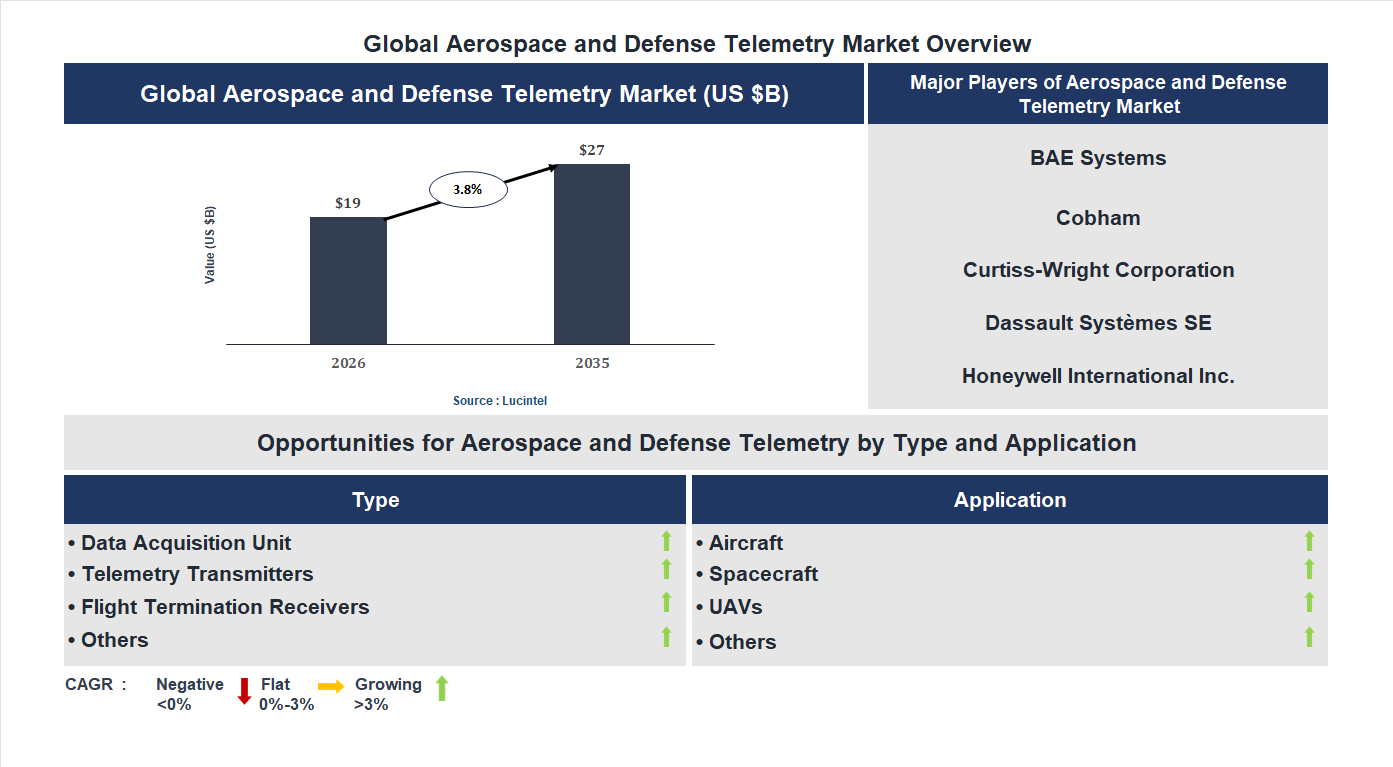
Key data points: The market size in 2035 = $27 billion, growth forecast = 3.8% annually for the next 8 years. Scroll below to get more insights. This market report covers trends, opportunities and forecasts in aerospace and defense telemetry market to 2035 by type (data acquisition unit, telemetry transmitters, flight termination receivers, and others), application (aircraft, spacecraft, UAVs, and others), and region (North America, Europe, Asia Pacific, and the Rest of the World)
We'll send your sample report shortly.
• Lucintel forecasts that, within the type category, data acquisition unit is expected to witness the highest growth over the forecast period.
• Within the application category, UAV is expected to witness the highest growth.
• In terms of region, APAC is expected to witness the highest growth over the forecast period. Gain valuable insights for your business decisions with our comprehensive 150+ page report. Sample figures with some insights are shown below.
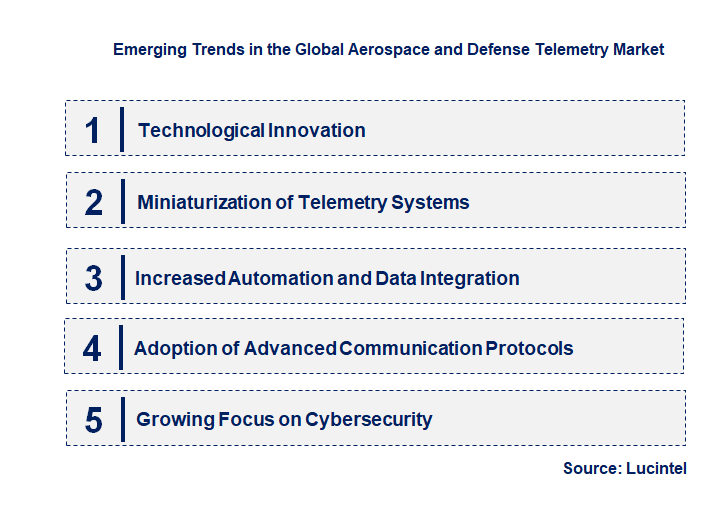
• Technological Innovation: The market is witnessing significant advancements in telemetry technology, including the integration of artificial intelligence and machine learning. These innovations enable real-time data processing, predictive maintenance, and enhanced decision-making capabilities. As a result, aerospace and defense operations become more efficient, safer, and cost-effective. The adoption of advanced sensors and data transmission methods also improves accuracy and reliability, supporting complex missions such as satellite launches and military surveillance. This trend is driving the development of smarter, more autonomous systems that can adapt to dynamic operational environments.
• Miniaturization of Telemetry Systems: There is a growing demand for smaller, lightweight telemetry components, especially in satellite and unmanned aerial vehicle (UAV) applications. Miniaturization allows for reduced payload weight, which is crucial for launching costs and operational flexibility. Smaller systems also enable integration into a broader range of platforms, including micro-satellites and compact drones. This trend enhances mission versatility and expands the scope of telemetry applications across commercial and defense sectors. It also encourages innovation in materials and design, leading to more efficient and durable systems.
• Increased Automation and Data Integration: Automation in telemetry systems is transforming data collection, processing, and analysis. Automated systems reduce human error, improve response times, and enable continuous monitoring of critical parameters. Integration of telemetry data with other operational systems, such as command and control centers, enhances situational awareness and decision-making. This interconnected approach supports complex missions like missile defense and space exploration. The trend toward automation also facilitates remote operations and reduces operational costs, making advanced telemetry solutions more accessible to a broader range of users.
• Adoption of Advanced Communication Protocols: The shift toward high-speed, secure communication protocols such as 5G, LTE, and satellite-based links is revolutionizing telemetry data transmission. These protocols enable faster, more reliable data transfer over long distances, which is essential for real-time monitoring and control. Enhanced security features protect sensitive information from cyber threats. The adoption of these protocols supports the increasing demand for real-time analytics and remote operations in both military and commercial aerospace applications. This trend ensures that telemetry systems can meet the growing data demands of modern aerospace missions.
• Growing Focus on Cybersecurity: As telemetry systems become more interconnected and reliant on digital communication, cybersecurity has become a critical concern. Protecting telemetry data from cyber threats is essential to ensure mission integrity and safety. The market is witnessing increased investment in secure communication channels, encryption technologies, and intrusion detection systems. This focus on cybersecurity is driving the development of resilient telemetry architectures capable of withstanding cyber-attacks. It also prompts industry standards and regulations to evolve, ensuring that telemetry systems remain secure in an increasingly digital and interconnected environment. These emerging trends are fundamentally transforming the aerospace and defense telemetry market by enhancing system capabilities, improving operational efficiency, and ensuring security. The integration of advanced technologies, miniaturization, automation, and robust communication protocols is enabling more sophisticated, reliable, and secure telemetry solutions. These developments are not only expanding the markets scope but also setting new standards for performance and safety, ultimately reshaping the future landscape of aerospace and defense operations.
• Growing Demand for Real-Time Data Transmission: The need for instant data relay in aerospace and defense operations is fueling market growth. Advanced telemetry systems enable real-time monitoring of aircraft, missiles, and satellites, improving operational efficiency and safety. This demand is driven by the increasing complexity of defense missions and the necessity for rapid decision-making. Enhanced data accuracy and transmission speed are critical, prompting innovations in satellite communication and wireless technologies. The market benefits from increased adoption across military and commercial applications, leading to higher revenue streams.
• Technological Advancements in Satellite Communication: Innovations in satellite technology are expanding telemetry capabilities. High-throughput satellites and low Earth orbit (LEO) constellations provide broader coverage and lower latency, improving data transfer rates. These advancements support complex defense systems, including space surveillance and missile tracking. The integration of AI and machine learning enhances data processing and predictive analytics. As satellite communication becomes more reliable and cost-effective, the market sees increased deployment of advanced telemetry solutions, boosting overall industry growth and opening new opportunities for service providers.
• Miniaturization of Telemetry Sensors: The development of smaller, lightweight sensors is revolutionizing telemetry systems. Miniaturized sensors reduce payload weight, enabling deployment on smaller aircraft, drones, and satellites. This enhances operational flexibility and reduces costs. Improved sensor accuracy and durability support long-term missions in harsh environments. The trend also facilitates the integration of telemetry systems into commercial aviation and unmanned systems. As miniaturization progresses, the market experiences increased adoption, leading to broader application scopes and higher market penetration.
• Integration of Artificial Intelligence and Data Analytics: AI-driven analytics are transforming telemetry data management. Machine learning algorithms enable predictive maintenance, anomaly detection, and mission optimization. AI enhances data interpretation, reducing response times and increasing operational efficiency. This integration supports autonomous systems and decision-making processes in defense operations. The market benefits from the growing adoption of AI tools, which improve system reliability and security. As AI becomes more sophisticated, it opens new avenues for advanced telemetry solutions, driving market expansion and innovation.
• Increasing Defense Budgets and Strategic Investments: Rising defense spending worldwide is fueling demand for advanced telemetry systems. Governments prioritize modernization of military infrastructure and space programs, investing heavily in telemetry technology. Strategic partnerships and public-private collaborations accelerate development and deployment. These investments support the development of next-generation systems with enhanced capabilities. The market experiences a surge in procurement activities, fostering innovation and competition. Overall, increased defense budgets are a key driver propelling the aerospace and defense telemetry market toward sustained growth. The overall impact of these developments is a robust expansion of the aerospace and defense telemetry market. Enhanced technological capabilities, strategic investments, and evolving operational needs are driving innovation and adoption. This growth not only improves military and commercial operations but also attracts new entrants and fosters global competitiveness. As these opportunities mature, the market is set to become more dynamic, efficient, and responsive to future defense and aerospace challenges.
• Increasing Adoption of Satellite Telemetry Systems: Satellite telemetry is crucial for space missions, satellite monitoring, and global communication networks. The demand for high-precision, real-time data transmission in space exploration and military applications is fueling growth. Advancements in satellite miniaturization and enhanced data security are expanding the scope of satellite telemetry systems, especially in commercial satellite launches and deep-space missions, creating new revenue streams and technological opportunities.
• Growing Use of Unmanned Aerial Vehicles (UAVs) and Drones: UAVs and drones rely heavily on telemetry for navigation, control, and data collection. The expanding use of drones in military surveillance, reconnaissance, and commercial applications like agriculture and infrastructure inspection is driving demand for lightweight, robust telemetry solutions. Innovations in miniaturized sensors and secure wireless communication are enabling longer flight times and improved operational efficiency, opening new markets and enhancing existing applications.
• Expansion of Space Exploration Missions: Increasing space exploration initiatives by government agencies and private companies are boosting telemetry needs. These missions require sophisticated telemetry systems for data transmission from spacecraft, rovers, and satellites. The development of deep-space communication networks and high-frequency data links is critical for mission success. This expansion offers opportunities for advanced ground stations, space-grade transmitters, and integrated data management solutions, fostering growth in the market.
• Rising Demand for Secure and Resilient Telemetry Solutions: As defense and space operations become more complex, the need for secure, encrypted telemetry systems intensifies. Cybersecurity threats and the need for reliable data transmission in hostile environments drive innovation in secure communication protocols. Developing resilient telemetry solutions that withstand jamming, hacking, and environmental challenges is essential, creating opportunities for specialized hardware, software, and integrated security services within the market.
• Integration of IoT and Big Data Analytics in Telemetry Systems: The integration of IoT devices and big data analytics enhances telemetry capabilities by enabling real-time data processing and predictive maintenance. This is particularly relevant in aircraft health monitoring, missile systems, and satellite data management. The ability to analyze vast data streams improves operational efficiency and decision-making. Market growth is driven by the need for scalable, intelligent telemetry solutions that support automation and advanced analytics in aerospace and defense applications. These growth opportunities are set to transform the aerospace and defense telemetry market by fostering innovation, expanding application areas, and enhancing operational security. The integration of advanced technologies and increasing demand across sectors will drive sustained market expansion, offering significant strategic advantages to industry players and stakeholders worldwide.
• Technological Innovation: Rapid advancements in telemetry technology, including miniaturization, enhanced data transmission, and integration with IoT, are enabling more efficient and reliable communication systems. These innovations support complex aerospace and defense operations, such as missile guidance, aircraft monitoring, and space exploration. As technology evolves, the market benefits from increased adoption of sophisticated telemetry solutions, leading to improved operational efficiency, safety, and mission success. The continuous development of cutting-edge systems ensures the market remains competitive and aligned with future aerospace and defense needs.
• Increasing Defense Budgets: Governments worldwide are boosting their defense budgets to modernize military capabilities and enhance national security. This increased spending directly correlates with higher demand for advanced telemetry systems used in military aircraft, submarines, and space missions. As defense agencies seek more reliable, secure, and real-time data transmission solutions, the market experiences significant growth opportunities. The sustained investment in defense infrastructure and technology modernization fuels innovation and expands the market scope, making telemetry a critical component of modern military operations.
• Growing Space Exploration Activities: The surge in space exploration initiatives by government agencies and private companies is a major driver for the telemetry market. These activities require sophisticated telemetry systems for spacecraft communication, navigation, and data collection. As space missions become more complex and frequent, the demand for high-performance telemetry solutions increases. This trend not only boosts market growth but also encourages technological advancements tailored to space-specific challenges, such as radiation resistance and long-distance data transmission, thereby expanding the market’s potential.
• Rising Adoption of IoT and Big Data Analytics: The integration of Internet of Things (IoT) and big data analytics in aerospace and defense applications is transforming telemetry systems. These technologies enable real-time data collection, analysis, and decision-making, enhancing operational efficiency and predictive maintenance. The adoption of IoT-connected devices in aircraft, drones, and defense systems creates a vast data ecosystem that requires advanced telemetry solutions for seamless communication. This convergence accelerates market growth by opening new avenues for innovative applications and improving overall system performance. The challenges facing the aerospace and defense telemetry market include:-
• Stringent Regulatory Compliance: The aerospace and defense sectors are heavily regulated to ensure safety, security, and environmental standards. Compliance with international and national regulations, such as ITAR and GDPR, complicates product development and deployment. These regulations often lead to increased costs, extended timelines, and restrictions on technology transfer, which can hinder market growth. Navigating complex regulatory landscapes requires significant expertise and resources, posing a barrier for new entrants and slowing down innovation.
• High Development and Implementation Costs: Developing advanced telemetry systems involves substantial investment in research, testing, and certification processes. The high costs associated with designing, manufacturing, and maintaining these systems can limit adoption, especially among smaller defense contractors and emerging markets. Additionally, integrating telemetry solutions into existing platforms requires significant customization and infrastructure upgrades, further escalating expenses. These financial barriers can slow market expansion and restrict access to cutting-edge technology for some stakeholders.
• Technological Complexity and Integration Challenges: The sophisticated nature of telemetry systems demands seamless integration with various aerospace and defense platforms. Compatibility issues, system interoperability, and cybersecurity concerns complicate deployment. Ensuring reliable performance in harsh environments, such as space or combat zones, adds to the technical challenges. Overcoming these complexities requires specialized expertise and robust testing, which can delay project timelines and increase costs, ultimately impacting market growth and innovation. The aerospace and defense telemetry market is driven by rapid technological advancements, increased defense spending, expanding space exploration, and the integration of IoT and big data analytics. However, regulatory hurdles, high development costs, and technological complexities pose significant challenges. These factors collectively shape the market’s evolution, requiring stakeholders to innovate continuously while navigating regulatory and technical barriers. The overall impact is a dynamic landscape with substantial growth potential, provided that challenges are effectively managed through strategic investments and technological resilience.
• BAE Systems
• Cobham
• Curtiss-Wright Corporation
• Dassault Systèmes SE
• Honeywell International Inc.
• Kongsberg Gruppen AS
• L3 Technologies Inc.
• Leonardo SPA
• Orbit Technologies Ltd.
• Safran SA
• Data Acquisition Unit
• Telemetry Transmitters
• Flight Termination Receivers
• Others
• Aircraft
• Spacecraft
• UAVs
• Others
• North America
• Europe
• Asia Pacific
• The Rest of the World
• United States: The US market has seen significant advancements with increased investments in satellite-based telemetry systems and secure communication networks. Major defense contractors are developing next-generation data collection platforms, integrating AI and machine learning for real-time analysis. The US government has also expanded its space exploration programs, emphasizing telemetry for lunar and Mars missions, boosting industry innovation and collaboration.
• China: China is rapidly advancing its aerospace telemetry capabilities, focusing on satellite communication and deep-space exploration. The country has launched new satellites equipped with sophisticated telemetry systems to support its BeiDou navigation system and lunar missions. Chinese firms are also investing in autonomous drone and aircraft telemetry, aiming to enhance domestic defense and space exploration efforts.
• Germany: Germany is emphasizing the integration of telemetry systems within its aerospace and defense sectors, particularly in satellite technology and aircraft monitoring. The country is investing in European collaborative projects to develop secure, high-capacity telemetry networks. Innovations in data encryption and system resilience are key priorities to ensure operational security and efficiency.
• India: India is expanding its telemetry infrastructure to support its growing space program and defense modernization efforts. The Indian Space Research Organization (ISRO) has launched new satellites with advanced telemetry capabilities for navigation, earth observation, and interplanetary missions. Additionally, India is focusing on indigenous development of secure communication systems for military applications.
• Japan: Japan is advancing its aerospace telemetry technology through investments in satellite communication and space exploration initiatives. The country is developing high-precision telemetry systems for its lunar and asteroid missions, emphasizing reliability and data security. Japan is also collaborating with international partners to enhance its space situational awareness and defense telemetry infrastructure.


• BAE Systems
• Cobham
• Curtiss-Wright Corporation
• Dassault Systèmes SE
• Honeywell International Inc.
• Kongsberg Gruppen AS
• L3 Technologies Inc.
• Leonardo SPA
• Orbit Technologies Ltd.
• Safran SA Q6. Which aerospace and defense telemetry market segment will be the largest in future? Answer: Lucintel forecasts that, within the type category, data acquisition unit is expected to witness the highest growth over the forecast period. Q7. In aerospace and defense telemetry market, which region is expected to be the largest in next 8 years? Answer: In terms of region, APAC is expected to witness the highest growth over the forecast period. Q8. Do we receive customization in this report? Answer: Yes, Lucintel provides 10% customization without any additional cost.


Choose a license that fits your team. Instant PDF delivery.
Prices exclude taxes. Instant delivery. Custom licensing available on request.
Market Report · July 31, 2026
Market Report · July 31, 2026
Market Report · July 31, 2026
Trusted partner for strategic intelligence and business growth


Receive a complimentary market analysis tailored to your industry. Our analysts will identify key growth opportunities and competitive dynamics specific to your business.

Market size, growth rate, and key trend analysis for your specific sector.

Top competitor positioning and market share analysis.

Strategic recommendations backed by data-driven insights.
Get curated market intelligence and competitive moves straight to your inbox.
By subscribing, you agree to receive our monthly insights. Unsubscribe anytime.
Receive a complimentary market analysis tailored to your industry. Our analysts will identify key growth opportunities and competitive dynamics specific to your business.
Market size, growth rate, and key trend analysis for your specific sector.
Top competitor positioning and market share analysis.
Strategic recommendations backed by data-driven insights.
Get curated market intelligence, emerging trends, and competitive moves straight to your inbox each month.
By subscribing, you agree to receive our monthly insights. Unsubscribe anytime.
We'll send your sample report shortly.