
Market Report · May 18, 2026

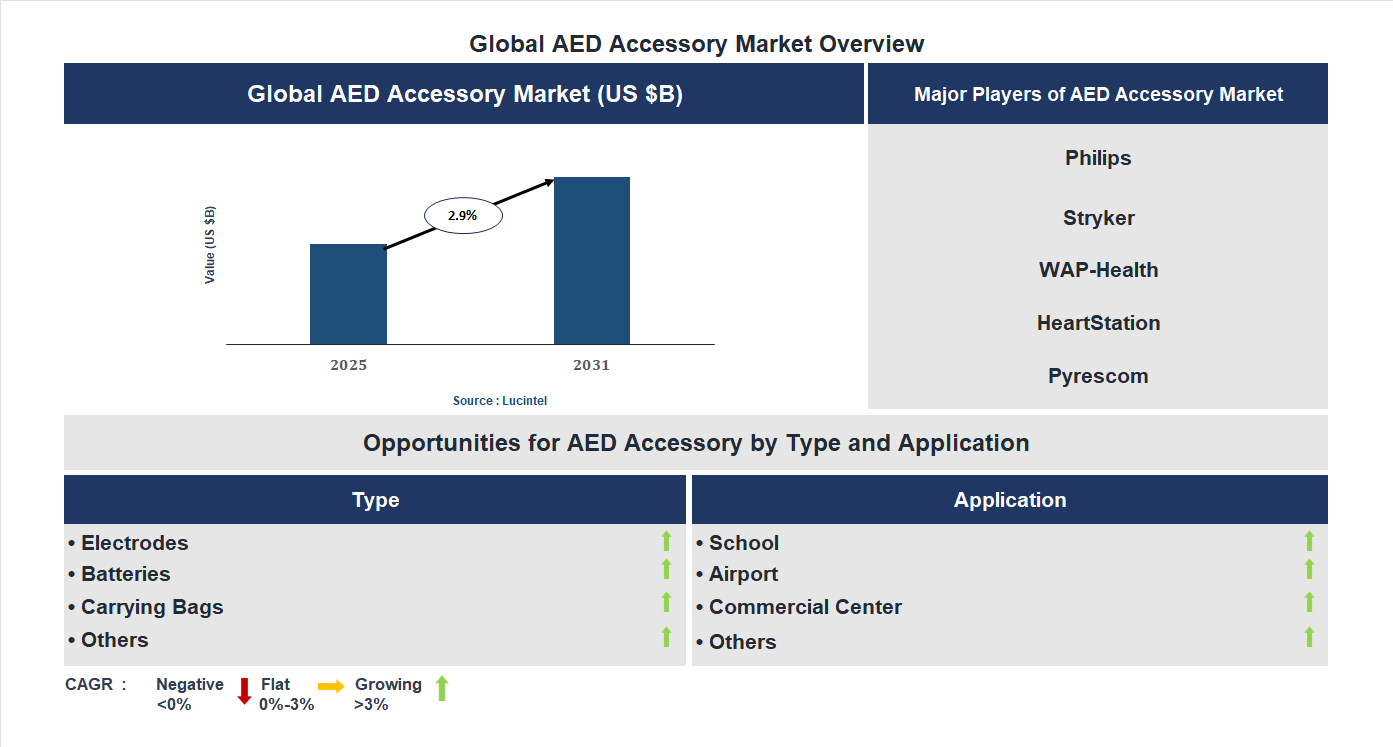
Key data points: The growth forecast = 2.9% annually for the next 7 years. Scroll below to get more insights. This market report covers trends, opportunities and forecasts in AED accessory market to 2031 by type (electrodes, batteries, carrying bags, and others), application (school, airport, commercial center, and others), and region (North America, Europe, Asia Pacific, and the Rest of the World)
We'll send your sample report shortly.
• Lucintel forecasts that, within the type category, electrode is expected to witness the highest growth over the forecast period.
• Within the application category, commercial center is expected to witness the highest growth.
• In terms of region, APAC is expected to witness the highest growth over the forecast period. Gain valuable insights for your business decisions with our comprehensive 150+ page report. Sample figures with some insights are shown below.
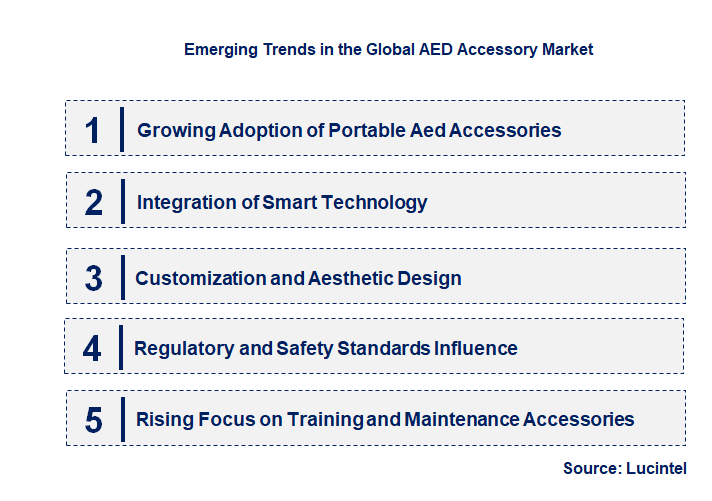
• Growing Adoption of Portable AED Accessories: Increased demand for portable and lightweight accessories such as carrying cases, battery packs, and protective covers. This trend is driven by the need for ease of transport and quick deployment in emergencies, especially in public spaces, sports arenas, and workplaces. Manufacturers are focusing on designing compact, durable, and user-friendly accessories to enhance accessibility and convenience, thereby expanding the market reach and encouraging more widespread AED usage.
• Integration of Smart Technology: The incorporation of IoT and connectivity features into AED accessories is transforming the market. Smart accessories, such as Bluetooth-enabled batteries and monitoring devices, allow real-time status updates, maintenance alerts, and usage tracking. This technological integration improves device reliability, reduces downtime, and ensures readiness during emergencies. It also facilitates data collection for training and maintenance, ultimately enhancing safety protocols and user confidence.
• Customization and Aesthetic Design: Consumers are increasingly seeking accessories that combine functionality with aesthetic appeal. Customizable covers, color options, and ergonomic designs are gaining popularity, especially among private users and organizations aiming for brand consistency. This trend enhances user engagement and satisfaction, encouraging more frequent use and proper maintenance of AEDs. Manufacturers are investing in innovative designs to meet these aesthetic preferences without compromising safety standards.
• Regulatory and Safety Standards Influence: Evolving regulations and safety standards are shaping accessory development. Compliance with international standards such as ISO and IEC ensures product safety, reliability, and interoperability. Manufacturers are focusing on developing accessories that meet these stringent requirements, which in turn boosts consumer confidence and facilitates market expansion across regions. Regulatory adherence also drives innovation in materials and design to meet evolving safety criteria.
• Rising Focus on Training and Maintenance Accessories: There is a growing demand for accessories that support training, maintenance, and replacement needs. Items such as training pads, simulation models, and replacement parts are becoming essential for organizations to ensure preparedness and compliance. This trend emphasizes the importance of ongoing education and maintenance, leading to increased sales of supportive accessories. It also fosters a proactive approach to AED management, ultimately improving emergency response effectiveness. In summary, these trends are collectively reshaping the AED accessory market by emphasizing portability, technological integration, aesthetic appeal, regulatory compliance, and ongoing training. They are expanding market opportunities, improving device reliability, and enhancing user engagement, which ultimately contributes to better emergency preparedness and response worldwide.
• Technological Innovation: Introduction of smart AED accessories with connectivity features has improved user interface and data management, enhancing emergency response efficiency and safety.
• Regulatory Enhancements: Stricter safety and quality standards imposed by health authorities have increased product reliability, boosting consumer confidence and market growth.
• Expansion in Healthcare Infrastructure: Growing healthcare facilities and public access initiatives have increased demand for AED accessories, broadening market reach globally.
• Product Diversification: Manufacturers are offering a wider range of accessories, including batteries, pads, and cases, tailored to different AED models and user needs, increasing market options.
• E-commerce Growth: The rise of online sales channels has improved product availability and accessibility, especially in remote areas, accelerating market penetration. These developments are collectively driving the AED accessory market towards greater innovation, safety, and accessibility. They are expanding market size, improving product quality, and increasing adoption across various sectors, ultimately contributing to better emergency preparedness and life-saving outcomes.
• Emergency Medical Services: Enhanced portability and durability of accessories improve response times and effectiveness during emergencies, leading to better survival rates and increased adoption by first responders.
• Hospital and Clinical Settings: Integration of advanced AED accessories, such as rechargeable batteries and improved electrode pads, enhances device reliability and reduces downtime, supporting continuous patient monitoring and treatment.
• Personal Use and Home Care: Development of user-friendly, compact accessories encourages wider adoption among laypersons, increasing the likelihood of immediate response during cardiac emergencies outside clinical settings.
• Training and Simulation: Innovative accessories designed for training purposes improve the realism and effectiveness of CPR and AED training programs, thereby increasing overall preparedness and confidence among users.
• OEM and Manufacturing: Collaboration with original equipment manufacturers to develop customized accessories fosters innovation, reduces costs, and accelerates the deployment of advanced AED solutions across various markets. In summary, these growth opportunities are significantly impacting the AED accessory market by expanding its application scope, improving device performance, and increasing accessibility. They are driving innovation, fostering market competitiveness, and ultimately contributing to better emergency response and patient outcomes worldwide.
• Technological Innovation: The development of advanced AED accessories, such as improved electrode pads and battery systems, enhances device efficiency and user safety. Innovations driven by research and development efforts enable accessories to be more durable, portable, and compatible with various AED models. This technological progress increases consumer confidence and encourages healthcare providers and emergency responders to invest in upgraded accessories, thereby expanding the market. Additionally, integration with smart technology and IoT capabilities offers real-time monitoring and data collection, further boosting demand. As technology continues to evolve, the market is expected to see sustained growth driven by improved product features and safety standards.
• Rising Incidence of Cardiovascular Diseases: The increasing prevalence of cardiovascular diseases globally is a significant driver for the AED accessory market. As heart-related conditions become more common, the need for immediate resuscitation tools like AEDs and their accessories grows. Governments and health organizations are emphasizing early intervention, which necessitates the availability of reliable accessories such as electrode pads, batteries, and replacement parts. This trend is particularly prominent in aging populations and regions with lifestyle-related health issues. The rising burden of cardiovascular diseases directly correlates with increased demand for accessories that ensure AED readiness and effectiveness, thereby fueling market growth.
• Regulatory and Safety Standards: Stringent regulatory frameworks and safety standards set by health authorities influence the AED accessory market significantly. Compliance with these standards ensures product safety, efficacy, and quality, which is crucial for market acceptance. Manufacturers invest in rigorous testing, certification, and quality assurance processes to meet regulatory requirements, which can also act as a barrier to entry for new players. These standards promote innovation in safety features and product reliability, ultimately fostering consumer trust. As regulations evolve, they shape product development strategies and market dynamics, ensuring that only high-quality accessories are available, which sustains market growth.
• Increasing Adoption in Public Spaces: The growing deployment of AEDs in public spaces such as airports, malls, sports arenas, and workplaces is a key driver. This trend is driven by government initiatives, corporate social responsibility, and increased awareness of sudden cardiac arrest risks. The availability of accessories like replacement pads, batteries, and carrying cases is essential to maintain AED functionality and readiness. The expansion of public access defibrillation programs enhances the demand for compatible accessories, creating new market opportunities. As public awareness and infrastructure improve, the market for AED accessories is expected to expand rapidly, supporting emergency preparedness and response.
• Growing Healthcare Expenditure: Rising healthcare spending across developed and developing countries supports the AED accessory market. Increased investment in healthcare infrastructure, emergency response systems, and training programs boosts demand for AEDs and their accessories. Governments and private healthcare providers prioritize cardiac emergency preparedness, leading to higher procurement of accessories such as electrode pads, batteries, and maintenance kits. This financial commitment ensures the availability and functionality of AEDs in various settings, thereby expanding the market. Additionally, the focus on improving healthcare outcomes and reducing mortality rates from cardiac events sustains long-term growth prospects for AED accessories. The challenges facing this AED accessory market include:-
• High Product Costs: The cost of AED accessories, including electrodes, batteries, and replacement parts, can be prohibitively high for some end-users, especially in developing regions. This financial barrier limits widespread adoption and regular maintenance, impacting market growth. Manufacturers face the challenge of balancing quality with affordability, which is crucial for expanding access in resource-constrained settings. Additionally, the need for frequent replacements due to wear and tear increases overall expenditure, discouraging some potential buyers. Addressing cost issues through innovation, economies of scale, and strategic pricing is essential to broaden market reach and ensure consistent product availability.
• Regulatory Complexities: Navigating the complex regulatory landscape across different countries poses a significant challenge for market players. Variations in approval processes, certification requirements, and safety standards can delay product launches and increase compliance costs. Small and new entrants may find it difficult to meet these stringent regulations, limiting market competition and innovation. Moreover, evolving standards require continuous updates and testing, which can be resource-intensive. Ensuring compliance while maintaining competitive pricing and product quality remains a delicate balance, impacting overall market growth and the pace of new product development.
• Limited Awareness and Training: Despite increasing deployment, awareness about AED accessories and proper usage remains limited in certain regions and communities. Lack of training on how to effectively use and maintain accessories can hinder their adoption and effectiveness during emergencies. This challenge is particularly relevant in rural or underdeveloped areas where emergency response infrastructure is weak. Without proper awareness and training programs, the potential life-saving benefits of AEDs and their accessories are underutilized. Improving education, outreach, and training initiatives is vital to maximizing the impact of AED deployment and ensuring accessories are used correctly and maintained properly. In summary, the AED accessory market is driven by technological advancements, rising cardiovascular disease prevalence, regulatory standards, public space adoption, and increased healthcare expenditure. However, high costs, regulatory hurdles, and awareness gaps pose significant challenges. These factors collectively influence market growth, with opportunities for innovation and expansion balanced by obstacles that require strategic solutions. Overall, the market is poised for growth, provided stakeholders address these challenges effectively, ensuring wider access, improved safety, and enhanced emergency response capabilities worldwide.
• Philips
• Stryker
• WAP-Health
• HeartStation
• Pyrescom
• Jousing
• Mindray
• ZOLL
• ARKY
• ViVest
• Electrodes
• Batteries
• Carrying Bags
• Others
• School
• Airport
• Commercial Center
• Others
• North America
• Europe
• Asia Pacific
• The Rest of the World
• United States: The US market for AED accessories has seen rapid growth due to heightened awareness of cardiac emergencies and supportive government initiatives. Innovations include wireless connectivity and enhanced battery life, improving device reliability. Major players are expanding their product lines and collaborating with healthcare providers to increase accessibility. Regulatory standards are becoming more stringent, ensuring safety and efficacy. Public access defibrillation programs are boosting demand for portable accessories, and e-commerce channels are expanding reach. Overall, the US market is characterized by technological innovation and increased adoption in public and private sectors.
• China: Chinas AED accessory market is expanding swiftly, driven by government policies promoting emergency healthcare infrastructure and increasing urbanization. Local manufacturers are investing in R&D to develop cost-effective, portable accessories suitable for diverse environments. The government’s focus on public health and safety has led to increased deployment of AEDs in public spaces, fueling accessory demand. Additionally, rising awareness and training programs are encouraging wider usage. E-commerce platforms are playing a vital role in distribution, making accessories more accessible. The market is also witnessing collaborations between domestic and international companies to enhance product quality and innovation.
• Germany: Germanys AED accessory market is characterized by high safety standards and technological sophistication. The country’s strong healthcare system and strict regulatory environment ensure high-quality product offerings. Innovations include smart accessories with IoT connectivity and improved battery technology. The market benefits from widespread public awareness campaigns and mandatory AED installations in public spaces, boosting accessory sales. German manufacturers focus on sustainable and eco-friendly products, aligning with environmental regulations. The integration of accessories with advanced AED models is a key trend, and partnerships with healthcare providers are expanding distribution networks across Europe.
• India: The AED accessory market in India is witnessing rapid growth due to increasing awareness of cardiac health and government initiatives promoting emergency response infrastructure. Local manufacturers are developing affordable, durable accessories tailored for diverse climatic conditions. The expanding healthcare sector and rising urbanization are driving demand, especially in metro cities. Public awareness campaigns and training programs are encouraging AED adoption in public and private spaces. E-commerce platforms are facilitating wider distribution, and collaborations with international firms are enhancing product quality. The market is poised for significant expansion as healthcare infrastructure continues to improve.
• Japan: Japans AED accessory market is driven by a highly developed healthcare system and stringent safety regulations. The country emphasizes technological innovation, with accessories featuring advanced connectivity and user-friendly designs. Widespread public awareness and mandatory AED installations in public facilities contribute to steady growth. Japanese manufacturers focus on high-quality, durable accessories that meet strict safety standards. The integration of accessories with smart technology and IoT capabilities is a notable trend. Government initiatives and corporate social responsibility programs further support market expansion, ensuring accessibility and reliability of AED accessories across various settings.


• Philips
• Stryker
• WAP-Health
• HeartStation
• Pyrescom
• Jousing
• Mindray
• ZOLL
• ARKY
• ViVest Q5. Which AED accessory market segment will be the largest in future? Answer: Lucintel forecasts that, within the type category, electrode is expected to witness the highest growth over the forecast period. Q6. In AED accessory market, which region is expected to be the largest in next 5 years? Answer: In terms of region, APAC is expected to witness the highest growth over the forecast period. Q7. Do we receive customization in this report? Answer: Yes, Lucintel provides 10% customization without any additional cost.


Choose a license that fits your team. Instant PDF delivery.
Prices exclude taxes. Instant delivery. Custom licensing available on request.
Market Report · May 18, 2026
Market Report · May 18, 2026
Market Report · May 18, 2026
Trusted partner for strategic intelligence and business growth


Receive a complimentary market analysis tailored to your industry. Our analysts will identify key growth opportunities and competitive dynamics specific to your business.

Market size, growth rate, and key trend analysis for your specific sector.

Top competitor positioning and market share analysis.

Strategic recommendations backed by data-driven insights.
Get curated market intelligence and competitive moves straight to your inbox.
By subscribing, you agree to receive our monthly insights. Unsubscribe anytime.
Receive a complimentary market analysis tailored to your industry. Our analysts will identify key growth opportunities and competitive dynamics specific to your business.
Market size, growth rate, and key trend analysis for your specific sector.
Top competitor positioning and market share analysis.
Strategic recommendations backed by data-driven insights.
Get curated market intelligence, emerging trends, and competitive moves straight to your inbox each month.
By subscribing, you agree to receive our monthly insights. Unsubscribe anytime.
We'll send your sample report shortly.