
Market Report · July 16, 2026

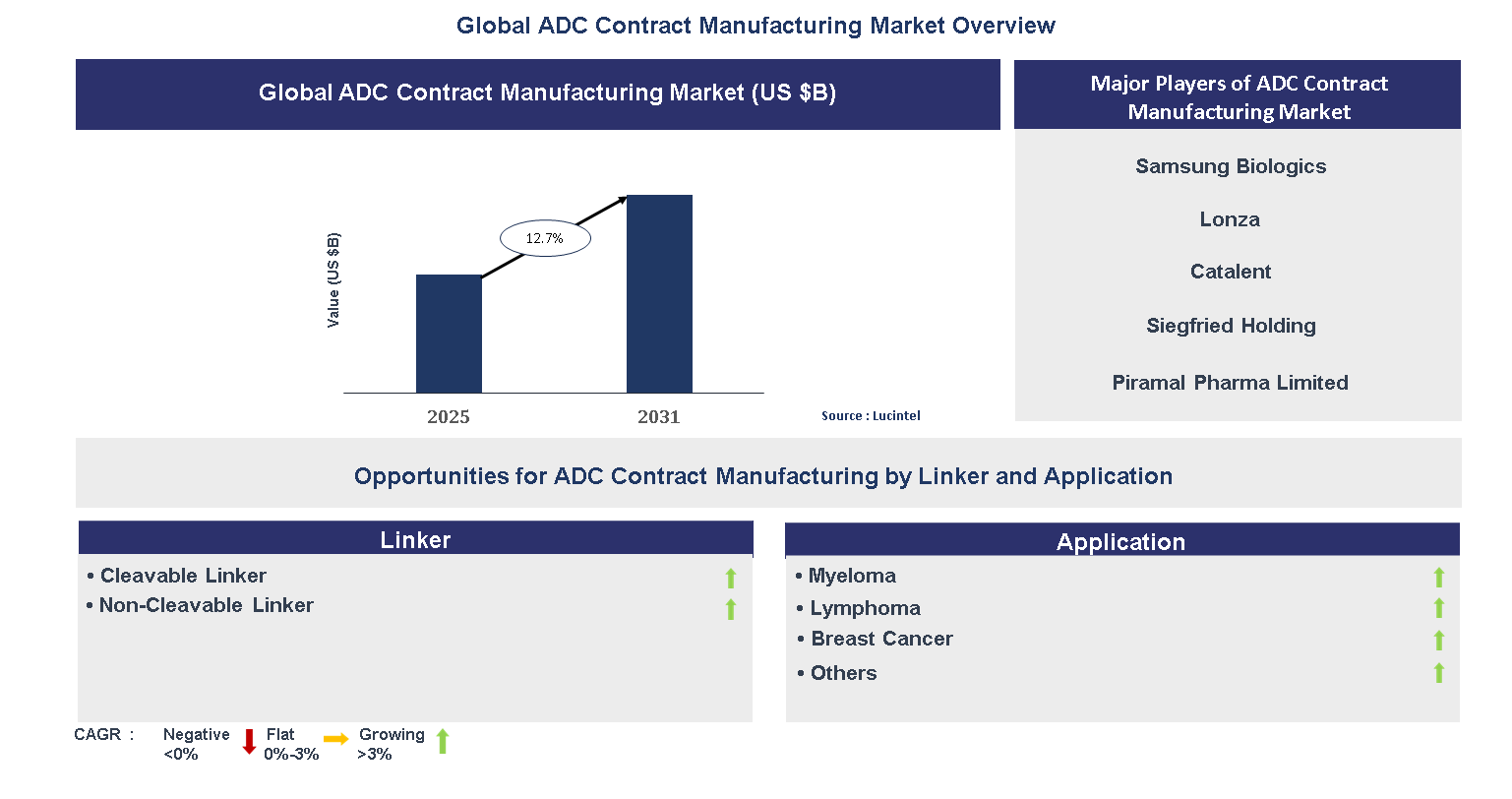
Key data points: The growth forecast = 12.7% annually for the next 7 years. Scroll below to get more insights. This market report covers trends, opportunities and forecasts in ADC contract manufacturing market to 2031 by linker (cleavable linker and non-cleavable linker), application (myeloma, lymphoma, breast cancer, and others), and region (North America, Europe, Asia Pacific, and the Rest of the World)
We'll send your sample report shortly.
• Lucintel forecasts that, within the linker category, cleavable linker is expected to witness higher growth over the forecast period.
• Within the application category, breast cancer is expected to witness the highest growth.
• In terms of region, APAC is expected to witness the highest growth over the forecast period. Gain valuable insights for your business decisions with our comprehensive 150+ page report. Sample figures with some insights are shown below.
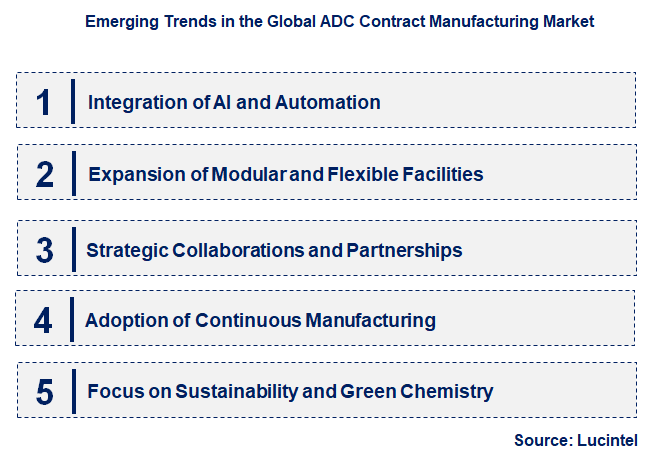
• Integration of AI and Automation: The use of artificial intelligence and robotics is improving precision in ADC conjugation and quality control. AI-driven data analytics help optimize process parameters, predict deviations, and ensure consistent yield. Automation reduces human error and accelerates timelines. This digital shift enhances productivity while maintaining compliance, allowing CDMOs to manage complex ADC manufacturing processes efficiently.
• Expansion of Modular and Flexible Facilities: Modular manufacturing systems are enabling faster project turnaround and flexible capacity management. These facilities can be quickly adapted to accommodate different ADC formats and production scales. Such flexibility helps CDMOs respond swiftly to client demands and reduces capital expenditure. This trend is improving manufacturing agility and supporting rapid commercialization of new ADC therapies.
• Strategic Collaborations and Partnerships: Collaboration between pharmaceutical firms and CDMOs is growing to share risk, resources, and expertise. These alliances focus on early-stage development, scale-up, and regulatory compliance. Partnerships accelerate innovation and strengthen the supply chain by integrating specialized knowledge from both sides. This cooperative approach is critical for efficient and cost-effective ADC production.
• Adoption of Continuous Manufacturing: Continuous processing technologies are being applied to ADC manufacturing to improve yield, quality, and consistency. This approach minimizes batch variations and allows real-time monitoring of production parameters. Continuous systems reduce waste and lower operational costs, providing a sustainable and efficient alternative to traditional batch manufacturing.
• Focus on Sustainability and Green Chemistry: CDMOs are adopting green chemistry practices to minimize environmental impact. Solvent recycling, energy-efficient systems, and waste reduction initiatives are becoming standard. Sustainability is not only a regulatory requirement but also a key differentiator among manufacturers seeking long-term client relationships. This trend enhances corporate responsibility and aligns with global environmental goals. These emerging trends are driving a new era of efficiency and innovation in ADC contract manufacturing. Automation and AI are enhancing precision, modular designs are improving flexibility, and sustainability practices are reinforcing environmental stewardship. Strategic partnerships and continuous processing technologies are transforming production efficiency and reliability. Collectively, these trends are enabling CDMOs to deliver high-quality ADCs faster and more cost-effectively, meeting the growing global demand for targeted cancer therapies while redefining operational and regulatory standards across the biopharmaceutical manufacturing industry.
• Expansion of High-Potency Manufacturing Facilities: Global CDMOs are investing heavily in high-potency active pharmaceutical ingredient (HPAPI) facilities to handle complex ADC payloads. These expansions support safer, large-scale production and enable compliance with international containment standards. This investment ensures that ADC manufacturing meets the growing pipeline demands of oncology-focused drug developers.
• Adoption of Single-Use Technology: The implementation of single-use systems in ADC manufacturing is reducing contamination risks and improving turnaround time. These systems enhance operational flexibility and enable faster product changeovers. Single-use technology is also helping CDMOs meet diverse project requirements while maintaining GMP compliance and cost efficiency.
• Integration of Digital and Data-Driven Manufacturing: The shift toward digital process monitoring and data analytics is optimizing ADC production workflows. Real-time tracking of parameters ensures product consistency and minimizes batch failures. Data integration across facilities supports predictive maintenance and quality assurance, improving both efficiency and traceability.
• Increased Strategic Outsourcing Partnerships: Pharmaceutical companies are forming long-term partnerships with specialized CDMOs for ADC development and manufacturing. This collaboration model accelerates technology transfer, reduces risk, and ensures timely delivery. Strategic alliances allow innovators to focus on R&D while leveraging CDMO expertise in complex manufacturing processes.
• Global Capacity Expansion and Localization: To address regional supply challenges, major CDMOs are expanding their production networks across North America, Europe, and Asia. This localization strategy ensures faster delivery, supply chain resilience, and better regulatory alignment. The trend enhances regional accessibility and supports rapid clinical and commercial launches. These key developments are redefining the operational landscape of ADC contract manufacturing. Facility expansions are improving scalability, digital tools are ensuring precision, and single-use technologies are enhancing efficiency. Strategic partnerships and regional localization are strengthening supply reliability and accelerating global access to ADC therapies. As these advancements mature, they collectively foster an integrated, agile, and innovation-driven manufacturing ecosystem capable of supporting the next generation of targeted biopharmaceuticals. The industry’s direction reflects a strong commitment to quality, sustainability, and patient-focused production excellence.
• Oncology Therapeutics: The largest and fastest-growing application segment, oncology remains the primary driver for ADC demand. CDMOs specializing in oncology ADCs are expanding production to support late-stage clinical trials and commercial supply. With more than 80 percent of ADCs in development targeting cancer, this segment provides consistent long-term growth potential.
• Hematology Applications: Hematologic cancers such as lymphoma and leukemia are emerging as strong areas of ADC adoption. Manufacturers are developing new linker-payload combinations to target hematologic malignancies with improved specificity. CDMOs are focusing on producing ADCs that enhance treatment efficacy while minimizing systemic toxicity.
• Autoimmune Disorders: The expanding research on ADCs for autoimmune diseases represents a new frontier. Contract manufacturers are working with biotech firms to develop conjugates that modulate immune pathways. This diversification of ADC applications broadens the therapeutic landscape and opens long-term opportunities for innovation-driven CDMOs.
• Infectious Disease Treatment: ADC technology is being explored for infectious diseases, where targeted delivery can improve antimicrobial efficiency. CDMOs are supporting early-stage R&D and small-batch manufacturing for these novel applications. This area, though in early development, provides promising diversification potential for ADC manufacturers.
• Targeted Delivery and Diagnostic Research: Research organizations are partnering with CDMOs for ADC-based diagnostics and targeted drug delivery systems. These projects demand precise conjugation techniques and analytical expertise. The collaboration supports innovation in next-generation diagnostics, enabling broader scientific applications and new business avenues for contract manufacturers. Strategic growth opportunities in ADC manufacturing are expanding beyond traditional oncology applications into hematology, autoimmune, and infectious disease segments. Targeted delivery research further diversifies the field, fostering innovation and new commercial avenues. By aligning production capabilities with emerging therapeutic needs, CDMOs can enhance competitiveness and capture a broader client base. This expansion of application areas not only drives revenue growth but also establishes a foundation for sustainable innovation across the ADC value chain, reinforcing the industry’s pivotal role in precision medicine.
• Samsung Biologics
• Lonza
• Catalent
• Siegfried Holding
• Piramal Pharma Limited
• Sartorius
• WuXi Biologics
• Cleavable Linker
• Non-Cleavable Linker
• Myeloma
• Lymphoma
• Breast Cancer
• Others
• North America
• Europe
• Asia Pacific
• The Rest of the World
• United States: In the United States, ADC contract manufacturing has advanced through large-scale facility expansions and technology integration. Key players are investing in next-generation conjugation platforms and high-potency handling suites to support the growing ADC pipeline. The US Food and Drug Administration has encouraged collaboration between drug developers and CMOs to streamline ADC approvals. Moreover, partnerships between biotech firms and CDMOs are increasing to optimize cost and speed. With rising oncology research and government support for innovative biologics, the United States continues to dominate the global ADC contract manufacturing landscape with strong technological expertise and regulatory leadership.
• China: China has emerged as a rapidly growing ADC contract manufacturing hub, driven by domestic innovation and international collaborations. Leading CDMOs are expanding their ADC production lines and investing in state-of-the-art conjugation facilities that meet global standards. Government initiatives supporting biopharma innovation and the Made in China 2025 plan have boosted local ADC development. Increased investment from multinational companies in China has strengthened the ecosystem for clinical and commercial ADC production. The nation’s cost-efficient manufacturing infrastructure, combined with growing technical expertise, positions China as a strong competitor in the global ADC contract manufacturing market.
• Germany: Germany continues to strengthen its ADC contract manufacturing capabilities through advanced automation and process control technologies. Major pharmaceutical companies are partnering with German CDMOs for high-precision conjugation and analytical services. The focus is on achieving higher yields and product consistency through integrated quality systems. With robust regulatory oversight and expertise in chemical synthesis, Germany is attracting international clients seeking reliable ADC production. Expansion in bioconjugation and payload manufacturing capacity has further enhanced its position as a key European hub for ADC contract manufacturing, supporting both early-stage development and commercial-scale production.
• India: India’s ADC contract manufacturing sector is expanding rapidly due to rising demand for cost-effective yet high-quality production services. Domestic CDMOs are adopting Western quality standards and investing in containment facilities for high-potency compounds. Partnerships with global pharmaceutical firms have helped Indian manufacturers acquire advanced conjugation technologies. The country’s strong pool of scientific talent and competitive pricing structure make it an attractive outsourcing destination. With increasing focus on regulatory compliance and process standardization, India is becoming a preferred choice for small and mid-scale ADC development and clinical material supply.
• Japan: Japan is enhancing its ADC manufacturing capabilities through collaborations between global biopharma firms and local CDMOs. The focus is on process optimization, stable linker-payload design, and GMP-compliant manufacturing. Technological innovation, particularly in bioconjugation chemistry, has positioned Japan as a leader in precision drug production. Government funding and academic-industry partnerships are driving the growth of ADC research infrastructure. The Japanese market’s commitment to high manufacturing standards and innovation enables it to play a crucial role in supporting regional ADC development and global clinical supply.


• Samsung Biologics
• Lonza
• Catalent
• Siegfried Holding
• Piramal Pharma Limited
• Sartorius
• WuXi Biologics Q5. Which ADC contract manufacturing market segment will be the largest in future? Answer: Lucintel forecasts that, within the linker category, cleavable linker is expected to witness higher growth over the forecast period. Q6. In ADC contract manufacturing market, which region is expected to be the largest in next 5 years? Answer: In terms of region, APAC is expected to witness the highest growth over the forecast period. Q7. Do we receive customization in this report? Answer: Yes, Lucintel provides 10% customization without any additional cost.


Choose a license that fits your team. Instant PDF delivery.
Prices exclude taxes. Instant delivery. Custom licensing available on request.
Market Report · July 16, 2026
Market Report · July 15, 2026
Market Report · July 15, 2026
Trusted partner for strategic intelligence and business growth


Receive a complimentary market analysis tailored to your industry. Our analysts will identify key growth opportunities and competitive dynamics specific to your business.

Market size, growth rate, and key trend analysis for your specific sector.

Top competitor positioning and market share analysis.

Strategic recommendations backed by data-driven insights.
Get curated market intelligence and competitive moves straight to your inbox.
By subscribing, you agree to receive our monthly insights. Unsubscribe anytime.
Receive a complimentary market analysis tailored to your industry. Our analysts will identify key growth opportunities and competitive dynamics specific to your business.
Market size, growth rate, and key trend analysis for your specific sector.
Top competitor positioning and market share analysis.
Strategic recommendations backed by data-driven insights.
Get curated market intelligence, emerging trends, and competitive moves straight to your inbox each month.
By subscribing, you agree to receive our monthly insights. Unsubscribe anytime.
We'll send your sample report shortly.