
Market Report · July 16, 2026

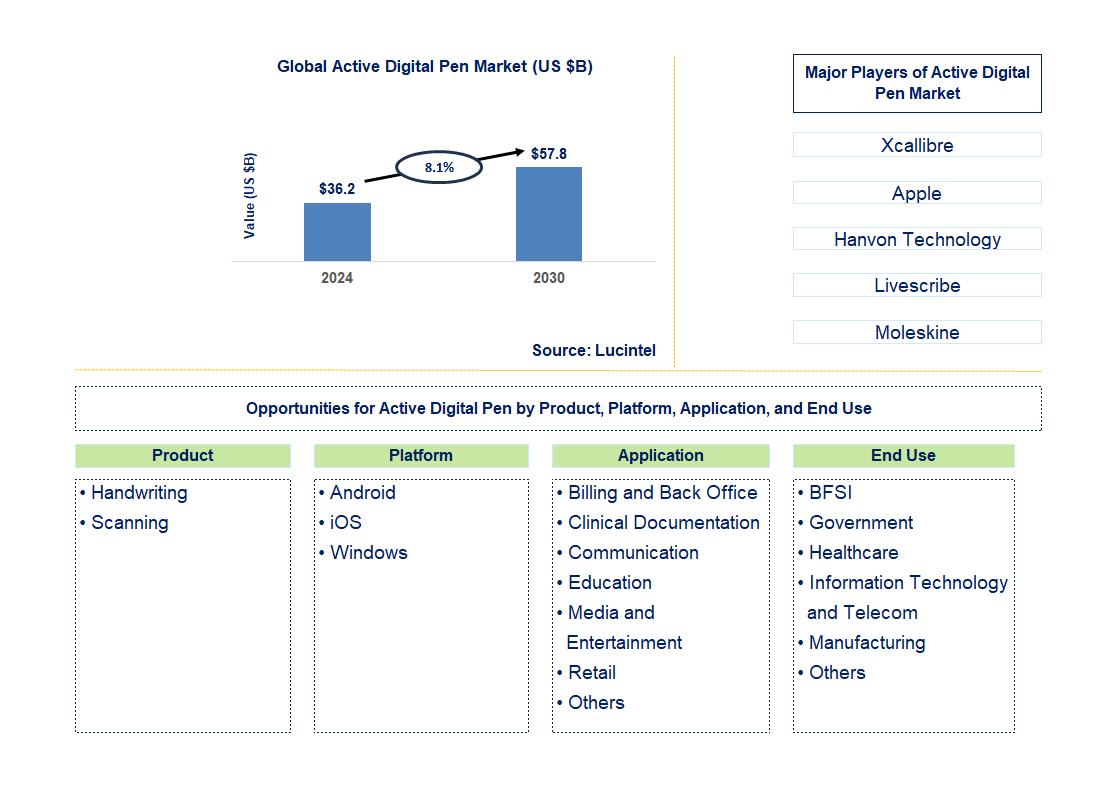
Key data points: The market size in 2030 = $57.8 billion, growth forecast = 8.1% annually for the next 6 years. Scroll below to get more insights. This market report covers trends, opportunities, and forecasts in the global active digital pen market to 2030 by product (handwriting and scanning), platform (android, ios, and windows), application (billing and back office, clinical documentation, communication, education, media and entertainment, retail, and others), end use (BFSI, government, healthcare, information technology and telecom, manufacturing, and others), and region (North America, Europe, Asia Pacific, and the Rest of the World)
We'll send your sample report shortly.
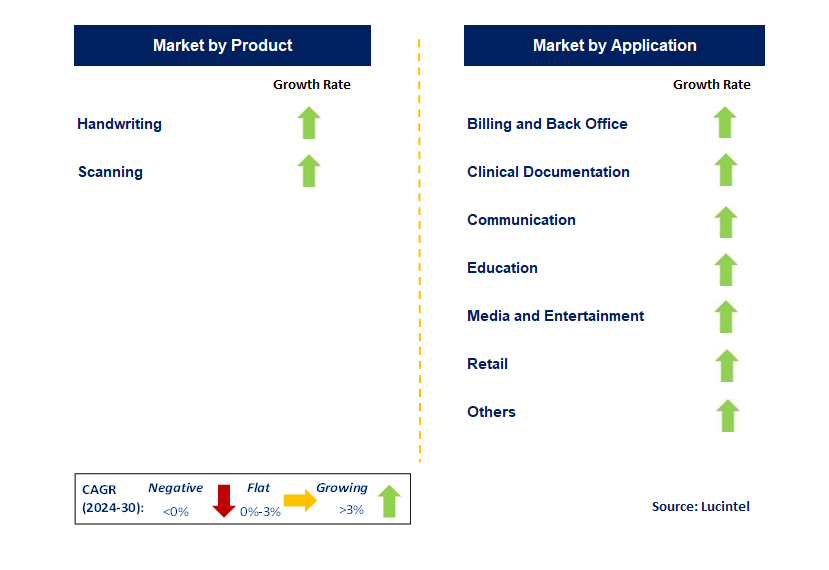
• Lucintel forecasts that, within the product category, handwriting is expected to witness a higher growth over the forecast period.
• Within the application category, billing and back office will remain the largest segment.
• In terms of region, North America is expected to witness the highest growth over the forecast period due to increasing digitalization in the area and growing use of cutting-edge technology. A more than 150-page report is developed to help in your business decisions.
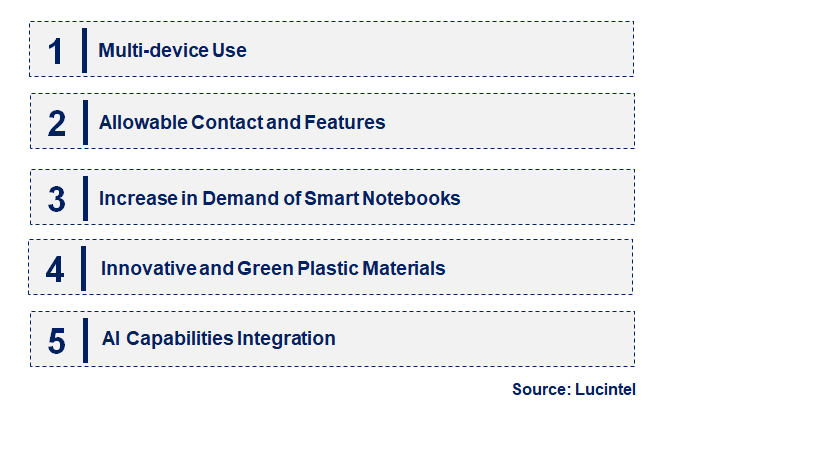
• Multi-device Use: There is an increasing trend of pen manufacturers designing active digital pen devices to function as add-ons for smartphones, tablets, and laptops. This is because there is always a need to complete the same work on different VoIP devices without having to restart applications.
• Allowable Contact and Features: Another well-known trend is the development of pen sensitivity and its customization features. The new generation of pens comes equipped with greater pressure sensitivity and tilt recognition for professionals who engage in activities requiring intensive use of drawing and designing tools, elevating the activities further.
• Increase in Demand for Smart Notebooks: Smart notebooks that work in synchronization with digital pens are gaining market attention. These notebooks enable users to make written or artistic impressions on paper while simultaneously capturing such information in digital format. This trend is more prevalent in educational and corporate settings that require the use of both digital tools for efficiency and paper for the art of handwriting.
• Innovative and Green Plastic Materials: As the world becomes more knowledgeable about environmental issues, there is also a growing need for the adoption of active digital pens that do not pose any threat to the environment. These pens are made with recyclable materials or designed to be used for longer periods with less battery usage, in line with sustainable development practices.
• AI Capabilities Integration: The enhancement of active digital pens with artificial intelligence is a new trend. Technologies such as recognition of hieroglyphs developed by characters and simultaneous translation are becoming widespread. This means that texts can be converted into handwritten figures more rapidly, which helps expedite business processes in many sectors. These developments are currently redefining the active digital pen market in terms of enhancing user experience, improving functionality, and minimizing environmental impact. As the trend progresses, other forms of innovation and broader usage of the active digital pen will be witnessed in the marketplace.
• Integration with Tablets and Laptops: Active digital pens are in high demand due to their incorporation in 2-in-1 laptops and tablets. Companies such as Microsoft, Apple, and Lenovo are improving the quality of their pneumatic systems, targeting digital arts industries and students seeking better usability.
• Advancements in Wireless Charging: Recently, cutting-edge active digital pens have started to include wireless recharging options, eliminating the need for frequent battery exchanges or cords for charging. This development not only increases user comfort but also extends the usability of the pens, making them more applicable in everyday scenarios.
• Focus on Education Tools: New tools are fulfilling the need for digital pens in contemporary educational systems, particularly with the growth of remote learning. Developers aim to produce pens that enhance students' activities, such as note-taking and drawing, with the goal of increasing implementation in the classroom.
• Improved Working Time and Quality: More active digital pens are being manufactured with higher-capacity rechargeable batteries, allowing for longer usage before needing a recharge. Additionally, the increased strength of these pens ensures that they can withstand heavy use, particularly in demanding environments such as design and architecture.
• Growth of Open Source Software Integration: Another development is the increasing integration of active digital pens with devices supporting open-source software. This contributes to the flexibility of pen configurations and functions, especially in the creative fields, thus broadening the applications of these devices. These developments show how the active digital pen continues to grow in functionality and application. As acceptability increases due to enhanced ergonomics and functionality, other industries will adopt these devices, leading to the growth of the market.
• Education Technology: Active digital pens have found their way into smart classroom solutions, enhancing the learning process. They incorporate an element of participation, improving note-taking and group learning, particularly in e-learning activities.
• Digital Modeling and Imaging: Much of the potential of digital pens can be harnessed in the art and design sector. High-end pens fitted with professional features for sensitivity and customization are influencing how art and design are done, making it possible to create more detailed and precise work.
• Healthcare and Telemedicine: In healthcare, electronic pens are used to capture signatures and patient data during procedures and telemedicine meetings. Using these pens enhances accurate documentation and diagnosis from remote locations, promoting the quality of healthcare.
• Enterprise Collaboration Tools: Active digital pens are growing in popularity within organizations, aiding in virtual meetings, brainstorming sessions, and teamwork projects. These pens enhance work speed by enabling groups to draft, mark, and distribute documents simultaneously.
• Document Signing and Legal Applications: The growing market for electronic signature solutions is contributing to the growth of the active digital pen market, especially in the legal and financial industries. These devices are portable and easy to use for signing e-documents, saving time for professionals who rely on paper-based processes. The identified growth opportunities demonstrate the increasing functionality of active digital pens across industries. As the demand for digital devices rises, the market for active digital pens will continue to expand, creating more avenues for growth and use.
• Technological Advancements: Innovations in pen technology, including pressure sensitivity, wireless charging, and artificial intelligence, are driving the increase in use for professional activities such as design, education, and healthcare, which require high levels of accuracy and efficiency.
• Rising Digital Transformation: The paperless shift in organizations is one of the most significant drivers of demand for digital tools. One of the major barriers in this transition has been the lack of proper digital devices. The active digital pen bridges the gap, enhancing conventional writing with digital capabilities.
• Growth of Remote Work and E-Learning: The rise of remote work and e-learning has created a market for tools that facilitate interaction and drawing, such as digital pens. This driver is particularly evident in the education and corporate sectors.
• Demand for Digital Signatures: There is a growing demand for effective communication in the document management sector, particularly for signing and filing documents. Active digital pens act as a tool for electronic signatures, improving document handling processes by reducing redundancy and securing electronic signatures.
• Cost-Effectiveness and Accessibility: As the cost of active digital pens decreases, these tools are becoming more accessible to a wider audience. This price reduction is especially helping regions such as India and China, where the market is expanding. Challenges in the active digital pen market include:
• Battery Life Limitations: Despite developments in active digital pens, battery life remains a challenge. Frequent charging interruptions are problematic in sectors that require continuous use.
• Compatibility Issues: Not all active digital pens work with every device, limiting their usefulness. Integration with different tablets, laptops, and smartphones may pose challenges for users, potentially affecting their attitude towards the product.
• Regulatory and Privacy Concerns: Since active digital pens can be used for signatures and data entry, privacy issues arise. Protecting e-signatures and electronic data remains a challenge from a regulatory standpoint, especially in industries that handle sensitive data. Growth in the active digital pen market is driven by technological changes and demand for digital tools. However, key concerns such as battery constraints and privacy need to be addressed to support continued growth in this evolving market.
• Xcallibre
• Apple
• Hanvon Technology
• Livescribe
• Moleskine
• NeoLAB convergence
• Dynabook Americas
• Anoto
• Microsoft
• Logitech
• Handwriting
• Scanning
• Android
• iOS
• Windows
• Billing and Back Office
• Clinical Documentation
• Communication
• Education
• Media and Entertainment
• Retail
• BFSI
• Government
• Healthcare
• Information Technology and Telecom
• Manufacturing
• Others
• North America
• Europe
• Asia Pacific
• The Rest of the World
• United States of America: The US market is improving with the penetration of active digital pens in education and corporate business, driven by the transition to remote learning and digital workplaces. American companies such as Microsoft and Apple have introduced more precise and pressure-sensitive pens. The adoption of digital pens for note-taking, design, and content creation has increased, particularly with the rise of tablets and convertible laptops, thus expanding the average consumer base.
• China: China has witnessed notable growth in the demand for active digital pens, especially in the integration of e-learning platforms. Smart brands like Xiaomi and Huawei are producing more affordable and better-performing active digital pens to compete with global brands. Additionally, the convergence of active digital pens with smart devices like tablets and smartphones for design, drawing, and writing is driving growth.
• Germany: In Germany, the adoption of active digital pens is emerging in creative industries and non-paper sectors. The demand for digital pens is increasing in areas like architecture and design, where precision is vital. Wacom, a company based in Germany, is leading the way by introducing advanced features that allow quick responses for professionals in these fields.
• India: The market in India is growing due to the adoption of technology-driven education and smart classroom solutions, supported by government policies. Active digital ink technologies for students are becoming commonplace among educators and professionals. However, the country's complex geography and political environment, along with lower income levels, have led to the entry of local manufacturers, such as those from China. Additionally, the rise of remote work has increased sales of digital pens for note-taking and collaboration.
• Japan: In Japan, industries such as design, animation, and gaming, which rely on precision tools, have adopted active digital pens. These pens are also being used by Japanese consumers for everyday tasks like note-taking and signing documents. Sony and other Japanese firms are enhancing their active pen offerings by incorporating advanced features such as AI and extending battery life.


• Xcallibre
• Apple
• Hanvon Technology
• Livescribe
• Moleskine
• NeoLAB convergence
• Dynabook Americas
• Anoto
• Microsoft
• Logitech Q6. Which active digital pen market segment will be the largest in future? Answer: Lucintel forecasts that handwriting is expected to witness the higher growth over the forecast period. Q7. In active digital pen market, which region is expected to be the largest in next 5 years? Answer: North America is expected to witness highest growth over the forecast period due to increasing digitalization in the area and growing use of cutting-edge technology. Q.8 Do we receive customization in this report? Answer: Yes, Lucintel provides 10% customization without any additional cost.


Choose a license that fits your team. Instant PDF delivery.
Prices exclude taxes. Instant delivery. Custom licensing available on request.
Market Report · July 16, 2026
Market Report · July 15, 2026
Market Report · July 15, 2026
Trusted partner for strategic intelligence and business growth


Receive a complimentary market analysis tailored to your industry. Our analysts will identify key growth opportunities and competitive dynamics specific to your business.

Market size, growth rate, and key trend analysis for your specific sector.

Top competitor positioning and market share analysis.

Strategic recommendations backed by data-driven insights.
Get curated market intelligence and competitive moves straight to your inbox.
By subscribing, you agree to receive our monthly insights. Unsubscribe anytime.
Receive a complimentary market analysis tailored to your industry. Our analysts will identify key growth opportunities and competitive dynamics specific to your business.
Market size, growth rate, and key trend analysis for your specific sector.
Top competitor positioning and market share analysis.
Strategic recommendations backed by data-driven insights.
Get curated market intelligence, emerging trends, and competitive moves straight to your inbox each month.
By subscribing, you agree to receive our monthly insights. Unsubscribe anytime.
We'll send your sample report shortly.