
Market Report · July 22, 2026

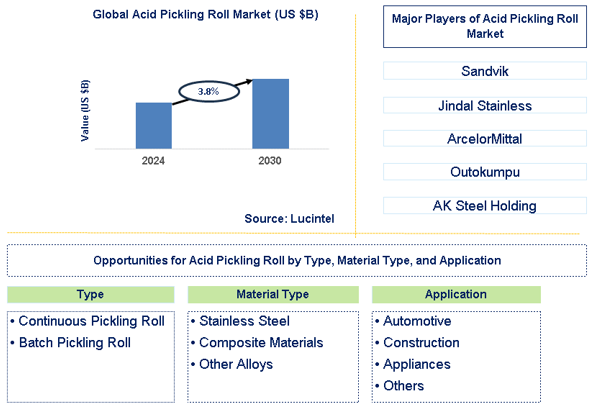
Key data points: The growth forecast = 3.8% annually for the next 6 years. Scroll below to get more insights. This market report covers trends, opportunities, and forecasts in the global acid pickling roll market to 2030 by type (continuous pickling roll and batch pickling roll), material type (stainless steel, composite materials, and other alloys), application (automotive, construction, appliances, and others), and region (North America, Europe, Asia Pacific, and the Rest of the World)
We'll send your sample report shortly.
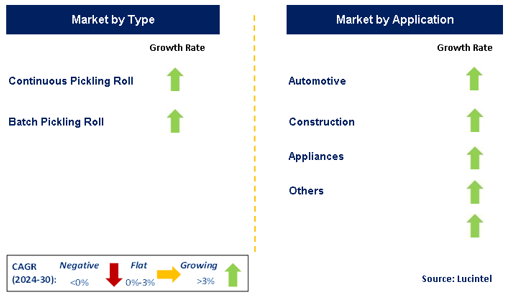
• Lucintel forecasts that, within the material type category, stainless steel is expected to witness a higher growth over the forecast period as it provides superior performance in pickling processes.
• Within the application category, automotive will remain the largest segment due to increase demand of high quality steel.
• In terms of regions, APAC is expected to witness the highest growth over the forecast period due to rising number of manufacturing activities and growing consumption of metals in China and India. Gain valuable insights for your business decisions with our comprehensive 150+ page report.
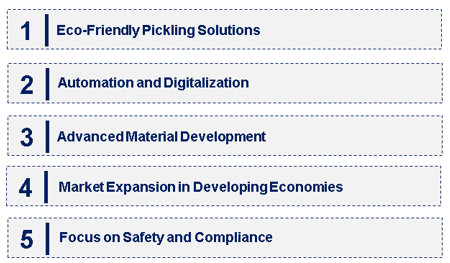
• Eco-Friendly Pickling Solutions: There is an ongoing transition to eco-friendly pickling processes driven by environmental regulations and sustainability initiatives within the industry. This includes acid-recycling systems that reduce acid usage and waste production. Cost savings from reduced raw material consumption and waste disposal expenses make these solutions essential to future market requirements, alongside their regulatory alignment.
• Automation and Digitalization: Automation and digitalization are transforming the acid pickling roll market, with AI, IoT, and robotics technologies being implemented in production lines. These technologies increase process efficiency, improve product quality, and reduce human errors. Real-time data monitoring and predictive maintenance have become standard, allowing better control over pickling processes. This trend enhances competitive power and operational excellence in the industry.
• Advanced Material Development: The need for more advanced pickling methods is driven by the use of materials such as high-strength steels and specialized alloys. Such materials require precise treatment to preserve their properties, leading to innovative pickling techniques . Manufacturers are shifting toward more controlled and efficient pickling approaches to maintain the properties of high-performance materials.
• Market Expansion in Developing Economies: Rapid industrialization in developing economies, particularly in Asia and Africa, is increasing demand for acid pickling rolls. Growth in construction, automotive, and manufacturing sectors across these regions fuels this demand. Acid pickling roll manufacturers can benefit significantly from these market expansions as these countries modernize their industrial infrastructure to meet rising consumption levels.
• Focus on Safety and Compliance: There is an increased focus on safety and compliance in the acid pickling roll market, driven by regulatory requirements and industry standards. This is addressed through safer pickling techniques, such as closed-loop systems and improved ventilation . For companies looking to enter global markets, compliance with international standards provides a critical competitive advantage. These emerging trends are reshaping the acid pickling roll market, driving innovation, sustainability, and market expansion. Companies that adopt these trends are well-positioned to succeed in a competitive, increasingly regulated environment.
• Integration of AI in Pickling Processes: The integration of AI in acid pickling processes enables real-time monitoring and immediate adjustments. AI systems can optimize acid concentration, enhancing quality consistency. Additionally, this advancement minimizes energy waste, leading to more energy-efficient pickling procedures. Manufacturers gain competitiveness with AI-driven pickling lines.
• Adoption of Acid Regeneration Systems: Acid regeneration systems are becoming more common, especially in regions with strict environmental regulations. These systems enable acid reuse and recycling, significantly reducing waste and operating costs. This advancement is vital for companies aiming to comply with environmental regulations while maintaining profitability, and acid regeneration has become integral to modern pickling facilities.
• Capacity Expansion in Emerging Markets: Emerging markets, especially in Asia, have seen increased acid pickling capacities due to rising industrial demand. New facilities with contemporary pickling technologies are being established as governments work to strengthen local manufacturing. This development promotes market growth and provides opportunities for local and international manufacturers to expand in high-growth regions.
• Innovations in Green Pickling Agents: Innovations in green pickling agents are transforming the industry by offering formulations that balance effectiveness with reduced environmental impact. These agents aim for minimal acid use and reduced hazardous waste generation, aligning with global sustainability goals. Regulatory pressures on the industry and its commitment to reducing its environmental footprint have driven greener pickling alternatives.
• Development of High-Efficiency Pickling Lines: Advanced sensors, control systems, and automation have enabled the development of high-efficiency pickling lines, revolutionizing the industry . These lines provide precise control over acid treatment, reducing acid consumption and improving the quality of treated metals . For companies seeking higher productivity, reduced costs, and increased demand for better-quality steel products, this advancement is essential. These developments are significantly impacting the acid pickling roll market, driving technological advancements and promoting sustainability. Companies that embrace these changes will gain a competitive advantage in an environmentally-conscious market.
• Automotive Industry Applications: The increased demand for high-quality, corrosion-resistant steel has made the automotive sector a significant growth area for acid pickling rolls. To meet goals for lightweighting and durability, automakers are focusing on precise and efficient pickling processes . Manufacturers can invest in advanced pickling technologies geared toward the automotive industry, which has stringent quality requirements.
• Expansion in Emerging Markets: Acid pickling roll manufacturers have substantial growth potential in emerging markets, including Asia, Africa, and Latin America. Rapid industrialization and infrastructure development in these regions have increased demand for steel products, necessitating efficient pickling techniques. Companies establishing a presence in these markets can benefit from government incentives aimed at bolstering local manufacturing.
• Renewable Energy Sector: The renewable energy sector, particularly in wind and solar power, increasingly requires high-quality steel components that need proper degreasing through pickling. Acid pickling rolls are in high demand within this sector, which is expanding to meet global energy needs. Developing specialized solutions for pickling in the renewable energy industry allows manufacturers to participate in this emerging market and support the global shift to clean energy.
• Adoption of Advanced Materials: The rapid adoption of advanced materials is creating new opportunities for acid pickling rolls. Specialized pickling processes are needed to maintain the properties of these materials, driving demand for innovative pickling technologies. Companies that invest in research and development to create solutions for advanced materials can assume pivotal roles in niche markets, including aerospace and defense.
• Eco-Friendly Manufacturing Initiatives: As environmental regulations tighten, there is an increasing demand for environmentally friendly metal surface finishing alternatives. Companies that adopt sustainable technologies, such as green pickling agents or acid regeneration systems, gain a competitive advantage. These initiatives appeal to eco-conscious customers and help firms expand their offerings in new market segments, strengthening their brand reputation. These strategic growth opportunities are driving the acid pickling roll market toward innovation and expansion. Companies can use these opportunities to strengthen their market presence while meeting evolving industry requirements and contributing to sustainability goals.
• Technological Advancements: Innovations, such as AI-driven process optimization and advanced acid recycling systems, are driving the acid pickling roll market. These improvements help companies reduce waste, increase efficiency, and lower costs. Continued advancements are expected to drive growth and innovation, enhancing profitability.
• Industrial Growth in Emerging Markets: Rapid industrialization in emerging markets, particularly in Asia and Africa, significantly drives demand for acid pickling rolls. The expansion of manufacturing and infrastructure in these regions requires efficient metal processing solutions, creating substantial growth potential for market players.
• Environmental Regulations: Strict environmental regulations are pushing companies to adopt sustainable pickling processes. Many companies are investing in eco-friendly technologies, such as acid regeneration systems and green pickling agents, to comply with regulations and promote sustainable practices.
• Increasing Demand for High-Quality Steel: Sectors such as automotive, construction, and aerospace require high-quality, corrosion-resistant steel. This demand increases the need for accurate and effective acid pickling, which enhances product quality and durability.
• Growth in the Renewable Energy Sector: The expanding renewable energy sector, particularly in wind and solar power, requires high-quality steel components that undergo acid pickling. Specialized pickling solutions for renewable energy applications open up new growth prospects in the industry. Challenges:
• High Operational Costs: Acid pickling processes face high operational costs, including those associated with acids, energy, and waste disposal. Managing these costs while maintaining efficient production processes can be challenging, especially for smaller manufacturers.
• Stringent Environmental Regulations: Environmentally friendly policies can impose high costs on companies as they invest in eco-friendly technologies. Adherence to these regulations can be challenging, particularly in regions with less strict regulatory frameworks.
• Competition from Alternative Technologies: Alternative methods, such as laser cleaning and plasma treatments, offer greater precision and reduced environmental impact, which can challenge the use of acid pickling rolls. Businesses must continuously innovate to remain competitive against these emerging technologies. A variety of factors shape the dynamics of the acid pickling roll market. While technological advancements offer growth potential, challenges such as high operational costs, regulatory demands, and competition from alternative technologies require careful strategic planning. By addressing these factors, companies can gain a competitive edge in this evolving market.
• Sandvik
• Jindal Stainless
• ArcelorMittal
• Outokumpu
• AK Steel Holding
• Tata Steel
• POSCO
• Continuous Pickling Roll
• Batch Pickling Roll
• Stainless Steel
• Composite Materials
• Other Alloys
• Automotive
• Construction
• Appliances
• Others
• North America
• Europe
• Asia Pacific
• The Rest of the World
• United States: In the US, advances have been made in acid pickling technology, focusing on sustainability and efficiency. Firms are shifting towards environmentally sustainable pickling methods that reduce acid consumption and waste. This has been combined with automation systems, increasing operational efficiency, minimizing human errors, and enhancing safety standards within organizations . These innovations are driven by stringent environmental regulations and the need for cost optimization, positioning the US as a leader in sustainable metal processing practices.
• China: As the world’s largest player in the steel industry, China has seen rapid changes in acid pickling processes, mainly aimed at scaling up production capacities. The country is investing substantially in modernizing its steel mills, which will also reduce environmental impacts. To this end, advanced acid regeneration systems have been adopted to recycle acids used in pickling, reducing both waste and operating costs while meeting strict environmental regulations.
• Germany: Technological innovation and precision engineering drive the acid pickling and rolling market in Germany. German firms lead globally in high-efficiency pickling lines featuring sensor integration into smart equipment controls. These systems ensure consistent quality during metal surface treatment while using less acid. Their emphasis on high-quality manufacturing sets clear examples of best practices in acid pickling processes across Europe.
• India: The market for acid pickling rolls in India is expanding rapidly due to the growth of the steel and automotive industries. Recently, there has been a shift towards more efficient and environmentally friendly pickling processes. Indian manufacturers are increasingly investing in advanced pickling technologies to improve the quality of steel products and meet international standards. Government policies promoting domestic production have also driven the modernization of pickling facilities across the country.
• Japan: Advances in acid pickling technology in Japan focus on automation and precision. Manufacturers in Japan are now using AI and IoT technologies for real-time monitoring and adjustment of pickling processes to improve efficiency and product quality. Additionally, Japan's efforts to reduce environmental impact have led to innovations such as recycling acids and managing waste products. These developments indicate Japan’s commitment to remaining a global leader in high-tech manufacturing.


• Sandvik
• Jindal Stainless
• ArcelorMittal
• Outokumpu
• AK Steel Holding
• Tata Steel
• POSCO Q5. Which acid pickling roll market segment will be the largest in future? Answer: Lucintel forecasts that stainless steel is expected to witness the higher growth over the forecast period as it provides superior performance in pickling processes. Q6. In acid pickling roll market, which region is expected to be the largest in next 5 years? Answer: APAC is expected to witness highest growth over the forecast period due to rising number of manufacturing activities and growing consumption of metals in China and India. Q7. Do we receive customization in this report? Answer: Yes, Lucintel provides 10% customization without any additional cost.


Choose a license that fits your team. Instant PDF delivery.
Prices exclude taxes. Instant delivery. Custom licensing available on request.
Market Report · July 22, 2026
Market Report · July 22, 2026
Market Report · July 22, 2026
Trusted partner for strategic intelligence and business growth


Receive a complimentary market analysis tailored to your industry. Our analysts will identify key growth opportunities and competitive dynamics specific to your business.

Market size, growth rate, and key trend analysis for your specific sector.

Top competitor positioning and market share analysis.

Strategic recommendations backed by data-driven insights.
Get curated market intelligence and competitive moves straight to your inbox.
By subscribing, you agree to receive our monthly insights. Unsubscribe anytime.
Receive a complimentary market analysis tailored to your industry. Our analysts will identify key growth opportunities and competitive dynamics specific to your business.
Market size, growth rate, and key trend analysis for your specific sector.
Top competitor positioning and market share analysis.
Strategic recommendations backed by data-driven insights.
Get curated market intelligence, emerging trends, and competitive moves straight to your inbox each month.
By subscribing, you agree to receive our monthly insights. Unsubscribe anytime.
We'll send your sample report shortly.