
Market Report · July 22, 2026

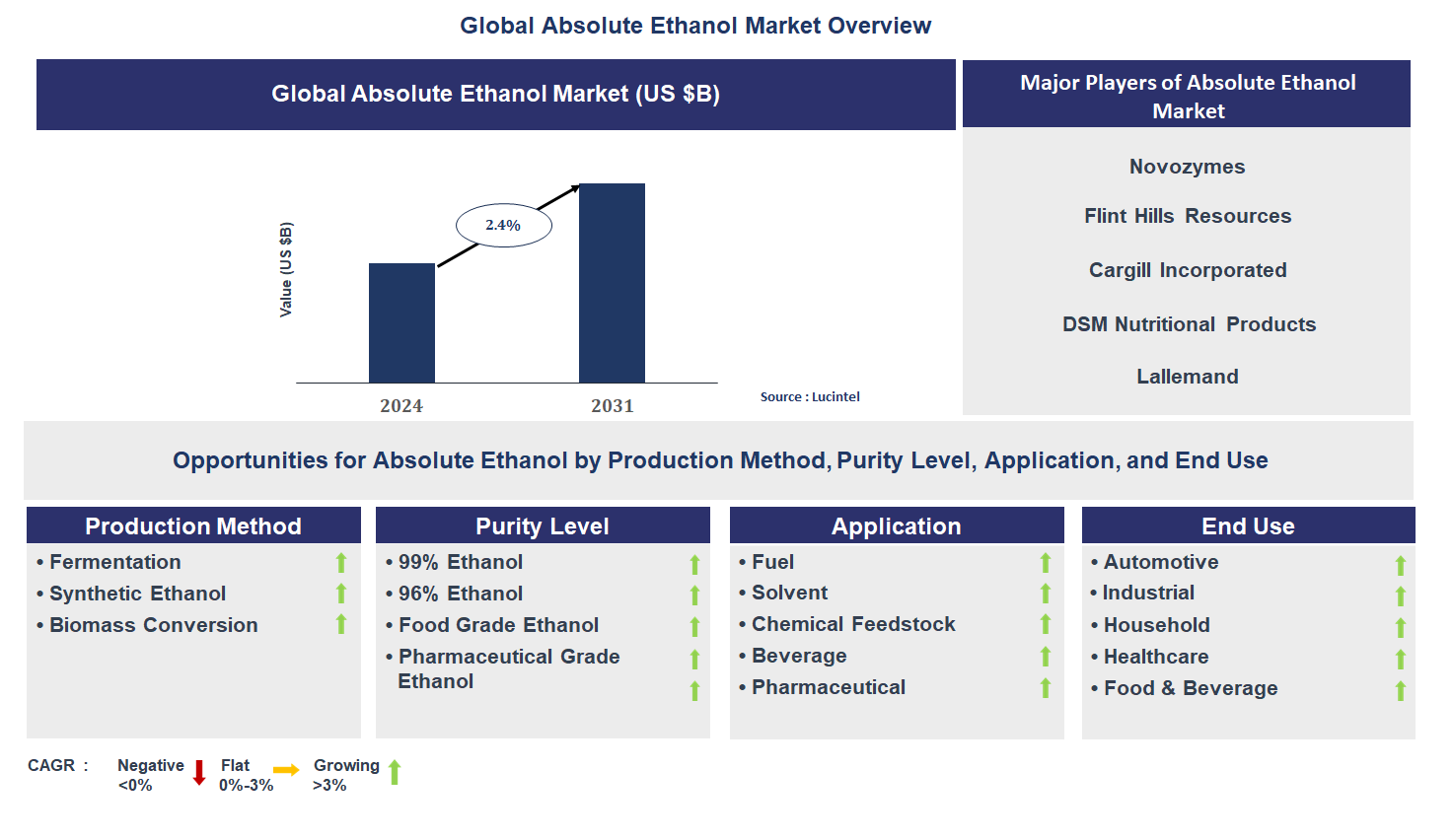
Key data points: The growth forecast = 2.4% annually for the next 7 years. Scroll below to get more insights. This market report covers trends, opportunities and forecasts in absolute ethanol market to 2031 by production method (fermentation, synthetic ethanol, and biomass conversion), purity level (99% ethanol, 96% ethanol, food grade ethanol, and pharmaceutical grade ethanol), application (fuel, solvent, chemical feedstock, beverage, and pharmaceutical), end use (automotive, industrial, household, healthcare, and food & beverage), and region (North America, Europe, Asia Pacific, and the Rest of the World)
We'll send your sample report shortly.
• Lucintel forecasts that, within the production method category, biomass conversion is expected to witness the highest growth over the forecast period.
• Within the end use category, automotive is expected to witness the highest growth.
• In terms of region, APAC is expected to witness the highest growth over the forecast period. Gain valuable insights for your business decisions with our comprehensive 150+ page report. Sample figures with some insights are shown below.
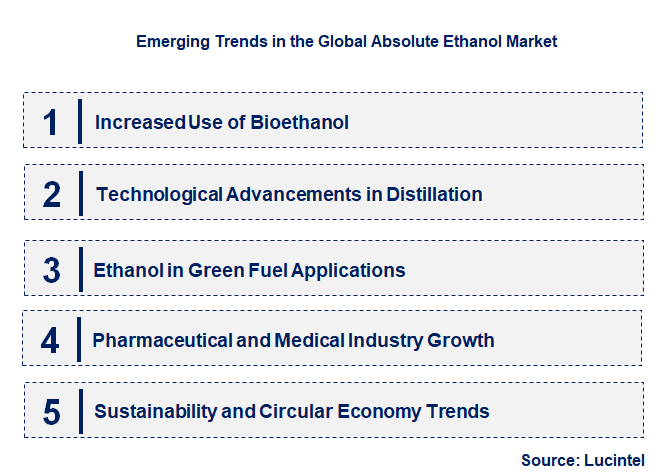
• Increased Use of Bioethanol: The shift from traditional fossil fuels to bioethanol is gaining momentum, driven by government policies and consumer demand for sustainable energy sources. Countries like Brazil, the U.S., and India are pushing for higher bioethanol production, primarily from crops like corn and sugarcane, which can be blended with gasoline to reduce emissions and dependence on oil.
• Technological Advancements in Distillation: Recent developments in distillation technology are increasing the efficiency of ethanol production, leading to higher purity absolute ethanol. These advancements, including membrane filtration and molecular sieves, not only improve yield but also reduce energy consumption, making ethanol production more sustainable and cost-effective for industries such as pharmaceuticals, food, and personal care.
• Ethanol in Green Fuel Applications: Ethanol is increasingly being adopted as a green fuel alternative in the automotive sector. With governments around the world setting stricter emissions standards, ethanol blending into gasoline is becoming a common practice. In countries like the U.S. and Brazil, ethanol is used extensively in transportation, helping reduce carbon footprints and foster the growth of the green fuel market.
• Pharmaceutical and Medical Industry Growth: The demand for absolute ethanol in the pharmaceutical industry continues to grow, driven by the need for high-purity alcohol in the production of vaccines, medicines, and disinfectants. With rising health concerns globally, the pharmaceutical sectors reliance on absolute ethanol for sanitization and manufacturing is likely to increase, further driving market growth.
• Sustainability and Circular Economy Trends: Sustainability is becoming a critical factor in the absolute ethanol market, with increasing emphasis on using renewable feedstocks and reducing waste. Ethanol production from agricultural and industrial waste, as well as carbon capture technologies, is gaining ground. This supports the development of a circular economy, where waste products are used as feedstocks, making the production process more eco-friendly. These emerging trends are reshaping the absolute ethanol market by introducing more sustainable, efficient, and innovative production methods. As bioethanol use increases and technological advancements improve purity, the market is becoming more eco-conscious and aligned with global green initiatives. The pharmaceutical and automotive industries, in particular, stand to benefit from these shifts, driving demand for higher-quality ethanol.
• Advancement in Bioethanol Production: The global shift towards bioethanol is a key development, driven by sustainability goals and government policies. Technologies such as cellulosic ethanol, which uses non-food biomass as a feedstock, are progressing rapidly, reducing the reliance on food crops and lowering greenhouse gas emissions. This trend supports the transition to renewable fuels and reduces dependence on fossil fuels.
• Enhanced Distillation Techniques: Advances in distillation processes are improving ethanol purity levels, making it more suitable for high-precision applications. Membrane separation and molecular sieve technologies are leading to more efficient production, with less energy consumption. These innovations are making it easier to produce absolute ethanol for use in sensitive industries, including pharmaceuticals, cosmetics, and food.
• Ethanol for Green Fuels: Ethanol’s role as a green fuel has been significantly boosted by global emission reduction efforts. Many countries, including the U.S. and Brazil, are increasing the use of ethanol-blended fuels to reduce carbon footprints. This development is pivotal in supporting the transition to sustainable energy solutions, especially in the transportation and energy sectors.
• Government Incentives and Regulations: Many governments are introducing policies to encourage the use of bioethanol and reduce the environmental impact of fossil fuels. In the U.S., the Renewable Fuel Standard (RFS) has been a significant driver of bioethanol demand. Similarly, India’s Ethanol Blended Petrol (EBP) program is pushing for greater ethanol integration in the fuel sector, providing incentives to boost production and consumption.
• Rise of Industrial Waste Ethanol: Using industrial waste materials like agricultural residues and food waste to produce ethanol is a key development in the market. This not only reduces waste but also makes ethanol production more sustainable. Countries like Germany and Japan are investing in technologies to extract ethanol from non-food biomass, promoting a circular economy. These developments are propelling the absolute ethanol market towards greater sustainability, efficiency, and innovation. Bioethanol is positioned to become a dominant fuel source, and advancements in distillation are enhancing the quality of ethanol for specialized applications. Government policies supporting these shifts are creating a favorable environment for the growth of the ethanol market across industries.
• Biofuels and Renewable Energy: The biofuel industry presents a significant growth opportunity for absolute ethanol, as governments increasingly promote ethanol blending into gasoline. The U.S. and Brazil have pioneered this trend, with more countries set to follow. The adoption of bioethanol as a sustainable fuel helps meet emission reduction targets and provides a cleaner alternative to fossil fuels.
• Pharmaceutical and Medical Industry: Absolute ethanol is in high demand in the pharmaceutical industry due to its use in the production of medicines, sanitizers, and vaccines. With the global health crisis increasing the need for sanitization and vaccines, there is a significant opportunity for ethanol suppliers to meet the rising demand in this sector. High-purity ethanol is vital for medical applications.
• Food and Beverage Sector: The food and beverage industry’s growing demand for ethanol as a solvent and preservative is another key growth area. Ethanol is used in flavoring, extraction processes, and as a preservative in alcoholic beverages. As consumer demand for organic and eco-friendly products rises, the food sector presents a valuable opportunity for high-quality ethanol production.
• Green Chemicals and Industrial Applications: Ethanol is increasingly used as a green solvent in various industrial applications, from cosmetics to cleaning products. As industries seek alternatives to harmful chemicals, ethanols environmentally friendly profile makes it a preferred choice. The demand for green chemicals is set to rise as sustainability becomes a central focus in industrial manufacturing.
• Environmental Sustainability and Circular Economy: The move towards a circular economy is creating new growth opportunities in absolute ethanol production. Using agricultural residues, food waste, and other non-food biomass to produce ethanol reduces environmental impact while improving waste management. This trend aligns with global efforts to reduce waste and carbon footprints, particularly in countries like Germany and Japan. These growth opportunities are shaping the future of the absolute ethanol market by aligning with global sustainability goals and consumer preferences. The rise of biofuels, the increasing use of ethanol in pharmaceuticals, and the shift toward green chemicals are all contributing to the market’s expansion. Ethanol production is becoming increasingly eco-friendly, providing long-term growth prospects across multiple industries.
• Novozymes
• Flint Hills Resources
• Cargill Incorporated
• DSM Nutritional Products
• Lallemand
• SABIC
• Green Plains
• Valero Energy Corporation
• The Andersons
• McKinsey and Company
• Fermentation
• Synthetic Ethanol
• Biomass Conversion
• 99% Ethanol
• 96% Ethanol
• Food Grade Ethanol
• Pharmaceutical Grade Ethanol
• Fuel
• Solvent
• Chemical Feedstock
• Beverage
• Pharmaceutical
• Automotive
• Industrial
• Household
• Healthcare
• Food & Beverage
• North America
• Europe
• Asia Pacific
• The Rest of the World
• United States: The U.S. is the largest producer of ethanol globally, and recent developments in the absolute ethanol market focus on meeting renewable fuel standards and reducing carbon emissions. Innovations in cellulosic ethanol production are gaining traction, improving sustainability. Additionally, the U.S. is investing in advanced distillation technologies to enhance the purity of ethanol, which supports its pharmaceutical and industrial uses.
• China: Chinas demand for absolute ethanol has risen sharply due to the country’s growing industrial base, especially in pharmaceuticals, automotive, and beverages. China is also increasingly investing in bioethanol to reduce dependence on fossil fuels, with the government introducing policies to promote ethanol blending in fuel. Additionally, the countrys focus on sustainability has led to improvements in ethanol production technology.
• Germany: Germany is focusing on eco-friendly ethanol production, particularly through the use of renewable sources such as agricultural waste. The country is exploring bioethanol as a key component in reducing CO2 emissions from transportation, in line with EU regulations. With a strong focus on sustainability, Germany is also improving distillation processes for higher purity ethanol, catering to the pharmaceutical and chemical industries.
• India: India has seen steady growth in the absolute ethanol market, primarily driven by rising demand in the pharmaceutical and food industries. The country is focusing on scaling up ethanol production from agricultural crops, primarily sugarcane. In response to increasing environmental concerns, India has also been promoting ethanol blending in fuel as part of its biofuel policy, helping reduce reliance on imported oil.
• Japan: Japan is advancing its use of absolute ethanol, focusing on the pharmaceutical and automotive industries. Recent developments in Japan include the push for bioethanol derived from non-food sources, such as waste biomass, as part of the country’s commitment to reducing greenhouse gas emissions. Japan’s emphasis on cutting-edge technology is also leading to innovations in the purification process of ethanol, improving its use in high-precision applications.


• Novozymes
• Flint Hills Resources
• Cargill Incorporated
• DSM Nutritional Products
• Lallemand
• SABIC
• Green Plains
• Valero Energy Corporation
• The Andersons
• McKinsey and Company Q5. Which absolute ethanol market segment will be the largest in future? Answer: Lucintel forecasts that, within the production method category, biomass conversion is expected to witness the highest growth over the forecast period. Q6. In absolute ethanol market, which region is expected to be the largest in next 5 years? Answer: In terms of region, APAC is expected to witness the highest growth over the forecast period. Q7. Do we receive customization in this report? Answer: Yes, Lucintel provides 10% customization without any additional cost.


Choose a license that fits your team. Instant PDF delivery.
Prices exclude taxes. Instant delivery. Custom licensing available on request.
Market Report · July 22, 2026
Market Report · July 22, 2026
Market Report · July 22, 2026
Trusted partner for strategic intelligence and business growth


Receive a complimentary market analysis tailored to your industry. Our analysts will identify key growth opportunities and competitive dynamics specific to your business.

Market size, growth rate, and key trend analysis for your specific sector.

Top competitor positioning and market share analysis.

Strategic recommendations backed by data-driven insights.
Get curated market intelligence and competitive moves straight to your inbox.
By subscribing, you agree to receive our monthly insights. Unsubscribe anytime.
Receive a complimentary market analysis tailored to your industry. Our analysts will identify key growth opportunities and competitive dynamics specific to your business.
Market size, growth rate, and key trend analysis for your specific sector.
Top competitor positioning and market share analysis.
Strategic recommendations backed by data-driven insights.
Get curated market intelligence, emerging trends, and competitive moves straight to your inbox each month.
By subscribing, you agree to receive our monthly insights. Unsubscribe anytime.
We'll send your sample report shortly.